Blog Archives
Q: What’s the point of all of this? Shouldn’t we be discussing how to end poverty or promote world peace? What can art do?
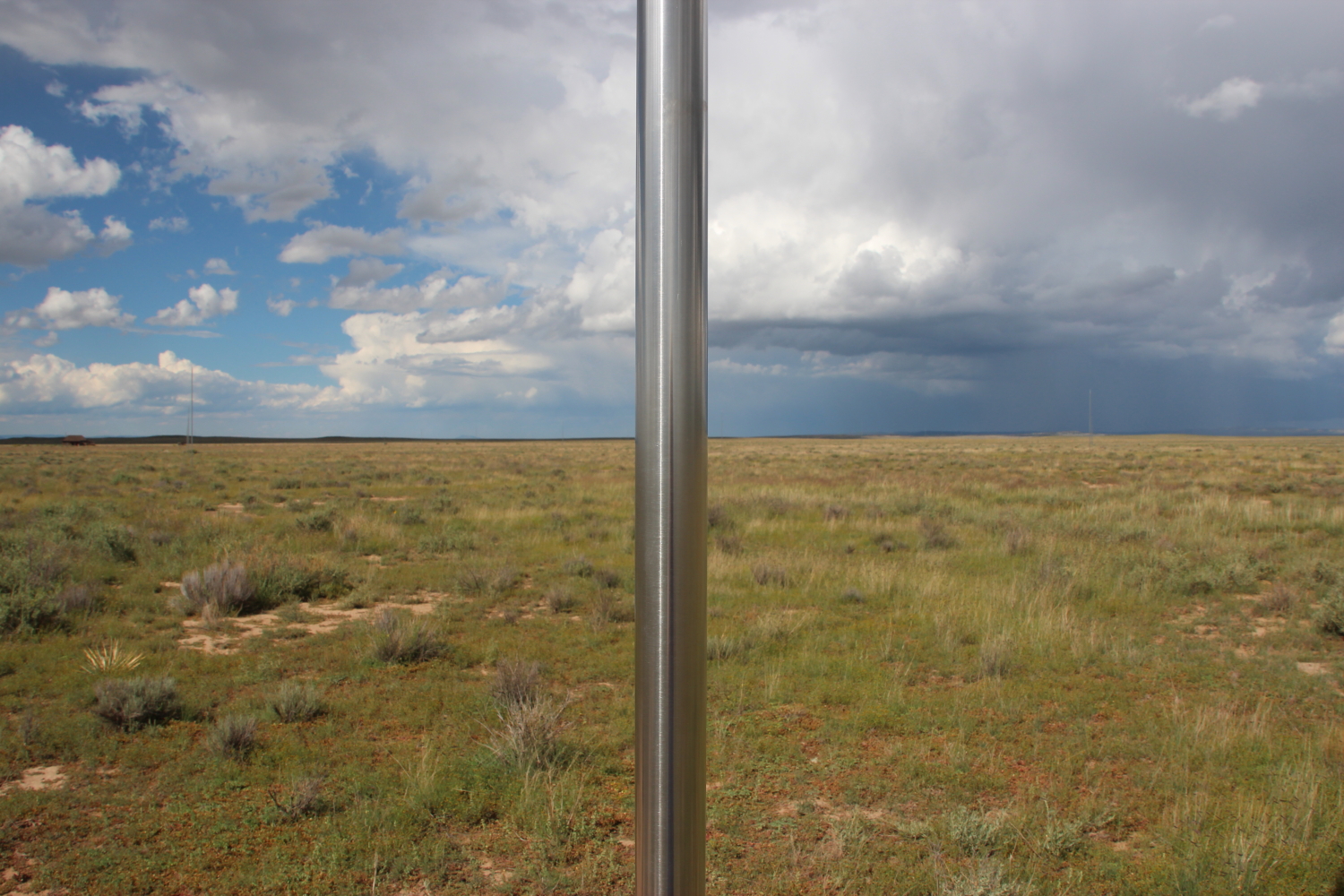
Lightning Field, Quemado, NM
A: I happen to recently have read an inspiring book by Anne Bogart, the theater director. It’s called, “and then you act: making art in an unpredictable world” and she talks about such issues. I’ll quote her wise words below:
“Rather than the experience of life as a shard, art can unite and connect the strands of the universe. When you are in touch with art, borders vanish and the world opens up. Art can expand the definition of what it means to be human. So if we agree to hold ourselves to higher standards and make more rigorous demands on ourselves, then we can say in our work, ‘We have asked ourselves these questions and we are trying to answer them, and that effort earns us the right to ask you, the audience, to face these issues, too.’ Art demands action from the midst of the living and makes a space where growth can happen.
One day, particularly discouraged about the global environment, I asked my friend the playwright Charles L. Mee, Jr., ‘How are we supposed to function in these difficult times? How can we contribute anything useful in this climate?’ ‘Well,’ he answered, ‘You have a choice of two possible directions. Either you convince yourself that these are terrible times and things will never get better and so you decide to give up, or, you choose to believe that there will be a better time in the future. If that is the case, your job in these dark political and social times is to gather together everything you value and become a transport bridge. Pack up what you cherish and carry it on your back to the future.'”
“… In the United States, we are the targets of mass distraction. We are the objects of constant flattery and manufactured desire. I believe that the only possible resistance to a culture of banality is quality. To me, the world often feels unjust, vicious, and even unbearable. And yet, I know that my development as a person is directly proportional to my capacity for discomfort. I see pain, destructive behavior and blindness of the political sphere. I watch wars declared, social injustices that inhabit the streets of my hometown, and a planet in danger of pollution and genocide. I have to do something. My chosen field of action is the theater.”
Comments are welcome!
Pearls from artists* # 71

New York street
* an ongoing series of quotations – mostly from artists, to artists – that offers wisdom, inspiration, and advice for the sometimes lonely road we are on.
Artists are individuals willing to articulate in the face of flux and transformation. And the successful artist finds new shapes for our present ambiguities and uncertainties. The artist becomes the creator of the future through the violent act of articulation. I say violent because articulation is a forceful act. It demands an aggressiveness and an ability to enter into the fray and translate that experience into expression. In the articulation begins a new organization of the inherited landscape.
My good friend the writer Charles L. Mee, Jr. helped me to recognize the relationship between art and the way societies are structured. He suggested that, as societies develop, it is the artists who articulate the necessary myths that embody our experience of life and provide parameters for ethics and values. Every so often the inherited myths lose their value because they become too small and confined to contain the complexities of the ever-transforming and expanding societies. In that moment new myths are needed to encompass who we are becoming. These new constructs do not eliminate anything already in the mix; rather, they include fresh influences and engender new formations. The new mythologies always include ideas, cultures and people formerly excluded from the previous mythologies. So, deduces Mee, the history of art is the history of inclusion.
Ann Bogart in A Director Prepares: Seven Essays on Art and Theater
Comments are welcome!
Pearls from artists* # 69
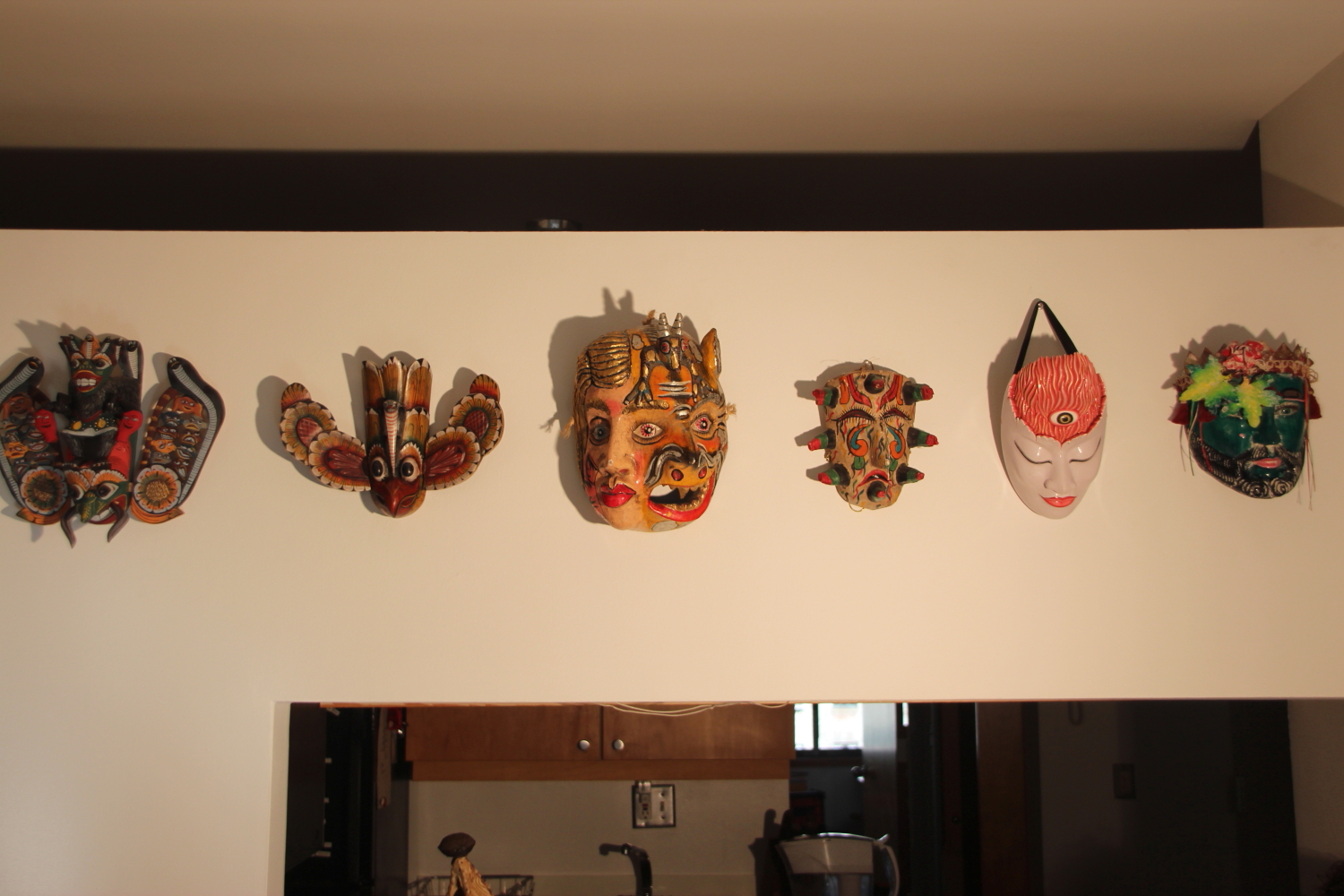
Masks from Sri Lanka, Mexico, and Bali
*
an ongoing series of quotations – mostly from artists, to artists – that offers wisdom, inspiration, and advice for the sometimes lonely road we are on.
The mission is to stay hungry. Once you need to know, you can proceed and draw distinctions. From the heat of this necessity, you reach out to content – the play, the theme, or question – and begin to listen closely, read, taste, and experience it. You learn to differentiate and interpret the sensations received while engaged with content. The perception forms the basis for expression.
Have you ever been so curious about something that the hunger to find out nearly drives you to distraction? The hunger is necessity. As an artist, your entire artistic abilities are shaped by how necessity has entered your life and then how you sustain it. It is imperative to maintain artistic curiosity and necessity. It is our job to maintain in this state of feedforward as long as humanly possible. Without necessity as the fuel for expression, the content remains theoretical. The drive to taste, discover, and express what thrills and chills the soul is the point. Creation must begin with personal necessity rather than conjecture about audience taste or fashion.
Anne Bogart in and then, you act: making art in an unpredictable world
Comments are welcome!
Q: You recently spent several weeks in Sri Lanka. After experiencing so many new sights and sounds, is it difficult to get back to work in your studio?
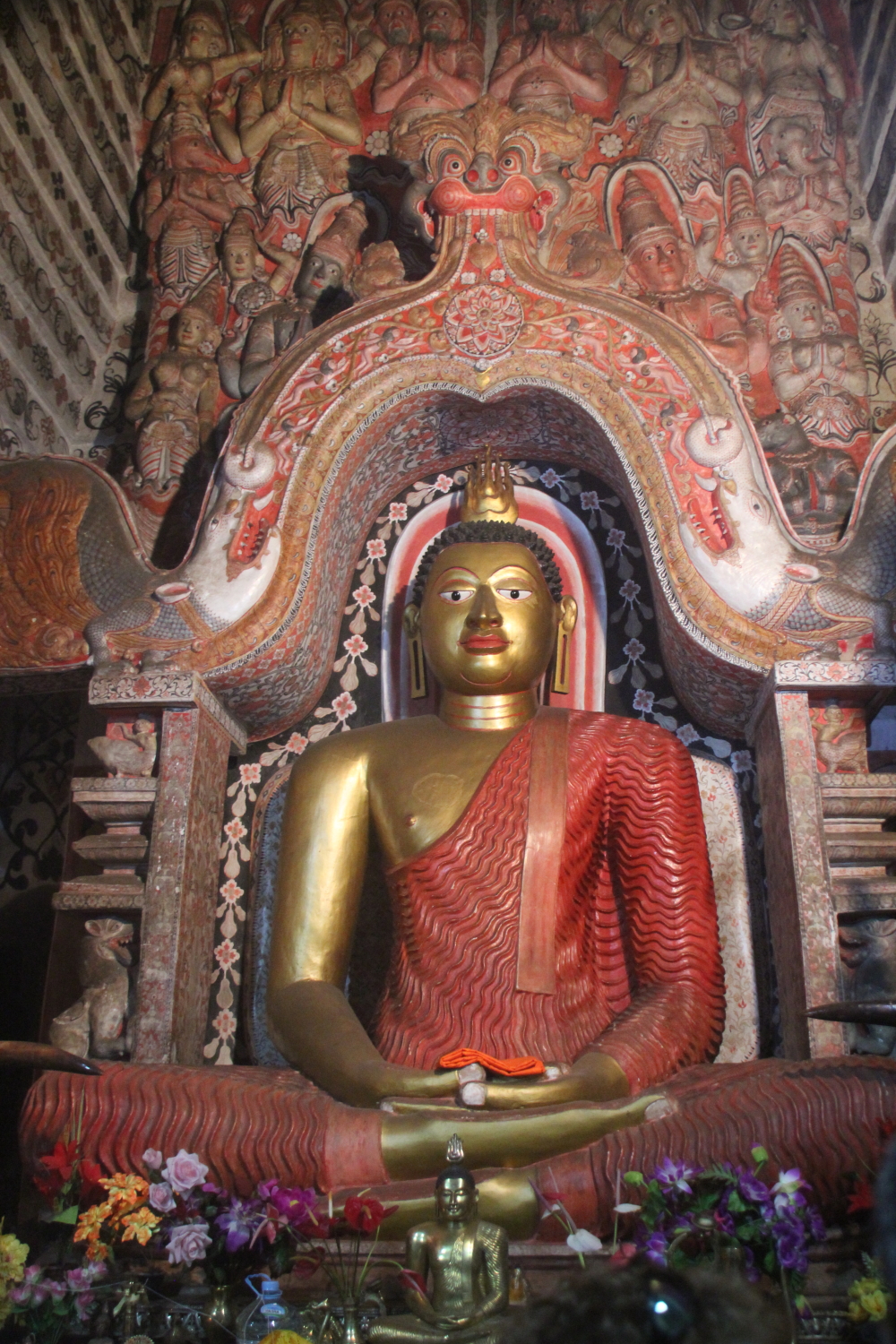
Cave temple at Natha Devale, Sri Lanka
A: It definitely requires some readjustment and a period – maybe a day or two – during which I feel removed from the painting on my easel and need time to become reacquainted with it. It’s a time to refocus, stay put, and reflect. For weeks I’ve led an action-packed life, exploring a fascinating country on the other side of the world. Over time, all of the experiences I’ve had will stay with me, or not, and in some ways begin to influence my work.
It’s funny. I often think of my studio as a cave. It’s a rather dark place and sometimes I have to force myself to go. In Sri Lanka I saw many ancient Buddhist cave temples, wild and vibrant, with colorful paintings on the walls and ceilings, chock full of statues of Buddha and other deities. My travels have given me a new appreciation of the riches to be found in caves of all sorts, including (especially) my own studio!
Comments are welcome!
Pearls from artists* # 56
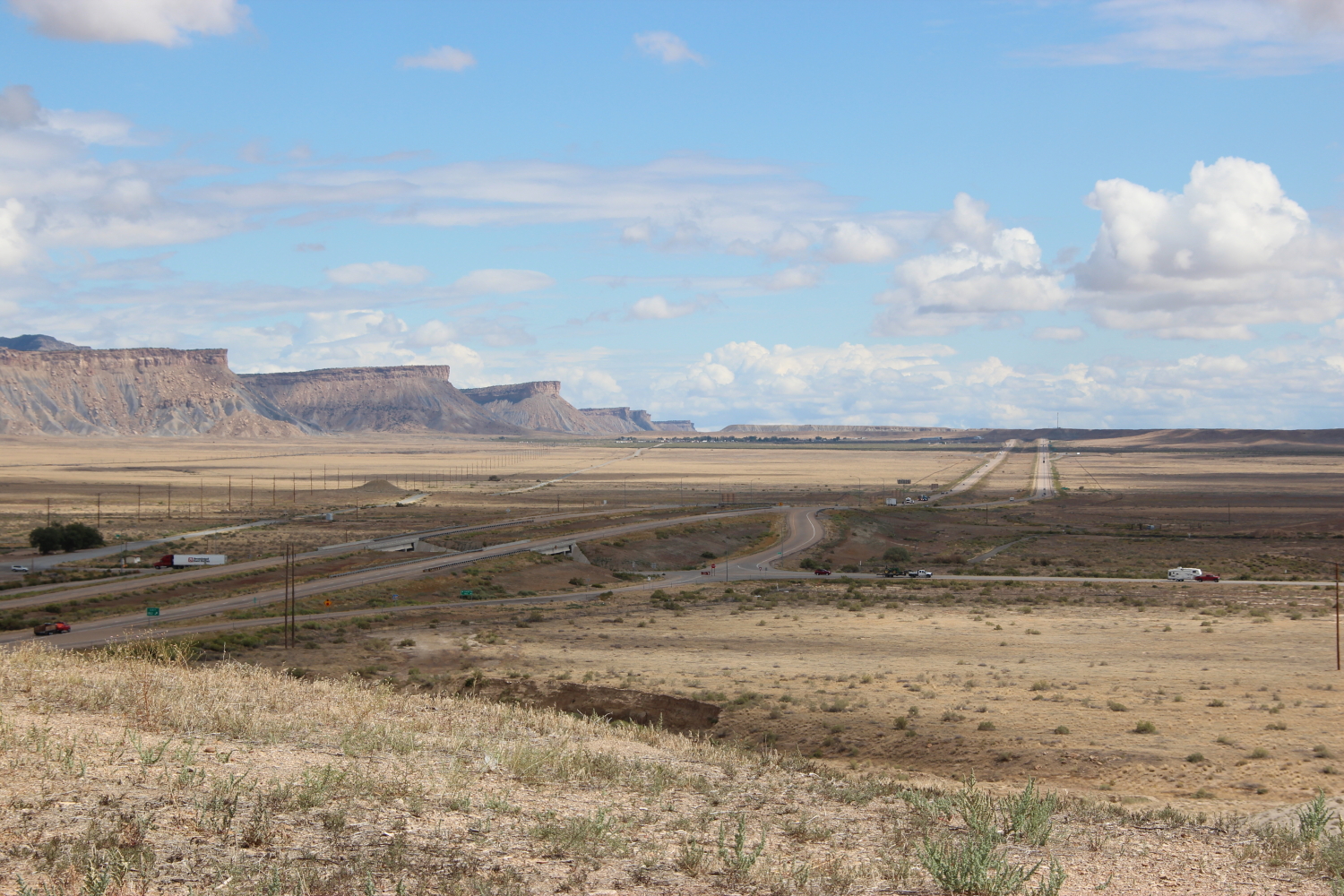
Utah
* an ongoing series of quotations – mostly from artists, to artists – that offers wisdom, inspiration, and advice for the sometimes lonely road we are on.
Balancing intuition against sensory information, and sensitivity to one’s self against pragmatic knowledge of the world, is not a stance unique to artists. The specialness of artists is the degree to which these precarious balances are crucial backups for their real endeavor. Their essential effort is to catapult themselves wholly, without holding back one bit, into a course of action without having any idea where they will end up. They are like riders who gallop into the night, eagerly leaning on their horse’s neck, peering into a blinding rain. And they have to do it over and over again. When they find that they have ridden and ridden – maybe for years, full tilt – in what is for them a mistaken direction, they must unearth within themselves some readiness to turn direction and to gallop off again. They may spend a little time scraping off the mud, resting the horse, having a hot bath, laughing and sitting in candlelight with friends. But in the back of their minds they never forget that the dark, driving run is theirs to make again. They need their balances in order to support their risks. The more they develop an understanding of all their experience – the more it is at their command – the more they carry with them into the whistling wind.
Anne Truitt in Daybook: The Journal of an Artist
Pearls from artists* # 52
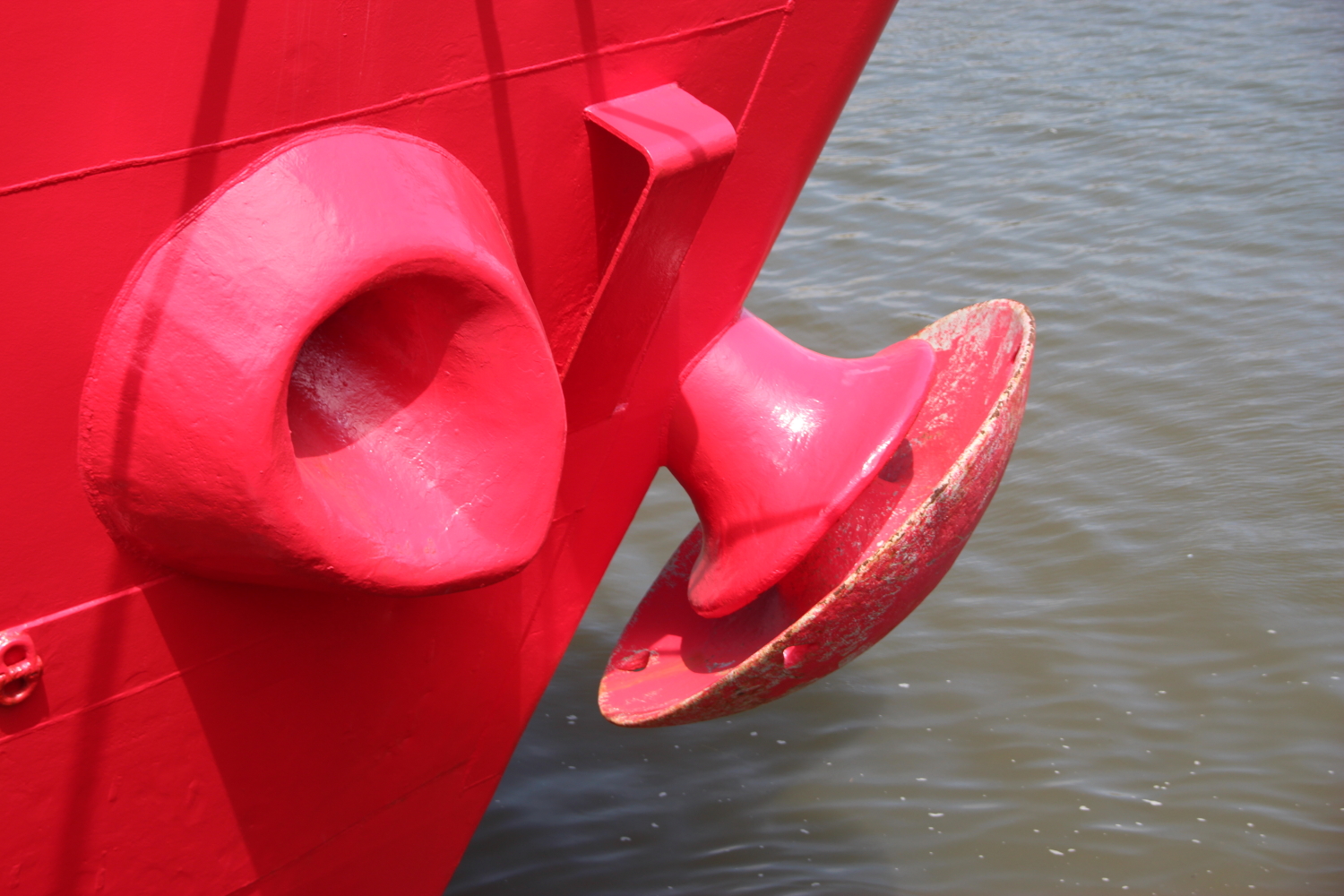
Boat hull
* an ongoing series of quotations – mostly from artists, to artists – that offers wisdom, inspiration, and advice for the sometimes lonely road we are on.
The modern way of seeing is to see in fragments. It is felt that reality is essentially unlimited, and knowledge is open-ended. It follows that all boundaries, all unifying ideas have to be misleading, demagogic; at best, provisional; almost always, in the long run, untrue. To see reality in the light of certain unifying ideas has the undeniable advantage of giving shape and form to our experience. But it also – so the modern way of seeing instructs us – denies the infinite variety and complexity of the real. Thereby it represses our energy, indeed our right, to remake what we wish to remake – our society, ourselves. What is liberating, we are told, is to notice more and more.
Paolo Dilonardo and Anne Jump, editors, Susan Sontag At the Same Time: Essays and Speeches
Comments are welcome!
Pearls from artists* # 51
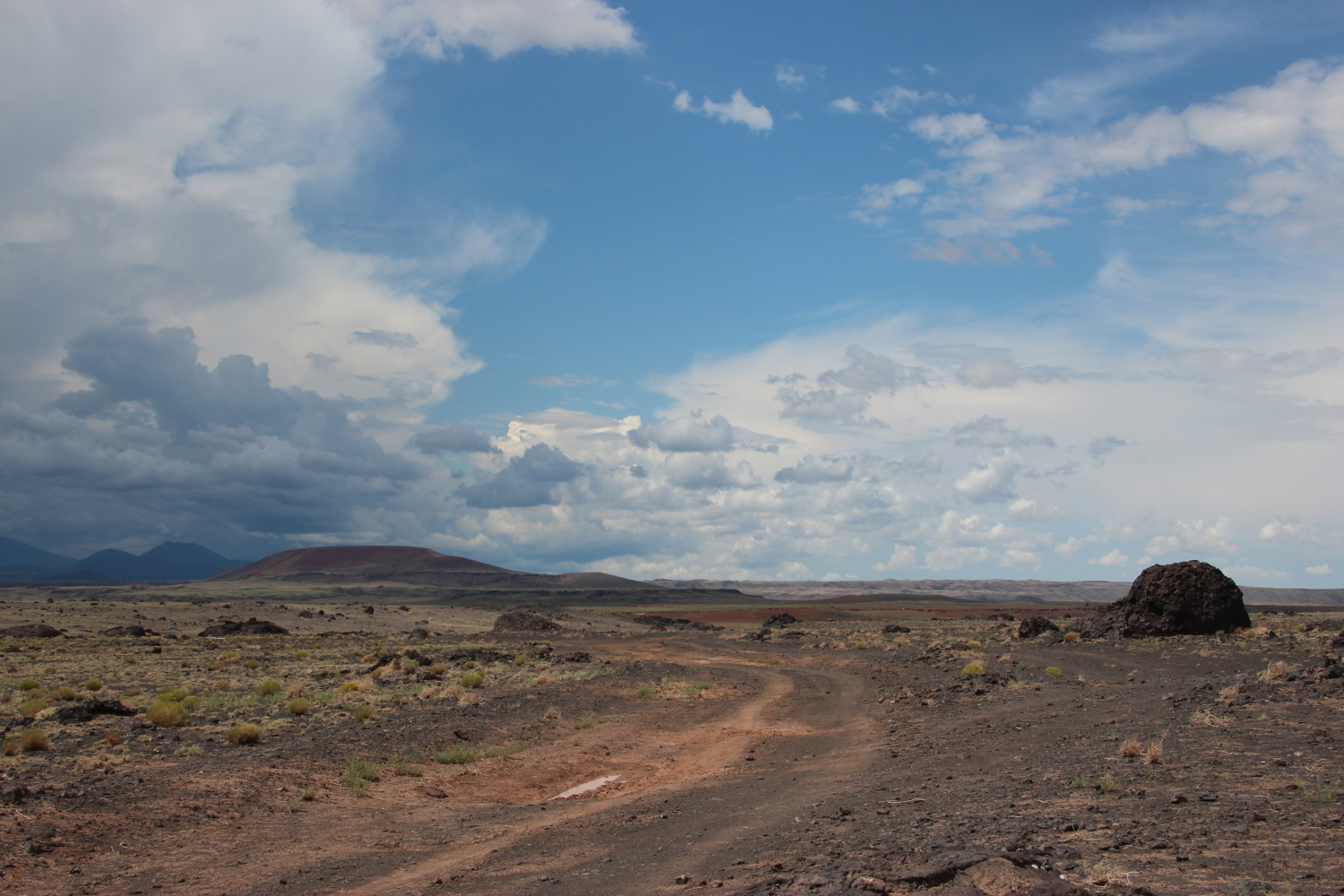
Road to Roden Crater in Arizona
* an ongoing series of quotations – mostly from artists, to artists – that offers wisdom, inspiration, and advice for the sometimes lonely road we are on.
The most demanding part of living a lifetime as an artist is the strict discipline of forcing oneself to work steadily along the nerve of one’s own most intimate sensitivity. As in any profession, facility develops. In most this is a decided advantage, and so it is with the actual facture of art; I notice with interest that my hand is more deft, lighter, as I grow more experienced. But I find that I have to resist the temptation to fall into the same kind of pleasurable relaxation I once enjoyed with clay. I have in some subtle sense to fight my hand if I am to grow along the reaches of my nerve.
And here I find myself faced with two fears. The first is simply that of the unknown – I cannot know where my nerve is going until I venture along it. The second is less sharp but more permeating: the logical knowledge that the nerve of any given individual is as limited as the individual. Under its own law, it may just naturally run out. If this happens, the artist does best, it seems to me, to fall silent. But by now the habit of work is so ingrained in me that I do not know if I could bear the silence.
Anne Truitt in Daybook: The Journal of an Artist
Q: Your pastel-on-sandpaper paintings are very labor intensive. Do you typically have just one in progress at any given time?

Works in progress, soft pastel on sandpaper, 58″ x 38″
A: For many years I always worked on one at a time because I have only one or two ideas – never more than that – about what I will make next. Also, I believe that “all art is the result of one’s having gone through an experience to the end.” (It’s on a note taped to the wall near my easel). So I would work on one painting at a time until all of the problems in it were resolved. Each piece that I undertake represents an investment of several months of my life and after nearly three decades as an artist, I know that once I start a piece I will not abandon it for any reason. When it is the best painting that I can make – when adding or subtracting anything would be a diminishment – I pronounce it “finished.” In the past I would start the next one only when the completed piece was out of my sight and at the frame shop.
But a few years ago I began working on two pastel paintings at a time. When I get stuck – or just need a break from looking at the same image day after day (I am in my studio 5 days a week) – I switch to the other one. This helps me work more efficiently. The two paintings interact with each other; they play off of each other and one suggests solutions that help me to resolve problem areas in the other. I’m not sure exactly how this happens – maybe putting a piece aside for awhile alerts my unconscious to begin working deeply on it – but having two in progress at the same time is my preferred way of working now.
A note about the painting on the left above, which was previously called, “Judas.” I happen to be reading “Cloud Atlas,” by David Mitchell and came across the word “judasing” used as a verb meaning, “doing some evil to a person who profoundly trusted you.” I’d never heard the word before, but it resonated with an event in my personal life. So the new title of my painting is “Judasing.” This is a good reminder that work and life are inextricably (and inexplicably) woven together and that titles can come from anywhere!
Comments are welcome!
Pearls from artists* # 46

Artist’s backyard
* an ongoing series of quotations – mostly from artists, to artists – that offers wisdom, inspiration, and advice for the sometimes lonely road we are on.
Some things will naturally excite us more than others. This is where art begins, when we separate our inner-directed impulse from the outer-directed deluge of other people’s work and opinion. “The artists are the ones who bare themselves to this experience of essence… Their vocation is to communicate that experience to others. Not to communicate it is to surrender the vision to atrophy; the artist must paint, or write, or sculpt – else the vision withers away and he or she is less apt to have it again.”
The trick is to be able to learn to juggle at least two things at once. We need to keep the initial impulse in its entirety before us as we start engaging in the execution of the parts.
Ian Roberts in Creative Authenticity: Sixteen Principles to Clarify and Deepen Your Artistic Vision
Comments are welcome!
Pearls from artists* # 44

Studio view
* an ongoing series of quotations – mostly from artists, to artists – that offers wisdom, inspiration, and advice for the sometimes lonely road we are on.
I cannot even imagine the individual arts sufficiently distinct from one another. This admittedly exaggerated attitude might have its most acute origin in the fact that in my youth, I, quite inclined toward painting, had to decide in favor of another art so as not to be distracted. And thus I made this decision with a certain passionate exclusivity. Based on my experience, incidentally, every artist needs to consider for the sake of intensity his means of expression to be basically the only one possible while he is producing. For otherwise he could not easily suspect that this or that piece of world would not be expressible by his means at all and he would finally fall into that most interior gap between the individual arts, which is surely wide enough and could be genuinely bridged only by the vital tension of the great Renaissance masters. We are faced with the task of deciding purely, each one alone, on his one mode of expression, and for each creation that is meant to be achieved in this one area all support from the other arts is a weakening and a threat.
Ulrich Baer, editor, The Wisdom of Rilke
Comments are welcome!



