Blog Archives
What’s on the easel today?

Work in progress
A: This is my fourth day working on a small (26”x 20”) pastel painting. All of these colors are going to change over the next few months.
Comments are welcome!
Q: What’s on the easel today?
Work in progress
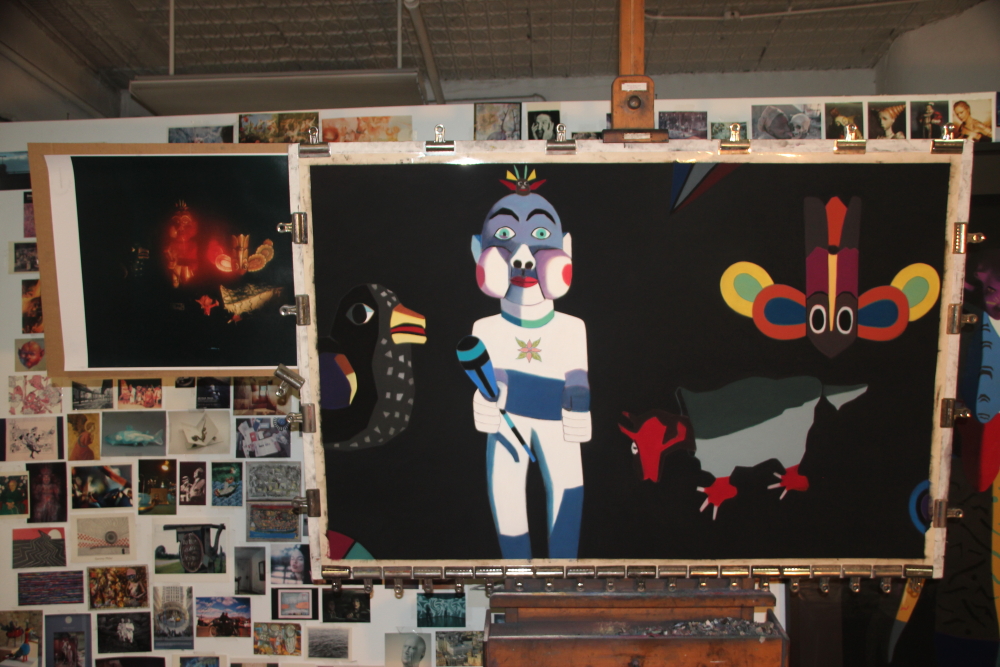
A: I am continuing with “White Star,” a 38″ x 58″ pastel painting I started some months ago.
Comments are welcome!
Q: How many pastel paintings do you have in progress now?
Work in progress
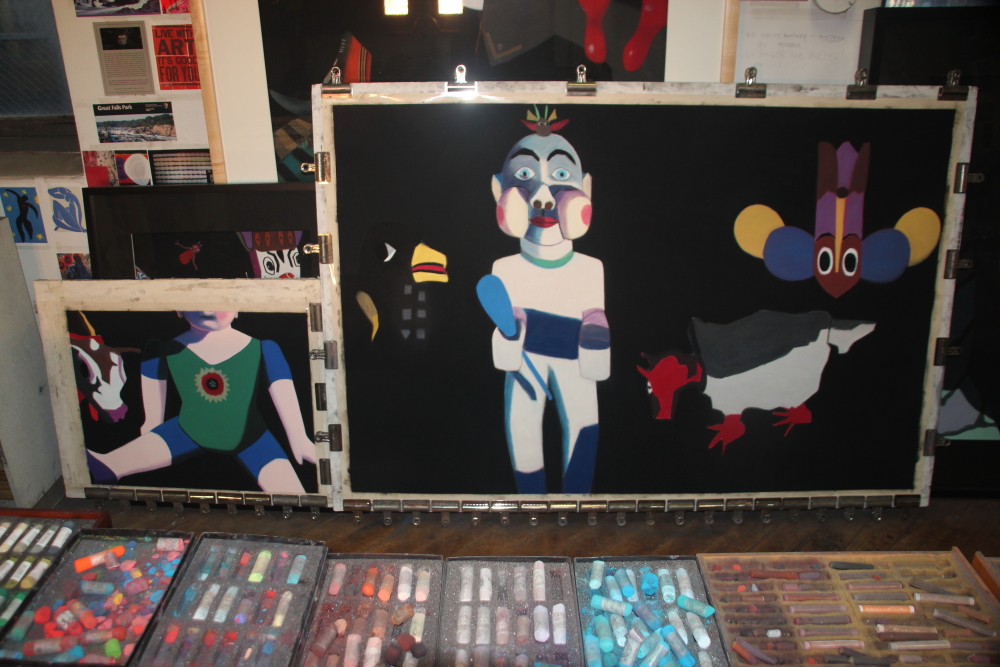
A: Making pastel-on-sandpaper paintings is a slow and meticulous process. I work full-time in my studio so that in a good year I can produce five finished pieces. Typically two are in progress at a time so that I can switch off when problems develop.
A downside to looking at a painting for months is that there comes a point when I can’t see the flaws any more. Then it’s definitely time to take a break.
When I put a painting that has been resting back onto my easel, I see it with fresh eyes again. Areas that need work immediately stand out. Problem areas become easily resolvable because I have continued to think about them while the painting was out of my sight.
Comments are welcome!
Q: How important are the titles of your pastel paintings?
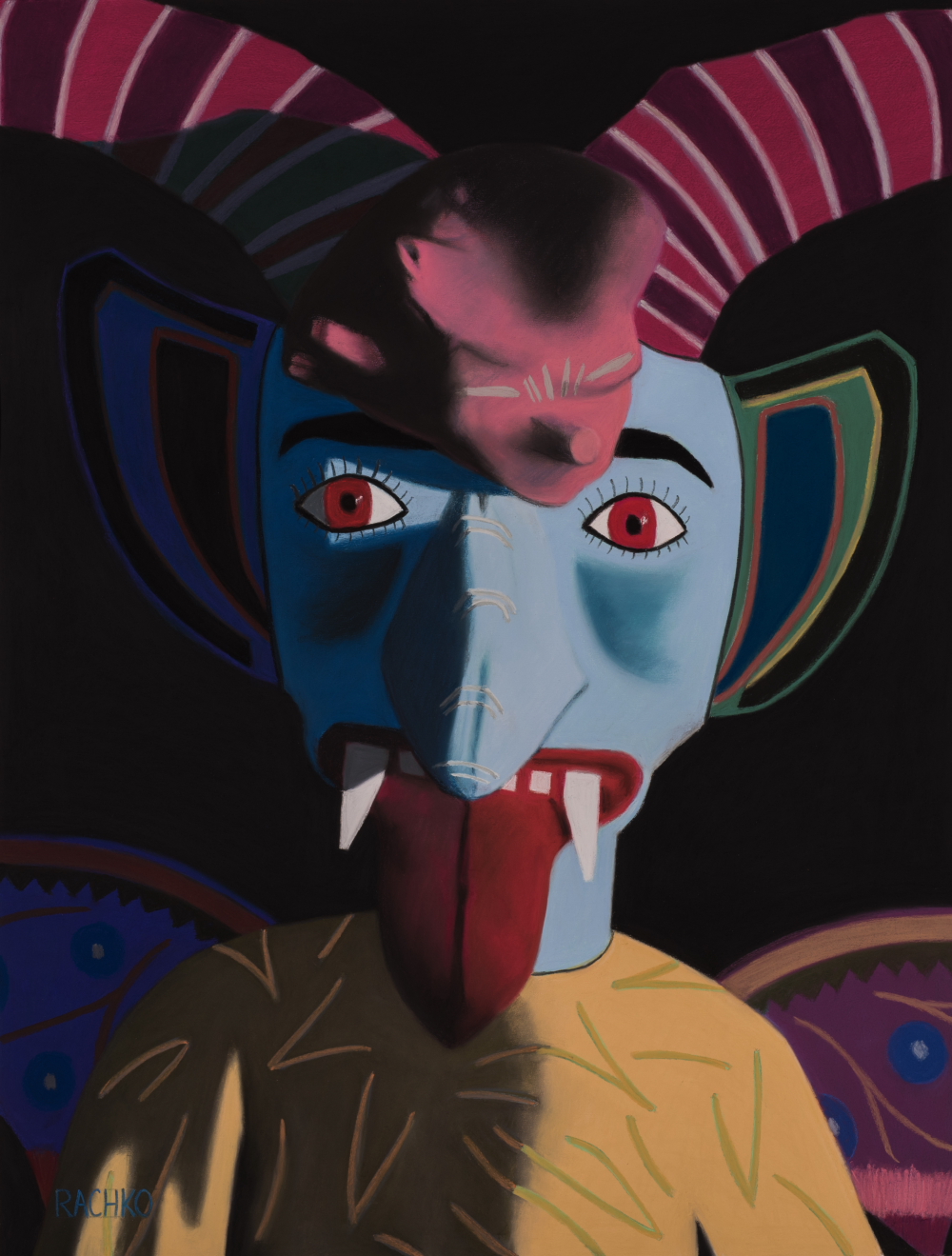
“Provocateur,” soft pastel on sandpaper, 26″ x 20″
A: I’d say they are important. Titles serve mainly as “a way in” for viewers, giving some clues about my thought processes while I am making a painting. Usually titles emerge only after I have been working on a painting for weeks or months. For me they are very much like mementos after a very interesting journey.
Comments are welcome!
Q: How do you achieve such richness of color in your pastel-on-sandpaper paintings?
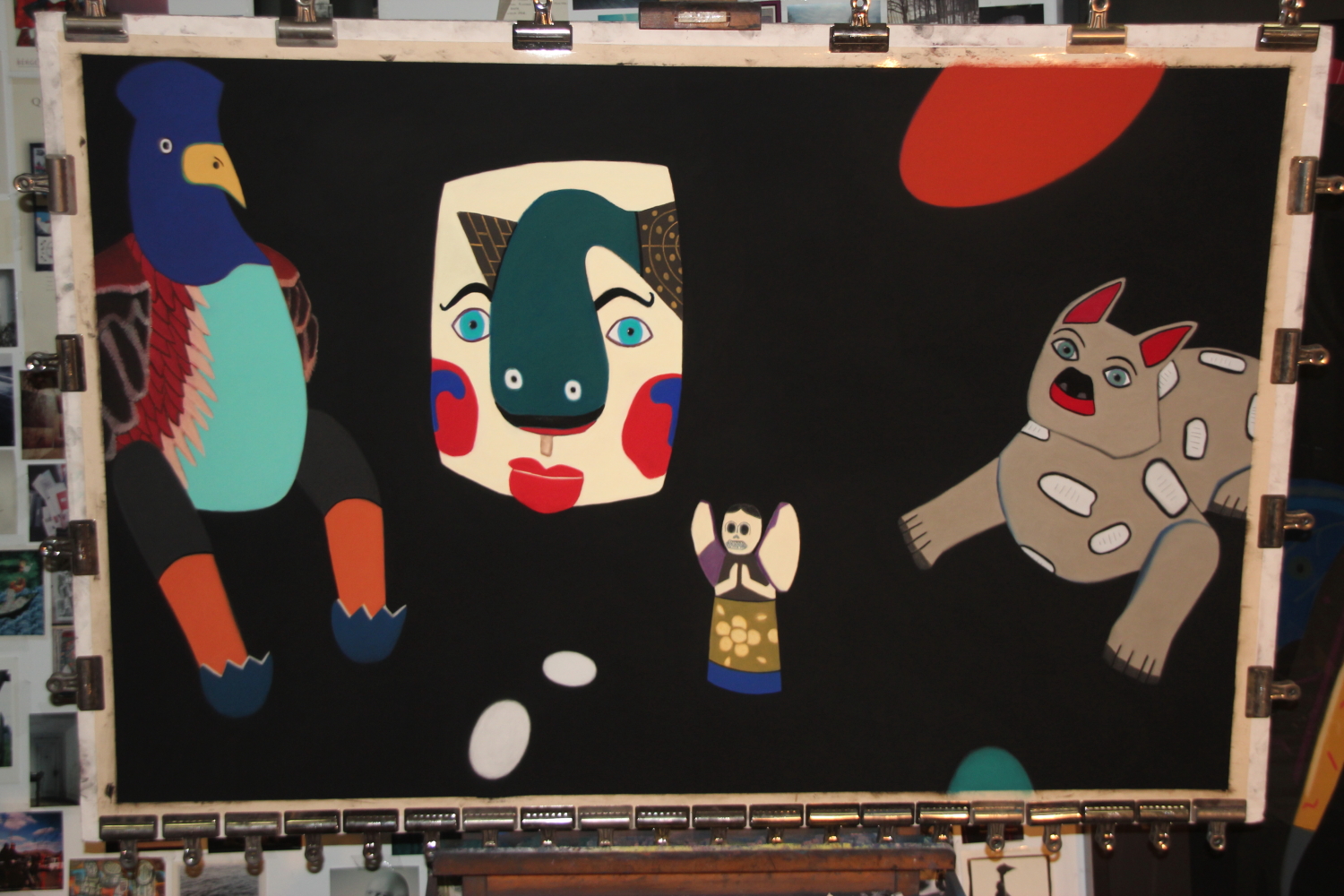
“Motley,” soft pastel on sandpaper, 38″ x 58″
A: This results from the several months of studio time and many layers of soft pastel that go into creating each painting. In a sense my technique is analogous to glazing done by the Old Masters. They slowly built up layers of thin paint to achieve a high degree of finish. Colors were not mixed physically, but optically. I gradually build up layers of soft pastel, as many as 30, to create a pastel painting. After a color is applied, I blend it with my fingers and push it into the sandpaper’s tooth. It mixes with the color beneath to create a new color, continually adding richness, saturation, and intensity to the overall painting.
Comments are welcome!
Pearls from artists* # 129
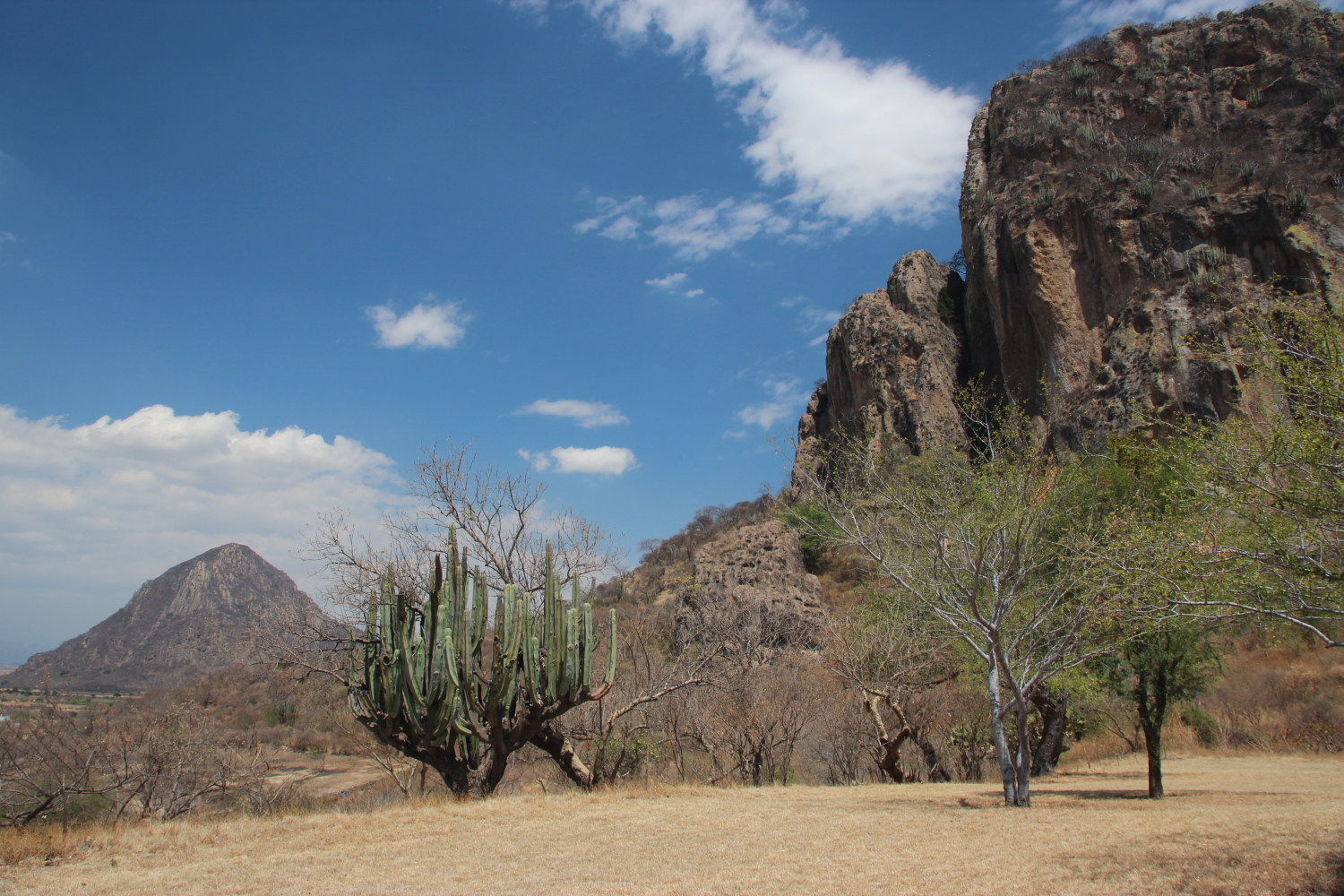
Chalcatzingo, Mexico
* an ongoing series of quotations – mostly from artists, to artists – that offers wisdom, inspiration, and advice for the sometimes lonely road we are on.
A painter friend of mine once told me that he thought of sound as an usher for the here and now. When he was a small child, Adam suffered an illness that left him profoundly deaf for several months. His memories of that time are vivid and not, he insists, at all negative. Indeed, they opened a world in which the images he saw could be woven together with much greater freedom and originality than he’d ever known. The experience was powerful enough that it helped steer him toward his lifelong immersion in the visual arts. “Sound imposes a narrative on you,” he said, “and it’s always someone else’s narrative. My experience of silence was like being awake inside a dream I could direct.”
George Prochnik in In Pursuit of Silence: Listening for Meaning in a World of Noise
Comments are welcome!
Pearls from artists* # 127
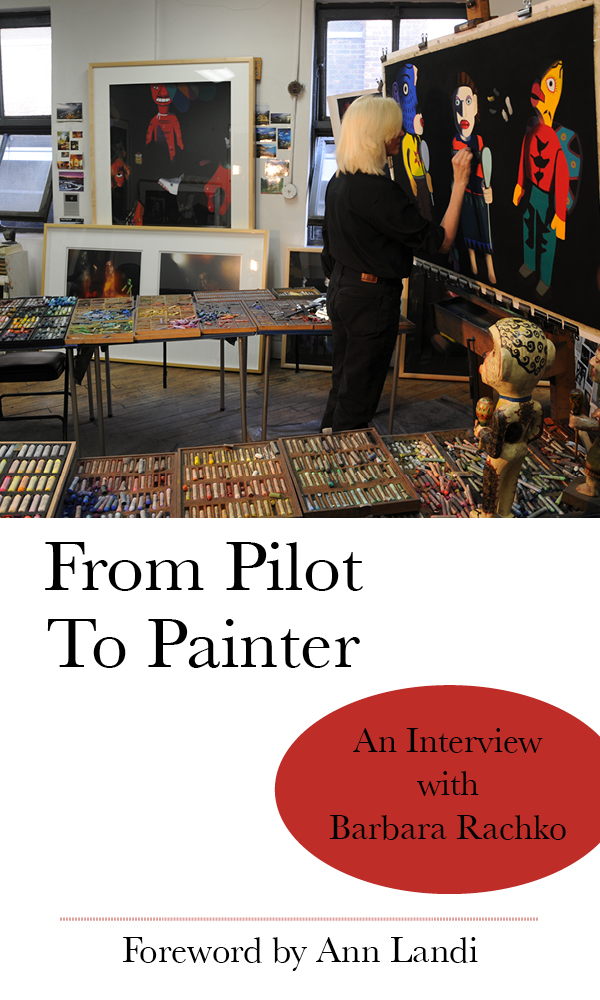
eBook cover
* an ongoing series of quotations – mostly from artists, to artists – that offers wisdom, inspiration, and advice for the sometimes lonely road we are on.
Two facts differentiate Daybook from my work in visual art.
The first is the simple safety of numbers. There are 6500 Daybooks in the world. My contribution to them was entirely mental, emotional. I never put my hand on a single copy of these objects until I picked up a printed book. I made no physical effort; no blood, no bone marrow moved from me to them. I do not mean that I made no effort. On the contrary, the effort was excruciating because it was so without physical involvement, so entirely hard-wrought out of nothing physical at all; no matter how little of the material world goes into visual art, something of it always does, and that something keeps you company as you work. There seems to me no essential difference in psychic cost between visual and literary effort, The difference is in what emerges as result. A work of visual art is painfully liable to accident; months of concentration and can be destroyed by a careless shove. Not so 6500 objects. This fact gives me a feeling of security like that of living in a large, flourishing, and prosperous family.
Ancillary to this aspect is the commonplaceness of a book. People do not have to go much out of their way to get hold of it, and they can carry it around with them and mark it up, and even drop it in a tub while reading in a bath. It is a relief to have my work an ordinary part of life, released from the sacrosanct precincts of galleries and museums. A book is also cheap. Its cost is roughly equivalent to its material value as an object, per se. This seems to me more healthy than the price of art, which bears no relation to its quality and fluctuates in the marketplace in ways that leave it open to exploitation. An artist who sells widely has only to mark a piece of paper for it to become worth an amount way out of proportion to its original cost. This aspect of art has always bothered me, and is one reason why I like teaching; an artist can exchange knowledge and experience for money in an economy as honest as that of a bricklayer.
Anne Truitt in Turn: The Journal of an Artist
Comments are welcome!
Q: You have spoken about learning to fly at the age of 25. What airplanes did you fly?

Cessna 150
A: I learned to fly at a small airport in Caldwell, NJ. Flying is expensive and since I didn’t have much money, I sought a job at Liberty Aviation, the local flight school, in exchange for flying lessons. For every three hours I worked, I earned a flying lesson. At the time it cost $25/hour to rent a plane, plus $10/hour for an instructor, and I was fortunate to find an excellent flight instructor who offered to teach me for free.
After I completed ground school at Clifton High School, I took my first flying lesson. It was on April 1, 1978 in a (two-seat) Cessna 150. During the following months I flew every chance I could, in Cessna 150s and newer Cessna 152s, and also occasionally in Piper Cherokees. On September 24, 1978 I received my private pilot’s license.
Then I got checked-out in a larger (four-seat) Cessna 172. For my instrument training I flew Cessna 150s and 172s. I received my instrument rating in April 1979.
Next I trained for a commercial pilot’s license and a multi-engine rating. I flew Cessna 172s and a twin-engine Piper Seminole and obtained my license and rating in May 1980.
In December 1980 I began Boeing 727 flight engineer training at Flight International in Atlanta, GA. Most of this was in Boeing-727 flight simulators with Delta airline pilots as instructors. My check-ride was in a Boeing-727 owned by FedEx. I received my flight engineer’s certificate in February 1981. At the time I was the only woman in the entire school!
Comments are welcome!
Q: Your “Gods and Monsters” series consists of tableaux of Mexican and Guatemalan figures that are photographed in a way that blurs certain elements to abstraction while others are in clear focus. Can you please speak more about this work?

Untitled chromogenic print, 24″ x 24″, edition of 5
A: When I depict the Mexican and, more recently, Guatemalan figures in my pastel-on-sandpaper paintings, they are hard-edged, vibrant, and in-your-face. That’s a result of the way I work in pastel. I slowly and meticulously build up layers of pigment, blend them with my fingers, continually refine and try to find the best, most eye-popping colors. It’s a very slow process that takes months of hard work. An aside… One frustration I have as an artist – I am hardly unique in this – is that my audience only sees the finished piece and they look at it for perhaps ten seconds. They rarely think about how their ten-second experience took me months to create!
In 2002 when I began photographing these figures, I wanted to take the same subject matter and give it an entirely different treatment. So these images are deliberately soft focus, dreamy, and mysterious. I use a medium format camera and shoot film. I choose a narrow depth of field. I hold gels in front of the scene to blur it and to provide unexpected areas of color. Even as a photographer I am a colorist.
I want this work to surprise me and it does, since I don’t usually know what images I will get. Often I don’t even look through the viewfinder as I position the camera and the gels and click the shutter. I only know what I’ve shot after I’ve seen a contact sheet, usually the next day.
The “Gods and Monsters” series began entirely as a reaction to my pastel paintings. The latter are extremely meticulous and labor intensive. At a certain point in the process I know more or less what the finished painting will look like, but there are still weeks of slow, laborious detail work ahead. So my photographic work is spontaneous, serendipitous, and provides me with much-needed instant gratification. I find it endlessly intriguing to have two diametrically opposed ways of working with the same subject.
Comments are welcome!
Pearls from artists * # 20
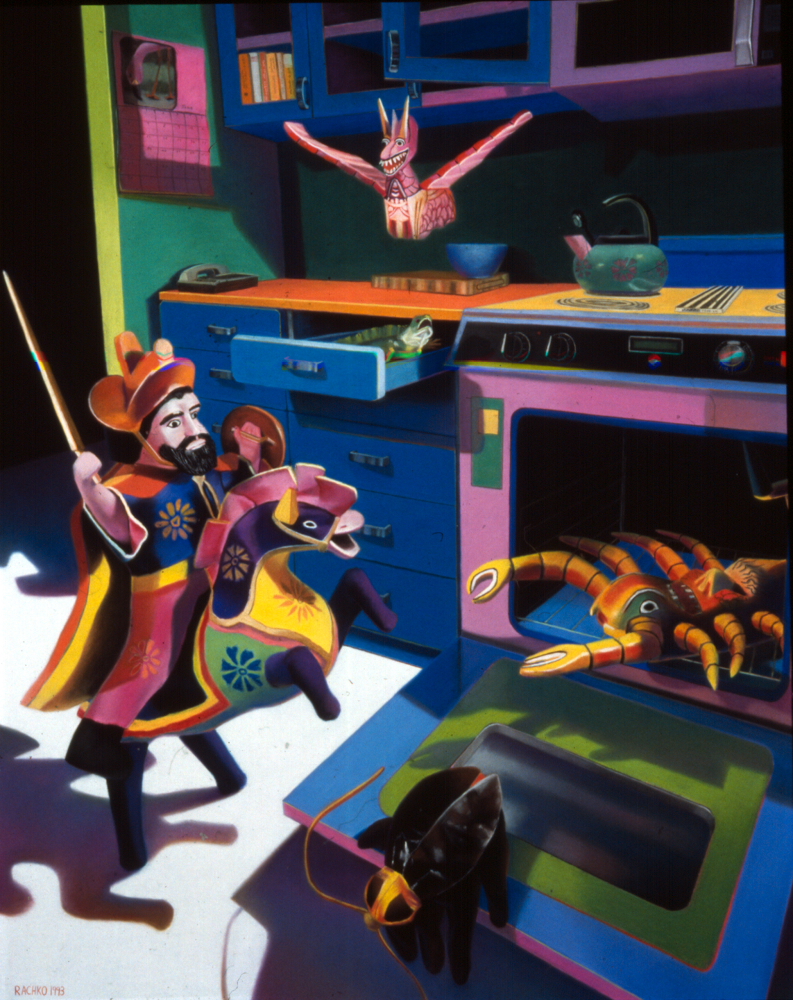
“The Magical Other,” soft pastel on sandpaper, 1993, 48″ x 38″
* an ongoing series of quotations – mostly from artists, to artists – that offers wisdom, inspiration, and advice for the sometimes lonely road we are on.
If, indeed, for any given time only a certain sort of work resonates with life, then that is the work you need to be doing in that moment. If you try to do some other work, you will miss your moment. Indeed, our own work is so inextricably tied to time and place that we cannot recapture even our own aesthetic ground of past times. Try, if you can, to reoccupy your own aesthetic space of a few years back, or even a few months. There is no way. You can only plunge ahead, even when that carries with it the bittersweet realization that you have already done your best work.
This heightened self-consciousness was rarely an issue in earlier times when it seemed self-evident that the artist (and everyone else, for that matter) had roots deeply intertwining their culture. Meanings and distinctions embodied within artworks were part of the fabric of everyday life, and the distance from art issues to all other issues was small. The whole population counted as audience when artists’ work encompassed everything from icons for the Church to utensils for the home. In the Greek amphitheater twenty-two hundred years ago, the plays of Euripides were performed as contemporary theater before an audience of fourteen thousand. Not so today.
Today art issues have for the most part become solely the concern of artists, divorced from – and ignored by – the larger community. Today artists often back away from engaging the times and places of their life, choosing instead the largely intellectual challenge of engaging the times and places of Art. But it’s an artificial construct that begins and ends at the gallery door. Apart from the readership of Artforum, remarkably few people lose sleep trying to incorporate gender-neutral biomorphic deconstructivism into their personal lives. As Adam Gopnik remarked in The New Yorker, “Post-modernist art is, above all, post-audience art.”
David Bayles & Ted Orland, Art & Fear: Observations on the Perils (and Rewards)of Artmaking
Comments are welcome!


 barbararachkoscoloreddust.com