Blog Archives
Q: Another exhibition was described as “a journey from identity to authenticity.” Does that resonate? (Question from “Pastel, Passion, and Perseverance: An Interview with Barbara Rachko” in .ART Odyssey: Healing)
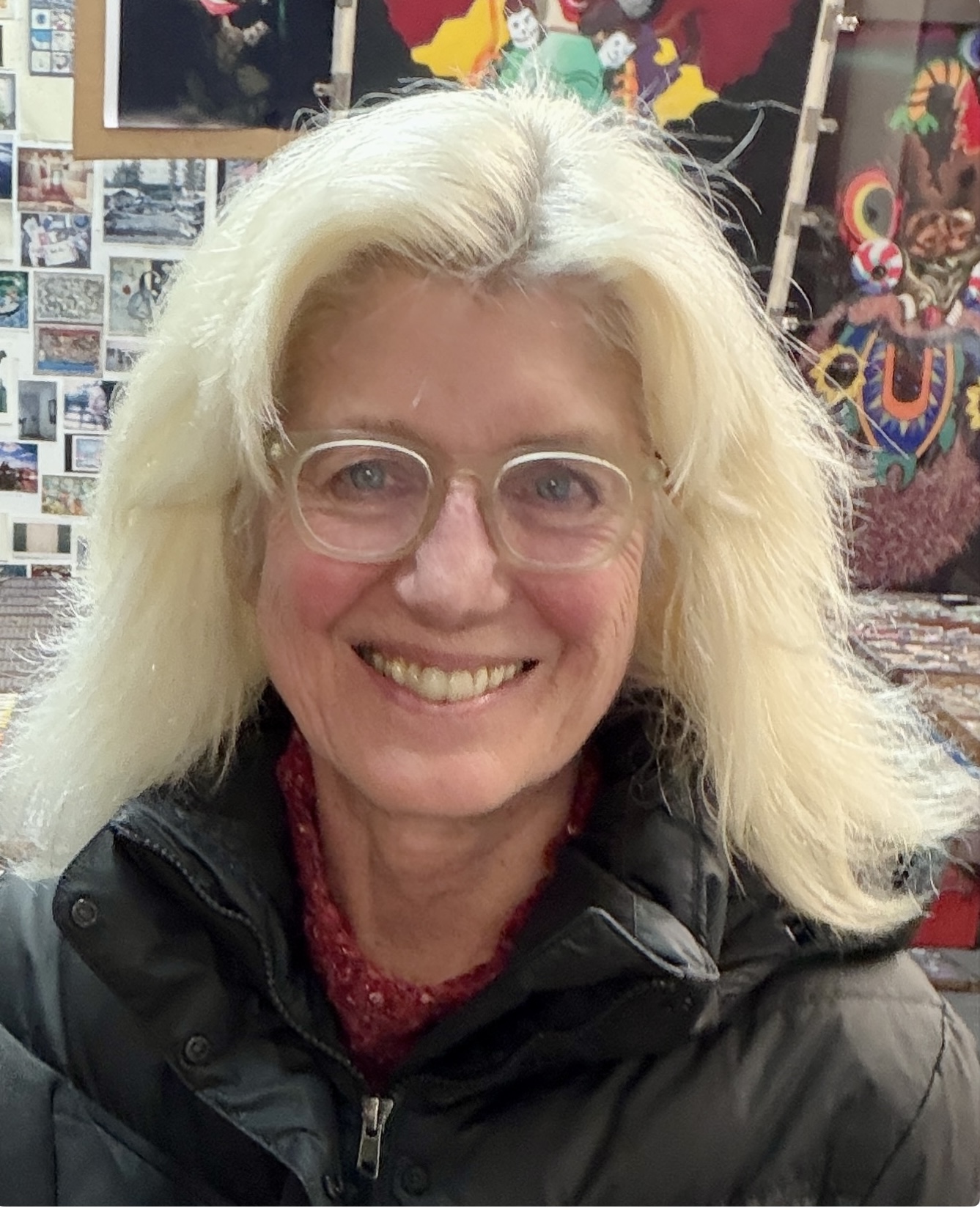
A: Yes, especially the authenticity part.
My work has always come from a deep place. Each painting is the inevitable result of three or four months of daily engagement—the constant adjustments, decisions, and struggles. By the time it’s finished, it couldn’t be any other way.
That, to me, is authenticity. Identity may be what we inherit — culture, upbringing, circumstance. Authenticity is what we strip back to, the choices we make that reflect our core. As I get older, l’ve been shedding what doesn’t serve me. I want to use my time and energy on what makes me a better artist and a better person.
Comments are welcome!
Q: What’s the most unusual place you have exhibited your art? Was it worth it?
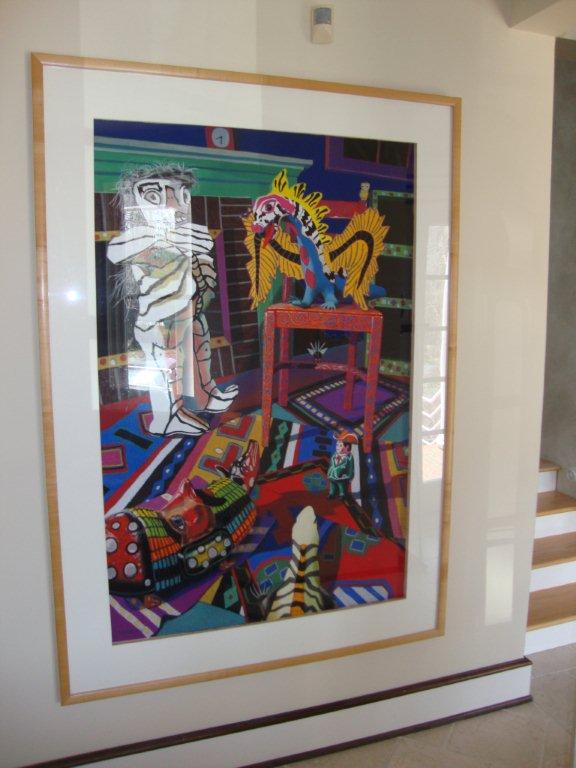
A: In 2004 I exhibited in a group show that was hosted as a fund raiser for Breast Cancer Awareness Month. Artists who had had breast cancer were invited to present our work. The show was titled, “Art of Survival,” and was held in a breast surgeon’s office in West Long Branch, NJ. I had absolutely no expectations of selling anything and reluctantly participated, thinking, “More people are likely to see my work in this show than would see it in my studio during the same period.” Who could have foreseen it, but I sold a $15,000 painting to the surgeon who had organized the exhibition!
Sadly, several years later, the curator of the exhibition informed me that Beth, the breast cancer surgeon, had died from the same disease.
Comments are welcome!
Q: How do you feel about the fact that more people view an artist’s work online than ever see it in person?

A: This has been a dilemma for decades. Don’t get me wrong. Artists are indeed fortunate to have alternative ways to share our art, such as on the internet, but there is just no substitute for seeing art in person! I remember friends telling me about a review of a Nan Goldin exhibition that said, “All of the pleasure circuits are fired in looking.” That rarely happens when you view art online. Yet this is how most people experience our work – at a remove and on a small screen.
Nowadays, a global audience will see art on their phones instead of in our studios or in a gallery or museum. My pastel paintings are quite large and very detailed so when people finally see them in person, they are often surprised. They had gotten used to seeing them in a much smaller scale online, where very few of the meticulous and subtle details I incorporate into them are visible.
Comments are welcome!
Q: Why art? (Question from “Arts Illustrated”)

A: I love this question! I remember being impressed by Ursula von Rydingsvard’s exhibition at the National Museum of Women in the Arts a few years ago. What stayed with me most was her wall text, “Why Do I Make Art by Ursula von Rydingsvard.” There she listed two dozen benefits that art-making has brought to her life.
I want to share some of my own personal reasons for art-making here, in no particular order. My list keeps changing, but these are true at least for today.
1. Because I love the entire years-long creative process – from foreign travel whereby I discover new source material, to deciding what I will make, to the months spent in the studio realizing my ideas, to packing up my newest pastel painting and bringing it to my Virginia framer’s shop, to seeing the framed piece hanging on a collector’s wall, to staying in touch with collectors over the years and learning how their relationship to the work changes.
2. Because I love walking into my studio in the morning and seeing all of that color! No matter what mood I am in, my spirit is immediately uplifted.
3. Because my studio is my favorite place to be… in the entire world. I’d say that it is my most precious creation. It’s taken more than twenty-two years to get it this way. I hope I never have to move!
4. Because I get to listen to my favorite music all day.
5. Because when I am working in the studio, if I want, I can tune out the world and all of its urgent problems. The same goes for whatever personal problems I am experiencing.
6. Because I am devoted to my medium. How I use pastel continually evolves. It’s exciting to keep learning about its properties and to see what new techniques will develop.
7. Because I have been given certain gifts and abilities and that entails a sacred obligation to USE them. I could not live with myself were I to do otherwise.
8. Because art-making gives meaning and purpose to my life. I never wake up in the morning wondering, how should I spend the day? I have important work to do and a place to do it. I know this is how I am supposed to be spending my time on earth.
9. Because I have an enviable commute. To get to my studio it’s a thirty-minute walk, often on the High Line early in the morning before throngs of tourists have arrived.
10. Because life as an artist is never easy. It’s a continual challenge to keep forging ahead, but the effort is also never boring.
11. Because each day in the studio is different from all the rest.
12. Because I love the physicality of it. I stand all day. I’m always moving and staying fit.
13. Because I have always been a thinker more than a talker. I enjoy and crave solitude. I am often reminded of the expression, “She who travels the farthest, travels alone.” In my work I travel anywhere.
14. Because spending so much solitary time helps me understand what I think and feel and to reflect on the twists and turns of my unexpected and fascinating life.
15. Because I learn about the world. I read and do research that gets incorporated into the work.
16. Because I get to make all the rules. I set the challenges and the goals, then decide what is succeeding and what isn’t. It is working life at its most free.
17. Because I enjoy figuring things out for myself instead of being told what to do or how to think.
18. Because despite enormous obstacles, I am still able to do it. Art-making has been the focus of my life for thirty-nine years – I was a late bloomer – and I intend to continue as long as possible.
19. Because I have been through tremendous tragedy and deserve to spend the rest of my life doing exactly what I love. The art world has not caught up as much as I would like yet, but so be it. This is my passion and my life’s work and nothing will change that.
20. Because thanks to the internet and via social media, my work can be seen in places I have never been to and probably will never go.
21. Because I would like to be remembered. The idea of leaving art behind for future generations to appreciate and enjoy is appealing.
Comments are welcome!
Q: Did you formally study art? (Question from “Cultured Focus Magazine”)

A: My bachelor’s degree in Psychology is from the University of Vermont. I did not formally study art, unless you want to count the several years-worth of drawing and painting classes I took at the Art League School in Alexandria, VA. I never went to art school so do not have a bachelor’s or master’s degree in art.
Much later, in the early 2000s, I was compelled to study photography at the International Center of Photography in New York. This is a rather long story.
On September 11, 2001, my husband Bryan Jack, a high-ranking federal government employee, a brilliant economist and a budget analyst at the Pentagon, was on his way to present his monthly guest lecture in economics at the Naval Postgraduate College in Monterey, CA. He was a passenger on the plane that departed from Dulles Airport and was high-jacked and crashed into the Pentagon.
Losing Bryan on 9/11 was the biggest shock of my life, devastating in every way imaginable. We were soulmates and newly married. I have lived with his loss every single day for more than twenty years now. Life has never been the same.
In the summer of 2002 I was beginning to feel ready to get back to work. Learning about photography and cameras became essential avenues to my well-being.
My first challenge was learning how to use Bryan’s 4 x 5 view camera. Bryan had always taken the 4 x 5 negatives from which I derived the reference photos that were essential tools for making pastel paintings. I enrolled in a one-week view camera workshop at the International Center of Photography in New York. Surprisingly, it was very easy. I had derived substantial technical knowledge just from watching Bryan for many years.
After the view camera workshop, I decided to throw myself into learning this new medium, beginning with Photography I. I spent the next few years taking many classes at ICP and learning as much as I could. Eventually, I learned how to use Bryan’s extensive collection of film cameras, to properly light the setups that served as subject material for my “Domestic Threats” pastel paintings, and to make my own large chromogenic prints in a darkroom.
Then in October 2009 I was invited to present a solo photography exhibition at a gallery in New York. Continuing to make art after Bryan’s death had seemed like such an impossibility. I remember thinking how proud he would have been to know I became a good photographer.
Comments are welcome!
Pearls from artists* # 626

With “Narcissist,” soft pastel on sandpaper, 28.5” x 35” framed
*an ongoing series of quotations – mostly from artists, to artists – that offers wisdom, inspiration, and advice for the sometimes lonely road we are on.
Being an artist and a woman has never been easy. In the sixteenth and seventeenth centuries, leading male artists – tackling five-meter-high marble sculptures and covering entire chapels with frescoes – were often termed ‘virtuosi,’ while women, simply by virtue of their gender, received neither the acclaim nor the opportunities. As time progressed, attitudes did not: it took until the end of the nineteenth century for women to be allowed to study the nude from life. Linda Nochlin has described this deprivation as though a medical student was denied the opportunity to dissect or even examine the naked human body.’ Even today, the contribution of women artists tends to be missing from history books and museum collections. It wasn’t until 1976, when feminist art historian Nochlin and Ann Sutherland Harris’s touring exhibition, Women Artists 1550 – 1950, opened at the Los Angeles County Museum of Art, that women were even acknowledged as having contributed to 400 years of art. This show kick-started the scholarship, still scant, that we have on these twentieth-century artists.
Katy Hessel in The Story of Art Without Men
Comments are welcome!
Q: How has photography changed your approach to painting?
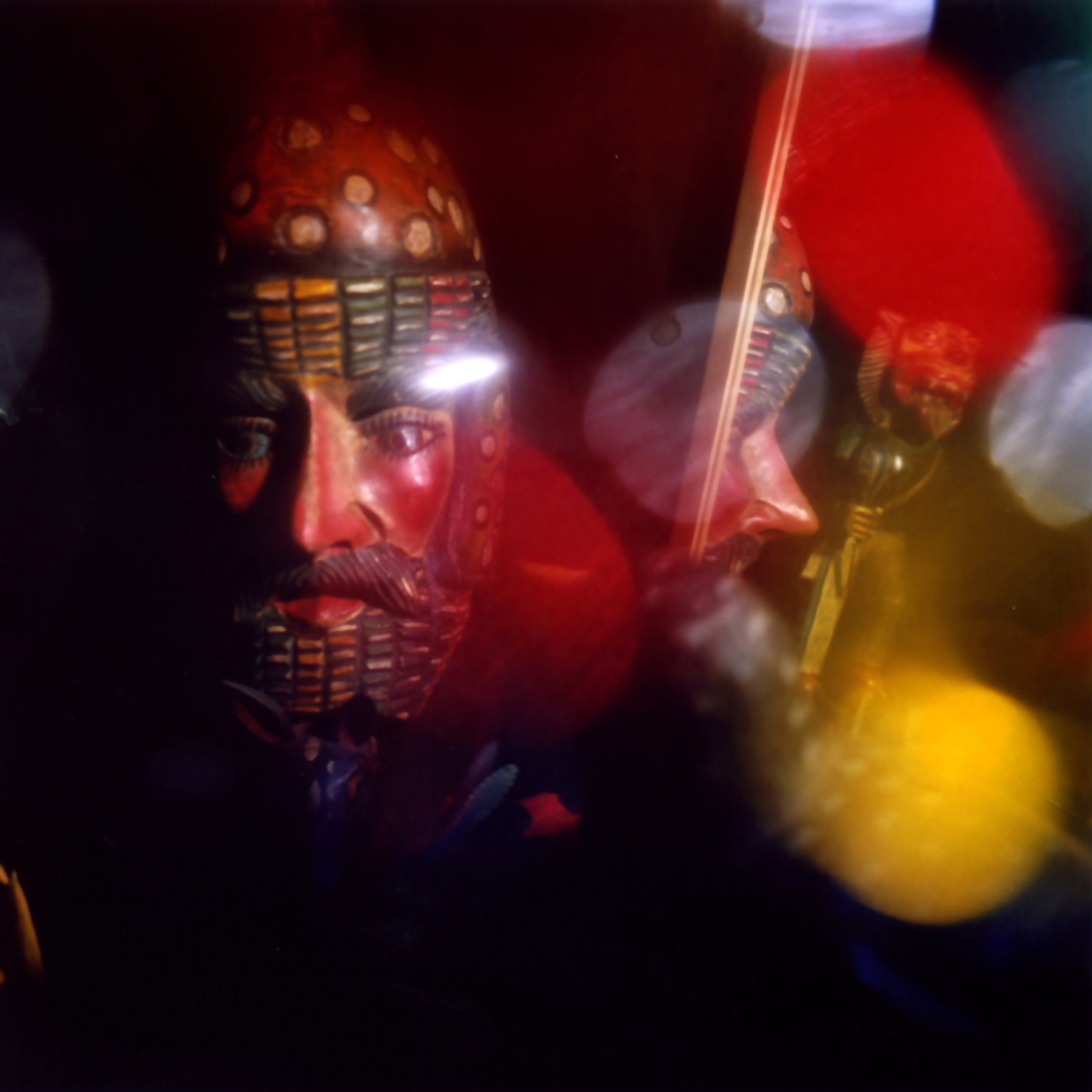
Untitled chromogenic print, 24″ x 24″ on 30″ x 40″ Fujicolor crystal archives paper, edition of 5
A: From the beginning in the 1980s I used photographs as reference material and my late husband, Bryan, would shoot 4” x 5” negatives of my elaborate setups using his Toyo-Omega view camera. In those days I rarely picked up a camera except when we were traveling.
After Bryan was killed on 9/11, I inherited his extensive camera collection – old Nikons, Leicas, Graphlex cameras, etc. – and I wanted to learn how to use them. Starting in 2002 I enrolled in a series of photography courses (about 10 over 4 years) at the International Center of Photography in New York. I learned how to use all of Bryan’s cameras and how to make my own big color prints in the darkroom.
Along the way I discovered that the sense of composition and color I had developed over many years as a painter translated well into photography. The camera was just another medium with which to express my ideas. Astonishingly, in 2009 I had my first solo photography exhibition in New York.
It’s wonderful to be both a painter and a photographer. Pastel painting will always be my first love, but photography lets me explore ideas much faster than I ever could as a painter. Paintings take months of work. Photographs – from the initial impulse to create a setup to hanging a framed chromogenic print on the wall – can be made in minutes.
Comments are welcome!
Pearls from artists* # 611
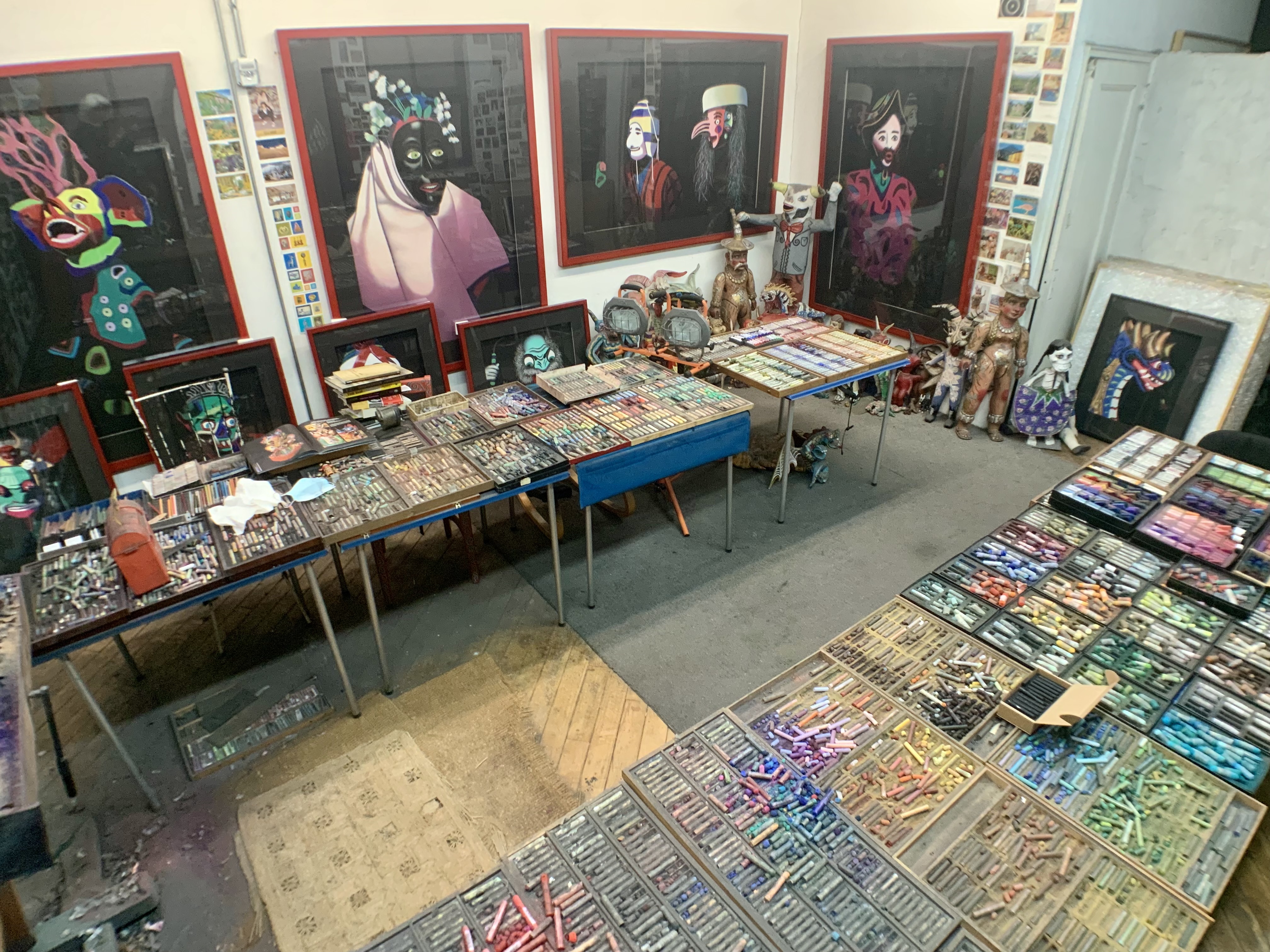
Barbara’s Studio
*an ongoing series of quotations – mostly from artists, to artists – that offers wisdom, inspiration, and advice for the sometimes lonely road we are on.
This common participation in the Trinity of Line, Form, and Color has founded a promiscuous fellowship which, while promoting the respect for skill, promotes to a far greater degree the misunderstanding of art. For skill in itself is but a sleight of hand. In a work of art one does not measure its extent but counts himself happiest when he is unaware of its existence in the contemplation of the result. Among those who decorate our banks and hotels you will find many who can imitate the manner of any master, living or dead, far better than the master could imitate himself, but they have no more knowledge of his soul than they have knowledge of their own. We will know how little skill avails, how ineffective are its artifices in filling the lack of true artistic motivation. His “less is more,” is Robert Browning’s famous evaluation of this problem in comparing the imperfections of Raphael’s art to the impecability of Del Sarto’s, “I should rather say that it will be more difficult to improve the mind of the master who makes such mistakes than to repair the work he has spoilt,” Leonardo wrote. Neither Giotto nor Goya exhibited half the skill of Coreggio or Sargent, either in the complexity of their undertaking or the apparent virtuosity of execution. The artist must have the particular skill to achieve his particular ends. If he has more, we are fortunate not to know it, for the exhibition of excess would only mar his art. You may be sure that the artist whose method is muddled betrays less his technical inadequacy than the incoherence of his own intentions.
Mark Rothko in The Artist’s Reality: Philosophies of Art
Comments are welcome!
Q: Would you share a bit more about yourself? (Question from “Bold Journey”)

A: I am an American contemporary Master Pastel Artist who divides my time between residences in New York City and Alexandria, VA. I am best known for my pastel-on-sandpaper paintings, my eBook, “From Pilot to Painter,” and my popular blog, “Barbara Rachko’s Colored Dust,” which currently has more than 125,000 subscribers. I am proud to be represented by Apricus Art Collection (US), Art Client Services (US), Galleria Balmain (UK), Emillions (US), Interstellar (IN), and Galleri SoHo (SE). I am a member of the International Association of Visual artists.
I travel regularly to Mexico, Central America, South America, and Asia. Since 2017 I have been creating “Bolivianos,” a painting series based on an exhibition of Carnival masks I photographed at the Museum of Ethnography and Folklore in La Paz.
My life has been called “extraordinary and inspiring.” I learned to fly when I was 25 and became a Commercial Pilot and Boeing-727 Flight Engineer before joining the Navy. As a Naval Officer I spent many years working at the Pentagon and retired as a Commander. On 9/11 my husband Dr. Bryan Jack was killed onboard the plane that crashed into the Pentagon. Ever since that awful day, I have worked hard to overcome my husband’s tragic loss. Now I enjoy a thriving career as an internationally-known professional artist.
Comments are welcome!


 barbararachkoscoloreddust.com
Q: What kind of internal conversations do you tend to have when you are in the process of making art? (Question from Vedica Art Studios and Gallery)
Jan 10
Posted by barbararachkoscoloreddust
A: When standing at my easel creating a pastel painting, I focus on formal properties: composition, shape, color, and line. I always strive to produce a painting I’ve never seen before. Even as (perhaps especially as) the creator, I want to be surprised by the final result. My studio days are spent thinking, looking, reacting, and adjusting colors and composition as I refine increasingly tiny details, ensuring all elements work harmoniously. I determine which areas need to recede or advance, which require intricate details to appear three-dimensional, and which are better left as flat areas of color.
These countless adjustments ensure viewers’ eyes are guided around the finished painting in intriguing ways. I often recall something collectors of my pastel paintings shared: they mentioned a New York Times review of a Nan Goldin exhibition, in which the writer stated, “All of the pleasure circuits are fired in looking.” The collectors agreed this is exactly how they feel when viewing my work. Artists live for appreciative comments like these!
Comments are welcome!
Share this:
Posted in 2026, An Artist's Life, Creative Process, Studio, Working methods
Comments Off on Q: What kind of internal conversations do you tend to have when you are in the process of making art? (Question from Vedica Art Studios and Gallery)
Tags: adjusting, adjustments, advance, agreed, always, appear, appreciative, areas, around, artists, “Magisterial”, “New York Times”, better, circuits, collectors, colors, comments, composition, countless, creating, creator, details, determine, elements, ensure, ensuring, especially, exactly, exhibition, finished, fired, formal, guided, harmoniously, increasingly, intricate, intriguing, looking, mentioned, Nan Goldin, painting, pastel painting, perhaps, pleasure, produce, properties, question, reacting, recall, recede, refine, require, result, review, shared, something, stated, strive, Studio, surprised, thinking, three-dimensional, Vedica Art Studios and Gallery, viewers, viewing, working, writer