Blog Archives
Pearls from artists* # 143
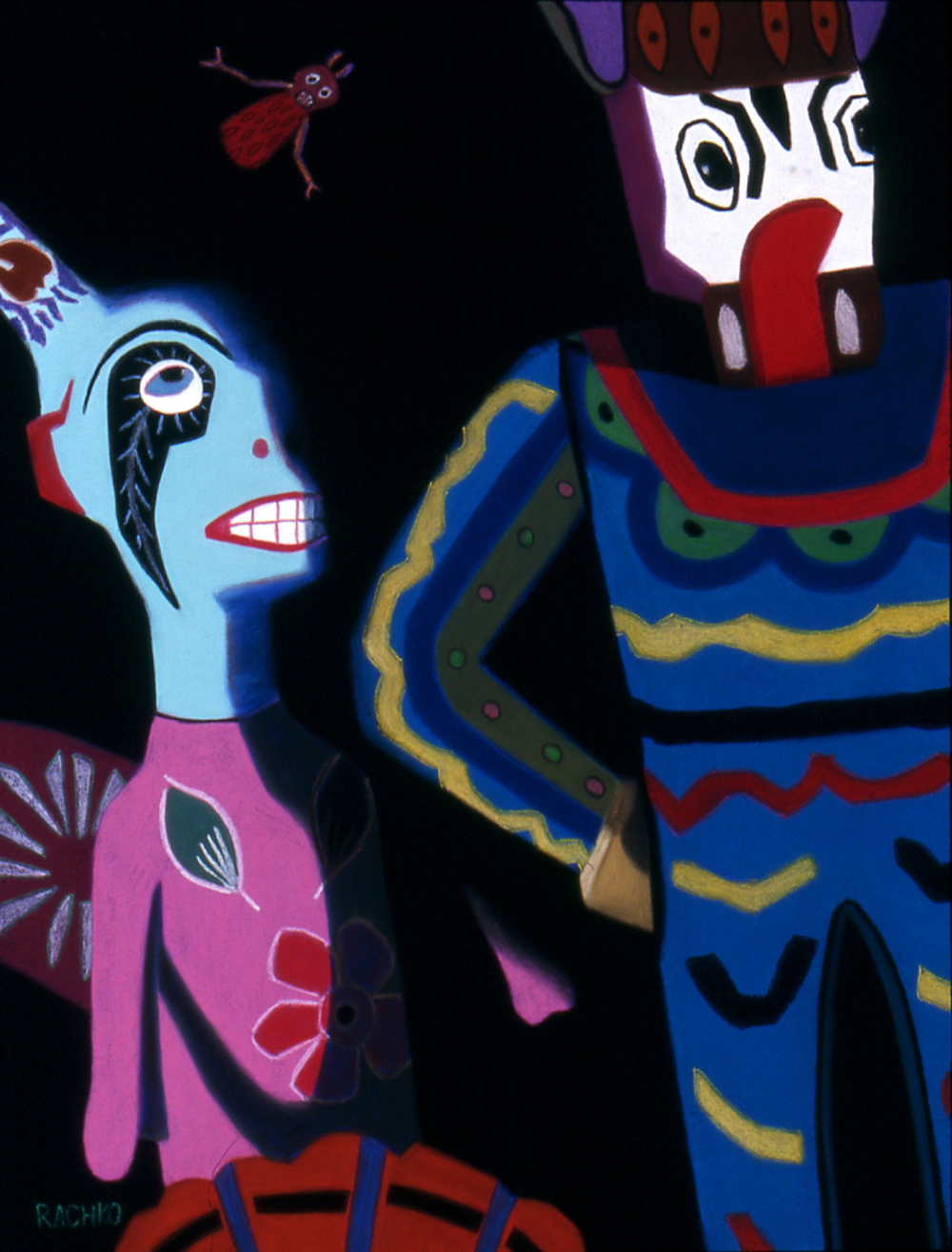
“Intruder,” soft pastel on sandpaper, 26″ x 20″
* an ongoing series of quotations – mostly from artists, to artists – that offers wisdom, inspiration, and advice for the sometimes lonely road we are on.
Artists and designers have the capacity to generate something from deep inside ourselves to live outside of ourselves. By residing in the experiential and the physical, and by developing the “hands on” as a portal of intelligent learning, we confirm the mind as maker and making as a state of mindfulness. We demonstrate how artists and designers are hosts for enduring creative discovery that is self-initiated and actively engaged. In short, artists and designers manifest what has not existed previously – in many cases, what has never even been imagined.
Rosanne Somerson in The Art of Critical Making: Rhode Island School of Design on Creative Practice, Rosanne Somerson and Mara L. Hermano, editors
Comments are welcome!
Q: Is it possible to sum up your creative practice in seven words?
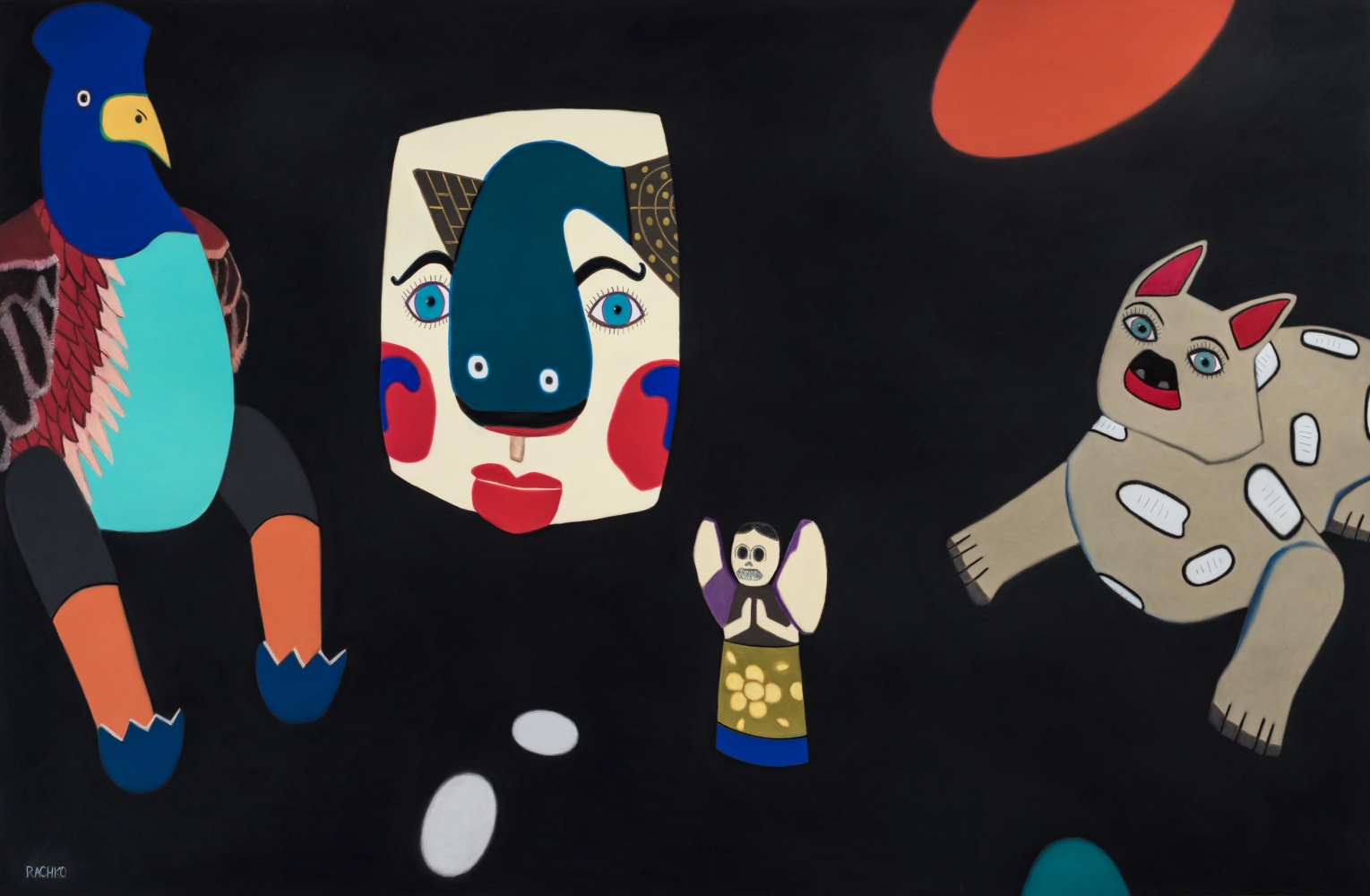
“Motley,” soft pastel on sandpaper, 38″ x 58″
A: Steadily striving to become a better artist. Of course, others determine how successful we have been in this regard.
Comments are welcome!
Pearls from artists* # 140

“Big Wow,” soft pastel on sandpaper, 38″ x 58″
* an ongoing series of quotations – mostly from artists, to artists – that offers wisdom, inspiration, and advice for the sometimes lonely road we are on.
Frankly, I think you’re better off doing something on the assumption that you will not be rewarded for it, that it will not receive the recognition it deserves, that it will not be worth the time and effort invested in it.
The obvious advantage to this angle is, of course, if anything good comes of it, then it’s an added bonus.
The second, more subtle and profound advantage is that by scuppering all hope of worldly and social betterment from one creative act, you are finally left with only one question to answer:
Do you make this damn thing exist or not?
And once you can answer that truthfully for yourself, the rest is easy.
Hugh MacLeod in Ignore Everybody and 39 Other Keys to Creativity
Comments are welcome!
Q: How do you know when a series has ended?

“A Promise, Meant to be Broken,” soft pastel on sandpaper, 58″ x 38″
A: I suppose it’s when there is nothing left to say within a particular body of work. The urgency to add something I haven’t tried vanishes. Usually I can’t even think of anything I haven’t tried.
I knew with certainty that the “Domestic Threats” series was finished while “A Promise Meant to be Broken” was still on my easel. It’s no accident that I included a self-portrait. This painting was my way of saying good-bye to an important body of work – literally turning my back on it – and summing up where the work had taken me.
For artists each series is a creative journey with a beginning, a middle, and an end. At a certain point it’s over. Then you build on what you’ve accomplished and move on to create something new. The connection between new work and old may not always be obvious, but one thing is certain: all the previous work laid the groundwork for what you make today.
Comments are welcome!
Q: Do you have a daily artistic practice?

Studio entrance
A: In one way or another I suppose I do. Of course, I don’t go to the studio six days a week like I used to, but I generally work five days, about seven to eight hours per day. When I am not actually in the studio working at my easel, I try to make use of my time in ways that, hopefully, will make me a better artist. I am usually reading, studying, looking at art, talking to friends who are artists, thinking about my creative practice, etc. Art and everything related to it are naturally the focus of my life.
Comments are welcome!
Q: What’s on the easel today?

Work in progress
A: I am in the early stages – only 3 or 4 layers of pastel applied so far – on a large pastel painting with the working title, “He and She.” The figures are two favorites – a four-foot tall male and female couple, made of carved wood and silver and gold-leaf. I found them years ago at Galerie Eugenio in Mexico City.
These are the largest heads I have ever painted. As I work on this piece I remember one of my teachers saying, “Never paint a head larger than life-size.” Well, here’s to breaking rules.
For reference I am looking at a digital photograph shot with my Canon T3i. My usual practice is to make a c-print from a negative made with my Mamiya 6, but the photo clipped to my easel above is from a high resolution JPEG. Typically I set up a scene at home on a black cloth and photograph it, but my reference photo was taken in my studio without rearranging anything. In this painting I am breaking a few rules, while my creative process is perhaps evolving towards greater simplicity.
Comments are welcome!
Pearls from artists* # 124
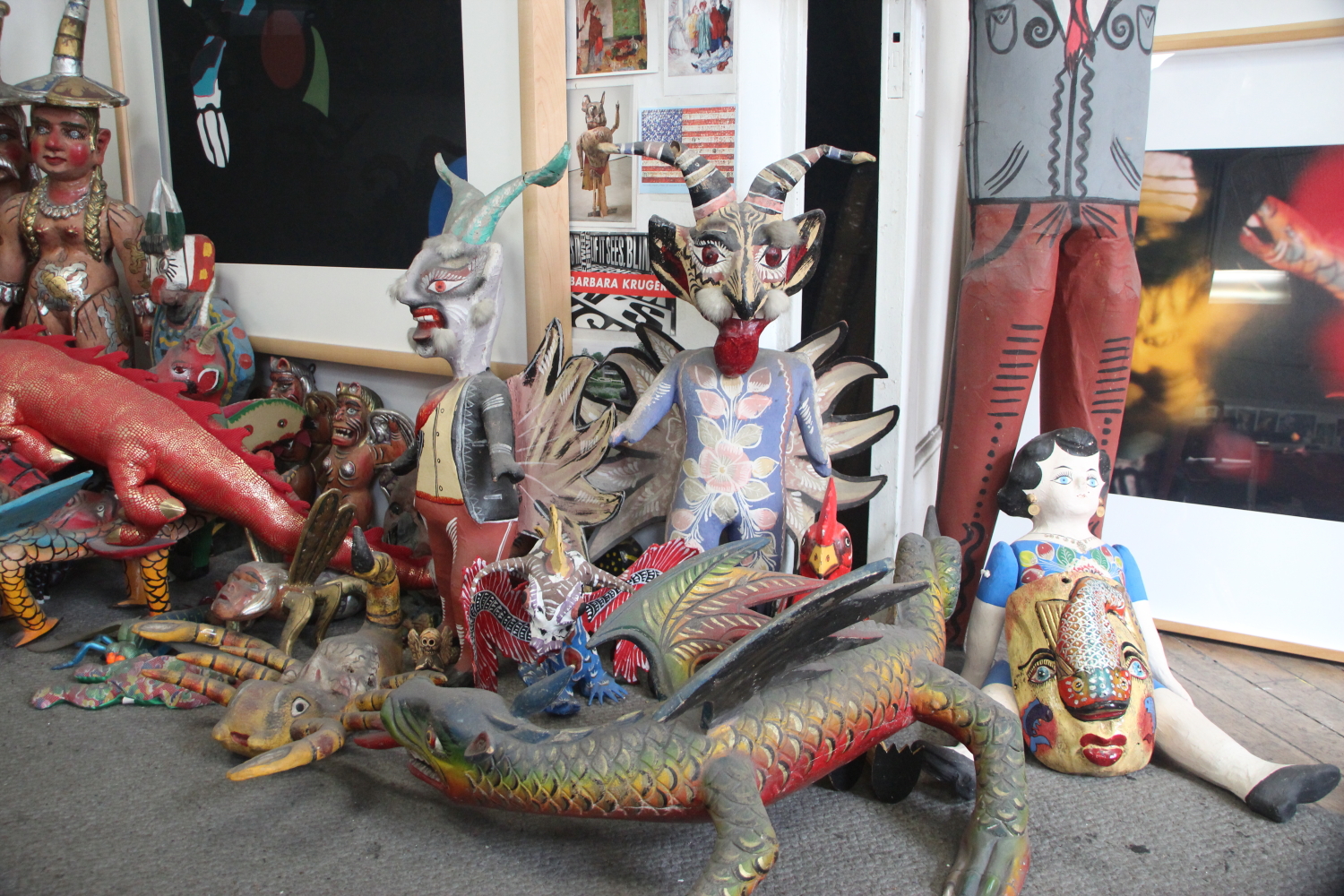
Barbara’s studio
* an ongoing series of quotations – mostly from artists, to artists – that offers wisdom, inspiration, and advice for the sometimes lonely road we are on.
You give yourself a creative life – pursuing those questions and aesthetic conditions that mean the most to you. What are you interested in? Landscape and gender and nuclear power are each worthy subjects and there are plenty more. Do you aspire to exhibit in museums or public spaces or virtual realms? Your job is to figure out how to best engage these distinct contexts. Your studio may be a large industrial space or a second bedroom or the kitchen table, where you can work days or nights while wearing your favorite sweatpants and drinking tea as music blasts or silence is maintained. You might produce five or fifty objects a year, using bronze or oil paint or folded paper, and these can be large or tiny, made to last for centuries or a few weeks. Maybe you’ve been a printmaker for several years and all of a sudden you decide to make videos. OK. You might be influenced by Pop Art or Minimalism or Feminism or Fluxus. How are you using these various histories to your advantage? Does Edward Hopper or Gordon Matta-Clark or Agnes Martin or David Hammons inspire you? If not, who does? Try to understand the reasons for your choices, and if you feel the need to shift gears, indulge that impulse. Grant yourself the permission to acquire new skills, travel to biennials, buy a new computer, start a reading group. Risk not knowing what will happen when you do.
Stephen Horodner in THE ART LIFE: On Creativity and Career
Comments are welcome!
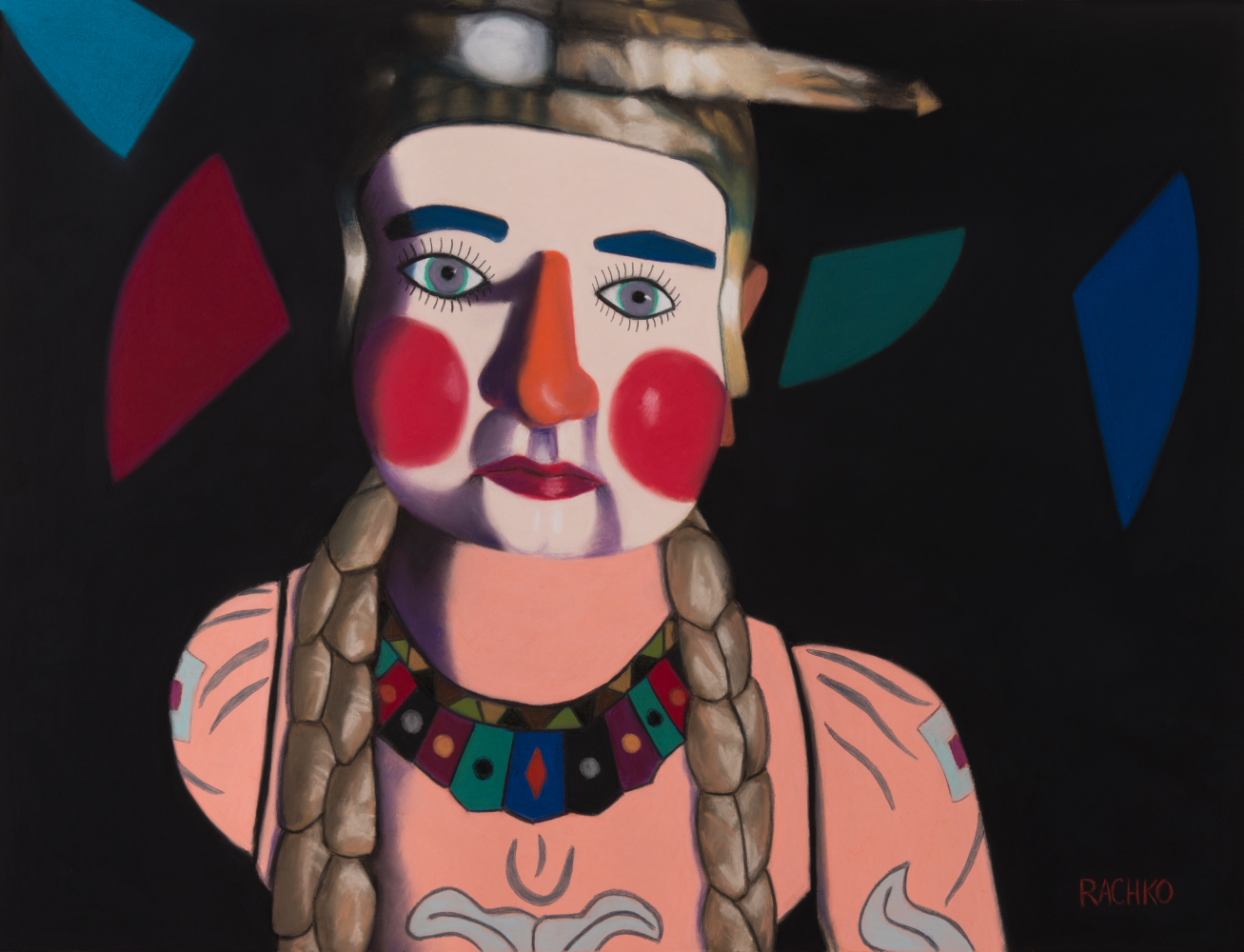
Q: I have been always fascinated with the re-contexualizing power of Art and with the way some objects or even some concepts often gain a second life when they are “transduced” on a canvas or in a block of marble. So I would like to ask you if in your opinion, personal experience is an absolutely indespensable part of a creative process. Do you think that a creative process could be disconnected from direct experience?
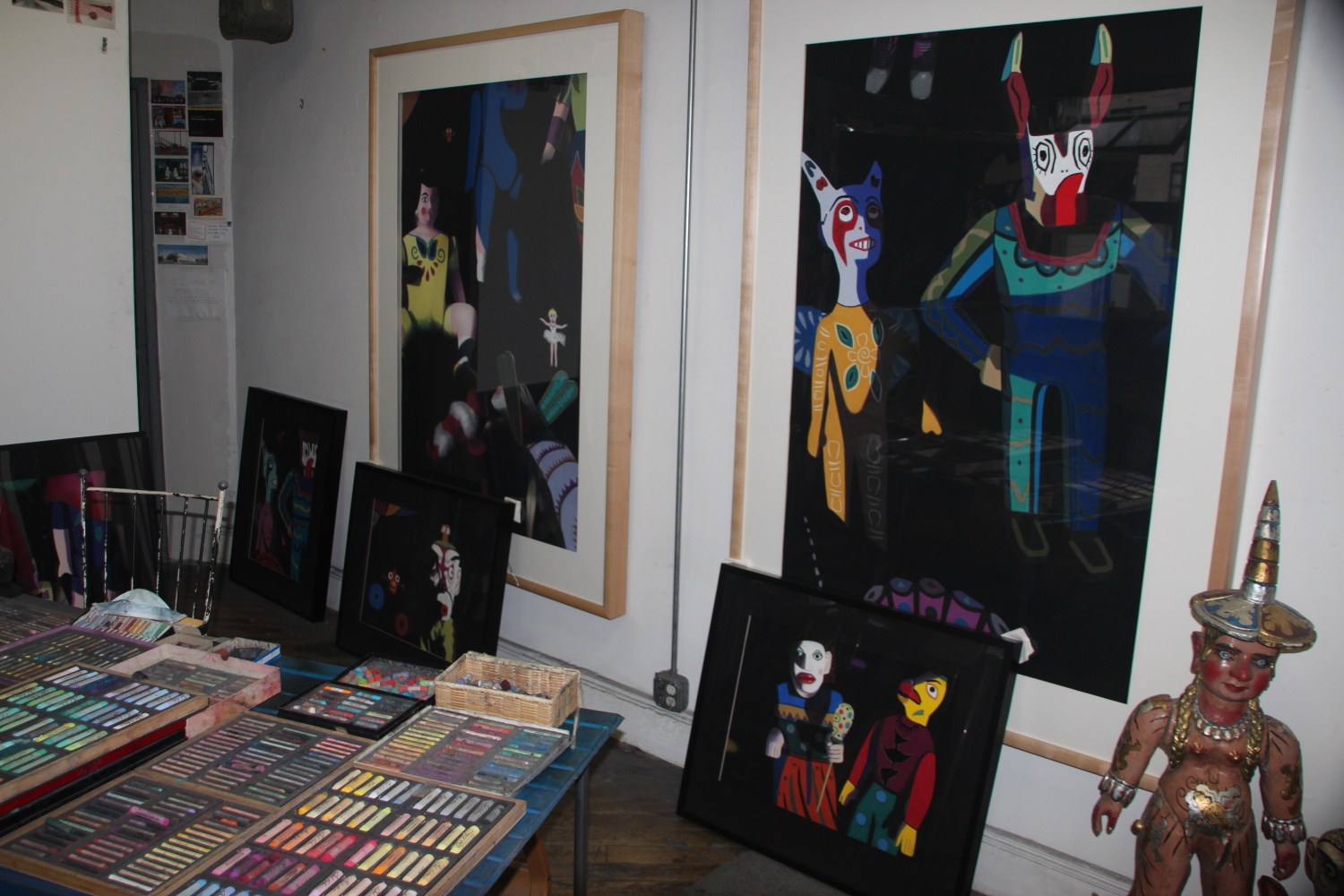
Barbara’s studio
A: Certainly personal experience is an indispensable and inseparable part of the creative process. For me art and life are one and I suspect that is true for most artists. When I look at each of my pastel paintings I can remember what was going on in my life at the time I made it. Each is a sort of veiled autobiography waiting to be decoded and in a way, each is also a time-capsule of the larger zeitgeist. It’s still a mystery how exactly this happens but all lived experience – what’s going on in the world, books I’m reading and thinking about, movies I’ve seen that have stayed with me, places I’ve visited, etc. – overtly and/or not so obviously, finds its way into the work.
Life experience also explains why the work I do now is different from my work even five years ago. In many ways I am not the same person.
The inseparableness of art and life is one reason that travel is so important to my creative process. Artists always seek new influences that will enrich and change our work. To be an artist, indeed to be alive, is to never stop learning and growing.
Comments are welcome!
Q: Last week you spoke about what happens before you begin a pastel painting. Would you talk about how you actually make the work?
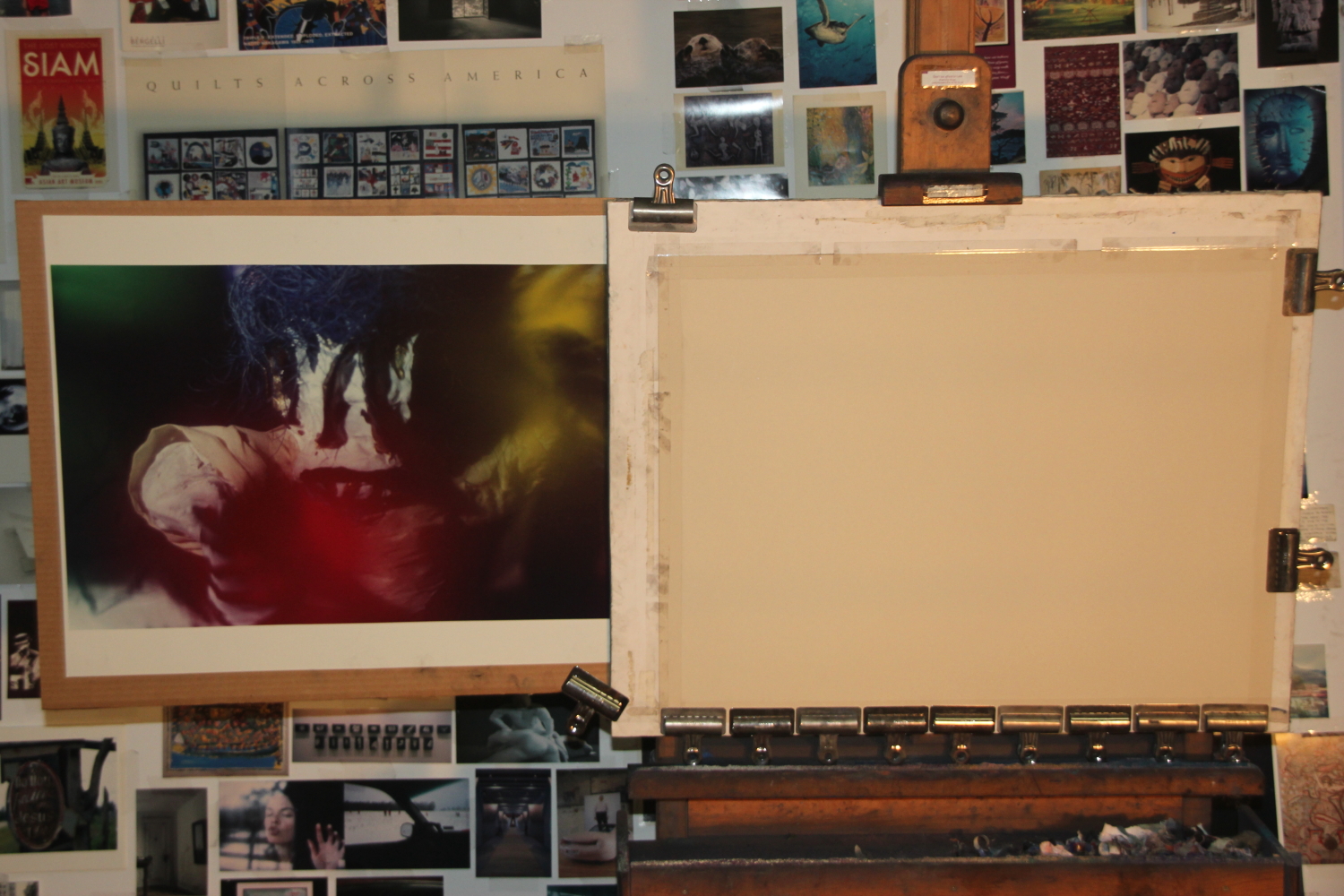
Beginning a new pastel painting
A: I work on each pastel-on-sandpaper painting for approximately three months. I try to be in my studio 7 to 8 hours a day, five days a week.
I make thousands of creative decisions as I apply and layer soft pastels (I have thousands to choose from), blend them with my fingers, and mix new colors directly on the sandpaper. A finished piece consists of up to 30 layers of soft pastel.
My self-invented technique accounts for the vivid, intense color that often leads viewers of my originals to look very closely and ask, “What medium is this?” I believe I am pushing soft pastel to its limits, using it in ways that no other artist has done before.
Comments are welcome!



