Blog Archives
Pearls from artists* # 207

Barbara’s studio
* an ongoing series of quotations – mostly from artists, to artists – that offers wisdom, inspiration, and advice for the sometimes lonely road we are on.
More than in any other vocation, being an artist means always starting from nothing. Our work as artists is courageous and scary. There is no brief that comes along with it, no problem solving that’s given as a task… An artist’s work is almost entirely inquiry based and self-regulated. It is a fragile process of teaching oneself to work alone, and focusing on how to hone your quirky creative obsessions so that they eventually become so oddly specific that they can only be your own.
“What It Really Takes to Be an Artist: MacArthur Genius Teresita Fernandez’s Magnificent Commencement Address,” by Maria Popova in “brainpickings”
Comments are welcome!
Pearls from artists* # 206
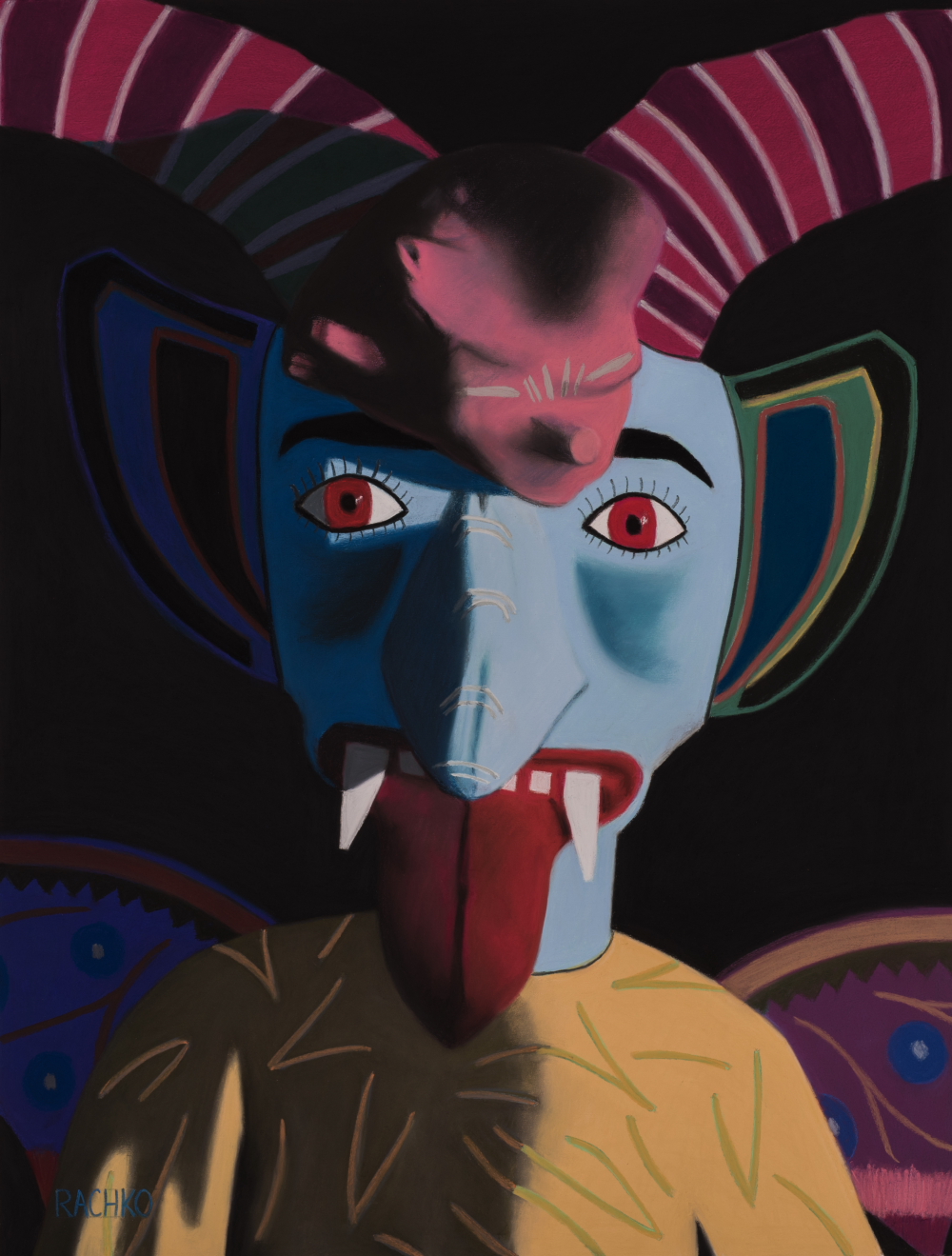
“Provocateur,” soft pastel on sandpaper, 26″ x 20″
* an ongoing series of quotations – mostly from artists, to artists – that offers wisdom, inspiration, and advice for the sometimes lonely road we are on.
And a career in higher education and medicine has taught me that creativity – whether in the sciences, arts or humanities – fosters controversy. We neither seek nor avoid controversy – we anticipate it and welcome the opportunity to explain the creative choices we make. We must take risks. We must be involved in the vital issues facing the world.
David J. Skorton, Director of the Smithsonian Institution in “What Do We Value?” Museum, May/June 2016
Comments are welcome!
Q: How many studios have you had since you’ve been a professional artist?

Barbara’s studio
A: I am on my third, and probably last, studio. I say ‘probably’ because I love my space and have no desire to move. Plus, it would be a tremendous amount of work to relocate, considering that I have been in my West 29th Street studio since 1997.
My very first studio, in the late 1980s, was the spare bedroom of my house in Alexandria, Virginia. I set up a studio there while I was on active duty in the Navy. When I resigned my commission, I was required to give the President an entire year’s advance notice. Towards the end of that year I remember calling in sick so I could stay home and make art.
In the early 1990s I rented a studio on the third floor of the Torpedo Factory in Alexandria. For a while I enjoyed working there, but the constant interruptions – in an art center that is open to the public – became tiresome.
In 1997 I had the opportunity to move to New York. I desperately craved solitary hours to work in peace, without interruption, so at first I didn’t have a telephone. I still don’t have WiFi there because my studio is reserved strictly for creative work.
Moving from Virginia to New York in 1997 was relatively easy. My aunt, who planned to be in California to continue her Buddhist studies, offered me her rent-controlled sixth-floor walkup on West 13th Street. I looked at just one other studio before signing a sublease for my space at 208 West 29th Street. I had heard about the vacancy through a college friend of my husband, Bryan. Karen, the lease-holder, was relocating to northern California to work on “Star Wars” with George Lucas. After several years, she decided not to return to New York and I have been the lease-holder ever since.
Comments are welcome!
Q: What do you think is an artist’s chief responsibility? Do you personally feel a responsibility to society?
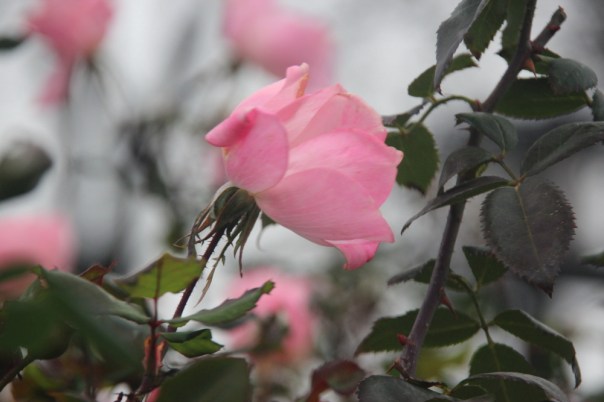
Winter roses
A: All serious artists have the responsibility of developing our unique and special gifts to the best of our abilities and sharing our creative output with an appreciative audience. In other words we do good work and then we educate, and often create, the audience for it. This is the demanding, all-important task that gets me out of bed every day.
In showing what is possible artists cannot help but create a better society. Ours is essential work.
Comments are welcome!
Q: What are some of your work habits? Do you sit most of the day?
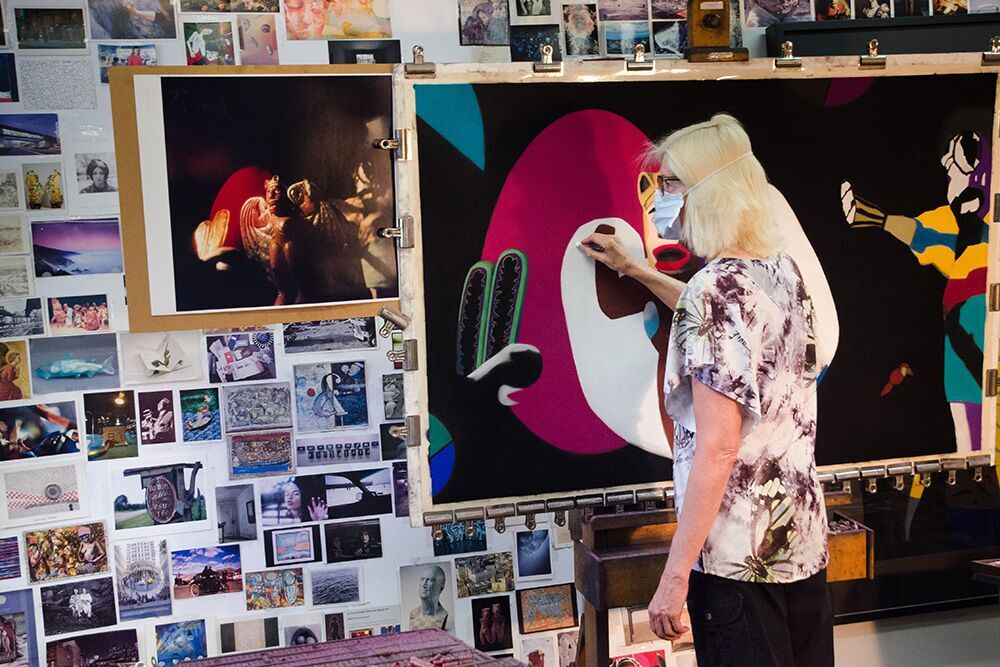
Barbara at work, Photo: Marianne Barcellona
A: No, I never sit while working. I enjoy the physicality of art-making and prefer to stand at my easel so I can back up to see how a painting looks from a distance. I like being on my feet all day and getting some exercise.
In order to accomplish anything, artists need to be disciplined. I work five days a week, taking Wednesdays and Sundays off, and spend seven hours or more in the studio. Daylight is necessary so I work more hours in summer, fewer in winter. I deliberately don’t have a clock on the wall – art-making is independent of timetables – but I tend to work in roughly two-hour blocks before taking a break.
Studio hours are sacrosanct and exclusively for creative work. I keep my computer and mobile devices out of the studio. Art business activities – answering email, keeping up with social media, sending jpegs, writing blog posts, doing interviews, etc. – are mostly accomplished at home in the evenings and on days off.
Comments are welcome!
Pearls from artists* # 177
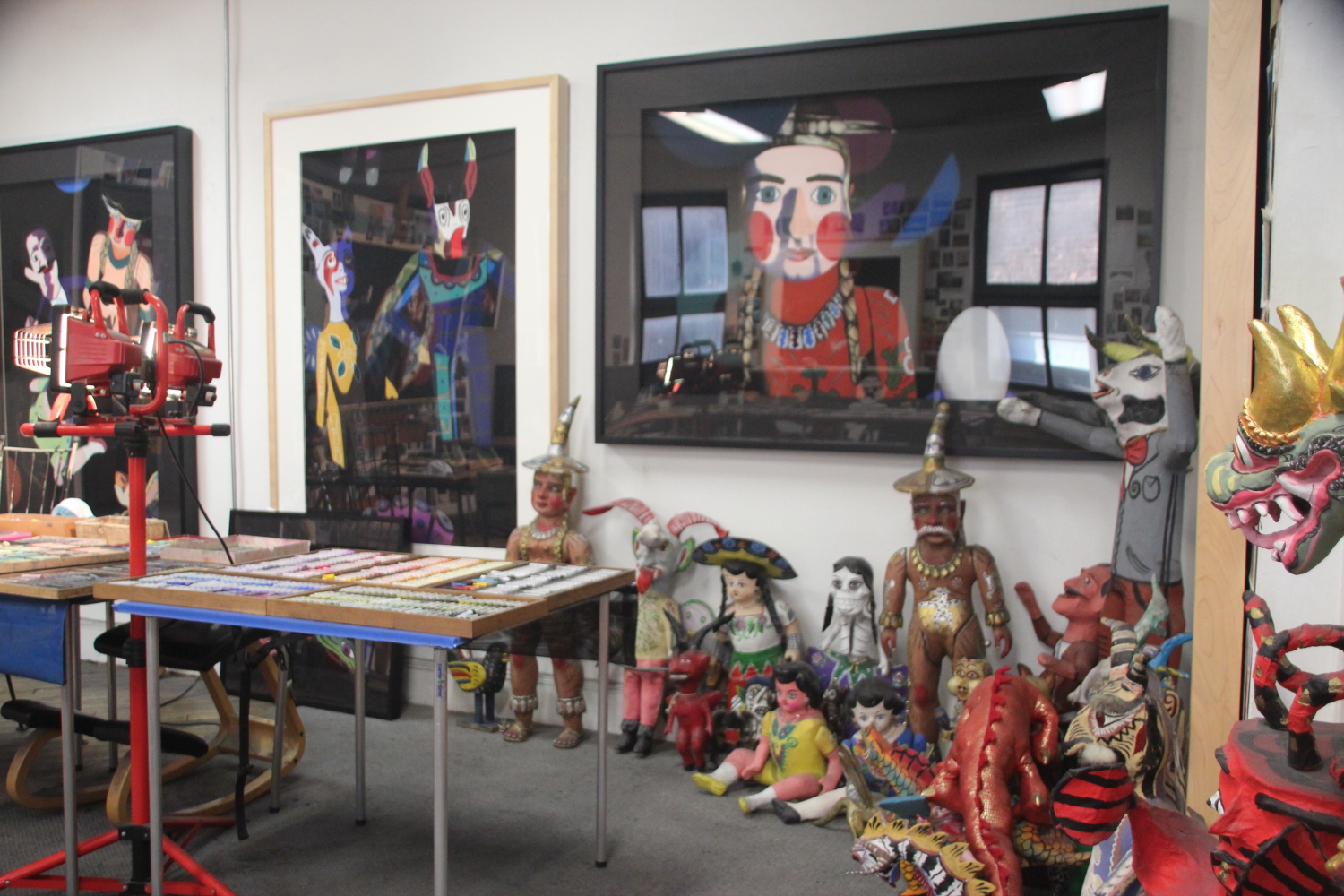
Barbara’s studio
* an ongoing series of quotations – mostly from artists, to artists – that offers wisdom, inspiration, and advice for the sometimes lonely road we are on.
Everyone but a lunatic has a reason for what he does. Yes, in that sense I am a determinist. But I believe, with Kant, that the mind is self-determined. That is, I believe intensely in the creative freedom of the mind. That is indeed absolutely essential to man’s security in a chaotic world of change. He is faced all the time with unique complex problems. To sum them up for action is an act of creative imagination. He fits the different elements together in a coherent whole and invents a rational act to deal with it. He requires to be free, he requires his independence and solitude of mind, he requires his freedom of mind and imagination. Free will is another matter – it is a term, or rather a contradiction in terms, which leads to continual trouble. The will is never free – it is always attached to an object, a purpose. It is simply the engine in the car – it can’t steer. It is the mind, the reason, the imagination that steers.
Joyce Carey in The Paris Review Interviews: Writers at work 1st Series, edited and with an introduction by Malcolm Cowley
Comments are welcome!
Pearls from artists* # 174
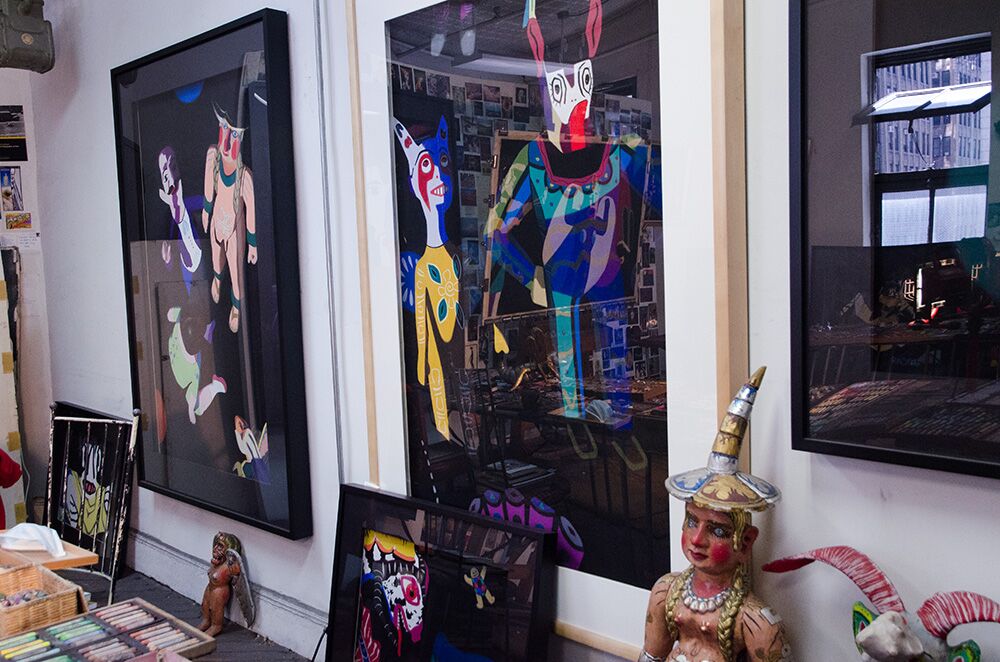
Barbara’s studio, Photo: Marianne Barcellona
* an ongoing series of quotations – mostly from artists, to artists – that offers wisdom, inspiration, and advice for the sometimes lonely road we are on.
If you are older, trust that the world has been educating you all along. You already know so much more than you think you know. You are not finished; you are merely ready. After a certain age, no matter how you’ve been spending your time, you have very likely earned a doctorate in living. If you’re still here – if you have survived this long – it is because you know things. We need you to reveal to us what you know, what you have learned, what you have seen and felt. If you are older, chances are strong that you may already possess absolutely everything you need to possess in order to live a more creative life – except the confidence to actually do your work. But we need you to do your work.
Whether you are young or old, we need your work in order to enrich and inform our own lives.
Elizabeth Gilbert in Big Magic: Creative Living Beyond Fear
Comments are welcome!
Pearls from artists* # 164
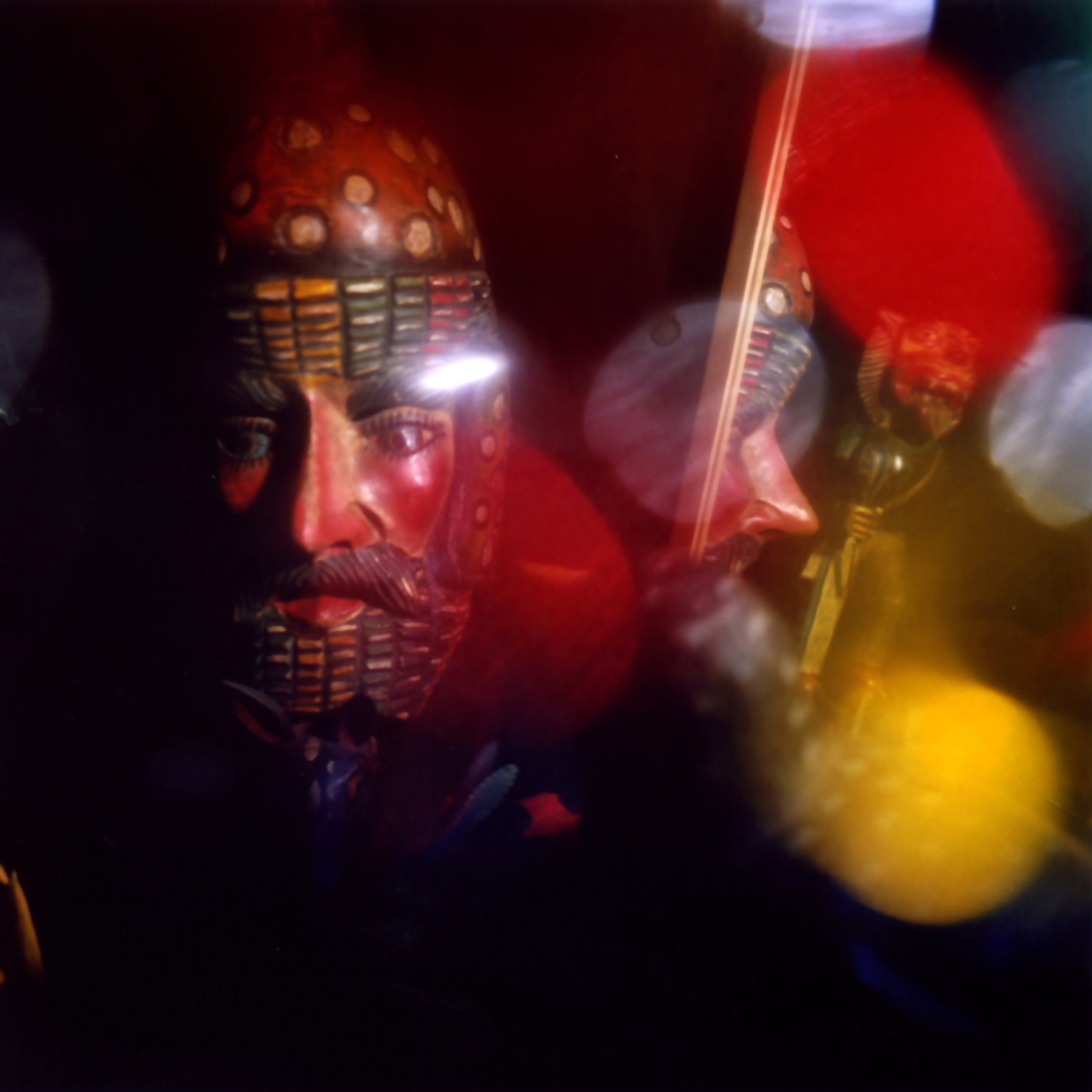
Untitled chromogenic print, 24″ x 24,” edition of 5
* an ongoing series of quotations – mostly from artists, to artists – that offers wisdom, inspiration, and advice for the sometimes lonely road we are on.
The Eastern and Western classics are full of gods, saints, and heroes, all striving against life’s odds and overcoming them with perseverance, courage, energy and hope as well as help from some sort of divine energy. Unlike the gods, the saints, gurus, and heroes are humanized in creative works. Otherwise, we would find it difficult to accept them, relate to them or look up to them for inspiration and courage. It is the humanization of the subject that makes the supernatural sometimes feel real. And sometimes makes the impossible seem reachable and achievable. The classic writings all contain humanized heroes, saints and gods. The characters in these books are so humanized that the courage and inspiration we get from their endurance in overcoming life’s challenges will keep on inspiring readers forever. Because of this we can aspire to their accomplishments. If we too are able to create meaningful works providing timeless inspiration to help others, our work will live on.
Samuel Odoquei in Origin of Inspiration: Seven Short Essays for Creative People
Comments are welcome!
Q: In terms of change where will you take your work next?

Barbara’s studio
A: That’s difficult to say because creating new pastel paintings is a somewhat mysterious process. Change happens on its own timetable and in its own way rather than from my efforts to exert conscious control over it. In essence it is my job to keep working in the studio, to be sensitive and true to my own creative process, and to go where the work leads. I doubt that I could work otherwise and still claim to be authentic.
Comments are welcome!
Q: Why don’t you teach or conduct pastel workshops?
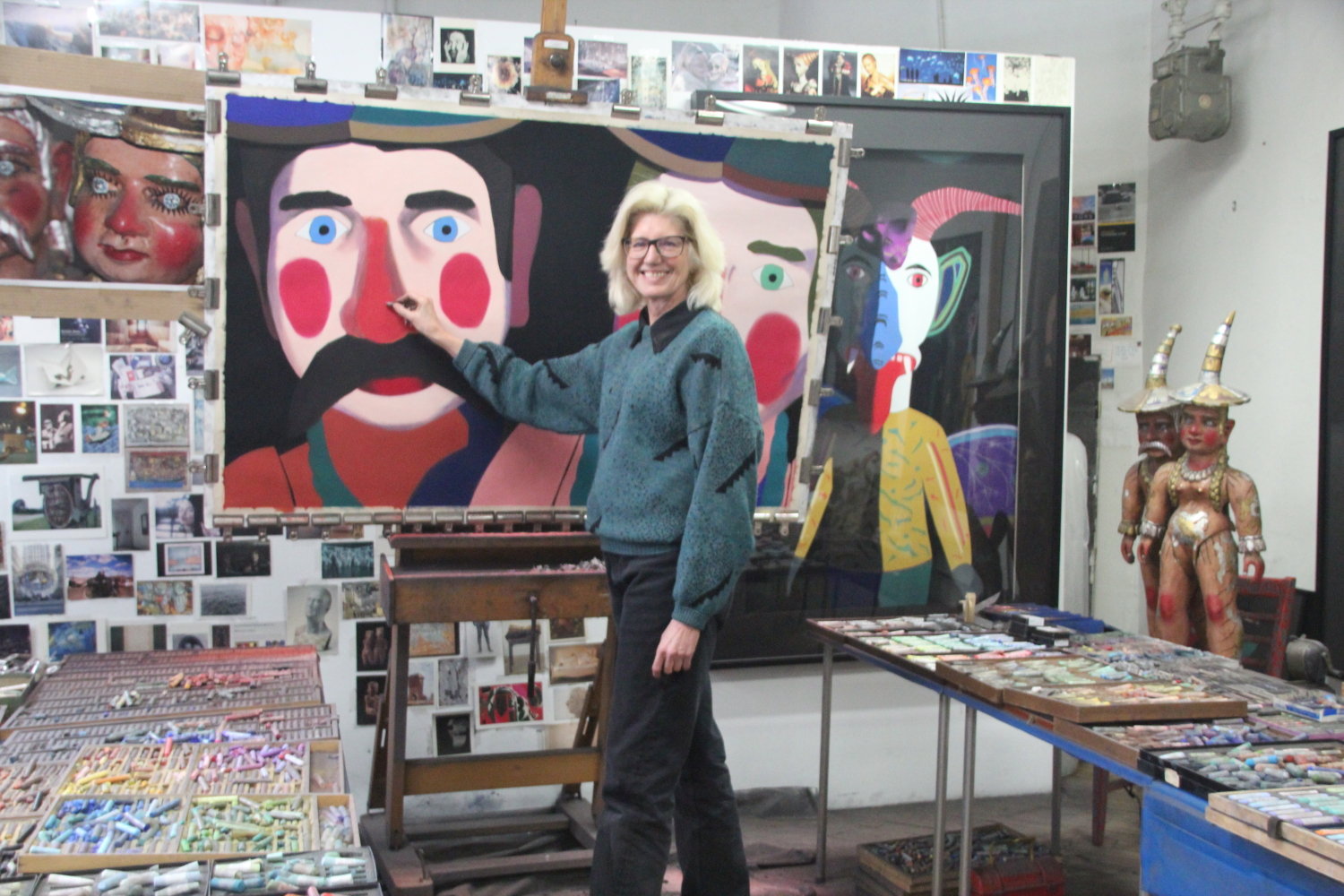
Barbara in her studio
A: I am often asked to teach, but I never have had the desire to do so. Because my work is extremely labor intensive, I am reluctant to give up precious studio time, either for teaching or for any activities that could be deemed a distraction. Consistent in my creative practice, I typically work in my studio five days a week, seven or more hours a day and am able to complete four or five pastel-on-sandpaper paintings in a year.
Teaching would divert time, attention, and energy away from my practice. Certainly it can be rewarding in many ways but since my process is slow and meticulous, I prefer to focus on making new work.
Comments are welcome!



