Blog Archives
Pearls from artists* # 648

“Apparition,” soft pastel on sandpaper, 58” x 38”
*an ongoing series of quotations – mostly from artists, to artists – that offers wisdom, inspiration, and advice for the sometimes lonely road we are on.
I prefer to speak in terms of the artist’s voice. Voice is deeper, manifested from the very core of your being. It is a synthesis of the experiences, intellectual concepts, and aesthetic interests you possess, executed in your distinctive way, in the formal, emotional, and intellectual language of your chosen medium. When successful, the realization of your voice follows a gestalt principle. The combination of your ideas and the work’s physical embodiment is greater than the sum of its parts and distinguishes your outcome from everyone else’s. If we wrote down a single concept and handed it to a dozen artists, we would get very different responses from each of them, and some works would be a stronger synthesis of ideas and execution. As Frank Stella once said, “There are no good ideas for paintings, there are only good paintings… the painting IS the idea (Saltz, 2020:42).”
The art that we recognize as having singular, identifying features, those formal aspects that allow us to immediately see a work as ‘a David Wojnarowicz’ or ‘a Julie Mehretu,’ were not the product of a singular flash of brilliance. These qualities evolved as part of a sustained, life-long, ever-deepening investigation to articulate their specific and singular vision. Our voice comes from tapping into the depths of our own consciousness, then distilling the most powerful aspects of that awareness. Voice also expands and deepens over time. It evolves along with the artist.
Kate Kretz in Art From Your Core: A Holistic Guide to Visual Voice
Comments are welcome!
Pearls from artists* # 626

*an ongoing series of quotations – mostly from artists, to artists – that offers wisdom, inspiration, and advice for the sometimes lonely road we are on.
This is why, when writers who are just starting out ask me when it gets easier, my answer is never. It never gets easier. I don’t want to scare them, so I rarely say more than at, but the truth is that, if anything, it gets harder. The writing life is filled with predictable uncertainties, but with the awareness that we are always starting over. That everything we will ever write will be flawed. We may have written one book, or many, but all we know – if we know anything at all – is how to write the book we’re writing. All novels are failures. Perfection itself would be a failure. All we can hope is that we will fail better. That we will not fall prey to the easy enchantments of repeating what may have worked in the past. I try to remember that the job – as well as the plight, and the unexpected joy – of the artist is to embrace uncertainty, to be sharpened and honed by it. Each time we come to the end of a piece of work, we have failed as we have leapt – spectacularly, brazenly – into the unknown.
Dani Shapiro in Still Writing: The Perils and Pleasures of a Creative Life
Comments are welcome!
Pearls from artists* # 565

*an ongoing series of quotations – mostly from artists, to artists – that offers wisdom, inspiration, and advice for the sometimes lonely road we are on.
Jung and Freud both observed that much of what ails us today is a product of being cut off from our inner life. Healing that division requires us to speak the language of symbol, and that necessitates a kind of thinking which is not easy for many of us. This kind of approach is particularly challenging in our culture, which has a bias in favor of the too bright, daylight awareness of the conscious mind, and privileges literal thinking and mechanistic ways of understanding the world.
Gary Bobroff in Carl Jung: Knowledge in a Nutshell
Comments are welcome!
Pearls from artists* # 562

“Shadow,” soft pastel on sandpaper, 26” x 20,” in progress
*an ongoing series of quotations – mostly from artists, to artists – that offers wisdom, inspiration, and advice for the sometimes lonely road we are on.
Jung observed that complexes could affect groups of people en masse. He saw that certain moments seemed to be expressions of a collective shadow, a bursting forth of a mass psychosis; the repressed side of a whole group coming alive; a tribal Mr. Hyde. He saw this madness first-hand in Germany in the 1930s and wrote about it. But every era carries some measure of collective shadow.
One could argue that no moment in time has seen more of the reality of human darkness than ours. Having witnessed the Holocaust and faced the threat of nuclear war in the twentieth century, and now facing the environmental impact of fossil fuels and plastics in the twenty-first century, we are undoubtedly aware of more of humanity’s potential for destruction than any of our ancestors ever were. Such a view does not come from a moralizing stance. Our era has made forced witnesses of us all.
The shadow is about where we put the Devil – where do we allow darkness to be housed? Racism and bigotry offer the relief of foisting our group’s shadow onto another whom we view as lesser. Doing so enables us not to look at or feel our shadow, and not see our own worst selves. But this collective shadow of our modern culture is also bigger and wider than group-to-group projections. There are culture-wide or civilization expressions of the collective shadow.
Jung saw the widespread loss of connection to the inner life and to a lived spirituality as one of the primary illnesses of our time. He observed that people were no longer animated by the traditional religions… For Jung, this meant that we’ve lost the old way but not yet found the new, and are sitting in a spiritual vacuum.
Into that vacuum, without our awareness, has slipped our fascination with human technology. Observe people closely today and you’ll notice that we have an almost magical faith in our devices. People see their computers and phones as all-knowing and expect them to function perfectly all the time, and view pharmaceuticals as magic cure-alls. Where we used to put God, we now have put technology. Where spirit was, we have unconsciously placed human genius.
Gary Bobroff in Carl Jung: Knowledge in a Nutshell
Comments are welcome!
Pearls from artists* # 488
*an ongoing series of quotations – mostly from artists, to artists – that offers wisdom, inspiration, and advice for the sometimes lonely road we are on.
To be astonished is to be caught unawares by the revelation of realities denied or repressed in the everyday. Astonishment has an intellectual as well as an emotional component – in it, the brain and the heart come together. Far from distracting us from the strange and the uncanny in life, the astonishment evoked by great artistic works puts them square in our sights. The work demands that we feel and think the mystery of our passage through this body, on this earth, in this universe. We realize afterward that the world is not what we thought it was: something hidden, impossible to communicate though clearly expressed in the work has risen into the light of awareness, and the share of the Real to which we are privy is proportionately expanded.
JF Martel in Reclaiming Art in the Age of Artifice: A Treatise, Critique, and Call to Action
Comments are welcome!
Pearls from artists* # 471

*an ongoing series of quotations – mostly from artists, to artists – that offers wisdom, inspiration, and advice for the sometimes lonely road we are on.
Impresario Peter Sellars remarks how “Vermeer [spent] hours, days, and weeks painting a small corner of a small room in an act of ritualistically informed meditation that leads to new possibilities of awareness and love.” The time of making, Sellars adds, influences the time of viewing: “The act [of painting] itself opens up and refines consciousness by slowing down time as it focuses the eye.” Sellars’ language of ritual and meditation anticipates my purposes. He associates painting not only with materiality but also with spiritual practices – indeed, he yokes the two: “The act of painting has always been charged with shamanic energies. Using bits of animal bone, hair, and sinew, mixing them with earth, and applying them steadily and with great concentration to a cave wall, a parchment, or a human face is an act of calling and recalling.”
Arden Reed in Slow Art: The Experience of Looking, Sacred Images to James Turrell
Comments are welcome!
Pearls from artists* # 410
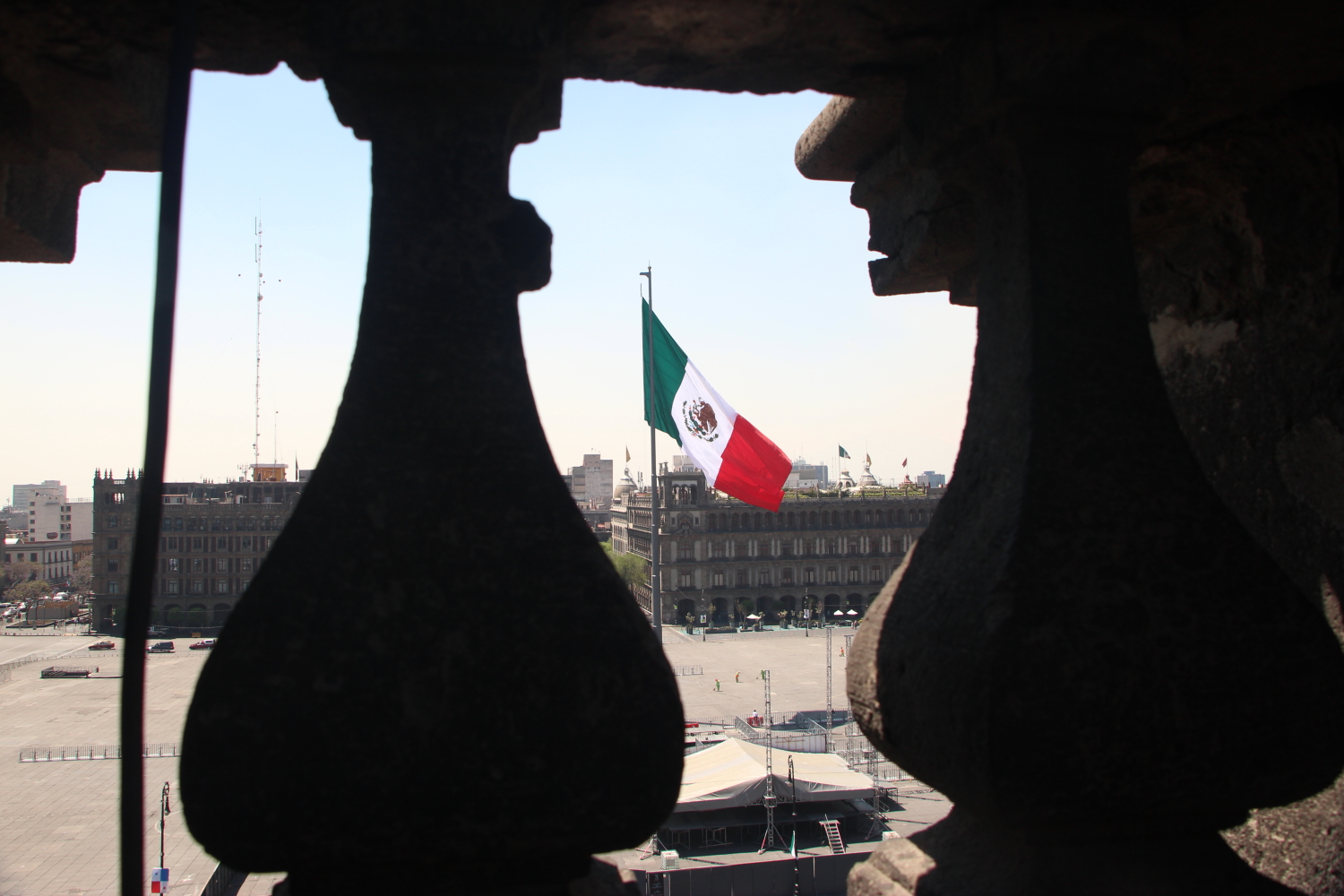
Mexico City
*an ongoing series of quotations – mostly from artists, to artists – that offers wisdom, inspiration, and advice for the sometimes lonely road we are on.
Faced with the disparities between lived reality and America’s professed ideals of inclusion and equity, countless artists have begun embracing the social role of art and using aesthetic means to speak out against all manner of injustice. In such a climate, the Mexican muralists [Jose Clemente Orozco, Diego Rivera, and David Alfaro Siqueiros] have once again emerged as models of how to marry aesthetic rigor and vitality to socially conscious subject matter that addresses the most fundamental questions concerning our collective pursuit of a more just and equitable society. Not withstanding the rich cultural ties and decades of migration that have long existed between the United States and Mexico, the relationship between the two countries has always been fraught, marked as much by mutual wariness and bouts of hostility as by a spirit of camaraderie and cooperation Yet the ugliness and xenophobia of the recent debates on the American side echoes the worst of the past. It thus seems more imperative than ever to acknowledge the profound and enduring influence Mexican muralism has had on artmaking in the United States and to highlight the beauty and power that can emerge from the free and vibrant cultural exchange between the two countries. As much as did American artists decades ago, artists in the United States today stand to benefit from an awareness of how dynamically and inventively the Mexican muralists used their art to project the ideals of compassion, justice, and solidarity. They remain a source of powerful inspiration for their seamless synthesis of ethics, art, and action.
Vida Americana: Mexican Muralists Remake American Art, 1925 – 1945, edited by Barbara Haskell
Comments are welcome!
Pearls from artists* # 406

With “Avenger,” soft pastel on sandpaper, 58” x 38” image, 70” x 50” framed
* an ongoing series of quotations – mostly from artists, to artists – that offers wisdom, inspiration, and advice for the sometimes lonely road we are on.
If we really are due for a shift in consciousness, it is incumbent upon each of us to “be the change,” in Gandhi’s famous phrase. Nothing is written in the stars.
Art is a testament to this way of thinking, because every great work of art is made, not for an abstract audience, but for the lone percipient with whom it seeks to connect. The symbols that compose artistic works are not static objects but dynamic events. As such, they can only emerge within a field of awareness, that is, within the context of a life being lived. It is therefore by approaching the work of art as though it were intended specifically for you – as though the artist had fashioned it with you in mind every step of the way – that you can turn the aesthetic experience into an engine of change in your own life and in the lives of those around you.
J.F. Martel in Reclaiming Art in the Age of Artifice: A Treatise, Critique, and Call to Action
Comments are welcome!
Pearls from artists* # 375

Tile worker in South India
* an ongoing series of quotations – mostly from artists, to artists – that offers wisdom, inspiration, and advice for the sometimes lonely road we are on.
With the camera you interpret reality. Photography is not truth. The photographer interprets reality and, above all, constructs his own reality according to his own awareness or his own emotions. Sometimes it’s complicated because it’s a kind of schizophrenic phenomenon. Without the camera, you see the world in one way, with the camera, in another. Through the window, you’re composing, and even dreaming about, this reality as if, through the camera, you were synthesizing what you are with what you’ve learned of a certain place. Then you make your own image, your own interpretation. The same thing happens to a writer as to a photographer. It’s impossible to capture the truth of life.
Graciela Iturbide in Eyes to Fly With: Portraits, Self-Portraits, and Other Photographs
Comments are welcome!
Pearls from artists* # 125
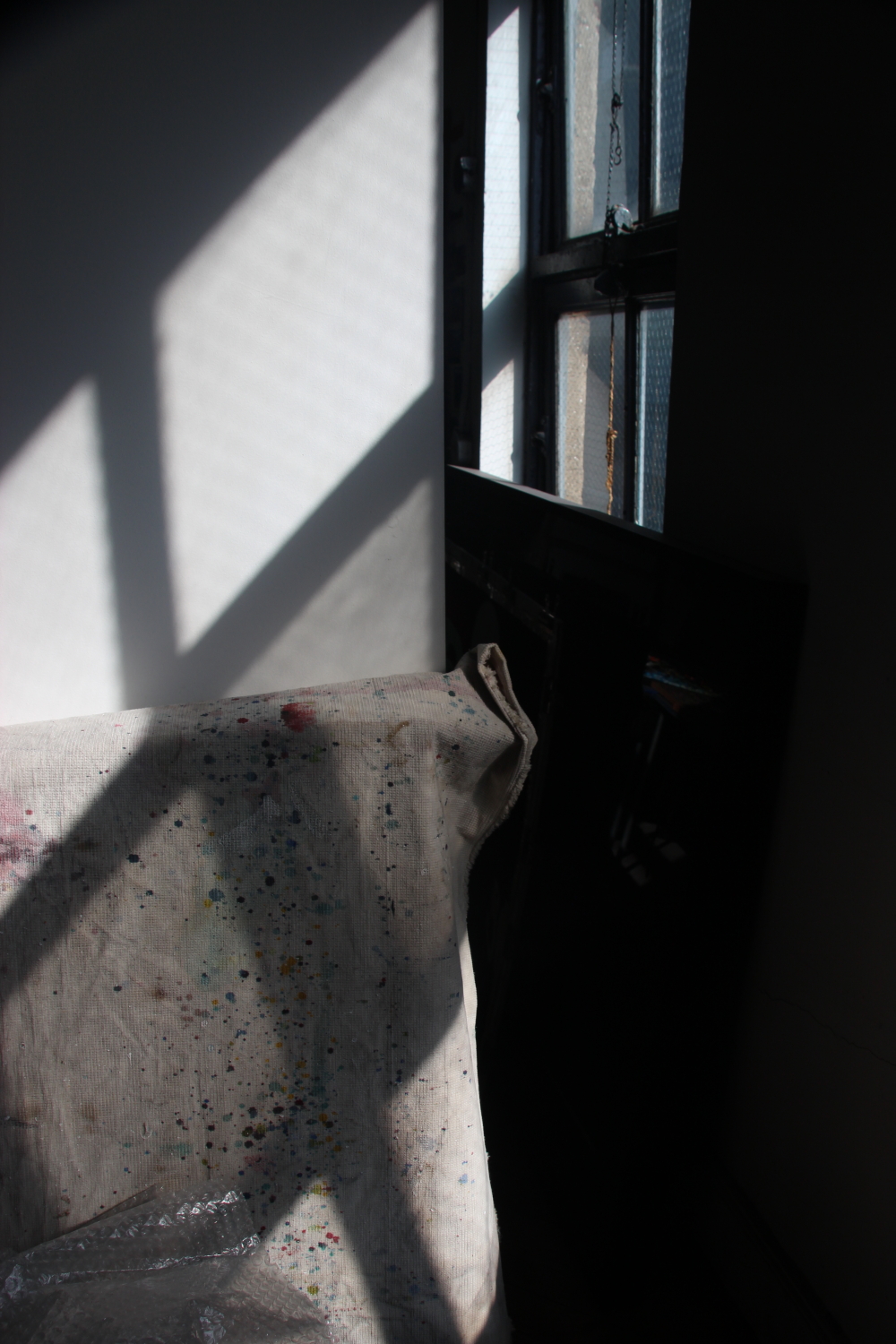
Barbara’s studio
* an ongoing series of quotations – mostly from artists, to artists – that offers wisdom, inspiration, and advice for the sometimes lonely road we are on.
My own natural proclivity is to categorize the world around me, to remove unfamiliar objects from their dangerous perches by defining, compartmentalizing and labeling them. I want to know what things are and I want to know where they are and I want to control them. I want to remove the danger and replace it with the known. I want to feel safe. I want to feel out of danger.
And yet, as an artist, I know that I must welcome the strange and the unintelligible into my awareness and into my working process. Despite my propensity to own and control everything around me, my job is to “make the familiar strange and the strange familiar,” as Bertolt Brecht recommended: to un-define and un-tame what has been delineated by belief systems and conventions, and to welcome the discomfort of doubt and the unknown, aiming to make visible what has become invisible by habit.
Because life is filled with habit, because our natural desire is to make countless assumptions and treat our surroundings as familiar and unthreatening, we need art to wake us up. Art un-tames, reifies and wakes up the part of our lives that have been put to sleep and calcified by habit. The artist, or indeed anyone who wants to turn daily life into an adventure, must allow people, objects and places to be dangerous and freed from the definitions that they have accumulated over time.
Anne Bogart in What’s the Story: Essays about art, theater, and storytelling
Comments are welcome!


 barbararachkoscoloreddust.com