Category Archives: Domestic Threats
Q: Can you elaborate on the title of your very first series, “Domestic Threats”?

A: All of the paintings in this series are set in places where I reside or used to live, either a Virginia house or New York apartments, i.e., domestic environments. Each painting typically contains a conflict of some sort, at least one figure who is being menaced or threatened by a group of figures. So I named the series “Domestic Threats.”
Depending on what is going on in the country at a particular moment in time, however, people have seen political associations in my work. When my husband, Bryan, was killed on 9/11, many people thought the title, “Domestic Threats,” was prescient. They have ascribed all kinds of domestic terrorism associations to it, but that is not really what I had in mind. For a time some thought I was hinting at scenes of domestic violence, but that also is not what I had intended. “Domestic Threats” seems to be fraught with associations that I never considered, but it’s an apt title for this body of work.
Comments are welcome!
Q: What do collectors say about your work?
A: Here’s a quote from Cheryll Chew and John Frye, who own four of my pastel paintings.
We walked into her studio in 1994 and saw “In Reality the Frogs Were Men.” That instant on that day, my consuming passion with Barbara Rachko’s work began. We had absolutely no resources to buy “In Reality . . .” I did, however, know without a doubt that one day we would have her work, no matter what it took to get it.
We, years later, have “Scene Eleven: Bedroom,” “Scene Nine: Living Room,” “Scene Five: Kitchen,” and “False Friends.”
We have unorthodox appreciations and every single day, those pieces of art quicken the pulse and bring us pure pleasure.
Her pieces make us want to dance wildly around the room and wave our arms in the air. We are deeply grateful that her work is in our home. Her art balances the everyday domestic with the unthinkably rare, lovely, and maniacal. That is an edgy state of being that we thrive in.
Not long ago, we read an article about Nan Goldin. In the article was a phrase that says precisely what Barbara Rachko’s work does for us . . .
all of the pleasure circuits are deeply fulfilled by looking. . .
Nan Goldin The Look of Love: Matchmaking at the Louvre
NY Times,10.27.2011
Comments are welcome!
Q: Would you talk about your first solo exhibition in a commercial gallery?

“Big Deal,” soft pastel on sandpaper, 58″ x 38″
A: Although I had exhibited in a number of non-profit galleries in Virginia, Washington, DC, Maryland, New Jersey, and New York, my first solo in a commercial gallery was at 479 Gallery, 520 Broadway, in July 1996. The previous summer I had entered a juried exhibition there. My work won first prize and I was awarded a solo show the following July.
This exhibition was soon followed by representation at an important New York gallery, Brewster Fine Arts, at 41 West 57th Street. I had my first two-person exhibition at Brewster in October 1996. The gallery specialized in art by Latin American artists. Besides myself, the sole non-Latina represented by Brewster was Leonora Carrington! I quickly began exhibiting alongside a group of illustrious artists: Leonora, Rufino Tamayo, Francisco Toledo, Francisco Zuniga, and other Latin American masters. I could hardly believe my good fortune!
Comments are welcome!
Q: The first pastel painting you see every morning when you arrive at your studio is “Myth Meets Dream.” It must have special meaning. Would you elaborate? (Question suggested by Marlissa Gardner via Facebook)
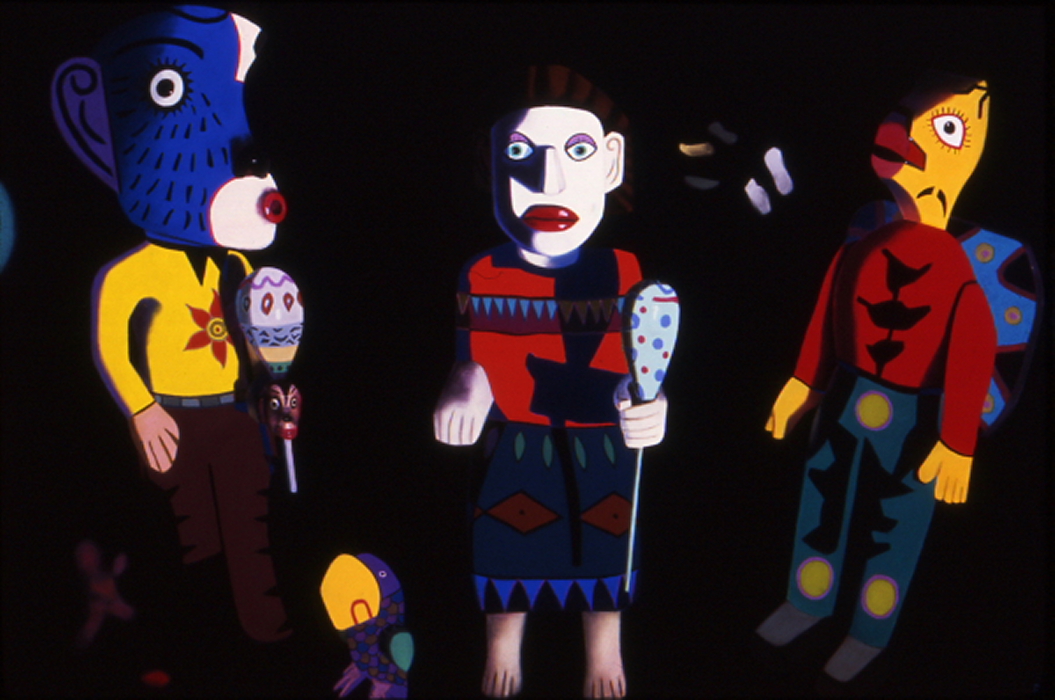
A: “Myth Meets Dream,” an early pastel painting from the “Domestic Threats” series, is one I have never wanted to sell. It marks the first time I included Mexican folk art figures in my work. In 1992 as a Christmas present, my future sister-in-law sent the two Oaxacan painted wooden figures you see depicted above – the blue winged creature and the red, white, and black figure behind it. The other three figures in this painting are hand-puppets.
Previously, I had been creating elaborate staged photographs in my Alexandria house using stuffed animals and hand-puppets. (The latter were made by a company called “Folk Tails”). I used the photos as reference material for pastel paintings. In other words, rather than work exclusively from life, I mostly looked at these photos while I made the painting. Although I have simplified my process since those early days, I still create pastel paintings using reference photographs.
In “Myth Meets Dream” you can see both puppets and my then new Oaxacan folk art figures. This pastel painting marks an important transition in subject matter and was the start of decades-worth of foreign travel, study, adventure, hard work, and yes, fun. It’s true that “Myth Meets Dream” hangs in my studio and is the first thing I see every morning. It brings back so many precious memories.
Every painting has a story!
If you’re interested to learn more, please see https://barbararachko.art/en/art-market
Comments are welcome!
Q: How has the use of photography in your work changed over the decades?
New York, NY
A: From the beginning in the mid-1980s I used photographs as reference material. My late husband, Bryan, would shoot 4” x 5” negatives of my elaborate setups using his Toyo-Omega view camera. In this respect Bryan was an integral part of my creative process as I developed the “Domestic Threats” pastel paintings. At that time I rarely picked up a camera, except to capture memories of our travels.
After Bryan was killed on 9/11, I inherited his extensive camera collection – old Nikons, Leicas, Graphlex cameras, and more. I wanted and needed to learn how to use them. Starting in 2002 I enrolled in a series of photography courses (about 10 over 4 years) at the International Center of Photography in New York. I learned how to use all of Bryan’s cameras and how to make my own big chromogenic prints in the darkroom.
Along the way I discovered that the sense of composition and color I had developed over many years as a painter translated well into photography. The camera was just another medium with which to express my ideas. Surprisingly, in 2009 I had my first solo photography exhibition at a gallery in New York. Bryan would have been so proud!
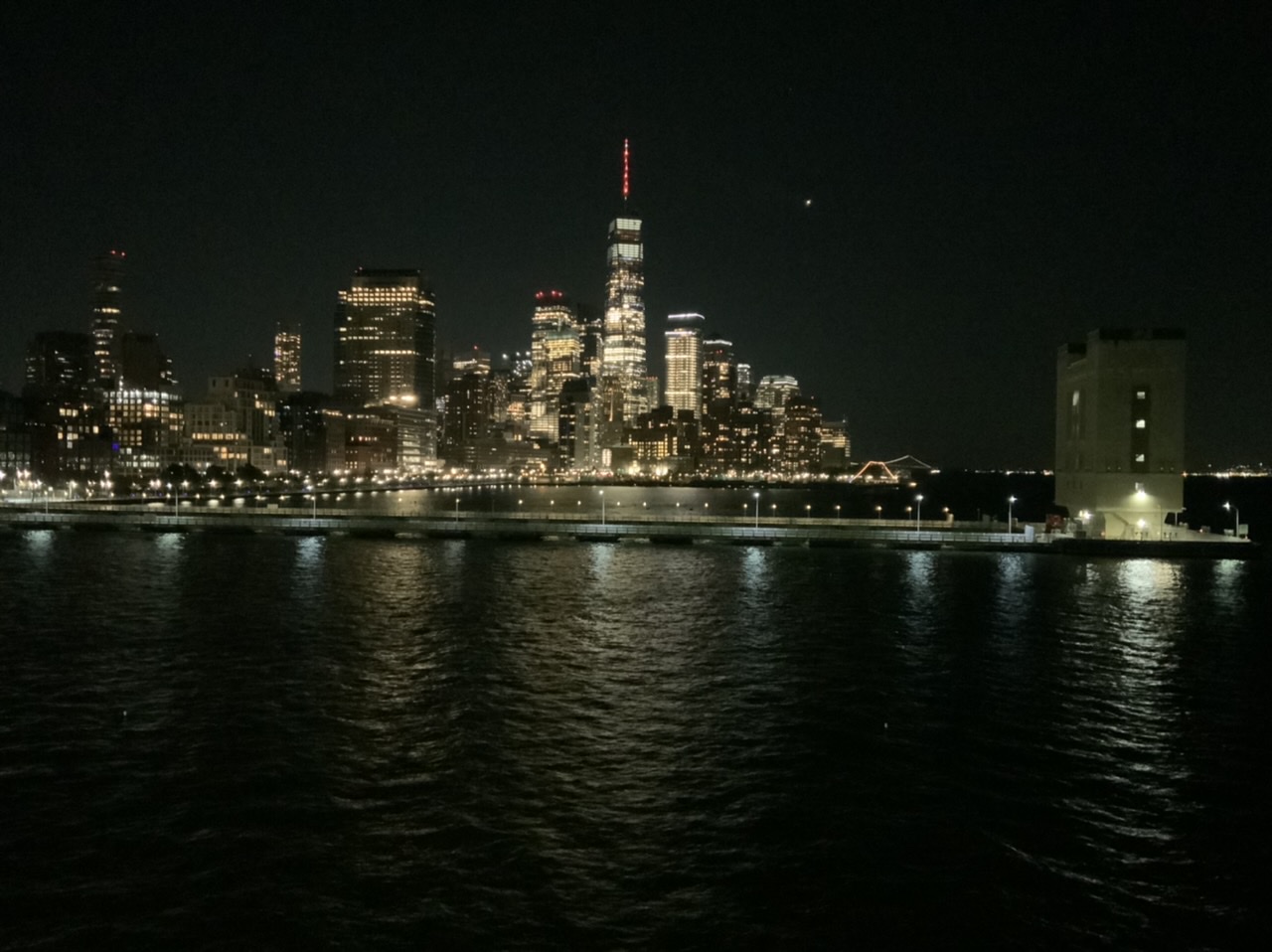
For several years now my camera of choice has been a 12.9” iPad Pro. It’s main advantage is that the large screen let’s me see every detail as I compose my photographs. I think of it as a portable, lightweight, and easy-to-use 8 x 10 view camera. My iPad is always with me when I travel and as I walk around exploring New York City.
It is a wonderful thing to be both a painter and a photographer! While pastel painting will always be my first love, photography has distinct advantages over my studio practice. Pastel paintings are labor-intensive, requiring months of painstaking work. Photography’s main advantage is speed. Photographs – from the initial impulse to hanging a print on a wall – can be made in minutes. Photography is instant gratification, allowing me to explore ideas much easier and faster than I ever could as a painter. Perhaps most importantly, composing photographs keeps my eye sharp whenever I am away from the studio. I credit photography as an important factor in the overall evolution of my work.
Comments are welcome!
Q: Would you speak about someone who made a difference in your professional life?
A: The first person who comes to mind is my favorite aunt, Teddie. In 1997 she was headed to northern California to attend a three-year-plus silent Tibetan Buddhist retreat at her teacher’s center. Teddie offered me her West 13th Street 6th-floor walkup apartment to live in while she was away. At the time I was based in Alexandria, VA and had just had my first solo exhibition at an important West 57th Street gallery, Brewster Fine Arts. I was becoming increasingly frustrated with the limited Washington, DC art scene, had outgrown everything it had to offer, and felt New York pulling me towards new and exciting professional adventures.
Teddie, recognizing my talent and ambition, made it possible for me to afford to move to New York. She had practiced Tibetan Buddhism for 35 years and was soon to become a Buddhist lama. She had an extraordinary mind and thought deeply about life. We used to talk for hours. Teddie was 7 years older and seemed more like a sister than an aunt. Indeed, she was my first soul mate. (I have been extremely fortunate to have had two such relationships in my life. The other was my late husband, Bryan).
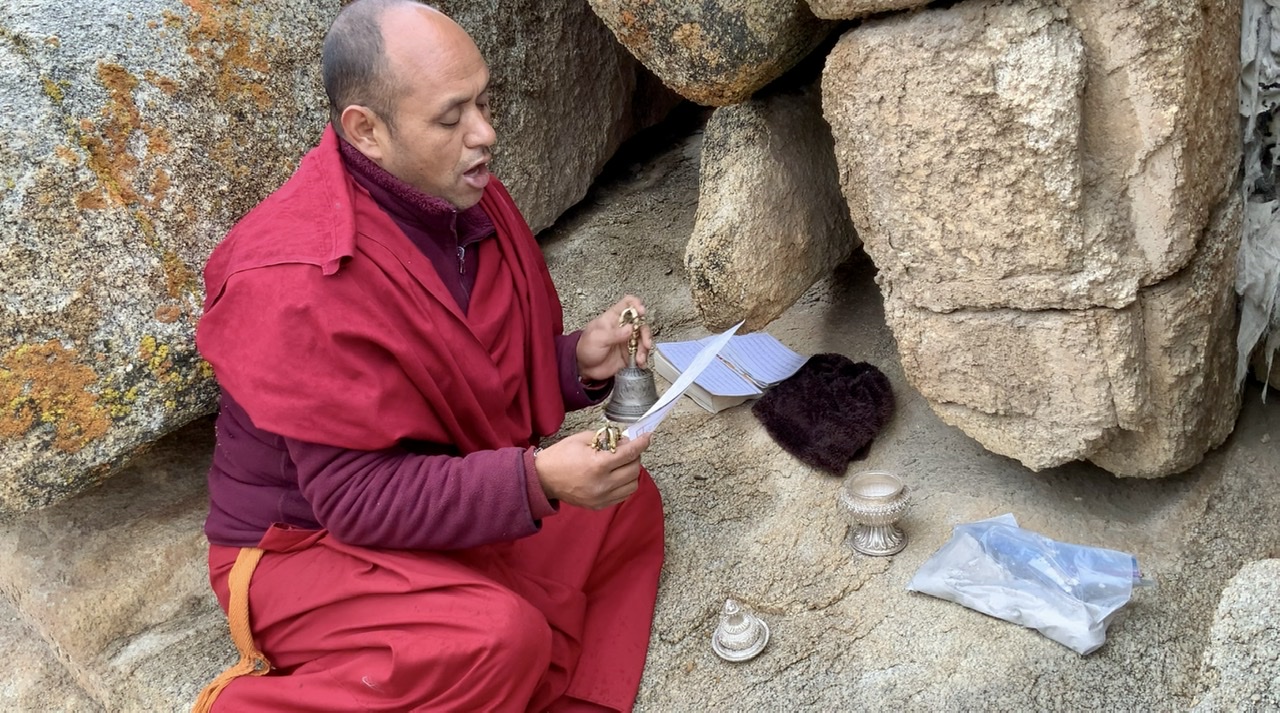
Unfortunately, dear Aunt Teddie died at the age of 67 of breast cancer. Recently, on September 25 I honored her life in a short ceremony on a mountain cliff in Leh, Ladakh (India). A Tibetan Buddhist monk recited prayers as he placed her ashes among the rocks.
Comments are welcome!
Q: How has photography changed your approach to painting?
A: Except for many hours spent in life-drawing classes and still life setups that I devised when I was learning my craft in the 1980s, I have always worked from photographs. My late husband, Bryan, would shoot 4” x 5” negatives of my elaborate “Domestic Threats” setups using his Toyo-Omega view camera. I rarely picked up a camera except when we were traveling. After Bryan was killed on 9/11, I inherited his extensive (film) camera collection – old Nikons, Leicas, Graphlex cameras, etc. – and needed to learn how to use them. Starting in 2002 I enrolled in a series of photography courses (about 10 over 4 years) at the International Center of Photography in New York. I learned how to use all of Bryan’s cameras and how to make my own big color prints in the darkroom.
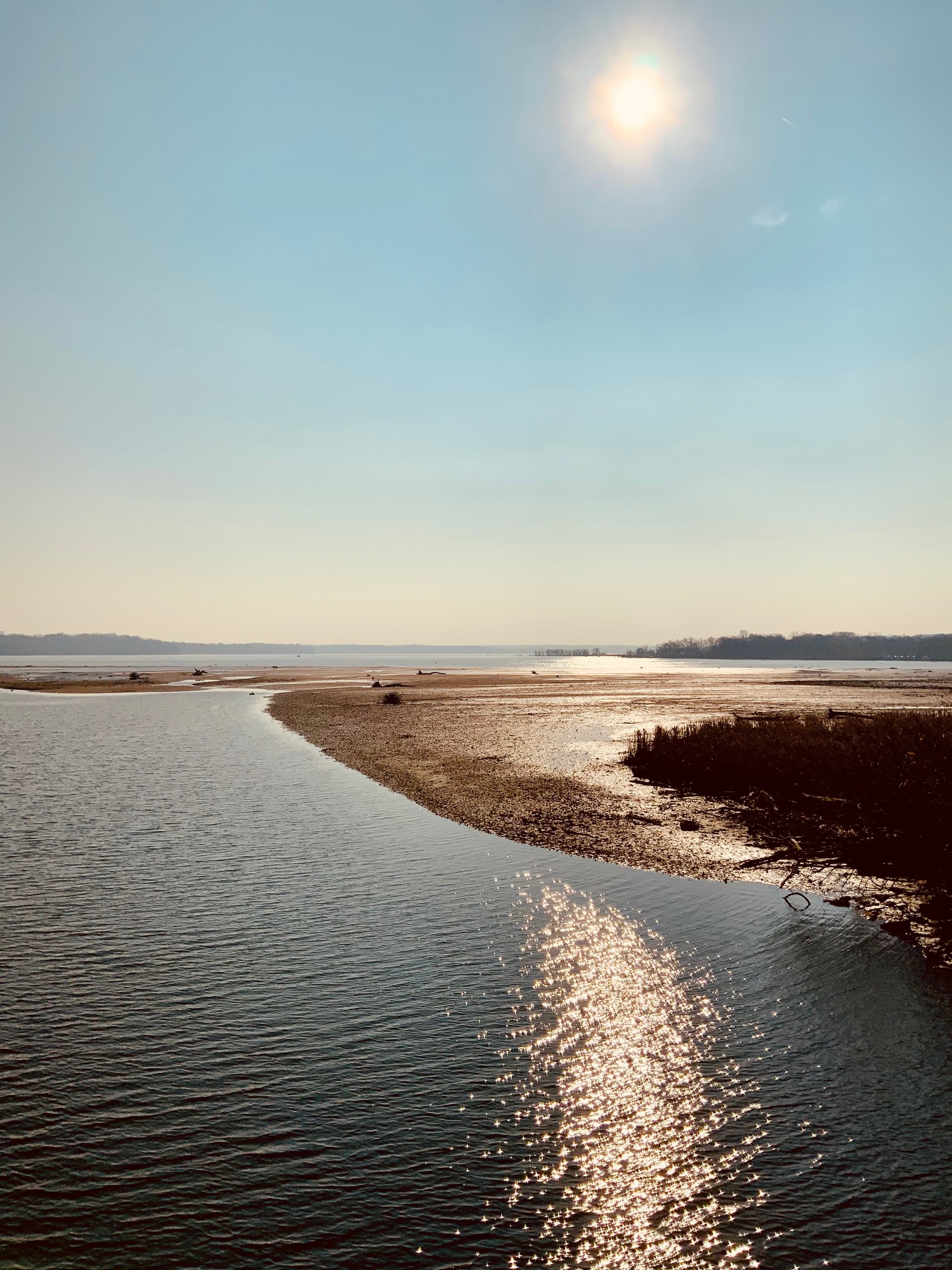
Early on I discovered that the sense of composition, color, and form I had developed over many years as a painter translated well into photography. The camera was, and is, just another medium with which to express ideas. Pastel painting will always be my first love. However, pastel paintings take months of work, while photography offers instant gratification, especially with my current preferred camera, an iPad Pro.
Comments are welcome!

Q: Would you speak about the creative process that resulted in your 1994 pastel painting, “Amok”?

A: Behind me in the photo above is one of my circa 1994 50” x 40” c-prints, signed by both Bryan, my late husband, and me. The photo was my reference for a pastel painting titled, “Amok” (right, above).
I staged these photos in our Alexandria house (staged photography was popular then), refined the composition over days or weeks, and lit the scene using two tungsten studio lights. I was careful to accentuate the shadows, doing what I could to light everything as though it were a film noir set. (Film noir is still a favorite movie genre of mine).
In those days I knew nothing about photography so I considered these photos collaborations, since Bryan clicked the shutter. (He typically shot two pieces of film using his old Toyo Omega 4 x 5 view camera with a rented wide angle lens). Bryan was reluctant to take any credit- insisting that the idea, concept, etc. were mine – but I persuaded him to also sign the photos. (How I wish he were still around to fill in forgotten details about our collaboration).People enjoyed and often asked to purchase the reference photos so I sometimes had them enlarged and sold them. The dragon in the foreground is significant because it was my first purchase in Oaxaca during our initial trip to Mexico.
If anyone is interested, please remind me to tell the (long) story about how I got it home on the plane!
Comments are welcome!
Q: You have worked with twenty-plus galleries during your career. Which ones do you consider the best?
“Myth Meets Dream,” 1993, soft pastel on sandpaper, the earliest painting that includes Mexican figures
A: Probably the most prestigious gallery that represented my work was Brewster Fine Arts on West 57th Street in Manhattan. Brewster was my first New York gallery. In the summer of 1996 I mailed the gallery a sheet of slides, as we did in those days. I was living in Virginia and had been a working artist for ten years. In July while traveling around Mexico, I decided to check the phone messages at home in Virginia. I was thrilled to receive an invitation from Mia Kim, the gallery director, to exhibit pastel paintings in October! And she had not yet even seen my work in person.
Beginning that fall, I gained representation with Brewster Fine Arts, an elegant gallery specializing in Latin American Masters like Rufino Tamayo, Diego Rivera, and others. I am not Latina, of course, but I showed there due to my subject matter. At my October opening, I remember Mia declaring to the attendees, “Barbara has the soul of a Latina!” That night I met fellow gallery artist Leonora Carrington. She and I were the only non-Latina artists respresented. I knew I was on my way!
The gallery continued to present my work in group exhibitions and the staff gave brilliant talks about me and my creative process. For many years whenever I introduced myself to a new art aficionado, they already knew my work from having seen it at Brewster. I continued to be represented there until the gallery closed years later.
Also, Gallery Bergelli in Larkspur, CA did an excellent job of representing my work. I applied for one of their juried exhibitions, was accepted, and afterwards, they offered permanent representation. Soon they introduced me to one of my best collectors, with whom I am still friends.
I have worked with many galleries, some good, some not, for various reasons. Ours is an extremely tough business. Unfortunately, many of the best and formerly-great galleries are gone forever.
Comments are welcome!
Q: Can you tell us about the different series of work you have created and what they embody?
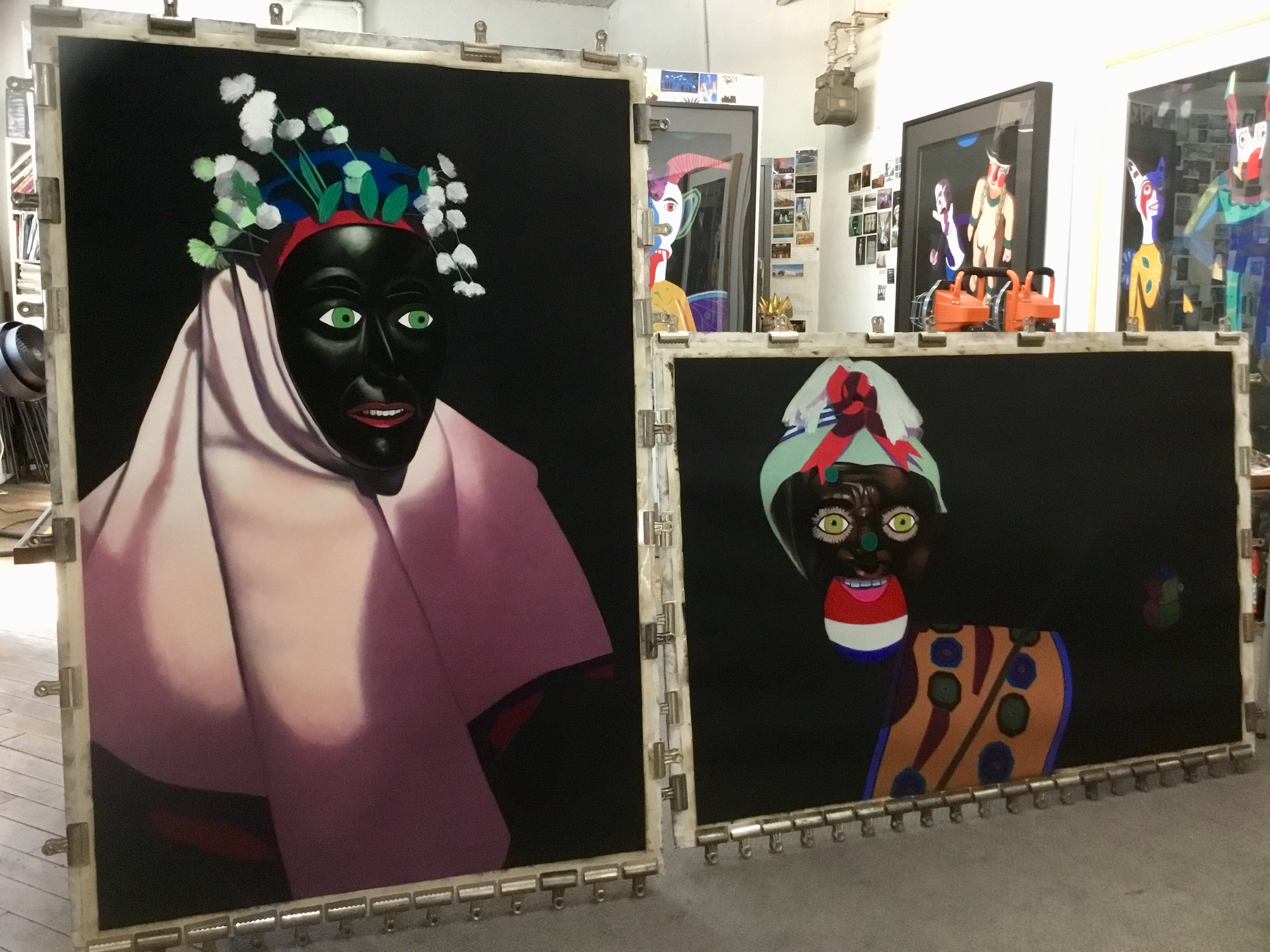
Barbara’s studio with work in progress
A: The Black Paintings series of pastel-on-sandpaper paintings grew directly from an earlier series, Domestic Threats. While both use cultural objects as surrogates for human beings acting in mysterious, highly-charged narratives, in the Black Paintings I replaced all background details of my actual setup (furniture, rugs, etc.) with lush black pastel. In this work the ‘actors’ are front and center.
While traveling in Bolivia two years ago, I visited a mask exhibition at the National Museum of Ethnography and Folklore in La Paz. The masks were presented against black walls, spot-lit, and looked eerily like 3D versions of my Black Paintings. I immediately knew I had stumbled upon a gift. So far I have completed nine pastel paintings in the Bolivianos series. One is awaiting finishing touches, one is in progress now, and I am planning the next one.
All of my pastel paintings are an example of a style called “contemporary conceptual realism” in which things are not quite as innocent as they seem. In this sense each painting is a kind of Trojan horse. There is plenty of backstory to my images, although I usually prefer not to over-explain them. Some mystery must always remain in art.
The world I depict is that of the imagination and this realm owes little debt to the natural world. I recently gave an art talk where I was reminded how fascinating it is to learn how others respond to my work. As New York art critic Gerrit Henry once remarked, “What we bring to a Rachko… we get back, bountifully.”
Comments are welcome!


 barbararachkoscoloreddust.com