Category Archives: An Artist’s Life
Pearls from artists* # 382

Barbara’s studio
* an ongoing series of quotations – mostly from artists, to artists – that offers wisdom, inspiration, and advice for the sometimes lonely road we are on.
I think a man [sic] spends his whole lifetime painting one picture or working on one piece of sculpture. The question of stopping is really a decision of moral considerations. To what extent are you intimidated by the actual act, so that you are beguiled by it? To what extent are you charmed by its inner life? And to what extent do you then really approach the intention or desire that is really outside it? The decision is always made when the purée has something in it that you wanted.
Barnett Newman quoted in The Unknown Masterpiece by Honore Balzac
Comments are welcome!
Q: What advice would you give to up and coming artists, as well as experienced artists, who want to reach the level of publicity and notoriety that you have achieved?
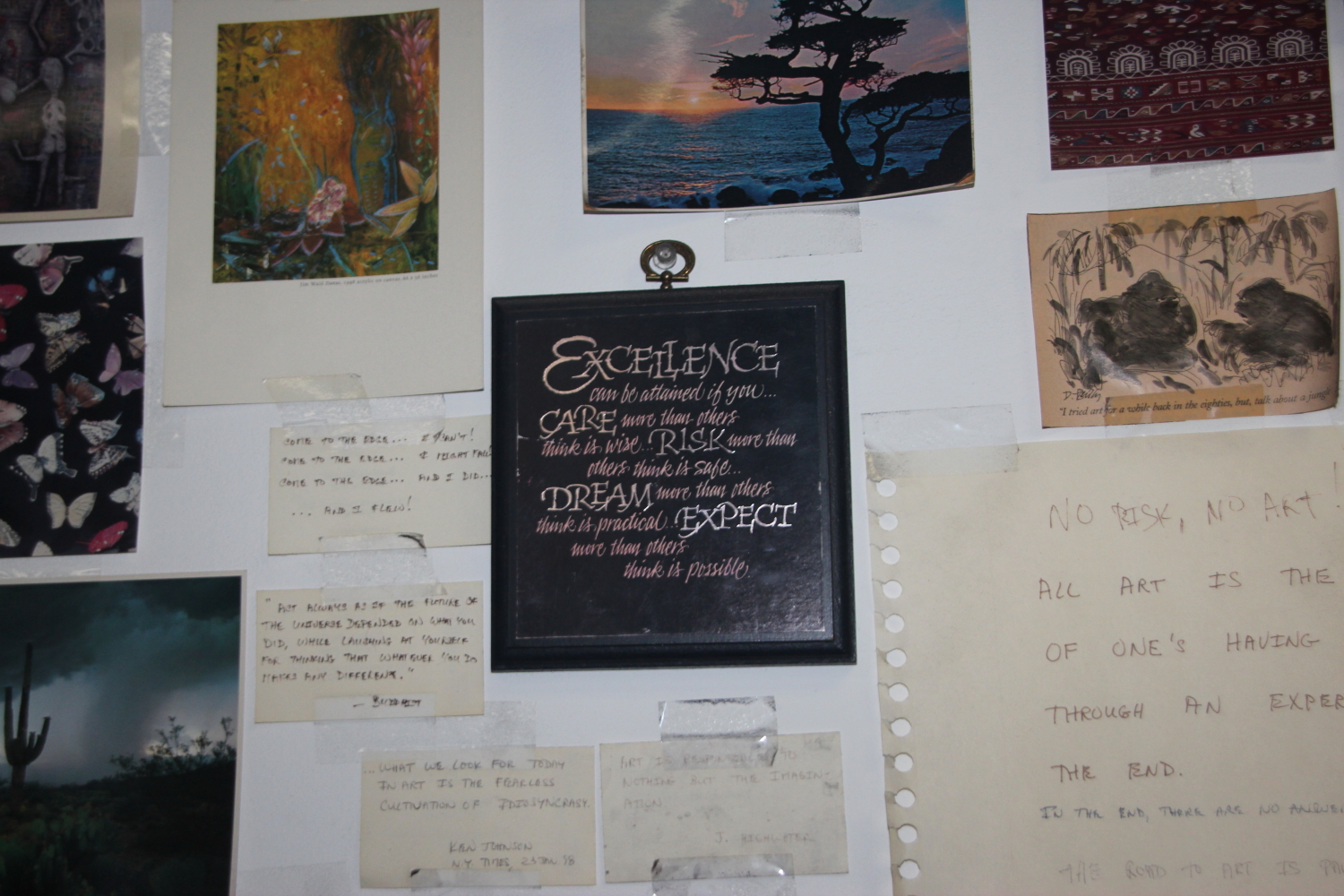
On my studio wall
A: I have several pieces of advice:
Build a support network among your fellow artists, teachers, and friends. It is tough to be an artist, period. Be sure to read plenty of books by and about artists. You will learn that all have experienced similar challenges.
Do whatever you must to keep working – no matter what! Being an artist never gets easier. There are always new obstacles and you will discover solutions over time.
When I left the active duty Navy in 1989, my co-workers threw a farewell party. One of the parting gifts I received was a small plaque from a young enlisted woman whom I had supervised. The words on the plaque deeply resonated with me, since I was about to make a significant and risky career change. It was the perfect gift for someone facing the uncertainty of an art career.
Many years later the plaque is still a proud possession of mine. It hangs on the wall behind my easel, to be read every day as I work. It says:
“Excellence can be attained if you…
Care more than others think is wise…
Risk more than others think is safe…
Dream more than others think is practical…
Expect more than others think is possible.”
I continue to live by these wise words.
Comments are welcome!
Pearls from artists* # 380
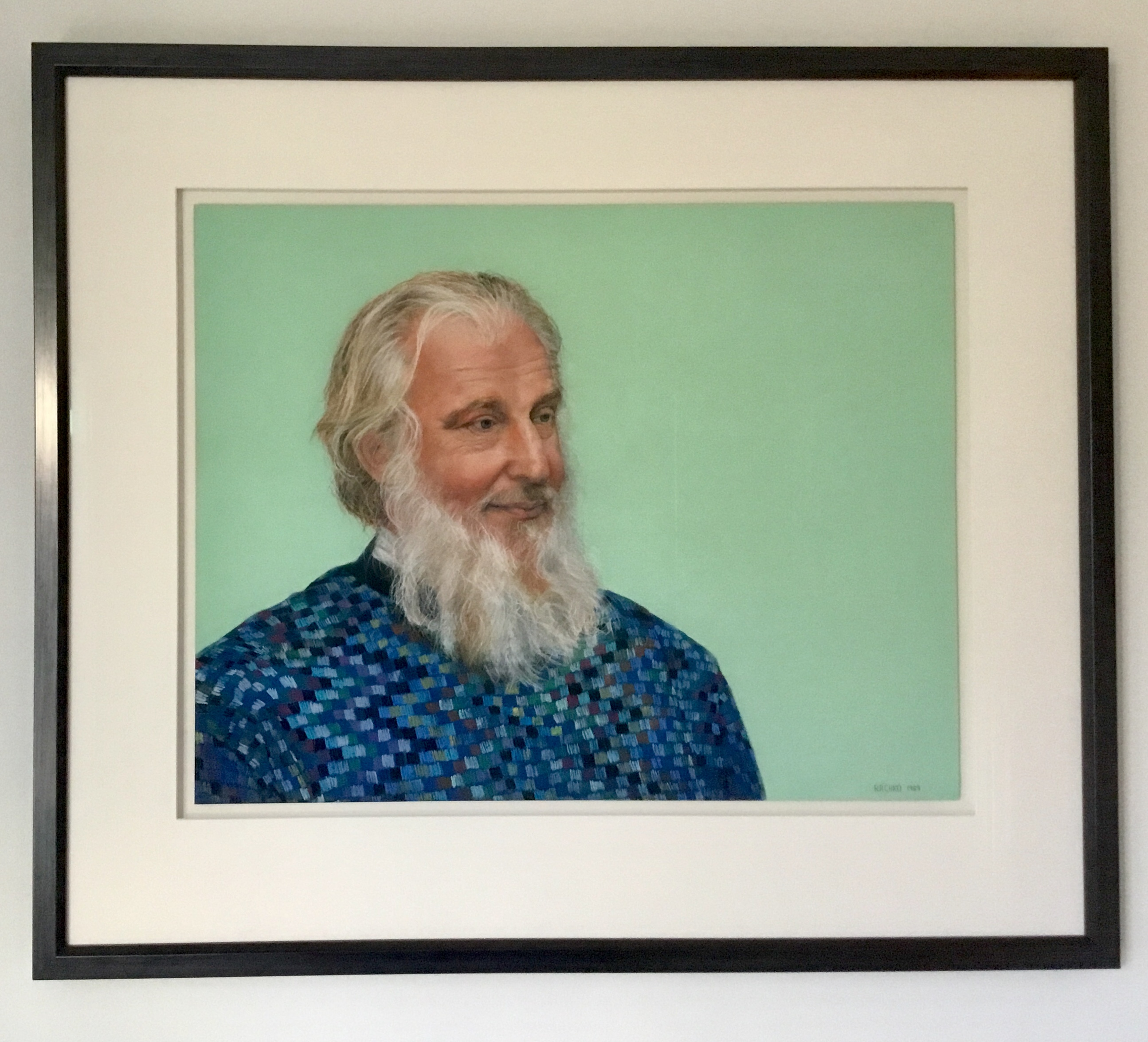
“John,” Soft Pastel on Sandpaper, 22” x 28” (image), 1989.
* an ongoing series of quotations – mostly from artists, to artists – that offers wisdom, inspiration, and advice for the sometimes lonely road we are on.
The freedom he enjoyed came at a cost. But those fears and irritations evaporated amid the support the artists gave one another immediately after the war. A community developed that sustained them and gave them courage. “You have to have confidence amounting to arrogance, because particularly at the beginning, you’re making something that nobody asked you to make,” Elaine [de Kooning] said. “And you have to have total confidence in yourself, and in the necessity of what you’re doing.” That was much easier done in a group of like-minded individuals.
Mary Gabriel in Ninth Street Women
Comments are welcome!
Q: You had a terrific interview published in the July Issue # 44 of “Art Market.” How did that happen?
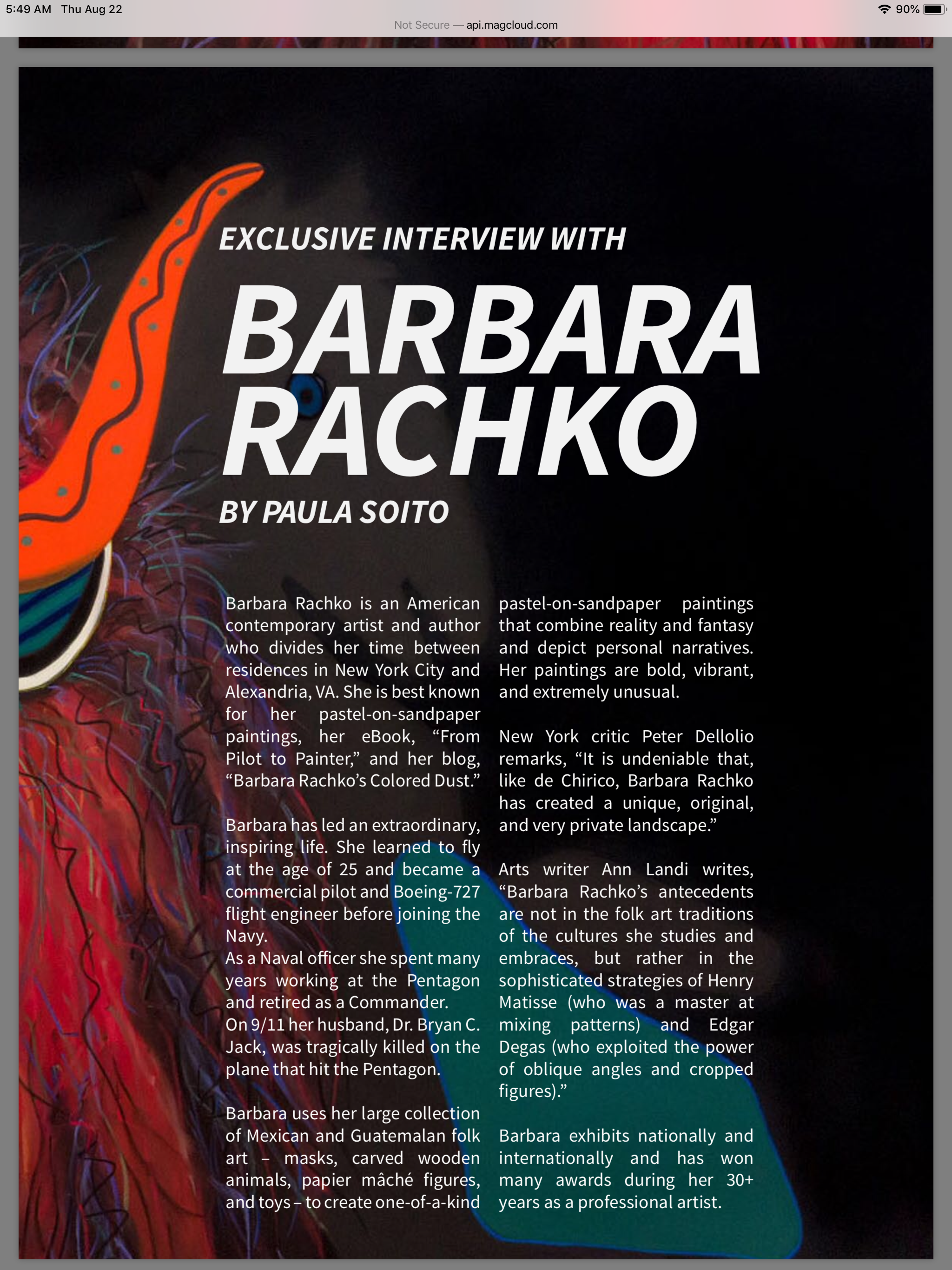
First page of Barbara’s interview in “Art Market”
A: You know, my business strategy is to get my work onto as many websites as possible in hopes of eventually reaching the right collectors. ArtsRow has not gotten me a sale yet, but wow, what press! The print copy of “Art Market is gorgeous.” I was stunned by the quality of the reproductions, the layout, and the fact that the publisher did not cut any of my 18-page interview!
This is how it happened. I cannot remember if Paula Soito found me or vice versa. Somehow we connected, I sent my work for her ArtsRow website, and shortly after, she asked to interview me for her blog. Paula deeply connected to something in my work or my bio. I may be mistaken, but I do not believe she asks many artists for an interview.
As I do with every interview request, I enthusiastically said, “Yes!” Paula proceeded to ask great questions. I prepared my written answers to her questions as though I were writing an article for “The New York Times,” because once an interview is published, you never know who will read it. And we had no word limits since the interview was being published on her blog, not in print.
So last spring my in-depth interview was published on Paula’s blog. Sometime later she let me know that she had met Dafna Navarro, CEO and Founder of “Art Market,” and was arranging for our interview to be published there. I thought, “Gee, that’s nice,” thinking there’s no way they will publish the whole article. When I received my print copy in the mail I was thrilled! Not only did my interview look great, but it was sandwiched between a piece about an exhibition at The Metropolitan Museum and one at The Whitney Museum of American Art! So, of course, I am sharing it with everyone and encouraging people to purchase a print copy.
Pearls from artists* # 379

“Blind Faith,” 38″ x 58,” soft pastel on sandpaper
* an ongoing series of quotations – mostly from artists, to artists – that offers wisdom, inspiration, and advice for the sometimes lonely road we are on.
Elaine’s and Bill’s [de Kooning] relationship involved a continual exchange of ideas that wasn’t restricted to conversations with friends. In the quiet of their studio when they were finally alone, they’d climb into bed and Elaine would read to Bill. Faulkner was a favorite. She also read Ambrose Bierce’s Civil War tales. And she would read Kierkegaard. That nineteenth-century father of Existentialism wrote with great passion about the essential solitude and uncertainty of the human struggle. They were words of consolation for Bill and Elaine who, though confident in their paths as artists, could not have been free of the nagging fear that they might spend their lives looking and never find what they sought in their work. Kierkegaard seemed to say that it didn’t matter, that it was striving that counted, and he described the need to reconcile oneself to the unknowable that was man’s fate. The artist, he said, had a crucial role to play in that regard. Like a religious figure who was an envoy from a realm most people could not access, the artist through his or her work revealed pure spirit so that men mired in the bitter reality of daily life might find the strength to continue.
Mary Gabriel in Ninth Street Women
Comments are welcome!
Pearls from artists* # 378
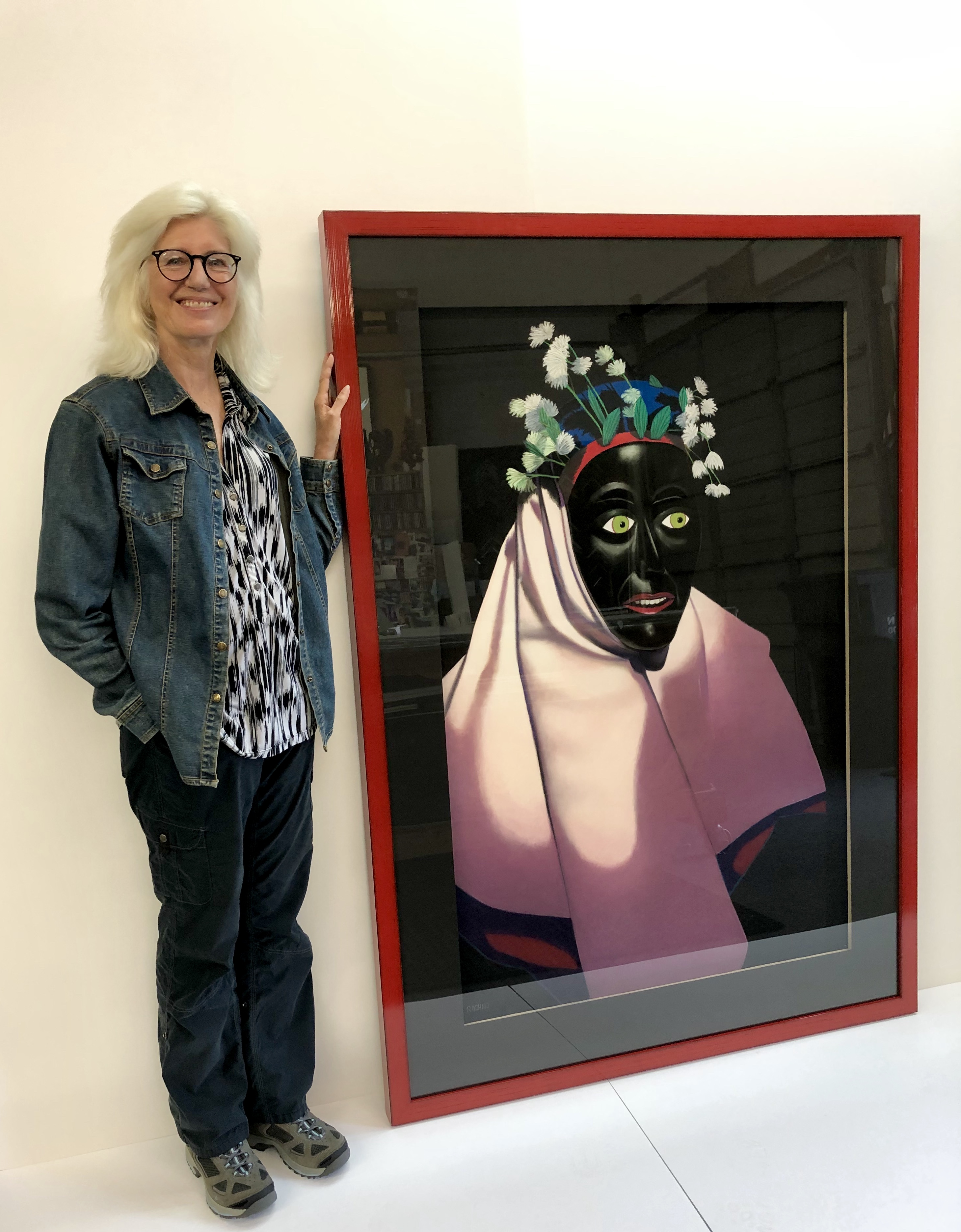
With “Poseur,” Soft Pastel on Sandpaper, 70” x 50,” 2019
* an ongoing series of quotations – mostly from artists, to artists – that offers wisdom, inspiration, and advice for the sometimes lonely road we are on.
[John] Graham told Lee [Krasner] and Jackson [Pollock] they were at the most wonderful part of their artistic journey because they were unknown and therefore free, and that there was only one thing they had to dread: fame.
How many men of great talent on their way to remarkable achievement in the present day are ruthlessly destroyed by critics, dealers, and public while mediocre, insensitive hacks, who by intrigue and industrious commercial effort have gained recognition and success, will go down in history with their inane creations. Success, fame, and greatness coincide very seldom. The great are not recognized during their life-time… Poe, Van Gogh,Rembrandt, Cezanne, Gauguin, Modigliani, Pushkin, Rimbaud, Baudelaire, and others could not make even a miserable living out of their art.
As Graham described it, true art could never be of the world because it was always steps, decades, light-years ahead of it. Artists, therefore, had no need to be part of the world, either. Their only duty was to persevere. Humanity, he said, depended on it.
Mary Gabriel in Ninth Street Women
Comments are welcome!
Pearls from artists* # 377
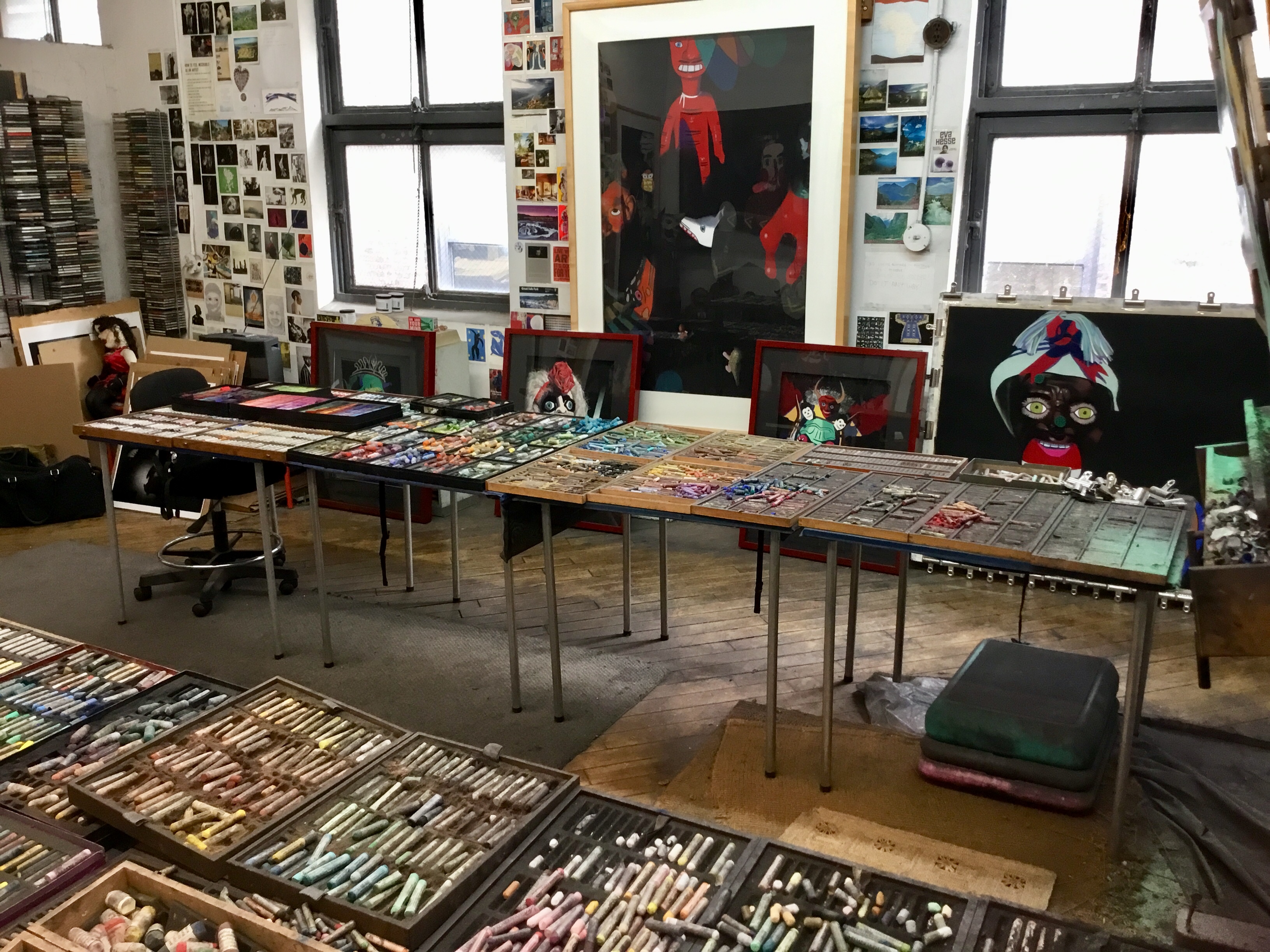
Barbara’s studio
* an ongoing series of quotations – mostly from artists, to artists – that offers wisdom, inspiration, and advice for the sometimes lonely road we are on.
Life for an artist, any artist, was difficult. There were few rewards other than the most important, which was satisfying one’s need to create. But in the art world of galleries, collections, and museums that the avant-garde artists in New York would inherit in the late 1940s, the difficulties experienced by the men who painted and sculpted would be nothing compared to those of the women. Society might mock the men’s work and disparage them for being “bums,” but at least they were awarded the dignity of ridicule. Women had to fight with every fiber of their being not to be completely ignored. In a treatise on men and women in America published at the start of the war, author Pearl S. Buck wrote,
The talented woman… must have, besides their talent, an unusual energy which drives them… to exercise their own powers. Like talented men, they are single-minded creatures, and they can’t sink into idleness nor fritter away life and time, nor endure discontent. They possess that rarest gift, integrity of purpose… Such women sacrifice, without knowing they do, what many other women hold dear – amusement, society, play of one kind or another – to choose solitude and profound thinking and feeling, and at last final expression.
“To what end?” another woman might ask. To the end, perhaps… of art – art which has lifted us out of mental and spiritual savagery.”
Mary Gabriel in Ninth Street Women
Comments are welcome!
Q: Do you enjoy being interviewed?
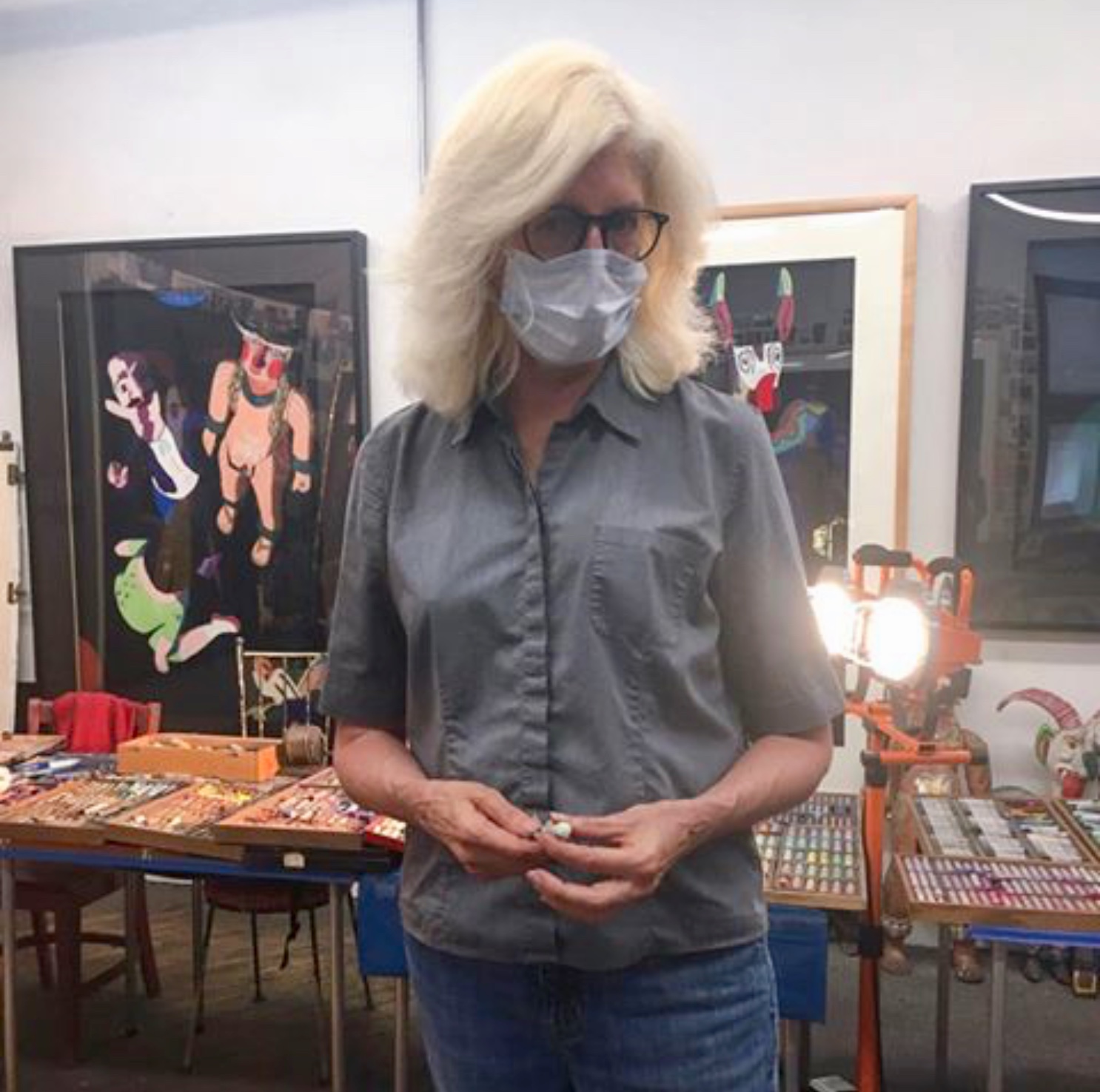
In the studio
A: I do very much. Each new interview is another opportunity to discover what is remembered, what is kept because it still seems important, and how certain details are selected from amongst all the accumulated memories of a lifetime. My own story is continually evolving as some facts are left out or rearranged, and others added. New connections keep being made while some others are discarded. I find it fascinating to read over old interviews and compare them with what I remember in the present.
Comments are welcome!
Pearls from artists* # 376
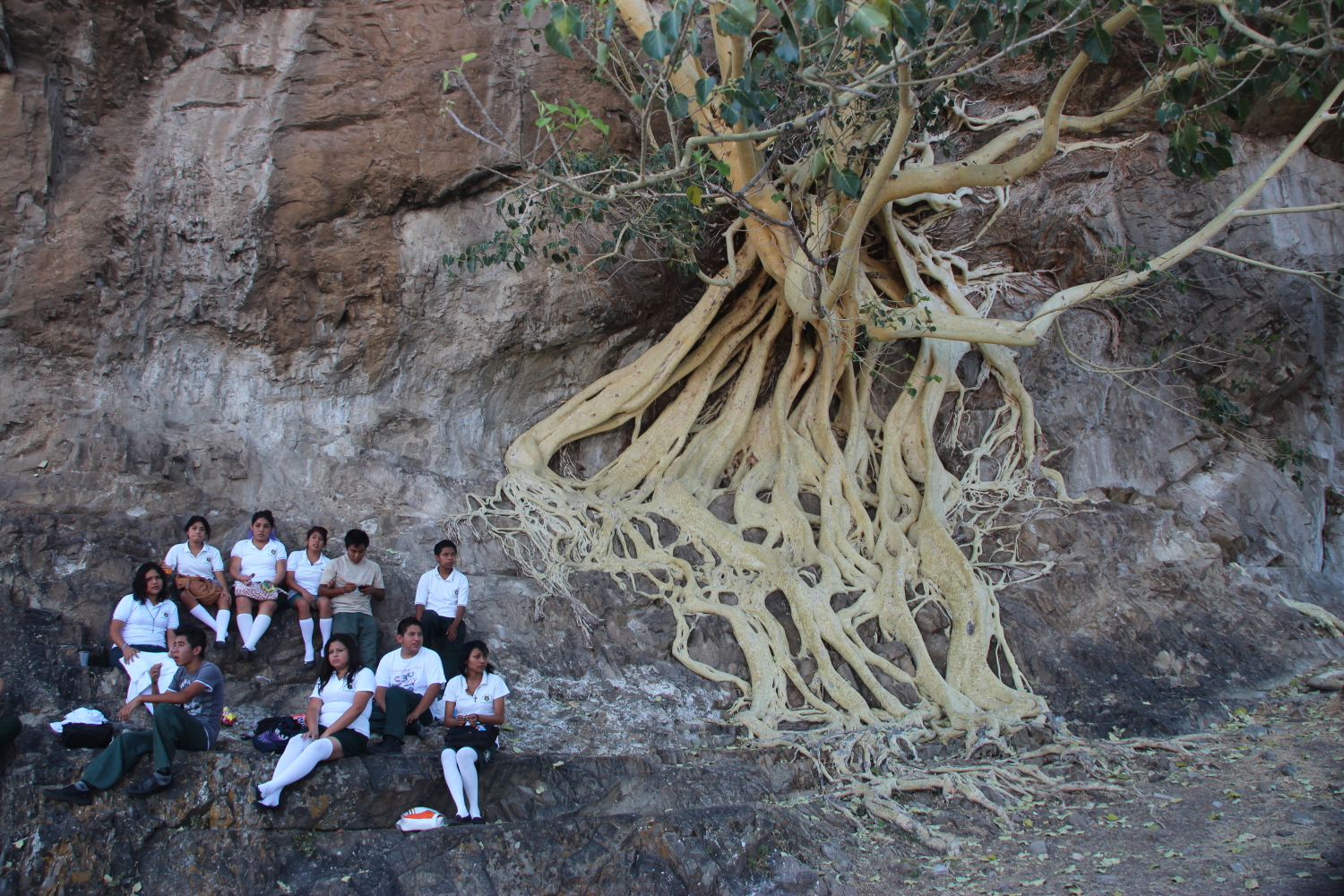
Chalcatzingo, Mexico
* an ongoing series of quotations – mostly from artists, to artists – that offers wisdom, inspiration, and advice for the sometimes lonely road we are on.
In the cemetery all the vultures began to circle, and the sky filled with birds. It was then that I began my series on birds – many of my bird photos came from this moment. All this to say that in life everything is connected: your pain and your imagination, which perhaps can help you forget reality. It’s a way of showing how you connect what you live with what you dream, and what you dream with what you do, and this is what remains on paper.
Graciela Iturbide in Eyes to Fly With: Portraits, Self-Portraits, and Other Photographs
Comments are welcome!
Q: Why do you make art?

“Why Do I Make Art” by Ursula von Rydingsvard
A: Last spring I viewed Ursula von Rydingsvard’s exhibition at the National Museum of Women in the Arts. One thing that stayed with me is her wall text, “Why Do I Make Art by Ursula von Rydingsvard” in which she listed a few dozen benefits that art-making has brought to her life.
I want to share some of my own personal reasons here, in no particular order. My list keeps changing, but these are true at least for today.
1. Because I love the entire years-long creative process – from foreign travel whereby I discover new source material, to deciding what I will make, to the months spent in the studio realizing my ideas, to packing up my newest pastel painting and bringing it to my Virginia framer’s shop, to seeing the framed piece hanging on a collector’s wall, to staying in touch with collectors over the years and learning how their relationship to the work changes.
2. Because I love walking into my studio in the morning and seeing all of that color! No matter what mood I am in, my spirit is immediately uplifted.
3. Because my studio is my favorite place to be… in the entire world. I’d say that it is my most precious creation. It’s taken more than twenty-two years to get it this way. I hope I never have to move!
4. Because I get to listen to my favorite music all day or to Public Radio stations.
5. Because when I am working in the studio, if I want, I can tune out the world and all of it’s urgent problems. The same goes for whatever personal problems I am experiencing.
6. Because I am devoted to my medium. How I use pastel continually evolves. It’s exciting to keep learning about its properties and to see what new techniques will develop.
7. Because I have been given certain gifts and abilities and that entails a sacred obligation to USE them. I could not live with myself were I to do otherwise.
8. Because art-making gives meaning and purpose to my life. I never wake up in the morning wondering, how should I spend the day? I have important work to do and a place to do it. I know this is how I am supposed to be spending my time on earth.
9. Because I have an enviable commute. To get to my studio it’s a thirty-minute walk, often on the High Line early in the morning before throngs of tourists have arrived.
10. Because life as an artist is never easy. It’s a continual challenge to keep forging ahead, but the effort is also never boring.
11. Because each day in the studio is different from all the rest.
12. Because I love the physicality of it. I stand all day. I’m always moving and staying fit.
13. Because I have always been a thinker more than a talker. I enjoy and crave solitude. I am often reminded of the expression, “She who travels the farthest, travels alone.” In my work I travel anywhere.
14. Because spending so much solitary time helps me understand what I think and feel and to reflect on the twists and turns of my unexpected and fascinating life.
15. Because I learn about the world. I read and do research that gets incorporated into the work.
16. Because I get to make all the rules. I set the challenges and the goals, then decide what is succeeding and what isn’t. It is working life at its most free.
17. Because I enjoy figuring things out for myself instead of being told what to do or how to think.
18. Because despite enormous obstacles, I am still able to do it. Art-making has been the focus of my life for thirty-three years – I was a late bloomer – and I intend to continue as long as possible.
19. Because I have been through tremendous tragedy and deserve to spend the rest of my life doing exactly what I love. The art world has not caught up yet, but so be it. This is my passion and my life’s work and nothing will change that.
20. Because thanks to the internet and via social media, my work can be seen in places I have never been to and probably will never go.
21. Because I would like to be remembered. The idea of leaving art behind for future generations to appreciate and enjoy is appealing.
Comments are welcome!


 barbararachkoscoloreddust.com