Blog Archives
Pearls from artists* # 408

“No Cure for Insomnia,” pastel on sandpaper, 58″ x 38″ image, 70” x 50” framed
* an ongoing series of quotations – mostly from artists, to artists – that offers wisdom, inspiration, and advice for the sometimes lonely road we are on.
Classics have nothing to do with aesthetic sophistication. They use the aesthetic as a springboard to something else. The creation of a classic will often require the artist to deviate from prevailing standards in order to push the ordinary vision through. If there is one prerequisite for producing a classic, it is the willingness to follow the vision wherever it leads, even if it demands a breach of convention, technique, or popular taste. (It may not even be a question of if or when, for how can one produce a truly singular work without reinventing the medium to some extent?) We often hear that the master artist is “in love” with her material: that the sculptor loves the marble, the dancer loves the body, the musician loves his instrument. For the maker of classics, however, the medium always seems to be an obstacle; love is never without a tinge of spite. William S. Burroughs was so contemptuous of language that he took to describing it as a disease. He conceived his work as an attempt to confront language in hopes to cure the mind of the “word virus.” Indeed, if the goal of art is to take us beyond the ordinary preoccupations to reach the heart of the Real, it would seem essential that there be a fight, a struggle to wrest from the medium something to which Consensus dictates it is not naturally inclined.
J.F. Martel in Reclaiming Art in the Age of Artifice: A Treatise, Critique, and Call to Action
Comments are welcome!
Q: Do you have a favorite among your thousands of travel photographs from around the world?

Tile worker, South India
A: I do! It is this photograph of a family matriarch filling a water jar. I don’t remember the name of the village, but it was somewhere in South India at a clay-tile-making workshop.
Walking in, I immediately stopped in my tracks. Had I just traveled back in time to some 18th century workshop? I found her appearance and demeanor extraordinary! (Regretfully, I did not ask her name). She was tiny, yet she was the boss whose authority and judgement were beyond question. After observing her move around the studio for a few minutes, I asked if I might have a photograph. She immediately struck this arresting and classic pose. I smiled to myself, “Obviously, she has done this a few times!”
Comments are welcome!
Pearls from artists* # 400

In the studio with friends
* an ongoing series of quotations – mostly from artists, to artists – that offers wisdom, inspiration, and advice for the sometimes lonely road we are on.
A student in the audience raised her hand and asked me:
“Why should I live?”
… In the very act of asking that question, you are seeking reasons for your convictions, and so you are committed to reason as the means to discover and justify what is important to you. And there are so many reasons to live!
As a sentient being, you have the potential to flourish. You can refine your faculty of reason itself by learning and debating. You can seek explanations of the natural world through science, and insight into the human condition through the arts and humanities. You can make the most of your capacity for pleasure and satisfaction, which allowed your ancestors to thrive and thereby allowed you to exist. You can appreciate the beauty and the richness of the natural and cultural world. As the heir to billions of years of life perpetuating itself, you can perpetuate life in turn. You have been endowed with a sense of sympathy – the ability to like , love, respect, help, and show kindness – and you can enjoy the gift of mutual benevolence with friends, family, and colleagues.
And because reason tells you that none of this is particular to you, you have the responsibility to provide to others what you expect for yourself. You can foster the welfare of other sentient beings by enhancing life, health, knowledge, freedom, abundance, safety, beauty, and peace. History shows that when we sympathize with others and apply our ingenuity to improving the human condition, we can make progress in doing so, and you can help to continue that progress.
Stephen Pinker in Enlightenment Now: The Case for Reason, Science, Humanism, and Progress
Comments are welcome!
Q: How long did it take you to discover the properties of pastel? (Liliana Mileo via facebook.com/BarbaraRachko/)
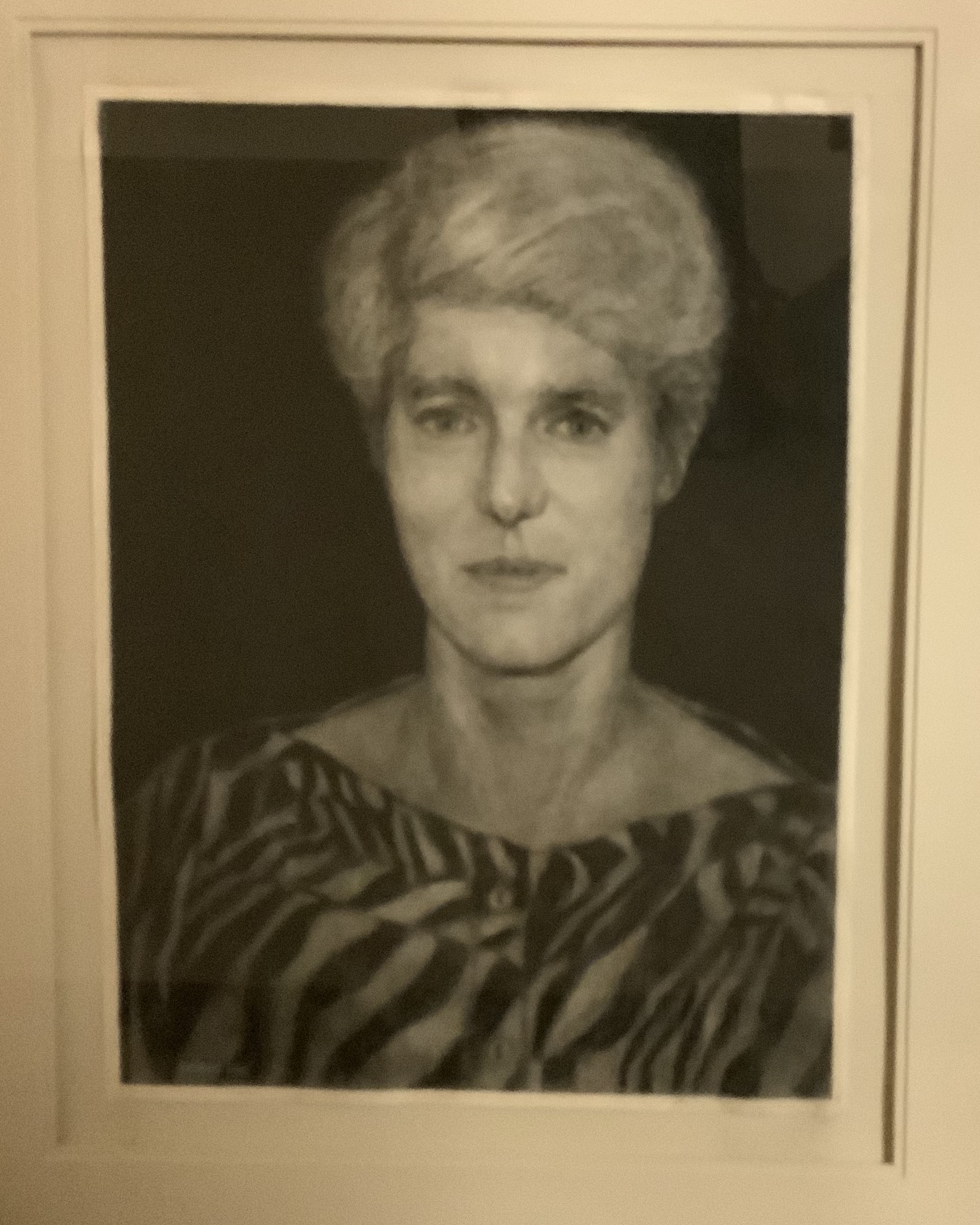
A charcoal self-portrait from 1988
A: After I moved to Alexandria, Virginia in the mid-1980s, I began taking classes at The Art League School. I was extremely unhappy with my career as a Navy Lieutenant. I worked as a computer analyst for the Joint Chiefs of Staff at the Pentagon and was searching for something more meaningful to do with my life.
I began with a basic drawing class and liked it. I enrolled in more classes and decided to spend two years working exclusively in black and white media, such as charcoal and graphite, before advancing to color. Fortunately, early on I found an excellent teacher in Lisa Semerad. I remain deeply grateful for the strong foundational drawing skills she imparted to me during this period.
After two years I tried water color and soon discovered it was not for me, a perfectionist who needs to refine my work. Then I tried etching and found it extremely tedious, the antithesis of instant gratification.
Finally I began studying soft pastel with Diane Tesler, another gifted teacher, and fell in love with this medium! At The Art League School I also completed a one-week workshop with Albert Handell, who introduced me to the archival sandpaper that I have been using ever since.
While I fell in love with pastel three decades ago, I continue to learn about its unique properties. I am pushing pastel to new heights as my techniques continually evolve. This is a lifetime journey of learning. I hope to never know all there is to know.
Comments are welcome! Ask anything and I may answer in a future blog post, as you’ve seen here with Liliana’s question.
Pearls from artists* # 382

Barbara’s studio
* an ongoing series of quotations – mostly from artists, to artists – that offers wisdom, inspiration, and advice for the sometimes lonely road we are on.
I think a man [sic] spends his whole lifetime painting one picture or working on one piece of sculpture. The question of stopping is really a decision of moral considerations. To what extent are you intimidated by the actual act, so that you are beguiled by it? To what extent are you charmed by its inner life? And to what extent do you then really approach the intention or desire that is really outside it? The decision is always made when the purée has something in it that you wanted.
Barnett Newman quoted in The Unknown Masterpiece by Honore Balzac
Comments are welcome!
Pearls from artists* # 224
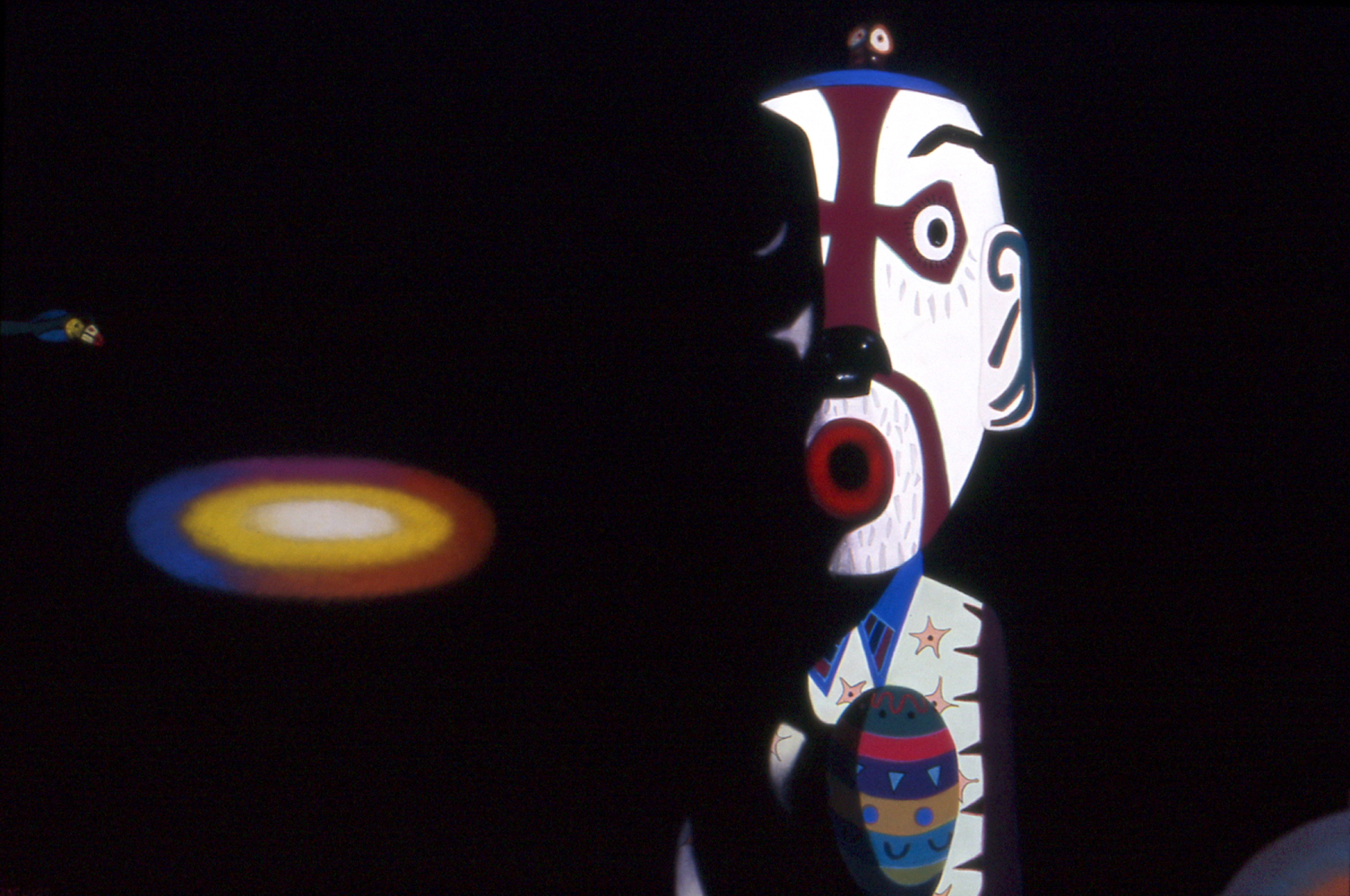
“Poker Face,” soft pastel on sandpaper, 38″ x 58″ image, 50″ x 70″ framed
* an ongoing series of quotations – mostly from artists, to artists – that offers wisdom, inspiration, and advice for the sometimes lonely road we are on.
… wise writers decline to engage in debates over the right way to read their words. T.S. Eliot was once approached with a question about a cryptic line from his poem “Ash-Wednesday”: “Lady, three white leopards sat under a juniper-tree.” What did the line mean? The poet replied: “I mean, ‘Lady, three white leopards sat under a juniper-tree .” Creating a text, Eliot seems to be saying, like having a child, only means bringing something into the world. It doesn’t include the power to control it’s destiny.
Adam Kirsch in “Can You Read a Book the Wrong Way?”, The New York Times Book Review, Sept. 27, 2016.
Comments are welcome!
Q: What’s on the easel today?
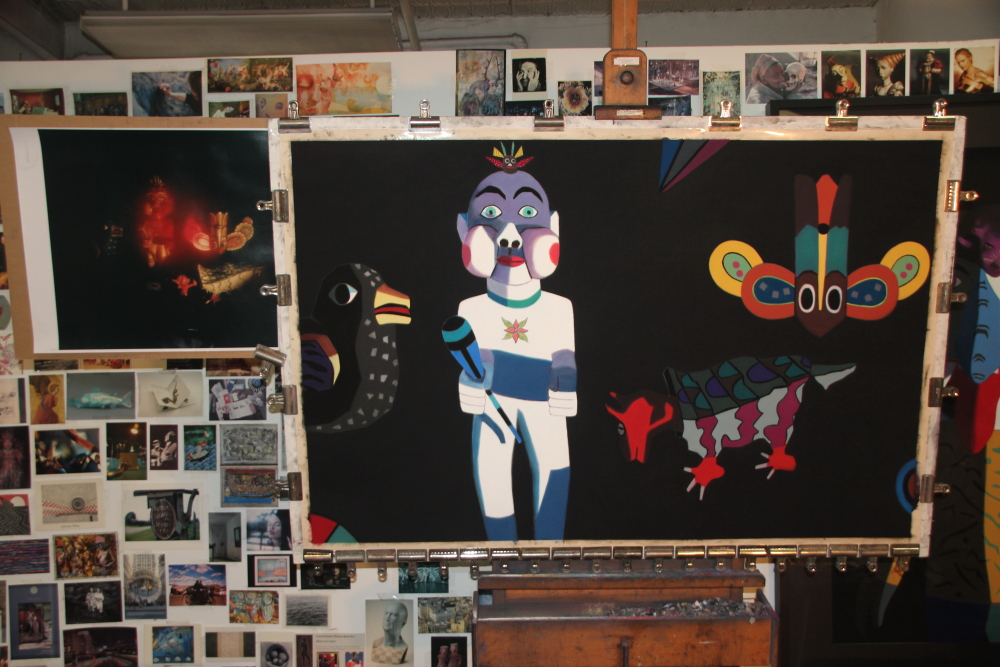
Work in progress
A: “White Star,” 38″ x 58″ is slowly progressing. The title of this painting alludes to David Bowie’s last album, “Dark Star” and is my somewhat more optimistic take on that phrase.
The white Guatemalan figure and the Sri Lankan mask on the top right still could use more details. Over time the “Black Paintings” series is becoming more about what is left out. So how much detail to add is an open question.
Comments are welcome!
Pearls from artists* # 188
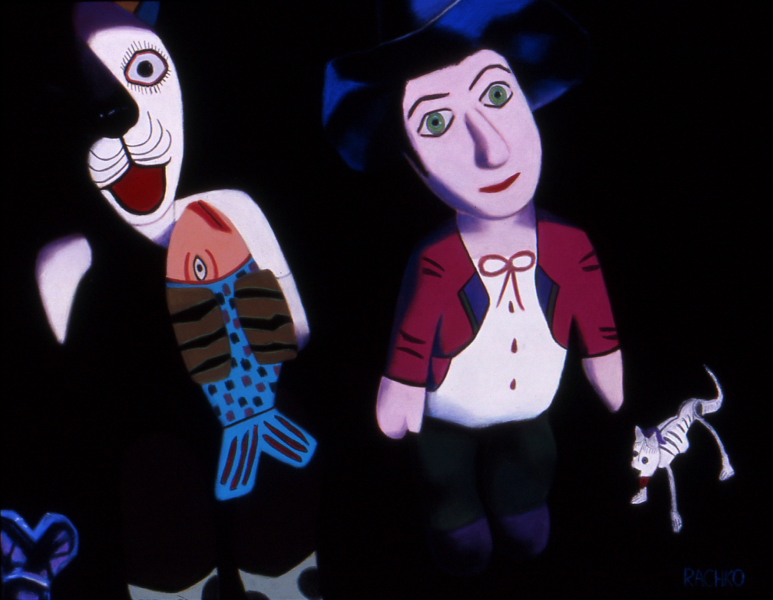
“Offering,” soft pastel on sandpaper, 20″ x 26″
* an ongoing series of quotations – mostly from artists, to artists – that offers wisdom, inspiration, and advice for the sometimes lonely road we are on.
HM: In order to create a work of art, you need an artist, an object, the work, and the audience. Indeed, where there’s no audience, there’s no artist. Renoir used to say, “No painters in Hamlet.” meaning that on a desert island you wouldn’t paint.
( I confess I am a little surprised. For my part, I find it difficult to believe that the true artist cannot work without hope. It seems to me that art is first and foremost an internal necessity, a need to escape from life. It is true that this is closer to the mystics’ point of view and that the artist, if he does not work directly for his contemporaries, at least looks forward to some future resonance. Nonetheless, I ask the same question again.)
PC: Even a true painter wouldn’t paint on a desert island?
HM: No… Painting is a means of communication, a language. An artist is an exhibitionist. Take away his spectators and the exhibitionist slinks off with his hands in his pockets.
The audience is the material in which you work. You don’t see the face of the audience. It’s huge, an immense mass. The public is – listen, it’s the man you encounter one fine day, who says, “Monsieur Matisse, I can’t tell you how much I love your picture, the one you exhibited at the salon,” and this man is a clerk who could never spend a red cent on painting. The public is not the buyer; the public is the sensitive material on which you hope to leave an imprint.
PC: Through the picture, the audience returns to the source of emotion.
HM: Yes, and the artist is the actor, the fellow with the wheedling voice who won’t rest until he’s told you his life story.
Chatting with Henri Matisse: The Lost 1941 Interview, Henri Matisse with Pierre Courthion, edited by Serge Guilbaut, translated by Chris Miller
Comments are welcome!
Q: Why do you make art?

Barbara’s studio
A: This is an excellent question and one I like to revisit because with all the day-to-day frustrations and disappointments that are a normal part of an artist’s life, it is easy to forget what is important.
First, I make art because I have a gift and a desire to share it with others. To not develop, express, and share all that I have to say through my work is unthinkable.
Second, I make art because it is what gives my life direction and purpose. I believe that each human being has his or her own quest, driven by passion, to fulfill a certain duty. Recall Joseph Campbell’s, “The Hero’s Journey.” I need to make art in order to feel that I am living up to my highest potential.
Third, for inexplicable reasons (to me, anyway) soft pastel is an undervalued medium. I fell in love with pastel above all other media and hope to demonstrate that great art can be created with it. This is one of the drives that keeps me steadily working.
Comments are welcome!
Q: How do you decide how much to charge for your paintings?

Barbara’s studio
A: What to charge for my work is a complex question. The prices of my pastel paintings take into account many tangible and intangible factors. Here are a few:
Sales history.
My thirty-year-long exhibition history.
The costs of maintaining a studio in New York. My overhead goes up annually, but I do not raise prices every year to offset these expenses.
The countless hours of labor, cost of art materials, framing, photography, transportation, foreign travel, etc. that go into creating a painting.
Costs for marketing, social media, advertising, website design and upkeep, ongoing education, etc.
Somewhat less quantifiable factors such as my reputation as an artist, the real demand for my work, goodwill, the fact that I work full-time as a professional artist, etc.
Comments are welcome!


 barbararachkoscoloreddust.com