Blog Archives
Pearls from artists* # 488
*an ongoing series of quotations – mostly from artists, to artists – that offers wisdom, inspiration, and advice for the sometimes lonely road we are on.
To be astonished is to be caught unawares by the revelation of realities denied or repressed in the everyday. Astonishment has an intellectual as well as an emotional component – in it, the brain and the heart come together. Far from distracting us from the strange and the uncanny in life, the astonishment evoked by great artistic works puts them square in our sights. The work demands that we feel and think the mystery of our passage through this body, on this earth, in this universe. We realize afterward that the world is not what we thought it was: something hidden, impossible to communicate though clearly expressed in the work has risen into the light of awareness, and the share of the Real to which we are privy is proportionately expanded.
JF Martel in Reclaiming Art in the Age of Artifice: A Treatise, Critique, and Call to Action
Comments are welcome!

Q: How do you work and approach your subject? (Question from “Arts Illustrated”)
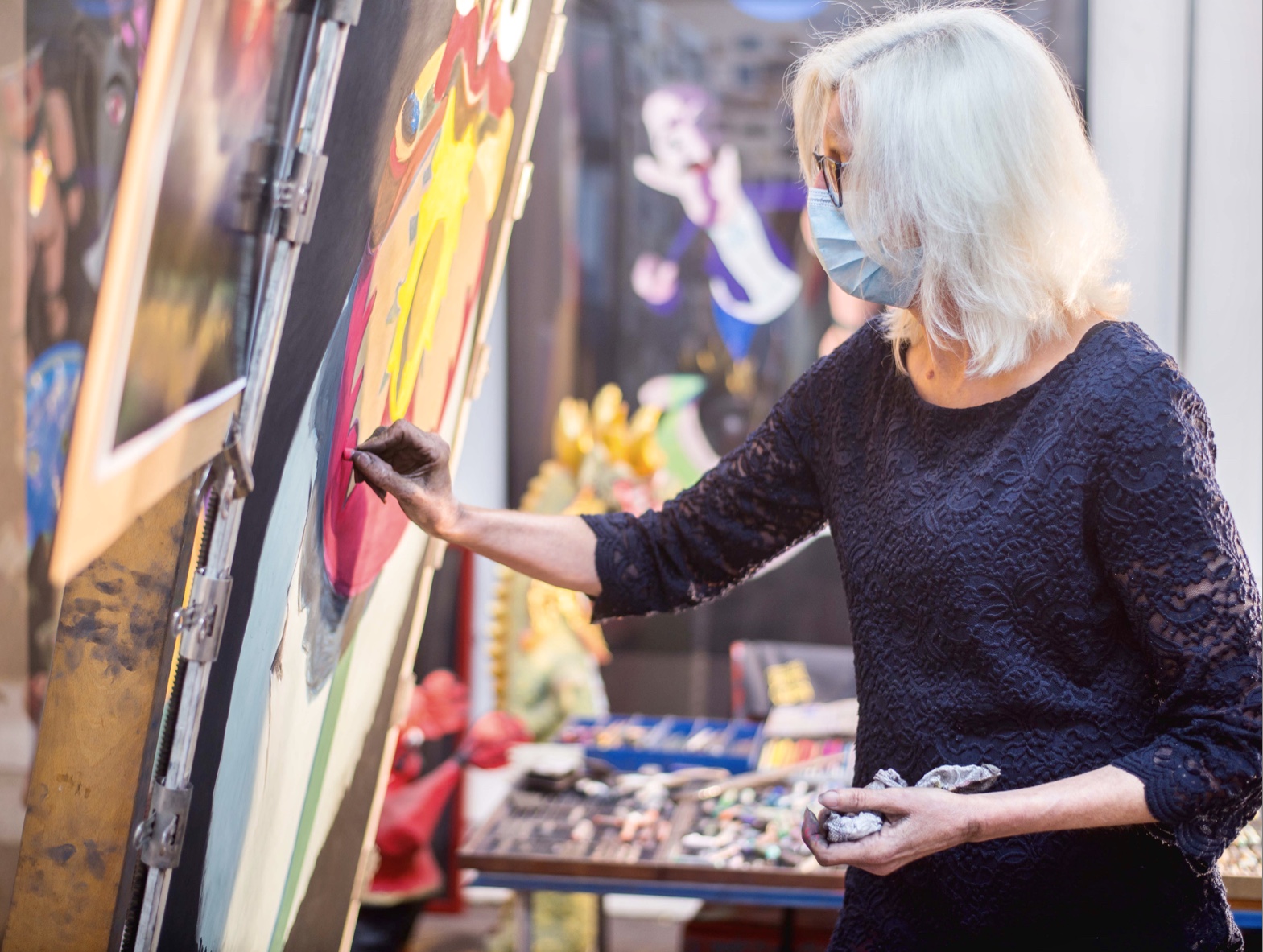
A: Undoubtedly, I could not make my work without UART sandpaper since my entire pastel technique evolved around it. I use 400 0r 500 grit. My favorite thing about it is its ‘tooth’ (i.e. texture or roughness).
Over the many months I spend creating a pastel painting, I build layer upon layer of soft pastel. Because the paper I use is relatively “toothy,” it accepts all of the pastel the painting needs. And as many people know, I own and use thousands of soft pastels!
Many layers of soft pastel and several months of studio time go into creating each painting. My self-invented technique is analogous to the glazing techniques used by the Old Masters, who slowly built up layers of thin oil paint to achieve a high degree of finish. Colors were not only mixed physically, but optically.
Similarly, I gradually build up layers of soft pastel, as many as thirty, to create a pastel painting. After applying a color, I blend it with my fingers and push it into the sandpaper’s tooth. It mixes with the color beneath to create a new color, continually adding richness, saturation, and intensity to the piece. By the time a pastel painting is finished, the colors are bold, vibrant, and exciting.
From the beginning in the 1980s I used photographs as reference material and my late husband, Bryan, would shoot 4” x 5” negatives of my elaborate setups with his Toyo-Omega view camera. In those days I rarely picked up a camera except when we were traveling. After Bryan was killed on 9/11, I inherited his extensive camera collection – old Nikons, Leicas, Graphlex cameras, etc. – and I wanted to learn how to use them. In 2002 I enrolled in a series of photography courses (about 10 over 4 years) at the International Center of Photography in New York. I learned how to use all of Bryan’s cameras and how to make my own big color prints in the darkroom.
Along the way I discovered that the sense of composition, form, and color I developed over many years as a painter translated well into photography. The camera was just another medium with which to express my ideas. Astonishingly, in 2009 I had my first solo photography exhibition in New York.
It’s wonderful to be both a painter and a photographer. Pastel painting will always be my first love, but photography lets me explore ideas much faster than I ever could as a painter. Paintings take months of work. To me, photographs – from the initial impulse to hanging a framed print on the wall – are instant gratification.
For several years I have been using my iPad Pro to capture thousands of travel photographs. Most recently, I visited Gujarat and Rajasthan in India. I have never been inclined to use a sketchbook so composing photos on my iPad keeps my eye sharp while I’m halfway around the world, far from my studio practice.
My blog, “Barbara Rachko’s Colored Dust,” continues to be a crucial part of my overall art practice. Blogging twice a week forces me to think deeply about my work and to explain it clearly to others. The process has helped me develop a better understanding about why I make art and, I like to think, has helped me to become a better writer.
Comments are welcome!
Travel photo of the month*
*Favorite travel photos that have not yet appeared in this blog
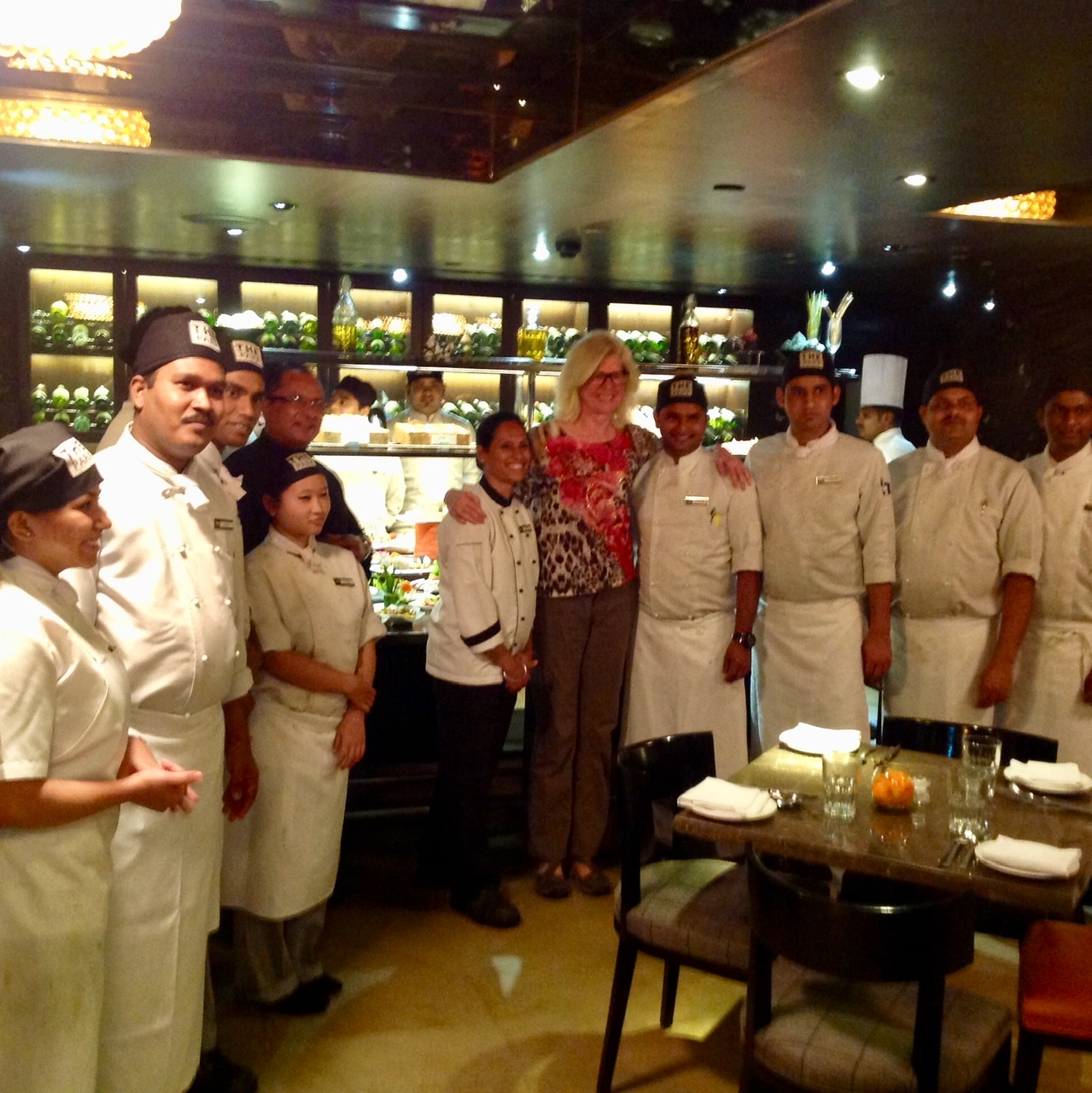
It was New Year’s Eve and I had just arrived in Bangalore from New York (jet lagged, although it doesn’t show here). Too tired to explore the neighborhood, I opted to dine at the hotel restaurant. I seemed to be the only Westerner there and I stood out. Soon the staff began treating me like a celebrity, requesting to take photographs, individually and in groups. Finally, I thought to ask for a photo of my own!
Comments are welcome!
Q: How has photography changed your approach to painting?
A: Except for many hours spent in life-drawing classes and still life setups that I devised when I was learning my craft in the 1980s, I have always worked from photographs. My late husband, Bryan, would shoot 4” x 5” negatives of my elaborate “Domestic Threats” setups using his Toyo-Omega view camera. I rarely picked up a camera except when we were traveling. After Bryan was killed on 9/11, I inherited his extensive (film) camera collection – old Nikons, Leicas, Graphlex cameras, etc. – and needed to learn how to use them. Starting in 2002 I enrolled in a series of photography courses (about 10 over 4 years) at the International Center of Photography in New York. I learned how to use all of Bryan’s cameras and how to make my own big color prints in the darkroom.
Early on I discovered that the sense of composition, color, and form I had developed over many years as a painter translated well into photography. The camera was, and is, just another medium with which to express ideas. Pastel painting will always be my first love. However, pastel paintings take months of work, while photography offers instant gratification, especially with my current preferred camera, an iPad Pro.
Comments are welcome!
Pearls from artists* # 436
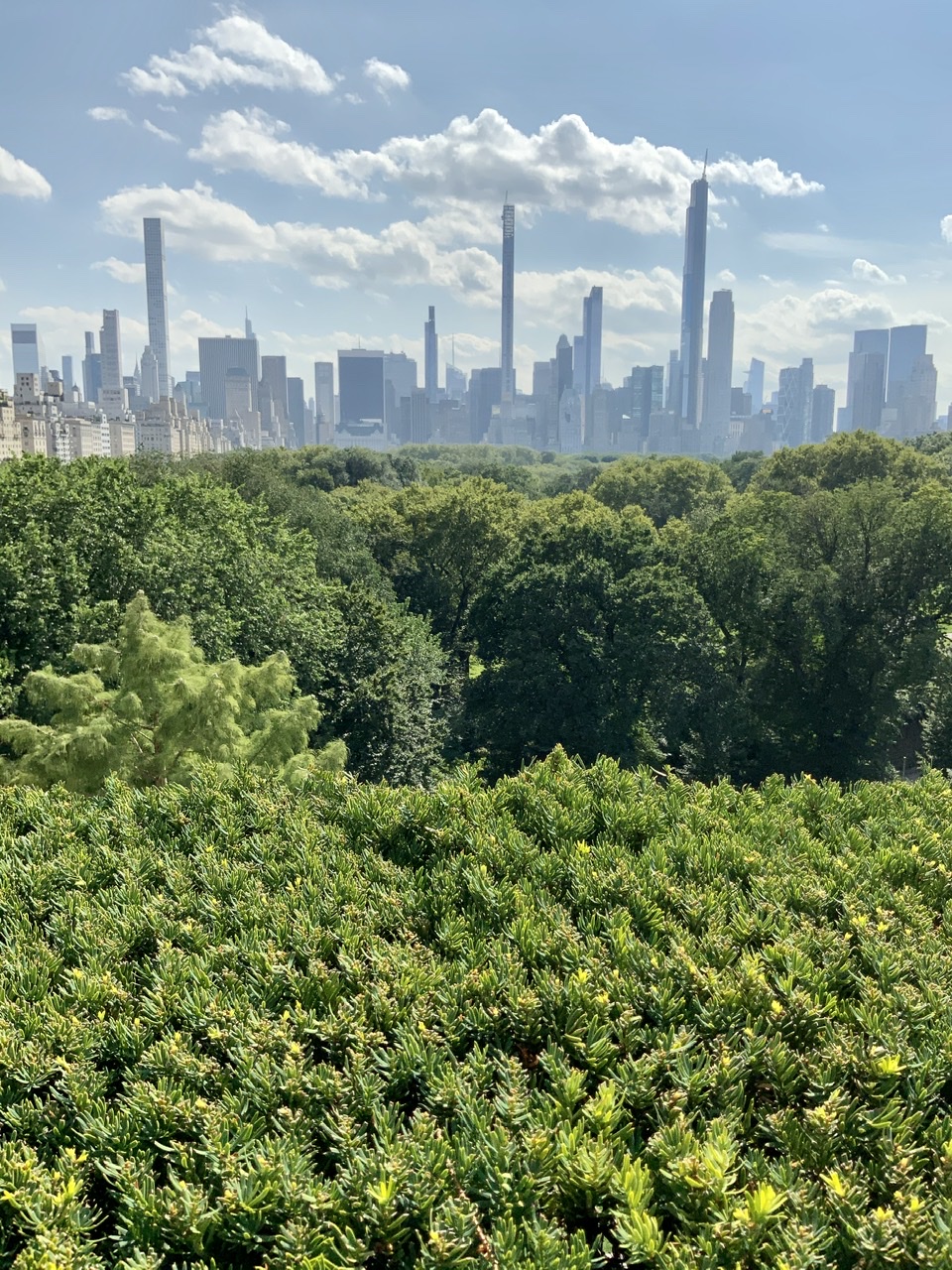
View from the roof of the Metropolitan Museum of Art, New York
*an ongoing series of quotations – mostly from artists, to artists – that offers wisdom, inspiration, and advice for the sometimes lonely road we are on.
Cassirer’s partial definition of art as symbolic language has dominated art studios in our [20th] century. A new history of culture anchored upon the work of art as a symbolic expression thus came into being. By these means art has been made to connect with the rest of history.
But the price has been high, for while studies of meaning received all our attention, another definition of art, as a system of formal relationships, thereby suffered neglect. This other definition matters more than meaning. In the same sense speech matters more than writing, because speech preceded writing, and because writing is but a special case of speech.
The other definition of art as form remains unfashionable, although every thinking person will accept it as a truism that no meaning can be conveyed without form. Every meaning requires a support, or a vehicle, or a holder. These are the bearers of meaning, and without them no meaning would cross from me to you, or from you to me, or indeed from any part of nature to any other part.
… The structural forms can be sensed independent of meaning. We know from linguistics in particular that the structural elements undergo more or less regular evolutions in time without relation to meaning, as when certain phonetic shifts in the history of cognate languages can be explained only by a hypothesis of regular change. Thus phoneme a occurring in an early stage of language, becomes phoneme b at a later stage, independently of meaning, and only under the rules governing the phonetic structure of the language. The regularity of these changes is such that the phonetic changes can be used to measure durations between recorded but undated examples of speech.
Similar regularities probably govern the formal infrastructure of every art. Whenever symbolic clusters appear, however, we see interferences that may disrupt the regular evolution of the formal system. An interference from visual images is present in almost all art. Even architecture, which is commonly thought to lack figural intention, is guided from one utterance to the next by the images of the admired buildings of the past, both far and near in time.
George Kubler in The Shape of Time: Remarks on the History of Things
Comments are welcome!
Pearls from artists* # 434
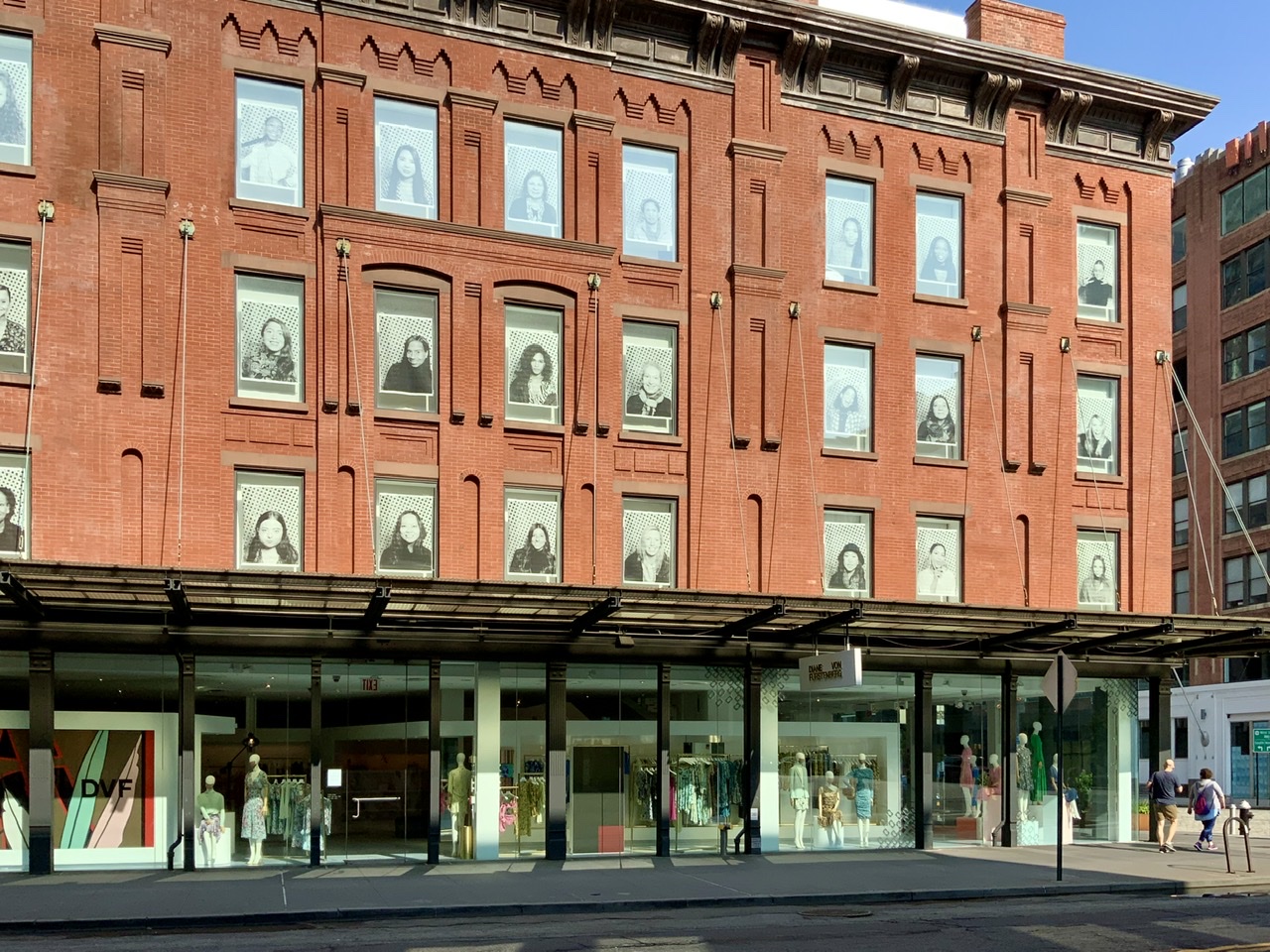
West Village, NYC
*an ongoing series of quotations – mostly from artists, to artists – that offers wisdom, inspiration, and advice for the sometimes lonely road we are on.
What do we carry forward? My family lived in New Jersey near Manhattan until I was ten, and although I have enjoyed spending my adult life as a photographer in the American West, when we left New Jersey for Wisconsin in 1947 I was homesick.
The only palliative I recall, beyond my parents’ sympathy was the accidental discovery in a magazine of pictures by a person of whom I had never heard but of scenes I recognized. The artist was Edward Hopper and one of the pictures was of a woman sitting in a sunny window in Brooklyn, a scene like that in the apartment of a woman who had cared for my sister and me. Other views resembled those I recalled from the train to Hoboken. There was also a picture inside a second-floor restaurant, one strikingly like the restaurant where my mother and I occasionally had lunch in New York.
The pictures were a comfort but of course none could permanently transport me home. In the months that followed, however, they began to give me something lasting, a realization of the poignancy of light. With it, all pictures were interesting.
Robert Adams in Art Can Help
Pearls from artists* # 431

New York Harbor
* an ongoing series of quotations – mostly from artists, to artists – that offers wisdom, inspiration, and advice for the sometimes lonely road we are on.
Writer Stanley Elkin suggested that all books retell the Old Testament story of Job. Similarly one feels that behind most music there is a struggle with pain. By the time we are adults, the songs we know by heart are often those that acknowledge grief or celebrate release, and the performers we respect are the ones who sing from need – people like Etta James, of whom it was said that she “always hit the notes with the right amount of hurt and hope.”
A photographer’s subject is his or her score, the given notes on a page. The way the photographer hits these notes – shows the subject – determines whether we will be newly reconciled with it.
Robert Adams in Art Can Help
Comments are welcome!
Q: What has been your biggest challenge so far?
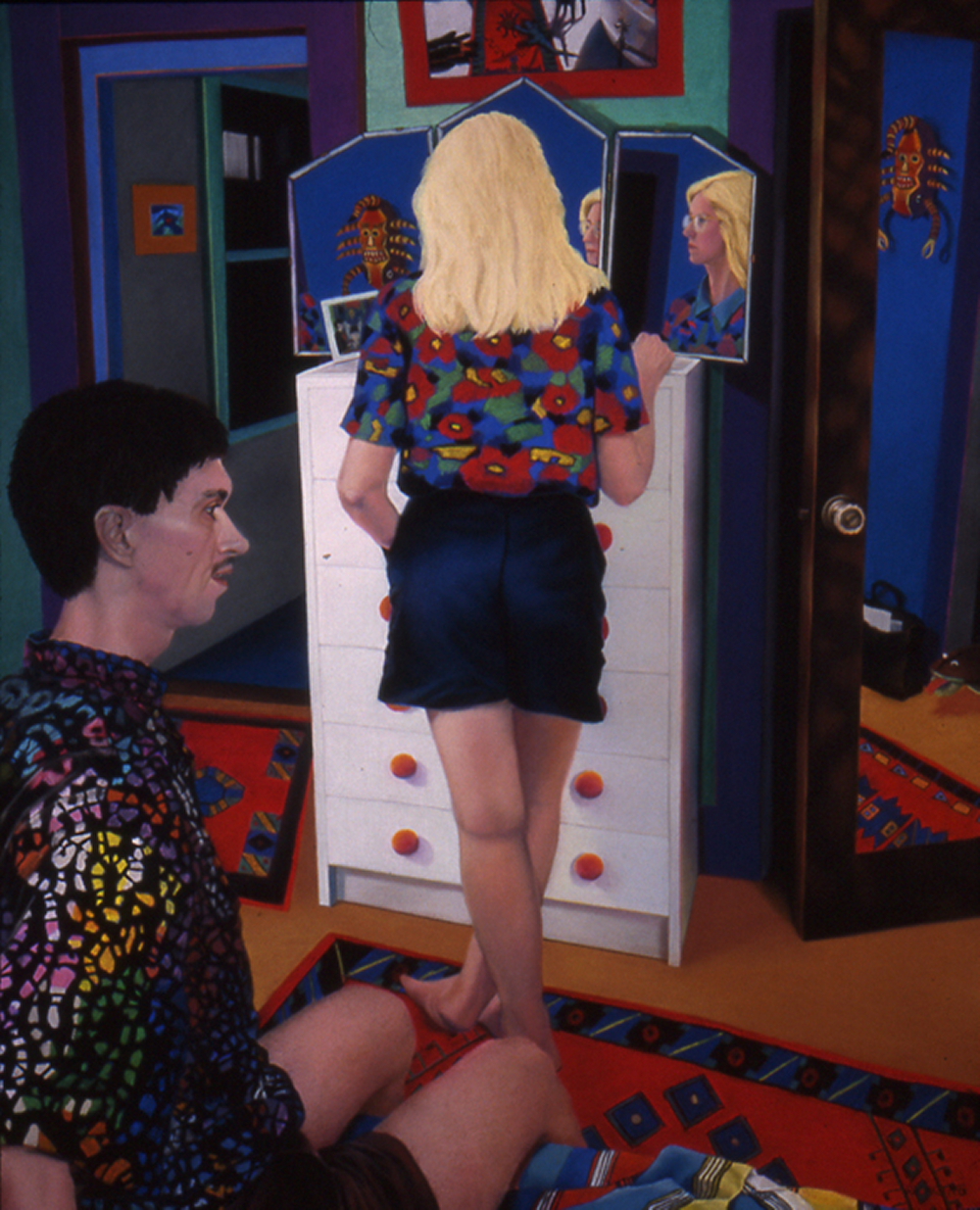
“Us and Them,” soft pastel on sandpaper, 47″ x 38″ image, 60″ x 50″ framed
A: On September 11, 2001, my husband Bryan, a high-ranking federal government employee, a brilliant economist (with an IQ of 180 he is the smartest man I have ever known) and a budget analyst at the Pentagon, was en route to Monterrey, CA to give his monthly guest lecture for an economics class at the Naval Postgraduate College. He had the horrible misfortune of flying out of Dulles Airport and boarding the plane that was high-jacked and crashed into the Pentagon, killing 189 people. Losing Bryan was the biggest shock of my life and devastating in every possible way.
The following summer I was ready to – I HAD to – get back to work. Learning about photography and pastel painting became avenues to my well-being. I use reference photos for my paintings, so my first challenge was to learn how to use Bryan’s 4 x 5 view camera (Bryan always took these reference photos for me).
In July 2002 I enrolled in a one-week view camera workshop at the International Center of Photography in New York. Much to my surprise, I had already acquired substantial technical knowledge from watching Bryan. Still, after the initial workshop, I threw myself into this new medium and continued studying photography at ICP for several years. I began with Photography I and enrolled in many more classes until I gradually learned how to use Bryan’s extensive camera collection, to properly light my setups, and to print large chromogenic photographs in a darkroom.
In October 2009 it was very gratifying to have my first solo photography exhibition with HP Garcia in New York. Please see http://barbararachko.art/images/PDFS/ BarbaraRachko-HPGargia.pdf. I vividly remember tearing up at the opening as I imagined Bryan looking down at me with his beautiful smile, beaming as he surely would have, so proud of me for having become a respected photographer.
Continuing to make art had seemed an impossibility after Bryan’s death. However, the first large pastel painting that I created using a self-made reference photograph proved my life’s work could continue. The title of that painting, “She Embraced It and Grew Stronger,” is certainly autobiographical. “She” is me, and “it” means continuing on without Bryan and living life for both of us.
Comments are welcome!
Pearls from artists* # 424
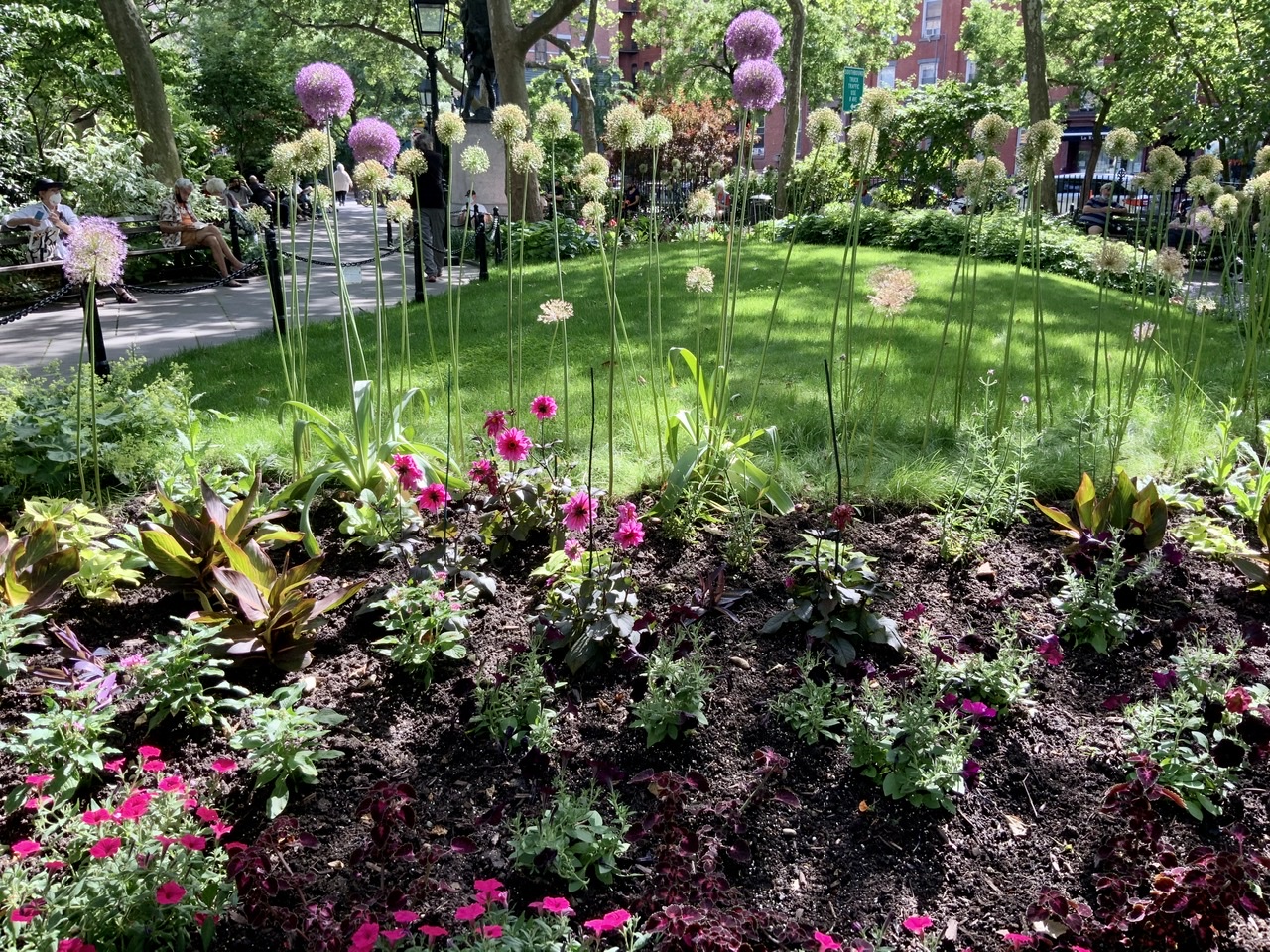
New York, NY
*an ongoing series of quotations – mostly from artists, to artists – that offers wisdom, inspiration, and advice for the sometimes lonely road we are on.
What the unproductive artist describes as his failure of will or insufficient motivation may rather be an absence in his belief system of the meaningfulness of art or of the art-making he’s presently doing. The most salient difference between the regularly blocked artist and the regularly productive artist may not be the greater talent of the latter, but the fact that the productive artist possesses and retains his missionary zeal.
Carlos Santana likened artists to “warriors in the trenches who have the vision of saving us from going over the edge.” The artist who possesses this vision will pursue his art even if he sometimes blocks. The artist who is less certain about the sacredness of his profession or the value of his work is hard-pressed to battle for art’s sake.
Eric Maisel in A Life in the Arts: Practical Guidance and Inspiration for Creative and Performing Artists
Comments are welcome!



