Blog Archives
Q: You read books on Friedrich Nietzsche and other philosophers. How has philosophy and your personal experience shaped the latest series, Bolivianos? (Question from Vedica Art Studios and Gallery)
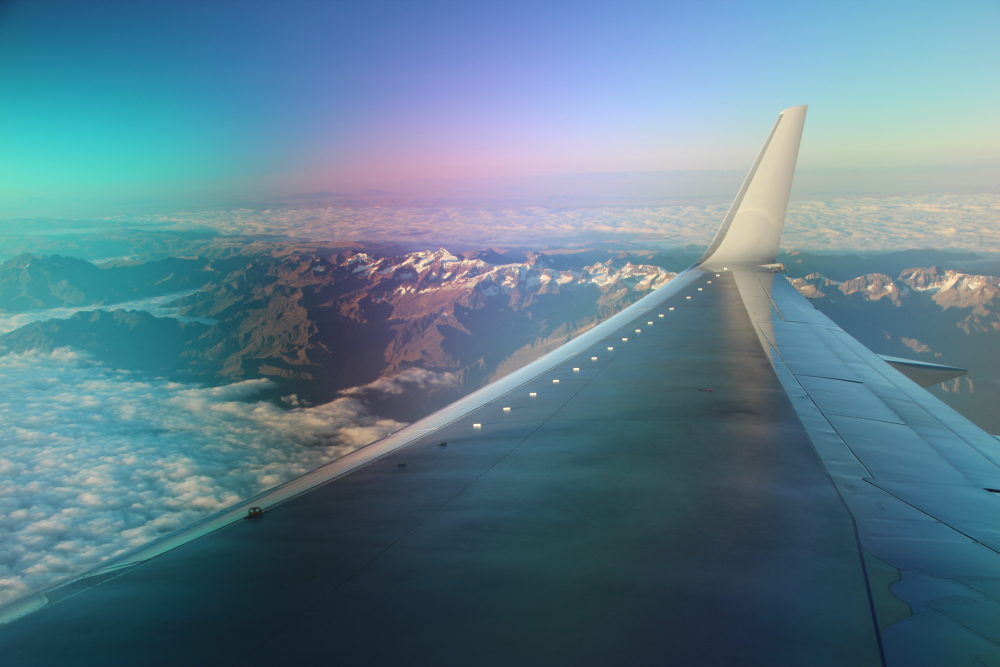
A: It’s difficult to pinpoint how philosophy specifically shaped my work because my curiosity spans so many subjects. Some critics have described me as a Renaissance woman, remarking on my wide-ranging and voracious reading. It’s true—I’m genuinely interested in practically everything!
In pursuit of making art, I have undertaken in-depth studies of numerous intriguing fields: drawing, color, composition, gross anatomy, art and art history, the art business, film history, photography, psychology, mythology, literature, philosophy, religion, music, jazz history, and archaeology—particularly ancient Mesoamerica (Olmec, Zapotec, Mixtec, Aztec, and Maya) and South America (the Inca and their ancestors).
Since the early 1990s, my inspiration and subject matter have come primarily from international travel to remote parts of the globe, especially Mexico, Central America, and South America. Travel is by far the best education! By visiting distant destinations, I have developed a deep reverence for people and cultures around the world. People everywhere are connected by our shared humanity.
These travels, supplemented by extensive research at home, are essential parts of my creative process. Research can be solitary and demanding, but I truly enjoy it. I want to know as much as possible, and this curiosity generates ideas for new work, propelling me into unexplored creative realms.
Foreign travel always expands our ways of thinking. This rich mixture of creative influences continually evolves and finds its way into my pastel paintings. Working, learning, evolving, and growing—I am perpetually curious and can hardly imagine a better way to spend my time on Earth!
Comments are welcome!
Pearls from artists* # 505

*an ongoing series of quotations – mostly from artists, to artists – that offers wisdom, inspiration, and advice for the sometimes lonely road we are on.
… I myself was once “at the top: – with a book that sat on the bestseller list for more than three years. I can’t tell you how many people said to me during those years, “How are you ever going to top that?” They’d speak of my great good fortune as though it were a curse, not a blessing, and would speculate about how terrified I must feel at the prospect of not being able to reach such phenomenal heights again.
But such thinking assumes there is a “top” – and that reaching that top (and staying there) is the only motive one has to create. Such thinking assumes that the mysteries of inspiration operate on the same scale as we do – on a limited human scale of success and failure, of winning and losing, of comparison and competition, of commerce and reputation, of units sold and influence wielded. Such thinking assumes that you must be constantly victorious – not only against your piers, but also against an earlier version of your own poor self. Most dangerously of all, such thinking assumes if you cannot win, then you must not continue to play.
But what does any of that have to do with vocation? What does any of that have to do with the pursuit of love? What does any of that have to do with the strange communion between the human and the magical? What does any of that have to do with faith? What does any of that have to do with the quiet glory of merely making things, and then sharing those things with an open heart and no expectations?
Elizabeth Gilbert in Big Magic: Creative Living Beyond Borders
Comments are welcome!
Q: How does art help you explore and understand other cultures? (Question from Arte Realizzata)
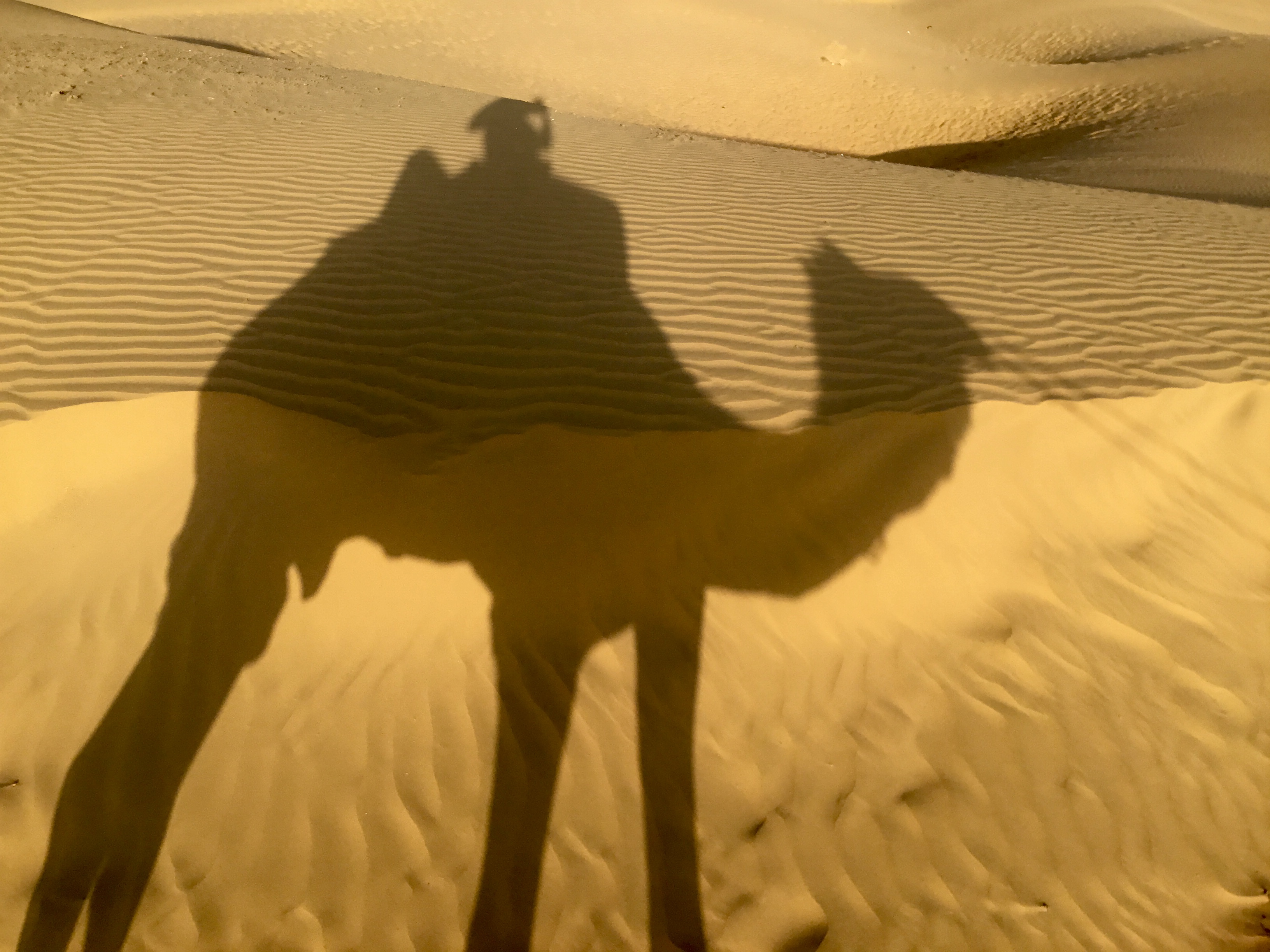
A: Art helps me explore and understand other cultures by revealing our shared humanity across space and time. For me art and travel are intertwined; there is no better education! My art-making has led me to visit fascinating places in search of source material, ideas, and inspiration: to Mexico, Guatemala, Brazil, Argentina, Uruguay, France, England, Italy, Bali, Java, Sri Lanka, and India. I have seen firsthand that people all over the world are the same.
Art has led me to undertake in-depth studies of intriguing subjects: drawing, color, composition, art, art history, the art business, film, film history, photography, mythology, literature, music, jazz, jazz history, and archaeology, particularly that of ancient Mesoamerica (Olmec, Zapotec, Mixtec, Aztec, and Maya), and South America (the Inca and their ancestors).
This rich mixture of creative influences continually grows. For anyone wanting to spend their time on earth studying, learning, and meeting new challenges, there is hardly anything more fascinating than to be a well-travelled, perpetually curious artist!
Comments are welcome!
Pearls from artists* # 471

*an ongoing series of quotations – mostly from artists, to artists – that offers wisdom, inspiration, and advice for the sometimes lonely road we are on.
Impresario Peter Sellars remarks how “Vermeer [spent] hours, days, and weeks painting a small corner of a small room in an act of ritualistically informed meditation that leads to new possibilities of awareness and love.” The time of making, Sellars adds, influences the time of viewing: “The act [of painting] itself opens up and refines consciousness by slowing down time as it focuses the eye.” Sellars’ language of ritual and meditation anticipates my purposes. He associates painting not only with materiality but also with spiritual practices – indeed, he yokes the two: “The act of painting has always been charged with shamanic energies. Using bits of animal bone, hair, and sinew, mixing them with earth, and applying them steadily and with great concentration to a cave wall, a parchment, or a human face is an act of calling and recalling.”
Arden Reed in Slow Art: The Experience of Looking, Sacred Images to James Turrell
Comments are welcome!
Pearls from artists* # 445
*an ongoing series of quotations – mostly from artists, to artists – that offers wisdom, inspiration, and advice for the sometimes lonely road we are on.
My good friend the writer Charles L. Mee, Jr helped me to recognize the relationship between art and the way societies are structured. He suggested that, as societies develop, it is the artists who articulate the necessary myths that embody our experience of life and provide parameters for ethics and values. Every so often the inherited myths lose their value because they become too small and confined to contain the complexities of the ever-transforming and expanding societies. In that moment new myths are needed to encompass who we are becoming. These new constructs do not eliminate anything already in the mix; rather, they include fresh influences and engender new formations. The new mythologies always include ideas, cultures and people formerly excluded from the previous mythologies. So, deduces Mee, the history of art is the history of inclusion.
I believe that the new mythologies will be created and articulated in art, in literature, painting and poetry. It is the artists who will create a livable future through their ability to articulate in the face of flux and change.
Anne Bogart in A Director Prepares: Seven Essays on Art and Theater
Comments are welcome!
Pearls from artists* # 364
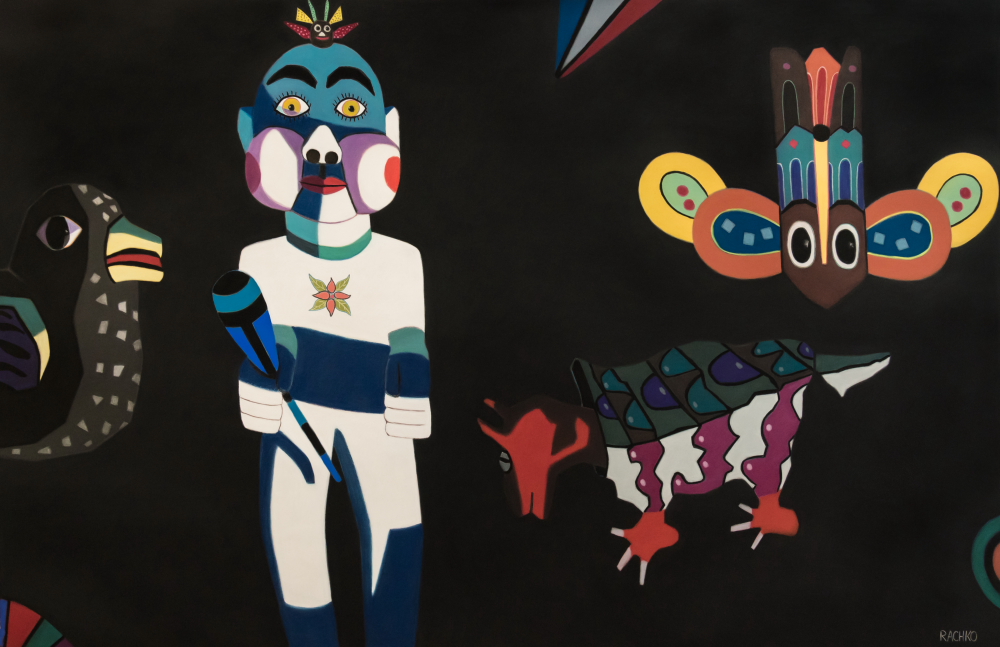
“White Star,” soft pastel on sandpaper, 38″ x 58″
* an ongoing series of quotations – mostly from artists, to artists – that offers wisdom, inspiration, and advice for the sometimes lonely road we are on.
If we are left unmoved by a painting of the Virgin, it is likely because the artist was unmoved in the painting of her. The subject matter is mostly irrelevant; it is important only as a vehicle for the artist’s attention. Authenticity comes from how deeply the artist felt. And this is the key to how much silence, how much consciousness or attention, the art contains.
… subject matter, if the artist is even using it, is just an armature for the artist to engage his intensity of feeling. It is the quality of your attention that influences how you see and how deeply you feel. Different artists have affinities for different subject matter as a way into expressing themselves deeply. And that depth is the quality, we, the viewers, respond to. It is what we continue to respond to over the centuries in great works of art. The fact that things last, that we continue to admire them, is in the end a good indicator of their quality, of their silence. Art museums therefore, have little nodes of silence nestling in their galleries. They are filled with, to use André Malraux’s expression, “the voices of silence.”
Ian Roberts in Creative Authenticity: 16 Principles to Clarify and Deepen Your Artistic Vision
Comments are welcome!
Q: I have been always fascinated with the re-contexualizing power of Art and with the way some objects or even some concepts often gain a second life when they are “transduced” on a canvas or in a block of marble. So I would like to ask you if in your opinion, personal experience is an absolutely indespensable part of a creative process. Do you think that a creative process could be disconnected from direct experience?
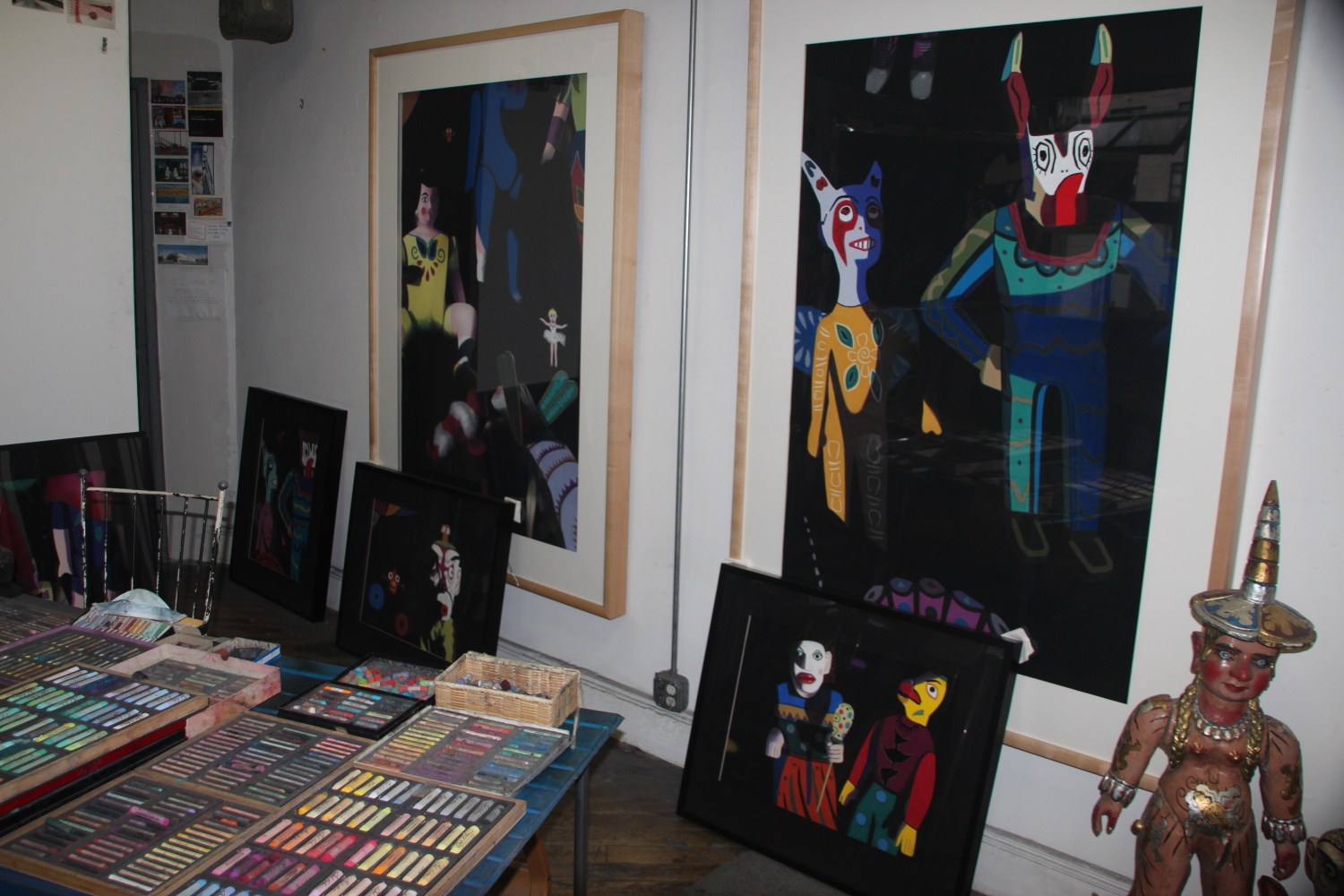
Barbara’s studio
A: Certainly personal experience is an indispensable and inseparable part of the creative process. For me art and life are one and I suspect that is true for most artists. When I look at each of my pastel paintings I can remember what was going on in my life at the time I made it. Each is a sort of veiled autobiography waiting to be decoded and in a way, each is also a time-capsule of the larger zeitgeist. It’s still a mystery how exactly this happens but all lived experience – what’s going on in the world, books I’m reading and thinking about, movies I’ve seen that have stayed with me, places I’ve visited, etc. – overtly and/or not so obviously, finds its way into the work.
Life experience also explains why the work I do now is different from my work even five years ago. In many ways I am not the same person.
The inseparableness of art and life is one reason that travel is so important to my creative process. Artists always seek new influences that will enrich and change our work. To be an artist, indeed to be alive, is to never stop learning and growing.
Comments are welcome!
Q: What artists influenced the creation of your latest pastel-on-sandpaper painting?

“Incognito,” 38″ x 58,” soft pastel on sandpaper
A: As I continue to evolve my studio practice, I study and learn from various artists, living and long gone, who have mastered visual art and many other disciplines. I cannot point to any particular artists that directly influenced “Incognito” or any other specific paintings.
With “Pearls from artists,” published every Wednesday in this blog, I quote passages from books I am reading that resonant with ideas regarding my work. Readers can perhaps infer some of my influences from those posts.
Comments are welcome!
Pearls from artists* # 71

New York street
* an ongoing series of quotations – mostly from artists, to artists – that offers wisdom, inspiration, and advice for the sometimes lonely road we are on.
Artists are individuals willing to articulate in the face of flux and transformation. And the successful artist finds new shapes for our present ambiguities and uncertainties. The artist becomes the creator of the future through the violent act of articulation. I say violent because articulation is a forceful act. It demands an aggressiveness and an ability to enter into the fray and translate that experience into expression. In the articulation begins a new organization of the inherited landscape.
My good friend the writer Charles L. Mee, Jr. helped me to recognize the relationship between art and the way societies are structured. He suggested that, as societies develop, it is the artists who articulate the necessary myths that embody our experience of life and provide parameters for ethics and values. Every so often the inherited myths lose their value because they become too small and confined to contain the complexities of the ever-transforming and expanding societies. In that moment new myths are needed to encompass who we are becoming. These new constructs do not eliminate anything already in the mix; rather, they include fresh influences and engender new formations. The new mythologies always include ideas, cultures and people formerly excluded from the previous mythologies. So, deduces Mee, the history of art is the history of inclusion.
Ann Bogart in A Director Prepares: Seven Essays on Art and Theater
Comments are welcome!


 barbararachkoscoloreddust.com
Q: It is well known that you gain inspiration from foreign travel. Has anyone ever accused you of stealing their culture?
Feb 9
Posted by barbararachkoscoloreddust
The Bolivian side of Lake Titicaca
A: Yes, a few people have done so via comments on Facebook. It came as a shock.
The logic of such an accusation presumes ownership. I don’t believe any person has a claim to owning culture.
Travel is arguably the best education there is. My travels around the world, supplemented with lots of research once I return home, are an important part of my creative process. This is how I develop ideas to forge a way ahead. It is difficult and solitary work.
Every artist is tasked with remaining open to influences – however, wherever, and whenever they appear. Somewhat late in life, travel as a source of inspiration found ME. And it has been a blessing!
People around the world have become fans. Many send messages of thanks saying they are proud that some aspect of their country’s culture has inspired my work. I am always grateful and touched to know this.
Comments are welcome!
Share this:
Posted in 2019, An Artist's Life, Bolivia, Creative Process, Inspiration, Studio, The West Village, Working methods
Comments Off on Q: It is well known that you gain inspiration from foreign travel. Has anyone ever accused you of stealing their culture?
Tags: accusation, accused, afterwards, arguably, around the world, aspect, blessing, comments, country, creative process, develop, education, Facebook, foreign travel, forge ahead, grateful, handful, influences, inspiration, inspired, Lake Titicaca, late in life, logic, messages, ownership, presumes, remaining open, research, sentiments, shock, singular, source of inspiration, stealing culture, Studio, supplemented, tasked, telling, thanks, touched, travel