Blog Archives
Q: What are your most significant professional accomplishments to date?

“Big Deal,” soft pastel on sandpaper, 58″ x 38″
A: I will mention these: my 1996 solo exhibition at a venerable New York gallery that specialized in Latin American-influenced art, Brewster Arts Ltd. at 41 West 57th Street; completion of Aljira’s Emerge 2000 business program for professional artists; and a solo exhibition at the Walton Art Center in Fayetteville, AR, in 2005. All three were very important factors in my artistic and professional development.
In January I published my first eBook, From Pilot to Painter, on Amazon.
In February I was interviewed by Brainard Carey for his Yale University Radio program. It can be heard at
http://museumofnonvisibleart.com/interviews/barbara-rachko/
Most recently I was interviewed for a fourteen-page article (the longest they have ever published on a single artist!) in ARTiculAction Art Review. Please see
http://issuu.com/articulaction/docs/articulaction_art_review_-_july_201/30
Comments are welcome!
Q: How long does it take you to complete a pastel-on-sandpaper painting?
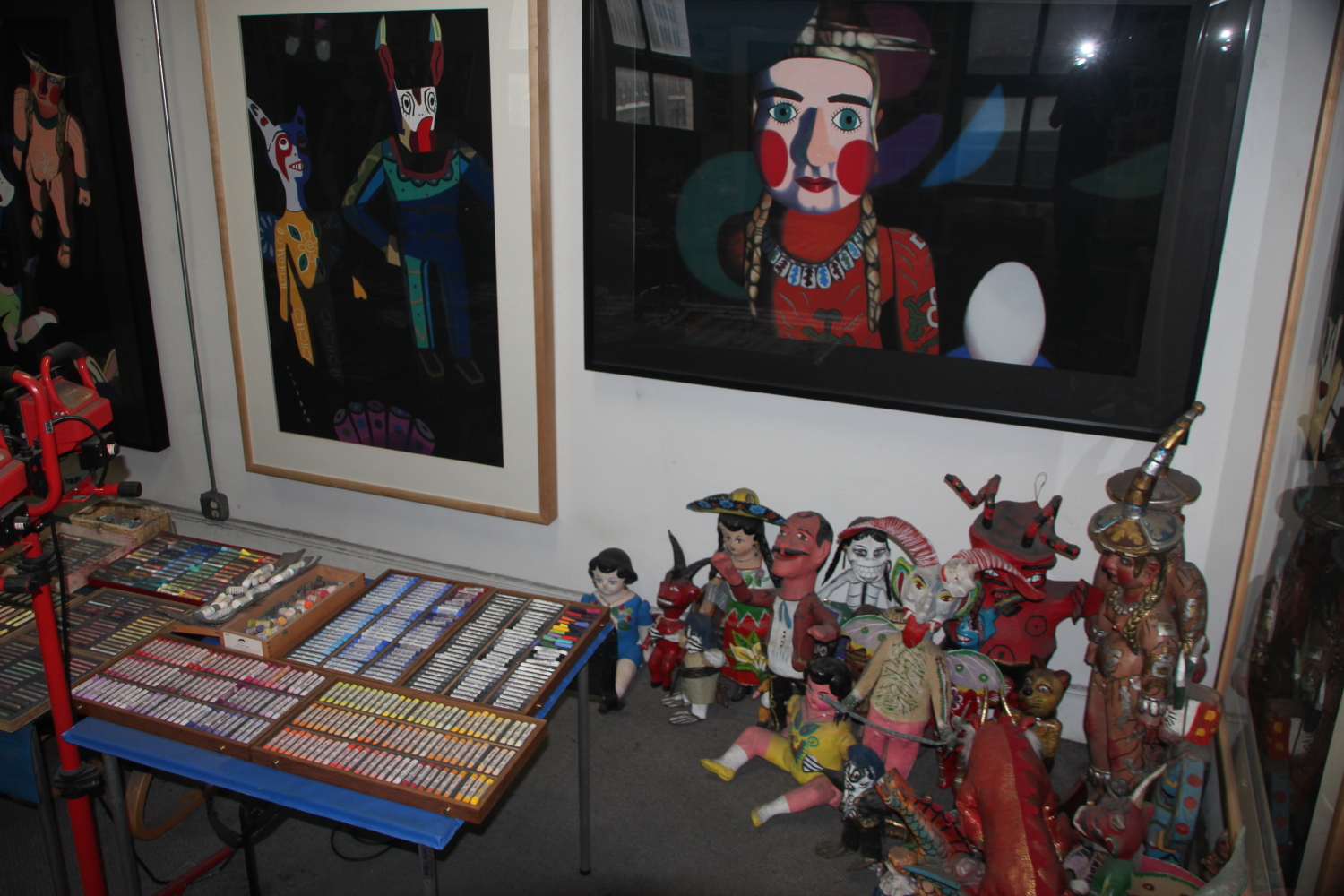
Barbara’s studio
A: Mine is a slow and labor-intensive process. First, there is foreign travel to find the cultural objects – masks, carved wooden animals, paper mâché figures, and toys – that are my subject matter. If they are heavy I ship them home.
Next comes planning exactly how to photograph them, lighting and setting everything up, and shooting a roll of 220 film with my Mamiya 6 camera. I still like to use an analog camera for my fine art work, although I am rethinking this. I have the film developed, decide which image to use, and order a 20” x 24” reference photograph from Manhattan Photo on West 20th Street.
Then I am ready to start. I work on each pastel-on-sandpaper painting for approximately three months. I am in my studio 7 to 8 hours a day, five days a week. During that time I make thousands of creative decisions as I apply and layer soft pastels (I have 8 tables-worth to choose from!), blend them with my fingers, and mix new colors directly on the sandpaper. A finished piece consists of up to 30 layers of soft pastel. My self-invented technique accounts for the vivid, intense color that often leads viewers of my originals to look very closely and ask, “What medium is this?” I believe I am pushing soft pastel to its limits, using it in ways that no other artist has done.
Comments are welcome!
Q: Who is your favorite artist and why?

Catalogue of Matisse’s late work
A: I admire the work of many artists, but if I have to choose only one then I’d say Matisse. Whenever there is a Matisse exhibition in New York, I try to see it at least once. Many years ago I read Hillary Spurling’s definitive two-volume biography (The Unknown Matisse, published 1998, and Matisse the Master, 2005) and became fascinated with how his life unfolded, how Matisse struggled and overcame daunting obstacles in order to make art, and how his work continued to grow and evolve throughout his long life.
I believe that Matisse and I are kindred souls in three respects: we both came from unpromising beginnings (he from a textile family in northern France, me from a blue collar family in New Jersey), our fathers did not support our interest in becoming artists, and he famously worked in series (I am well into my third series).
Comments are welcome!
Q: How do you experience art in New York?

Lower Manhattan
A: As a New York artist I am very fortunate to live in a city with a vibrant, exciting cultural scene. Simply put, art is in the air here and I take inspiration from everything I see and experience: painting, photography, sculpture, installation, performance art, public art, dance, theater, film, opera, jazz, etc. This city itself is an endlessly fascinating place. Visually it is always thrilling! I never know what I am going to see – good and bad – whenever I leave my apartment.
I have been living here since April 1997. The city provides a heady mix to ponder and this mix mysteriously enriches, influences, and somehow finds its way into the work. I have been an artist for nearly thirty years and I continue to be intrigued with watching the intricacies of how my creative process evolves and grows.
Comments are welcome!
Pearls from artists* # 94
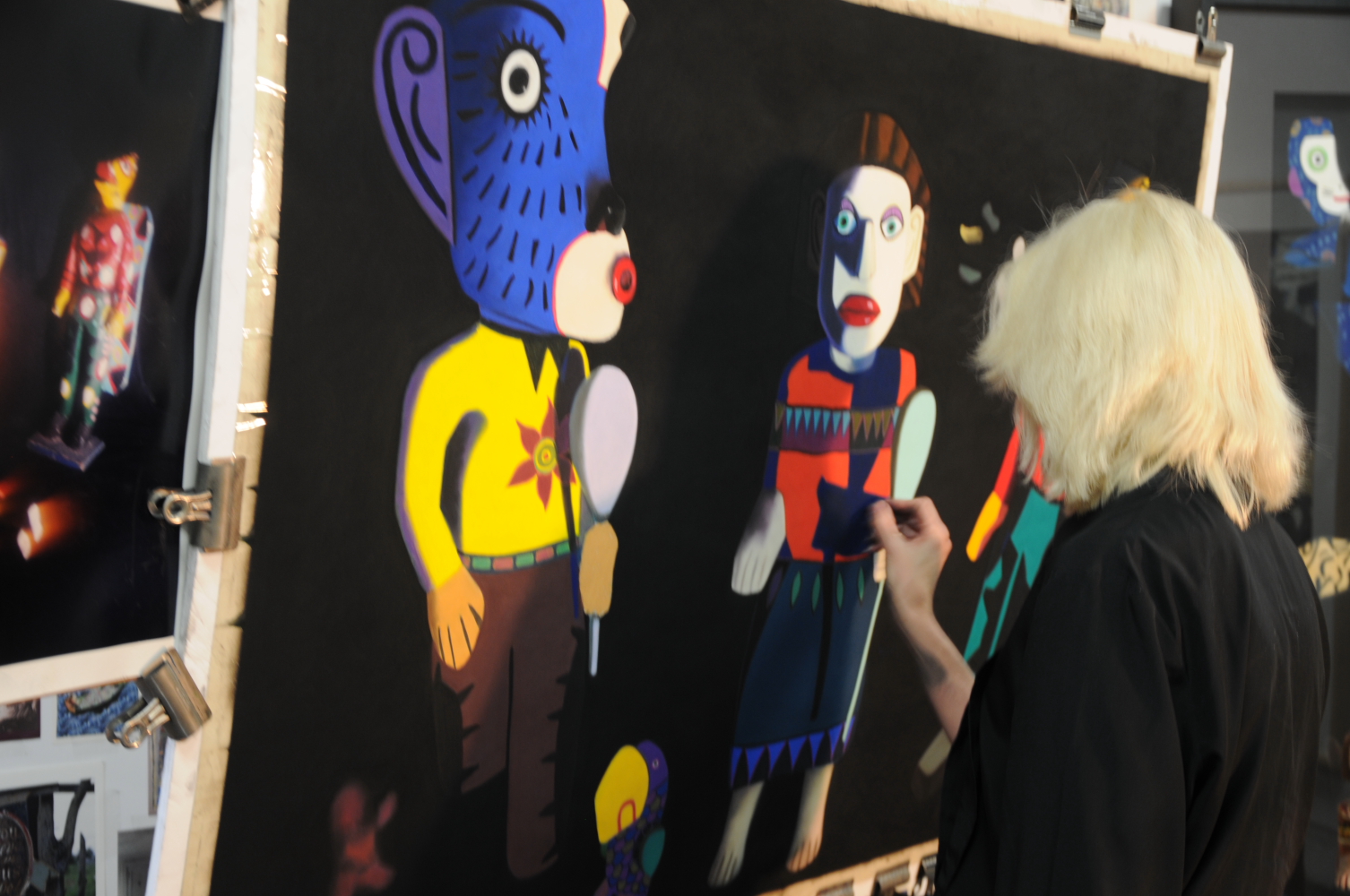
Working on “False Friends” Photo: Diana Feit
* an ongoing series of quotations – mostly from artists, to artists – that offers wisdom, inspiration, and advice for the sometimes lonely road we are on.
A work of art which inspires us comes from no quibbling or uncertain man. It is the manifest of a very positive nature in great enjoyment, and at the very moment the work was done.
It is not enough to have thought great things before doing the work. The brush stroke at the moment of contact carries inevitably the exact state of being of the artist at that exact moment into the work, and there it is, to be seen and read by those who can read such signs, and to be read later by the artist himself, with perhaps some surprise, as a revelation of himself.
For an artist to be interesting to us he must be interesting to himself. He must have been capable of intense feeling, and capable of profound contemplation.
He who has contemplated has met with himself, is in a state to see into the realities beyond the surfaces of his subject. Nature reveals to him, and, seeing and feeling intensely, he paints, and whether he wills it or not each brush stroke is an exact record of such as he was at the exact moment the stroke was made.
The Art Spirit by Robert Henri
Comments are welcome!
Q: Why do people need art in their daily lives?
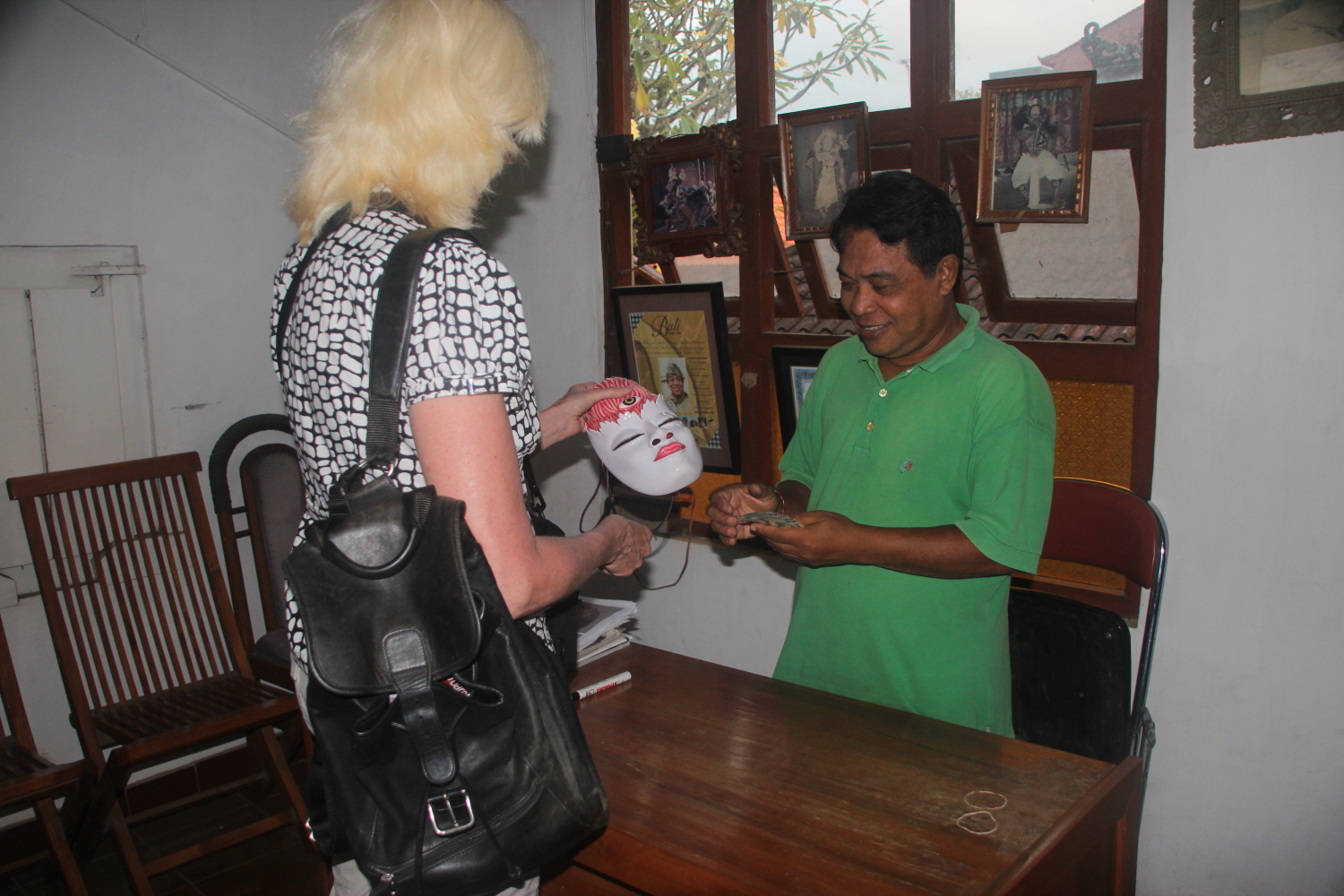
With Ida Bagus Anom, Mas, Bali; Photo: Donna Tang
A: That is for each person to decide, but as someone who devotes every waking moment to my work and to becoming a better artist, I cannot imagine my life without art.
I will tell you a little about what art has done for me. In my younger days boredom was a strong motivator. I left the active duty Navy out of boredom. I couldn’t bear not being intellectually challenged (most of my jobs consisted of paper-pushing), not using my flying skills (at 27 I was a licensed commercial pilot and Boeing-727 flight engineer), and not developing my artistic talents. In what surely must be a first, the Navy turned me into a hard-working and disciplined artist. And once I left the Navy there was no plan B. There was no time to waste. It was “full speed ahead.”
Art is a calling. You do not need to be told this if you are among those who are called. It’s all about “the work,” that all-consuming focus of an artist’s life. If a particular activity doesn’t seem likely to make me a better artist, I tend to avoid it. I work hard to nourish and protect my gifts. As artists we invent our own tasks, learn whatever we need in order to progress, and complete projects in our own time. It is life lived at its freest.
My art-making has led me to fascinating places: Mexico, Guatemala, Brazil, Argentina, Uruguay, France, England, Italy, Bali, Java, Sri Lanka, and more; and to in-depth studies of intriguing subjects: drawing, color, composition, art and art history, the art business, film and film history, photography, mythology, literature, music, jazz and jazz history, and archaeology, particularly that of ancient Mesoamerica (Olmec, Zapotec, Mixtec, Aztec, Maya, etc.). And this rich mixture continually grows! For anyone wanting to spend their time on earth learning and meeting new challenges, there is no better life!
Comments are welcome!
Pearls from artists* # 85
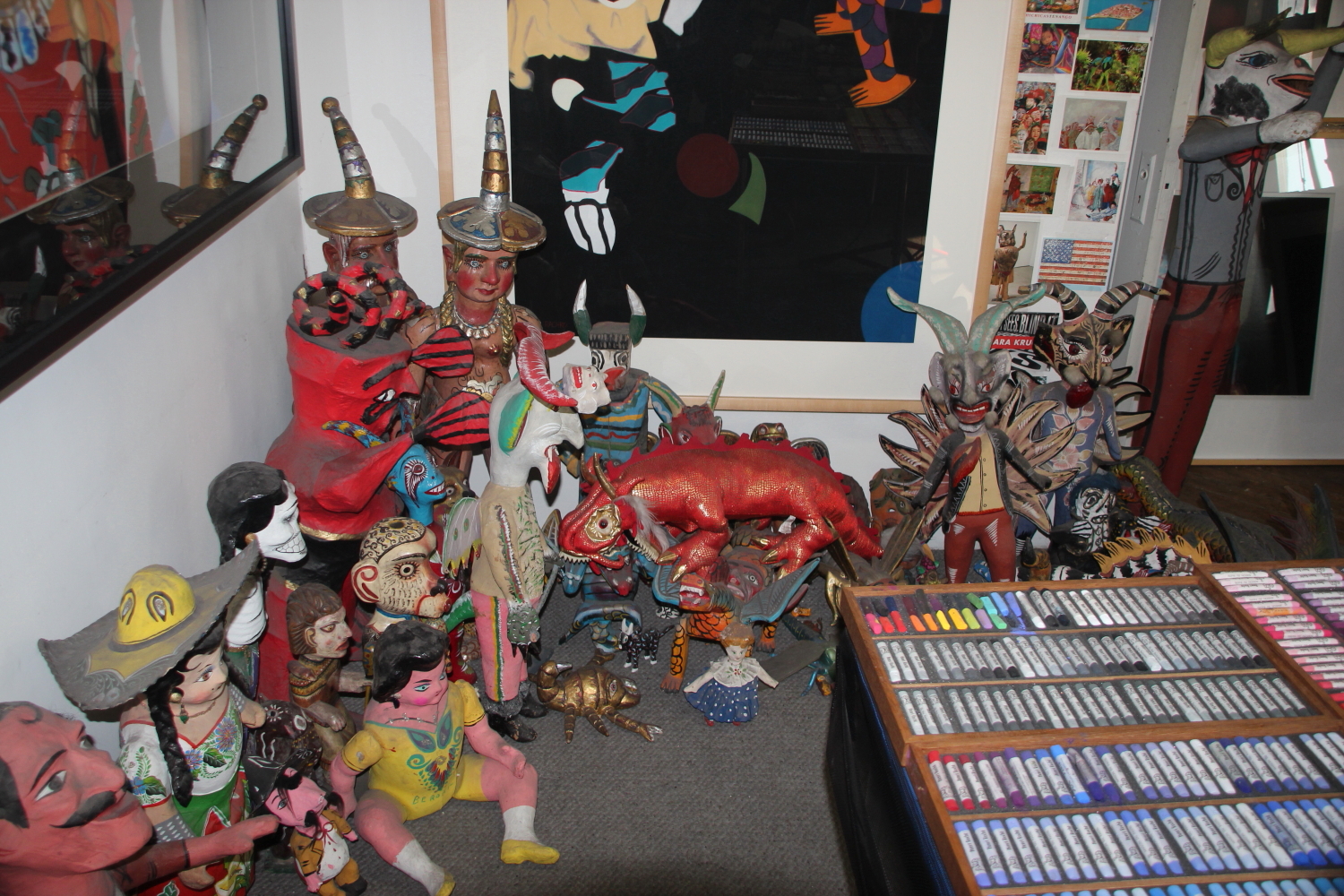
Studio
* an ongoing series of quotations – mostly from artists, to artists – that offers wisdom, inspiration, and advice for the sometimes lonely road we are on.
Credo
I believe in art.
I do not believe in the “art world” as
it is today.
I do not believe in art as a commodity.
Great art is in exquisite balance. It is
restorative.
I believe in the energy of art, and through
the use of that energy, the artist’s ability
to transform his or her life and, by ex-
ample, the lives of others.
I believe that through our art, and through
the projection of transcendent imagery, we
can mend and heal the planet.
Audrey Flack in Art & Soul: Notes on Creating
Comments are welcome!
Q: Do you have any advice for a young painter or someone just starting out as an artist?
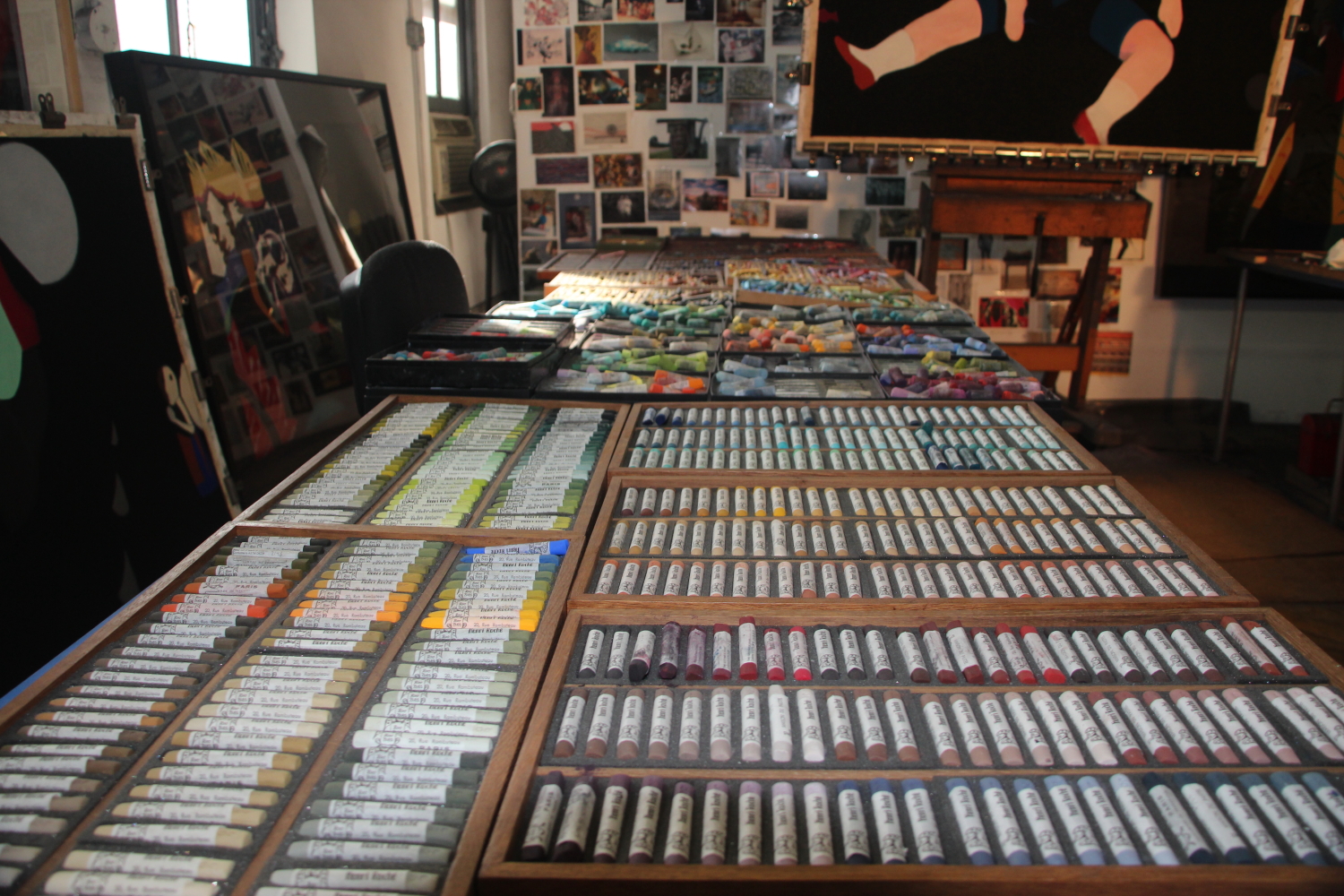
Studio
A: As artists each of us has at least two important responsibilities: to express things we are feeling for which there are no adequate words and to communicate to a select few people, who become our audience. By virtue of his or her own uniqueness, every human being has something to say. But self-expression by itself is not enough. As I often say, at it’s core art is communication. Without this element there is no art. When artists fail to communicate, perhaps they haven’t mastered their medium sufficiently so are unsuccessful in the attempt, or they may be being self-indulgent and not trying. Admittedly there is that rare and most welcome occurrence when an artistic statement – such as a personal epiphany – happens for oneself alone.
Most importantly, always listen to what your heart tells you. It knows and speaks the truth and becomes easier to trust as you mature. If you get caught up in the art world, step back and take some time to regain your bearings, to get reacquainted with the voice within you that knows the truth. Paint from there. Do not ever let a dealer or anyone else dictate what or how you should paint.
With perhaps the singular exception of artist-run cooperative galleries, be very suspicious of anyone who asks for money to put your work in an exhibition. These people are making money from desperate and confused artists, not from appreciative art collectors. With payment already in hand there is no financial incentive whatsoever for these people to sell your paintings and they won’t.
Always work in a beautiful and special place of your own making. It doesn’t need to be very large, unless you require a large space in which to create, but it needs to be yours. I’m thinking of Virginia Woolf’s “a room of one’s own” here. A studio is your haven, a place to experiment, learn, study, and grow. A studio should be a place you can’t wait to enter and once you are there and engaged, are reluctant to leave.
Be prepared to work harder than you ever have, unrelentingly developing your special innate gifts, whether you are in the mood to do so or not. Most of all remember to do it for love, because you love your medium and it’s endless possibilities, because you love working in your studio, and because you feel most joyously alive when you are creating.
Comments are welcome!
Pearls from artists* # 82
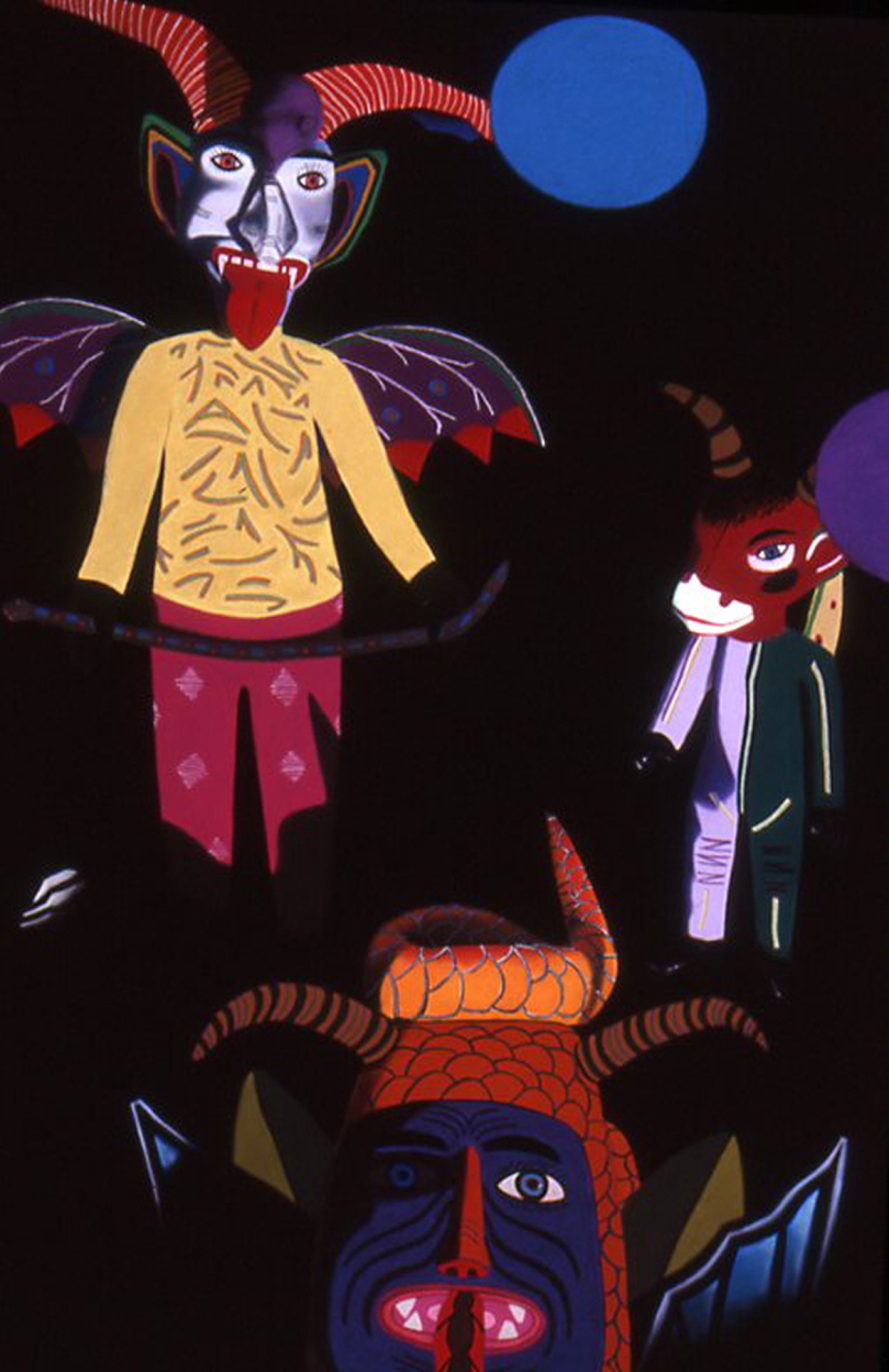
“The Sovereign,” soft pastel on sandpaper, 58″ x 38″
* an ongoing series of quotations – mostly from artists, to artists – that offers wisdom, inspiration, and advice for the sometimes lonely road we are on.
Art isn’t psychology. For one thing art deals in images, not language. Images precede language and are closer to feelings. They summon feelings before they’re named and categorized, when they’re still fresh and sometimes hard to recognize or identify.
For another thing, to translate his vision an artist uses materials that are, for lack of a better word, alchemical. Paint, for example, has this wonderful, mysterious quality – a smell and a sensuous, velvety feel and an ability to hold color and light – that unlocks and speeds up one’s creative metabolism. And paint captures my every impulse – from my broadest conceptions to the tiniest ticks and tremors of my wrist.
There are literally no words to describe what occurs when an image suddenly and unexpectedly appears on the canvas. Sometimes it’s serendipity, the result of a fortunate brushstroke. Sometimes I think it has to do with the inherent qualities of paint, or the slickness of a surface, or the fullness or acuity of a brush. And sometimes when I’ve got a good rhythm going and everything comes together, I feel as though it produces the purest expression of who I am and what I am and how I perceive the world.
Eric Fischl and Michael Stone in Bad Boy: My Life on and off the Canvas
Comments are welcome!
Q: I just got home from my first painting experience… three hours and I am exhausted! Yet you, Barbara, build up as many as 30 layers of pastel, concentrate on such intricate detail, and work on a single painting for months. How do you do it?
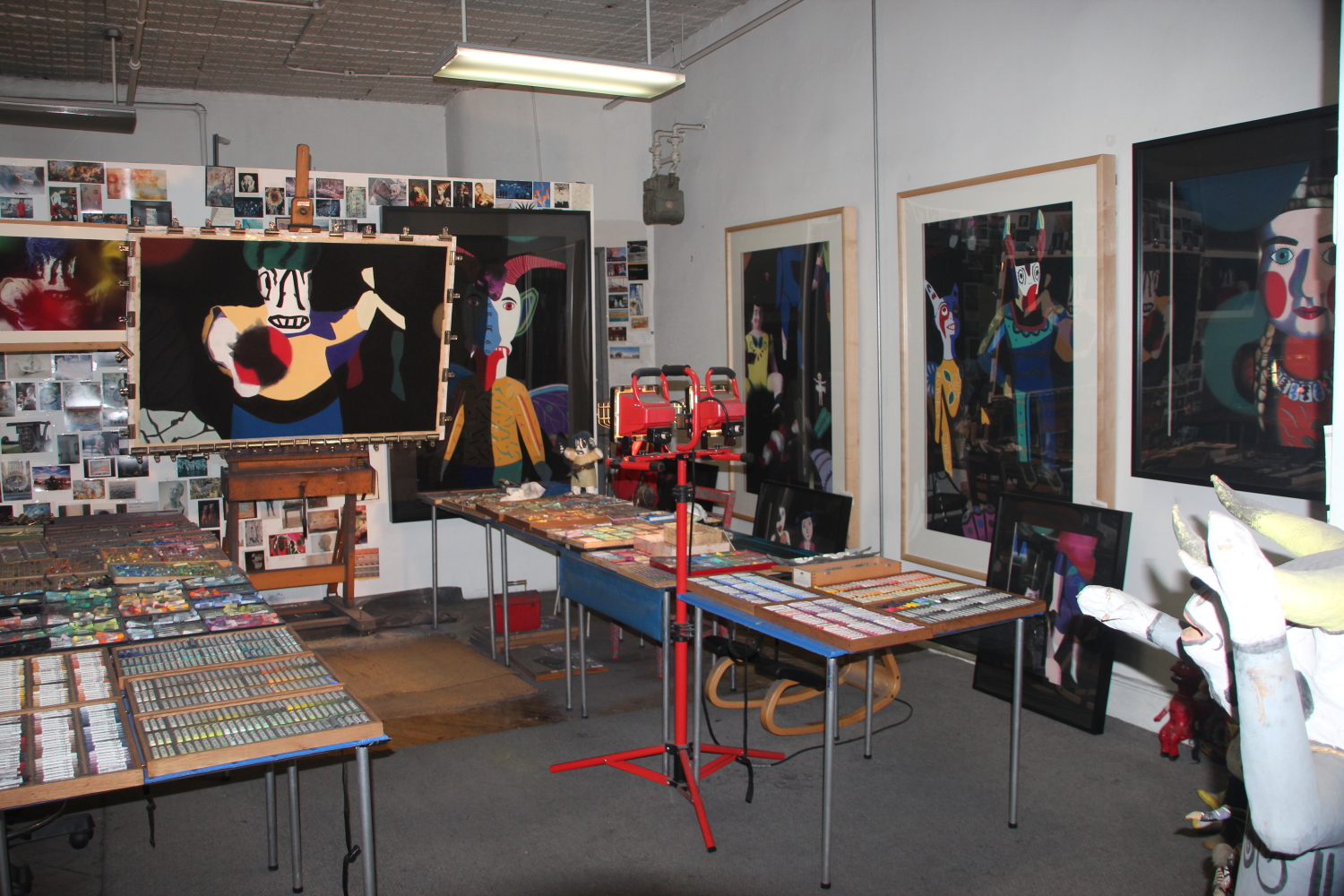
Barbara’s studio
A: The short answer is that I absolutely love making art in my studio and on the best days I barely even notice time going by!
Admittedly, it’s a hard road. Pursuing life as an artist takes a very special and rare sort of person. Talent and having innate gifts are a given, merely the starting point. We must possess a whole cluster of characteristics and be unwavering in displaying them. We are passionate, hard-working, smart, devoted, sensitive, self-starting, creative, hard-headed, resilient, curious, persistent, disciplined, stubborn, inner-directed, tireless, strong, and on and on. Into the mix add these facts. We need to be good business people. Even if we are, we are unlikely to make much money. We are not respected as a profession. People often misunderstand us: at best they ignore us, at worst they insult our work and us, saying we are lazy, crazy, and more.
The odds are stacked against any one individual having the necessary skills and stamina to withstand it all. So many artists give up, deciding it’s too tough and just not worth it, and who can blame them? This is why I believe artists who persevere over a lifetime are true heroes. It’s why I do all I can to help my peers. Ours is an extremely difficult life – it’s impossible to overstate this – and each of us finds our own intrinsic rewards in the work itself. Otherwise there is no reason to stick with it. Art is a calling and for those of us who are called, the work is paramount. We build our lives around the work until all else becomes secondary and falls away. We are in this for the duration.
In my younger days everything I tried in the way of a career eventually became boring. Now with nearly thirty years behind me as a working artist, I can still say, “I am never bored in the studio!” It’s difficult to put into words why this is true, but I know that I would not want to spend my time on this earth doing anything else. How very fortunate that I do not have to do so!
Comments are welcome!


 barbararachkoscoloreddust.com