Blog Archives

Q: Do you have any rituals that you do before beginning a day’s work in the studio?

The Studio!

A: When I arrive at the studio in the morning it’s rare for me to immediately start working.  Usually I read  something art-related – books written by artists, about creativity, etc.  At the moment I’m reading The Artist’s Reality: Philosophies of Art by Mark Rothko.As usual I am struggling to understand aspects of the art business and figure out what I need to do next to get my work seen and collected by a wider audience.  The Artist’s Reality reminds me why I decided to make art in the first place.   It helps reconnect with temporarily forgotten parts of myself and is a much-needed  reminder of what I love about being an artist, especially in light of the business side that is becoming so complex and demanding of attention now. 

Balancing the creative and business aspects of being an artist is a continual struggle.  Both are so important.  An artist needs an appreciative audience – very few artists devote their lives to art-making so that the work will remain in a closet – but I also believe this (from a note I wrote years ago and tacked to the studio wall):  “Just make the work.  None of the rest matters.”

Comments are welcome!

Q: The first pastel painting you see every morning when you arrive at your studio is “Myth Meets Dream.” It must have special meaning. Would you elaborate? (Question suggested by Marlissa Gardner via Facebook)

"Myth Meets Dream," 1993, soft pastel on sandpaper, the earliest painting that includes Mexican figures
“Myth Meets Dream,” soft pastel on sandpaper, 47” x 38” image, 60” x 50” framed, 1993

A: “Myth Meets Dream,” an early pastel painting from the “Domestic Threats” series, is one I have never wanted to sell. It marks the first time I included Mexican folk art figures in my work. In 1992 as a Christmas present, my future sister-in-law sent the two Oaxacan painted wooden figures you see depicted above – the blue winged creature and the red, white, and black figure behind it. The other three figures in this painting are hand-puppets.

Previously, I had been creating elaborate staged photographs in my Alexandria house using stuffed animals and hand-puppets. (The latter were made by a company called “Folk Tails”). I used the photos as reference material for pastel paintings. In other words, rather than work exclusively from life, I mostly looked at these photos while I made the painting. Although I have simplified my process since those early days, I still create pastel paintings using reference photographs.

In “Myth Meets Dream” you can see both puppets and my then new Oaxacan folk art figures. This pastel painting marks an important transition in subject matter and was the start of decades-worth of foreign travel, study, adventure, hard work, and yes, fun. It’s true that “Myth Meets Dream” hangs in my studio and is the first thing I see every morning. It brings back so many precious memories.

Every painting has a story!

If you’re interested to learn more, please see https://barbararachko.art/en/art-market

Comments are welcome!

Q: Where do you create your art? (Question from artamour)

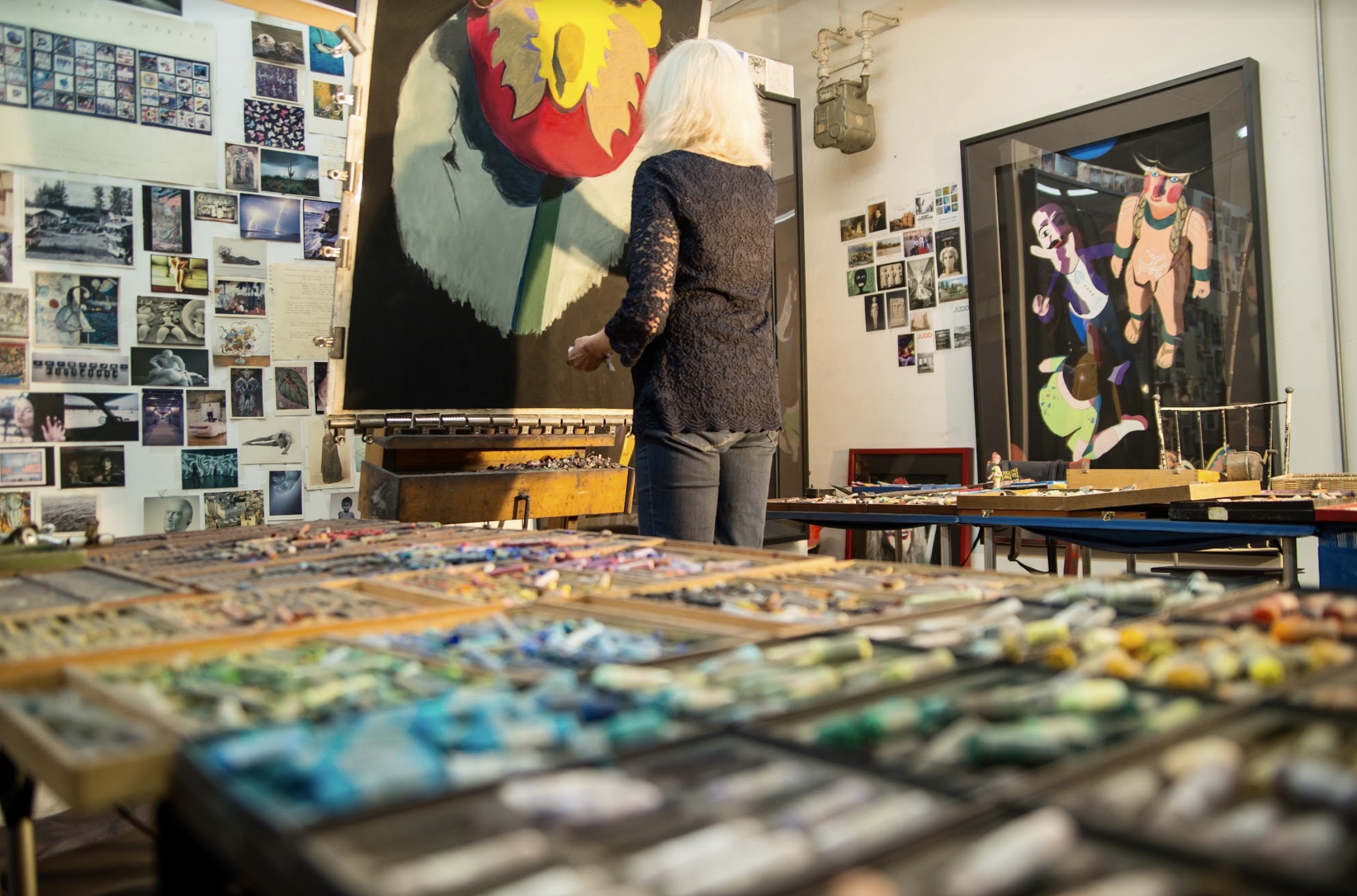
Barbara’s Studio

A: In April 1997 an opportunity to move to New York City arose and I didn’t look back. By then I was showing in a good 57th Street gallery, Brewster Gallery (they focused exclusively on Latin American Masters so I was in the company of Leonora Carrington, Rufino Tamayo, Diego Rivera, etc.).  Also, I had managed to find an excellent New York artists/agent, Leah Poller, with whom to collaborate. (Leah and I are still dear friends).

I looked at only one other space before finding my West 29th Street studio and knew instantly it was the one! An old friend of Bryan’s from Cal Tech rented the space next door and he had told us it was available. Initially the studio was a sublet. The lease-holder was a painter headed to northern California to work temporarily for George Lucas at the Lucas Ranch. After several years she decided to stay so I was able to take over the lease. I feel extremely fortunate to have been in my West 29th Street, New York City space now for twenty-five years. In a city where old buildings are knocked down to make way for new ones this is rare.

My studio is an oasis in a chaotic city, a place to make art, to read, and to think. I love to walk in the door every morning and I feel calmer the moment I arrive. It is still my absolute favorite place in New York! Sometimes I think of it as my best creation.

Comments are welcome!

Pearls from artists* # 511

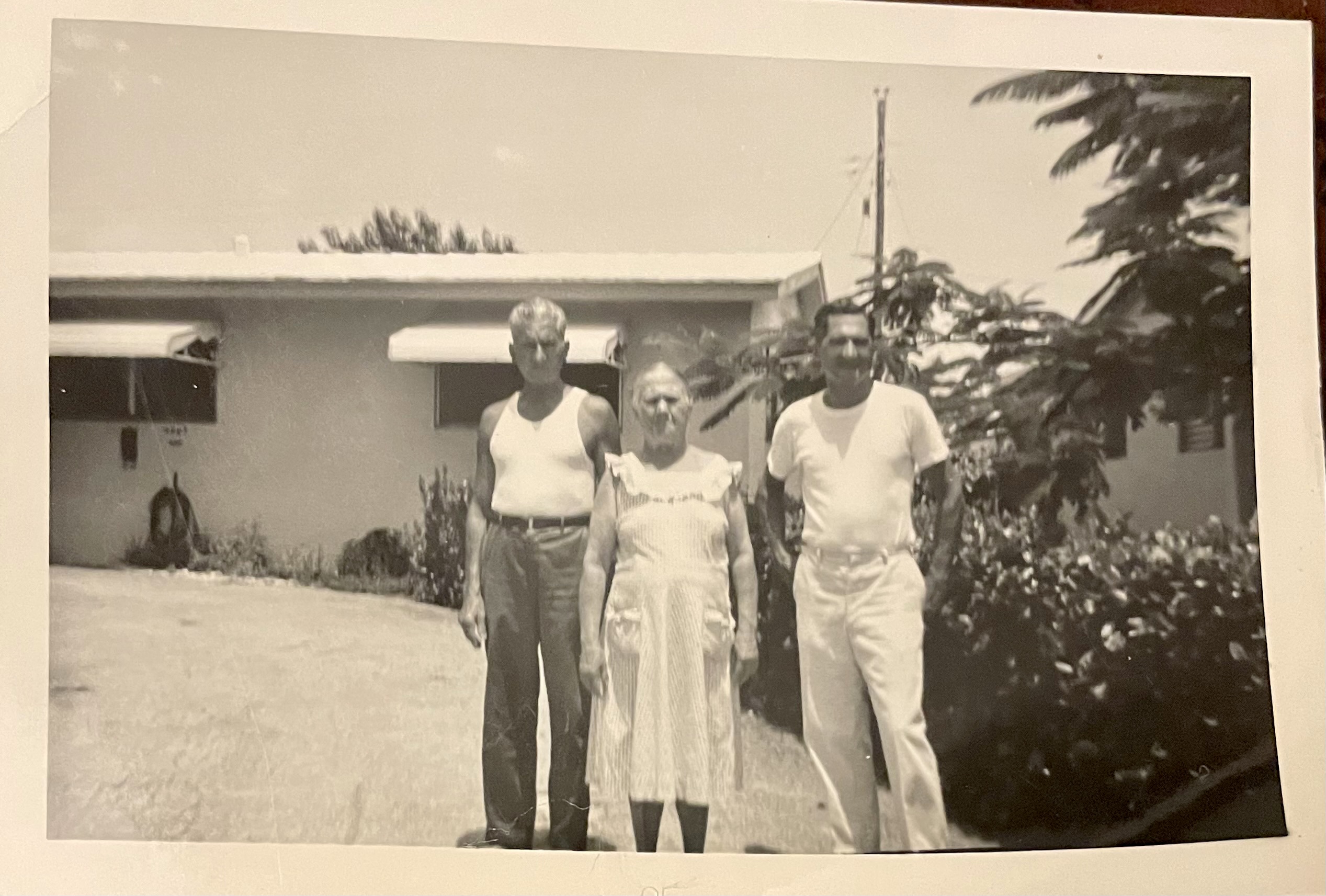
My paternal grandparents, left

* an ongoing series of quotations – mostly from artists to artists – that offers wisdom, inspiration, and advice for the sometimes lonely road we are on.

You do not need anyone’s permission to live a creative life.

Maybe you didn’t receive this kind of message when you were growing up. Maybe your parents were terrified of risk in any form. Maybe your parents were obsessive-compulsive rule-followers, or maybe they were too busy being melancholic depressives, or addicts, or abusers to ever use their imaginations towards creativity. Maybe they were afraid of what the neighbors would say. Maybe your parents weren’t makers in the least. Maybe they were pure consumers. Maybe you grew up in an environment where people just sat around watching tv and waiting for stuff to happen to them.

Forget about it. It doesn’t matter.

Look a little further back in your family’s history. Look at your grandparents: Odds are pretty good they were makers. No? Not yet? Keep looking back, then. Go back further still. Look at your great-grandparents. Look at your ancestors. Look at the ones who were immigrants, or slaves, or soldiers, or farmers, or sailors, or the original people who watched the ships arrive with the strangers onboard. Go back far enough and you will find people who were not consumers. People who were not passively waiting for stuff to happen to them. You will find people who spent their lives making things.

This is where you come from.

This is where we all come from.

Elizabeth Gilbert in Big Magic: Creative Living Beyond Fear

Comments are welcome!

Q: What’s on the easel today?

Work in progress
“Shamanic,” soft pastel on sandpaper, 35” x 28.5” framed

A: I just started a large 58″ x 38″ pastel painting based on the same reference photograph I used for “Shamanic,” 26″ x 20.” Sometimes ideas for new projects arrive in prosaic ways. I saw a mockup of “Shamanic” on my New Delhi gallery’s Instagram page. The mockup depicted my pastel painting as considerably larger than it actually is. I became intrigued with this unexpected format and decided to create a new one in a larger size.

For now I have turned Shamanic” to the wall so that it does not inadvertently influence my color choices. The two pastel paintings are already looking quite different.

Comments are welcome!

Q: Walk us through your “typical day”?

Barbara at work on “Schemer,” Soft Pastel on Sandpaper, 26” x 20”

Barbara at work on “Schemer,” Soft Pastel on Sandpaper, 26” x 20”

A:  I’ll describe a typical day at the studio.  When I first arrive in the morning, I read for 30 minutes. Reading focuses and quiets my mind and gets me ready to begin the day’s work.  While I read, I look at the pastel painting that’s on my easel to see where to begin.  Then I close the book, turn on some music, plug in the Halogen lamps I use while working, apply a barrier cream to my hands, put on a surgical mask (to avoid breathing pastel dust), pick up a pastel, and start.   

I never sit while working.  I enjoy the physicality of art-making and prefer to stand at my easel so I can back up to see how the pastel painting looks from a distance.  I like being on my feet all day and getting some exercise.  I work for a couple of hours, break for lunch, and then work the rest of the afternoon.

I believe artists need to be disciplined.  I work five days a week, taking Wednesdays and Sundays off, and spend seven hours or more per day in the studio.  Daylight is essential so I work more hours in summer, fewer in winter.  I like to think of art-making as independent of time tables, but I tend to work in roughly two-hour blocks before taking a break.  I typically work until 5:00 or so.

Studio hours are sacrosanct and exclusively for creative work.  I do not have WiFi at my studio and prefer to keep my computer and mobile devices elsewhere (they devour time).  Art business activities – answering email, keeping up with social media, sending jpegs, writing blog posts, doing interviews, etc. – are accomplished at home in the mornings, in the evenings, and on days off from the studio.

Comments are welcome!

Q: Do you have a home studio or do you go to an outside studio to work? Which do you prefer and why?

At work

At work

A: I have always preferred a separate studio. Pastel creates a lot of dust, it’s toxic to breathe, plus I do not want to live with the mess! I need a place to go in the mornings, someplace where I can focus and work without any distractions. It’s difficult to do that at home.

From the beginning of my time as an artist, in the mid-1980’s, I had a studio. My first one was in the spare bedroom of the Alexandria, Virginia, house that I shared with my late husband, Bryan, and that I still own.

For about three years in the 1990s I had a studio on the third floor of the Torpedo Factory Art Center, a building in Alexandria, VA that is open to the public. People would come in, watch artists at work, and sometimes buy a piece of art.

In April 1997 an opportunity to move to New York arose and I didn’t look back. By then I was showing in a good 57th Street gallery, Brewster Arts Ltd. (the gallery focused exclusively on Latin American artists; I was in the company of Leonora Carrington, Rufino Tamayo, Diego Rivera, etc.), and I had managed to find a New York agent, Leah Poller, with whom to collaborate.

I looked at only one other space before finding my West 29th Street studio and knew instantly it was the one! An old friend of Bryan’s from Cal Tech rented the space next door and he had told us it was available. Initially the studio was a sublet. The lease-holder was a painter headed to northern California to work temporarily for George Lucas at the Lucas Ranch. After several years she decided to stay so I was able to take over the lease. I feel extremely fortunate to have been in my West 29th Street, New York City space now for twenty-three years. In a city where old buildings are perpetually knocked down to make way for new ones this is rare.

My studio is an oasis in a chaotic city, a place to make art, to read, and to think. I love to walk in the door every morning and I feel calmer the moment I arrive. It’s my absolute favorite place in New York! Sometimes I think of it as my best creation. For more about this please see

https://artofcollage.wordpress.com/2020/04/30/artists-and-their-relationship-to-their-studio

Comments are welcome!

Q: How do you start your day?

Working

Working

A:  (Note: this is my pre-pandemic answer).

I have always been a morning person. I wake up about 6:00, make breakfast, and spend about an hour online checking email, monitoring and responding to social media (my two assistants devote their efforts to social media marketing of my work), catching up on news (art sites like Hyperallergic, The New York Times, the BBC, etc.). I swim three or four times a week. On those days I leave my apartment by 7:30, walk to the pool, swim for an hour, and arrive at the studio about 11. On days when I don’t swim, I generally arrive at the studio between 9:30 and 10.

Comments are welcome!


Pearls from artists* # 385

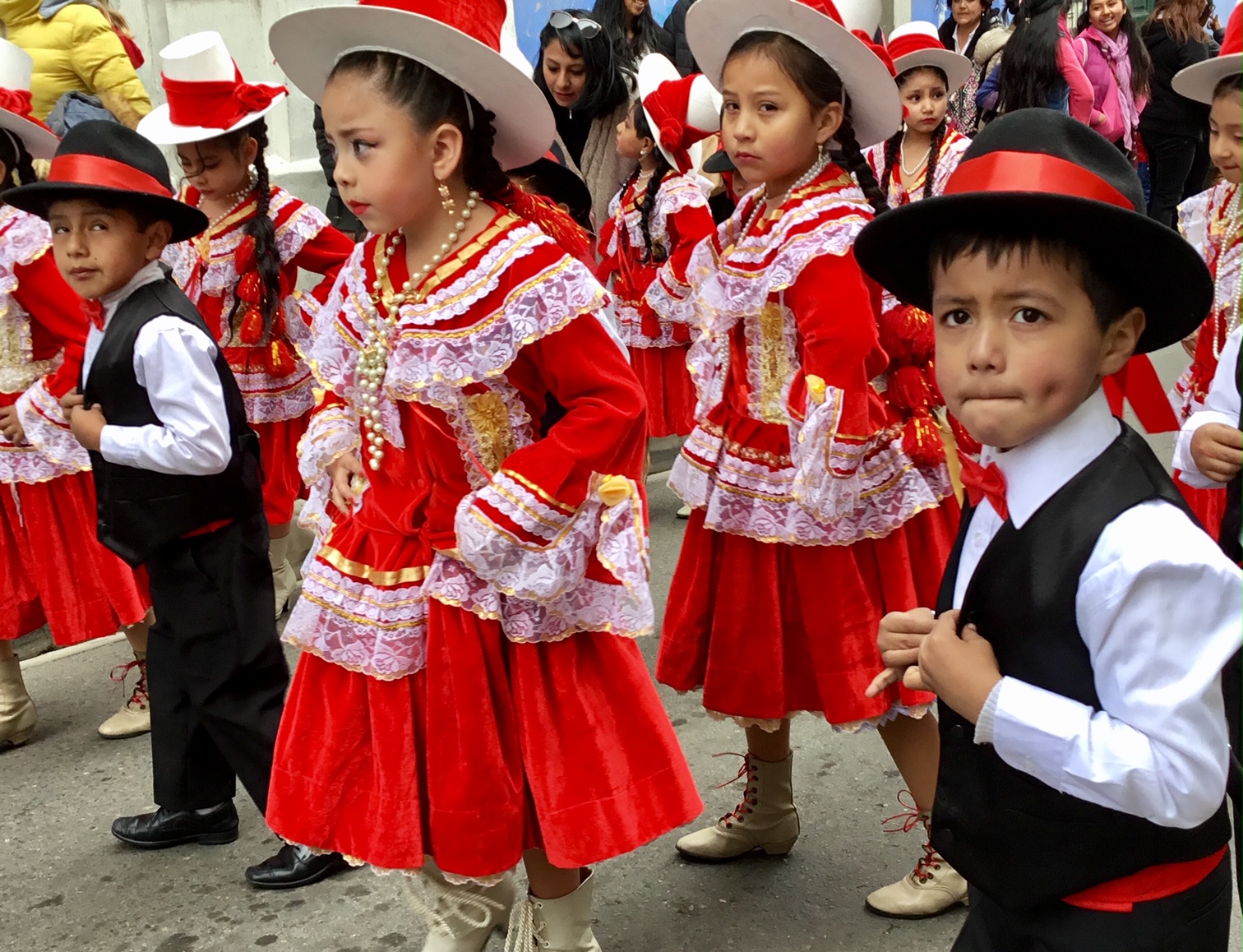
Potosí, Bolivia

Potosí, Bolivia

* an ongoing series of quotations – mostly from artists, to artists – that offers wisdom, inspiration, and advice for the sometimes lonely road we are on.

Sunday of Carnival, the parade begins.  For a whole day of celebration in music and dance, people can express their hope and fears, revive their myths and escape to a reality far from everyday life.

Thousands of spectators arrive from different parts if Bolivia and other countries.  Filling the streets, they straddle benches, window ledges, balconies, cats and eve hang from walls or roofs to witness the entrance of the Carnival.  Thus is the magnificent parade when Carnival makes its official entry into Oruro.  The comparsas (dance troupes) dance to music for20 blocks, nearly eight lies, to the Church of the Virgin of Socavón (Virgin of the Mine). Each tries to out do the next in the brilliance of their costumes, the energy of their dancing and the power of their music.  All their efforts are dedicated to the Virgin whose shrine is found on the hill called Pie de Gallo.

If there are thousands of spectators, there are also thousands of dancers from the city and other parts of the country.  Among the most remarkable are the Diablos and Morenos which count for eight of the 40 or 50 participating groups.  Keeping in mind that the smallest troupes have between 30 and 50 embers and the largest between 200 and 300, it is possible to calculate the number of dancers and imagine the spectacle.

Each dance recalls a particular aspect of life in the Andes.  Lifted from different periods and places, the dances offer a rich interpretation of historical events, creating an imaginative mythology for Oruro.

… Carnival blends indigenous beliefs and rituals with those introduced by the Spaniards.  Both systems of belief have undergone transformations, each making allowance for the other, either through necessity or familiarity.  The Christianity  fought from Europe becomes loaded with new meanings while the myths and customs of the Andes accommodate their language and creativity to the reality of their conquered world.  The process can be seen as a struggle culminating in a ‘mestizaje’ or new cultural mix.

El Carnaval de Oruro by Manuel Vargas in Mascaras de los Andes Bolivianos, Editorial Quipus and Banco Mercantil

Comments are welcome!

Pearls from artists* # 332

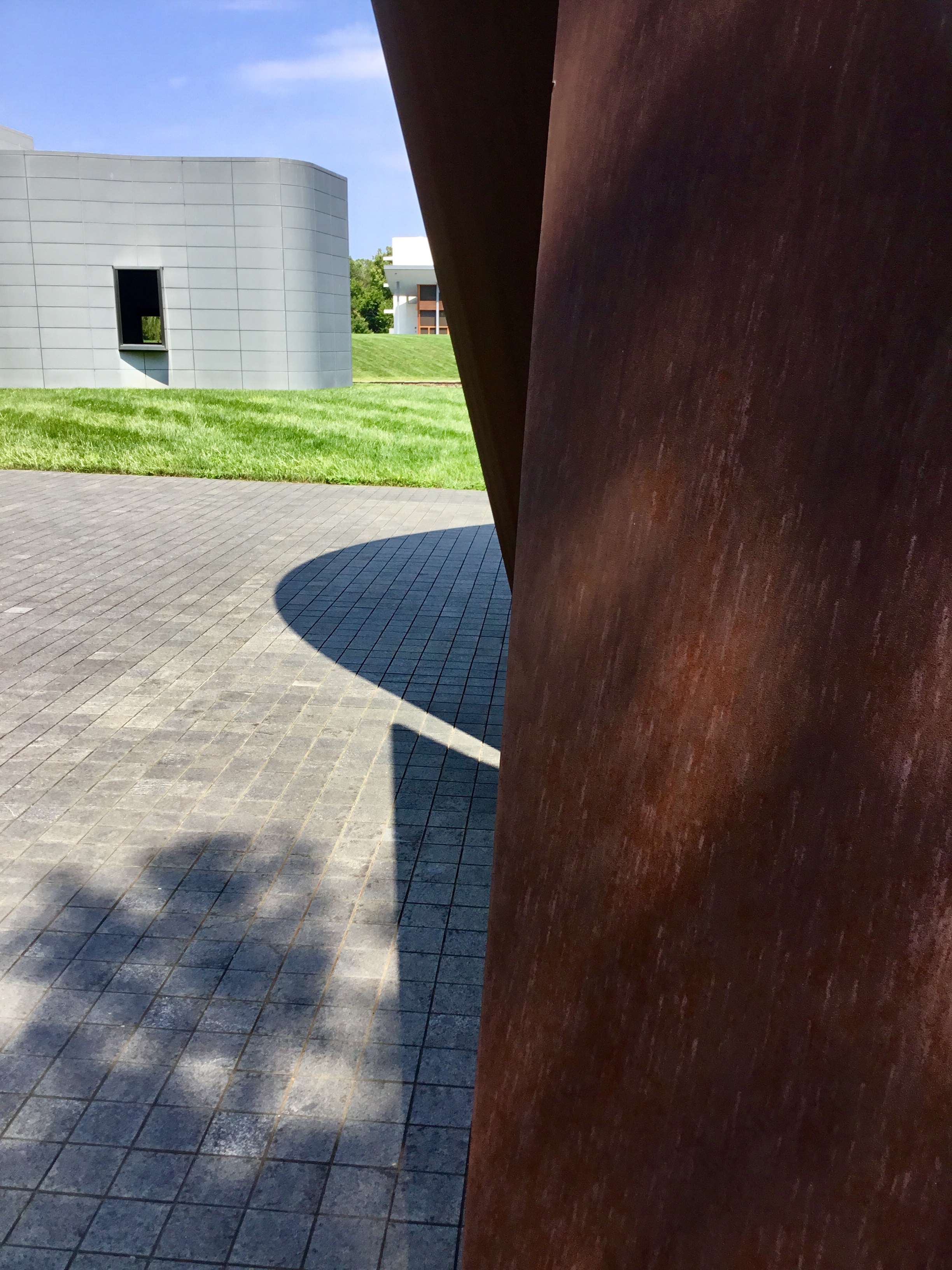
Glenstone Museum, Potomac, MD

Glenstone Museum, Potomac, MD

*an ongoing series of quotations – mostly from artists, to artists – that offers wisdom, inspiration, and advice for the sometimes lonely road we are on.

And your doubt may become a good quality if you train it.  It must  become knowing, it must become critical.  Ask it, whenever it wants to spoil something for you, why something is ugly, demand proofs from it, test it, and you will find it perplexed and embarrassed perhaps, or perhaps rebellious.  But don’t give in, insist on arguments and act this way, watchful and consistent, every single time, and the day will arrive when from a destroyer it will become one of  your best workers – perhaps the cleverest of all that are building at your life.     

Rainer Maria Rilke, Letters to a Young Poet, Translation by M.D. Herter Norton

Comments are welcome!