Q: What is it about soft pastel that you find so intriguing that you use it as your primary fine art medium?

Some of Barbara’s pastels
A: For starters it’s the medium that I fell in love with many years ago. I recently read this article online, “What is Pastel?” by Mike Mahon, and will quote it because it neatly sums up what I love about working with pastel.
Pastel is the most permanent of all media when applied to conservation ground and properly framed. Pastel has no liquid binder that may cause it to oxidize with the passage of time as oftentimes happens with other media.
In this instance, Pastel does not refer to pale colors, as the word is commonly used in cosmetic and fashion terminology. The pure, powdered pigment is ground into a paste with a minimum amount of gum binder, rolled into sticks and dried. The infinite variety of colors in the Pastel palette range from soft and subtle to hard and brilliant.
An artwork is created by stroking the stick of dry pigment across an abrasive ground, embedding the color in the “tooth” of the ground. If the ground is completely covered with Pastel, the work is considered a Pastel painting; whereas, leaving much of the ground exposed produces a Pastel sketch. Techniques vary with individual artists. The Pastel medium is favored by many artists because it allows a spontaneous approach. There is no drying time, therefore, no change in color occurs after drying as it does in other media.
Did you know that a particle of Pastel pigment seen under a microscope looks like a diamond with many facets? It does! Therefore, Pastel paintings reflect light like a prism. No other medium has the same power of color or stability.
Historically, Pastel can be traced back to the 16th century. Its invention is attributed to the German painter, Johann Thiele. A Venetian woman, Rosalba Camera, was the first to make consistent use of Pastel. Chardin did portraits with an open stroke, while La Tour preferred the blended finish. Thereafter, a galaxy of famous artists—Watteau, Copley, Delacroix, Millet, Manet, Renoir, Toulouse Lautrec, Vuillard, Bonnard, Glackens, Whistler, Hassam, William Merritt Chase—used Pastel for a finished work rather than for preliminary sketches.
Pastels from the 16th century exist today, as fresh as the day they were painted. Edgar Degas was the most prolific user of Pastel and its champion. His protégé, Mary Cassat, introduced Pastel to her friends in Philadelphia and Washington, and thus to the United States. In the Spring of 1983, Sotheby Parke Bernet sold at auction, two Degas Pastels for more than $3,000,000 each! Both Pastels were painted about 1880.
Note: Do not confuse Pastel with “colored chalk.” Chalk is a porous, limestone substance impregnated with dyes, whereas, Pastel is pure pigment—the same as is used in other permanent painting media.
Today, Pastel paintings have the stature of oil and watercolor as a major fine art medium. Many of our most renowned, living artists have distinguished themselves in Pastel and have enriched the art world with this beautiful medium.
So knowing all this, I often wonder, why don’t more artists use pastel? Is it because framing is a big issue? Works on paper need to be framed and pastel paintings have unique problems (see my April 27, 2013 blog post). Second only to the cost of maintaining a studio in New York City, frames are my single largest business expense. Sometimes I am grateful that pastel is a very slow medium. I typically finish 4 or 5 paintings in a year, which means I only have to pay for 4 or 5 frames!
Comments are welcome!
Pearls from artists* # 39

Great Salt Lake
* an ongoing series of quotations – mostly from artists, to artists – that offers wisdom, inspiration, and advice for the sometimes lonely road we are on.
When you think of paying an author for his work you ought to think generously. It is the author who makes your magazine. If you cannot pay in cold cash, why don’t you write the author and ask what you could do for him? Offer to do something in the nature of a personal sacrifice, I would say. He may need to have some typing done, or some printing; he may need a table to write on, or books to reference; he may need some research work done for him. There are a thousand and one things he may need and appreciate much more than cold cash, especially when it constitutes a sum which, by American standards of living, means absolutely nothing. It costs me, for example, almost five dollars a week for postage. It costs me much more than that for the gifts of books and water colors I am obliged to make to enthusiastic admirers who are too poor to buy my work.
… But this, it seems to me, is the way one good artist should treat another. And you who are editors of small magazines are mostly artists yourselves, I take it. You all expect to become celebrated writers some day; you identify yourselves with the men whose work you admire and hope to publish. Well, carry out the identification to the nth degree, I say. Think how you would feel if, after years of labor and struggle, you are asked to accept a trivial sum. It is far, far better to say: “We have no money at all. We believe in you and your work… will you help us? We are willing to make any sacrifice in order to make your name known.” Most authors would be touched by such an appeal; they would offer their work gladly; they would probably offer to help in other ways. I am thinking naturally of the kind of writers whom you wish to interest in your project. There can be a magnificent collaboration between author and editor, author an publisher. But you, as editor, must first begin by giving, not demanding. Give the shirt off your back, or offer to give it, and then see what sort of response you will get form the author. I have often noticed with beggars that when they ask for something and you offer them twice or ten times as much, they are so overwhelmed that they often refuse to accept anything, or else they offer to become your slave. Writers, in a way, are like beggars. They are continually begging to be heard, to be recognized. Really they are simply begging for a chance to give of their great gifts – which is the most heart-rending begging of all and a disgrace to any civilized community in which it happens. Which is to say, almost the entire civilized world.
Henry Miller in Stand Still Like the Hummingbird
Comments are welcome!
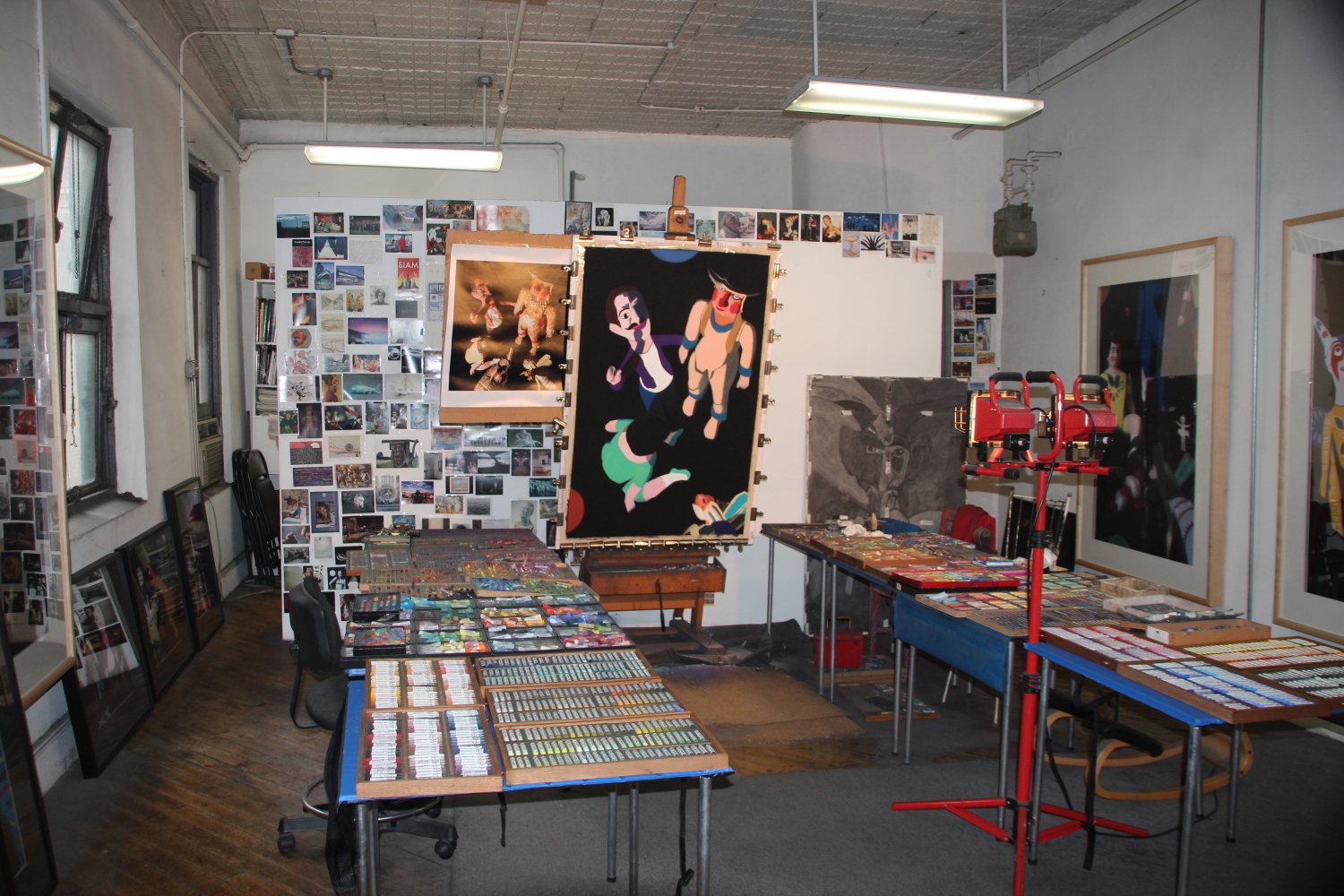
Pearls from artists* # 38
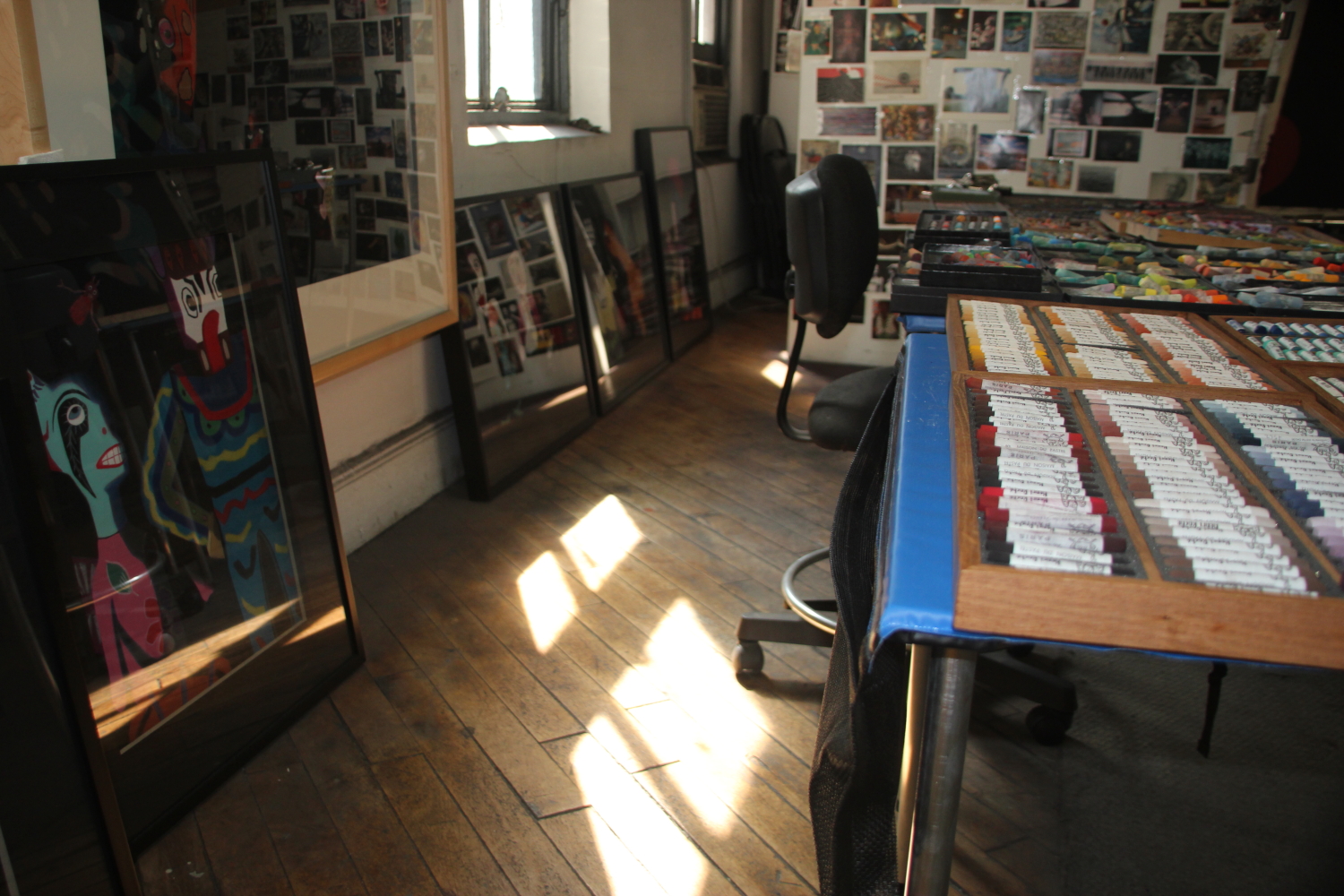
Morning sun at the studio
* an ongoing series of quotations – mostly from artists, to artists – that offers wisdom, inspiration, and advice for the sometimes lonely road we are on.
It’s one thing to be intelligent and it’s another to enjoy thinking, to relish the time spent alone with one’s thoughts, to happily muse, imagine, and analyze. Artists, who are introspective by nature, typically enjoy spending time in this fashion and may even prefer solitude to the company of others. Able to work by themselves, artists are often lost in a state of dreamy thoughtfulness of the sort described by the painter Hans Hofmann when he wrote, ” The first red spot on a white canvas may at once suggest to me the meaning of ‘morning redness,’ and from there I dream further with my color.” Artists are not introspective, thoughtful, lost in time and space because they wish to ignore the world. They’re introspective because out of that attitude artistic answers flow.
Eric Maisel in A Life in the Arts
Comments are welcome!
Q: The handmade frames on your large pastel-on-sandpaper paintings are quite elaborate. Can you speak more about them?
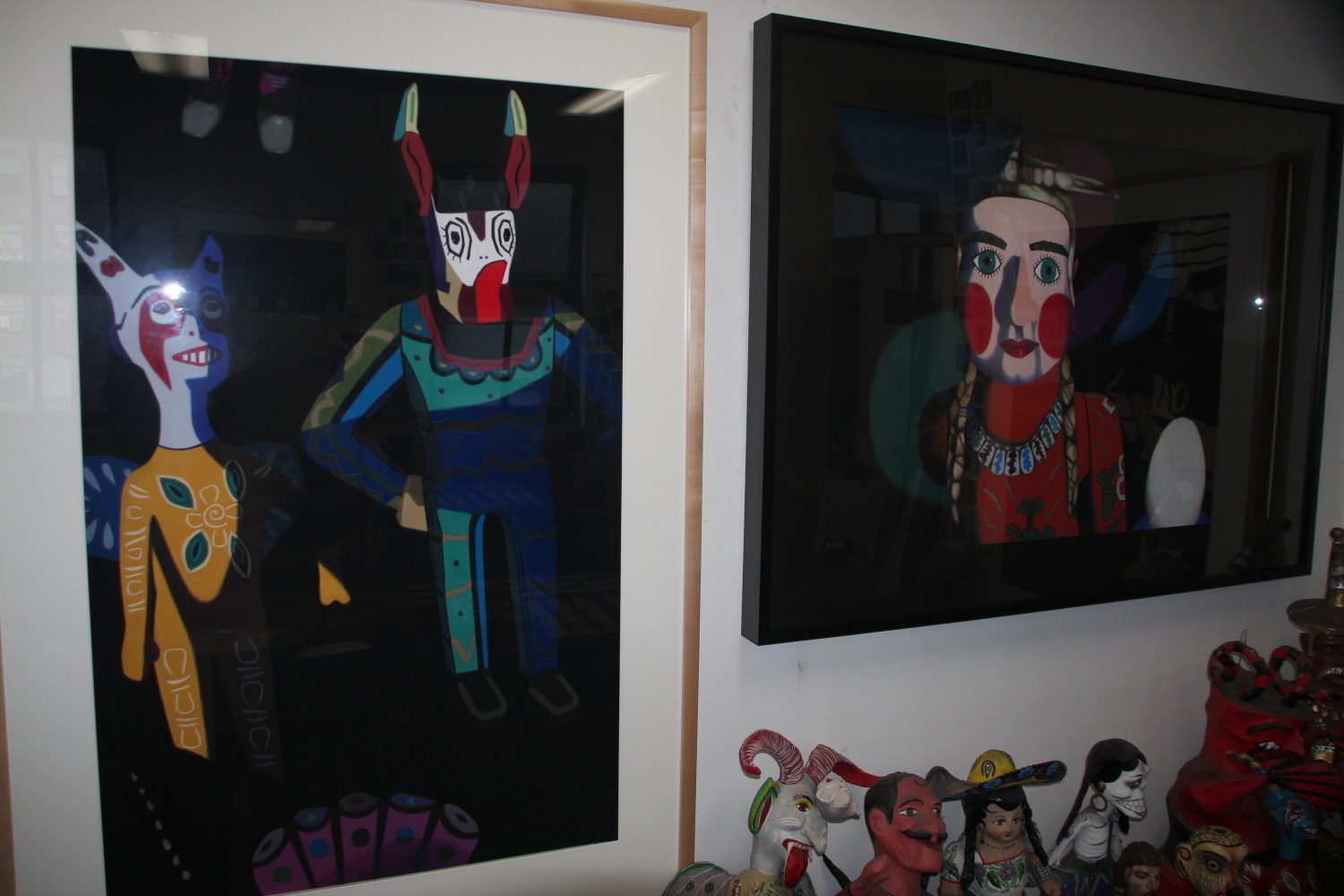
“Quartet” (left) and “Epiphany,” soft pastel on sandpaper
A: I have been working in soft pastel since 1986, I believe, and within six years the sizes of my paintings increased from 11″ x 14″ to 58″ x 38.” (I’d like to work even bigger, but the limiting factors continue to be first, the size of mat board that is available and second, the size of my pick-up truck). My earliest work is framed with pre-cut mats, do-it-yourself Nielsen frames, and glass that was cut-to-order at the local hardware store. With larger-sized paintings DIY framing became impractical. In 1989 an artist told me about Underground Industries, a custom framing business in Fairfax, Virginia, run by Rob Plati, his mother, Del, and until last year, Rob’s late brother, Skip. So Rob and Del have been my framers for 24 years. When I finish a painting in my New York studio, I drive it to Virginia to be framed.
Pastel paintings have unique problems – for example, a smudge from a finger, a stray drop of water, or a sneeze will ruin months of hard work. Once a New York pigeon even pooped on a finished painting! Framing my work is an ongoing learning experience. Currently, my frames are deep, with five layers of acid-free foam core inserted between the painting and the mat to separate them. Plexiglas has a static charge so it needs to be kept as far away from the pastel as possible, especially since I do not spray finished pastel paintings with fixative.
Once they are framed, my paintings cannot be laid face down. There’s a danger that stray pastel could flake off. If that happens, the whole frame needs to be taken apart and the pastel dust removed. It’s a time-consuming, labor-intensive process and an inconvenience, since Rob and Del, the only people I trust with my work, are five hours away from New York by truck.
Comments are welcome!
Pearls from artists* # 37
Self portrait, White Sands, NM
* an ongoing series of quotations – mostly from artists, to artists – that offers wisdom, inspiration, and advice for the sometimes lonely road we are on.
Certainly the most compelling thing in both personal life and art is to be yourself. When we engage attentively and honestly, pay attention to the insights that come to us, see our denial and faulty thinking, and engage in uncovering the obstacles and blocks to our expression, we realize that art is a wonderful medium for personal growth.
If we realize all this, we do ourselves justice when we claim to be an artist. We really mean it, and we own it. Today, as we start working on whatever it is we’re doing, let’s claim our role as artists, being attentive to process as much as finished results.
Ian Roberts in Creative Authenticity: 16 Principles to Clarify and Deepen Your Artistic Vision.
Comments are welcome!
Q: What do you do to protect yourself from toxic pastel dust?
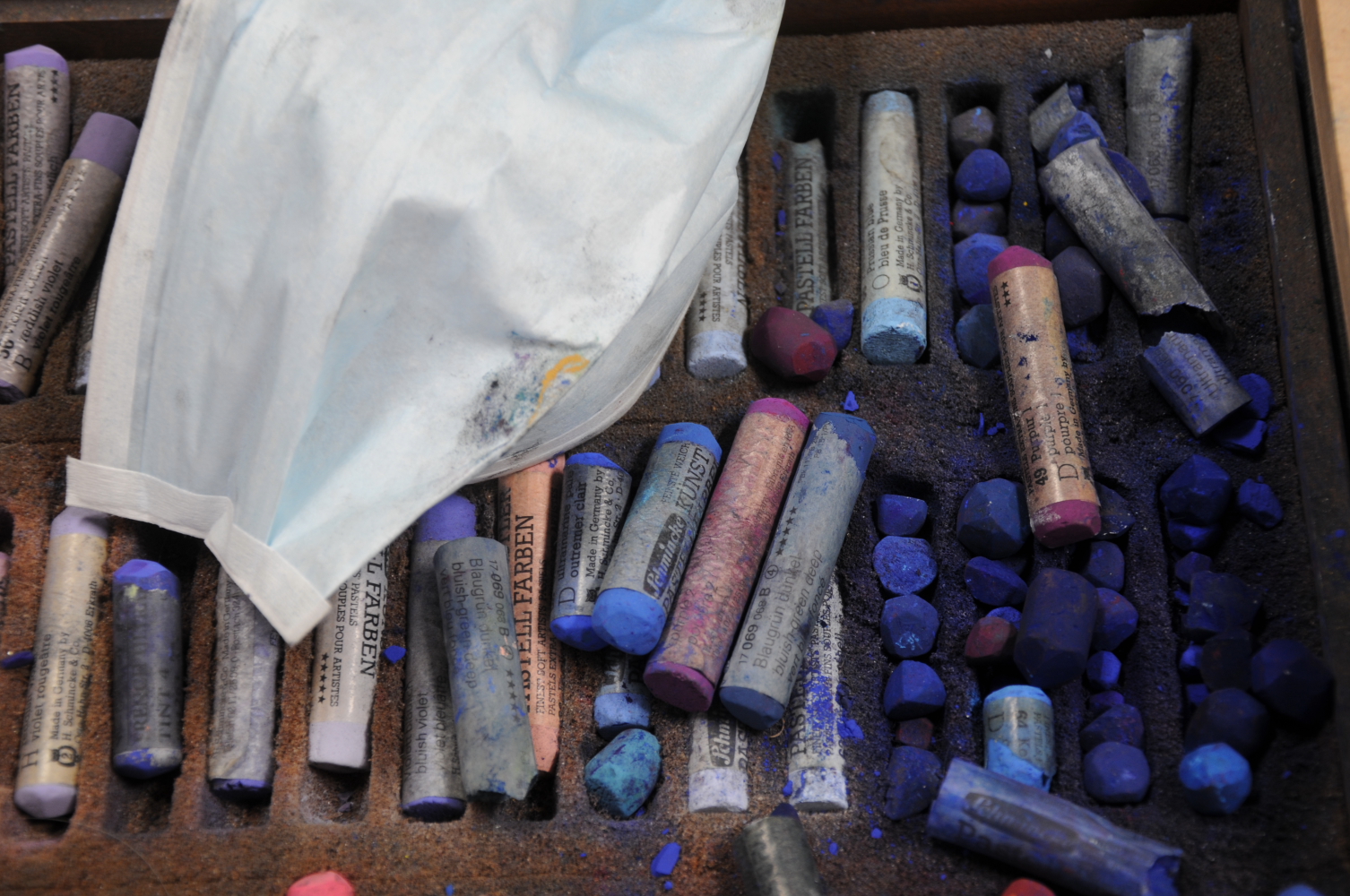
Used surgical mask
A: Certain sticks of soft pastel contain toxic lead and cadmium so some precautions are necessary. Before I begin working, I liberally apply a barrier cream, called Artguard, to my hands and wrists so that pastel will not be absorbed through my skin via small cuts that I might have. I wear a surgical mask to avoided breathing the dust. Also, I try to work so that my hand is below my head, to lessen the likelihood of breathing particles of pastel as they fall to the floor. I ensure there is good air circulation in my studio. Once the dust has settled onto the floor, I try not to stir it up again until I dispose of it. I’ve been working with soft pastel for 27 years and have managed to stay healthy so far.
Comments are welcome!
Pearls from artists* # 36
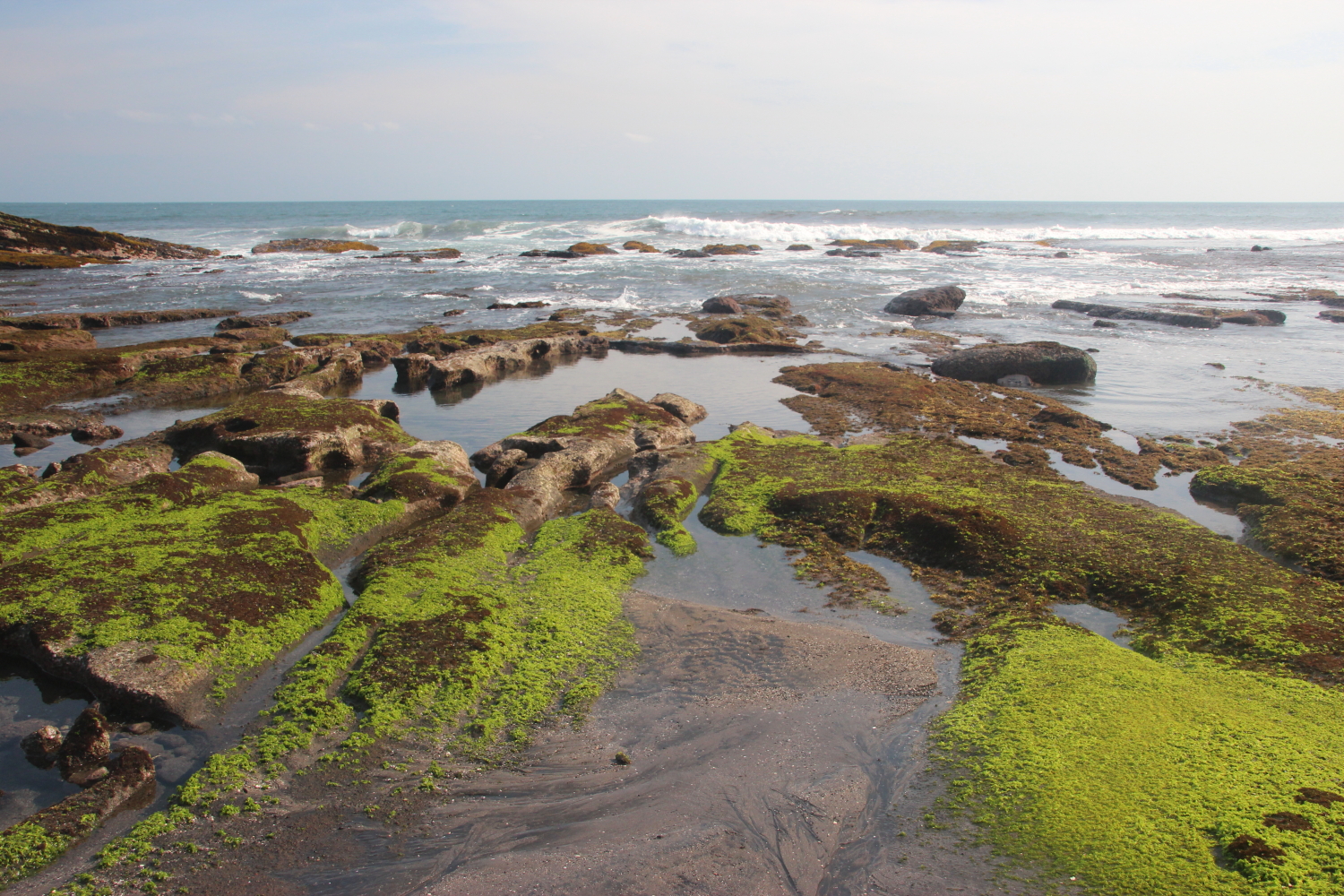
Indian Ocean, Tanah Lot, Bali
* an ongoing series of quotations – mostly from artists, to artists – that offers wisdom, inspiration, and advice for the sometimes lonely road we are on.
… don’t wait for things to change, the hour of man is now and, whether you are working at the bottom of the pile or on top, if you are a creative individual you will go on producing, come hell or high water. And this is the most you can hope to do. One has to go on believing in himself, whether recognized or not, whether heeded or not. The world may seem like hell on wheels – and we are doing our best, are we not, to make it so? – but there is always room, if only in one’s own soul, to create a spot of Paradise, crazy though it may sound.
Henry Miller in Stand Still Like the Hummingbird
Comments are welcome!
Q: When and why did you start working on sandpaper?

Raw sandpaper
A: In the late 1980s when I was studying at the Art League in Alexandria, VA, I took a three-day pastel workshop with Albert Handel, an artist known for his southwest landscapes in pastel and oil paint. I had just begun working with soft pastel (I’d completed my first class with Diane Tesler) and was still experimenting with paper. Handel suggested I try Ersta fine sandpaper. I did and nearly three decades later, I’ve never used anything else.
The paper (UArt makes it now) is acid-free and accepts dry media, especially pastel and charcoal. It allows me to build up layer upon layer of pigment, blend, etc. without having to use a fixative. The tooth of the paper almost never gets filled up so it continues to hold pastel. If the tooth does fill up, which sometimes happens with problem areas that are difficult to resolve, I take a bristle paintbrush, dust off the unwanted pigment, and start again. My entire technique – slowly applying soft pastel, blending and creating new colors directly on the paper (occupational hazard: rubbed-raw fingers, especially at the beginning of a painting as I mentioned in last Saturday’s blog post), making countless corrections and adjustments, looking for the best and/or most vivid colors, etc. – evolved in conjunction with this paper.
I used to say that if Ersta ever went out of business and stopped making sandpaper, my artist days would be over. Thankfully, when that DID happen, UArt began making a very similar paper. I buy it from ASW (Art Supply Warehouse) in two sizes – 22″ x 28″ sheets and 56″ wide by 10 yard long rolls. The newer version of the rolled paper is actually better than the old, because when I unroll it it lays flat immediately. With Ersta I laid the paper out on the floor for weeks before the curl would give way and it was flat enough to work on.
Comments are welcome!
Pearls from artists* # 35
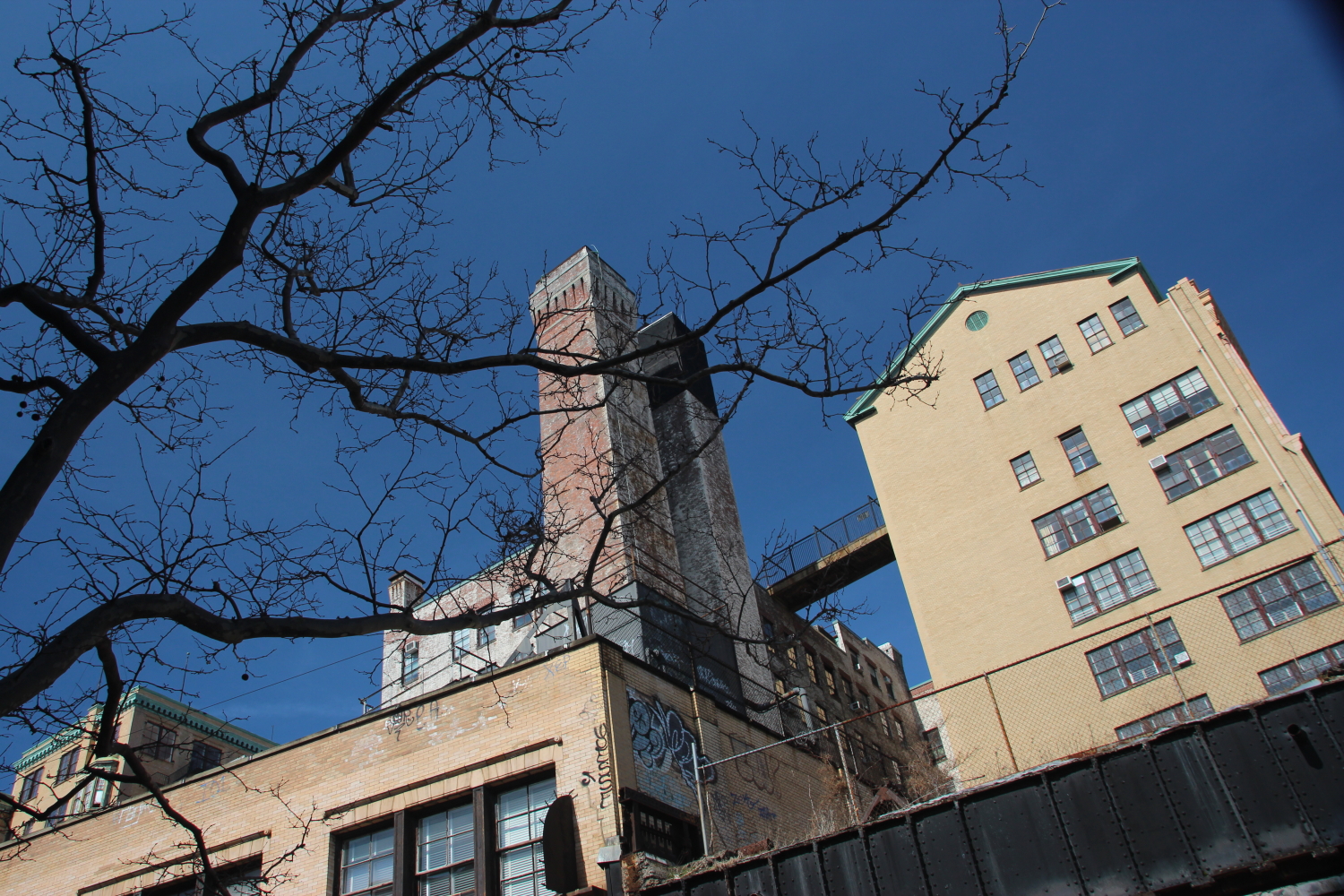
Westbeth, NYC
* an ongoing series of quotations – mostly from artists, to artists – that offers wisdom, inspiration, and advice for the sometimes lonely road we are on.
An individual who has committed himself to art and now wrestles within it, having given up everything else, has also become strict, you see. Such a person is more likely to warn off others rather than to beckon them to enter into a realm of the most tremendous demands and indescribable sacrifices. And for someone sitting at his desk, behind closed doors, matters are still relatively simple: at least he has to deal only with himself. But an actor, even when his work originates in the purest experiences of his being, stands in the open and performs his work in the open where he is exposed to all the influences, detractions, disturbances, and even hostilities that originate in his colleagues and his audience and that interrupt, distract, and split him off. For him things are more difficult than for anyone else; above all, he needs to lure success and to base his actions on it. And yet what misery results if this new alignment leads him to abandon the inner direction that had driven him into art in the first place. He seems to have no self; his job consists in letting others dictate selves to him. And the audience, once it has accepted him, wants to preserve him within the limits where it finds entertainment; and yet his achievement depends entirely upon his capacity to maintain an interior constancy through all kinds of changes, blindly, like a madman. Any momentary weakness toward success is as sure to doom him as giving in and drawing on applause as a precondition for their creation spells doom for the painter or poet.
Ulrich Baer in The Wisdom of Rilke
Comments are welcome!


 barbararachkoscoloreddust.com