Category Archives: Pastel Painting
Q: Would you talk about how the Judas figures you depict in your pastel paintings function in Mexico?
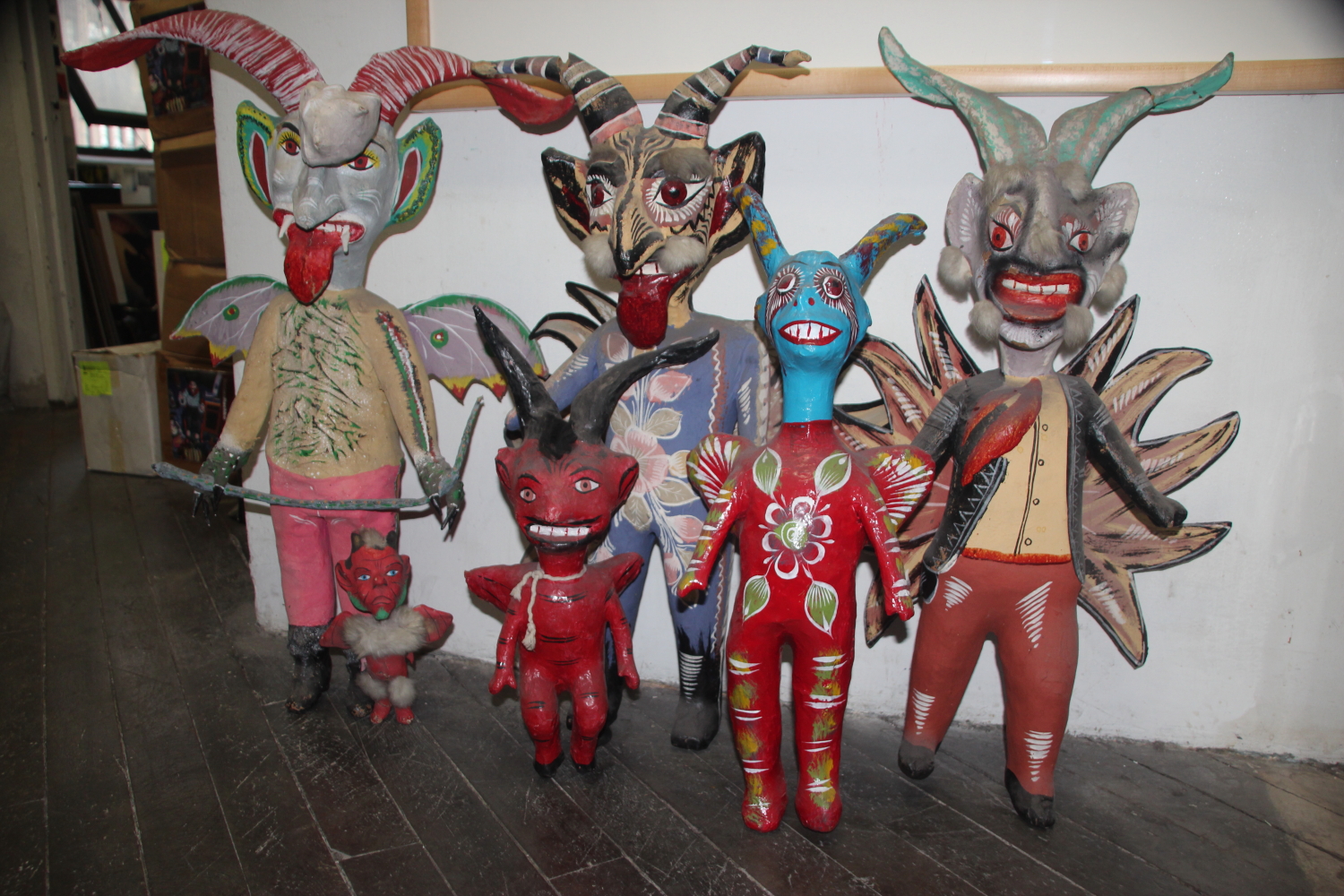
Some Judases
A: Here’s a good explanation from a website called “Mexican Folk Art Guide”:
“La quema de Judas or the Judas burning in Mexico is a celebration held on Sabado de Gloria (Holy Saturday). Papier mache figures symbolizing Judas Iscariot stuffed with fireworks are exploded in local plazas in front of cheerful spectators.
The Judases exploded in public spaces can measure up to 5 meters, while 30 cm ones can be found with a firework in their back to explode at home.
In Mexico la quema de Judas dates from the beginning of the Spanish colony when the Judas effigies were made with hay and rags and burned. Later as paper became available and the fireworks techniques arrived, thanks to the Spanish commerce route from the Philippines, the Judases were made out of cardboard, stuffed with fireworks, and exploded.
After the Independence War the celebration lost its religious character and became a secular activity. The Judas effigies were stuffed with candies, bread, and cigarettes to attract the crowds into the business [establishment] that sponsored the Judas.
Judas was then depicted as a devil and identified with a corrupt official, or any character that would harm people. In 1849 a new law stipulated that it was forbidden to relate a Judas effigy with any person by putting a name on it or dressing it in a certain way to be identified with a particular person.”
This is why whenever I bring home a Judas figure from Mexico, I feel like I have rescued it from a fire-y death!
Comments are welcome!
Pearls from artists* # 143
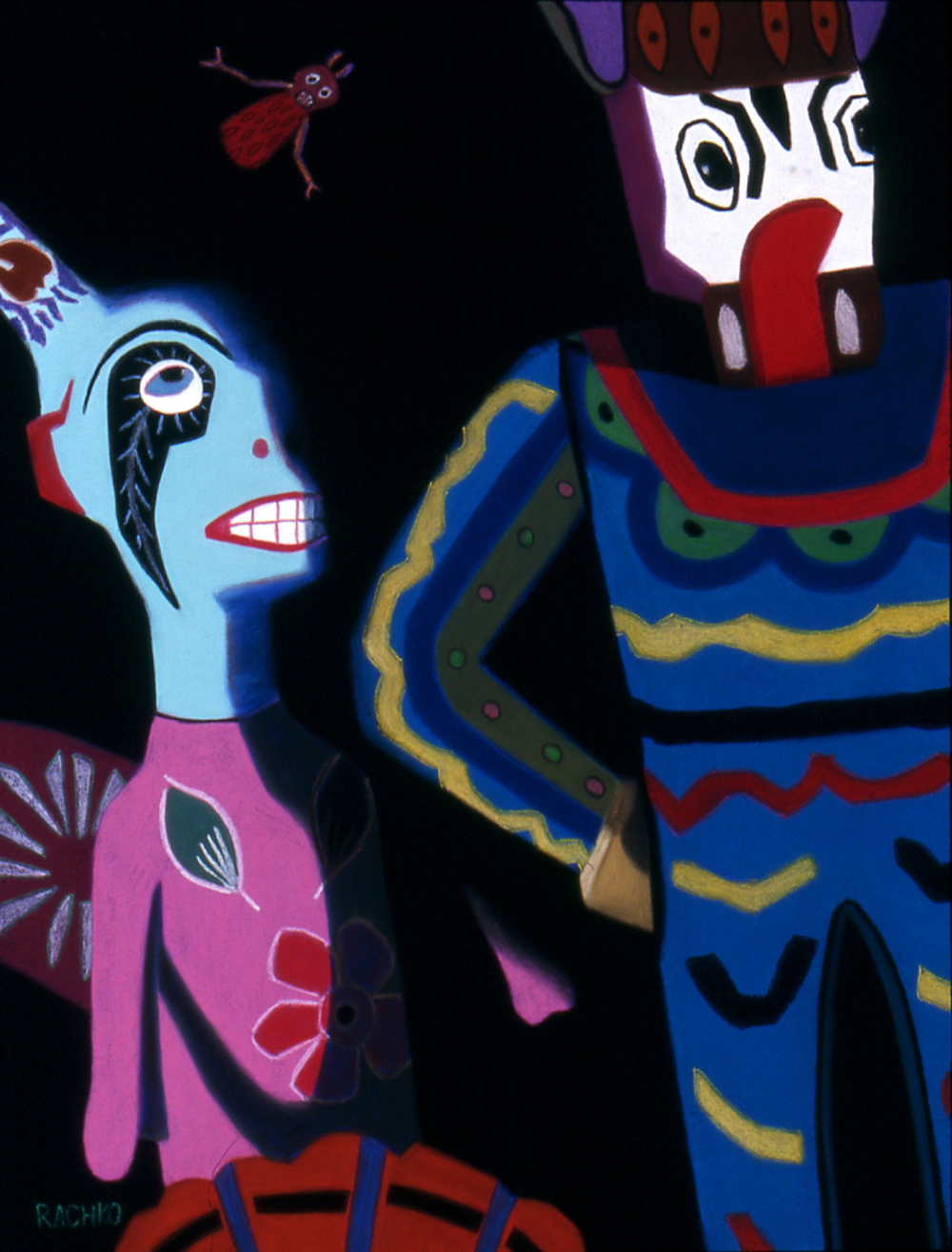
“Intruder,” soft pastel on sandpaper, 26″ x 20″
* an ongoing series of quotations – mostly from artists, to artists – that offers wisdom, inspiration, and advice for the sometimes lonely road we are on.
Artists and designers have the capacity to generate something from deep inside ourselves to live outside of ourselves. By residing in the experiential and the physical, and by developing the “hands on” as a portal of intelligent learning, we confirm the mind as maker and making as a state of mindfulness. We demonstrate how artists and designers are hosts for enduring creative discovery that is self-initiated and actively engaged. In short, artists and designers manifest what has not existed previously – in many cases, what has never even been imagined.
Rosanne Somerson in The Art of Critical Making: Rhode Island School of Design on Creative Practice, Rosanne Somerson and Mara L. Hermano, editors
Comments are welcome!
Q: Is it possible to sum up your creative practice in seven words?
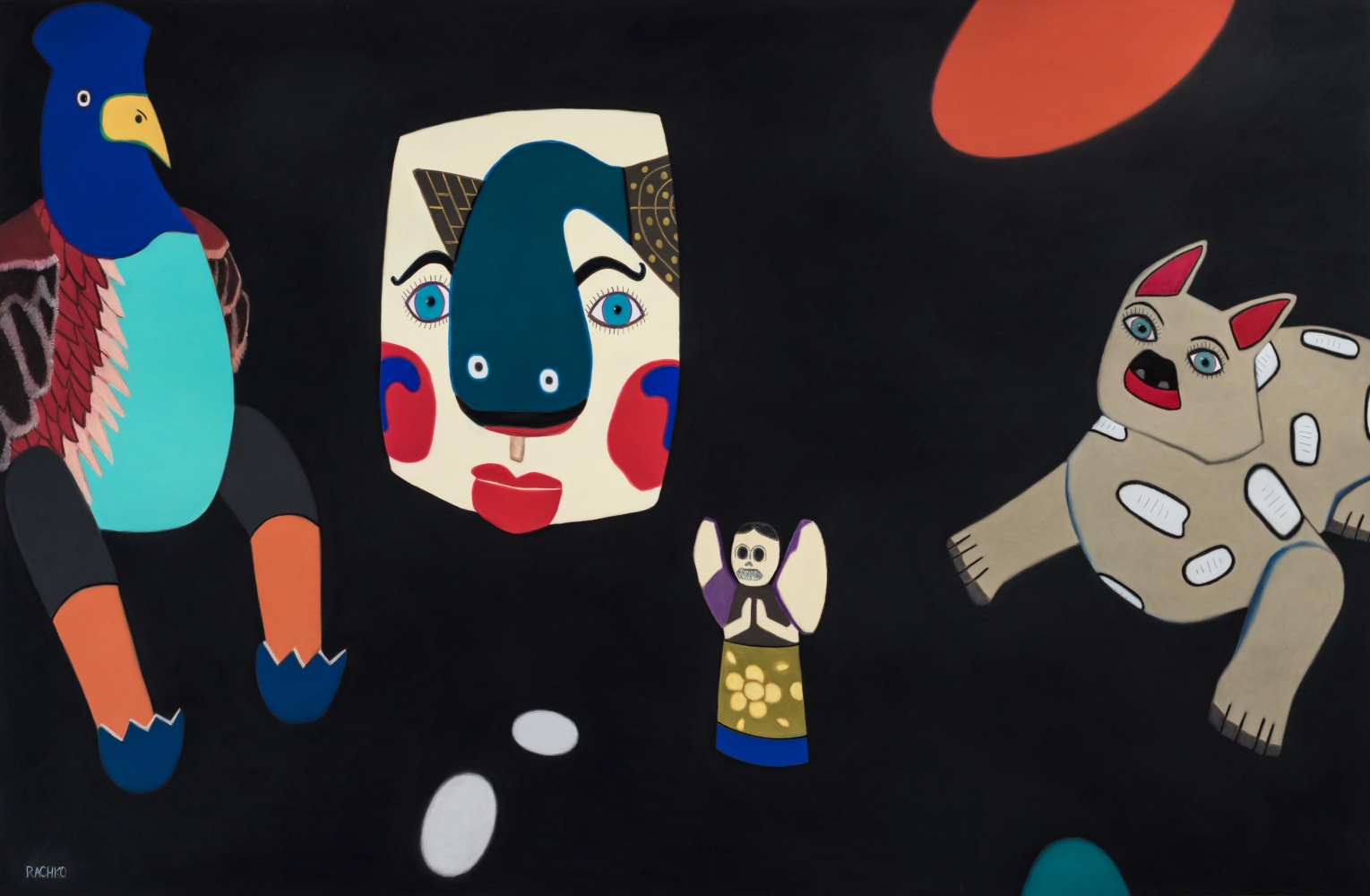
“Motley,” soft pastel on sandpaper, 38″ x 58″
A: Steadily striving to become a better artist. Of course, others determine how successful we have been in this regard.
Comments are welcome!
Pearls from artists* # 142
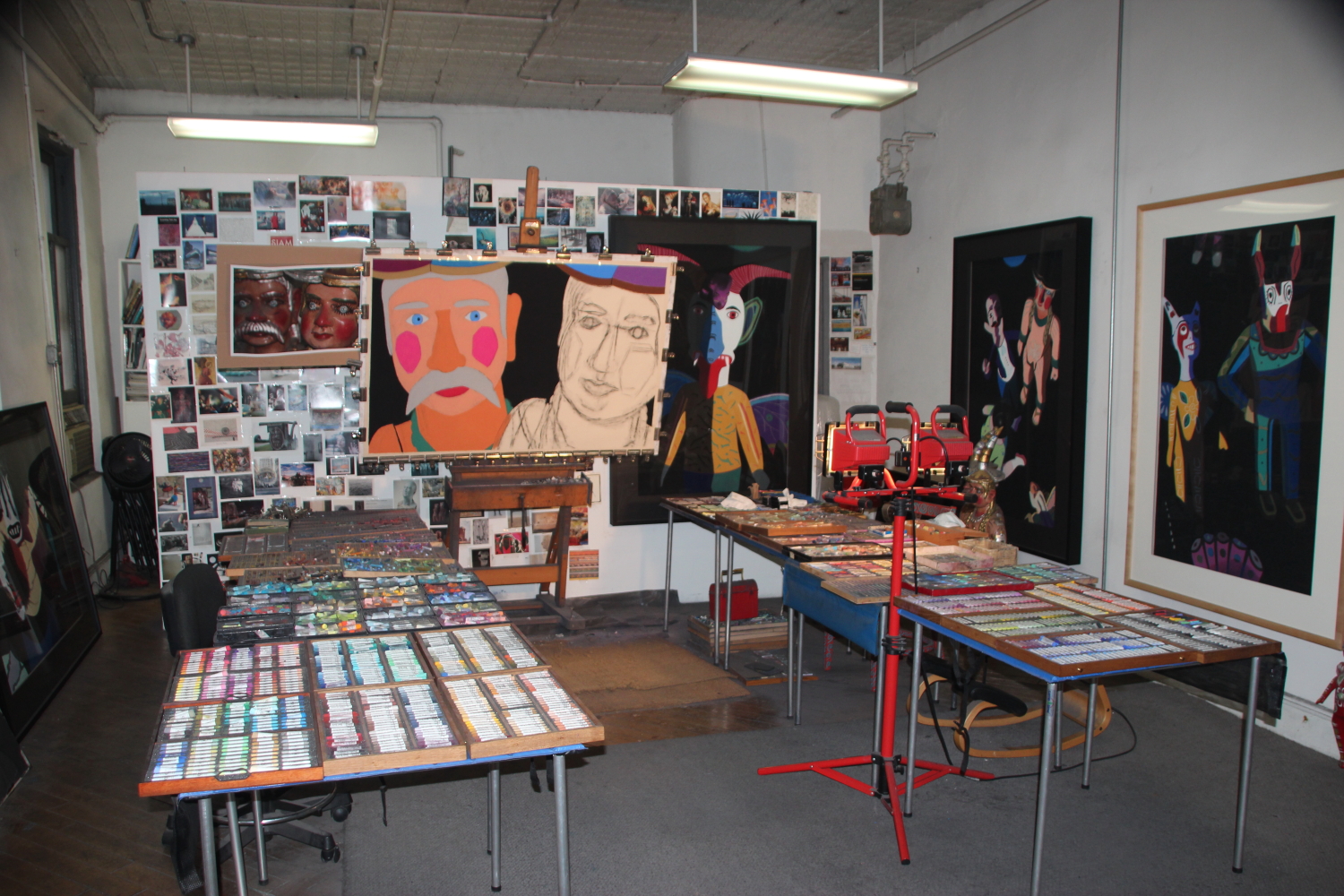
Barbara’s studio
* an ongoing series of quotations – mostly from artists, to artists – that offers wisdom, inspiration, and advice for the sometimes lonely road we are on.
You essentialize as you get older. I think you start discarding and leaving in there only what is necessary. That is part of the process of getting older as an artist. It takes a lot of work to do that. It takes many, many hours and many, many days and many, many weeks and many years to shed.
Conversations with Meredith Monk by Bonnie Marranca
Comments are welcome!
Q: How do you decide how much to charge for your paintings?

Barbara’s studio
A: What to charge for my work is a complex question. The prices of my pastel paintings take into account many tangible and intangible factors. Here are a few:
Sales history.
My thirty-year-long exhibition history.
The costs of maintaining a studio in New York. My overhead goes up annually, but I do not raise prices every year to offset these expenses.
The countless hours of labor, cost of art materials, framing, photography, transportation, foreign travel, etc. that go into creating a painting.
Costs for marketing, social media, advertising, website design and upkeep, ongoing education, etc.
Somewhat less quantifiable factors such as my reputation as an artist, the real demand for my work, goodwill, the fact that I work full-time as a professional artist, etc.
Comments are welcome!
Pearls from artists* # 141

Painting, subject, reference photo
* an ongoing series of quotations – mostly from artists, to artists – that offers wisdom, inspiration, and advice for the sometimes lonely road we are on.
It would be very interesting to record photographically not the stages of a painting, but its metamorphoses. One would see perhaps by what course a mind finds its way towards the crystallization of its dream. But what is really very curious is to see that the picture does not change basically, that the initial vision remains almost intact in spite of appearances. I see often a light and dark, when I have put them in my picture, I do everything I can to ‘break them up,’ in adding a color that creates a counter effect. I perceive, when this work is photographed, that which I have introduced to correct my first vision has disappeared, and that after all the photographic image corresponds to my first vision, before the occurrence of the transformation brought about by my will.
The picture is not thought out and determined beforehand, rather while it is being made it follows the mobility of thought. Finished, it changes further, according to the condition of him who looks at it. A picture lives its life like a living creature, undergoing the changes that daily life imposes on us. That is natural, since a picture lives only through him who looks at it.
Christian Zervos: Conversation with Picasso in The Creative Process, edited by Brewster Ghiselin
Comments are welcome!
Q: What’s on the easel today?
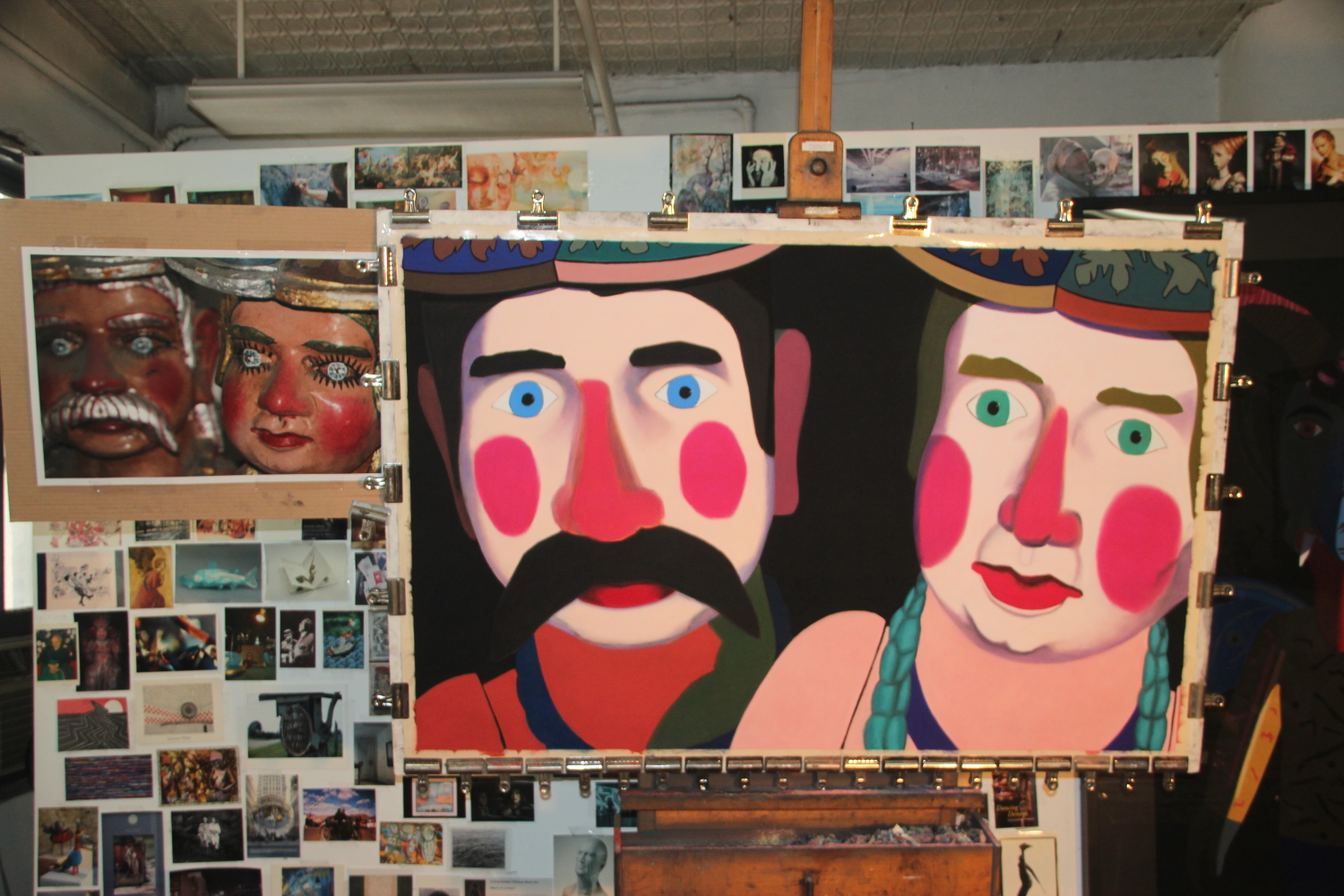
“Duality,” soft pastel on sandpaper, 38″ x 58″
A: I continue working on a large pastel painting called, “Duality.” This one is taking longer than usual, perhaps because the large heads are a departure from anything I’ve made before. I am having to find my way more slowly.
Comments are welcome!
Pearls from artists* # 140

“Big Wow,” soft pastel on sandpaper, 38″ x 58″
* an ongoing series of quotations – mostly from artists, to artists – that offers wisdom, inspiration, and advice for the sometimes lonely road we are on.
Frankly, I think you’re better off doing something on the assumption that you will not be rewarded for it, that it will not receive the recognition it deserves, that it will not be worth the time and effort invested in it.
The obvious advantage to this angle is, of course, if anything good comes of it, then it’s an added bonus.
The second, more subtle and profound advantage is that by scuppering all hope of worldly and social betterment from one creative act, you are finally left with only one question to answer:
Do you make this damn thing exist or not?
And once you can answer that truthfully for yourself, the rest is easy.
Hugh MacLeod in Ignore Everybody and 39 Other Keys to Creativity
Comments are welcome!
Q: Why do you prefer not to explain your titles and imagery?
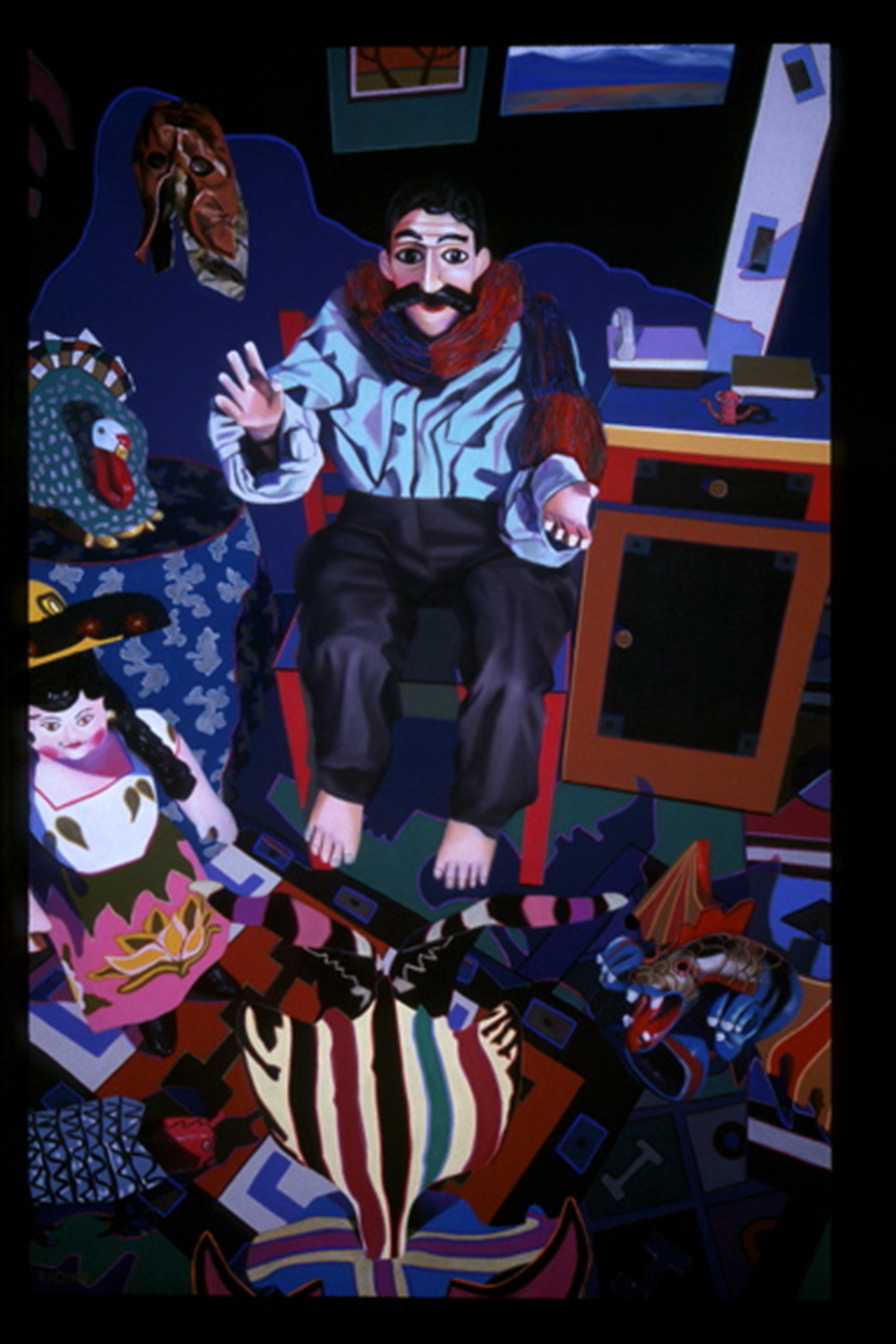
“Truth Betrayed by Innocence,” soft pastel on sandpaper, 58″ x 38″
A: It’s mainly because answers close down imagination and creativity. I enjoy hearing alternative interpretations of my pastel paintings. People are wildly imaginative and each person brings unique insights to their art viewing. By leaving meanings open, conversation is generated. Most artists want viewers to talk about their work.
Once at a public artist’s talk that I attended, I was told by an artist that my interpretation of her title was completely wrong. First of all, how can an interpretation honestly expressed by your audience be “wrong?” Art is as open to interpretation as a Rorschach test (art IS a kind of Rorshach test). Then she explained the thinking behind her title and succeeded in cutting off all further conversation. I felt belittled. Later several people told me that my interpretation was much more compelling. Still, the experience was mortifying and I hope to never do that to anyone.
Comments are welcome!
Pearls from artists* # 139
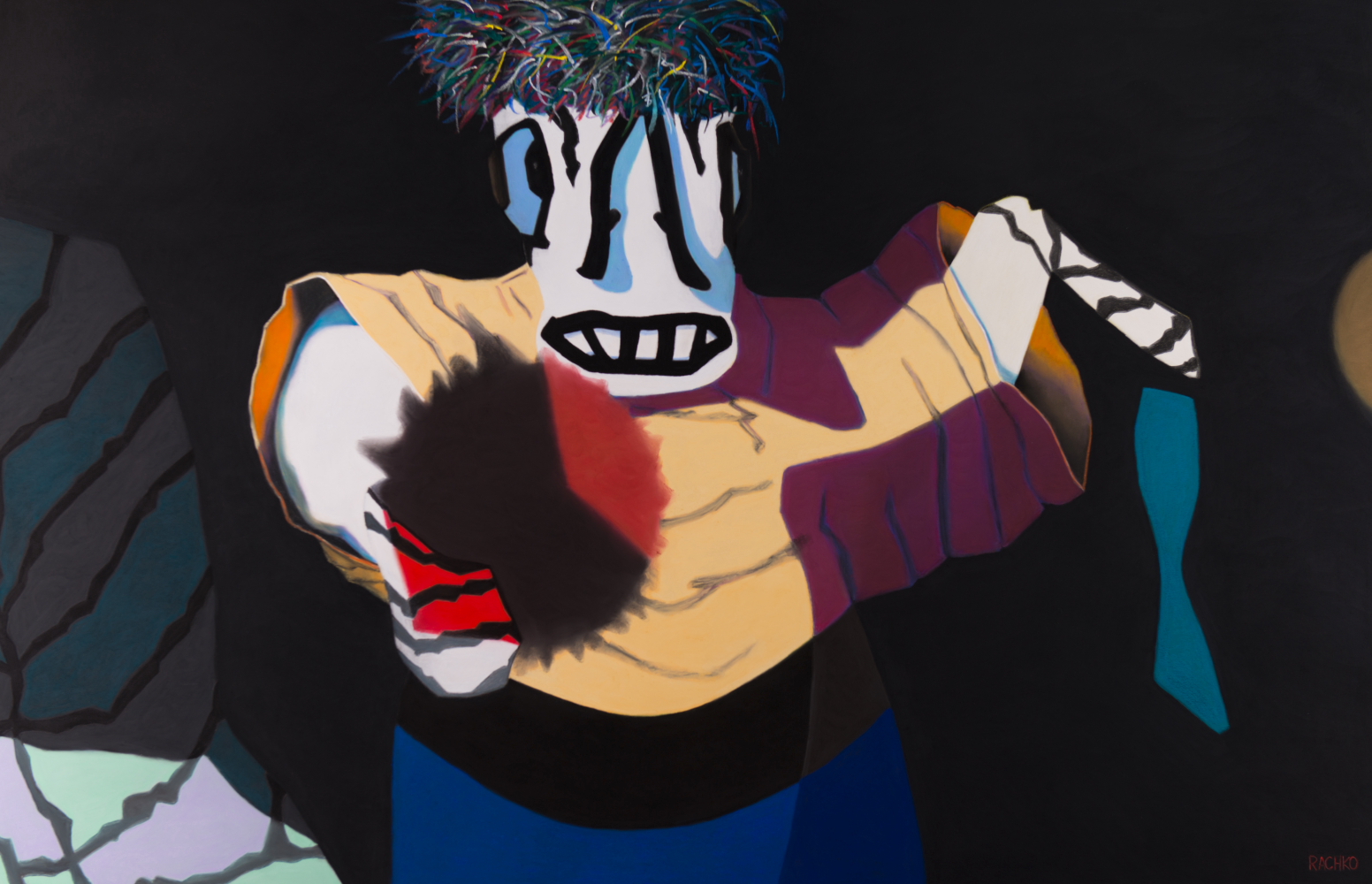
“Broken,” soft pastel on sandpaper, 38″ x 58″
* an ongoing series of quotations – mostly from artists, to artists – that offers wisdom, inspiration, and advice for the sometimes lonely road we are on.
Leaving a show of Pat Steir’s work called Winter Paintings at Cheim & Read Gallery, I thought back some years to when the Walker Art Center’s then curator Richard Flood was walking us through the Center’s collection and we came upon an abstract expressionist painting by Joan Mitchell that was so striking I asked him why it had taken so long for her to be recognized. He answered with a wry expression: “It’s the problem of beauty!”
A few days earlier our friends Kol and Dash came to lunch at our home, and Dash said at this time most visual art is conceptual. “It’s a way of thinking,” she said.
Story/Time: The Life of an Idea/Bill T. Jones
Comments are welcome!


 barbararachkoscoloreddust.com