Blog Archives
Pearls from artists* # 703
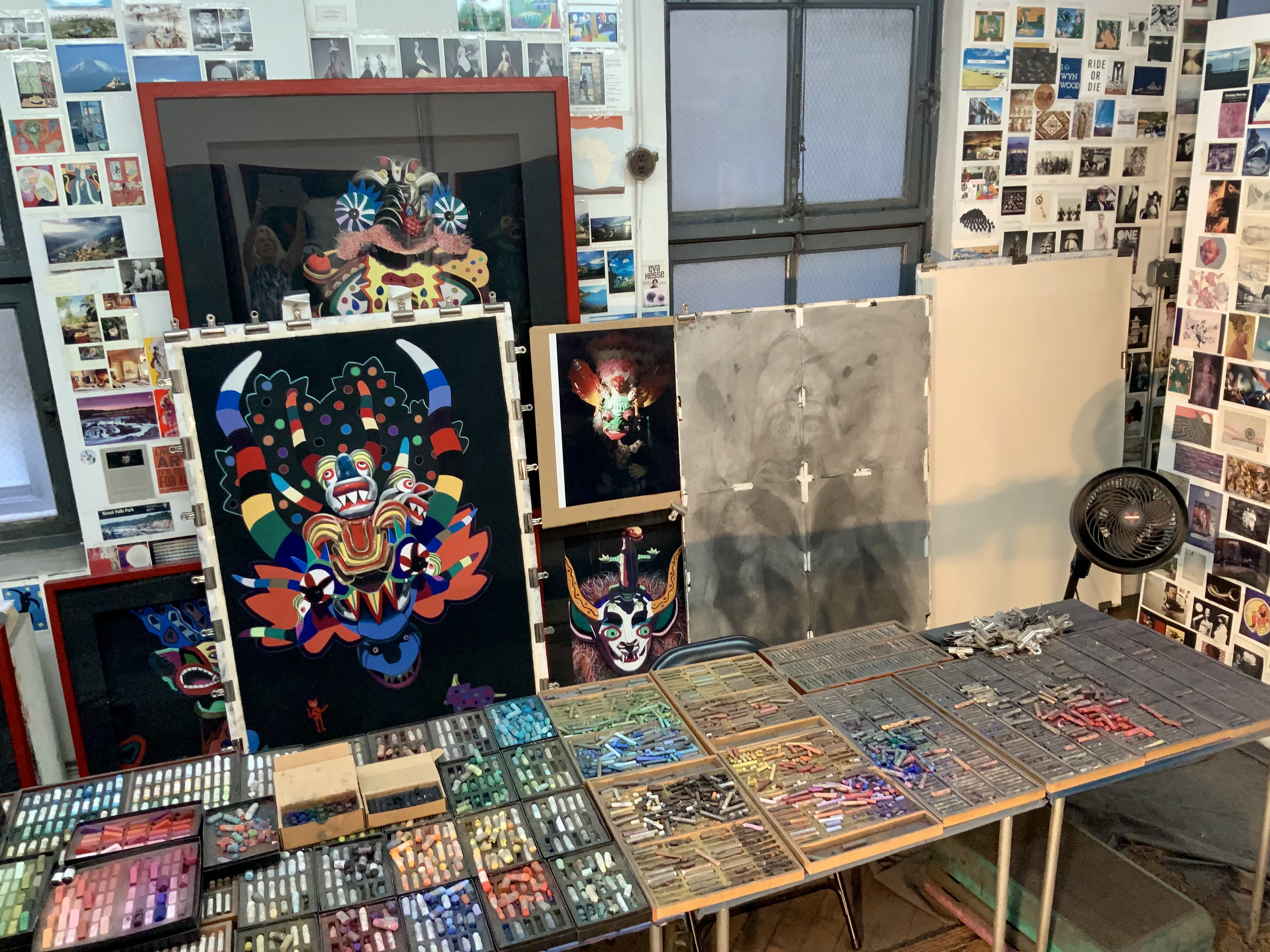
Barbara’s Studio
*an ongoing series of quotations – mostly from artists, to artists – that offers wisdom, inspiration, and advice for the sometimes lonely road we are on.
Artmaking embodies freedom, in a way that few vocations do. But, while we have no supervisors in our studios, we are not quite as free as we imagine. We all carry sone cumulative art baggage. All the people and ideas that have influenced us over the years have shaped the art we make today. Sone guidance served us well, seamlessly dovetailing into our own divine direction. Yet others may hold us back, constraining the distinct development of our creative articulation.
The work we do is affected by logistical limitations, such as time, space, and money. But we also possess biases, assumptions, rules, values, methodologies, goal structures, and conceptual frameworks we have assimilated into our practice along the way. We may delude ourselves into thinking we have actively chosen these limiting parameters, instead of recognizing that we may have absorbed them purely by default. Authority figures, over the course of our entire lives, have provided positive or negative reinforcement, not only through overt criticism or praise, but also through omission. These pressures are frequently tacit, wordlessly shaping the direction of our practice when a piece was changed or ignored by the powers that be.
Kate Kretz in Art From Your Core: A Holistic Guide to Visual Voice
Comments are welcome!
Q: Over your 40-year career as an artist, you have managed to keep presentation, technical, subject matter, conceptual consistencies in your art practice and work. How do you manage to filter out inspirations that might be luring at that moment but do not support your art practice? For example, you master pastel works. There must have been moments when you might have been inspired to make oil works. How do you keep such inspirations aside. (Question from Vedica Art Studios and Gallery)

A: About thirty-five years ago, when my pastel paintings were becoming larger—around 60” x 40”—I had to choose between transitioning to oil on canvas or continuing with pastel. Framing was the main concern. I wasn’t certain large pastels could be framed, and even if they could, the cost might be prohibitive. However, I had already fallen in love with pastel and knew no other medium could offer such vibrant colors or velvety textures. Determined, I resolved the framing issue (art-making is fundamentally problem-solving), committed myself fully to soft pastel, and have continued inventing and refining techniques ever since.
My goal from the beginning has always been improvement as an artist. If an activity doesn’t contribute to my growth—as a person or as an artist—I typically don’t pursue it. Time and energy are finite resources, so I try to use them wisely.
Comments are welcome!
Pearls from artists* # 139
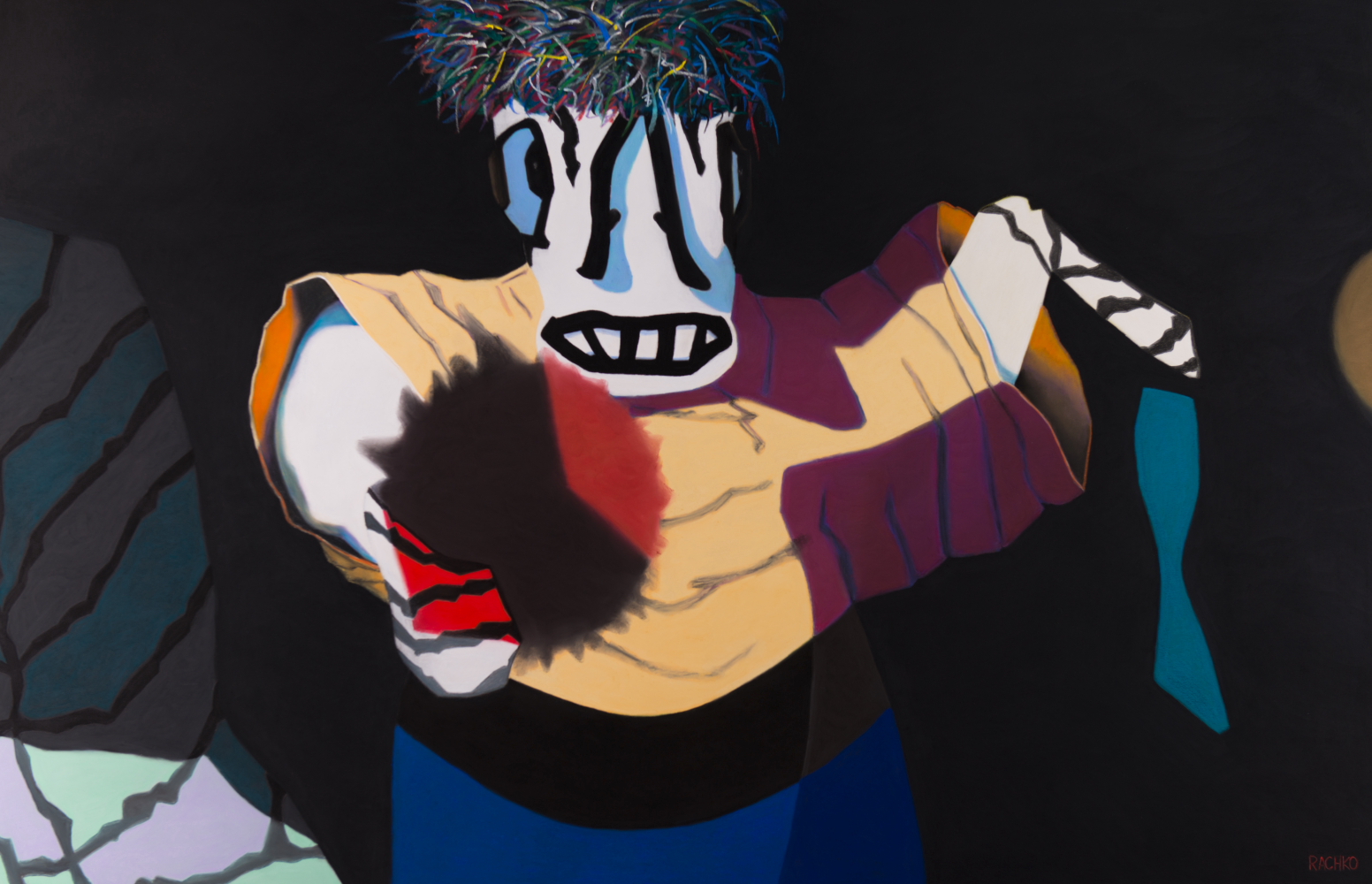
“Broken,” soft pastel on sandpaper, 38″ x 58″
* an ongoing series of quotations – mostly from artists, to artists – that offers wisdom, inspiration, and advice for the sometimes lonely road we are on.
Leaving a show of Pat Steir’s work called Winter Paintings at Cheim & Read Gallery, I thought back some years to when the Walker Art Center’s then curator Richard Flood was walking us through the Center’s collection and we came upon an abstract expressionist painting by Joan Mitchell that was so striking I asked him why it had taken so long for her to be recognized. He answered with a wry expression: “It’s the problem of beauty!”
A few days earlier our friends Kol and Dash came to lunch at our home, and Dash said at this time most visual art is conceptual. “It’s a way of thinking,” she said.
Story/Time: The Life of an Idea/Bill T. Jones
Comments are welcome!



