Blog Archives
Q: As an artist what would you say is your particular ‘superpower’?

Barbara’s studio
A: I have been told that it is my unique way of composing images or, in other words, how I deliberately move the viewer’s eye around the picture. More exactly, it’s the way I combine flat shapes, patterns, angles, forms, modeling, decoration, details, lights, and darks in surprising ways when I make pastel paintings or pick up a camera.
But I think there’s a secondary, more subtle element: my understanding of and sensitivity to using color for psychological effect. The way I use color in pastel paintings is intuitive. This is something I haven’t reflected on very much yet, but will examine in a future post.
Comments are welcome!
Q: How do you think living in New York affects your work?
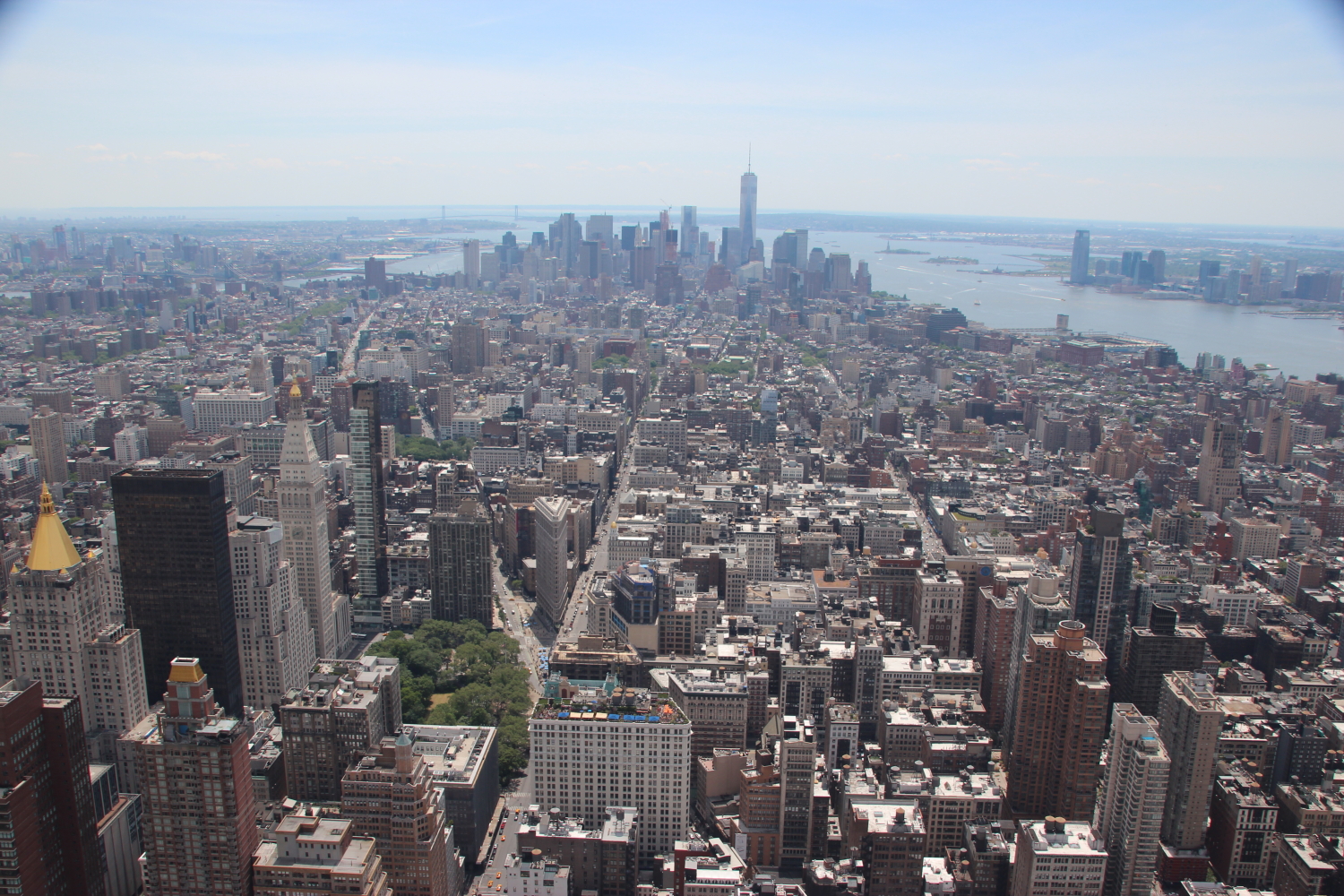
Lower Manhattan
A: Arguably, life in New York provides an artist with direct access to some of the best international art of the past, the present, and probably the future. It is possible to see more art here – both good and bad – than in any other American city.
Just pick up any local magazine and scan the art listings! Our problem is never that there isn’t anything interesting to see or do. It’s “how do we zero in on the most significant local cultural activities, ones that might contribute to making us better artists?”
Certainly a visual artist’s work is consciously and unconsciously influenced not only by what she sees in museums and galleries, but by walking around the city. That’s partly why I am an inveterate walker. I never know what amazing things I am going to see when I leave my apartment.
Although living in New York City is a rich and heady mix for anyone, it is more so for sensitive artists. Artists are virtual sponges, soaking up experiences, processing them, and mysteriously expressing them in our work.
New York lets an artist ponder excellence as we see and experience firsthand what is possible. The best of the best manages to make its way here.
Undoubtedly, my own work is richer for having spent the last eighteen years in this fascinating, wild, and crazy city. For a visual artist New York is an infinitely fascinating place to live.
Comments are welcome!
Pearls from artists* # 153

“So What?”, soft pastel on sandpaper, 20″ x 26″
* an ongoing series of quotations – mostly from artists, to artists – that offers wisdom, inspiration, and advice for the sometimes lonely road we are on.
Ours is an excessively conscious age. We know so much, we feel so little. I have lived enough around painters and around studios to have had all the theories – and how contradictory they are – rammed down my throat. A man has to have a gizzard like an ostrich to digest all the brass tacks and wire nails of modern art theories. Perhaps all the theories, the utterly indigestible theories, like nails in an ostrich’s gizzard, do indeed help to grind small and make digestible all the emotional and aesthetic pabulum that lies in an artist’s soul. But they can serve no other purpose. Not even corrective. The modern theories of art make real pictures impossible. You only get these expositions, critical ventures in paint, and fantastic negations. And the bit of fantasy that may lie in the negation – as in a Dufy or a de Chirico – is just the bit that has escaped theory and perhaps saves the picture. Theorise, theorise all you like – but when you start to paint, shut your theoretic eyes and go for it with instinct and intuition.
D.H. Lawrence: Making Pictures in The Creative Process, edited by Brewster Ghiselin
Comments are welcome!
Pearls from artists* # 141

Painting, subject, reference photo
* an ongoing series of quotations – mostly from artists, to artists – that offers wisdom, inspiration, and advice for the sometimes lonely road we are on.
It would be very interesting to record photographically not the stages of a painting, but its metamorphoses. One would see perhaps by what course a mind finds its way towards the crystallization of its dream. But what is really very curious is to see that the picture does not change basically, that the initial vision remains almost intact in spite of appearances. I see often a light and dark, when I have put them in my picture, I do everything I can to ‘break them up,’ in adding a color that creates a counter effect. I perceive, when this work is photographed, that which I have introduced to correct my first vision has disappeared, and that after all the photographic image corresponds to my first vision, before the occurrence of the transformation brought about by my will.
The picture is not thought out and determined beforehand, rather while it is being made it follows the mobility of thought. Finished, it changes further, according to the condition of him who looks at it. A picture lives its life like a living creature, undergoing the changes that daily life imposes on us. That is natural, since a picture lives only through him who looks at it.
Christian Zervos: Conversation with Picasso in The Creative Process, edited by Brewster Ghiselin
Comments are welcome!
Q: What’s on the easel today?

Work in progress
A: I am in the early stages – only 3 or 4 layers of pastel applied so far – on a large pastel painting with the working title, “He and She.” The figures are two favorites – a four-foot tall male and female couple, made of carved wood and silver and gold-leaf. I found them years ago at Galerie Eugenio in Mexico City.
These are the largest heads I have ever painted. As I work on this piece I remember one of my teachers saying, “Never paint a head larger than life-size.” Well, here’s to breaking rules.
For reference I am looking at a digital photograph shot with my Canon T3i. My usual practice is to make a c-print from a negative made with my Mamiya 6, but the photo clipped to my easel above is from a high resolution JPEG. Typically I set up a scene at home on a black cloth and photograph it, but my reference photo was taken in my studio without rearranging anything. In this painting I am breaking a few rules, while my creative process is perhaps evolving towards greater simplicity.
Comments are welcome!
Pearls from artists* # 115
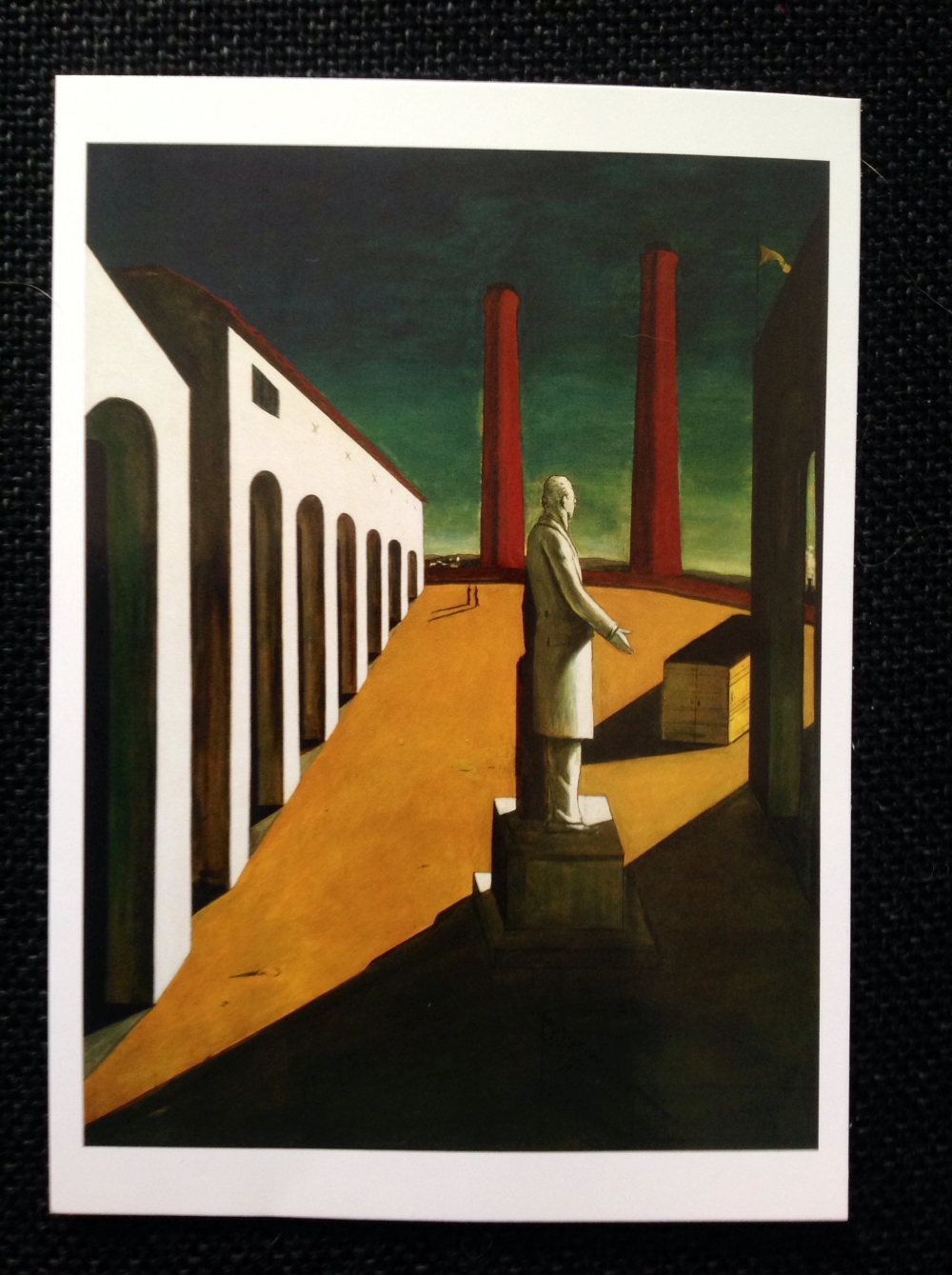
Giorgio de Chirico, “The Enigma of a Day,” oil on canvas, 6′ 1 1/4 x 55,” MoMA
* an ongoing series of quotations – mostly from artists, to artists – that offers wisdom, inspiration, and advice for the sometimes lonely road we are on.
THE DISQUIETING MUSES
From Two de Chiricos
[On Giorgio de Chirico]
Boredom sets in first, and then despair.
One tries to brush it off. It only grows.
Something about the silence of the square.
Something is wrong; something about the air,
It’s color; about the light, the way it goes.
Something about the silence of the square.
The muses in their fluted evening wear,
Their faces blank, might lead one to suppose
Something about the silence of the square.
Something about the buildings standing there.
But no, they have no purpose but to pose.
Boredom sets in first, and then despair.
What happens after that, one doesn’t care.
What brought one here – the desire to compose
Something about the silence of the square.
Or something else, of which one’s not aware,
Life itself, perhaps – who really knows?
Boredom sets in first and then despair…
Something about the silence of the square.
Mark Strand in Art and Artists: Poems, edited by Emily Fragos
Comments are welcome!
Pearls from artists* # 113

Studio corner
* an ongoing series of quotations – mostly from artists, to artists – that offers wisdom, inspiration, and advice for the sometimes lonely road we are on.
In Amsterdam I saw a striking still life painted by Rembrandt van Rijn suspended above a glass case that contained the same objects that he used as a model for the picture. The contrast between what felt like a drab collection of random objects in the case and the stunning luminescent painting that seemed imbued with nothing less than intense energy and life gave me pause and clarified something I had been thinking about. I had been thinking about the power of art to transform the frustrations and irritations of daily life into a realm of grace and to embody, through arrangement, composition, light, color and shade, nothing less than the secret elixir of life itself.
We encounter daily frustrations, irritations, and obstacles. Perhaps we feel hampered and limited by our hit-and-miss upbringing, our apparent limitations and our imperfect ongoing circumstances. And yet Rembrandt’s still life painting demonstrates that it is within our power to transform the random, the everyday, the frustrating and the prosaic into an arrangement instilled with grace and poetry. Is it the arrangement of these objects that lends such a spiritual quality to the painting? Is it the sensation of light captured upon canvas? How did Rembrandt transform the quotidian into an uplifting vision of life?
Anne Bogart in What’s the Story: Essays about art, theater, and storytelling
Comments are welcome!
Pearls from artists* # 102
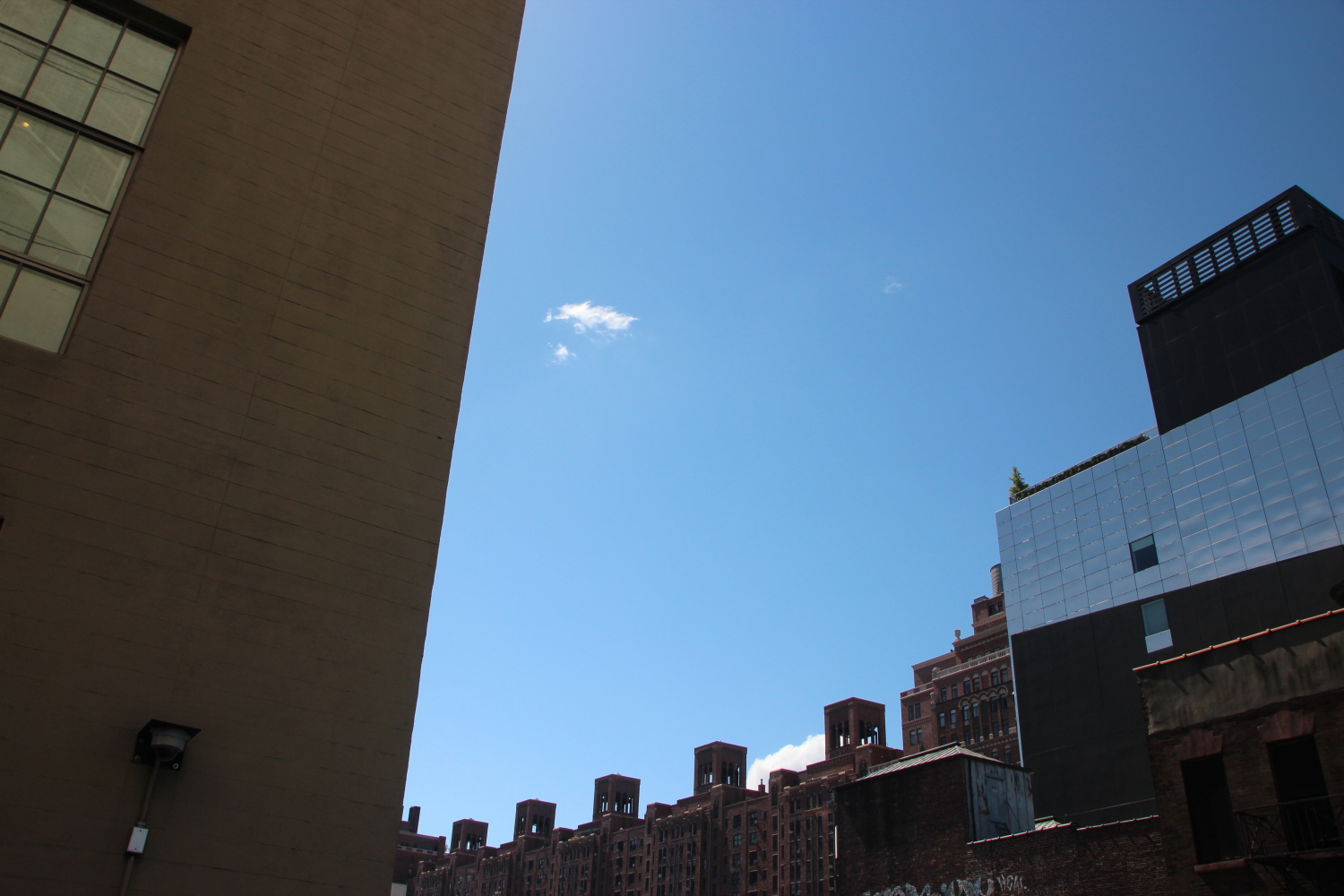
New York, NY
* an ongoing series of quotations – mostly from artists, to artists – that offers wisdom, inspiration, and advice for the sometimes lonely road we are on.
That a photograph is unlikely to be a laboratory record is evident when we think about how it is made. Most photographers are people of immense enthusiasms whose work involves many choices – to brake the car, grab the yellow instead of the green filter, wait out the cloud, and at the second everything looks inexplicably right, to release the shutter. Behind these decisions stands the photographer’s individual framework of recollections and meditations about the way he perceived that place or places like it before. Without such a background there would be no knowing whether the scene on the ground glass was characteristic of the geography and of his experience of it and intuition of it – in short, whether it was true.
Making photographs has to be, then, a personal matter; when it is not, the results are not persuasive. Only the artist’s presence in the work can convince us that its affirmation resulted from and has been tested by human experience. Without the photographer in the photograph the view is no more compelling than the product of some annoying record camera, a machine perhaps capable of happy accident but not response to form.
Beauty in Photography by Robert Adams
Comments are welcome!
Q: How would you define art?

Barbara’s studio
A: At its core all art is communication. I personally believe that without the component of communication, there is no art. The expression of human creative skill and imagination becomes art when it is appreciated for its beauty, complexity, emotional power, evocativeness, etc. A sympathetic and understanding audience is essential.
Why might artists fail to communicate? Perhaps they haven’t mastered their medium sufficiently to elicit a reaction from the viewer. Perhaps the viewer lacks the necessary artistic, cultural, or intellectual background to understand and appreciate what the artist is communicating. Maybe the viewer is distracted or preoccupied and not looking or thinking deeply enough. There are many reasons.
Comments are welcome!
Pearls from artists* # 61

White Sands, NM
* an ongoing series of quotations – mostly from artists, to artists – that offers wisdom, inspiration, and advice for the sometimes lonely road we are on.
I can only shudder when I think of life without our handiwork. The sheer paucity of living only for the sake of survival and empty diversion would be that of an empty vessel. My own life as an artist helps me to fill that vessel, and on occasion I am able to share that with another. Is there meaning in my struggle, my endless solitude? Yes, I believe there is, for at the very least I have found greater meaning for myself in that search. And as those artists who have come before me have perhaps more clearly expressed, our ability to ponder the questions that denote our humanness are worthy of a life of solitude. That is where I find my solace and my courage. In the final analysis, it is the art that I make that allows me to pause and briefly see. Only now do I begin to understand and accept both the burden and joy of my life.
Dianne Albin quoted in Eric Maisel’s The Van Gogh Blues
Comments are welcome!


 barbararachkoscoloreddust.com