Blog Archives
Pearls from artists* # 62
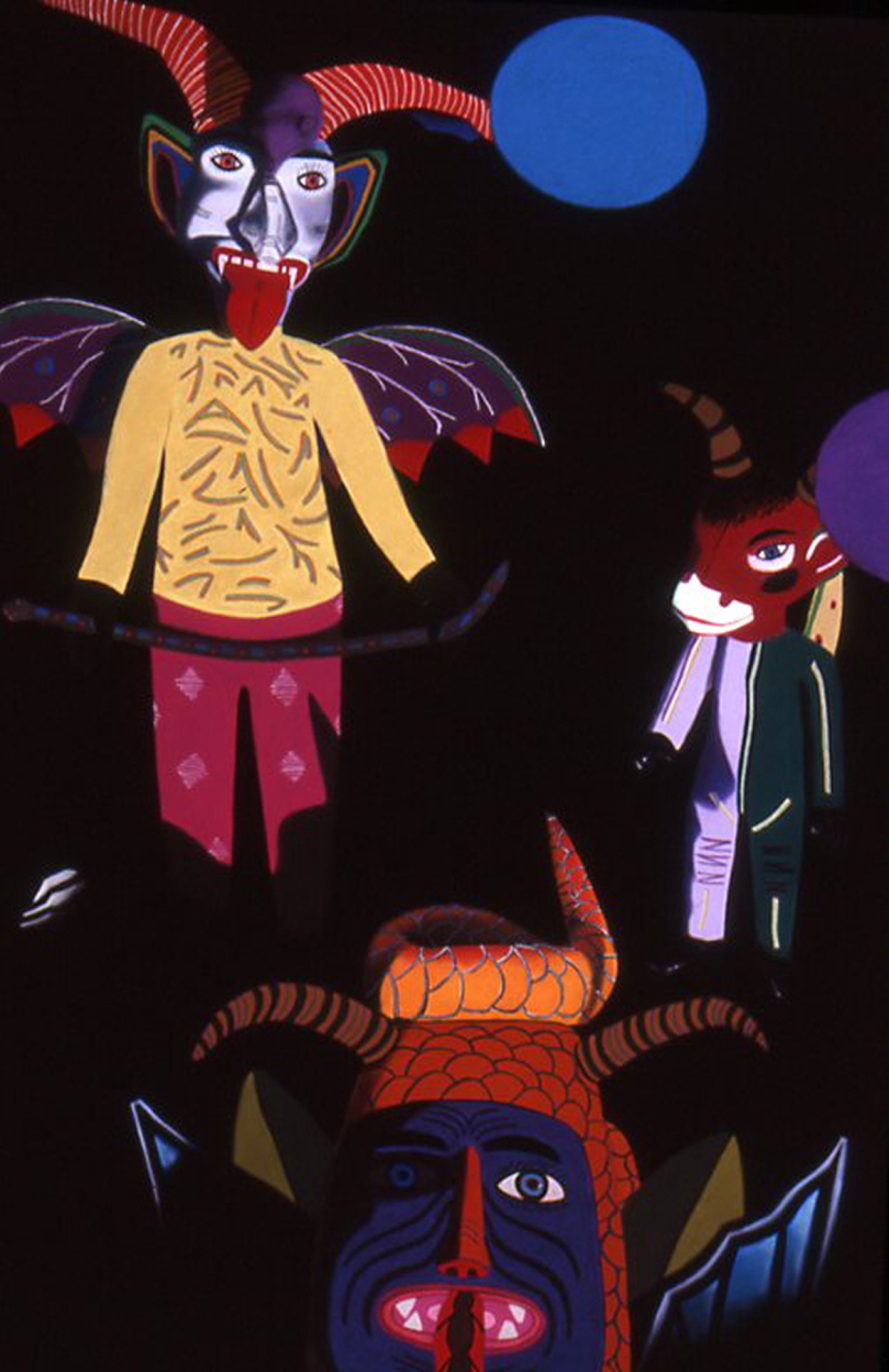
“The Sovereign,” soft pastel on sandpaper, 58″ x 38″
* an ongoing series of quotations – mostly from artists, to artists – that offers wisdom, inspiration, and advice for the sometimes lonely road we are on.
Yes, I’m formalistically obsessed. I see in a picture what I see in nature – everything has its place and is integrated. Like a tree or a human body, the image is put together for a greater whole. If you chop off something, you immediately destroy the organism. Form is crucial to what I do, and I believe that the form, in a way, creates the content. If you don’t have the form, you don’t get the content. If you get the maximum formal relationships in a precise, organic, metaphoric methodology, then you have a better chance of bringing out the content to its full degree. Of course, a picture doesn’t stand alone by its form. You can have forms that relate but offer no meaning. Ultimately, a picture is judged by its meaning, and I think that’s what a lot of people lose sight of.
Interview with Roger Ballen in Lines, Marks, and Drawings: Through the Lens of Roger Ballen, Craig Allen Subler and Christine Mullen Kreamer
Comments are welcome!
Pearls from artists* # 58

Cabo San Lucas, Mexico
* an ongoing series of quotations – mostly from artists, to artists – that offers wisdom, inspiration, and advice for the sometimes lonely road we are on.
I remember as a teenager having a group of friends at school and another group whom I spent the weekends with. I functioned fine until on occasions when I was with friends from both groups at the same time. Then it became really difficult, because I was used to acting very differently with the two groups. With one I was the leader, very vocal and outspoken about my opinions. With the other group I wanted desperately to belong and so I adapted to fit in, which meant not really being myself.
The lack of authenticity is painful. It applies to all levels of life. If our voice as a painter is inauthentic, we’re in trouble. In the end there is nothing so compelling as to be yourself. This is why being an artist can be so exhilarating. If you want to uncover your truth, you have a daily technique to come to terms with your limitations and to overcome them. You have an opportunity to look at the limiting stories you have written in your head and heart and rewrite them with boldness and vision. The quality of your attention influences how you see things.
What you put your attention on grows stronger in your life. Life, if you look around you, whether inside or in nature, is one bubbling mass of creativity. Recognize we have no shortage of it. If you focus your attention on what you now decide is fundamental , that quality will grow in your life. Not what our parents or teachers or friends or media or anybody says or said. What we now put our attention on will grow in our life. If you want to paint and put your focus there you will unleash a torrent of energy and enthusiasm.
Ian Roberts in Creative Authenticity: 16 Principles to Clarify and Deepen Your Artistic Vision
Comments are welcome!
Pearls from artists* # 49

Untitled, 24″ x 24″ chromogenic print, edition of 5
* an ongoing series of quotations – mostly from artists, to artists – that offers wisdom, inspiration, and advice for the sometimes lonely road we are on.
The beauty of art is better, “higher,” according to Hegel, than the beauty of nature because it is made by human beings and is the work of the spirit. But the discerning of beauty in nature is also the result of traditions of consciousness, and of culture – in Hegel’s language, of spirit.
The responses to beauty in art and to beauty in nature are interdependent. As Wilde pointed out, art does more than school us on how and what to appreciate in nature. (He was thinking of poetry and painting. Today the standards of beauty in nature are largely set by photography.) What is beautiful reminds us of nature as such – of what lies beyond the human and the made – and thereby stimulates and deepens our sense of the sheer spread and fullness of reality, inanimate as well as pulsing, that surrounds us all.
A happy by-product of this insight, if insight it is: beauty regains its solidity, its inevitability, as a judgment needed to make sense of a large portion of one’s energies, affinities, and admirations; and the usurping notions appear ludicrous.
Imagine saying, “That sunset is interesting.”
Paolo Dilonardo and Anne Jump, editors, Susan Sontag At the Same Time: Essays and Speeches
Comments are welcome!
Pearls from artists* # 47

Grand Falls, AZ
* an ongoing series of quotations – mostly from artists, to artists – that offers wisdom, inspiration, and advice for the sometimes lonely road we are on.
An artist can expect no help from his peers. Any art form which is not his own must be intolerable to him and upsets him to the highest degree. I have seen Claude Debussy ill at the orchestral rehearsals of Le Sacre. His soul was discovering its splendour. The form that he had given to his soul was suffering from another that did not accord with its own contours. Therefore no help. Neither from our peers nor from a mob incapable of consenting without revolt to a violent break with the habits it had begun to form. Whence will help come? From no one. And it is then that art begins to use the obscure stratagems of nature in a kingdom which resists it, which even seems to fight it or turn its back upon it.
Jean Cocteau in The Difficulty of Being
Comments are welcome!
Pearls from artists* # 39

Great Salt Lake
* an ongoing series of quotations – mostly from artists, to artists – that offers wisdom, inspiration, and advice for the sometimes lonely road we are on.
When you think of paying an author for his work you ought to think generously. It is the author who makes your magazine. If you cannot pay in cold cash, why don’t you write the author and ask what you could do for him? Offer to do something in the nature of a personal sacrifice, I would say. He may need to have some typing done, or some printing; he may need a table to write on, or books to reference; he may need some research work done for him. There are a thousand and one things he may need and appreciate much more than cold cash, especially when it constitutes a sum which, by American standards of living, means absolutely nothing. It costs me, for example, almost five dollars a week for postage. It costs me much more than that for the gifts of books and water colors I am obliged to make to enthusiastic admirers who are too poor to buy my work.
… But this, it seems to me, is the way one good artist should treat another. And you who are editors of small magazines are mostly artists yourselves, I take it. You all expect to become celebrated writers some day; you identify yourselves with the men whose work you admire and hope to publish. Well, carry out the identification to the nth degree, I say. Think how you would feel if, after years of labor and struggle, you are asked to accept a trivial sum. It is far, far better to say: “We have no money at all. We believe in you and your work… will you help us? We are willing to make any sacrifice in order to make your name known.” Most authors would be touched by such an appeal; they would offer their work gladly; they would probably offer to help in other ways. I am thinking naturally of the kind of writers whom you wish to interest in your project. There can be a magnificent collaboration between author and editor, author an publisher. But you, as editor, must first begin by giving, not demanding. Give the shirt off your back, or offer to give it, and then see what sort of response you will get form the author. I have often noticed with beggars that when they ask for something and you offer them twice or ten times as much, they are so overwhelmed that they often refuse to accept anything, or else they offer to become your slave. Writers, in a way, are like beggars. They are continually begging to be heard, to be recognized. Really they are simply begging for a chance to give of their great gifts – which is the most heart-rending begging of all and a disgrace to any civilized community in which it happens. Which is to say, almost the entire civilized world.
Henry Miller in Stand Still Like the Hummingbird
Comments are welcome!
Pearls from artists* # 38
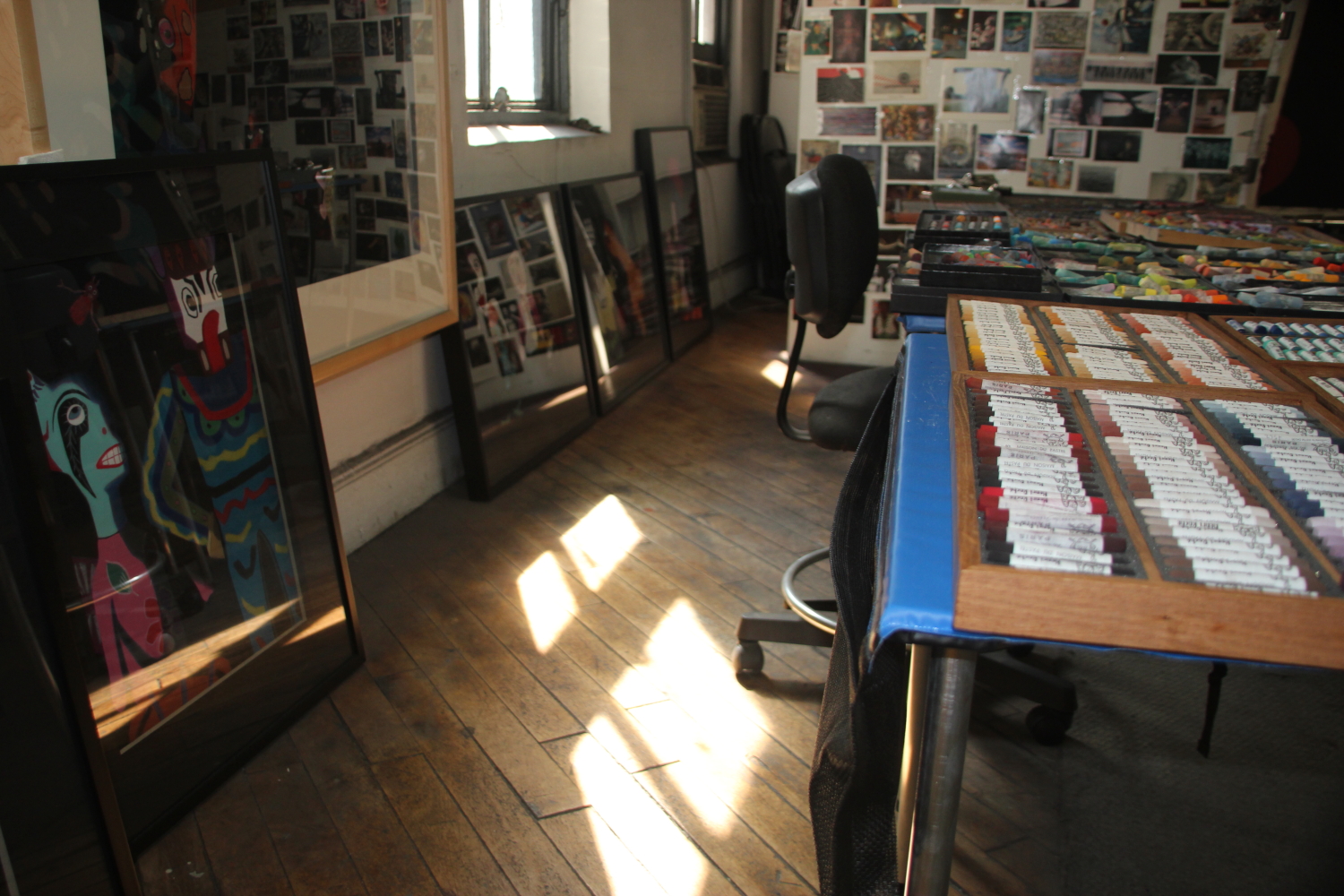
Morning sun at the studio
* an ongoing series of quotations – mostly from artists, to artists – that offers wisdom, inspiration, and advice for the sometimes lonely road we are on.
It’s one thing to be intelligent and it’s another to enjoy thinking, to relish the time spent alone with one’s thoughts, to happily muse, imagine, and analyze. Artists, who are introspective by nature, typically enjoy spending time in this fashion and may even prefer solitude to the company of others. Able to work by themselves, artists are often lost in a state of dreamy thoughtfulness of the sort described by the painter Hans Hofmann when he wrote, ” The first red spot on a white canvas may at once suggest to me the meaning of ‘morning redness,’ and from there I dream further with my color.” Artists are not introspective, thoughtful, lost in time and space because they wish to ignore the world. They’re introspective because out of that attitude artistic answers flow.
Eric Maisel in A Life in the Arts
Comments are welcome!
Pearls from artists* # 34

On the High Line
* an ongoing series of quotations – mostly from artists, to artists – that offers wisdom, inspiration, and advice for the sometimes lonely road we are on.
To collect photographs is to collect the world. Movies and television programs light up walls, flicker, and go out; but with still photographs the image is also an object, lightweight, cheap to produce, easy to carry about, accumulate, store.
In Godard’s Les Carabiniers (1963), two sluggish lumpen-peasants are lured into joining the king’s army by the promise that they will be able to loot, rape, kill, or do whatever else they please to the enemy, and get rich. But the suitcase of booty that Michel-Ange and Ulysse triumphantly bring home, years later, to their wives turns out to contain only picture postcards, hundreds of them, of monuments, department stores, mammals, wonders of nature, methods of transport, works of art, and other classified treasures from around the globe.
Godard’s gag vividly parodies the equivocal magic of the photographic image. Photographs are perhaps the most mysterious of all the objects that make up, and thicken, the environment we recognize as modern.
Photographs really are experience captured, and the camera is the ideal arm of consciousness in its acquisitive mood.
Susan Sontag in On Photography
Comments are welcome!
Pearls from artists* # 10

West 28th Street
* an ongoing series of quotations – mostly from artists, to artists – that offers wisdom, inspiration, and advice for the sometimes lonely road we are on.
That art that matters to us – which moves the heart, or revives the soul,or delights the senses, or offers courage for living, however we choose to describe the experience – that work is received by us as a gift is received. Even if we are touched by a work of art something comes to us which has nothing to do with the piece. I went to see a landscape painter’s works, and that evening, walking among pine trees near my home, I could see the shapes and colors I had not seen the day before. The spirit of an artist’s gifts can wake our own. The work appeals, as Joseph Conrad says, to a part of our being which is itself a gift and not an acquisition. Our sense of harmony can hear the harmonies that Mozart heard. We may not have the power to profess our gifts as the artist does,and yet we come to recognize, and in a sense to receive, the endowments of our being through the agency of his creation. We feel fortunate, even redeemed. The daily commerce of our lives – “sugar for sugar and salt for salt,” as the blues singers say – proceeds at its own constant level, but a gift revives the soul. When we are moved by art we are grateful that the artist lived, grateful that he labored in the service of his gift.
If a work of art is the emanation of its maker’s gift and if it is received by its audience as a gift, then is it, too, a gift? I have framed the question to imply an affirmative answer, but I doubt we can be so categorical. Any object, any item of commerce, becomes one kind of property or another depending on how we use it. Even if a work of art contains the spirit of the artist’s gift, it does not follow that the work itself is a gift. It is what we make of it.
And yet, that said, it must be added that the way we treat a thing can sometimes change its nature. For example, religions often prohibit the sale of sacred objects, the implication being that their sanctity is lost if they are bought and sold. A work of art seems to be a hardier breed; it can be sold in the market and still emerge a work of art. But if it is true that in the essential commerce of art a gift is carried by the work from the artist to his audience, if I am right to say that where there is no gift there is no art, then it is possible to destroy a work of art by converting it into a commodity. Such, at any rate, is my position. I do not maintain that art cannot be bought and sold; I do maintain that the gift portion of the work places a constraint upon our merchandising.
Lewis Hyde, The Gift
Comments are welcome.



