Blog Archives
Pearls from artists* # 173
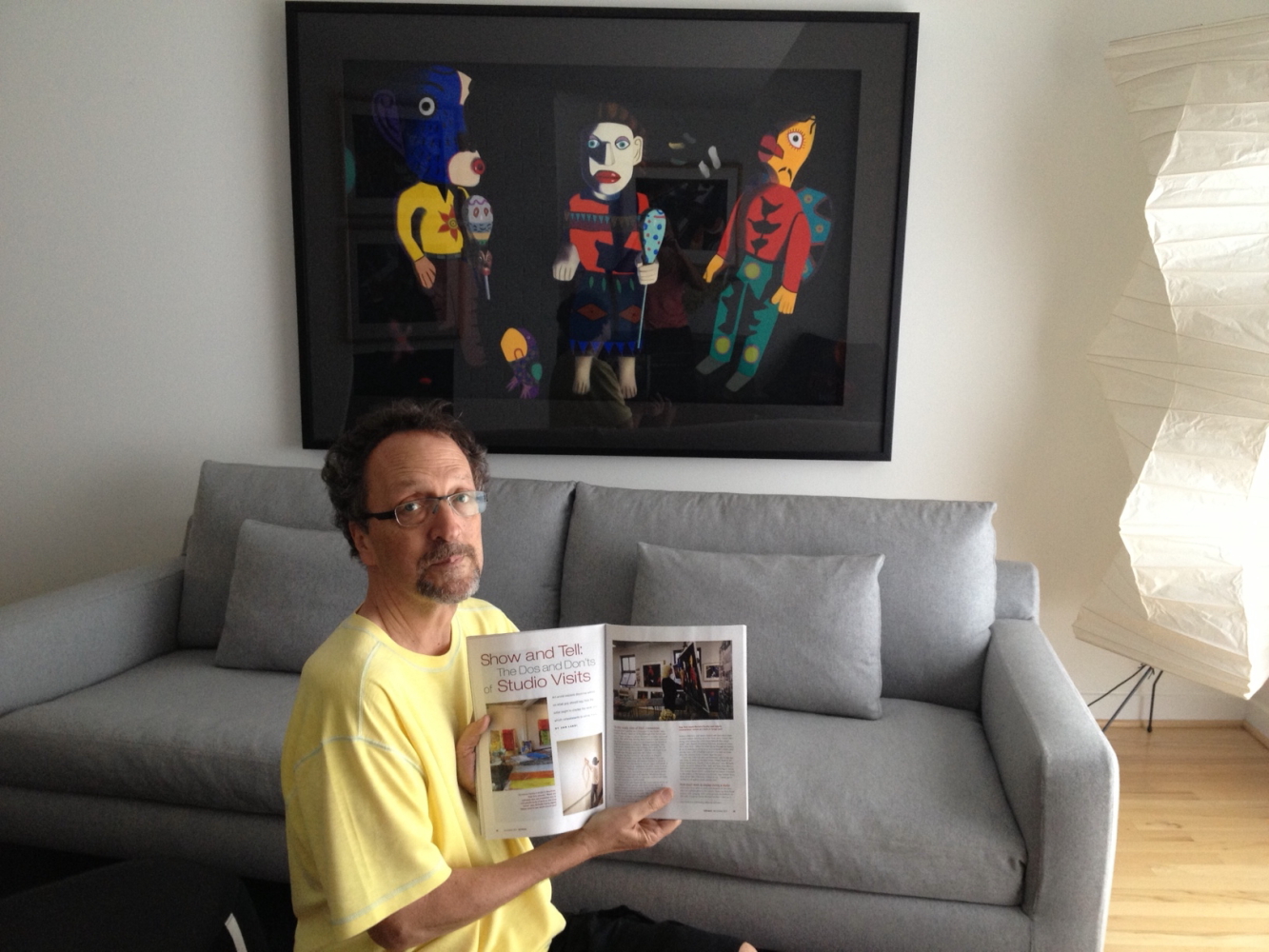
Collector, “False Friends,” and ARTNews article that shows the painting in progress
* an ongoing series of quotations – mostly from artists, to artists – that offers wisdom, inspiration, and advice for the sometimes lonely road we are on.
Artists, by nature, are gamblers. Gambling is a dangerous habit. But whenever you make art, you’re always gambling. You’re rolling the dice on the slim odds that your investment of time, energy, and resources now might pay off later in a big way – that somebody might buy your work, and that you might become successful.
Elizabeth Gilbert in Big Magic: Creative Living Beyond Fear
Comments are welcome!
Pearls from artists* # 165
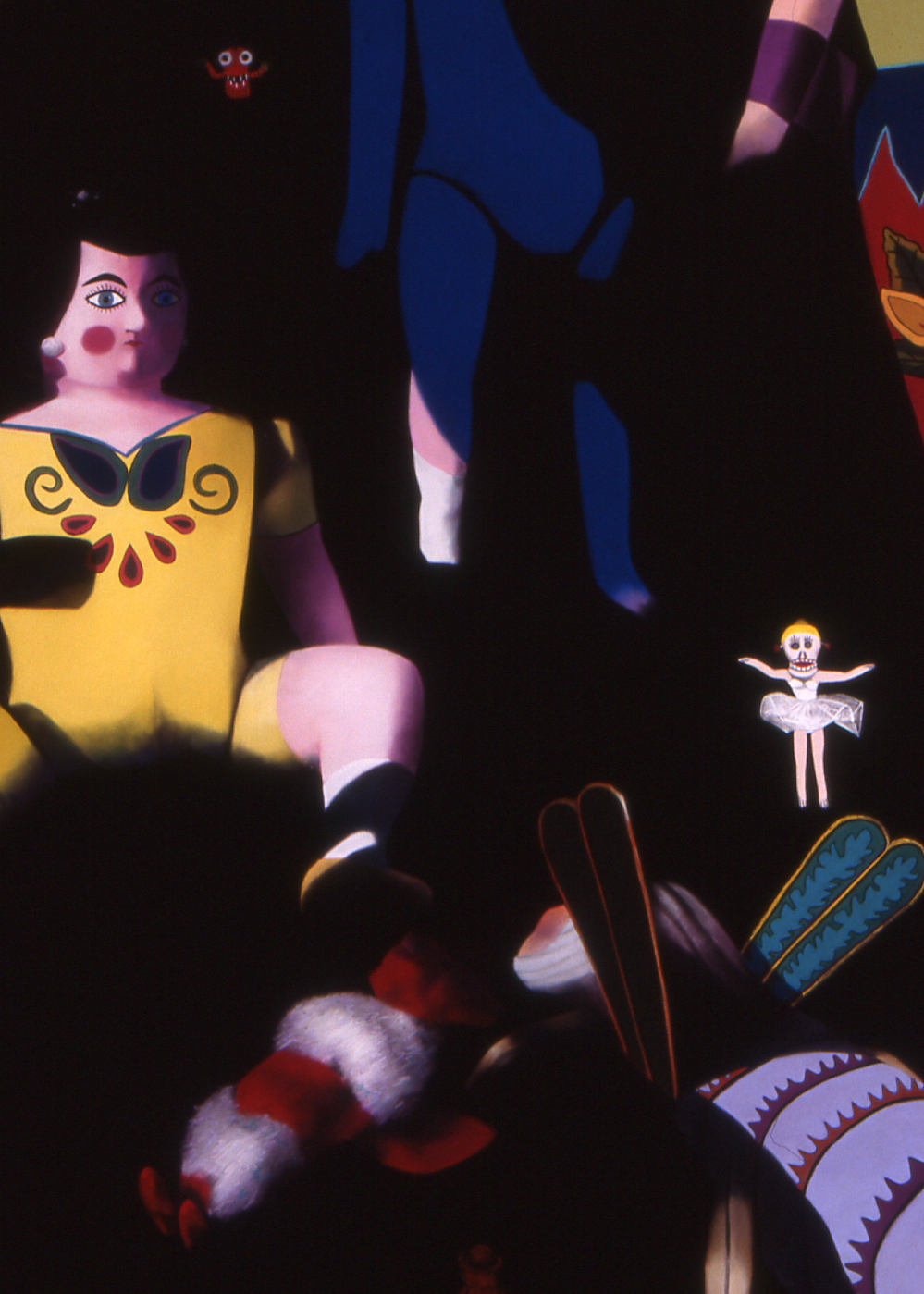
“The Space Between,” soft pastel on sandpaper, 58″ x 38″
* an ongoing series of quotations – mostly from artists, to artists – that offers wisdom, inspiration, and advice for the sometimes lonely road we are on.
When I have painted a fine picture I have not given expression to a thought! That is what they say. What fools people are! They would strip painting of all its advantages. A writer has to say almost everything in order to make himself understood, but in painting it is as if some mysterious bridge were set up between the spirit of the persons in the picture and the beholder. The beholder sees figures, the external appearance of nature, but inwardly he meditates; the true thinking that is common to all men. Some give substance to it in writing, but in so doing they lose the subtle essence. Hence, grosser minds are more easily moved by writers than by painters or musicians. The art of the painter is all the nearer to man’s heart because it seems to be more material. In painting, as in external nature, proper justice is done to what is finite and to what is infinite, in other words, to what the soul finds inwardly moving in objects that are known through the senses alone.
The Journal of Eugene Delacroix edited by Hubert Wellington
Comments are welcome!
Pearls from artists* # 161

Whitney Museum
* an ongoing series of quotations – mostly from artists, to artists – that offers wisdom, inspiration, and advice for the sometimes lonely road we are on.
It is the artist’s innate sensitivity that makes him special and different from other professionals. Society expects the artist to be more compassionate and understanding in order to bring out that which will enlighten, inspire and encourage life in his work. His vocation should not just be for art’s sake.
Where the average person sees an old beat-up shark, the artist sees a symbol of beauty in aging and imagines bringing out those qualities that the shark has sheltered over the ages, by means of artistic creation. To the intelligent and sensitive artist, the homeless man lying on the street corner is a symbol that reminds us of what we, as a society, should be doing to better our living.
Sensitivity comes into play when leaves that appear to the general viewer to be uniformly green are seen by the sensitive artist to be different shades, tones, and subtle nuances of green. Without sensitivity, special and important characteristics of nature will be out of our sight and out of reach to the viewing layman. Only the obvious, the average and the common will reveal themselves to the insensitive artist. The endurance of certain works will depend on what the artist has captured with the help of his sensitivity and because of the ideas behind the work.
Samuel Adoquei in Origin of Inspiration: Seven Short Essays for Creative People
Comments are welcome!
Pearls from artists* # 158

“Dichotomy,” soft pastel on sandpaper, 38″ x 58″
* an ongoing series of quotations – mostly from artists, to artists – that offers wisdom, inspiration, and advice for the sometimes lonely road we are on.
It is the artist’s innate sensitivity that makes him special and different from other professionals. Society expects the artist to be more compassionate and understanding in order to bring out that which will enlighten, inspire and encourage life in his work. His vocation should not just be art for art’s sake.
Where the average person sees an old beat-up shark, the artist sees a symbol of beauty in aging and imagines bringing out those qualities that the shark has sheltered over the ages by means of artistic creation. To the intelligent and sensitive artist, the homeless man lying on the street corner is a symbol that reminds us of what we, as a society, should do to better our living.
Sensitivity comes into play when leaves that appear to the general viewer to be uniformly green are seen by the sensitive artist to be different shades, tones and nuances of green. Without sensitivity, special and important characteristics of nature will be out of sight and out of reach to the viewing layman. Only the obvious, the average and the common will reveal themselves to the insensitive artist. The endurance of certain works will depend on what the artist has captured with the help of his sensitivity and because of the ideas behind the work.
Samuel Adoquei in Origin of Inspiration: Seven Short Essays for Creative People
Comments are welcome!
Pearls from artists* # 156
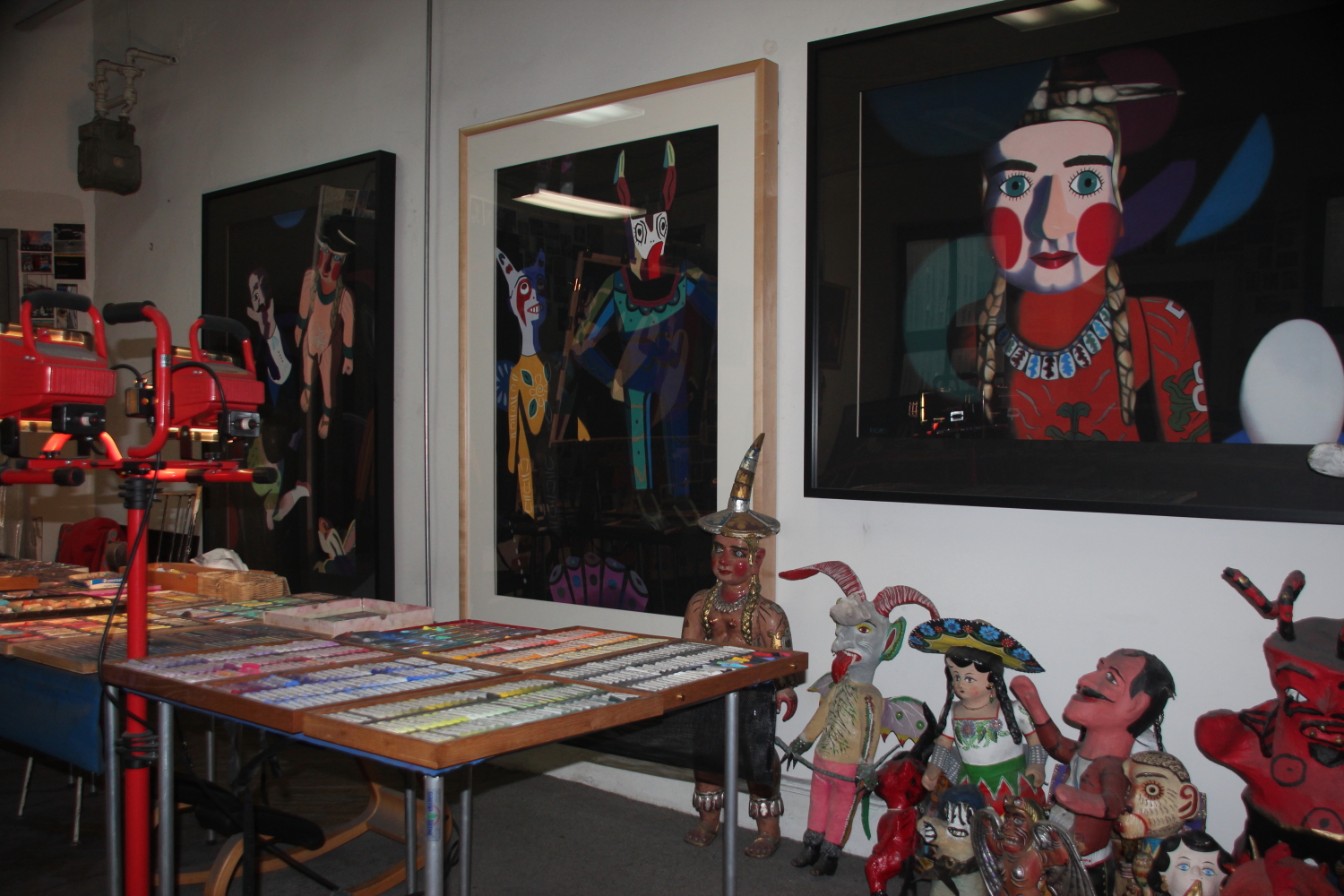
Barbara’s studio
Our vision is what makes us unique and special. Literally, vision means an artist’s unique way of seeing the world, the special and specific choices the artist makes when observing the world around him. It is also what the artist imagines and sees with his unique mind’s eye and brings out by way of his art. Vision is like a lighthouse, it guides the artist to a specific area of nature or life or to a subject that is personal to the artist, one that others might have overlooked. Vision also includes that which the artist’s conscience tells him the world ought to be – or what the world is lacking. Vision is that unique and special contribution we bring and add to life; it is that which no one can provide but us. Passion, inspiration, talent and skill all have to come together so that our vision can be achieved.
Samuel Adoquei in Origin of Inspiration: Seven Short Essays for Creative People
Comments are welcome!
Q: I’m convinced that some information and ideas are hidden, or even encrypted in the environment we live in, so we need a way to decipher them. Maybe one of the roles of an artist is to reveal unexpected sides of Nature, especially of our inner Nature. What’s your opinion about this?
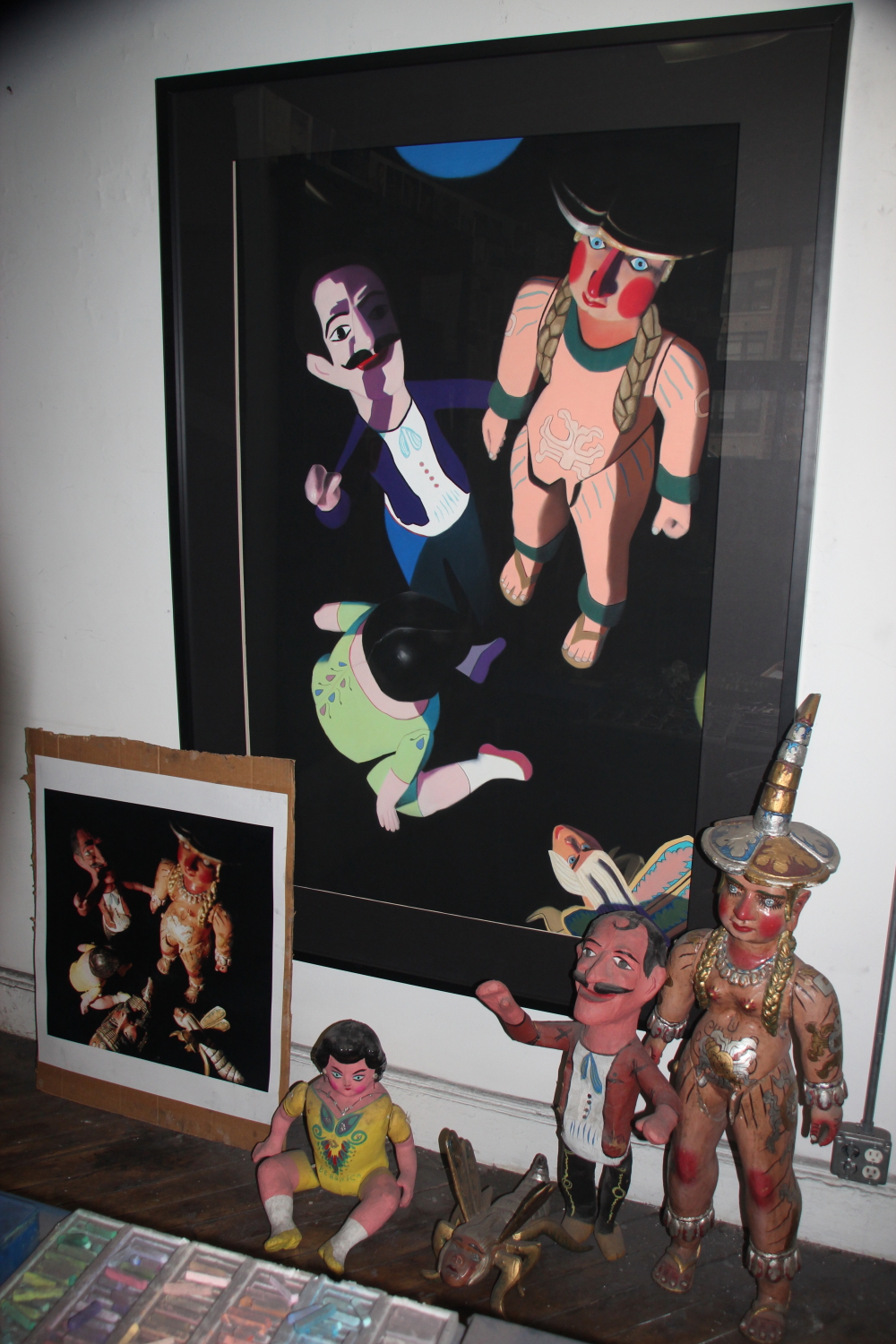
Barbara’s studio
A: I agree. Artists in general are more sensitive to these sorts of hidden ideas, feelings, emotions, etc. in ways that most non-artists are not. It’s a cliche but it’s true.
Comments are welcome!
Pearls from artists* # 94
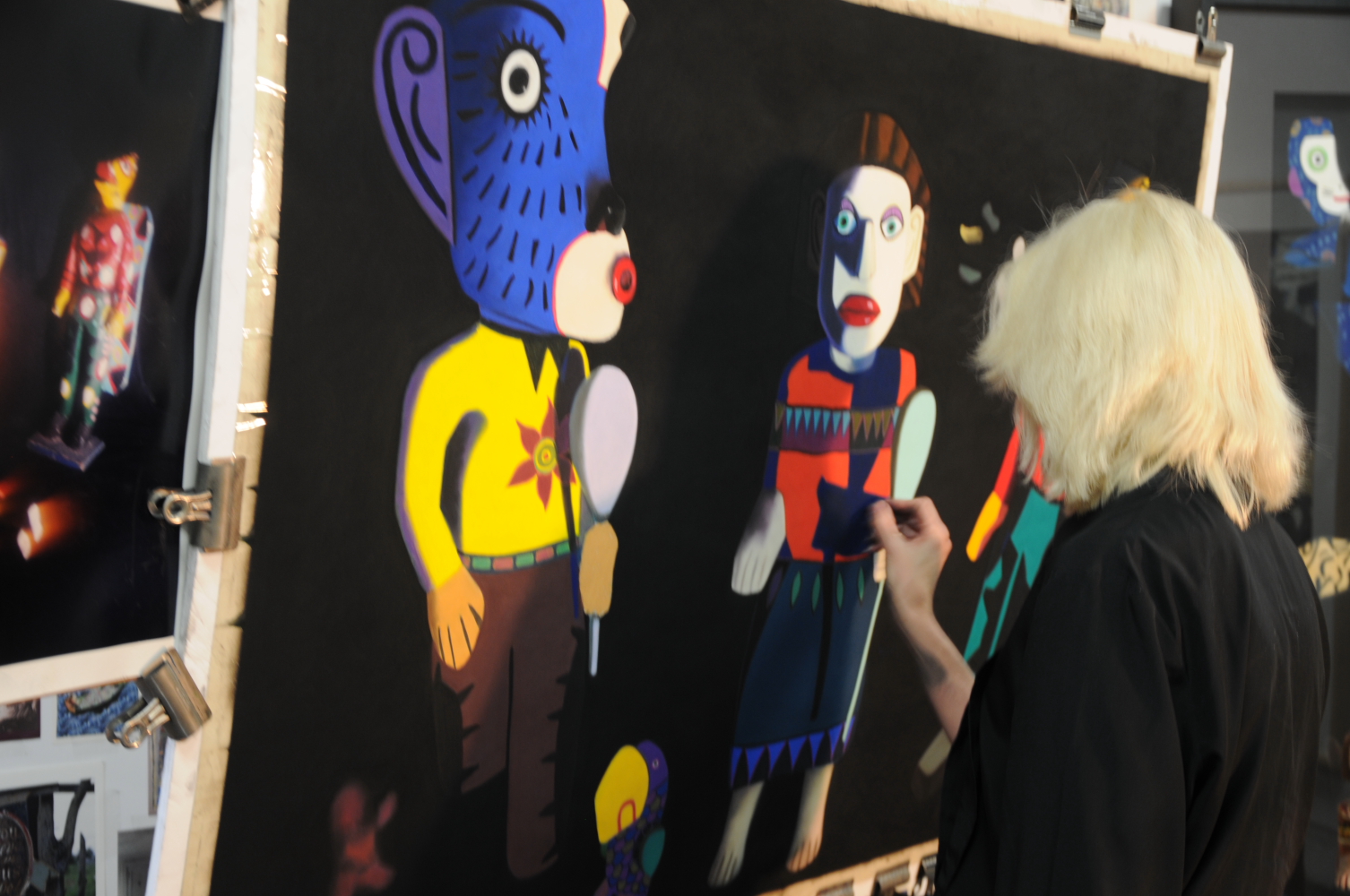
Working on “False Friends” Photo: Diana Feit
* an ongoing series of quotations – mostly from artists, to artists – that offers wisdom, inspiration, and advice for the sometimes lonely road we are on.
A work of art which inspires us comes from no quibbling or uncertain man. It is the manifest of a very positive nature in great enjoyment, and at the very moment the work was done.
It is not enough to have thought great things before doing the work. The brush stroke at the moment of contact carries inevitably the exact state of being of the artist at that exact moment into the work, and there it is, to be seen and read by those who can read such signs, and to be read later by the artist himself, with perhaps some surprise, as a revelation of himself.
For an artist to be interesting to us he must be interesting to himself. He must have been capable of intense feeling, and capable of profound contemplation.
He who has contemplated has met with himself, is in a state to see into the realities beyond the surfaces of his subject. Nature reveals to him, and, seeing and feeling intensely, he paints, and whether he wills it or not each brush stroke is an exact record of such as he was at the exact moment the stroke was made.
The Art Spirit by Robert Henri
Comments are welcome!
Pearls from artists* # 80
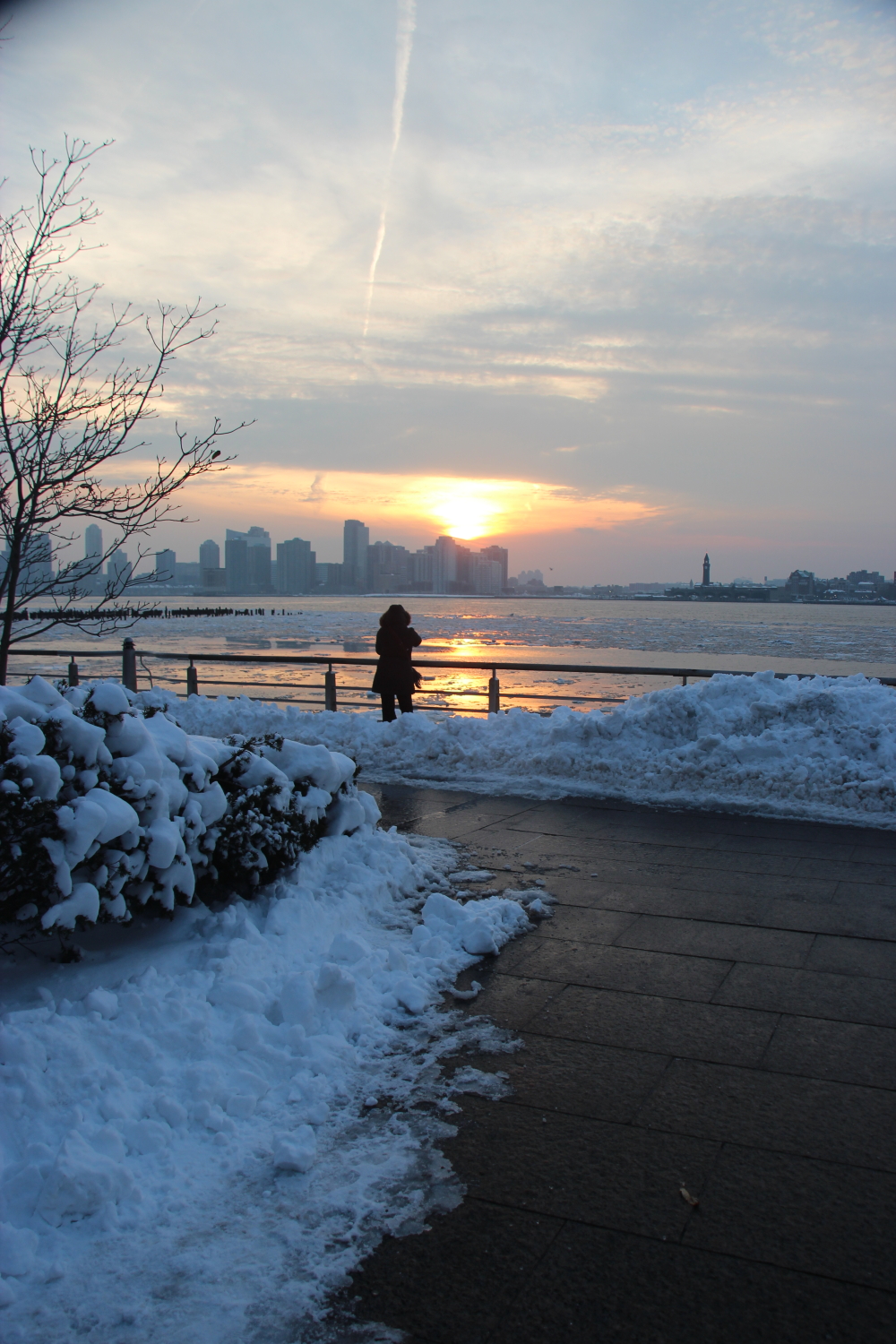
New York, NY
* an ongoing series of quotations – mostly from artists, to artists – that offers wisdom, inspiration, and advice for the sometimes lonely road we are on.
Whatever teaches us to talk to ourselves is important: whatever teaches us to sing ourselves out of despair. But the painting [“The Goldfinch,” 1654, by C. Fabritius] has also taught me that we can speak to each other across time. And I feel I have something very serious and urgent to say to you, my non-existent reader, and I feel I should say it as urgently as if I were standing in the room with you. That life – whatever else it is – is short. That fate is cruel but maybe not random. That Nature (meaning Death) always wins but that doesn’t mean we have to bow and grovel to it. That maybe if we’re not always so glad to be here, it’s our task to immerse ourselves anyway: wade straight through it, right through the cesspool, while keeping eyes and hearts open. And in the midst of our dying, as we rise from the organic and sink back ignominiously into the organic, it is a glory and a privilege to love what Death doesn’t touch. For if disaster and oblivion have followed this painting down through time – so too has love. Insofar as it is immortal (and it is) I have a small, bright, immutable part in that immortality. It exists; and it keeps on existing. And I add my own love to the history of people who have loved beautiful things, and looked out for them, and pulled them from the fire, and sought them when they were lost, and tried to preserve them and save them while passing them along literally from hand to hand, singing out brilliantly from the wreck of time to the next generation of lovers, and the next.
Donna Tartt in The Goldfinch
Comments are welcome!
Pearls from artists* # 65
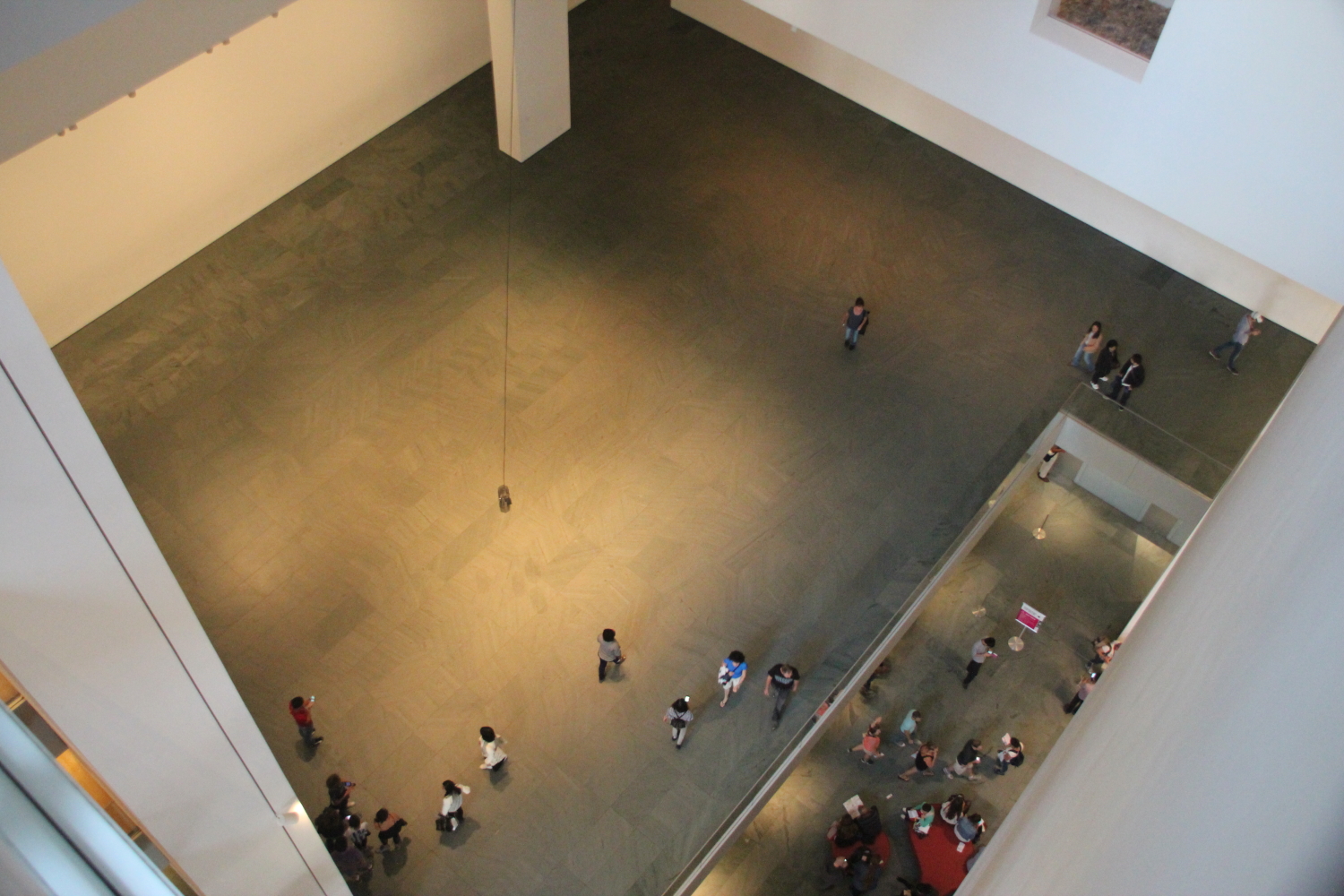
Museum of Modern Art, NYC
* an ongoing series of quotations – mostly from artists, to artists – that offers wisdom, inspiration, and advice for the sometimes lonely road we are on.
To create demands a certain undergoing: surrender to a subconscious process that can yield surprising results. And yet, despite the intuitive nature of the artistic process, it is of utmost importance to be aware of the reason you create. Be conscious about what you are attempting or tempting. Know why you are doing it. Understand what you expect in return.
The intentions that motivate an act are contained within the action itself. You will never escape this. Even though the “why” of any work can be disguised or hidden, it is always present in its essential DNA. The creation ultimately always betrays the intentions of the artist. James Joyce called this invisible motivation behind a work of art “the secret cause.” This cause secretly informs the process and then becomes integral to the outcome. This secret cause determines the distance that you will journey in the process and finally, the quality of what is wrought in the heat of the making.
Anne Bogart in and then, you act: making art in an unpredictable world
Pearls from artists* # 64

High Line, New York, NY
* an ongoing series of quotations – mostly from artists, to artists – that offers wisdom, inspiration, and advice for the sometimes lonely road we are on.
As soon as an artist has located the vital center of his activities, nothing will be more important than for him to remain within this center and never move further away from it (which is, of course, also the center of his nature, of his world) than the interior walls of his quietly and steadily expanding achievement. His place is not, never, not even for a moment, next to the beholder and critic (at least no longer in an environment where all that is visible becomes ambiguous and preliminary, an auxiliary construction and temporary scaffolding for something else). And one basically needs to be an acrobat to leap back safely and unharmed from this point of view into one’s inner center (the distances are too great and all the spots too destabilized to risk such an entirely inquisitive feat). Most artists today use up their strength in this back-and-forth, and in addition to wasting their energy they get terribly confused and lose a part of their essential innocence to the sin of having taken their work from the outside by surprise, to have tasted it, to have joined others in enjoying it!
Ulrich Baer, editor, The Wisdom of Rilke
Comments are welcome!



