Blog Archives
Q: You started the Bolivianos series in 2017. It has been 8 years since you created The Champ. This endeavor of focussing on a series for almost a decade’s timeline shows that you embody stability as against many artists who tend to hop on to the next inspiration they find. How has discipline, stability, focus and punctuality defined your works apart from being inspired by Bolivian culture for the series Bolivianos? (Question from Vedica Art Studios and Gallery)
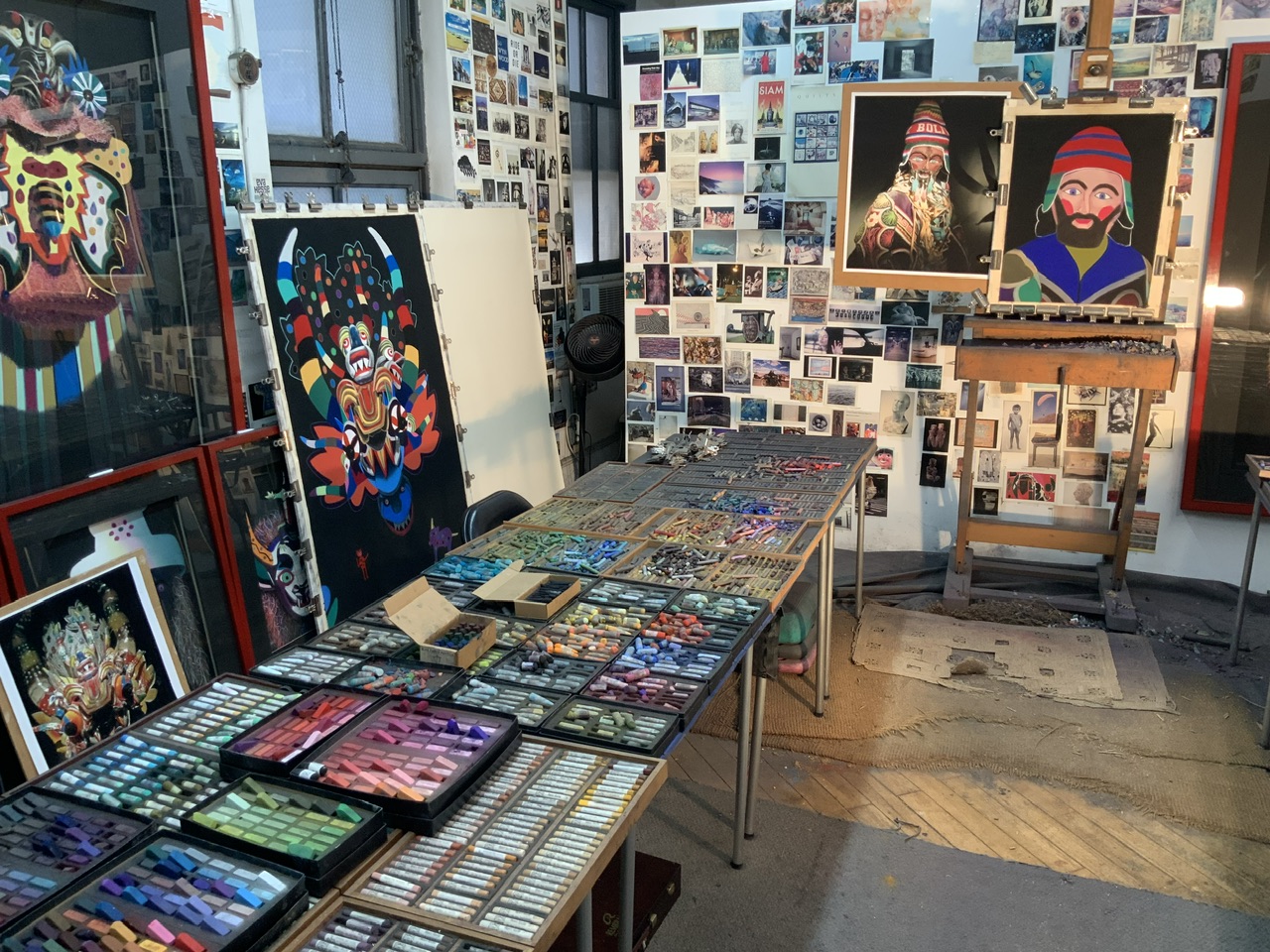
A: My first series, Domestic Threats, lasted fifteen years, and my second, Black Paintings, lasted ten. Stability and related qualities are likely natural parts of my personality, reinforced by my previous professional life. My prior careers as a Navy Commander, commercial pilot, and Boeing-727 Flight Engineer undoubtedly helped develop discipline, stability, focus, and punctuality. Details matter deeply to me; as a Naval Officer for twenty-one years, “attention to detail” was paramount. From my earliest days as an artist, I have been meticulous and dedicated to inventing new techniques and refining the craft of soft pastel.
I dislike wasting precious time. As a goal-oriented person, I continually strive to accomplish as much as possible. These qualities were influenced by my Navy career and further deepened by the tragic loss of my husband onboard the plane that crashed into the Pentagon on 9/11. I understand firsthand that life can change in an instant. Whenever I finish one task, I immediately look around and ask, “OK, what’s next?” I devote my studio time to pushing myself and pastel to new technical heights. There’s always more to accomplish as an artist!
Comments are welcome!
Q: Would you please share your current bio?

A: Here it is.
Barbara Rachko, born in 1953 in Paterson, New Jersey, is a contemporary painter based in New York City, renowned for her large pastel-on-sandpaper paintings inspired by Bolivian Carnival masks. With nearly 40 years dedicated to revolutionizing pastel as a fine art medium, Rachko’s influential blog, Barbara Rachko’s Colored Dust, has garnered over 229,000 subscribers. She is the subject of the acclaimed documentary “Barbara Rachko: True Grit,” available on YouTube, and her ebook “From Pilot to Painter” captures her inspiring journey from a former pilot to an accomplished artist.
Rachko’s work explores the vibrant cultural heritage of Bolivian Carnival masks, and Mexican and Guatemalan folk art. Her meticulous attention to detail is showcased in notable series such as Bolivianos, Black Paintings, and Domestic Threats. In 2023, she was featured in a documentary that premiered at the Newport Beach Film Festival, earning the Audience Award and Best in Category Award, further cementing her impact on contemporary art.
Her solo exhibitions include the Joy Pratt Markham Gallery at Walton Arts Center (AR), Louise Jones Brown Gallery at Duke University (NC), Olin Gallery (VA), and La MaMa La Galleria (NY). She trained in photography at the International Center of Photography in New York and studied drawing and pastel techniques at the Art League School in Alexandria, VA. Her works are held in private collections worldwide and have been showcased at prestigious art fairs, including Art Basel Miami, Moon Art Fair in Hamburg, and Art Busan in Korea, affirming her global influence in pastel painting.
Comments are welcome!
Q: How do you feel about the fact that more people view an artist’s work online than ever see it in person?

A: This has been a dilemma for decades. Don’t get me wrong. Artists are indeed fortunate to have alternative ways to share our art, such as on the internet, but there is just no substitute for seeing art in person! I remember friends telling me about a review of a Nan Goldin exhibition that said, “All of the pleasure circuits are fired in looking.” That rarely happens when you view art online. Yet this is how most people experience our work – at a remove and on a small screen.
Nowadays, a global audience will see art on their phones instead of in our studios or in a gallery or museum. My pastel paintings are quite large and very detailed so when people finally see them in person, they are often surprised. They had gotten used to seeing them in a much smaller scale online, where very few of the meticulous and subtle details I incorporate into them are visible.
Comments are welcome!
Q: Can you explain how you choose colors? (Question from Maria Cox via Instagram)

A: I am wild about color! As I work to create a pastel painting, I apply a color, back up from my easel to see how it interacts with and affects the rest of the painting, and then I make revisions. This process necessitates countless color changes and hundreds of hours during months of work. I apply pastel using a meticulous layering process. Were you to x-ray one of them, the earlier, discarded versions of a pastel painting would be visible. All the while I carefully fine-tune and refine how the colors and shapes interact with each other.
The goal is to make an exciting painting that no one, especially me as the maker, has ever seen before. I have no desire to repeat myself, to make art that resembles work by any other artist, or to be forced into a niche.
I try to select intense, vibrant colors that are exciting to look at, that work well in relationship to each other, and that will grab the viewer. Sometimes I deliberately choose colors for their symbolic meanings. For example, I selected a dark purple for the alternating triangles (the ones with the pink dots above) in “Overlord” because purple denotes royalty.
I have been working with soft pastel for 37 years so I have a fairly intricate science of color at my disposal. No doubt, many unconscious factors are at play, too. More on that in future posts.
Comments are welcome!
Q: There are so many instances in the art world where paintings are discovered to be fakes. Do you think this is a potential problem where your work is concerned? Can your pastel paintings be forged?


A: For the record, a little-appreciated fact about my pastel-on-sandpaper paintings is that they can never be forged. To detect a fake, you would only need to x-ray them. If dozens of layers of revisions are not visible under the final pastel painting, you are not looking at an original Rachko, period.
My completed paintings are the results of thousands of decisions. They are the product of an extremely meticulous, labor-intensive, and self-invented process. This is the difference between spending months thinking about and creating a painting, as I do, or a single day. It’s highly doubtful that my rigorous creative process can EVER be duplicated.
Comments are welcome!
Q: How many pastel paintings do you have in progress now?
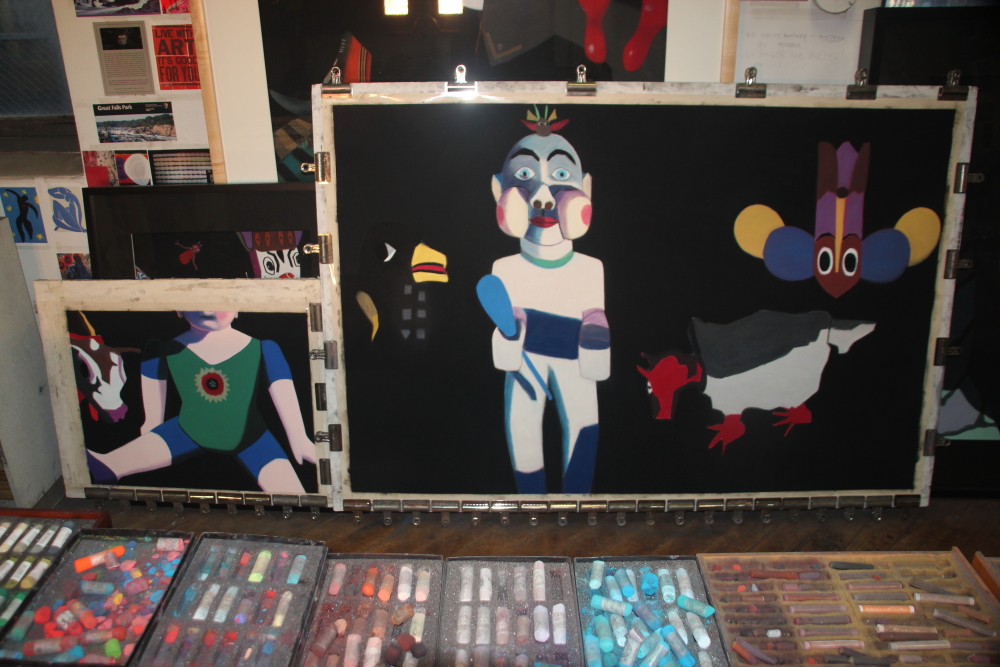
Work in progress
A: Making pastel-on-sandpaper paintings is a slow and meticulous process. I work full-time in my studio so that in a good year I can produce five finished pieces. Typically two are in progress at a time so that I can switch off when problems develop.
A downside to looking at a painting for months is that there comes a point when I can’t see the flaws any more. Then it’s definitely time to take a break.
When I put a painting that has been resting back onto my easel, I see it with fresh eyes again. Areas that need work immediately stand out. Problem areas become easily resolvable because I have continued to think about them while the painting was out of my sight.
Comments are welcome!
Q: Have any artists influenced you technically?

Barbara at work, Photo: Marianne Barcellona
A: I’d have to say no one, because my technique of using soft pastel on sandpaper is largely self-invented and it continues to slowly evolve. I apply up to thirty layers of pigment, blending it with my fingers, and creating new colors directly on the sandpaper. It is a rather meticulous process that suits my personality.
My unique way of applying and mixing pastel is a richly complex science of color. This intricate technique is one of the reasons that my pastel paintings cannot be forged by anyone.
Every great artist throughout history has invented their own techniques and created a world that is uniquely theirs, with its own iconography, its own laws, and its own specific concerns. Artists who are most worthy of the name create their own tasks and make and break their own rules.
Comments are welcome!
Q: How do you document your work?
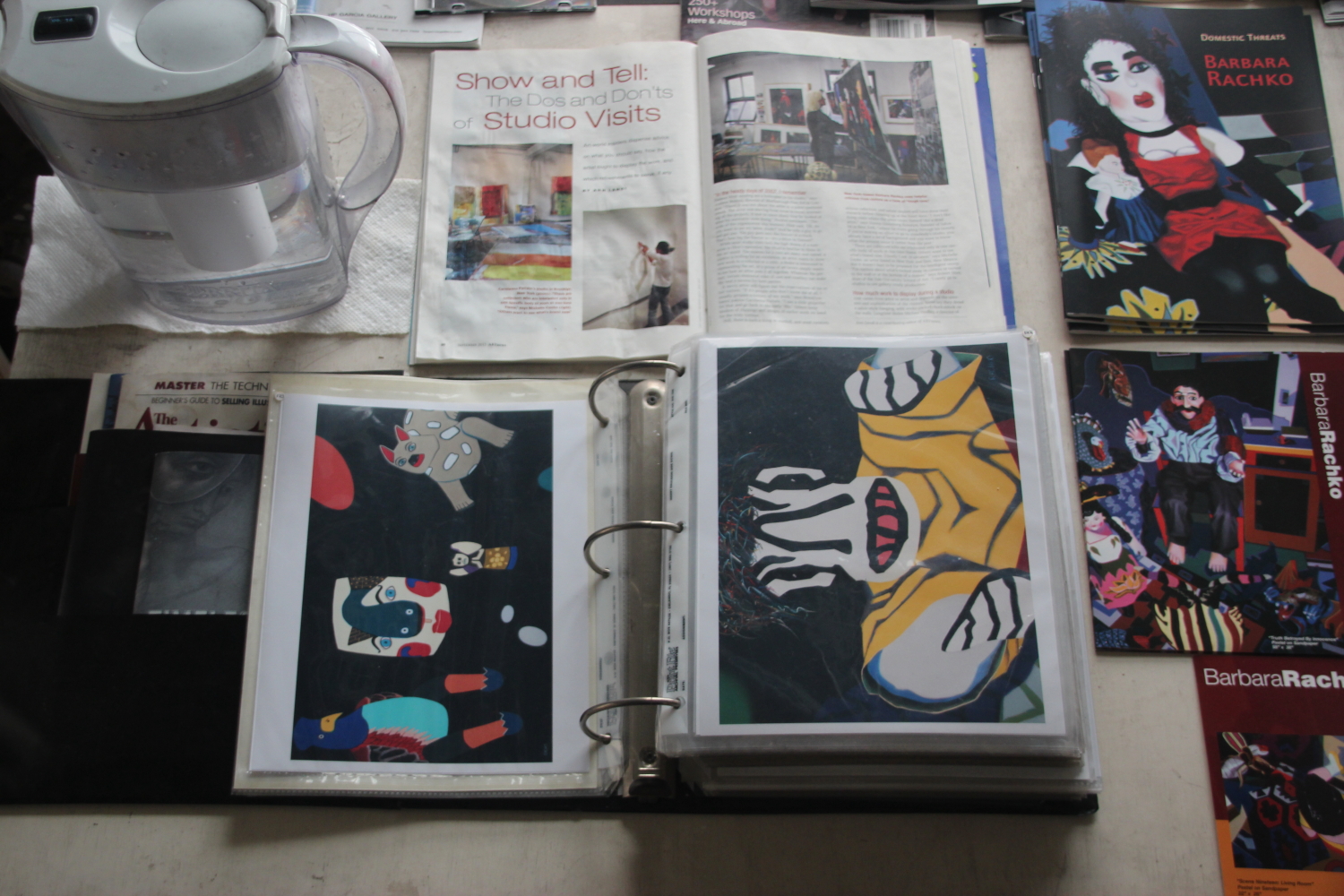
Barbara’s portfolio book
A: I have been a professional artist for thirty years so some things have changed and some haven’t. I have a portfolio book of 8 x 10 photographs of all my pastel paintings. Since my process is slow and meticulous, the latest, “Troublemaker,” is pastel painting number 124.
I have always gotten my work professionally photographed. Until 2001 my husband Bryan was my photographer and since then I have hired three people. To document older work I have slides, 4 x 5 transparencies, and color and black and white 4 x 5 negatives. I continued with slides and film longer than many artists, but finally switched to digital files a few years ago when buying film and processing it became difficult.
Comments are welcome!
Q: Why don’t you teach or conduct pastel workshops?
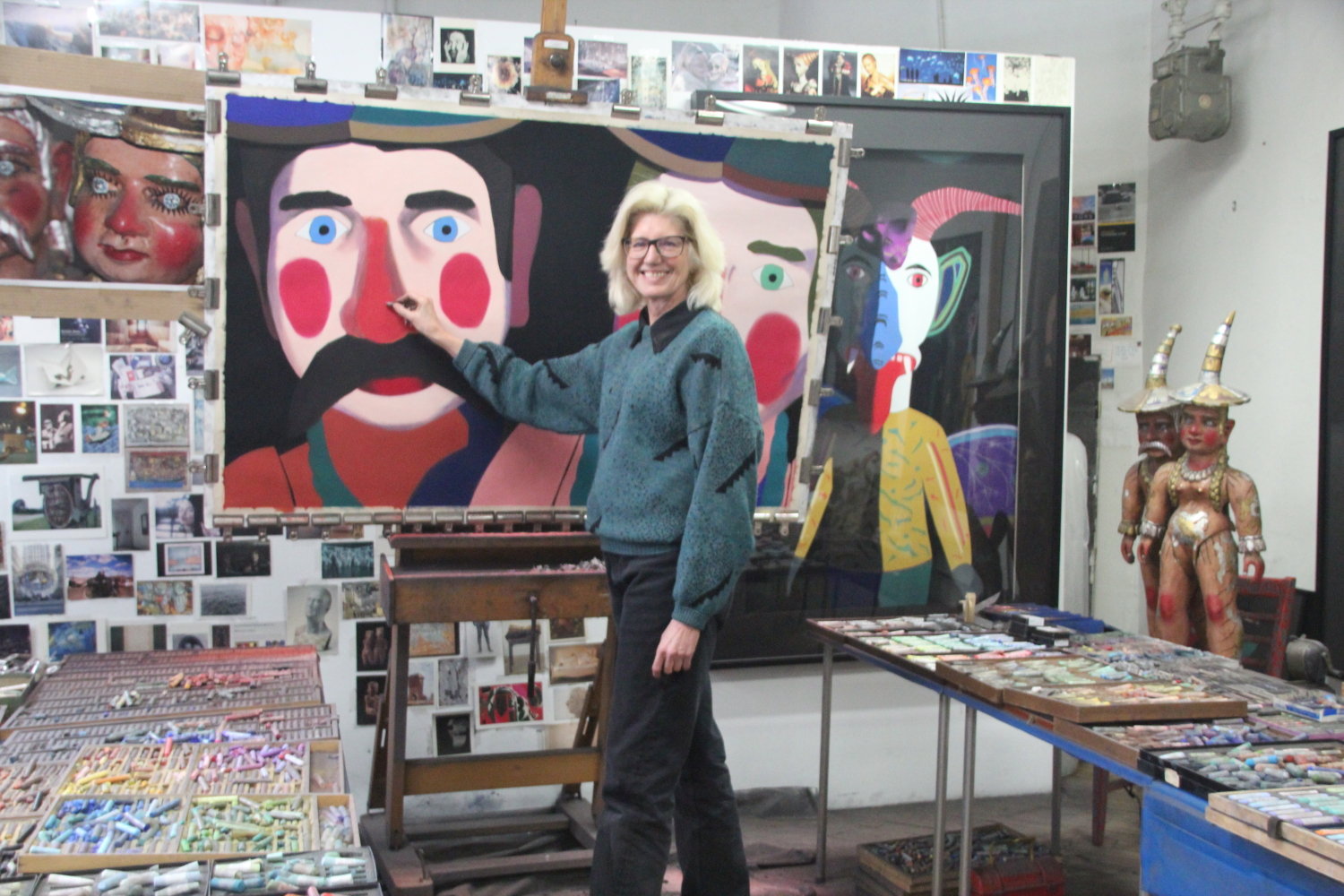
Barbara in her studio
A: I am often asked to teach, but I never have had the desire to do so. Because my work is extremely labor intensive, I am reluctant to give up precious studio time, either for teaching or for any activities that could be deemed a distraction. Consistent in my creative practice, I typically work in my studio five days a week, seven or more hours a day and am able to complete four or five pastel-on-sandpaper paintings in a year.
Teaching would divert time, attention, and energy away from my practice. Certainly it can be rewarding in many ways but since my process is slow and meticulous, I prefer to focus on making new work.
Comments are welcome!
Q: What’s on the easel today?
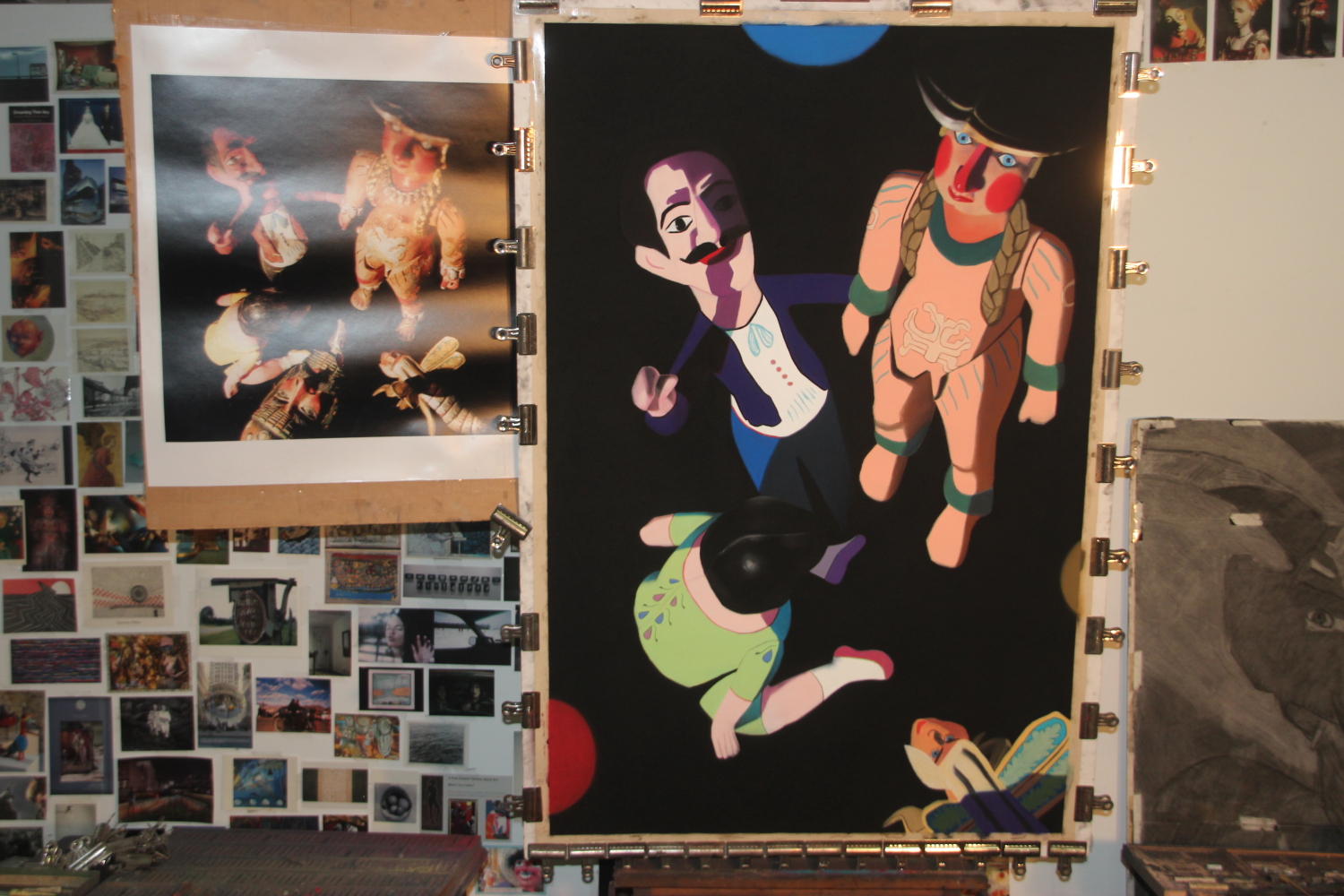
“The Ancestors,” soft pastel on sandpaper, 58″ x 38″, in progress
A: I’m putting in details on “The Ancestors.” At this stage I am doing very meticulous work and progress is difficult to see in photographs (above).
Comments are welcome!


 barbararachkoscoloreddust.com