Blog Archives
Pearls from artists* # 46

Artist’s backyard
* an ongoing series of quotations – mostly from artists, to artists – that offers wisdom, inspiration, and advice for the sometimes lonely road we are on.
Some things will naturally excite us more than others. This is where art begins, when we separate our inner-directed impulse from the outer-directed deluge of other people’s work and opinion. “The artists are the ones who bare themselves to this experience of essence… Their vocation is to communicate that experience to others. Not to communicate it is to surrender the vision to atrophy; the artist must paint, or write, or sculpt – else the vision withers away and he or she is less apt to have it again.”
The trick is to be able to learn to juggle at least two things at once. We need to keep the initial impulse in its entirety before us as we start engaging in the execution of the parts.
Ian Roberts in Creative Authenticity: Sixteen Principles to Clarify and Deepen Your Artistic Vision
Comments are welcome!
Pearls from artists* # 41
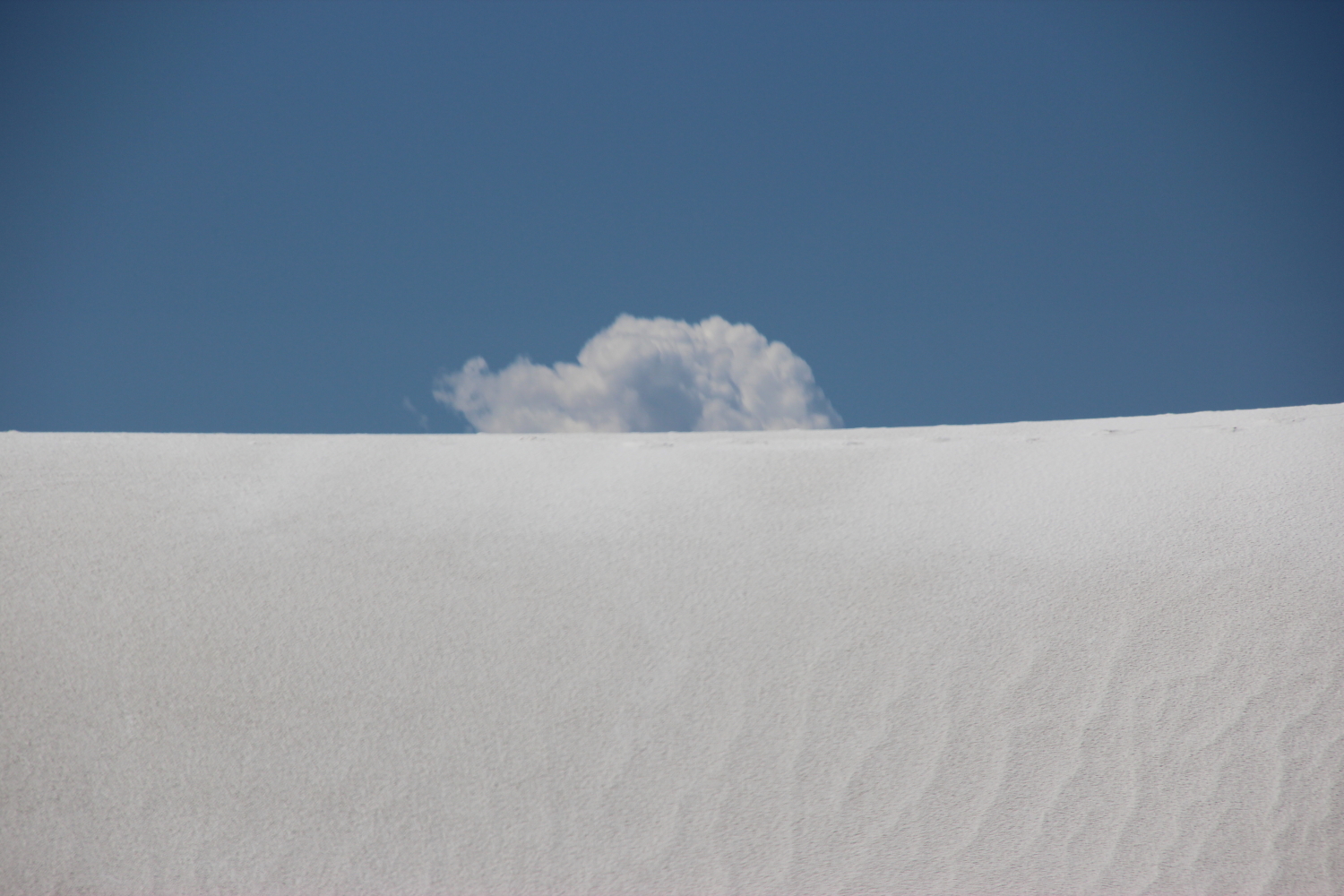
White Sands, NM
* an ongoing series of quotations – mostly from artists, to artists – that offers wisdom, inspiration, and advice for the sometimes lonely road we are on.
If you look at the work of an artist over a lifetime there is always transformation. Some hit a lively place early and then seem to lose it later. Others find that place progressively throughout their life; others still, find it late. But regardless, they are all learning to isolate the poetic place within them. That focus on the poetic in our own work increases our appreciation of the beauty around us, increases our growth, and increases our divine connection.
One thing you see in many artists’ work is that as they continue over the decades to translate their experience of the poetic into form, they learn to communicate better. They strip away all the extraneous stuff and artistic baggage they had. They say more with less.
The problem is seldom that what we truly, deeply experience is too simple to simplify. There is power in stripping everyhing away to reveal the vision. That’s what takes a lifetime.
Ian Roberts in Creative Authenticity: 16 Principles to Clarify and Deepen Your Artistic Vision
Comments are welcome!
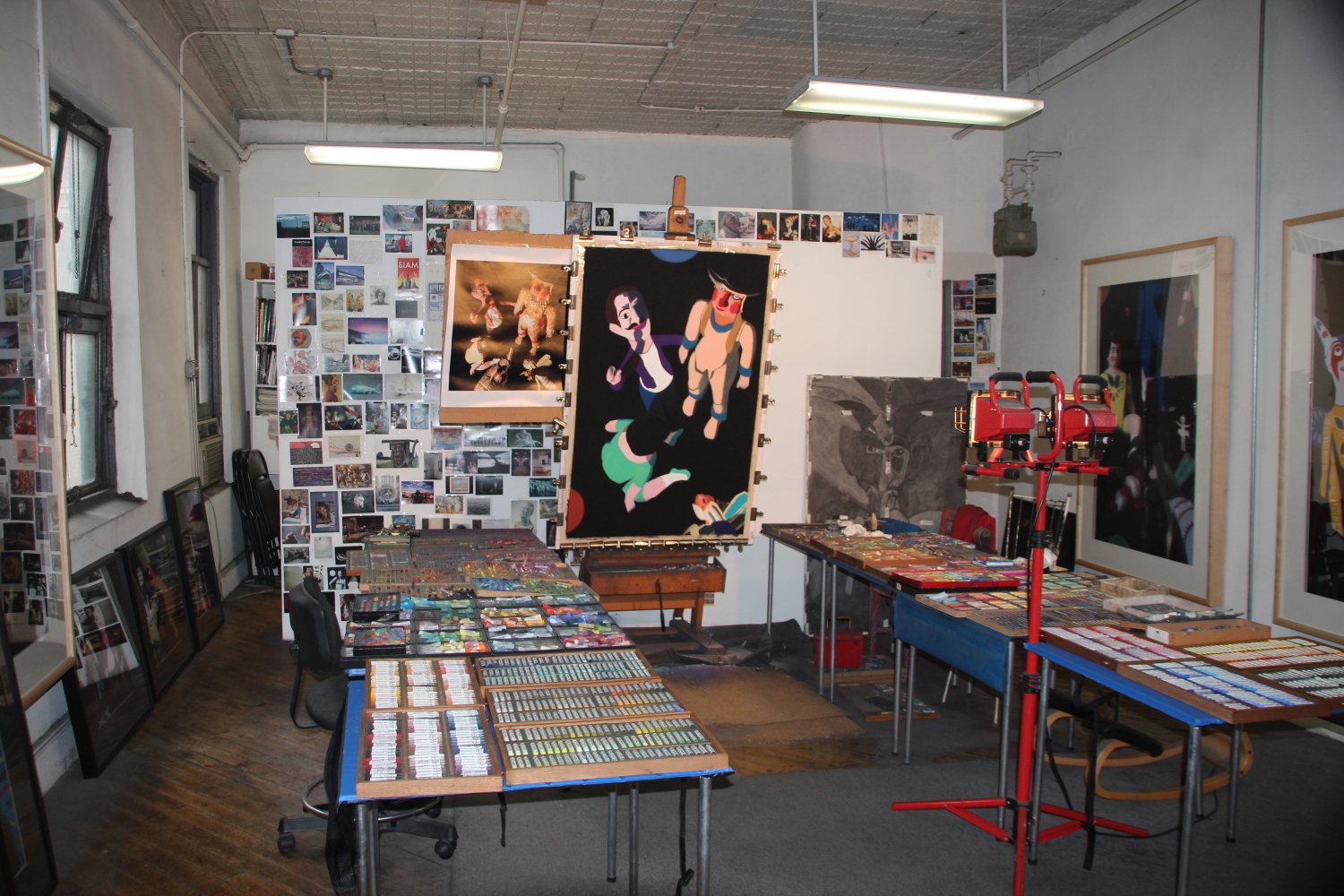
Q: What first intrigued you about Mexico?

“Myth Meets Dream,” 1993, soft pastel on sandpaper, first painting that includes Oaxacan figures
A: In the early 90’s my husband, Bryan, and I made our first trip to Oaxaca and to Mexico City. At the time I had become fascinated with the Mexican “Day of the Dead” celebrations so our trip was timed to see them firsthand. Along with busloads of other tourists, we visited several cemeteries in small Oaxacan towns. The indigenous people tending their ancestor’s graves were so dignified and so gracious, even with so many mostly-American tourists tromping around on a sacred night, that I couldn’t help being taken with these beautiful people and their beliefs. From Oaxaca we traveled to Mexico City, where again I was entranced, but this time by the rich and ancient history. On our first trip we visited the National Museum of Anthropology, where I was introduced to the fascinating story of ancient Meso-American civilizations (it is still one of my favorite museums in the world); the ancient city of Teotihuacan, which the Aztecs discovered as an abandoned city and then occupied as their own; and the Templo Mayor, the historic center of the Aztec empire, infamous as a place of human sacrifice. I was astounded! Why had I never learned in school about Mexico, this highly developed cradle of western civilization in our own hemisphere, when so much time had been devoted to the cultures of Egypt, Greece, and elsewhere? When I returned home to Virginia I began reading everything I could find about ancient Mexican civilizations, including the Olmec, Zapotec, Mixtec, Aztec, and Maya. This first trip to Mexico opened up a whole new world and was to profoundly influence my future work. I would return there many more times.
Comments are welcome!
Q: Would you talk about some of your early experiences with art?
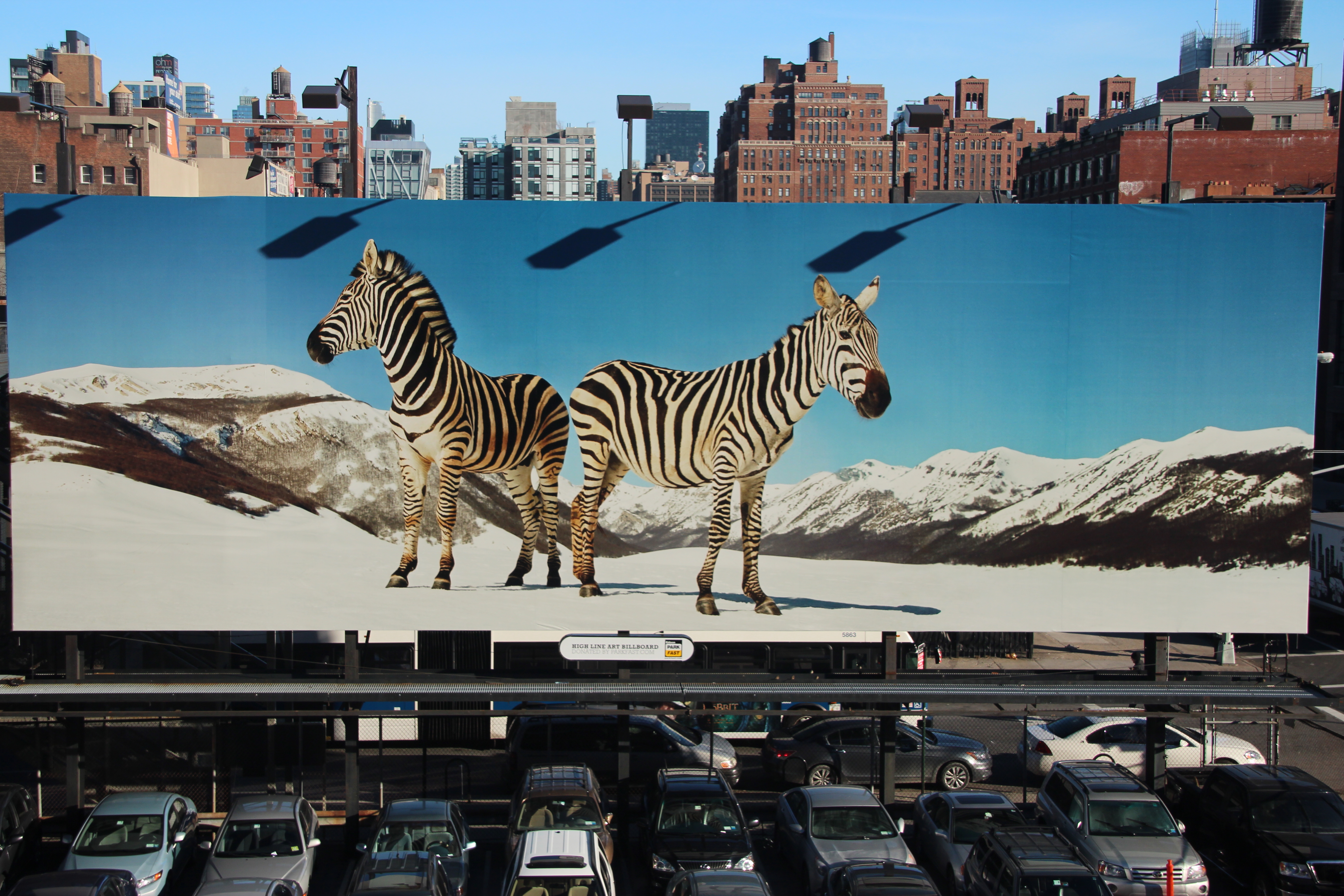
Zebras in Chelsea
A: I grew up in a blue collar family in suburban New Jersey. My father was a television repairman for RCA. For awhile my mother worked as a sewing machine operator in a factory that made women’s undergarments, but mostly she stayed home to raise my sister and me (at the time I had only one sister, Denise; Michele was born much later). My parents were both first-generation Americans and in those days no one in my extended family had gone to college. I was a smart kid and showed some artistic talent in kindergarten or earlier. I have always been able to draw anything, as long as I can see it (i.e., I require a visual reference as opposed to drawing from memory). I remember copying the Sunday comics, which in those days appeared in all the newspapers. At the age of 6 my mother enrolled Denise and me in Saturday morning painting classes at the studio of an artist named Frances Hulmes in Rutherford, NJ. I continued the classes for about 8 years and became a fairly adept oil painter. Living just 12 miles from New York City in Clifton, New jersey, my mother often took us to museums, particularly the Museum of Modern Art, the Metropolitan Museum of Art, and the Museum of Natural History. I remember falling in love with Rousseau’s “The Sleeping Gypsy” and being astonished by the violence and scale of Picasso’s “Guernica,” when it was on long-term loan to MoMA. I have fond memories of studying the dioramas at the Museum of Natural History. They are still my favorite part of the museum. I suppose it goes without saying that there were not any artists in my family so I had no role models. At the age of 15 my father decided that art was not a serious pursuit – he said it was a hobby, not a profession – so he abruptly stopped paying for my Saturday morning lessons. With no financial or moral support to pursue art, I turned my attention to other interests (ex. I learned to fly airplanes, becoming a commercial pilot and Boeing 727 flight engineer) and let my artistic abilities lie dormant.
Comments are welcome!
Pearls from artists* # 21

Apartment building, New York City
* an ongoing series of quotations – mostly from artists, to artists – that offers wisdom, inspiration, and advice for the sometimes lonely road we are on.
It is the beginning of a work that the writer throws away.
A painting covers its tracks. Painters work from the ground up. The latest version of a painting overlays earlier versions, and obliterates them. Writers, on the other hand, work from left to right. The discardable chapters are on the left. The latest version of a literary work begins somewhere in the work’s middle, and hardens toward the end. The earlier version remains lumpishly on the left; the work’s beginning greets the reader with the wrong hand. In those early pages and chapters anyone may find bold leaps to nowhere, read the brave beginnings of dropped themes, hear a tone since abandoned, discover blind alleys, track red herrings, and laboriously learn a setting now false.
Several delusions weaken the writer’s resolve to throw away work. If he has read his pages too often, those pages will have a necessary quality, the ring of the inevitable, like poetry known by heart; they will perfectly answer their own familiar rhythms. He will retain them. He may retain those pages if they possess some virtues, such as power in themselves, though they lack the cardinal virtue, which is pertinence to, and unity with, the book’s thrust. Sometimes the writer leaves his early chapters in place from gratitude; he cannot contemplate them or read them without feeling again the blessed relief that exalted him when the words first appeared – relief that he was writing anything at all. That beginning served to get him where he was going, after all; surely the reader needs it, too, as groundwork. But no.
Every year the aspiring photographer brought a stack of his best prints to an old, honored photographer, seeking his judgment. Every year the old man studied the prints and painstakingly ordered them into two piles, bad and good. Every year the old man moved a certain landscape print into the bad stack. At length he turned to the young man: “You submit this same landscape every year, and every year I put it in the bad stack. Why do you like it so much?” The young photographer said, “Because I had to climb a mountain to get it.”
Annie Dillard, The Writing Life
Comments are welcome!
Q: When you set up your figures to photograph, do you create a story?
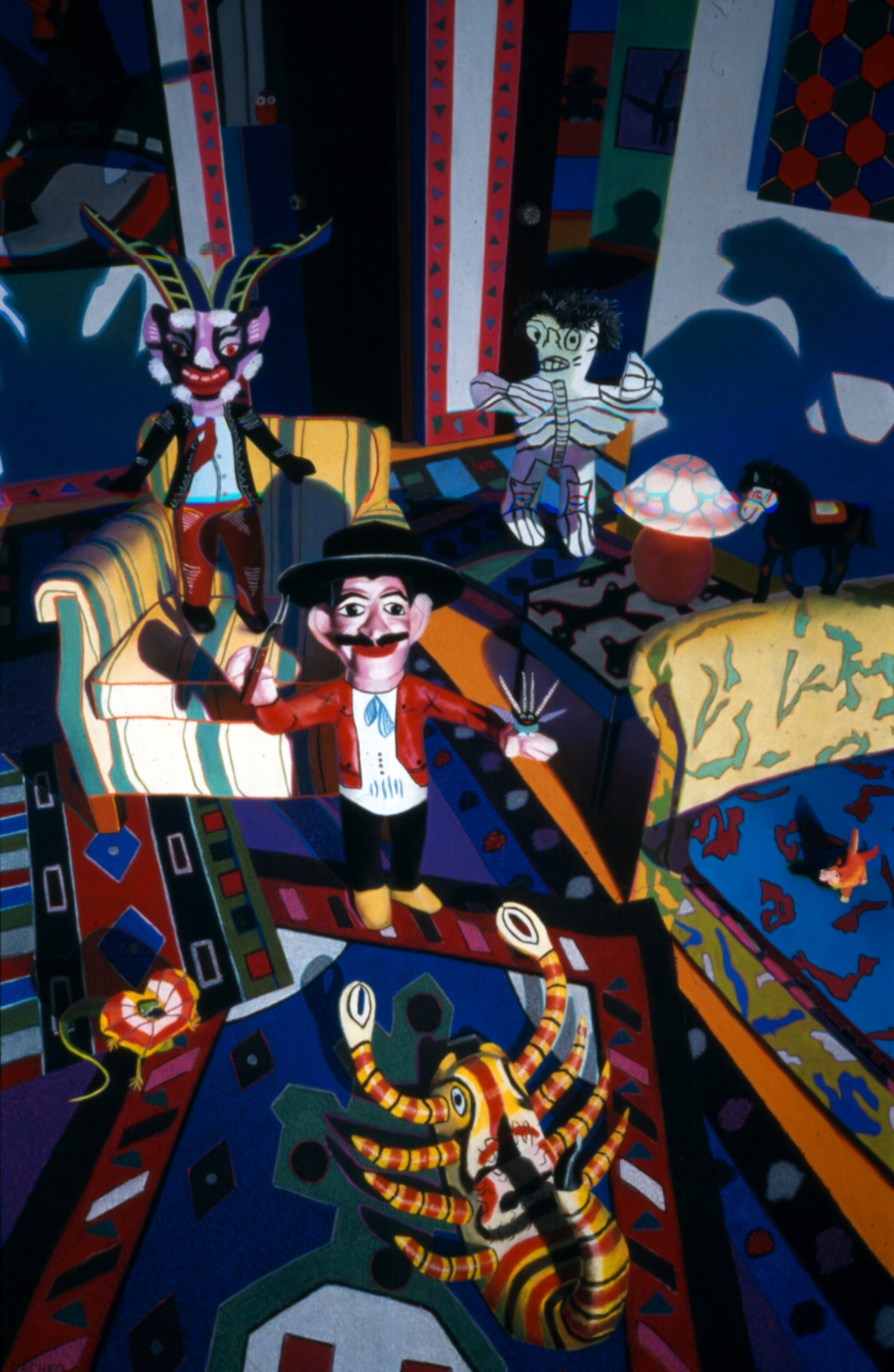
“He Just Stood There Grinning,” soft pastel on sandpaper, ” 58″ x 38″
A: I always did so with my “Domestic Threats” paintings, but not with my current work. As I set up a group of figures to photograph, I would make up a story about what was happening between them: what the Day of the Dead skeleton I bought in Mexico City was saying to the frog/fish/human mask from Guerrero, for example. I was a big kid playing with my favorite toys! The stories were the spark to get me started on a new project, but I usually forgot about them afterwards. They were necessary, yet incidental to my creative process, which is probably why I have never written them down.
Years ago I had the experience of being at one of my solo shows when a group of elementary school children came along with their teacher. The teacher asked them to act out one of the stories in a particular painting. Ever curious about how people relate to my work, I didn’t introduce myself as the creator of the pieces hanging on the walls. I no longer remember the details, but their interpretations soon had me laughing. It is a constant surprise to hear from people encountering my work for the first time what they see in it, especially when those people are young kids with wild imaginations!
Comments are welcome!
Pearls from artists* # 18

West Village
* an ongoing series of quotations – mostly from artists, to artists – that offers wisdom, inspiration, and advice for the sometimes lonely road we are on.
Those who would make art might well begin by reflecting on the fate of those who preceded them: most who began, quit. It’s a genuine tragedy. Worse yet, it’s an unnecessary tragedy. After all, artists who continue and artists who quit share an immense field of common emotional ground. (Viewed from the outside, in fact, they’re indistinguishable). We’re all subject to a familiar and universal progression of human troubles – troubles we routinely survive, but which are (oddly enough) routinely fatal to the art-making process. To survive as an artist requires confronting these troubles. Basically, those who continue to make art are those who have learned how to continue – or more precisely, have learned how to not quit.
But curiously, while artists always have a myriad of reasons to quit, they consistently wait for a handful of specific moments to quit. Artists quit when they convince themselves that their next effort is already doomed to fail. And artists quit when they lose the destination for their work – for the place their work belongs.
Virtually all artists encounter such moments. Fear that your next work will fail is a normal, recurring, and generally healthy part of the art-making cycle. It happens all the time: you focus on some new idea in your work, you try it out, run with it for awhile, reach a point of diminishing returns, and eventually decide it’s not worth pursuing further. Writers even have a phrase for it – “the pen has run dry” – but all media have their equivalents. In the normal artistic cycle this just tells you that you’ve come full circle, back to that point where you need to begin cultivating the next new idea. But in artistic death it marks the last thing that happens: you play out an idea, it stops working, you put the brush down… and thirty years later you confide to someone over coffee that, well, yes, you had wanted to paint when you were much younger. Quitting is fundamentally different from stopping. The latter happens all the time. Quitting happens once. Quitting means not starting again – and art is all about starting again.
David Bayles and Ted Orland, Art & Fear
Comments are welcome!
Q: What would you be if you were not an artist?
Self-portrait on a Hudson River barge
A: I honestly have no idea, but whatever it might be, there is a good chance that I’d be bored! In my younger days boredom was a strong motivator. I left the active duty Navy out of boredom. I couldn’t bear not being intellectually challenged (most of my jobs consisted of paper-pushing), not using my flying skills (at 27 I was a licensed commercial pilot and Boeing 727 flight engineer), and not developing my artistic talent. In what surely must be a first, by spending a lot of time and money training me for jobs I hated, the Navy turned me into a hard-working artist! And once I left the Navy there was no plan B. There was no time to waste. It was “full speed ahead.”
Art is a calling. You do not need to be told this if you are among those who are called. It’s all about “the work,” that all-consuming focus of an artist’s life. If a particular activity doesn’t make you a better artist, you avoid it. You work hard to nourish and protect your gifts. As artists we invent our own tasks, learn whatever we need in order to progress, and complete projects in our own time. It is life lived at its freest.
My art-making has led me to fascinating places: Mexico, Guatemala, Brazil, Argentina, Uruguay, France, England, Italy, Bali, Java and more; and to in-depth studies of intriguing subjects: drawing, color, composition, art and art history, the art business, film and film history, photography, mythology, literature, music, jazz history, and archaeology, particularly that of ancient Mesoamerica (the Olmec, Zapotec, Mixtec, Aztec, Maya, etc.). And this rich mixture continually grows! For anyone wanting to spend their time on earth learning and meeting new challenges, there is no better life than that of an artist.
I SO agree with this exchange that I read years ago between between Trisha Brown and Mikhail Baryshnikov in the New York Times. I wrote it on a piece of paper and taped it to my studio wall:
Trisha: How do you think we keep going? Are we obsessed?
Mikhail: We do it because there’s nothing better. I’m serious. Because there is nothing more exciting than that. Life is so boring, that’s why we are driven to the mystery of creation.
Comments are welcome.
Pearls from artists* # 11

Great Salt Lake
* an ongoing series of quotations – mostly from artists, to artists – that offers wisdom, inspiration, and advice for the sometimes lonely road we are on.
Virtually all artists spend some of their time (and some artists spend all of their time) producing work that no one else much cares about. It just seems to come with the territory. But for some reason – self defense, perhaps – artists find it tempting to romanticize this lack of response, often by (heroically) picturing themselves peering deeply into the underlying nature of things long before anyone else has eyes to follow.
Romantic, but wrong. The sobering truth is that the disinterest of others hardly ever reflects a gulf in vision.In fact there’s generally no good reason why others should care about most of any one artist’s work. The function of the overwhelming majority of your artwork is simply to teach you how to make the small fraction of your artwork that soars. One of the basic and difficult lessons every artist must learn is that even the failed pieces are essential. X-rays of famous paintings reveal that even master artists sometimes made basic mid-course corrections (or deleted really dumb mistakes) by over-painting the still wet canvas. The point is that you learn how to make your work by making your work, and a great many pieces you make along the way will never stand out as finished art. The best you can do is make art you care about – and lots of it!
The rest is largely a matter of perseverance. Of course once you’re famous, collectors and academics will circle back in droves to claim credit for spotting evidence of genius in every early piece. But until your ship comes in, the only people who will really care about your work are those who care about you personally. Those close to you know that making the work is essential to your well being. They will always care about your work, if not because it is great, then because it is yours – and this is something to be genuinely thankful for. Yet however much they love you, it still remains as true for them as for the rest of the world: learning to make your work is not their problem.
David Bayles and Ted Orland, Art & Fear
Comments are welcome.


 barbararachkoscoloreddust.com