Blog Archives
Pearls from artists* # 103
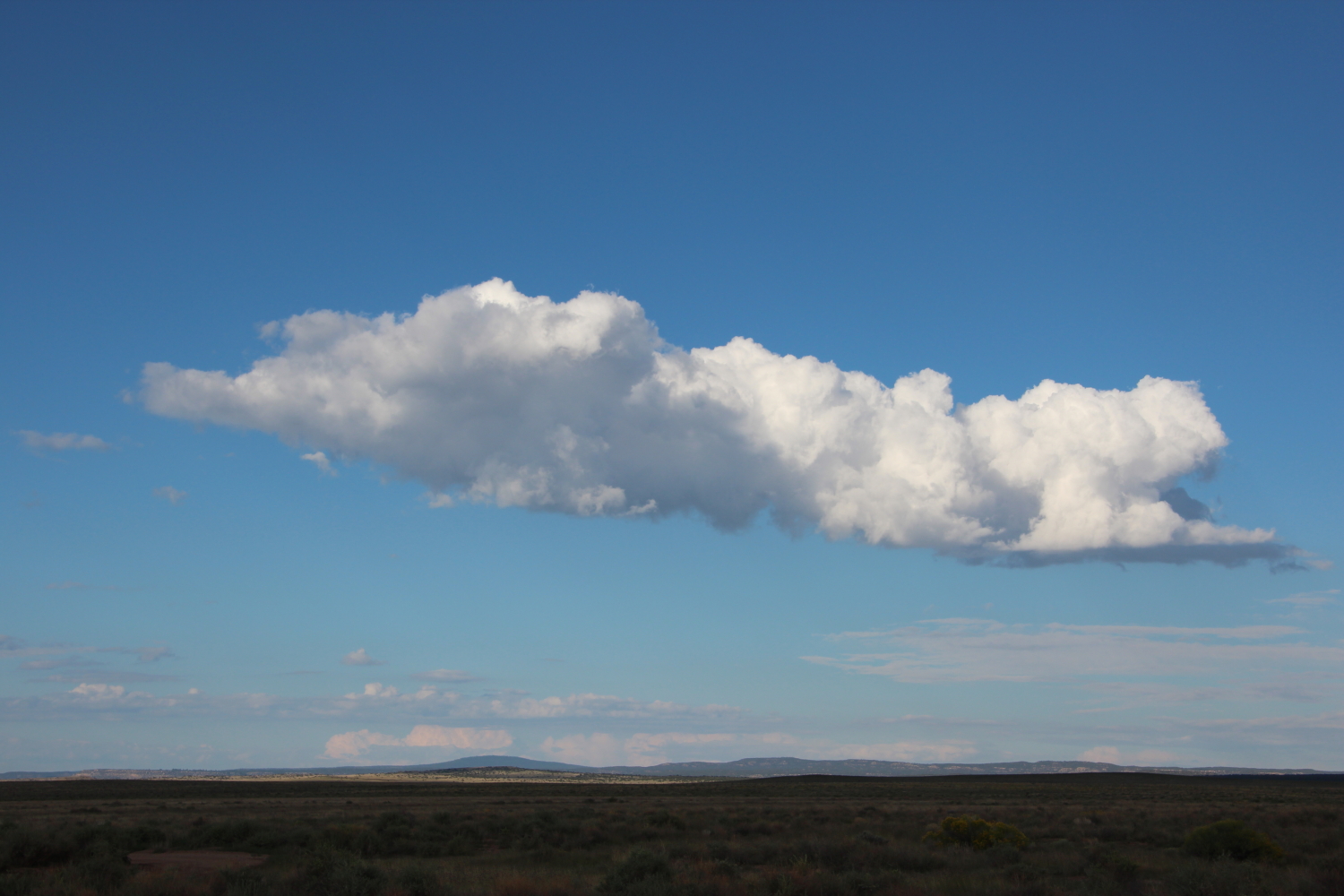
Quemado, NM
* an ongoing series of quotations – mostly from artists, to artists – that offers wisdom, inspiration, and advice for the sometimes lonely road we are on.
There are times when the art-maker’s solitude feels mildly pleasant, or deeply pleasurable, or even blissful. Many people refer to Mihaly Czikszentmihalyi’s concept of “flow” as their experience of art-making – that state of being in which one is focused and concentrated, removed from time, energized, and not lonely at all. But flow happens most readily when the task is not too frustrating, and when the obstacles feel manageable. I feel flow more readily when the writing is going well than when I’m trying to wrangle with some thorny bit of it. Then I feel unflow and, sometimes, too alone with the labor and very glad to have fond people close at hand in my life and in my memory.
Janna Malamud Smith in An Absorbing Errand: How Artists and Craftsmen Make Their Way to Mastery
Comments are welcome!
Pearls from artists* # 102
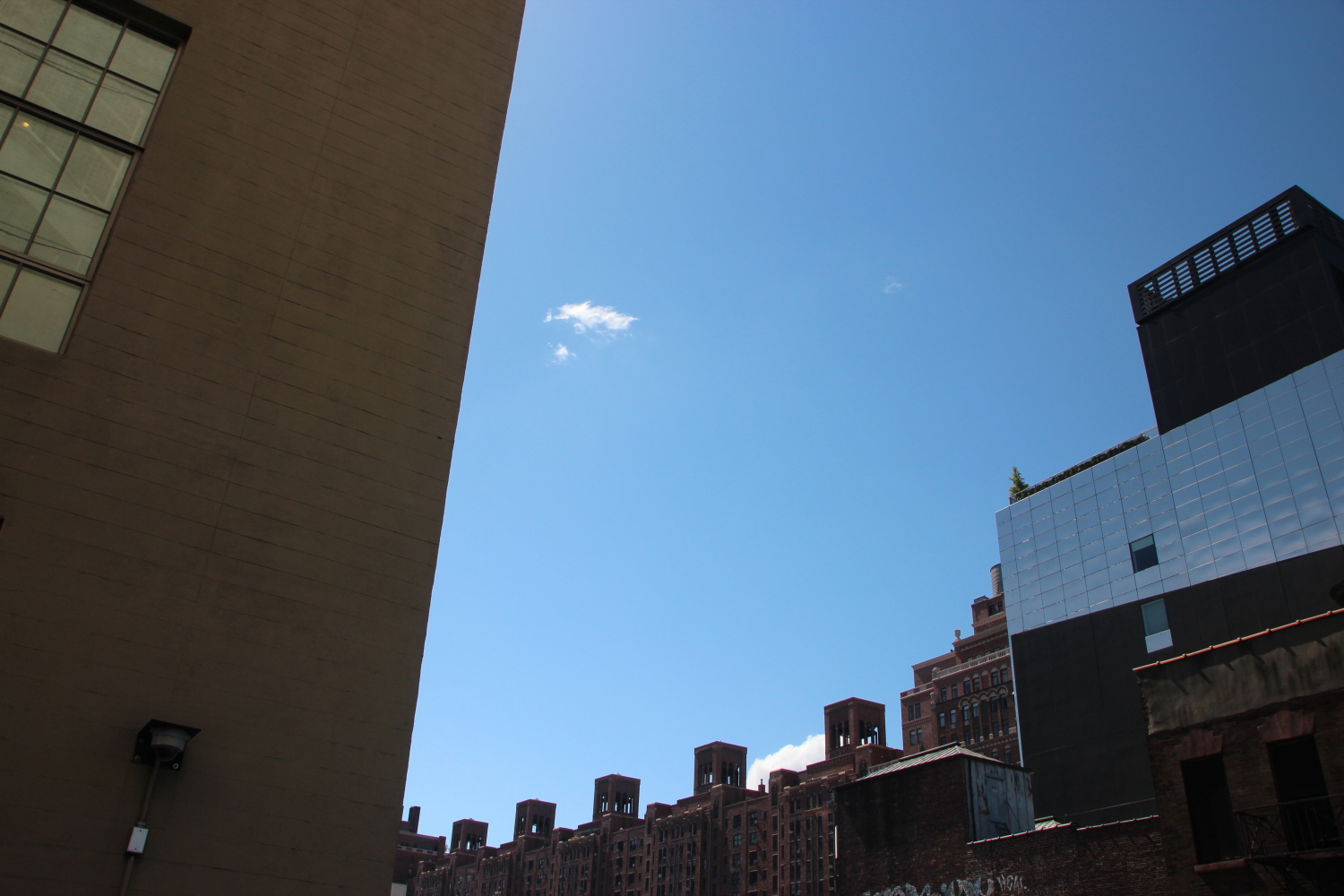
New York, NY
* an ongoing series of quotations – mostly from artists, to artists – that offers wisdom, inspiration, and advice for the sometimes lonely road we are on.
That a photograph is unlikely to be a laboratory record is evident when we think about how it is made. Most photographers are people of immense enthusiasms whose work involves many choices – to brake the car, grab the yellow instead of the green filter, wait out the cloud, and at the second everything looks inexplicably right, to release the shutter. Behind these decisions stands the photographer’s individual framework of recollections and meditations about the way he perceived that place or places like it before. Without such a background there would be no knowing whether the scene on the ground glass was characteristic of the geography and of his experience of it and intuition of it – in short, whether it was true.
Making photographs has to be, then, a personal matter; when it is not, the results are not persuasive. Only the artist’s presence in the work can convince us that its affirmation resulted from and has been tested by human experience. Without the photographer in the photograph the view is no more compelling than the product of some annoying record camera, a machine perhaps capable of happy accident but not response to form.
Beauty in Photography by Robert Adams
Comments are welcome!
Q: How do you experience art in New York?

Lower Manhattan
A: As a New York artist I am very fortunate to live in a city with a vibrant, exciting cultural scene. Simply put, art is in the air here and I take inspiration from everything I see and experience: painting, photography, sculpture, installation, performance art, public art, dance, theater, film, opera, jazz, etc. This city itself is an endlessly fascinating place. Visually it is always thrilling! I never know what I am going to see – good and bad – whenever I leave my apartment.
I have been living here since April 1997. The city provides a heady mix to ponder and this mix mysteriously enriches, influences, and somehow finds its way into the work. I have been an artist for nearly thirty years and I continue to be intrigued with watching the intricacies of how my creative process evolves and grows.
Comments are welcome!
Pearls from artists* # 81
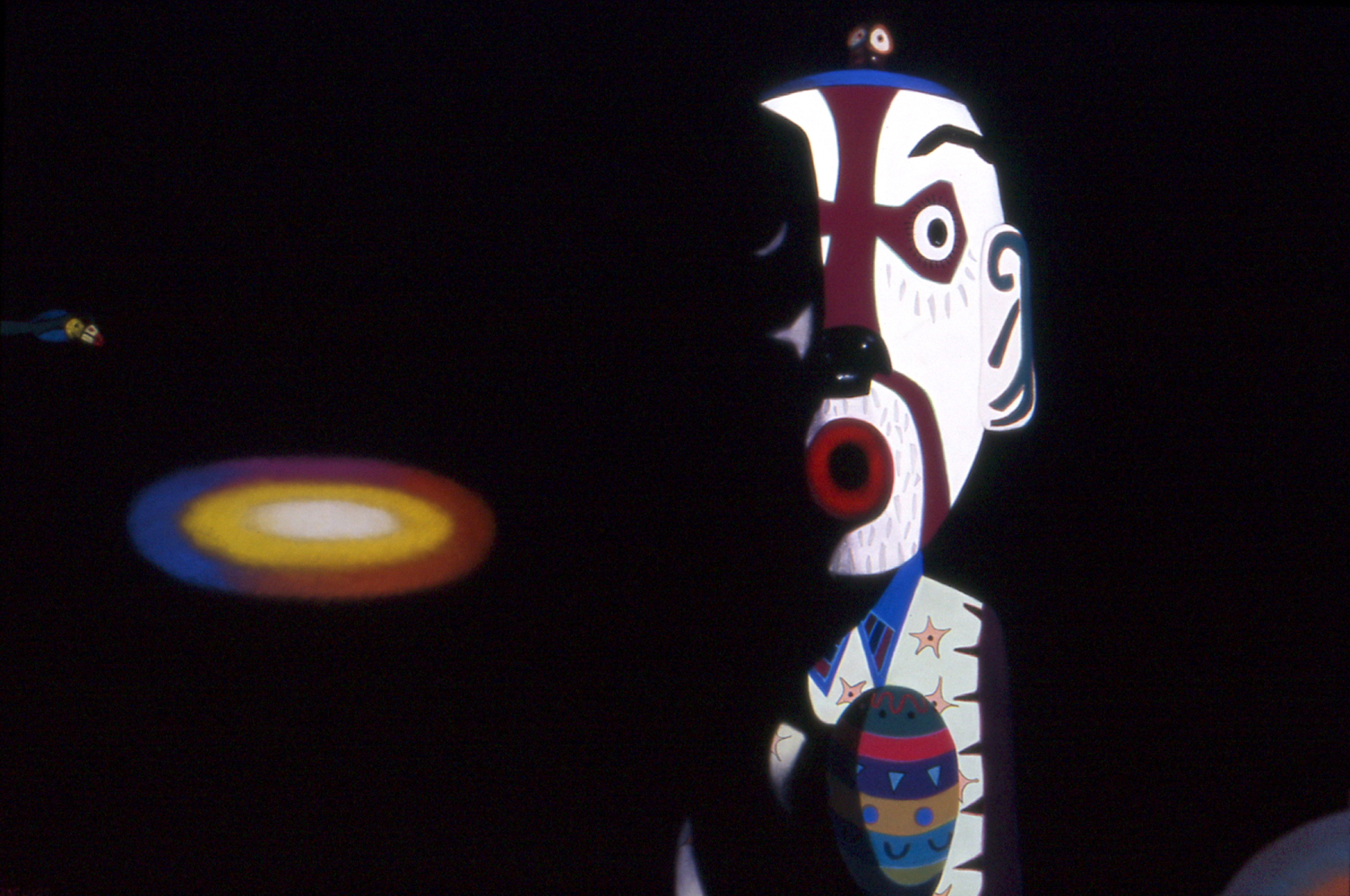
“Poker Face,” soft pastel on sandpaper, 38″ x 58″
* an ongoing series of quotations – mostly from artists, to artists – that offers wisdom, inspiration, and advice for the sometimes lonely road we are on.
The creative process remains as baffling and unpredictable to me today as it did when I began my journey over forty years ago. On the one hand, it seems entirely logical – insight building on insight; figures from my past, the culture, and everyday life sparking scenes and images on canvas; and all of it – subject, narrative, theme – working together with gesture, form, light to capture deeply felt experience. But in real time the process is a blur, a state that precludes consciousness or any kind of rational thinking. When I’m working well, I’m lost in the moment, painting quickly and intuitively, reacting to forms on the canvas, allowing their meaning to reveal itself to me. In every painting I make I’m looking for some kind of revelation, something I didn’t see before. If it surprises me, hopefully it will surprise the viewer, too.
Eric Fischl and Michael Stone in Bad Boy: My Life On and Off the Canvas
Comments are welcome!
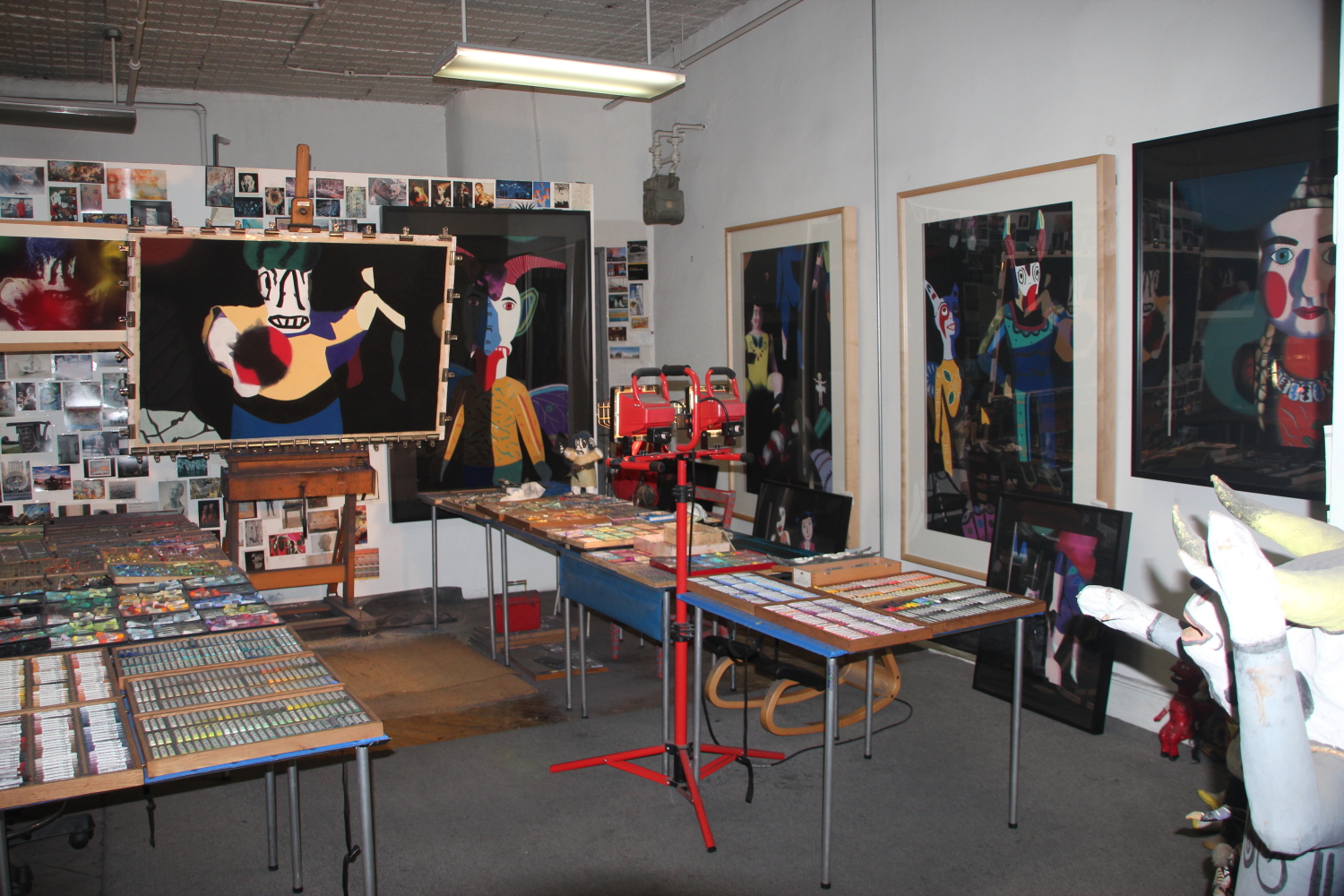
Q: I just got home from my first painting experience… three hours and I am exhausted! Yet you, Barbara, build up as many as 30 layers of pastel, concentrate on such intricate detail, and work on a single painting for months. How do you do it?
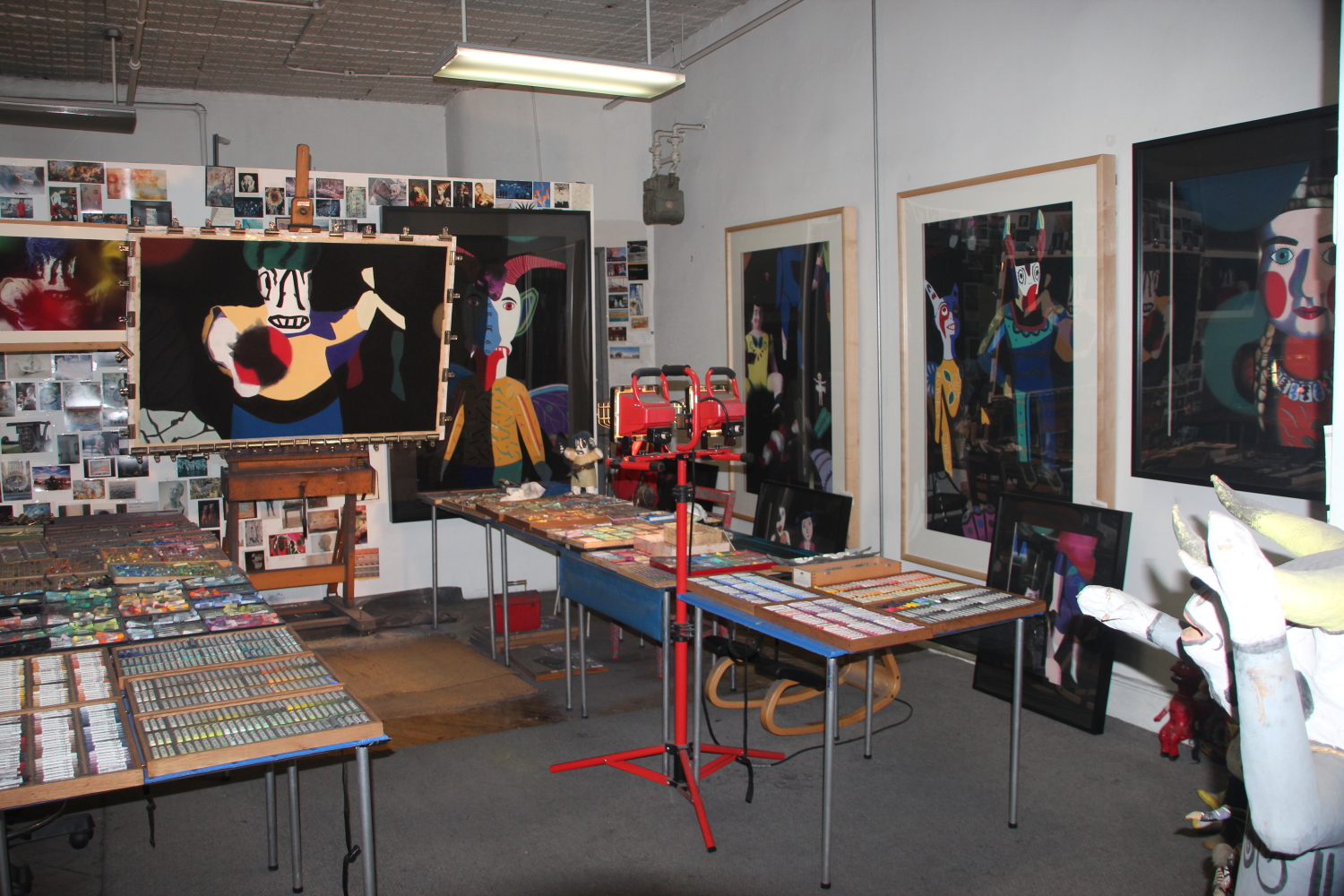
Barbara’s studio
A: The short answer is that I absolutely love making art in my studio and on the best days I barely even notice time going by!
Admittedly, it’s a hard road. Pursuing life as an artist takes a very special and rare sort of person. Talent and having innate gifts are a given, merely the starting point. We must possess a whole cluster of characteristics and be unwavering in displaying them. We are passionate, hard-working, smart, devoted, sensitive, self-starting, creative, hard-headed, resilient, curious, persistent, disciplined, stubborn, inner-directed, tireless, strong, and on and on. Into the mix add these facts. We need to be good business people. Even if we are, we are unlikely to make much money. We are not respected as a profession. People often misunderstand us: at best they ignore us, at worst they insult our work and us, saying we are lazy, crazy, and more.
The odds are stacked against any one individual having the necessary skills and stamina to withstand it all. So many artists give up, deciding it’s too tough and just not worth it, and who can blame them? This is why I believe artists who persevere over a lifetime are true heroes. It’s why I do all I can to help my peers. Ours is an extremely difficult life – it’s impossible to overstate this – and each of us finds our own intrinsic rewards in the work itself. Otherwise there is no reason to stick with it. Art is a calling and for those of us who are called, the work is paramount. We build our lives around the work until all else becomes secondary and falls away. We are in this for the duration.
In my younger days everything I tried in the way of a career eventually became boring. Now with nearly thirty years behind me as a working artist, I can still say, “I am never bored in the studio!” It’s difficult to put into words why this is true, but I know that I would not want to spend my time on this earth doing anything else. How very fortunate that I do not have to do so!
Comments are welcome!
Q: What’s the point of all of this? Shouldn’t we be discussing how to end poverty or promote world peace? What can art do?
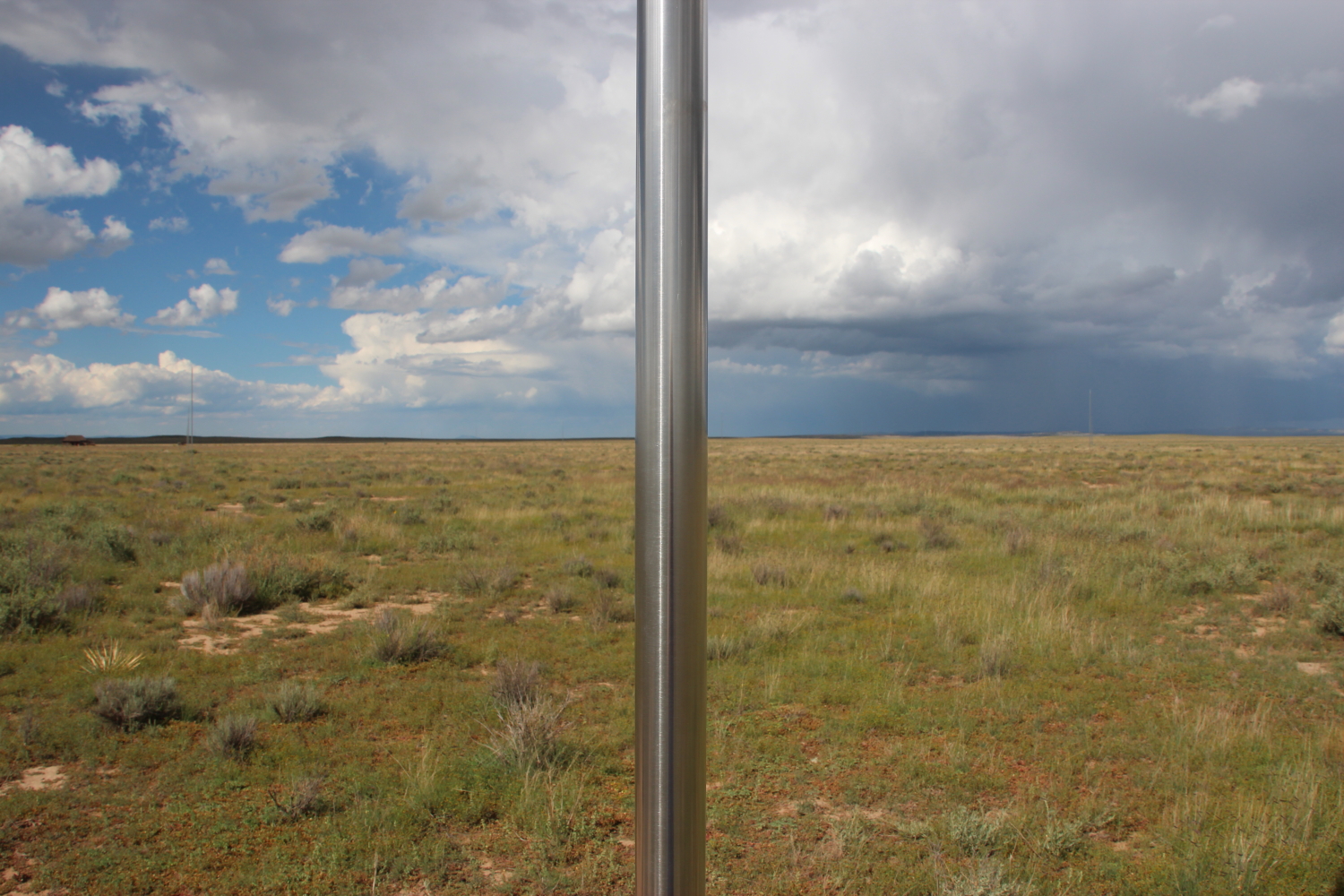
Lightning Field, Quemado, NM
A: I happen to recently have read an inspiring book by Anne Bogart, the theater director. It’s called, “and then you act: making art in an unpredictable world” and she talks about such issues. I’ll quote her wise words below:
“Rather than the experience of life as a shard, art can unite and connect the strands of the universe. When you are in touch with art, borders vanish and the world opens up. Art can expand the definition of what it means to be human. So if we agree to hold ourselves to higher standards and make more rigorous demands on ourselves, then we can say in our work, ‘We have asked ourselves these questions and we are trying to answer them, and that effort earns us the right to ask you, the audience, to face these issues, too.’ Art demands action from the midst of the living and makes a space where growth can happen.
One day, particularly discouraged about the global environment, I asked my friend the playwright Charles L. Mee, Jr., ‘How are we supposed to function in these difficult times? How can we contribute anything useful in this climate?’ ‘Well,’ he answered, ‘You have a choice of two possible directions. Either you convince yourself that these are terrible times and things will never get better and so you decide to give up, or, you choose to believe that there will be a better time in the future. If that is the case, your job in these dark political and social times is to gather together everything you value and become a transport bridge. Pack up what you cherish and carry it on your back to the future.'”
“… In the United States, we are the targets of mass distraction. We are the objects of constant flattery and manufactured desire. I believe that the only possible resistance to a culture of banality is quality. To me, the world often feels unjust, vicious, and even unbearable. And yet, I know that my development as a person is directly proportional to my capacity for discomfort. I see pain, destructive behavior and blindness of the political sphere. I watch wars declared, social injustices that inhabit the streets of my hometown, and a planet in danger of pollution and genocide. I have to do something. My chosen field of action is the theater.”
Comments are welcome!
Pearls from artists* # 71

New York street
* an ongoing series of quotations – mostly from artists, to artists – that offers wisdom, inspiration, and advice for the sometimes lonely road we are on.
Artists are individuals willing to articulate in the face of flux and transformation. And the successful artist finds new shapes for our present ambiguities and uncertainties. The artist becomes the creator of the future through the violent act of articulation. I say violent because articulation is a forceful act. It demands an aggressiveness and an ability to enter into the fray and translate that experience into expression. In the articulation begins a new organization of the inherited landscape.
My good friend the writer Charles L. Mee, Jr. helped me to recognize the relationship between art and the way societies are structured. He suggested that, as societies develop, it is the artists who articulate the necessary myths that embody our experience of life and provide parameters for ethics and values. Every so often the inherited myths lose their value because they become too small and confined to contain the complexities of the ever-transforming and expanding societies. In that moment new myths are needed to encompass who we are becoming. These new constructs do not eliminate anything already in the mix; rather, they include fresh influences and engender new formations. The new mythologies always include ideas, cultures and people formerly excluded from the previous mythologies. So, deduces Mee, the history of art is the history of inclusion.
Ann Bogart in A Director Prepares: Seven Essays on Art and Theater
Comments are welcome!
Pearls from artists* # 69
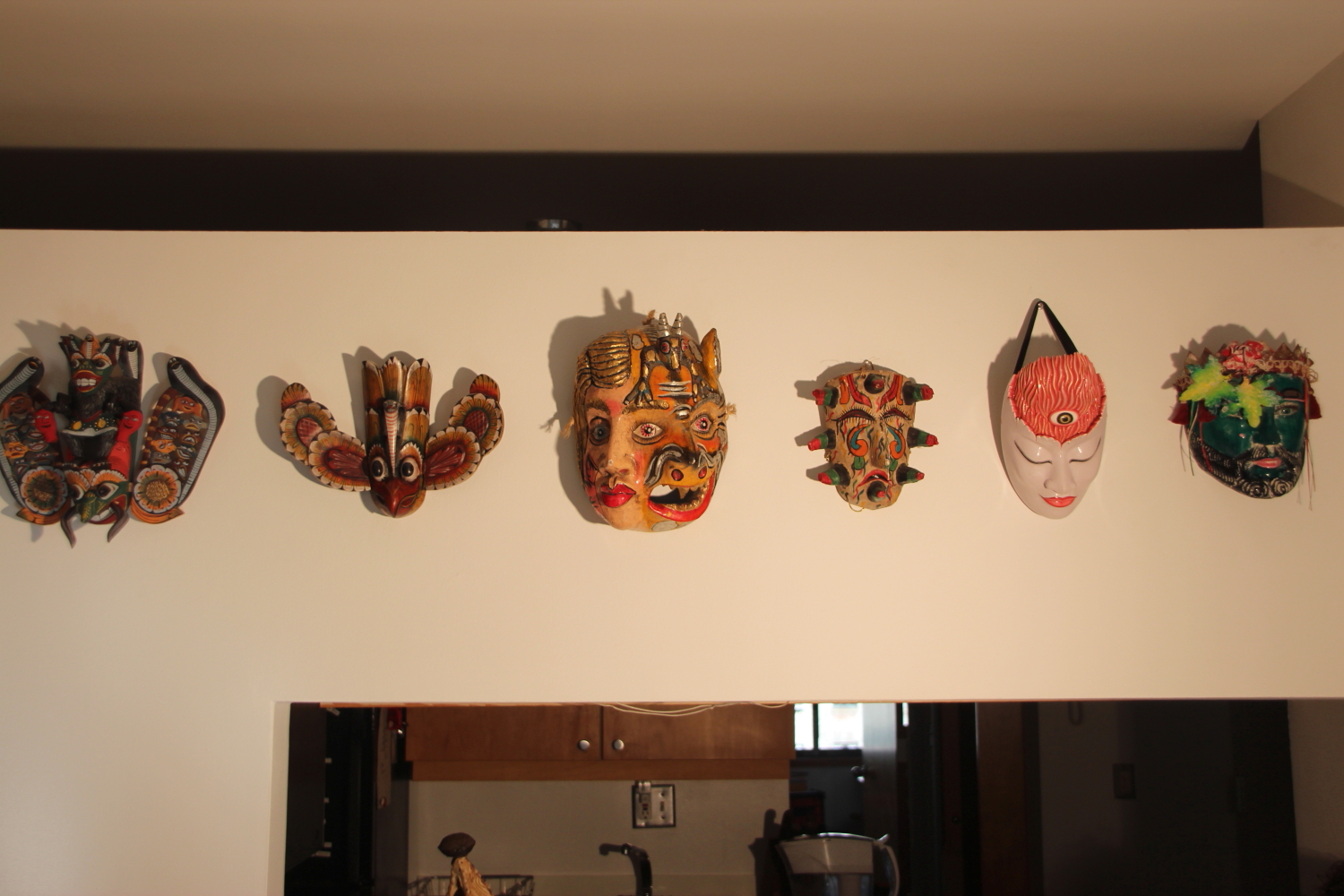
Masks from Sri Lanka, Mexico, and Bali
*
an ongoing series of quotations – mostly from artists, to artists – that offers wisdom, inspiration, and advice for the sometimes lonely road we are on.
The mission is to stay hungry. Once you need to know, you can proceed and draw distinctions. From the heat of this necessity, you reach out to content – the play, the theme, or question – and begin to listen closely, read, taste, and experience it. You learn to differentiate and interpret the sensations received while engaged with content. The perception forms the basis for expression.
Have you ever been so curious about something that the hunger to find out nearly drives you to distraction? The hunger is necessity. As an artist, your entire artistic abilities are shaped by how necessity has entered your life and then how you sustain it. It is imperative to maintain artistic curiosity and necessity. It is our job to maintain in this state of feedforward as long as humanly possible. Without necessity as the fuel for expression, the content remains theoretical. The drive to taste, discover, and express what thrills and chills the soul is the point. Creation must begin with personal necessity rather than conjecture about audience taste or fashion.
Anne Bogart in and then, you act: making art in an unpredictable world
Comments are welcome!


 barbararachkoscoloreddust.com
Q: What is the reality of the art world today? Do people experience it enough?
Aug 2
Posted by barbararachkoscoloreddust
West 29th Street studio
A: I cannot comment on the art world today or the experience of other people. I can only speak for myself. I am completely devoted to my work; my entire life revolves around art. When I’m not in my studio creating, I am reading about art, thinking about it, gaining inspiration from other artists and from artistic travel, working out new ideas, going to museum and gallery exhibitions, trying to understand the business side of things, etc. Art is a calling and I personally experience it enough as my work continues to evolve!
Comments are welcome!
Share this:
Posted in 2014, An Artist's Life, Art in general, Black Paintings, Creative Process, Inspiration, New York, NY, Pastel Painting, Photography, Studio, Working methods
2 Comments
Tags: art, art world, artistic, business, calling, comment, completely, continues, creating, devoted, enough, evolve, Exhibitions, experience, gaining, gallery, going, grow, ideas, inspiration, life, museum, people, personally., reading, reality, revolves, speak, Studio, thinking, today, travel, trying, understand, West 29th Street, work, working