Blog Archives
Pearls from artists* # 627

In Hanga Roa, Rapa Nui (Easter Island), one of the most remote places on Earth!
*an ongoing series of quotations – mostly from artists, to artists – that offers wisdom, inspiration, and advice for the sometimes lonely road we are on.
We cannot afford to walk sightless among miracles. Nor can we protect ourselves from suffering. We do work that thrusts us into the pulsing heart of this world, whether or not we’re on the mood, whether or not it’s difficult or painful or we’d prefer to divert our eyes. When I think of the wisest people I know, they share one defining trait: curiosity. They turn away from the minutiae of their lives – and focus on the world around them. They are motivated by a desire to explore the unfamiliar. They are drawn toward what they don’t understand. They enjoy surprise. Some of these people are seventy, eighty, close to ninety years old, but they remind me of my son and his friend on the day I sprung them from camp. Courting astonishment. Seeking breathless wonder.
Dani Shapiro in Still Writing: The Perils and Pleasures of a Creative Life
Comments are welcome!
Pearls from artists* # 616
*an ongoing series of quotations – mostly from artists, to artists – that offers wisdom, inspiration, and advice for the sometimes lonely road we are on.
This may be the most important piece of advice I can give you: The Internet is nothing like a cigarette break. If anything, it’s the opposite. One of the most difficult practical challenges facing writers in this age of connectivity is the fact that the very instrument on which most of us write is also a portal to the outside world. I once heard Ron Carlson say that composing on a computer is like writing in an amusement park. Stuck for a nanosecond? Why feel it? With the single click of a key we can remove ourselves and take a ride on a log flume instead.
By the time we return to work – if, indeed, we return to our work at all – we will be further away from our deepest impulses rather than closer to them. Where were we? Oh, yes. We were stuck. We were feeling uncomfortable and lost. We have gained nothing in the way of waking-dream time. Our thoughts have not drifted, but rather, have ricocheted from one bright and shiny thing to another.
Dani Shapiro in Still Writing: The Perils and Pleasures of a Creative Life
Comments are welcome!
Pearls from artists* # 611
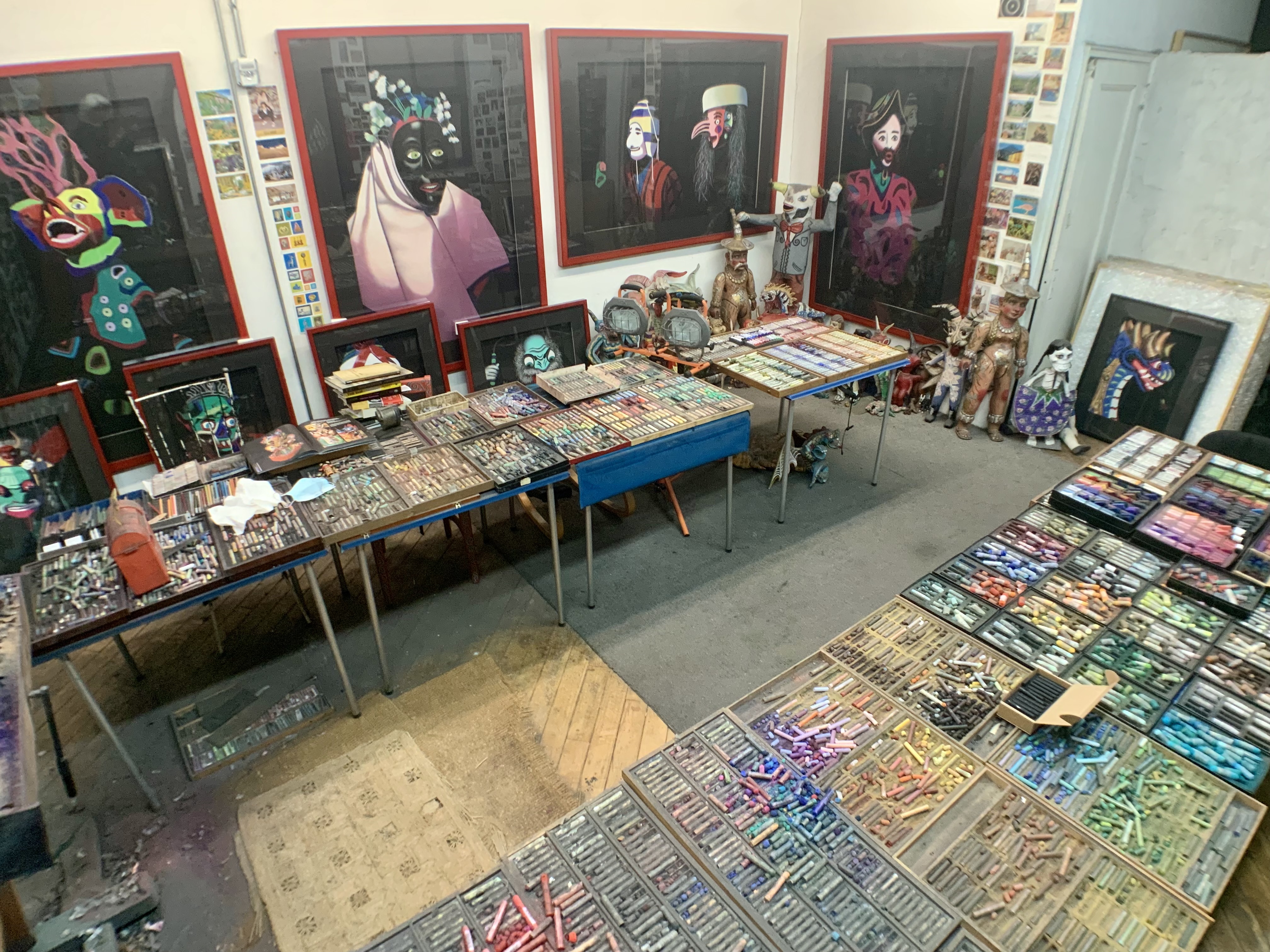
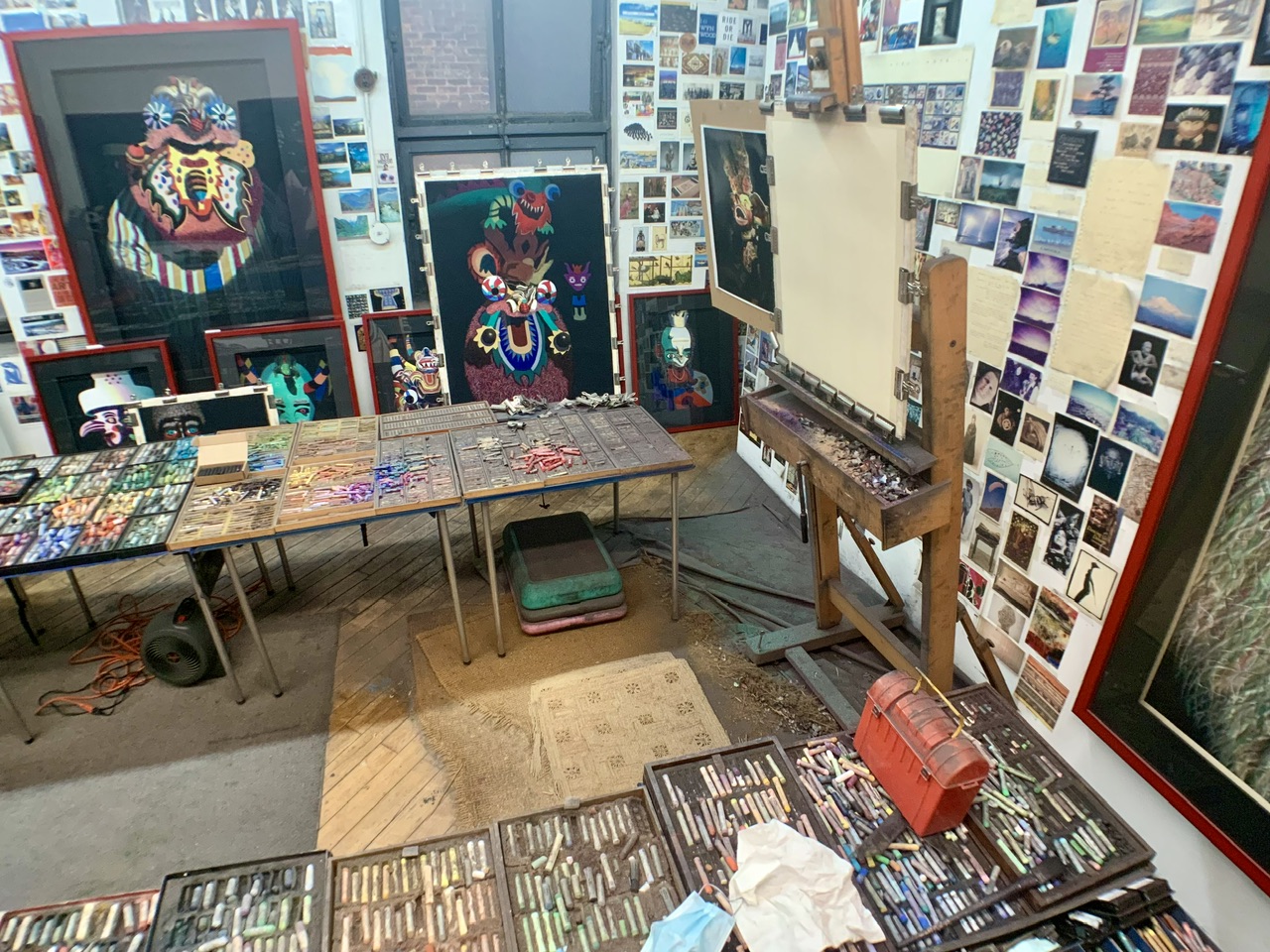
Barbara’s Studio
*an ongoing series of quotations – mostly from artists, to artists – that offers wisdom, inspiration, and advice for the sometimes lonely road we are on.
This common participation in the Trinity of Line, Form, and Color has founded a promiscuous fellowship which, while promoting the respect for skill, promotes to a far greater degree the misunderstanding of art. For skill in itself is but a sleight of hand. In a work of art one does not measure its extent but counts himself happiest when he is unaware of its existence in the contemplation of the result. Among those who decorate our banks and hotels you will find many who can imitate the manner of any master, living or dead, far better than the master could imitate himself, but they have no more knowledge of his soul than they have knowledge of their own. We will know how little skill avails, how ineffective are its artifices in filling the lack of true artistic motivation. His “less is more,” is Robert Browning’s famous evaluation of this problem in comparing the imperfections of Raphael’s art to the impecability of Del Sarto’s, “I should rather say that it will be more difficult to improve the mind of the master who makes such mistakes than to repair the work he has spoilt,” Leonardo wrote. Neither Giotto nor Goya exhibited half the skill of Coreggio or Sargent, either in the complexity of their undertaking or the apparent virtuosity of execution. The artist must have the particular skill to achieve his particular ends. If he has more, we are fortunate not to know it, for the exhibition of excess would only mar his art. You may be sure that the artist whose method is muddled betrays less his technical inadequacy than the incoherence of his own intentions.
Mark Rothko in The Artist’s Reality: Philosophies of Art
Comments are welcome!
Pearls from artists* # 593
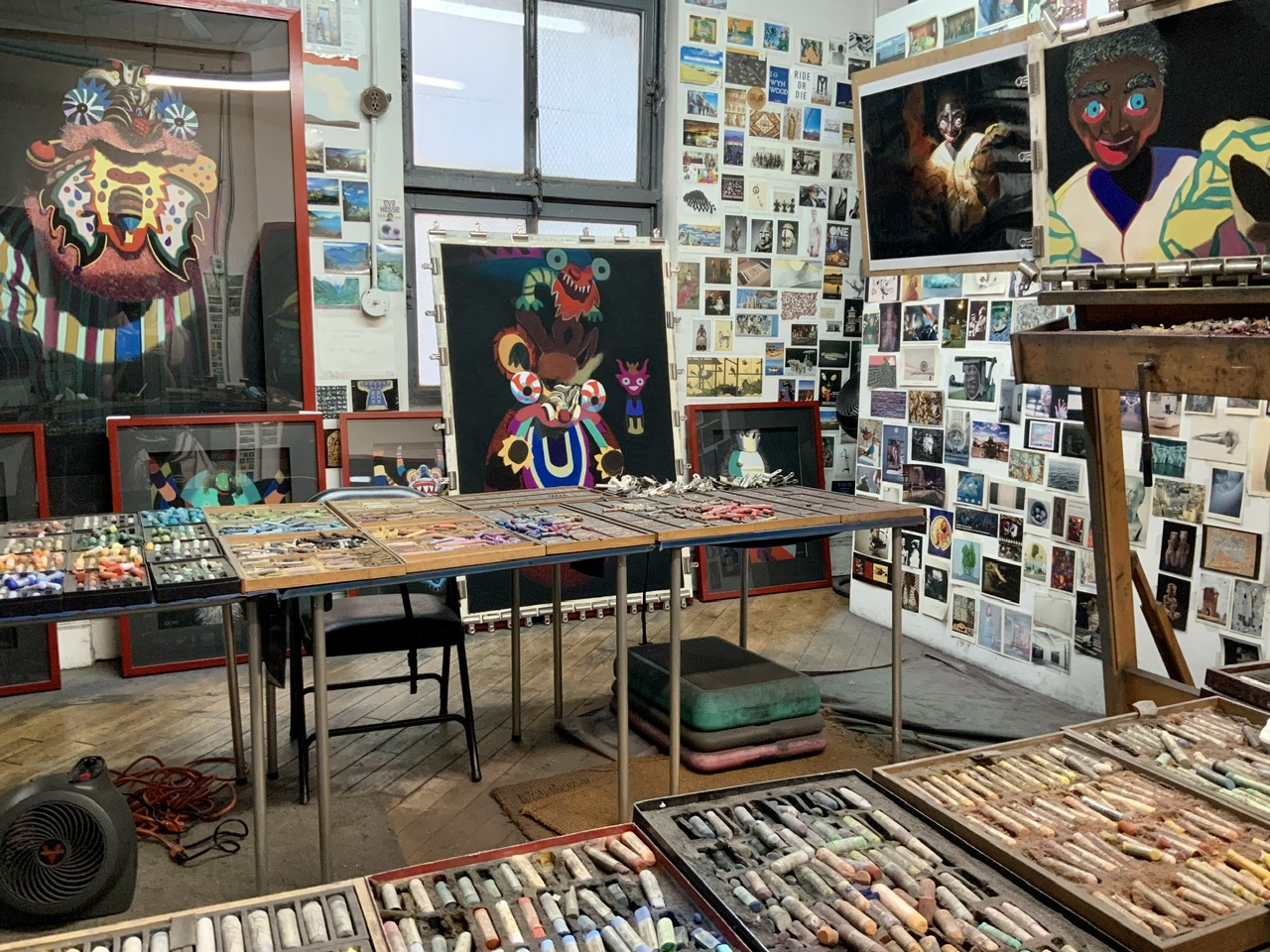
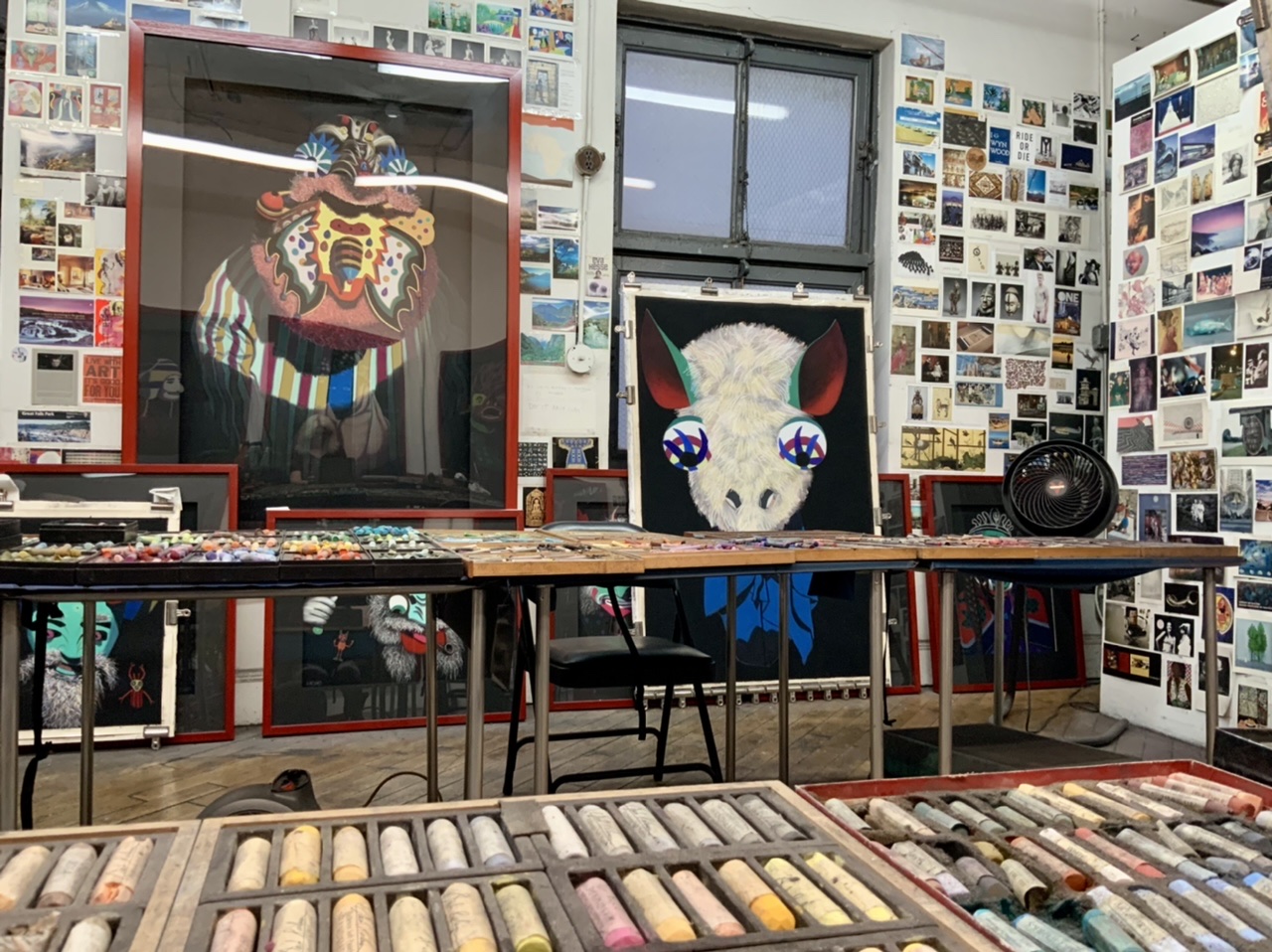
Barbara’s Studio with work in progress
*an ongoing series of quotations – mostly from artists, to artists – that offers wisdom, inspiration, and advice for the sometimes lonely road we are on.
Falling in love with beauty or with someone else’s artwork that touches us is easy. We can experience the rapture of it and go home. But falling in love with our instrument or with our work is more like falling in love with a person, in that we experience the rapture and delight of the discovery, but then we are saddled with the effort of fulfillment, with love’s labors and the hard lessons in which illusions are stripped away, in which we confront difficult pieces of self-knowledge, in which we have to stretch our physical, emotional, intellectual stamina to its limits, in which our patience and our ability to persevere and transcend ourselves are tested.
Stephen Nachmanovitch in Free Play: Improvisation in Life and Art
Comments are welcome!

Pearls from artists* # 591

*an ongoing series of quotations – mostly from artists, to artists – that offers wisdom, inspiration, and advice for the sometimes lonely road we are on.
Like lîla, or divine creativity, art is a gift, coming from a place of joy, self-discovery, inner knowing. Play, intrinsically rewarding, doesn’t cost anything. As soon as you put a price on it, it becomes, to some extent, not play. Somewhere, therefore, we each have to map out for ourselves the tricky questions of money and the artist. This is a difficult issue because artists have to eat, equip themselves, and subsidize years of professional training. Yet the marketplace shifts our art at least to some degree out of the state of free play, and may in some cases contaminate it totally. Professional athletes face the same issues. Certainly they play to a great extent for love of their sport, but issues of money, prestige, and fame introduce a lot of non play as well.
Stephen Nachmanovitch in Free Play: Improvisation in Life and Art
Comments are welcome!
Pearls from artists* # 586

Starting a new one!
*an ongoing series of quotations – mostly from artists, to artists – that offers wisdom, inspiration, and advice for the sometimes lonely road we are on.
The page is your mirror. What happens inside you is reflected back. You come face-to-face with your own resistance, lack of balance, self-loathing, and insatiable ego – and also with your singular vision, guts, and fortitude. No matter what you’ve achieved the day before, you begin each day at the bottom of the mountain. Isn’t this true for most of us? A surgeon about to perform a difficult operation is at the bottom of the mountain. A lawyer delivering a closing argument. An actor waiting in the wings. A teacher on the first day of school. Sometimes we may think that we’re in charge, or that we have things figured out. Life is usually right there, though, ready to knock us over when we get too sure of ourselves. Fortunately, if we have learned the lessons that years of practice have taught us, when this happens, we endure. We fail better. We sit up, dust ourselves off, and begin again.
Dani Shapiro in Still Writing: The Perils and Pleasures of a Creative Life
Comments are welcome!

Pearls from artists* # 534

*an ongoing series of quotations – mostly from artists, to artists – that offers wisdom, inspiration, and advice for the sometimes lonely road we are on.
Today I am quoting myself:
I strive to always do what is best for my art practice. It’s difficult sometimes, but it’s important to ignore most of what other people say. They mean well, but advice to artists is often misguided, especially when it is unsolicited. Fortunately, our hearts are never wrong.
B. Rachko on a Facebook post
Comments are welcome!
Pearls from artists* # 532
*an ongoing series of quotations – mostly from artists, to artists – that offers wisdom, inspiration, and advice for the sometimes lonely road we are on.
Far from offering an escape from the world, the arts present one of the most difficult and hard-fought ways to enter into the life of our time or any other time. What the artist must first accept is the authority of an art form, the immersion in what others have done and achieved. Once the artist has begun to take all that in – it’s a process that never really ends – there comes the even greater challenge of asserting one’s freedom. It’s the limits imposed by a vocation that makes it possible to turn away from the pressures of the moment and think and feel freely – and sometimes, give the most private emotions an extraordinary public hearing. If art is the ordering of disorderly experience, and I don’t know how else to describe it, then the artist must be true both to the order and to the disorder. These are the trials of the artist and the artistic vocation. They shape the experience of anybody who reads a novel or looks at a painting or listens to a piece of music.
Jed Perl in Authority and Freedom: A Defense of the Arts
Comments are welcome!
Pearls from artists* # 528

*an ongoing series of quotations – mostly from artists, to artists – that offers wisdom, inspiration, and advice for the sometimes lonely road we are on.
There are so many good reasons to stop complaining if you want to live a more creative life.
First of all, it’s annoying. Every artist complains, so it’s a dead and boring topic. (From the volume of complaints that emerges from the professional creative class, you would think these people had been sentenced to their vocations by an evil dictator, rather than having chosen their line of work with a free will and open heart).
Second, of course it’s difficult to create things; if it wasn’t difficult, everyone would be doing it, and it wouldn’t be special or interesting.
Third, nobody ever really listens to anybody else’s complaints, anyhow, because we’re all too focused on our own holy struggle, so basically, you’re just talking to a brick wall.
Fourth, and most important, you’re scaring away inspiration. Every time you express a complaint about how difficult and tiresome it is to be creative, inspiration takes another step away from you, offended. It’s almost like inspiration puts up its hands and says, “Hey, sorry buddy! I didn’t realize my presence was such a drag. I’ll take my business elsewhere.”
Elizabeth Gilbert in Big Magic: Creative living Beyond Fear
Comments are welcome!


 barbararachkoscoloreddust.com