Blog Archives
Q: You read books on Friedrich Nietzsche and other philosophers. How has philosophy and your personal experience shaped the latest series, Bolivianos? (Question from Vedica Art Studios and Gallery)
A: It’s difficult to pinpoint how philosophy specifically shaped my work because my curiosity spans so many subjects. Some critics have described me as a Renaissance woman, remarking on my wide-ranging and voracious reading. It’s true—I’m genuinely interested in practically everything!
In pursuit of making art, I have undertaken in-depth studies of numerous intriguing fields: drawing, color, composition, gross anatomy, art and art history, the art business, film history, photography, psychology, mythology, literature, philosophy, religion, music, jazz history, and archaeology—particularly ancient Mesoamerica (Olmec, Zapotec, Mixtec, Aztec, and Maya) and South America (the Inca and their ancestors).
Since the early 1990s, my inspiration and subject matter have come primarily from international travel to remote parts of the globe, especially Mexico, Central America, and South America. Travel is by far the best education! By visiting distant destinations, I have developed a deep reverence for people and cultures around the world. People everywhere are connected by our shared humanity.
These travels, supplemented by extensive research at home, are essential parts of my creative process. Research can be solitary and demanding, but I truly enjoy it. I want to know as much as possible, and this curiosity generates ideas for new work, propelling me into unexplored creative realms.
Foreign travel always expands our ways of thinking. This rich mixture of creative influences continually evolves and finds its way into my pastel paintings. Working, learning, evolving, and growing—I am perpetually curious and can hardly imagine a better way to spend my time on Earth!
Comments are welcome!
Q: What would you be if you were not an artist?

The studio with pastel paintings in progress!
A: I honestly have no idea, but whatever it might be, there is a good chance that I’d be bored! In my younger days boredom was a strong motivator. I left the active duty Navy out of boredom. I couldn’t bear not being intellectually challenged (most of my jobs consisted of paper-pushing), not using my flying skills (at 27 I was a licensed commercial pilot and Boeing 727 flight engineer), and not developing my artistic talent. In what surely must be a first, by spending a lot of time and money training me for jobs I hated, the Navy turned me into a hard-working artist! And once I left the Navy there was no plan B. There was no time to waste. It was “full speed ahead.”
Art is a calling. You do not need to be told this if you are among those who are called. It’s all about “the work,” that all-consuming focus of an artist’s life. If a particular activity doesn’t make you a better artist, you avoid it. You work hard to nourish and protect your gifts. As artists we invent our own tasks, learn whatever we need in order to progress, and complete projects in our own time. It is life lived at its freest.
My art-making has led me to fascinating places: Mexico, Guatemala, Brazil, Chile, Easter island, Argentina, Uruguay, France, England, Italy, Bali, Java, India, Bhutan, and more; and to in-depth studies of intriguing subjects: drawing, color, composition, art and art history, the art business, film and film history, photography, mythology, literature, music, jazz history, and archaeology, particularly that of ancient Mesoamerica (the Olmec, Zapotec, Mixtec, Aztec, Maya, etc.). And this rich mixture continually grows! For anyone wanting to spend their time on earth learning and meeting new challenges, there is no better life than that of an artist.
I SO agree with this exchange that I read years ago between between Trisha Brown and Mikhail Baryshnikov in the New York Times. I wrote it on a piece of paper and taped it to my studio wall:
Trisha: How do you think we keep going? Are we obsessed?
Mikhail: We do it because there’s nothing better. I’m serious. Because there is nothing more exciting than that. Life is so boring, that’s why we are driven to the mystery of creation.
Comments are welcome.
Q: How large is your collection of Mexican folk art objects?

Part of my collection
A: I began collecting these figures in the early 1990s. I haven’t counted them, but my guess is that I have amassed around 200 pieces of various sizes. This includes some Guatemalan figures. I went to Guatemala in 2009 and 2010. Since I divide my time between a house in Alexandria, VA, an apartment in Manhattan, and a studio in Chelsea, a portion of my folk art collection resides in each of these places.
Since 2017 I have been creating pastel paintings in the “Bolivianos” series, which exclusively use my photographs of Bolivian Carnival masks as source material. Occasionally, I will add one of my smaller Mexican or Guatemalan figures to improve and enrich a painting’s composition. Otherwise, my Mexican collection sits gathering dust. My thinking and my ideas, not to mention my travels, have evolved and just naturally moved on with time.
Comments are welcome!
Q: How has photography changed your approach to painting?
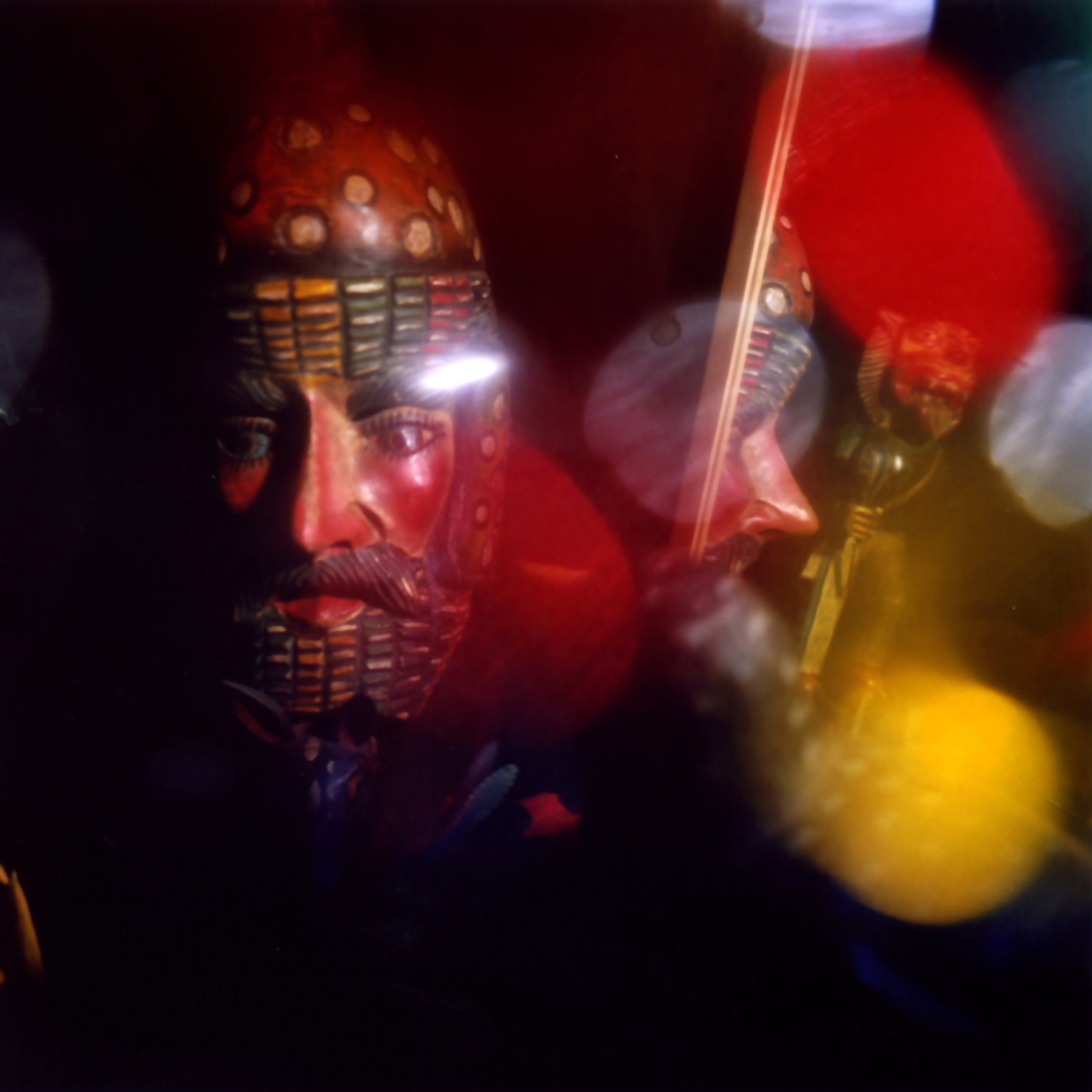
Untitled chromogenic print, 24″ x 24″ on 30″ x 40″ Fujicolor crystal archives paper, edition of 5
A: From the beginning in the 1980s I used photographs as reference material and my late husband, Bryan, would shoot 4” x 5” negatives of my elaborate setups using his Toyo-Omega view camera. In those days I rarely picked up a camera except when we were traveling.
After Bryan was killed on 9/11, I inherited his extensive camera collection – old Nikons, Leicas, Graphlex cameras, etc. – and I wanted to learn how to use them. Starting in 2002 I enrolled in a series of photography courses (about 10 over 4 years) at the International Center of Photography in New York. I learned how to use all of Bryan’s cameras and how to make my own big color prints in the darkroom.
Along the way I discovered that the sense of composition and color I had developed over many years as a painter translated well into photography. The camera was just another medium with which to express my ideas. Astonishingly, in 2009 I had my first solo photography exhibition in New York.
It’s wonderful to be both a painter and a photographer. Pastel painting will always be my first love, but photography lets me explore ideas much faster than I ever could as a painter. Paintings take months of work. Photographs – from the initial impulse to create a setup to hanging a framed chromogenic print on the wall – can be made in minutes.
Comments are welcome!
Pearls from artists* # 617
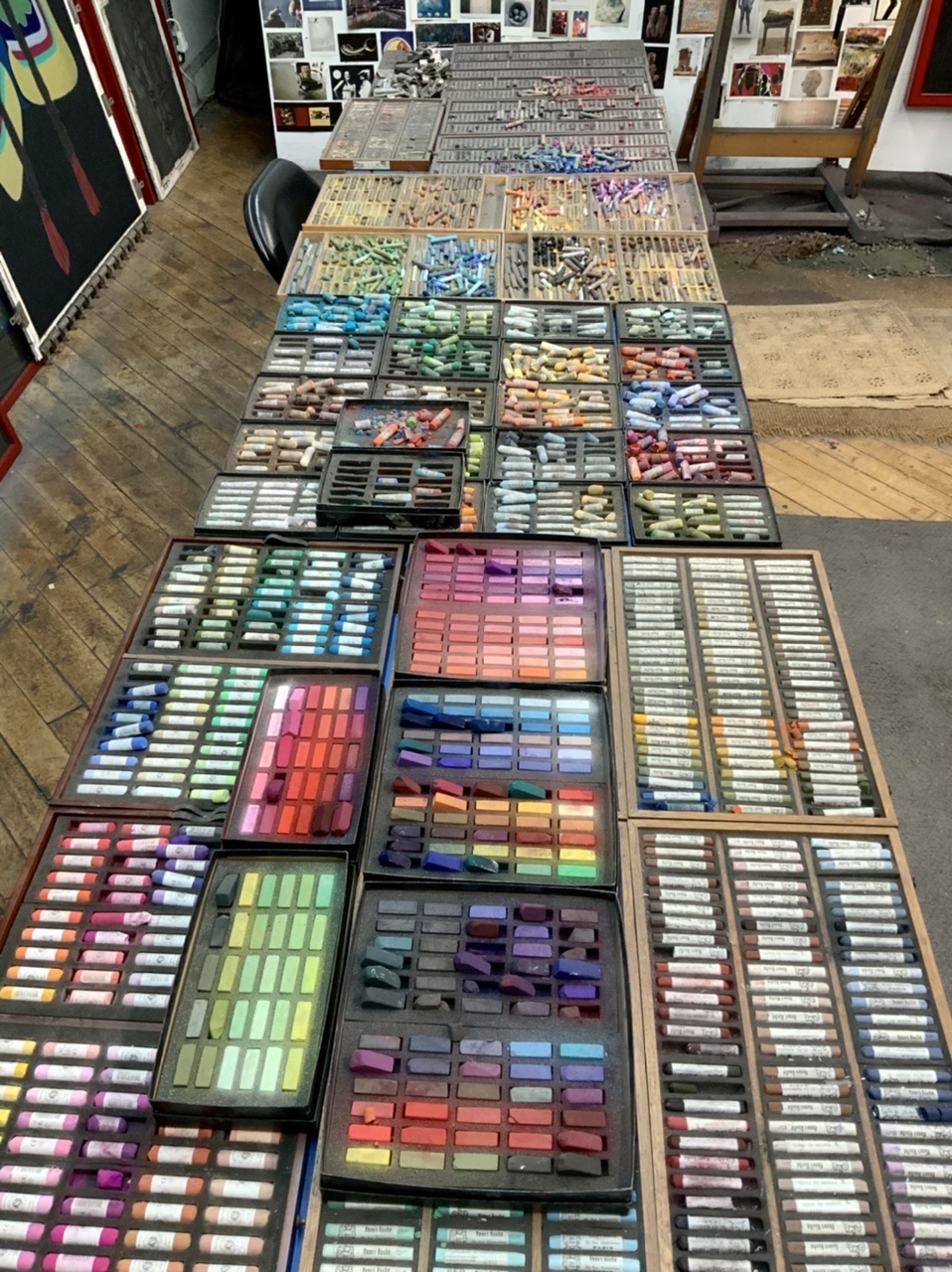
*an ongoing series of quotations – mostly from artists, to artists – that offers wisdom, inspiration, and advice for the sometimes lonely road we are on.
Artists’ pigments, like printers’ inks, have many uses apart from the creation of art. The advertising artist, the illustrator, the portraitist, the stylist, and the decorator all employ the plastic and pictorial devices of the artist. Yet their chief preoccupation, the purpose and function of their effort, is other than the creation of art. It is the commercial artist’s job to enhance the desirability of marketable goods. The illustrator vies with the written word in the description of places or facts and the reporting of events. The portraitist must flatter his patron, while the stylist and decorator adorn his figure, streamline his gadgets, and embellish his property. There may be a resemblance to the outward appearance of art. But the intrinsic relationship is no closer here than that which exists between the composition of birthday greetings, recipes, or advertising copy and the creations of the poet, though the identical phrase and syntax may be used in both.
Mark Rothko in The Artist’s Reality: Philosophies of Art
Comments are welcome!
Pearls from artists* # 585
*an ongoing series of quotations – mostly from artists, to artists – that offers wisdom, inspiration, and advice for the sometimes lonely road we are on.
Improvisation, composition, writing, painting, theater, invention, all creative acts are forms of play, the starting place of creativity in the human growth cycle, and one of the great primal life functions. Without play, learning and evolution are impossible. Play is the taproot from which original art springs; it is the raw stuff that the artist channels and organizes with all his learning and technique. Technique itself springs from play, because we can acquire technique only by the practice of practice, by persistently experimenting and playing with our tools and testing their limits and resistances. Creative work is play; it is free speculation using the materials of one’s chosen form. The creative mind plays with the objects it loves. Artists play with color and space. Musicians play with sound and silence. Eros plays with lovers. Gods play with the universe. Children play with everything they can get their hands on.
Stephen Nachmanovitch in Free Play: Improvisation in Life and Art
Comments are welcome!
Q: How has the use of photography in your work changed over the decades?
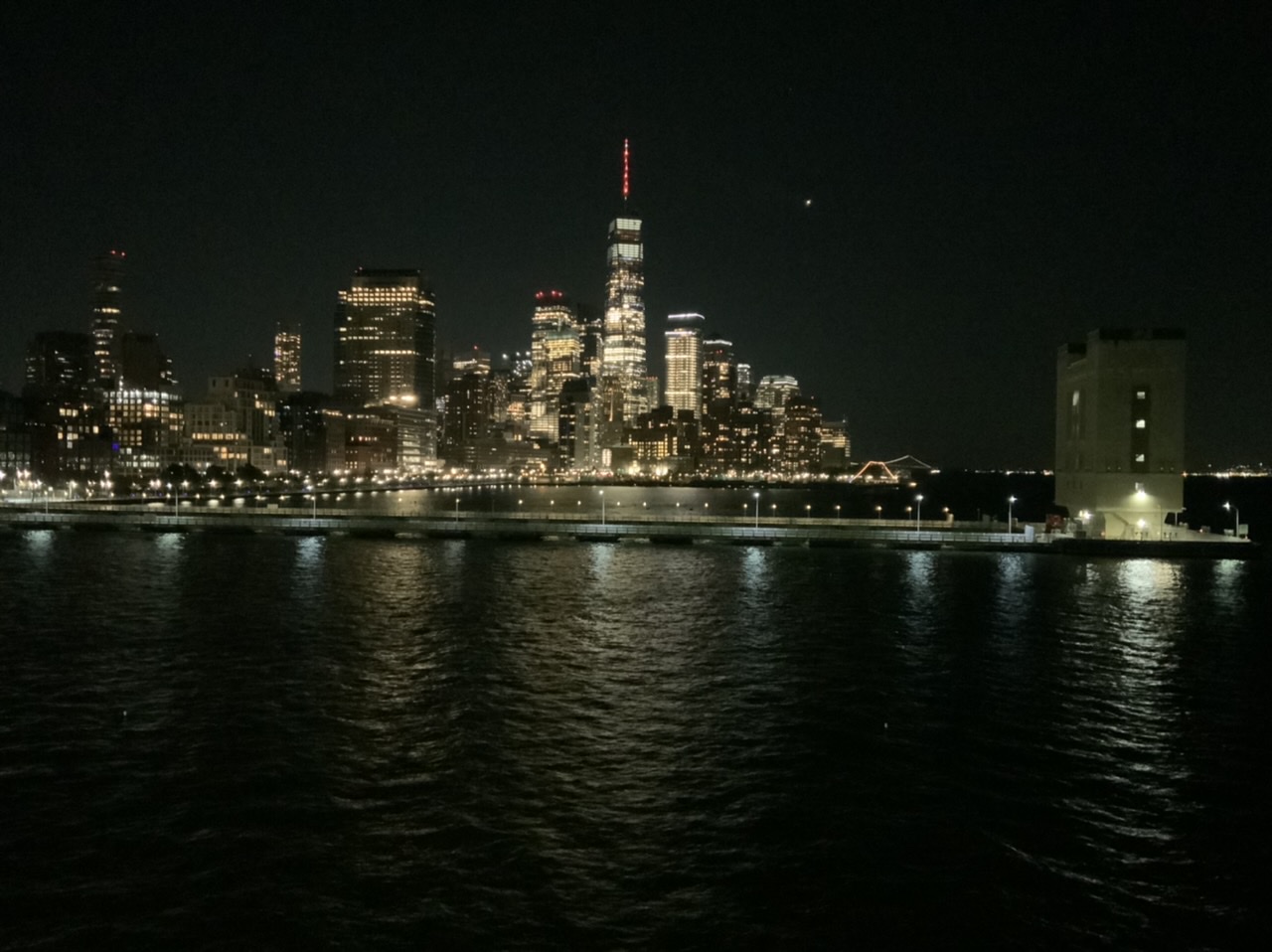
New York, NY
A: From the beginning in the mid-1980s I used photographs as reference material. My late husband, Bryan, would shoot 4” x 5” negatives of my elaborate setups using his Toyo-Omega view camera. In this respect Bryan was an integral part of my creative process as I developed the “Domestic Threats” pastel paintings. At that time I rarely picked up a camera, except to capture memories of our travels.
After Bryan was killed on 9/11, I inherited his extensive camera collection – old Nikons, Leicas, Graphlex cameras, and more. I wanted and needed to learn how to use them. Starting in 2002 I enrolled in a series of photography courses (about 10 over 4 years) at the International Center of Photography in New York. I learned how to use all of Bryan’s cameras and how to make my own big chromogenic prints in the darkroom.
Along the way I discovered that the sense of composition and color I had developed over many years as a painter translated well into photography. The camera was just another medium with which to express my ideas. Surprisingly, in 2009 I had my first solo photography exhibition at a gallery in New York. Bryan would have been so proud!
For several years now my camera of choice has been a 12.9” iPad Pro. It’s main advantage is that the large screen let’s me see every detail as I compose my photographs. I think of it as a portable, lightweight, and easy-to-use 8 x 10 view camera. My iPad is always with me when I travel and as I walk around exploring New York City.
It is a wonderful thing to be both a painter and a photographer! While pastel painting will always be my first love, photography has distinct advantages over my studio practice. Pastel paintings are labor-intensive, requiring months of painstaking work. Photography’s main advantage is speed. Photographs – from the initial impulse to hanging a print on a wall – can be made in minutes. Photography is instant gratification, allowing me to explore ideas much easier and faster than I ever could as a painter. Perhaps most importantly, composing photographs keeps my eye sharp whenever I am away from the studio. I credit photography as an important factor in the overall evolution of my work.
Comments are welcome!
Q: How do you account for your intense compositions? (Question from Robin Plati via Facebook)
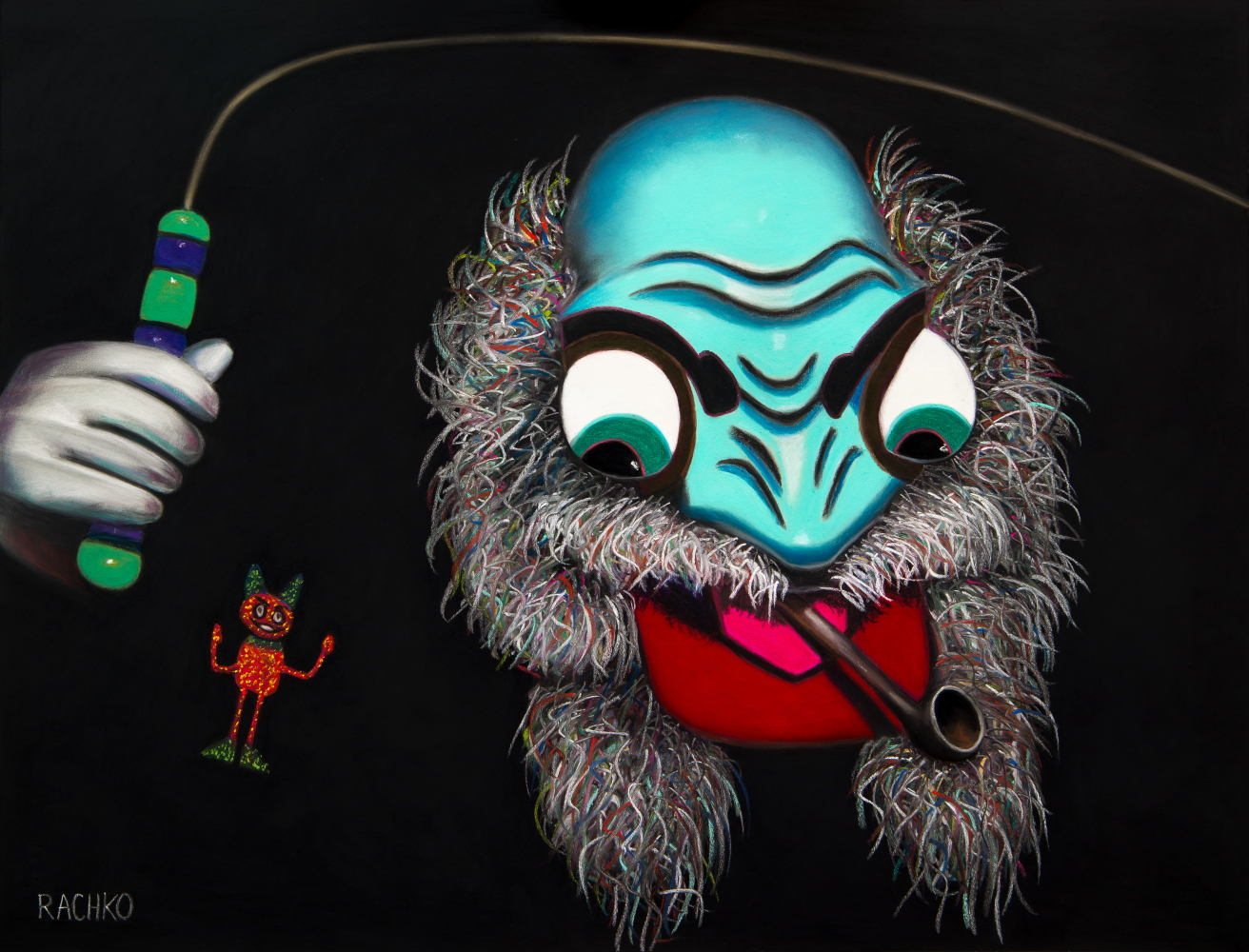
A: If I do say so, composition is something I’m known for. During the months I work on them, I devote many hours to looking at the painting on my easel and figuring out how to move the viewer’s eyes around in interesting ways. Everything you see is carefully worked out after hundreds of studio hours. Finished pastel paintings always have an inevitability about them. Change one detail and the entire composition is thrown off.
Comments are welcome!
Q: How does art help you explore and understand other cultures? (Question from Arte Realizzata)
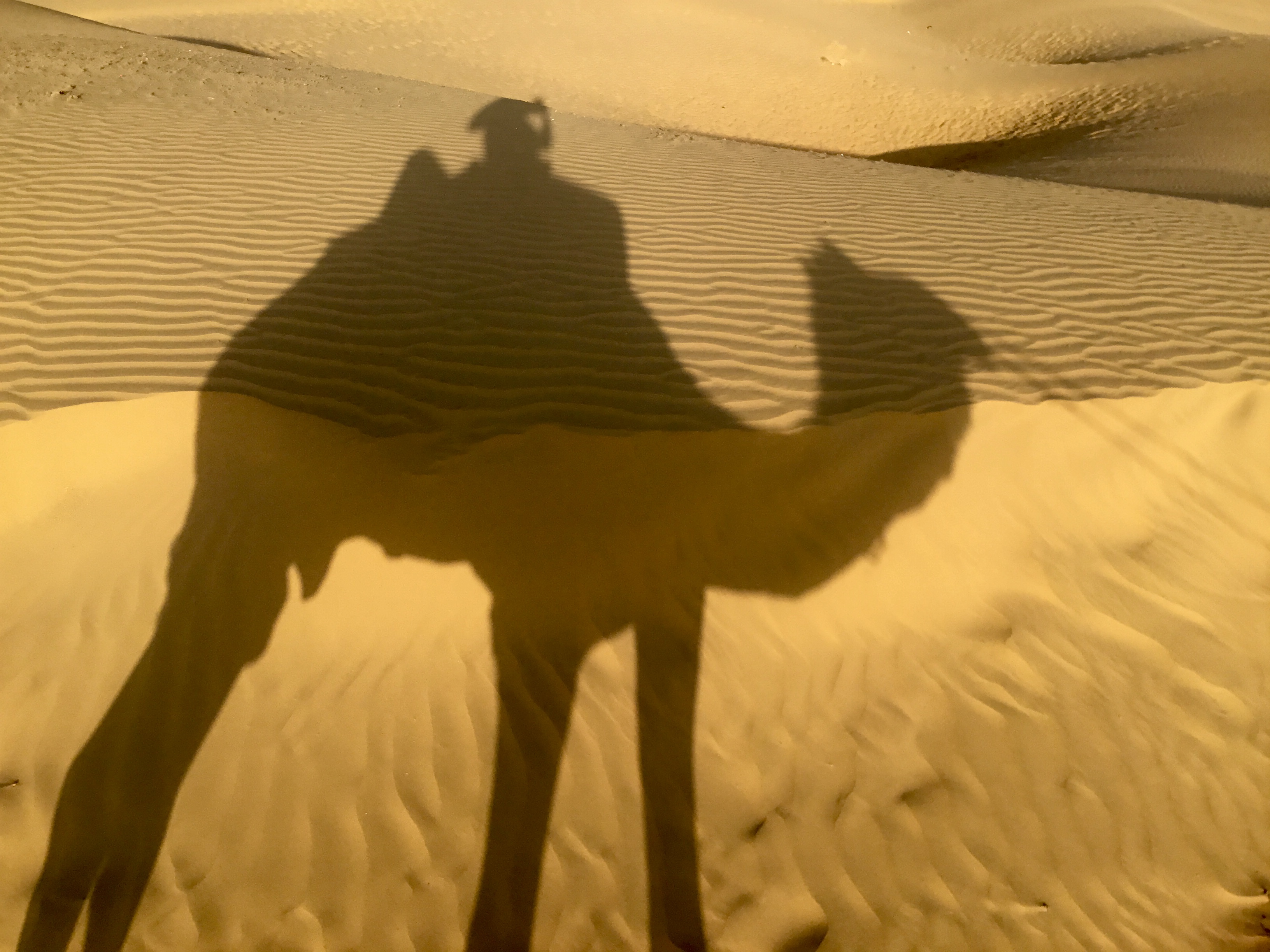
A: Art helps me explore and understand other cultures by revealing our shared humanity across space and time. For me art and travel are intertwined; there is no better education! My art-making has led me to visit fascinating places in search of source material, ideas, and inspiration: to Mexico, Guatemala, Brazil, Argentina, Uruguay, France, England, Italy, Bali, Java, Sri Lanka, and India. I have seen firsthand that people all over the world are the same.
Art has led me to undertake in-depth studies of intriguing subjects: drawing, color, composition, art, art history, the art business, film, film history, photography, mythology, literature, music, jazz, jazz history, and archaeology, particularly that of ancient Mesoamerica (Olmec, Zapotec, Mixtec, Aztec, and Maya), and South America (the Inca and their ancestors).
This rich mixture of creative influences continually grows. For anyone wanting to spend their time on earth studying, learning, and meeting new challenges, there is hardly anything more fascinating than to be a well-travelled, perpetually curious artist!
Comments are welcome!


 barbararachkoscoloreddust.com
Q: What kind of internal conversations do you tend to have when you are in the process of making art? (Question from Vedica Art Studios and Gallery)
Jan 10
Posted by barbararachkoscoloreddust
A: When standing at my easel creating a pastel painting, I focus on formal properties: composition, shape, color, and line. I always strive to produce a painting I’ve never seen before. Even as (perhaps especially as) the creator, I want to be surprised by the final result. My studio days are spent thinking, looking, reacting, and adjusting colors and composition as I refine increasingly tiny details, ensuring all elements work harmoniously. I determine which areas need to recede or advance, which require intricate details to appear three-dimensional, and which are better left as flat areas of color.
These countless adjustments ensure viewers’ eyes are guided around the finished painting in intriguing ways. I often recall something collectors of my pastel paintings shared: they mentioned a New York Times review of a Nan Goldin exhibition, in which the writer stated, “All of the pleasure circuits are fired in looking.” The collectors agreed this is exactly how they feel when viewing my work. Artists live for appreciative comments like these!
Comments are welcome!
Share this:
Posted in 2026, An Artist's Life, Creative Process, Studio, Working methods
Comments Off on Q: What kind of internal conversations do you tend to have when you are in the process of making art? (Question from Vedica Art Studios and Gallery)
Tags: adjusting, adjustments, advance, agreed, always, appear, appreciative, areas, around, artists, “Magisterial”, “New York Times”, better, circuits, collectors, colors, comments, composition, countless, creating, creator, details, determine, elements, ensure, ensuring, especially, exactly, exhibition, finished, fired, formal, guided, harmoniously, increasingly, intricate, intriguing, looking, mentioned, Nan Goldin, painting, pastel painting, perhaps, pleasure, produce, properties, question, reacting, recall, recede, refine, require, result, review, shared, something, stated, strive, Studio, surprised, thinking, three-dimensional, Vedica Art Studios and Gallery, viewers, viewing, working, writer