Blog Archives
Q: I have been always fascinated with the re-contexualizing power of Art and with the way some objects or even some concepts often gain a second life when they are “transduced” on a canvas or in a block of marble. So I would like to ask you if in your opinion, personal experience is an absolutely indespensable part of a creative process. Do you think that a creative process could be disconnected from direct experience?
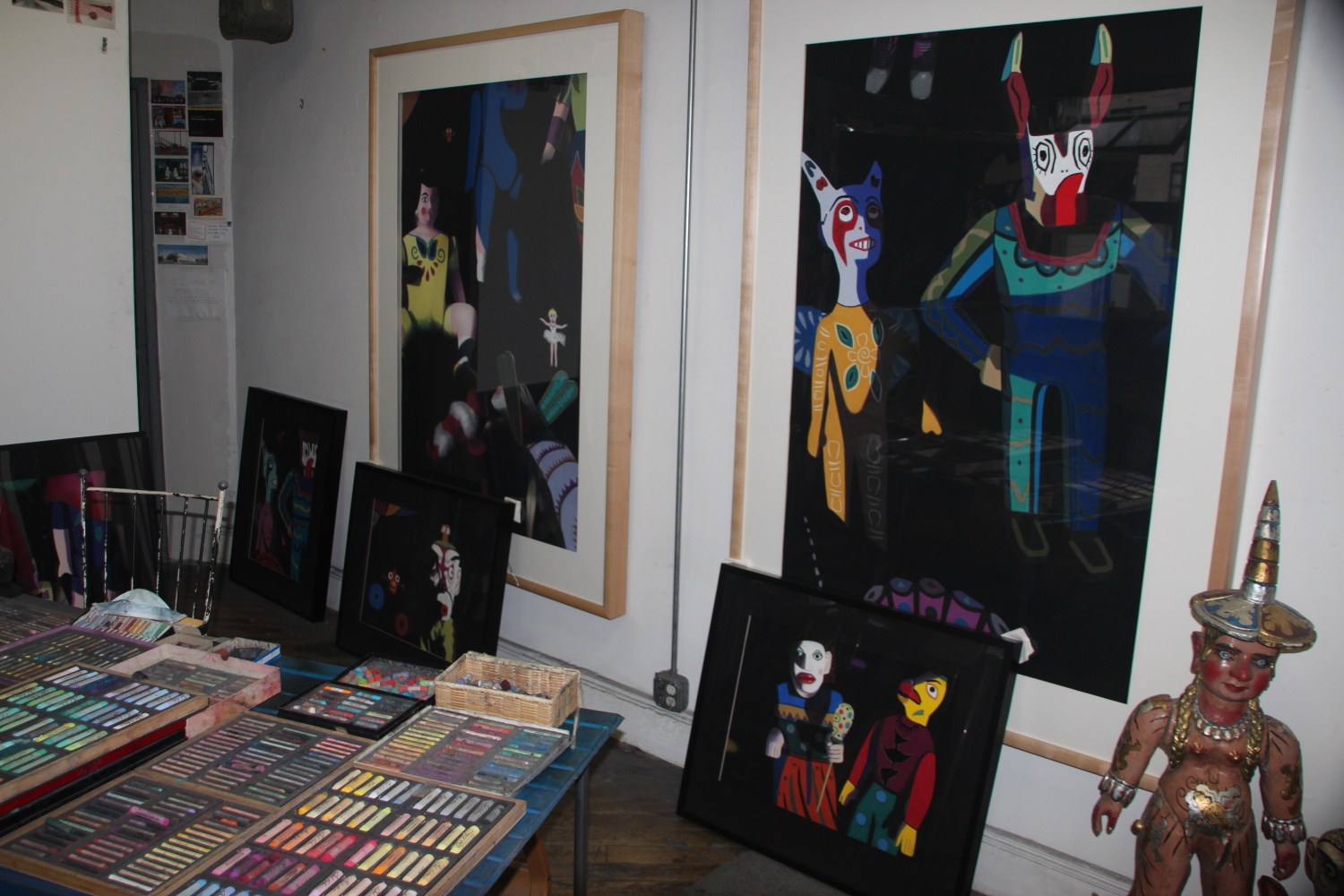
Barbara’s studio
A: Certainly personal experience is an indispensable and inseparable part of the creative process. For me art and life are one and I suspect that is true for most artists. When I look at each of my pastel paintings I can remember what was going on in my life at the time I made it. Each is a sort of veiled autobiography waiting to be decoded and in a way, each is also a time-capsule of the larger zeitgeist. It’s still a mystery how exactly this happens but all lived experience – what’s going on in the world, books I’m reading and thinking about, movies I’ve seen that have stayed with me, places I’ve visited, etc. – overtly and/or not so obviously, finds its way into the work.
Life experience also explains why the work I do now is different from my work even five years ago. In many ways I am not the same person.
The inseparableness of art and life is one reason that travel is so important to my creative process. Artists always seek new influences that will enrich and change our work. To be an artist, indeed to be alive, is to never stop learning and growing.
Comments are welcome!
Q: How did you happen to have a photograph published in The Wall Street Journal?

Sun Tunnels by Nancy Holt
A. That is a long story. To get far away from New York for the ten-year anniversary of 9/11, my friend, Donna Tang, and I planned a two-week road trip to see land art sites in Arizona, New Mexico, Utah, and Colorado. (Donna did excellent research).
We hoped for a private tour of Roden Crater with James Turrell, which is not easy to arrange. I had also invited my friend Ann Landi, an art critic and arts writer, to join us, hoping she might get an interview with Turrell and write an article for Artnews. Turrell has been working on Roden Crater for 30+ years so Ann was interested in seeing it too! Ann contacted Turrell’s gallery – Gagosian – but they later relayed Turrell’s refusal.
We were planning to see other land art sites. As an alternative to Roden Crater and Turrell, Ann pitched a story to The Wall Street Journal about Sun Tunnels and Nancy Holt (Robert Smithson’s wife, who as the only woman in the land art movement, has never been given her due). The Journal said yes, so Ann made plans to join Donna and me in Salt Lake City.
The three of us visited Sun Tunnels, Spiral Getty, and other sites together. Ann had a brand new point-and-shoot camera that she hadn’t yet learned how to use. I always take lots of photos whenever I travel. After we returned home, I sent Ann a few images and she asked permission to submit them with her article. I was thrilled when The Wall Street Journal requested JPEGs. It was the first time I’ve had a photograph published in a major newspaper.
Comments are welcome!
Pearls from artists* # 113

Studio corner
* an ongoing series of quotations – mostly from artists, to artists – that offers wisdom, inspiration, and advice for the sometimes lonely road we are on.
In Amsterdam I saw a striking still life painted by Rembrandt van Rijn suspended above a glass case that contained the same objects that he used as a model for the picture. The contrast between what felt like a drab collection of random objects in the case and the stunning luminescent painting that seemed imbued with nothing less than intense energy and life gave me pause and clarified something I had been thinking about. I had been thinking about the power of art to transform the frustrations and irritations of daily life into a realm of grace and to embody, through arrangement, composition, light, color and shade, nothing less than the secret elixir of life itself.
We encounter daily frustrations, irritations, and obstacles. Perhaps we feel hampered and limited by our hit-and-miss upbringing, our apparent limitations and our imperfect ongoing circumstances. And yet Rembrandt’s still life painting demonstrates that it is within our power to transform the random, the everyday, the frustrating and the prosaic into an arrangement instilled with grace and poetry. Is it the arrangement of these objects that lends such a spiritual quality to the painting? Is it the sensation of light captured upon canvas? How did Rembrandt transform the quotidian into an uplifting vision of life?
Anne Bogart in What’s the Story: Essays about art, theater, and storytelling
Comments are welcome!
Pearls from artists* # 112
New York, NY
* an ongoing series of quotations – mostly from artists, to artists – that offers wisdom, inspiration, and advice for the sometimes lonely road we are on.
If the goal of art is Beauty and if we assume that the goal is sometimes reached, even if always imperfectly, how do we judge art? Basically, I think, by whether it reveals to us important Form that we ourselves have experienced but to which we have not paid adequate attention. Successful art rediscovers Beauty for us.
One standard, then, for the evaluation of art is the degree to which it gives us a fresh intimation of Form. For a picture to be beautiful it does not have to be shocking, but it must in some significant respect be unlike what has preceded it (this is why an artist cannot afford to be ignorant of the tradition within his medium). If the dead end of the romantic vision is incoherence, the failure of classicism, which is the outlook I am defending, is the cliché, the ten thousandth camera-club imitation of a picture by Ansel Adams.
Robert Adams in Beauty in Photography
Comments are welcome!
Q: When you left the Navy you worked on commission as a portrait artist. Why don’t you accept commissions now?

Barbara’s studio
A: As I have often said, I left the active duty Navy in 1989, but stayed in the Reserves. The Reserves provided a small part-time income and the only requirement was that I work one weekend a month and two weeks each year. Plus, I could retire after 13 more years and receive a pension. (In 2003 I retired from the Navy Reserve as a Commander). The rest of the time I was free to pursue my studio practice.
For a short time I made a living making commissioned photo-realist portraits in soft pastel on sandpaper. However, after a year I became very restless. I remember thinking, “I did not leave a boring job just to make boring art!” I lost interest in doing commissions because what I wanted to accomplish personally as an artist did not coincide with what portrait clients wanted. I finished my final portrait commission in 1990 and never looked back.
To this day I remain reluctant to accept a commission of any kind. So I am completely free to paint whatever I want, which is the only way to evolve as a serious, deeply committed artist.
Comments are welcome!
Pearls from artists* # 111
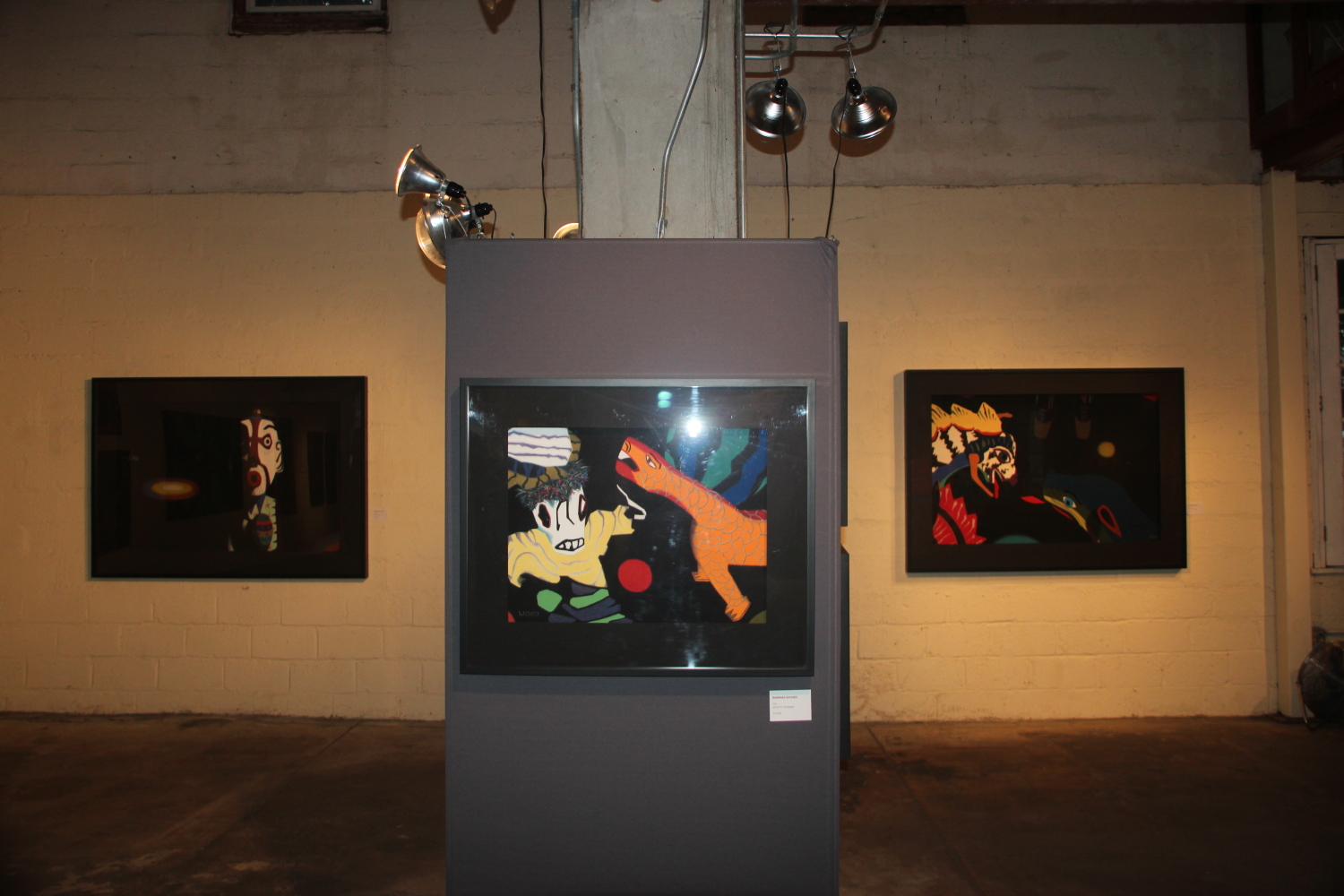
Perkins Center for the Arts, Collingswood, NJ
It is very difficult to describe the creative experience in such a way that it would cover all cases. One of the essentials is the variety with which one approaches any kind of artistic creation. It doesn’t start in any one particular way and it is not always easy to say what gets you going.
I’ve sometimes made the analogy with eating. Why do you eat? You’re hungry. You are sort of in the mood to eat, and if you are in the mood to eat, the food tastes better; you’re more interested in what you’re eating. The whole experience is more “creative.” It’s the hunger that stimulates you to eat. It’s the same thing in art; except that, in art, the hunger is the need for self-expression.
How does it come about that you feel hungry? You don’t know, you just feel hungry. The juices are working, and suddenly you are aware of the fact that you want a piece of bread and butter. It’s about the same in art. If you pass your life in creating works of art in one field or another, you recognize the “hunger” signs and you are quick to take advantage of them, if they’re accompanied by ideas. Sometimes, you have the hunger and you don’t have any ideas; there’s no bread in the house. It’s as simple as that.
AAron Copland in The Creative Experience: Why and How Do We Create?, Stanley Rosner and Lawrence E. Abt, editors
Comments are welcome!
Pearls from artists* # 107

“The Ancestors,” soft pastel on sandpaper, 38″ x 58″
* an ongoing series of quotations – mostly from artists, to artists – that offers wisdom, inspiration, and advice for the sometimes lonely road we are on.
If the proper goal of art is, as I now believe, Beauty, the Beauty that concerns me is that of Form. Beauty is, in my view, a synonym of the coherence and structure underlying life (not for nothing does Aristotle list plot first in his enumeration of the components of tragedy, a genre of literature that, at least in its classical form, affirms order in life). Beauty is the overriding demonstration of pattern that one observes, for example, in the plays of Sophocles and Shakespeare, the fiction of Joyce, the films of Ozu, the paintings of Cezanne and Matisse and Hopper, and the photographs of Timothy O’Sullivan, Alfred Stieglitz, Edward Weston, and Dorothea Lange.
Why is Form beautiful? Because, I think, it helps us meet our worst fear, the suspicion that life may be chaos and that therefore our suffering is without meaning. James Dickey was right when he asked rhetorically, “What is heaven anyway, but the power of dwelling among objects and actions of consequence.” “Objects of consequence” cannot be created by man alone, nor can “actions of consequence’ happen in a void; they can only be found within a framework that is larger than we are, an encompassing totality invulnerable to our worst behavior and most corrosive anxieties.
… How, more specifically, does art reveal Beauty, or Form? Like philosophy it abstracts. Art simplifies. It is never exactly equal to life. In the visual arts, this careful sorting out in favor of order is called composition, and most artists know its primacy.
Beauty in Photography by Robert Adams
Comments are welcome!
Q: Can you describe your entire body of work in six words or less?
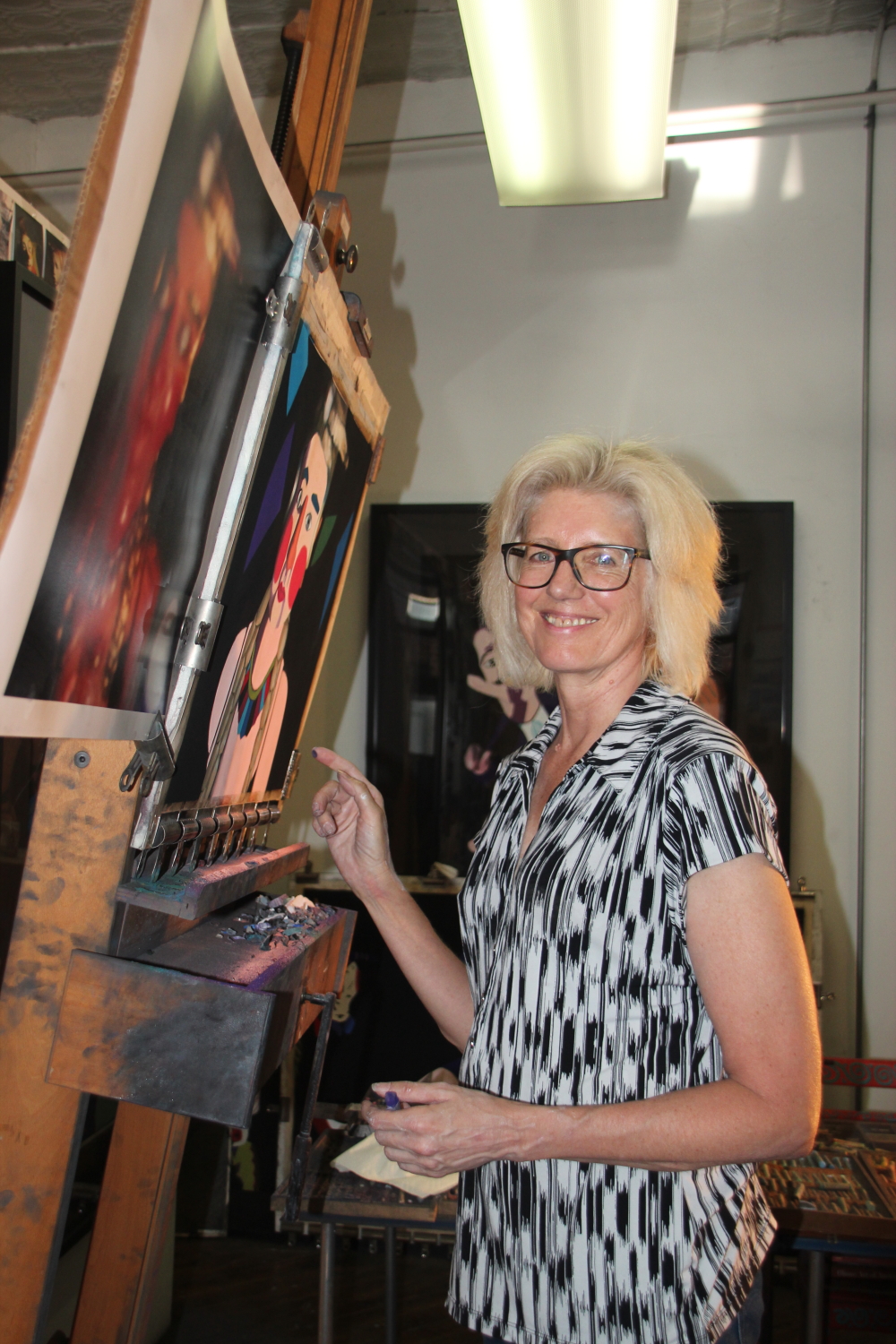
In the studio, Photo: Britta Konau
A: Only if I forget what it took to get me to this point! I remember all too well the long periods of study, hard work, self-doubt, self-nurturing, disappointments, setbacks, risks, focus, drive, discipline, joy, detours, fallow periods, rejections, perseverance, etc. that have gone into sustaining an art career for nearly thirty years. There are no blueprints and few role models for a successful artist’s life. (Even the meaning of “success” as an artist is difficult to define). I invite others, who surely can be more objective, to attempt a summation of my entire body of work in a few words.
Comments are welcome!
Pearls from artists* # 100
Barbara’s studio
* an ongoing series of quotations – mostly from artists, to artists – that offers wisdom, inspiration, and advice for the sometimes lonely road we are on.
I think it’s terribly important that people have always made structures that are better and more rigorous and more demanding than we as an audience can live up to for every single moment. Serious art should be better than you are. I think my plays are more lucid, more rigorous, than I, Richard, am in my life. I’m a stumble bum like all the rest of us. Create art that is better than you are able to manifest in normal life.
Richard Foreman in Anne Bogart’s Conversations with Anne: Twenty-four Interviews
Comments are welcome!


 barbararachkoscoloreddust.com
Q: What is the reality of the art world today? Do people experience it enough?
Aug 2
Posted by barbararachkoscoloreddust
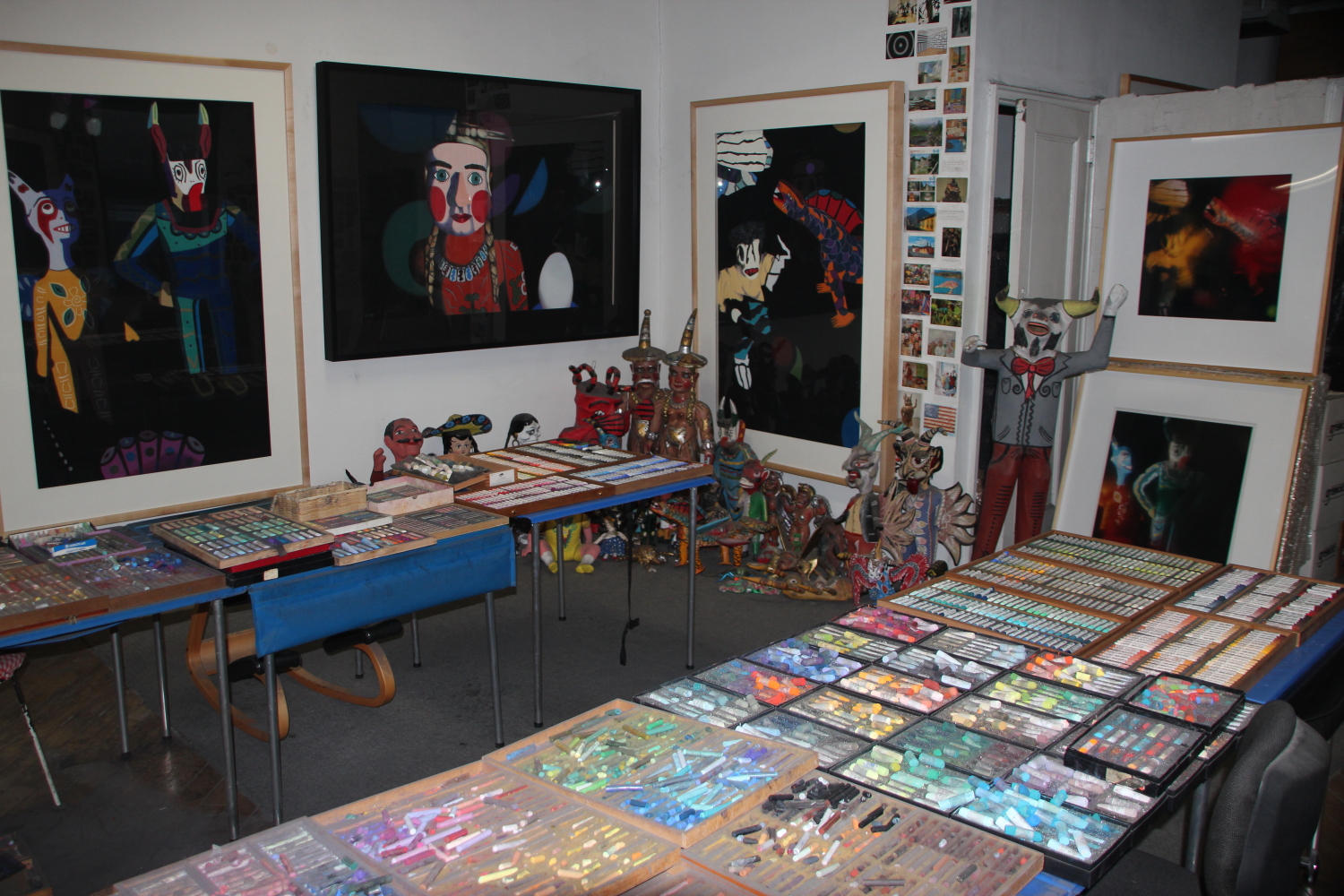
West 29th Street studio
A: I cannot comment on the art world today or the experience of other people. I can only speak for myself. I am completely devoted to my work; my entire life revolves around art. When I’m not in my studio creating, I am reading about art, thinking about it, gaining inspiration from other artists and from artistic travel, working out new ideas, going to museum and gallery exhibitions, trying to understand the business side of things, etc. Art is a calling and I personally experience it enough as my work continues to evolve!
Comments are welcome!
Share this:
Posted in 2014, An Artist's Life, Art in general, Black Paintings, Creative Process, Inspiration, New York, NY, Pastel Painting, Photography, Studio, Working methods
2 Comments
Tags: art, art world, artistic, business, calling, comment, completely, continues, creating, devoted, enough, evolve, Exhibitions, experience, gaining, gallery, going, grow, ideas, inspiration, life, museum, people, personally., reading, reality, revolves, speak, Studio, thinking, today, travel, trying, understand, West 29th Street, work, working