Category Archives: The West Village
Pearls from artists* # 434
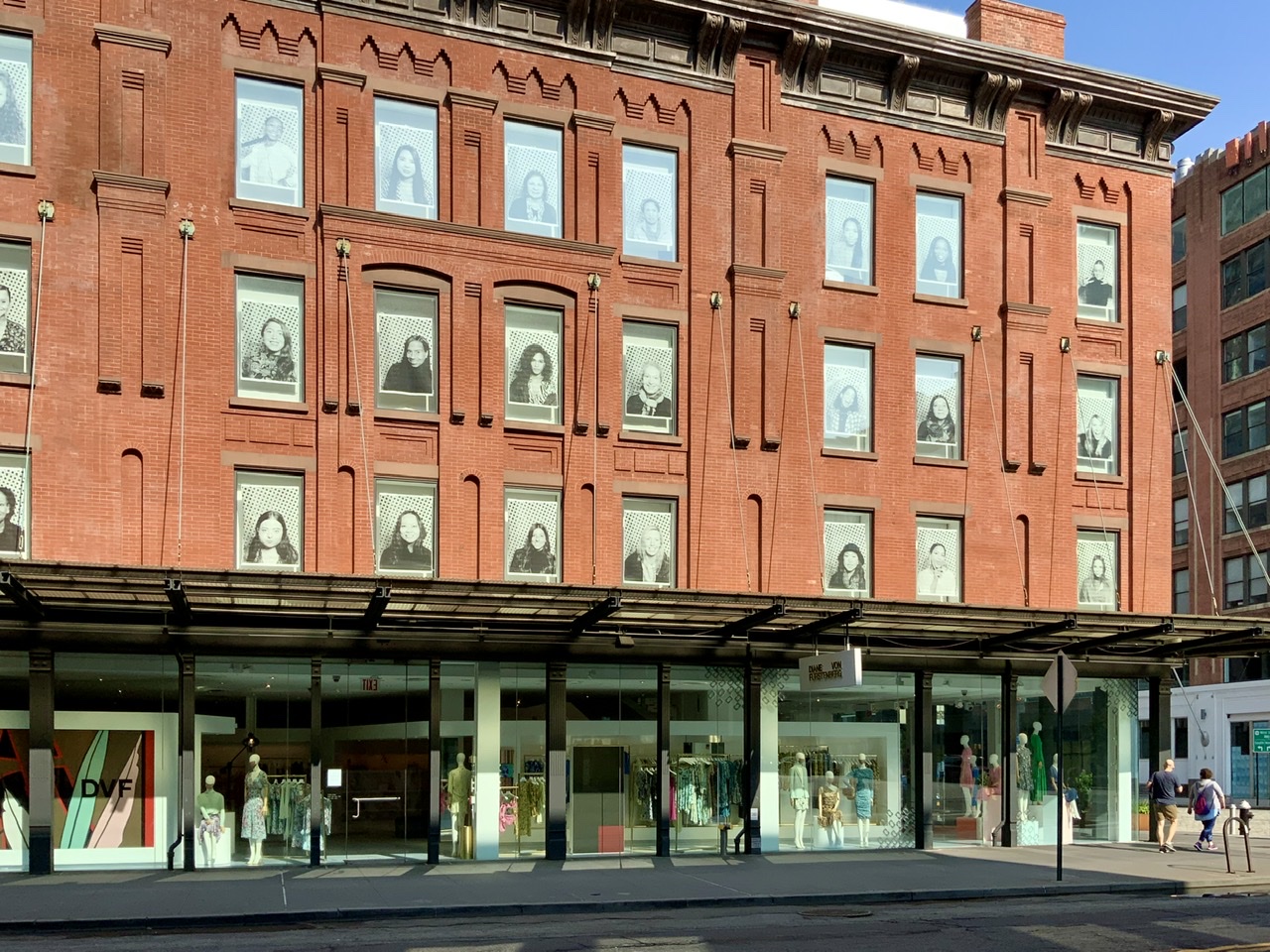
West Village, NYC
*an ongoing series of quotations – mostly from artists, to artists – that offers wisdom, inspiration, and advice for the sometimes lonely road we are on.
What do we carry forward? My family lived in New Jersey near Manhattan until I was ten, and although I have enjoyed spending my adult life as a photographer in the American West, when we left New Jersey for Wisconsin in 1947 I was homesick.
The only palliative I recall, beyond my parents’ sympathy was the accidental discovery in a magazine of pictures by a person of whom I had never heard but of scenes I recognized. The artist was Edward Hopper and one of the pictures was of a woman sitting in a sunny window in Brooklyn, a scene like that in the apartment of a woman who had cared for my sister and me. Other views resembled those I recalled from the train to Hoboken. There was also a picture inside a second-floor restaurant, one strikingly like the restaurant where my mother and I occasionally had lunch in New York.
The pictures were a comfort but of course none could permanently transport me home. In the months that followed, however, they began to give me something lasting, a realization of the poignancy of light. With it, all pictures were interesting.
Robert Adams in Art Can Help
Q: What kind of art do you create?
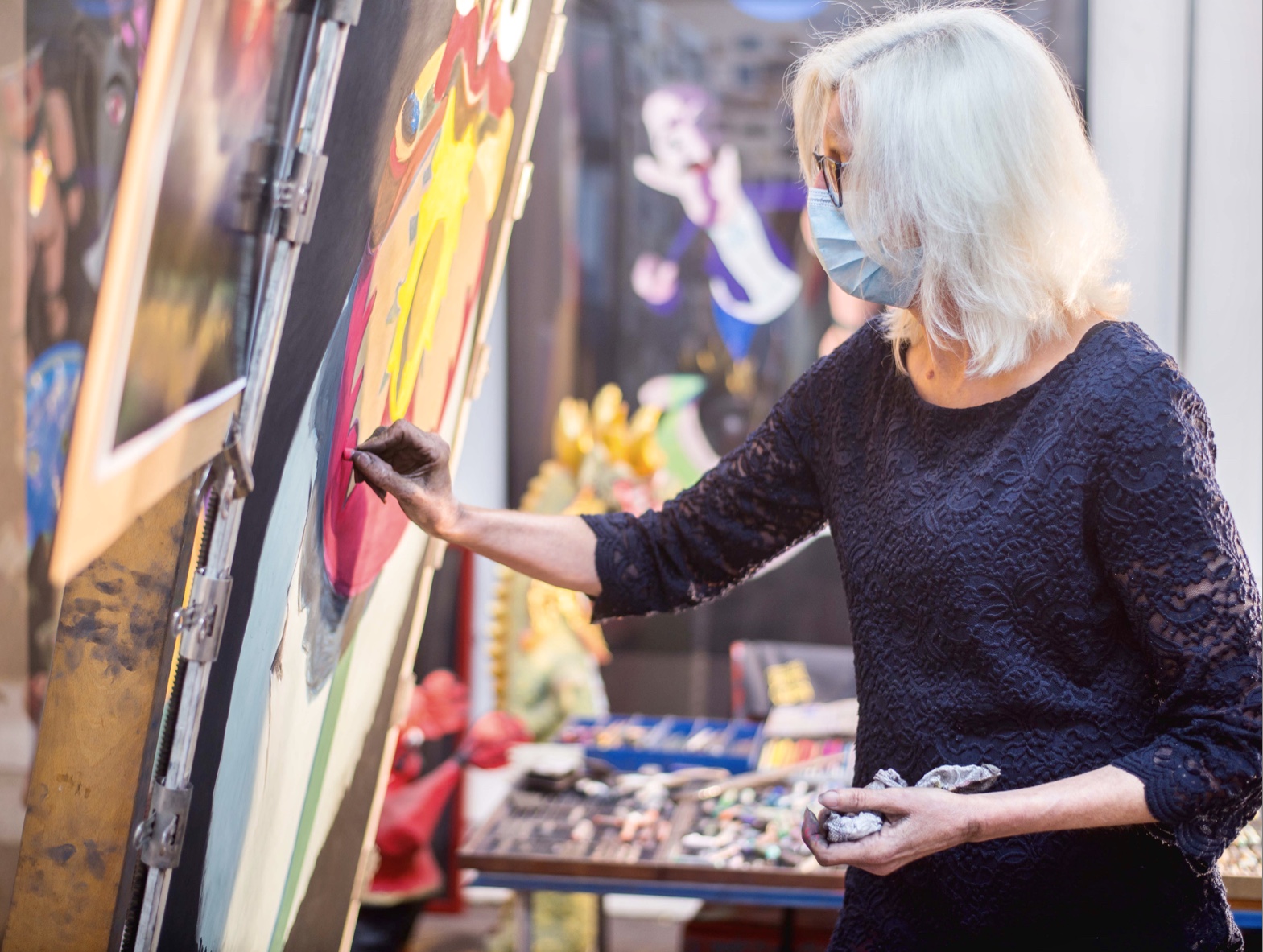
At work
A: I live in the West Village in New York City and have been a working artist for thirty-four years. I create original pastel paintings that use my large collection of Mexican and Guatemalan folk art – masks, carved wooden animals, papier mache figures, and toys – as subject matter. Blending with my fingers, I spend months painstakingly applying dozens of layers of soft pastel onto acid-free sandpaper. My self-invented technique achieves extraordinarily rich, vibrant color and results in paintings that uniquely combine reality, fantasy, and autobiography. Please see https://barbararachko.art/en/
For the last three years I have been working on a series called, “Bolivianos,” based on an exhibition of Carnival masks seen in La Paz. Art critics and others have said that these are my strongest pastel paintings so far. As I write I am working on the fifteenth piece in the series.
Comments are welcome!
Q: What is the one painting that you never want to sell?

“No Cure for Insomnia,” pastel on sandpaper, 58″ x 38″
A: There are two: “Myth Meets Dream” and “No Cure for Insomnia.” Both are part of my “Domestic Threats” series and were breakthroughs at the time I made them. They are relatively early works – the first from 1993, the latter from 1999 – and were important in my artistic development.
“Myth Meets Dream” is the earliest pastel painting in which I depict Mexican figures. It includes two brightly painted, carved wooden animals from Oaxaca sent to me in 1992 by my sister-in-law. I have spoken about them before. These figures were the beginning of my ongoing fascination with Mexico.
“No Cure for Insomnia” includes a rare self-portrait and is set in my late aunt’s sixth-floor walkup on West 13th Street, where I lived when I moved to New York in 1997. My four years there were very productive.
Comments are welcome!
Pearls from artists* # 161

Whitney Museum
* an ongoing series of quotations – mostly from artists, to artists – that offers wisdom, inspiration, and advice for the sometimes lonely road we are on.
It is the artist’s innate sensitivity that makes him special and different from other professionals. Society expects the artist to be more compassionate and understanding in order to bring out that which will enlighten, inspire and encourage life in his work. His vocation should not just be for art’s sake.
Where the average person sees an old beat-up shark, the artist sees a symbol of beauty in aging and imagines bringing out those qualities that the shark has sheltered over the ages, by means of artistic creation. To the intelligent and sensitive artist, the homeless man lying on the street corner is a symbol that reminds us of what we, as a society, should be doing to better our living.
Sensitivity comes into play when leaves that appear to the general viewer to be uniformly green are seen by the sensitive artist to be different shades, tones, and subtle nuances of green. Without sensitivity, special and important characteristics of nature will be out of our sight and out of reach to the viewing layman. Only the obvious, the average and the common will reveal themselves to the insensitive artist. The endurance of certain works will depend on what the artist has captured with the help of his sensitivity and because of the ideas behind the work.
Samuel Adoquei in Origin of Inspiration: Seven Short Essays for Creative People
Comments are welcome!
Pearls from artists* # 80
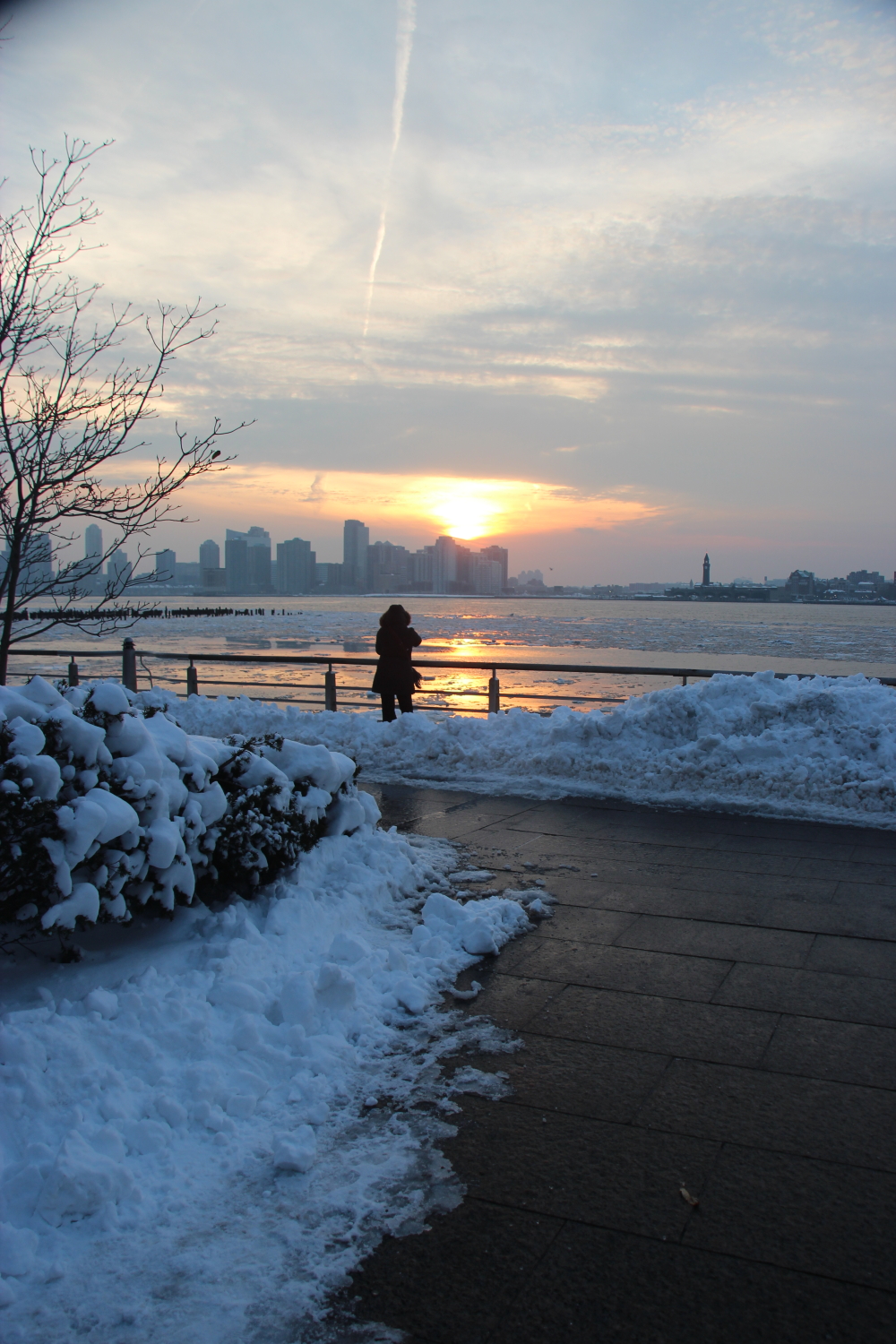
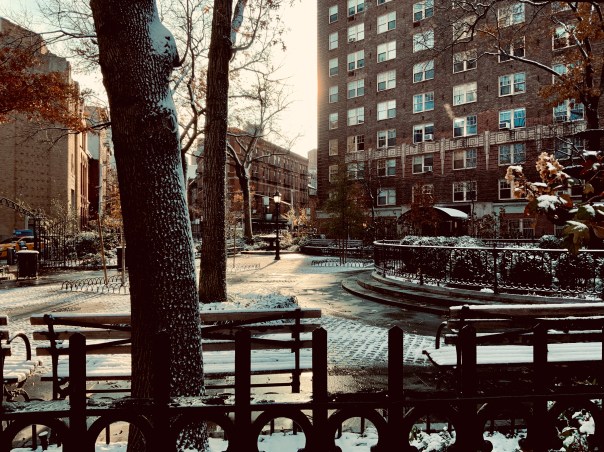
New York, NY
* an ongoing series of quotations – mostly from artists, to artists – that offers wisdom, inspiration, and advice for the sometimes lonely road we are on.
Whatever teaches us to talk to ourselves is important: whatever teaches us to sing ourselves out of despair. But the painting [“The Goldfinch,” 1654, by C. Fabritius] has also taught me that we can speak to each other across time. And I feel I have something very serious and urgent to say to you, my non-existent reader, and I feel I should say it as urgently as if I were standing in the room with you. That life – whatever else it is – is short. That fate is cruel but maybe not random. That Nature (meaning Death) always wins but that doesn’t mean we have to bow and grovel to it. That maybe if we’re not always so glad to be here, it’s our task to immerse ourselves anyway: wade straight through it, right through the cesspool, while keeping eyes and hearts open. And in the midst of our dying, as we rise from the organic and sink back ignominiously into the organic, it is a glory and a privilege to love what Death doesn’t touch. For if disaster and oblivion have followed this painting down through time – so too has love. Insofar as it is immortal (and it is) I have a small, bright, immutable part in that immortality. It exists; and it keeps on existing. And I add my own love to the history of people who have loved beautiful things, and looked out for them, and pulled them from the fire, and sought them when they were lost, and tried to preserve them and save them while passing them along literally from hand to hand, singing out brilliantly from the wreck of time to the next generation of lovers, and the next.
Donna Tartt in The Goldfinch
Comments are welcome!
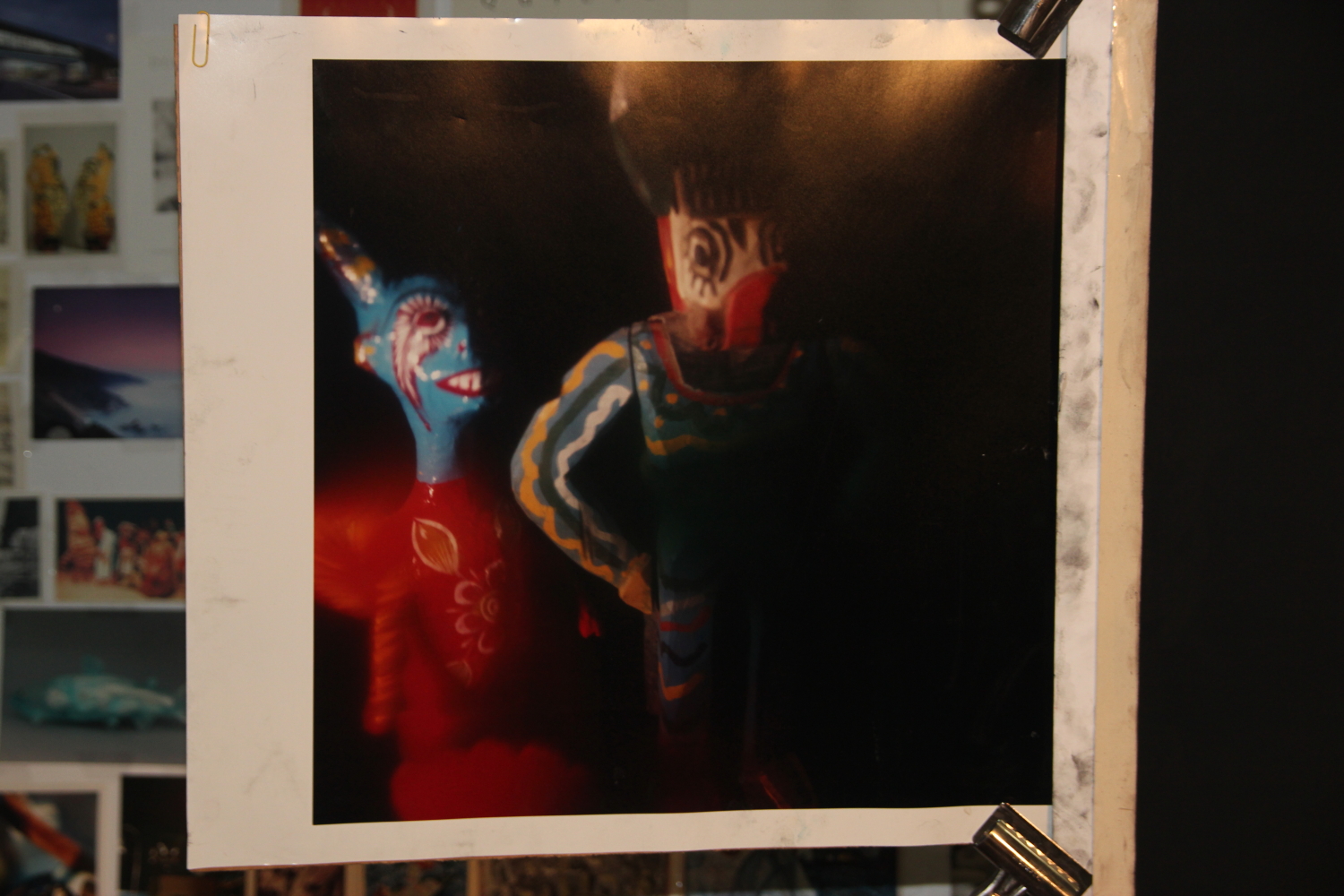
Q: Why do you need to use a photograph as a reference source to make a pastel painting?
One of Barbara’s reference photos
A: When I was about 4 or 5 years old I discovered that I had a natural ability to draw anything that I could see. It’s the way my brain is wired and it is a gift! One of my earliest memories as an artist is of copying the Sunday comics. Always it has been much more difficult to draw what I CANNOT see, i.e., to recall how things look solely from memory or to invent them outright.
The evolution of my pastel-on-sandpaper paintings has been the opposite of what one might expect. I started out making extremely photo-realistic portraits. I remember feeling highly unflattered when after months of hard work, someone would look at my completed painting and say, “It looks just like a photograph!” I know this was meant as a compliment, but to me it meant that I had failed as an artist. Art is so much more than copying physical appearances.
So I resolved to move away from photo-realism. It has been slow going and part of me still feels like a slacker if I don’t put in all the details. But after nearly three decades I have arrived at my present way of working, which although still highly representational, contains much that is made up, simplified, and/or stylized. As I have always done, I continue to work from life and from photographs, but at a certain point I put everything aside and work solely from memory.
Comments are welcome!
Pearls from artists* # 35
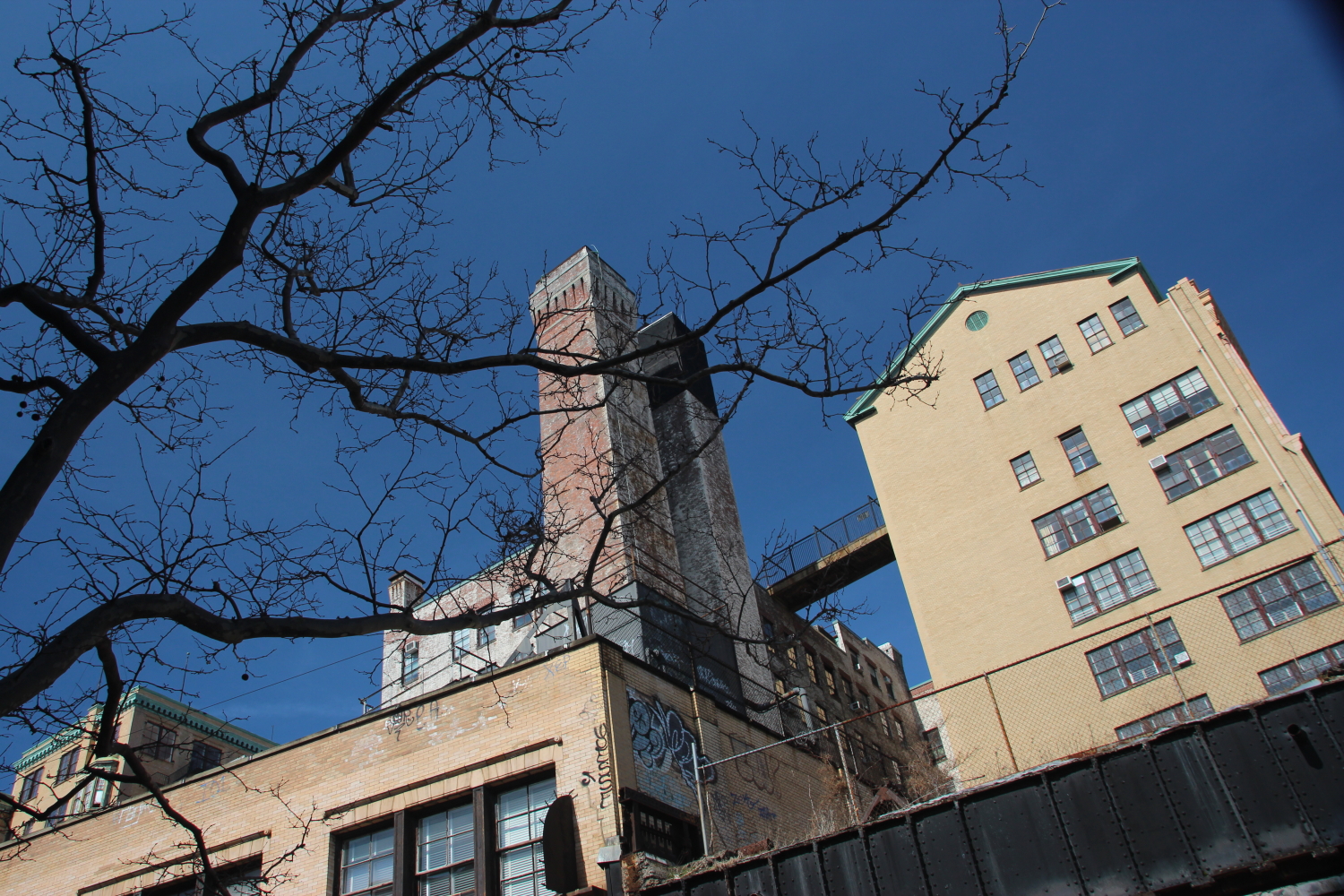
Westbeth, NYC
* an ongoing series of quotations – mostly from artists, to artists – that offers wisdom, inspiration, and advice for the sometimes lonely road we are on.
An individual who has committed himself to art and now wrestles within it, having given up everything else, has also become strict, you see. Such a person is more likely to warn off others rather than to beckon them to enter into a realm of the most tremendous demands and indescribable sacrifices. And for someone sitting at his desk, behind closed doors, matters are still relatively simple: at least he has to deal only with himself. But an actor, even when his work originates in the purest experiences of his being, stands in the open and performs his work in the open where he is exposed to all the influences, detractions, disturbances, and even hostilities that originate in his colleagues and his audience and that interrupt, distract, and split him off. For him things are more difficult than for anyone else; above all, he needs to lure success and to base his actions on it. And yet what misery results if this new alignment leads him to abandon the inner direction that had driven him into art in the first place. He seems to have no self; his job consists in letting others dictate selves to him. And the audience, once it has accepted him, wants to preserve him within the limits where it finds entertainment; and yet his achievement depends entirely upon his capacity to maintain an interior constancy through all kinds of changes, blindly, like a madman. Any momentary weakness toward success is as sure to doom him as giving in and drawing on applause as a precondition for their creation spells doom for the painter or poet.
Ulrich Baer in The Wisdom of Rilke
Comments are welcome!
Pearls from artists* # 21

Apartment building, New York City
* an ongoing series of quotations – mostly from artists, to artists – that offers wisdom, inspiration, and advice for the sometimes lonely road we are on.
It is the beginning of a work that the writer throws away.
A painting covers its tracks. Painters work from the ground up. The latest version of a painting overlays earlier versions, and obliterates them. Writers, on the other hand, work from left to right. The discardable chapters are on the left. The latest version of a literary work begins somewhere in the work’s middle, and hardens toward the end. The earlier version remains lumpishly on the left; the work’s beginning greets the reader with the wrong hand. In those early pages and chapters anyone may find bold leaps to nowhere, read the brave beginnings of dropped themes, hear a tone since abandoned, discover blind alleys, track red herrings, and laboriously learn a setting now false.
Several delusions weaken the writer’s resolve to throw away work. If he has read his pages too often, those pages will have a necessary quality, the ring of the inevitable, like poetry known by heart; they will perfectly answer their own familiar rhythms. He will retain them. He may retain those pages if they possess some virtues, such as power in themselves, though they lack the cardinal virtue, which is pertinence to, and unity with, the book’s thrust. Sometimes the writer leaves his early chapters in place from gratitude; he cannot contemplate them or read them without feeling again the blessed relief that exalted him when the words first appeared – relief that he was writing anything at all. That beginning served to get him where he was going, after all; surely the reader needs it, too, as groundwork. But no.
Every year the aspiring photographer brought a stack of his best prints to an old, honored photographer, seeking his judgment. Every year the old man studied the prints and painstakingly ordered them into two piles, bad and good. Every year the old man moved a certain landscape print into the bad stack. At length he turned to the young man: “You submit this same landscape every year, and every year I put it in the bad stack. Why do you like it so much?” The young photographer said, “Because I had to climb a mountain to get it.”
Annie Dillard, The Writing Life
Comments are welcome!


 barbararachkoscoloreddust.com
Q: It is well known that you gain inspiration from foreign travel. Has anyone ever accused you of stealing their culture?
Feb 9
Posted by barbararachkoscoloreddust
The Bolivian side of Lake Titicaca
A: Yes, a few people have done so via comments on Facebook. It came as a shock.
The logic of such an accusation presumes ownership. I don’t believe any person has a claim to owning culture.
Travel is arguably the best education there is. My travels around the world, supplemented with lots of research once I return home, are an important part of my creative process. This is how I develop ideas to forge a way ahead. It is difficult and solitary work.
Every artist is tasked with remaining open to influences – however, wherever, and whenever they appear. Somewhat late in life, travel as a source of inspiration found ME. And it has been a blessing!
People around the world have become fans. Many send messages of thanks saying they are proud that some aspect of their country’s culture has inspired my work. I am always grateful and touched to know this.
Comments are welcome!
Share this:
Posted in 2019, An Artist's Life, Bolivia, Creative Process, Inspiration, Studio, The West Village, Working methods
Comments Off on Q: It is well known that you gain inspiration from foreign travel. Has anyone ever accused you of stealing their culture?
Tags: accusation, accused, afterwards, arguably, around the world, aspect, blessing, comments, country, creative process, develop, education, Facebook, foreign travel, forge ahead, grateful, handful, influences, inspiration, inspired, Lake Titicaca, late in life, logic, messages, ownership, presumes, remaining open, research, sentiments, shock, singular, source of inspiration, stealing culture, Studio, supplemented, tasked, telling, thanks, touched, travel