Category Archives: Pearls from Artists
Pearls from artists* # 133
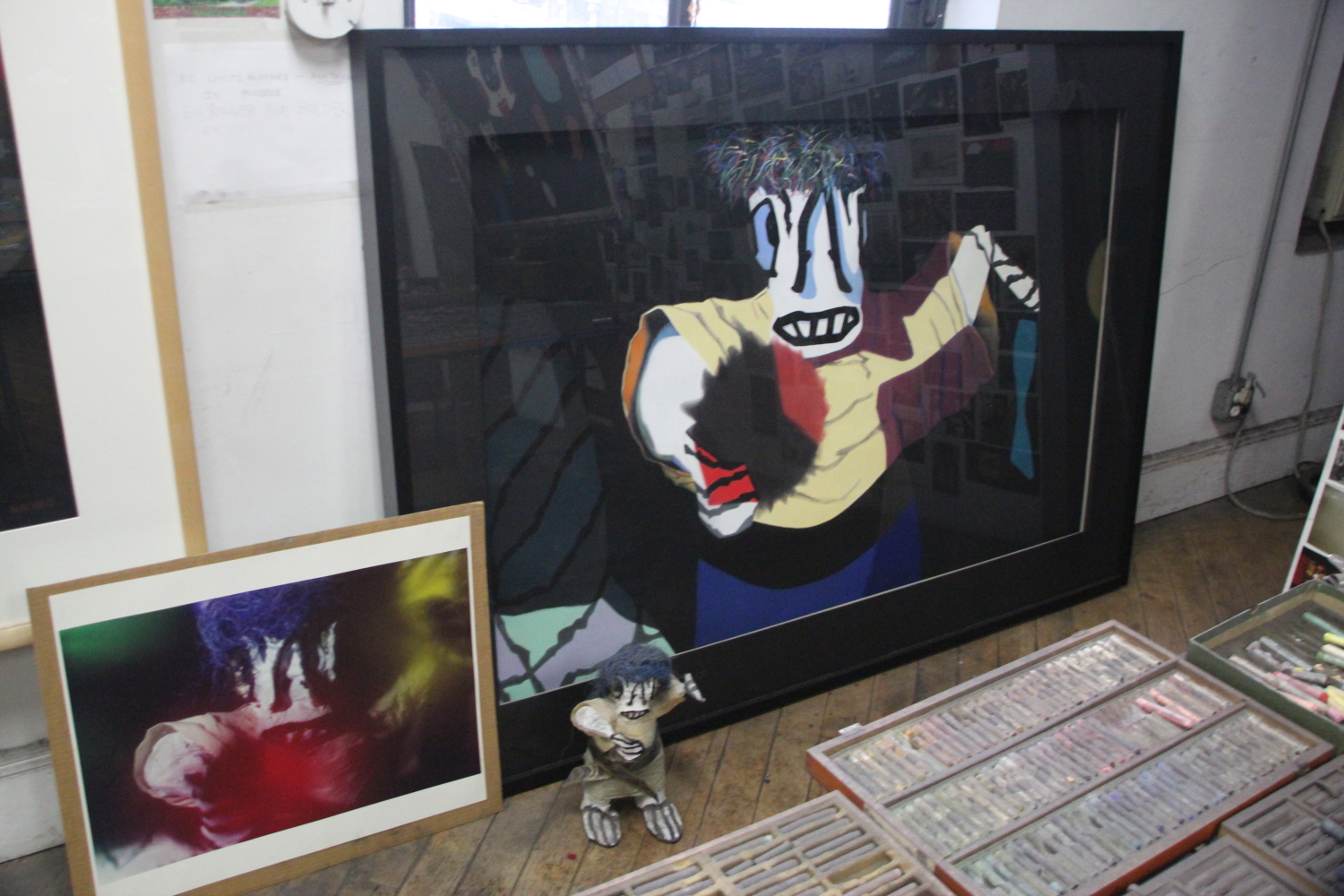
“Broken,” soft pastel on sandpaper, 50″ x 70″ framed
* an ongoing series of quotations – mostly from artists, to artists – that offers wisdom, inspiration, and advice for the sometimes lonely road we are on.
O writer, with what words will you describe the entire configuration of objects with the perfection that the drawing gives? If you are unable to draw, you will describe everything confusedly and convey little knowledge of the true form of objects; and you will deceive yourself in imagining that you can satisfy your hearer when you speak of the configuration of any corporeal object bounded by surfaces.
– Leonardo da Vinci
Quoted in Leonardo’s Brain: Understanding da Vinci’s Creative Genius by Leonard Shlain
Comments are welcome!
Pearls from artists* # 132

Las Cruces, NM
* an ongoing series of quotations – mostly from artists, to artists – that offers wisdom, inspiration, and advice for the sometimes lonely road we are on.
… To feel confident and successful is not natural to the artist.
To feel insufficient.
to experience disappointment and defeat in waiting for
inspiration
is the natural state of mind of an artist.
As a result praise to most artists is a little embarrassing.
They cannot take credit for inspiration,
for what we can see perfectly, but we cannot do perfectly…
Agnes Martin quoted in The Art Life: On Creativity and Career by Stuart Horodner
Comments are welcome!
Pearls from artists* # 131
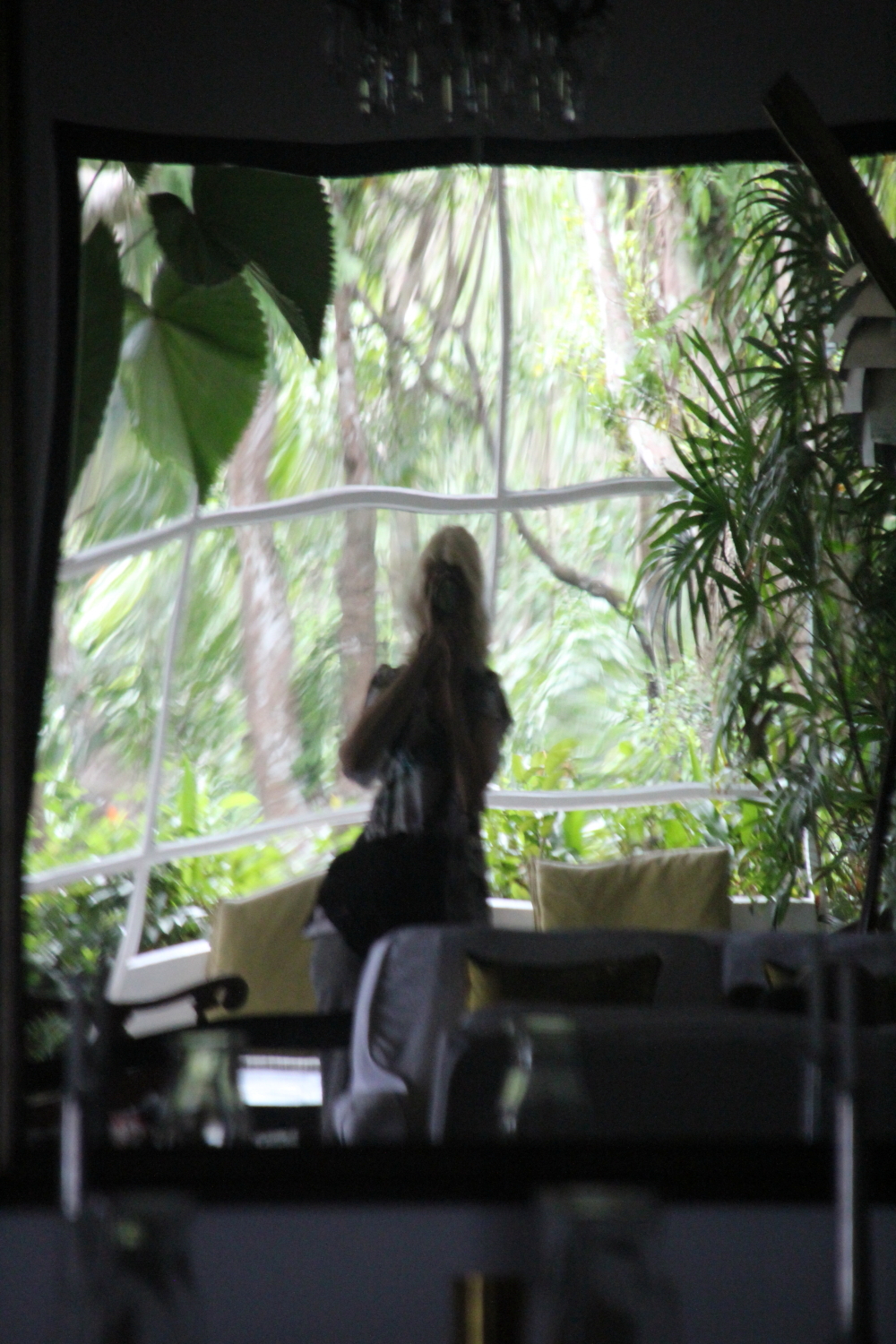
Self-portrait at an architect’s estate in Sri Lanka
* an ongoing series of quotations – mostly from artists, to artists – that offers wisdom, inspiration, and advice for the sometimes lonely road we are on.
Sister Corita
Immaculate Heart College Art Department Rules
Rule 1: Find a place you trust, and then try trusting it for a while.
Rule 2: General duties of a student: pull everything out of your teacher. Pull everything out of your fellow students.
Rule 3: General duties of a teacher: Pull everything out of your students.
Rule 4: Consider everything an experiment.
Rule 5: Be self-disciplined. This means finding someone wise or smart and choosing to follow them. To be disciplined is to follow in a good way. To be self-disciplined is to follow in a better way.
Rule 6: Nothing is a mistake. There’s no win and no fail. There’s only make.
Rule 7: The only rule is work. If you work it will lead to something. It’s the people who do all of the work all of the time who eventually catch on to things.
Rule 8: Don’t try to create and analyze at the same time. They’re different processes.
Rule 9: Be happy whenever you can manage it. Enjoy yourself. It’s lighter than you think.
Rule 10: “We’re breaking all the rules. Even our own rules. And how do we do that? By leaving plenty of room for X quantities.” John Cage
Helpful Hints: Always be around. Come or go to everything. Always go to classes. Read anything you can get your hands on. Look at movies carefully, often. Save everything – it might come in handy later.
There should be new rules next week.
Quoted in The Art Life: On Creativity and Career by Stuart Horodner
Comments are welcome!
Pearls from artists* # 130
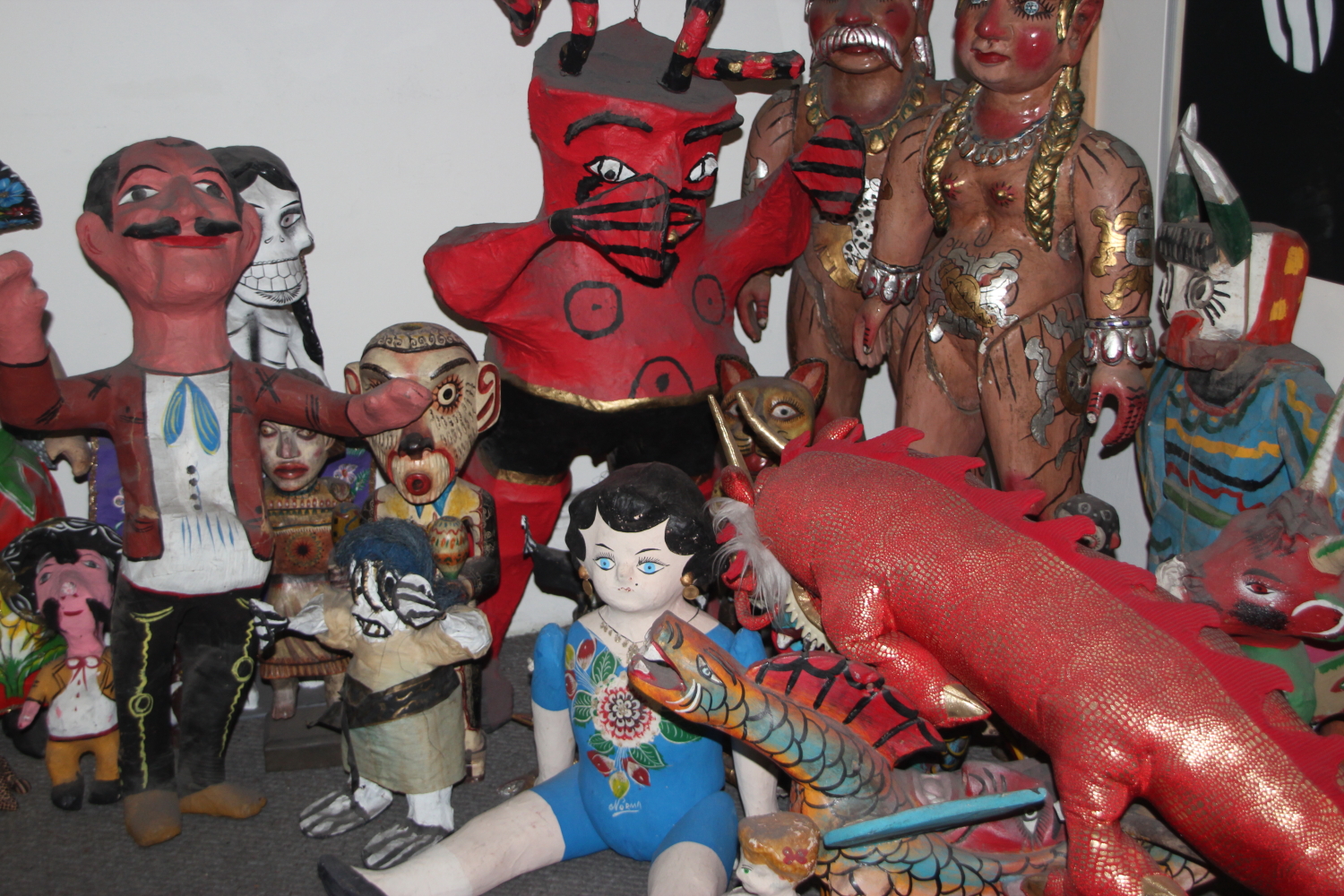
Studio corner
* an ongoing series of quotations – mostly from artists, to artists – that offers wisdom, inspiration, and advice for the sometimes lonely road we are on.
In the aesthetic act something comes to life. That’s a good phrase for it, comes to life, suggesting both something separate, apart from life, extra, from elsewhere, and something not alive in the act of being invested with life. The phrase brought to life does this same double take.
Ali Smith in Artful
Comments are welcome!
Pearls from artists* # 129
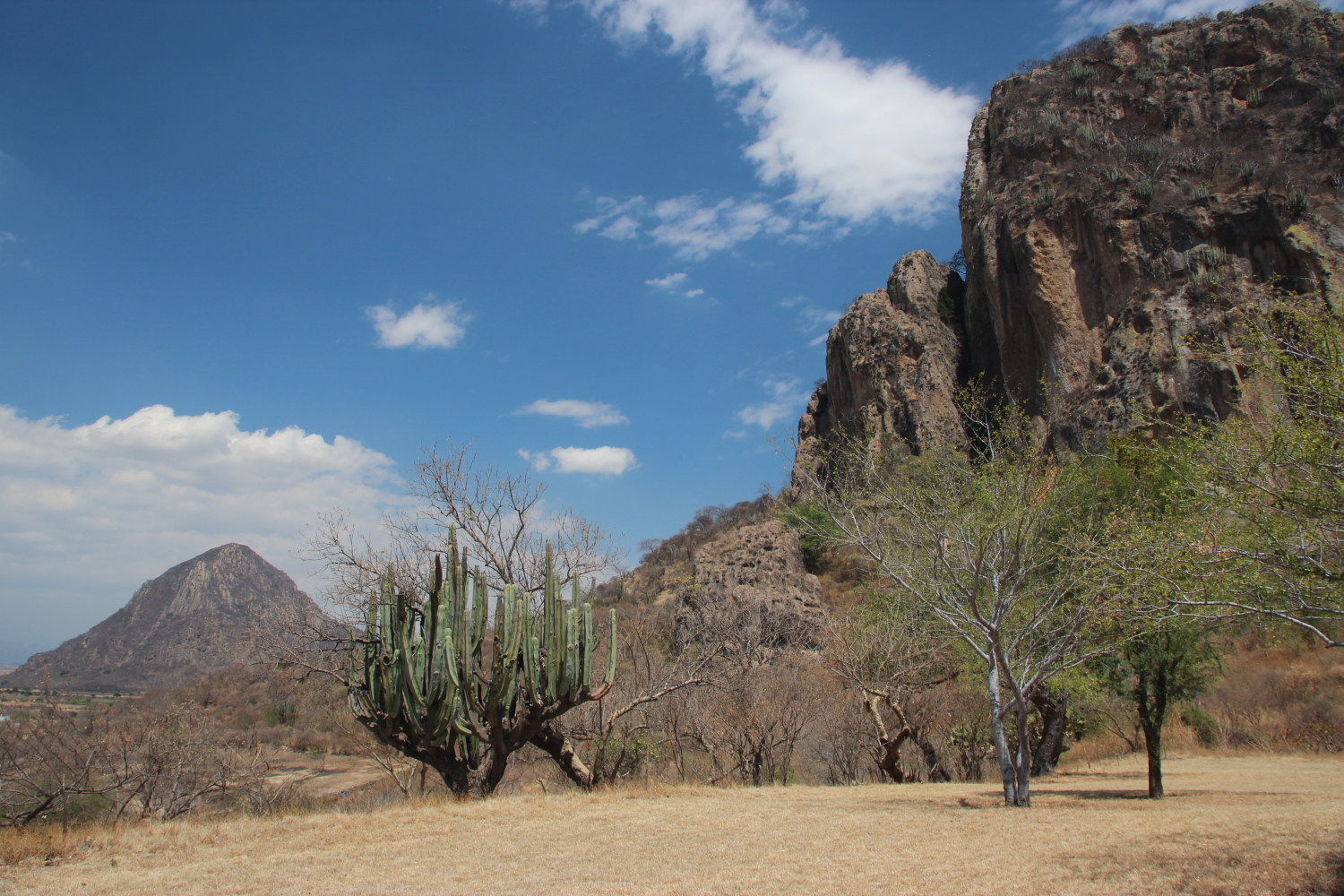
Chalcatzingo, Mexico
* an ongoing series of quotations – mostly from artists, to artists – that offers wisdom, inspiration, and advice for the sometimes lonely road we are on.
A painter friend of mine once told me that he thought of sound as an usher for the here and now. When he was a small child, Adam suffered an illness that left him profoundly deaf for several months. His memories of that time are vivid and not, he insists, at all negative. Indeed, they opened a world in which the images he saw could be woven together with much greater freedom and originality than he’d ever known. The experience was powerful enough that it helped steer him toward his lifelong immersion in the visual arts. “Sound imposes a narrative on you,” he said, “and it’s always someone else’s narrative. My experience of silence was like being awake inside a dream I could direct.”
George Prochnik in In Pursuit of Silence: Listening for Meaning in a World of Noise
Comments are welcome!
Pearls from artists* # 128
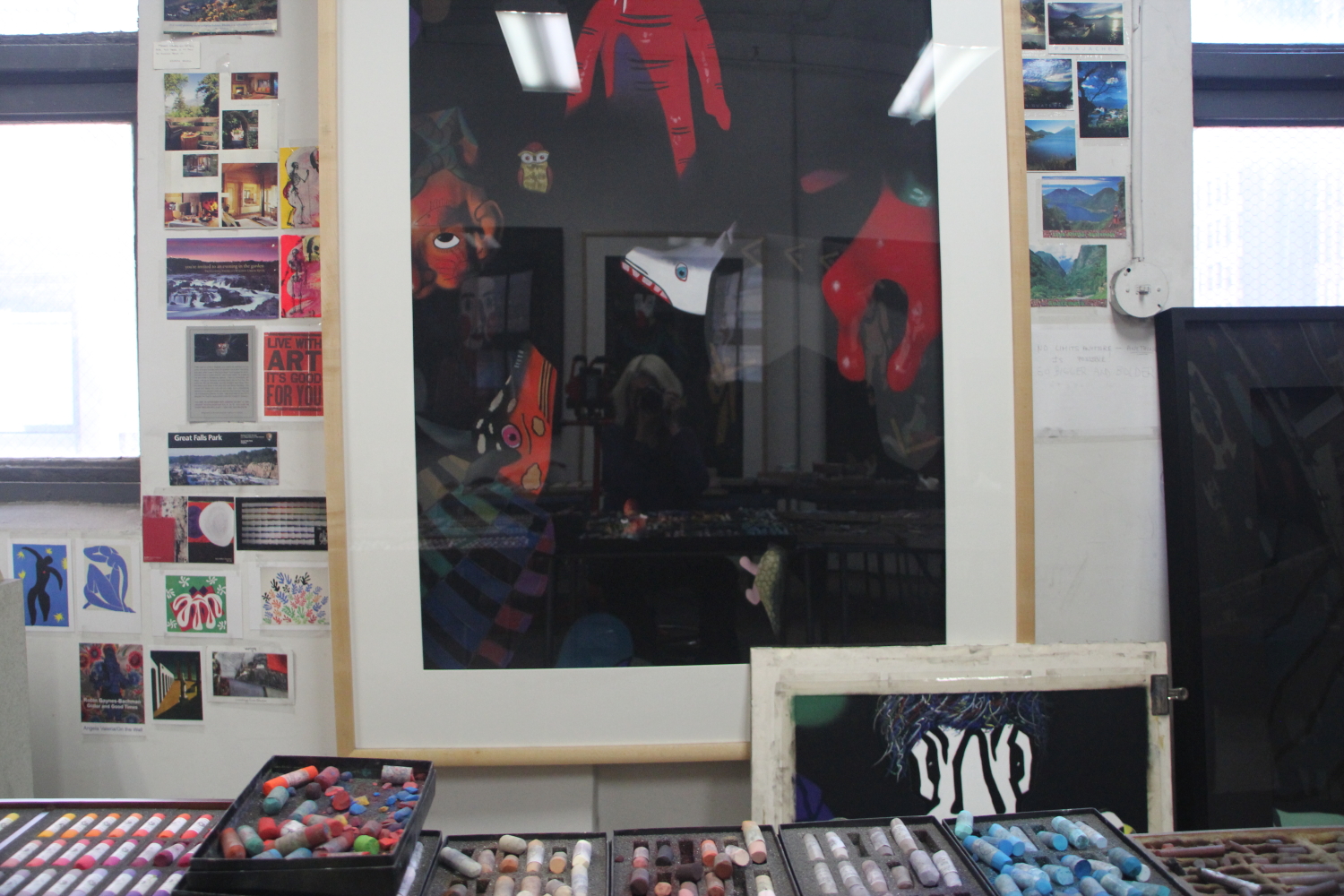
Self-portrait with “Some Things We Regret”
* an ongoing series of quotations – mostly from artists, to artists – that offers wisdom, inspiration, and advice for the sometimes lonely road we are on.
A chastening day yesterday. Color rose up and towered over me and advanced toward me. A tsunami – only that terrifying Japanese word for tidal wave will do – of color, and I was swept off my feet. In a frenzy, I tried to catch it. Sheet after sheet of Arches paper spread around the studio, covering all the surfaces of all my tables and finally the floor. I tried to keep one step ahead all morning. In the afternoon, I managed to get a toehold, and once again recognized my limitation: that vestige of all that a human being could know that is what I do know. I see this delicate nerve of myself as unimpressive. The fact is that is all I have. The richness of years, contained like wine in the goatskin of my body, meets my hand narrowly.
Anne Truitt in Turn: The Journal of an Artist
Comments are welcome!
Pearls from artists* # 127
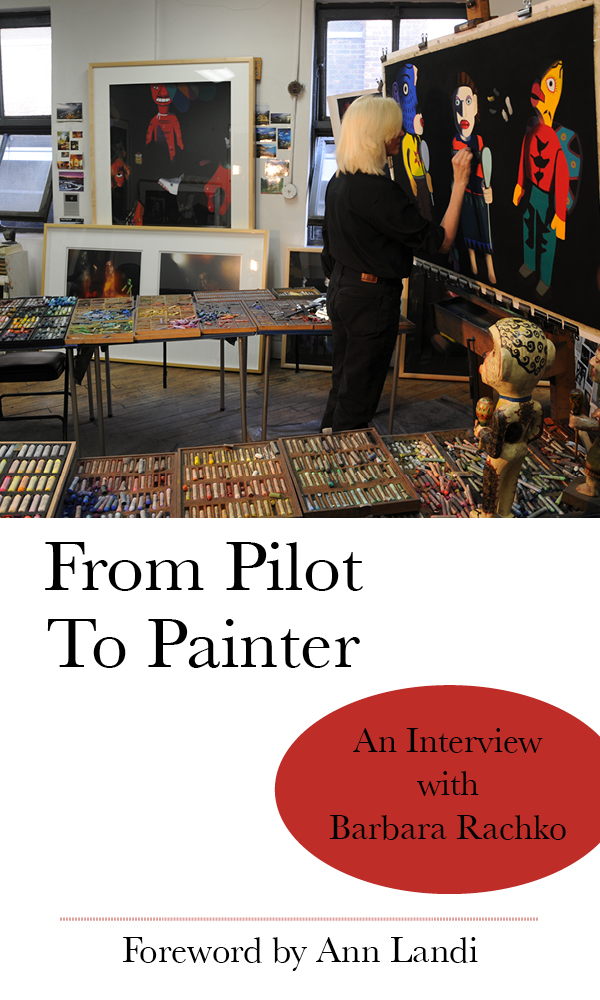
eBook cover
* an ongoing series of quotations – mostly from artists, to artists – that offers wisdom, inspiration, and advice for the sometimes lonely road we are on.
Two facts differentiate Daybook from my work in visual art.
The first is the simple safety of numbers. There are 6500 Daybooks in the world. My contribution to them was entirely mental, emotional. I never put my hand on a single copy of these objects until I picked up a printed book. I made no physical effort; no blood, no bone marrow moved from me to them. I do not mean that I made no effort. On the contrary, the effort was excruciating because it was so without physical involvement, so entirely hard-wrought out of nothing physical at all; no matter how little of the material world goes into visual art, something of it always does, and that something keeps you company as you work. There seems to me no essential difference in psychic cost between visual and literary effort, The difference is in what emerges as result. A work of visual art is painfully liable to accident; months of concentration and can be destroyed by a careless shove. Not so 6500 objects. This fact gives me a feeling of security like that of living in a large, flourishing, and prosperous family.
Ancillary to this aspect is the commonplaceness of a book. People do not have to go much out of their way to get hold of it, and they can carry it around with them and mark it up, and even drop it in a tub while reading in a bath. It is a relief to have my work an ordinary part of life, released from the sacrosanct precincts of galleries and museums. A book is also cheap. Its cost is roughly equivalent to its material value as an object, per se. This seems to me more healthy than the price of art, which bears no relation to its quality and fluctuates in the marketplace in ways that leave it open to exploitation. An artist who sells widely has only to mark a piece of paper for it to become worth an amount way out of proportion to its original cost. This aspect of art has always bothered me, and is one reason why I like teaching; an artist can exchange knowledge and experience for money in an economy as honest as that of a bricklayer.
Anne Truitt in Turn: The Journal of an Artist
Comments are welcome!
Pearls from artists* # 126

Self-portrait with “Blue Misterioso”
* an ongoing series of quotations – mostly from artists, to artists – that offers wisdom, inspiration, and advice for the sometimes lonely road we are on.
Photography is an elegiac art, a twilight art. There is no subject the photographer might attempt that could not be touched with pathos. All photogrpahs are memento mori. To take a photograph is to participate in another person’s (or thing’s) mortality, vulnerability, mutability. precisely by slicing out this moment and freezing it, all photographs testify to time’s relentless melt.
Photography by Susan Sontag in Anthology: Selected Essays from Thirty Years of The New York Review of Books, edited by Robert S. Silvers and Barbara Epstein
Comments are welcome!
Pearls from artists* # 125
Barbara’s studio
* an ongoing series of quotations – mostly from artists, to artists – that offers wisdom, inspiration, and advice for the sometimes lonely road we are on.
My own natural proclivity is to categorize the world around me, to remove unfamiliar objects from their dangerous perches by defining, compartmentalizing and labeling them. I want to know what things are and I want to know where they are and I want to control them. I want to remove the danger and replace it with the known. I want to feel safe. I want to feel out of danger.
And yet, as an artist, I know that I must welcome the strange and the unintelligible into my awareness and into my working process. Despite my propensity to own and control everything around me, my job is to “make the familiar strange and the strange familiar,” as Bertolt Brecht recommended: to un-define and un-tame what has been delineated by belief systems and conventions, and to welcome the discomfort of doubt and the unknown, aiming to make visible what has become invisible by habit.
Because life is filled with habit, because our natural desire is to make countless assumptions and treat our surroundings as familiar and unthreatening, we need art to wake us up. Art un-tames, reifies and wakes up the part of our lives that have been put to sleep and calcified by habit. The artist, or indeed anyone who wants to turn daily life into an adventure, must allow people, objects and places to be dangerous and freed from the definitions that they have accumulated over time.
Anne Bogart in What’s the Story: Essays about art, theater, and storytelling
Comments are welcome!
Pearls from artists* # 124
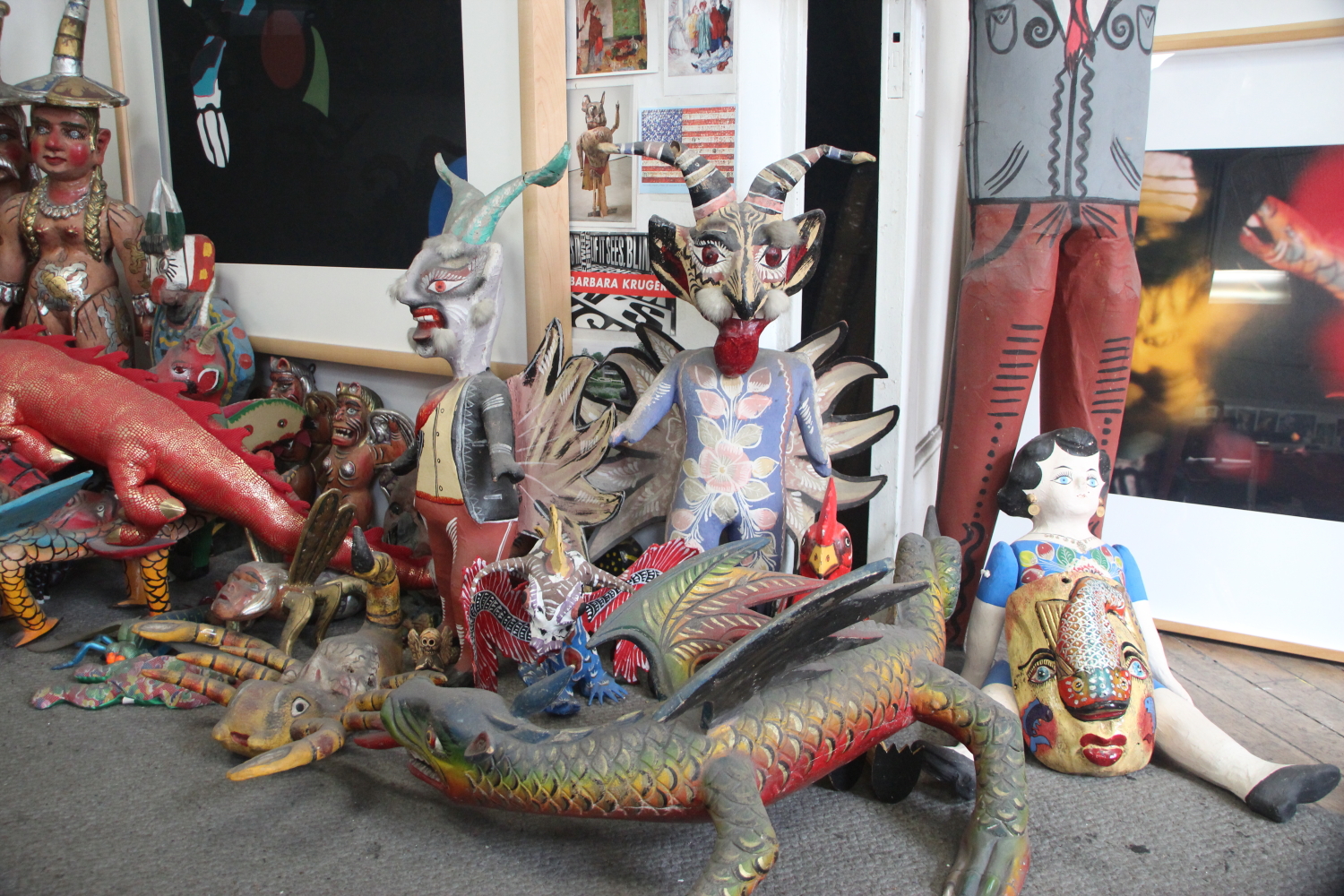
Barbara’s studio
* an ongoing series of quotations – mostly from artists, to artists – that offers wisdom, inspiration, and advice for the sometimes lonely road we are on.
You give yourself a creative life – pursuing those questions and aesthetic conditions that mean the most to you. What are you interested in? Landscape and gender and nuclear power are each worthy subjects and there are plenty more. Do you aspire to exhibit in museums or public spaces or virtual realms? Your job is to figure out how to best engage these distinct contexts. Your studio may be a large industrial space or a second bedroom or the kitchen table, where you can work days or nights while wearing your favorite sweatpants and drinking tea as music blasts or silence is maintained. You might produce five or fifty objects a year, using bronze or oil paint or folded paper, and these can be large or tiny, made to last for centuries or a few weeks. Maybe you’ve been a printmaker for several years and all of a sudden you decide to make videos. OK. You might be influenced by Pop Art or Minimalism or Feminism or Fluxus. How are you using these various histories to your advantage? Does Edward Hopper or Gordon Matta-Clark or Agnes Martin or David Hammons inspire you? If not, who does? Try to understand the reasons for your choices, and if you feel the need to shift gears, indulge that impulse. Grant yourself the permission to acquire new skills, travel to biennials, buy a new computer, start a reading group. Risk not knowing what will happen when you do.
Stephen Horodner in THE ART LIFE: On Creativity and Career
Comments are welcome!



