Blog Archives
Q: What’s on the easel today?
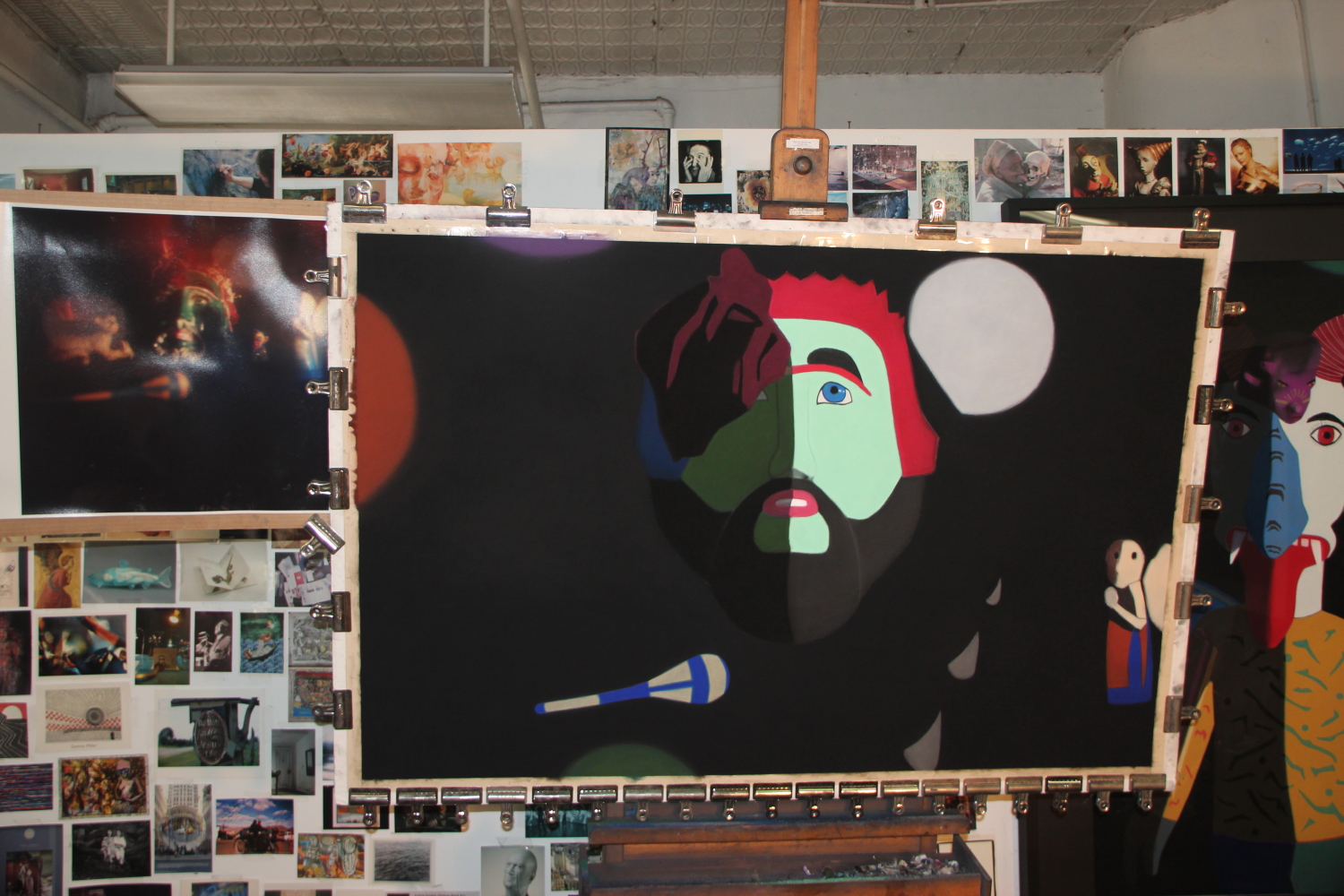
Work in progress
A: I continue to work on a pastel-on-sandpaper painting that I began some weeks ago. For now the working title is “Blinded,” which relates to the maroon and black shape on the main figure’s right eye. I haven’t yet figured out the deeper meaning of that shape.
Comments are welcome!
Q: Where do you want your work to go in the future?
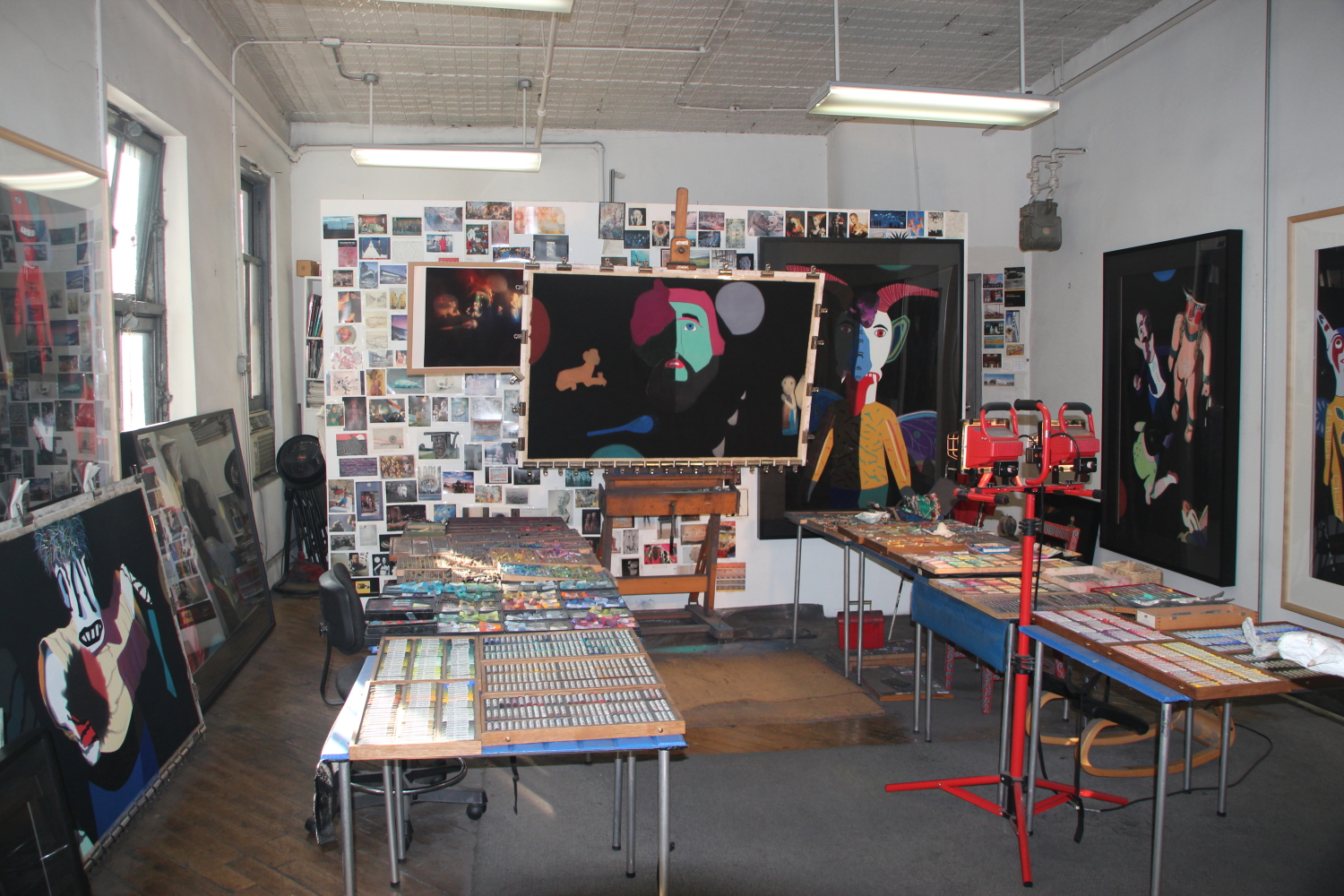
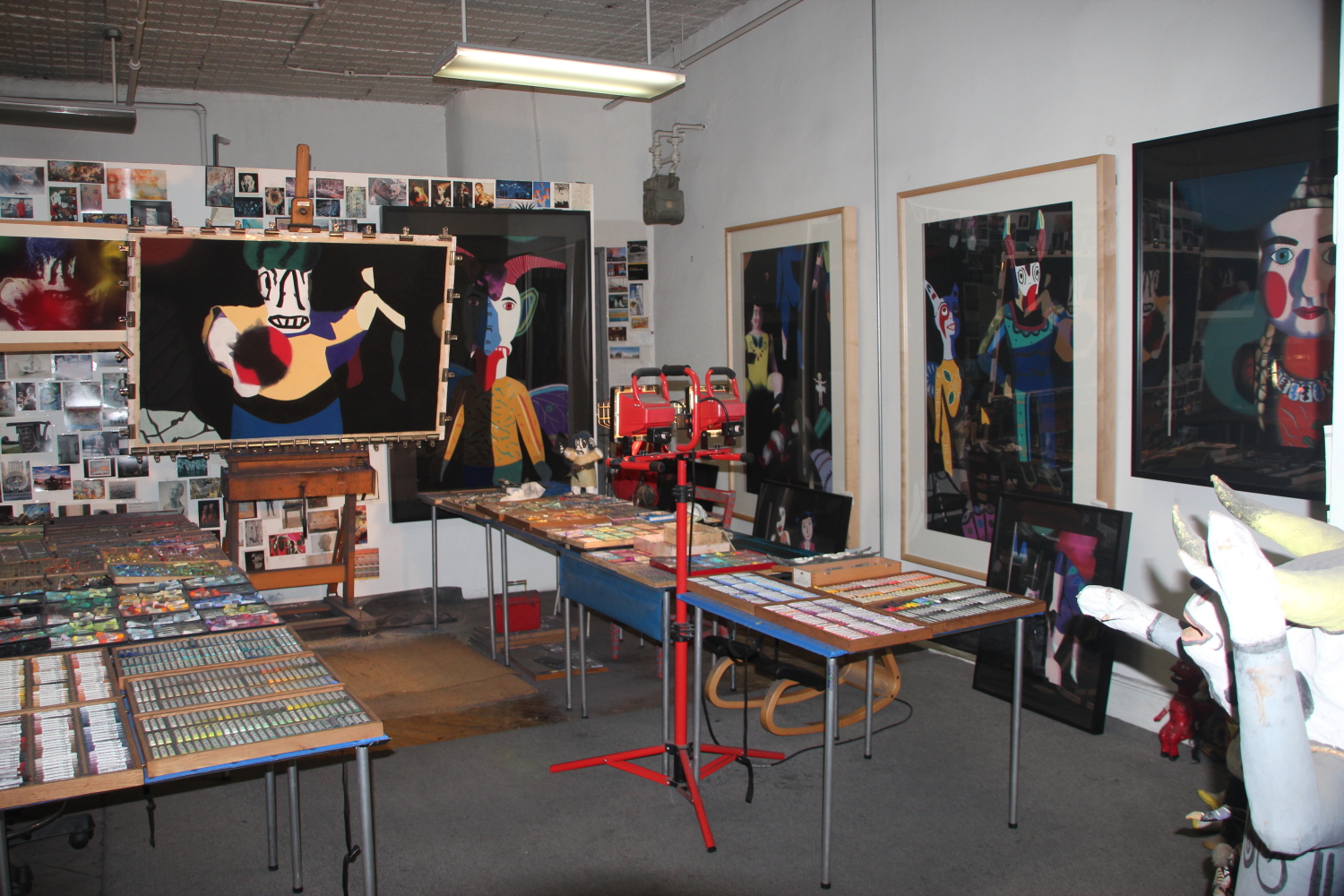
Barbara’s studio
A: Recently I answered a question about why I create, but now that I think about it, the same answer applies to what I want to do as an artist in the future:
~ to create bold and vibrant pastel paintings and photographs that have never existed before
~ to continue to push my primary medium – soft pastel on sandpaper – as far as I can and to use it in more innovative ways
~ to create opportunities for artistic dialogue with people who understand and value the work to which I am devoting my life
The last has always been the toughest. I sometimes think of myself as Sisyphus because expanding the audience for my art is an ongoing uphill battle. Many artist friends tell me they feel the same way about building their audience. It’s one of the most difficult tasks that we have to do as artists. I heard Annie Leibovitz interviewed on the radio once and remember her saying that after 40 years as a photographer, everything just gets richer. Notice that she didn’t say it gets any easier; she said, “it just gets richer.” I have been a painter for nearly 30 years and a photographer for 11. I agree completely. All artists have to go wherever our work goes. Creating art and watching the process evolve is an endlessly fascinating intellectual journey. I wouldn’t want to be spending my time on earth doing anything else!
Comments are welcome!
Q: What impact do you hope to have on viewers of your work?
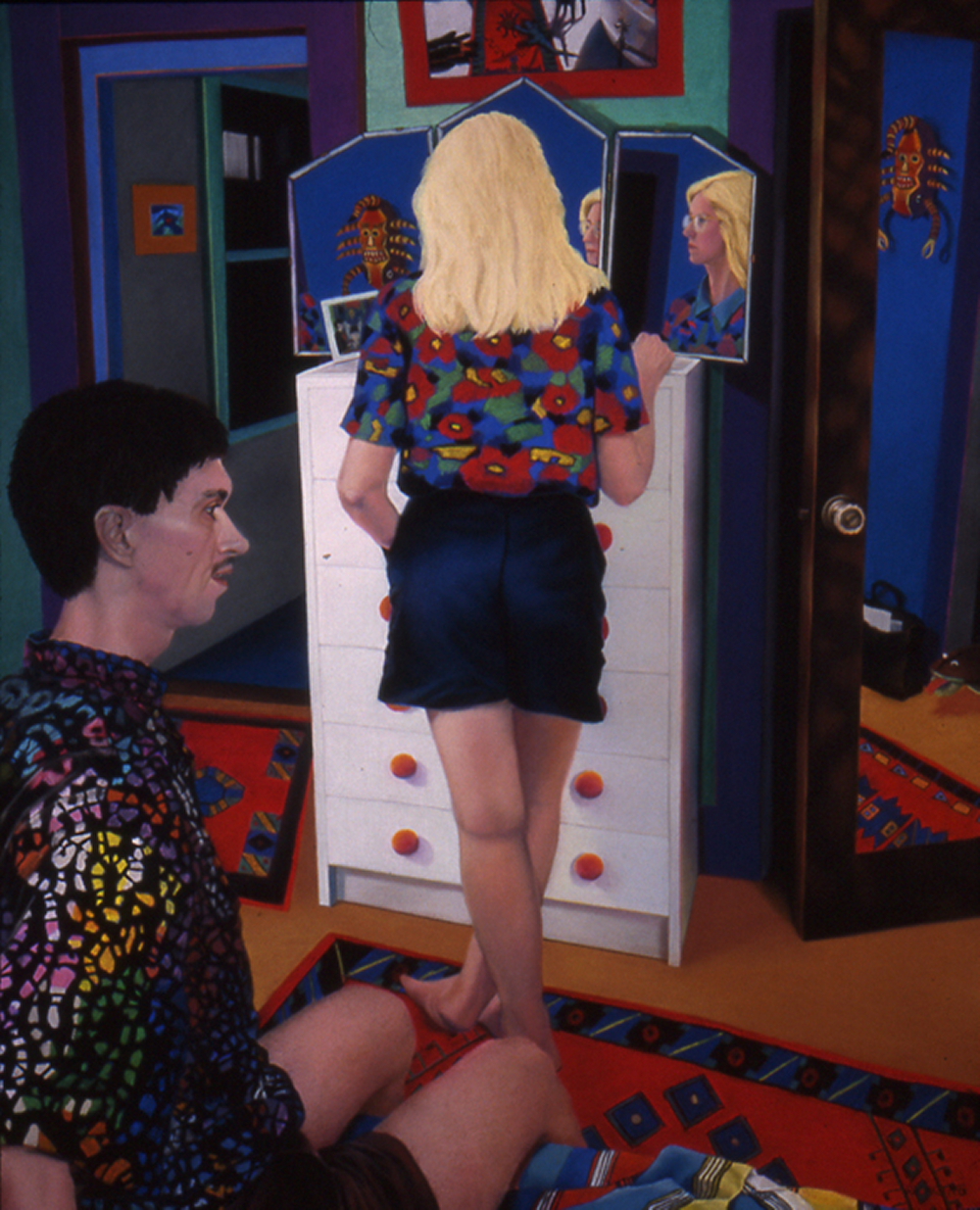
“Us and Them,” soft pastel on sandpaper, 47″ x 38″, 1993
A: I am pushing soft pastel to its limits, using it in ways that no artist has done before. I want people to see what is possible to accomplish with this medium. Because I have experienced unspeakable heartache – the loss of my husband on 9/11, onboard the high-jacked airplane that crashed into the Pentagon – when viewers learn about my life story, I hope to serve as an inspiration to keep forging ahead regardless of what tragedies life may bring. These are the main reasons that I wrote my eBook.
Comments are welcome!
Pearls from artists* # 76
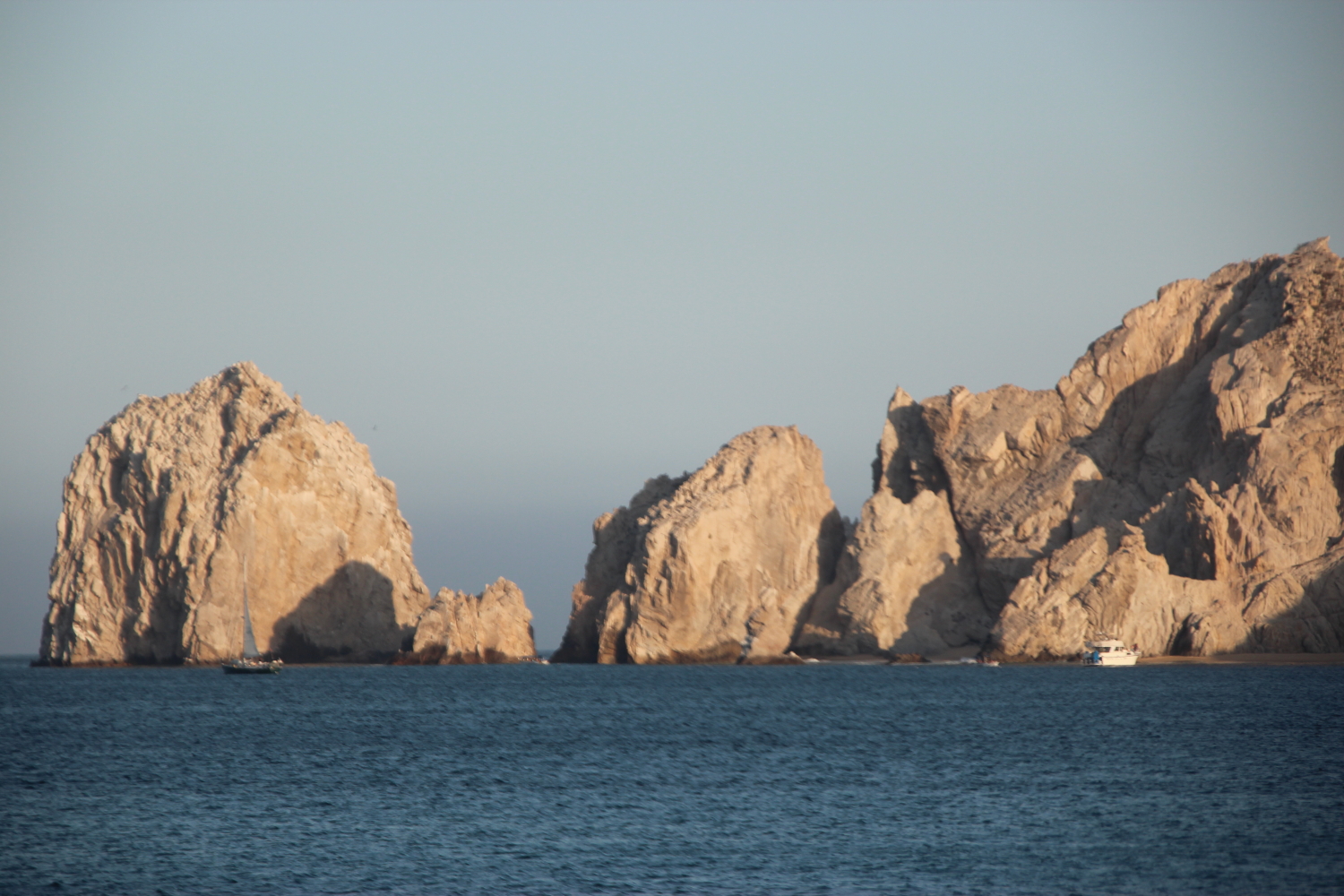
Cabo San Lucas, Mexico
* an ongoing series of quotations – mostly from artists, to artists – that offers wisdom, inspiration, and advice for the sometimes lonely road we are on.
What stops us in our tracks? I am rarely stopped by something or someone I can instantly know. In fact, I have always been attracted to the challenge of getting to know what I cannot instantly categorize or dismiss, whether an actor’s presence, a painting, a piece of music, or a personal relationship. It is the journey towards the object of attraction that interests me. We stand in relation to one another. We long for the relationships that will change our vistas. Attraction is an invitation to an evanescent journey, to a new way of experiencing life or perceiving reality.
An authentic work of art embodies intense energy. It demands response. You can either avoid it, shut it out, or meet it and tussle. It contains attractive and complicated energy fields and a logic all its own. It does not create desire or movement in the receiver, rather it engenders what James Joyce labeled ‘aesthetic arrest.’ You are stopped in your tracks. You cannot easily walk by it and go on with your life. You find yourself in relation to something that you cannot readily dismiss.
Anne Bogart in A Director Prepares: Seven Essays on Art and Theater
Comments are welcome!
Pearls from artists* # 73
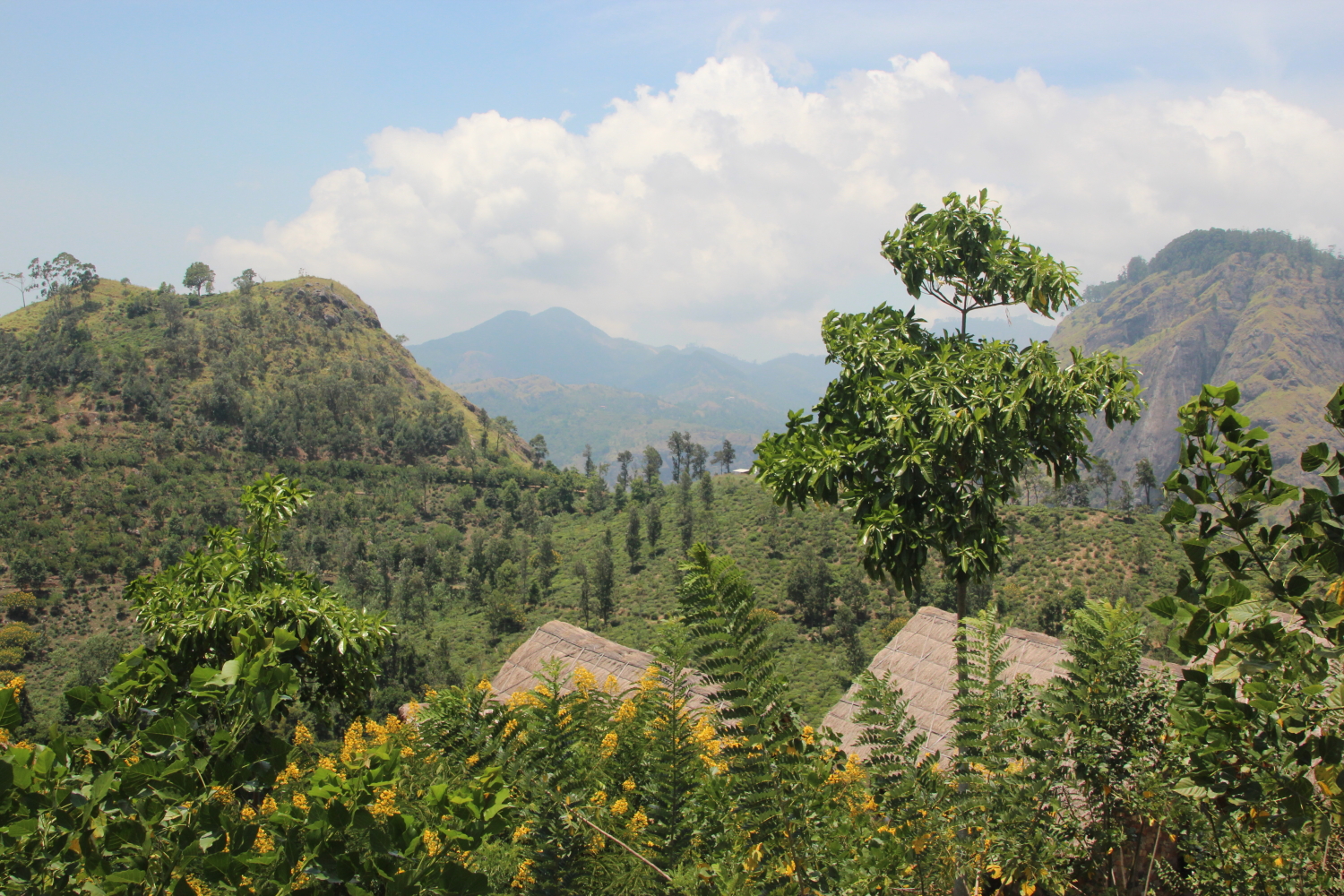
Sri Lanka
* an ongoing series of quotations – mostly from artists, to artists – that offers wisdom, inspiration, and advice for the sometimes lonely road we are on.
The primary tool in a creative process is interest. To be true to one’s interest, to pursue it successfully, one’s body is the best barometer. The heart races. The pulse soars. Interest can be your guide. It always points you in the right direction. It defines the quality, energy, and content of your work. You cannot feign or fake interest or choose to be interested in something because it is prescribed. It is never prescribed. It is discovered. When you sense this quickening you must act immediately. You must follow that interest and hold on tight.
Anne Bogart in A Director Prepares: Seven Essays on Art and Theater
Comments are welcome!
Q: What’s on the easel today?
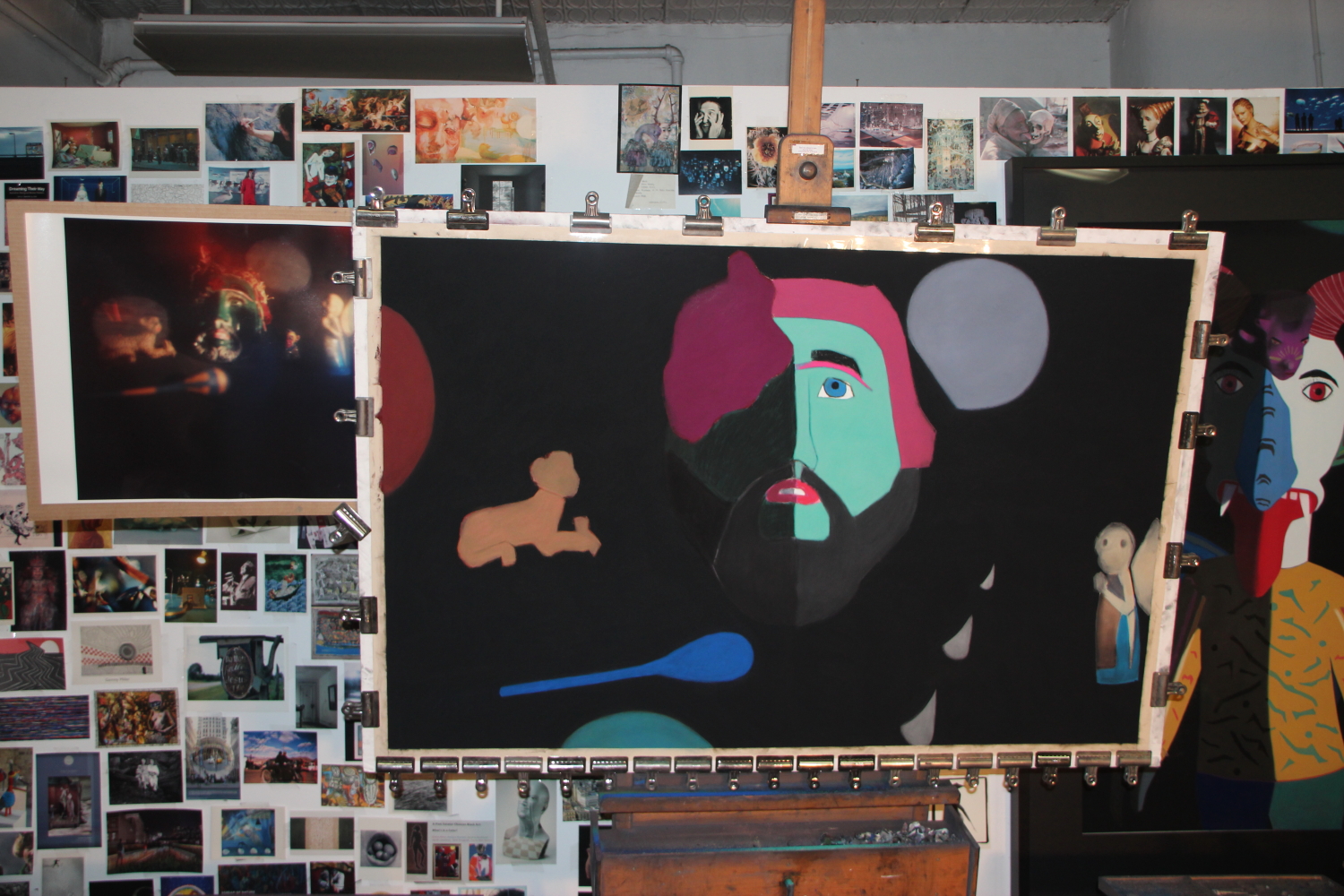
Pastel-on-sandpaper painting in progress
A: I am working on a pastel painting that features a mask I found in Todos Santos, Mexico on a recent trip there with friends. This is the first time I have so prominently featured a head without a body so I’m unsure whether the painting is coming together just yet. Fortunately it’s very early in the process so there is plenty of time to make adjustments.
Comments are welcome!
Q: Can you discuss your process, including how you actually use Mexican and Guatemalan folk art figures in your art?

A corner of Barbara’s studio
A: When I set up the figures to photograph for a painting, I work very intuitively, so how I actually cast them in an artwork is difficult to say. Looks count a lot – I select an object and put it in a particular place, look at it, move it or let it stay, and sometimes develop a storyline. I spend time arranging lights and looking for interesting cast shadows. With my first “Domestic Threats” series, all of this was done so that Bryan, my late husband, or I could shoot a couple of negatives with his Toyo Omega 4″ x 5″ view camera. For my “Black Paintings” series, begun in 2007, I shoot medium format negatives with a Mamiya 6 camera.
I always look at a 20″ x 24″ photograph for reference as I make a pastel-on-sandpaper painting, plus I also work from the ‘live’ objects. The photograph is mainly a catalyst because finished paintings are always quite different from their associated reference photos. Also, since I spend months creating them, the paintings’ interpretative development goes way beyond that of the photo.
I once completed 6 large (58” x 38”) pastel paintings in a single year, but more recently 4 or 5 per year is common. It takes approximately 3 months to make each one. During that time I layer and blend together as many as 25 to 30 layers of pastel. Of course, the colors get more intense as the painting progresses and the pigment accumulates on the sandpaper.
Comments are welcome!
Q: What have you learned about the people of Mexico through your travels, reading, and research?
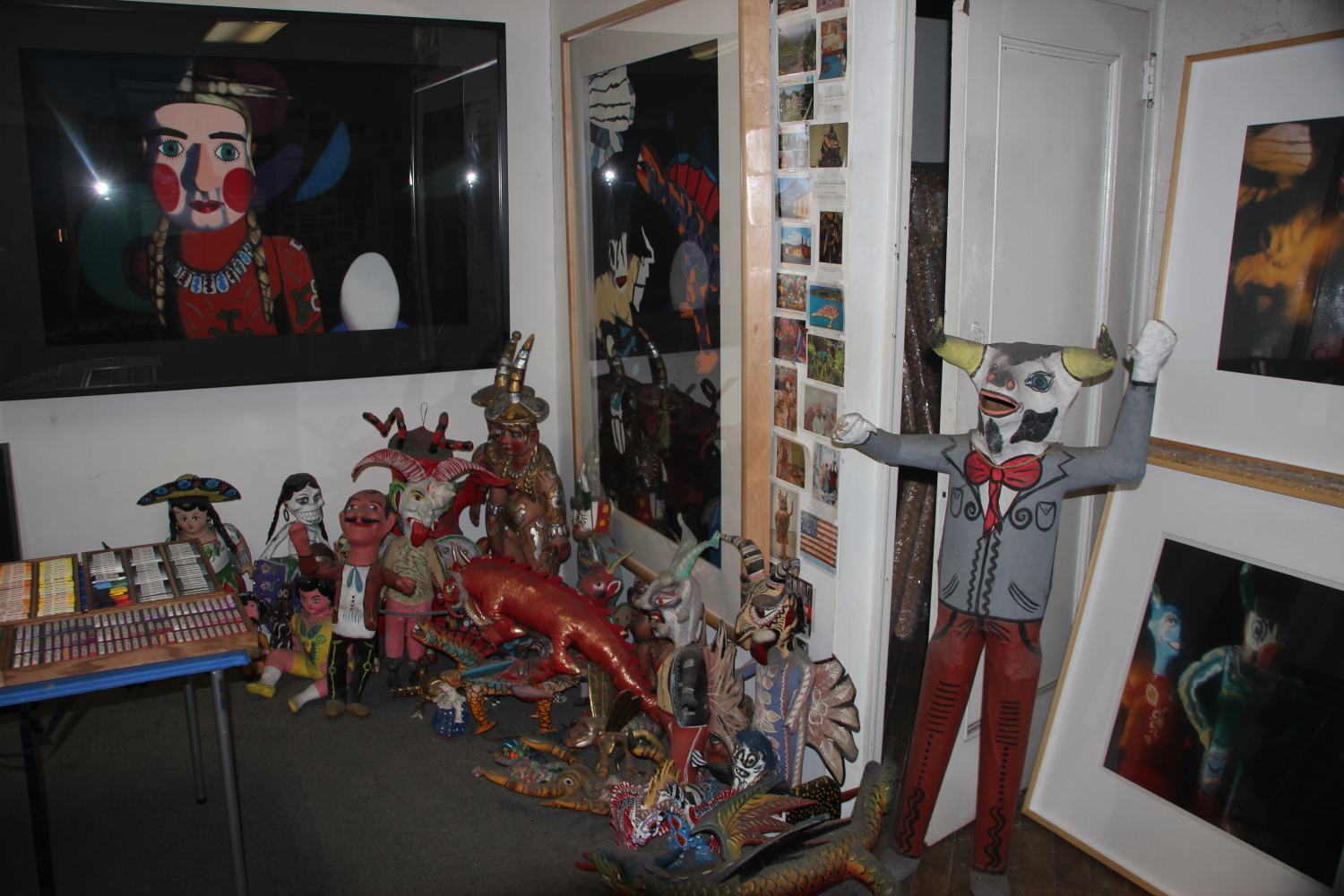
A corner of the studio
A: It didn’t take long to become smitten with these beautiful people. It happened on my first trip there in 1992 when Bryan and I, along with busloads of other tourists, were visiting the Oaxacan cemeteries on The Day of the Dead. The Oaxaquenos tending their ancestor’s graves were so dignified and so gracious, even with so many mostly-American tourists tromping around on a sacred night, that I couldn’t help being taken with them and with their beliefs. My studies since that time have given me a deeper appreciation for the art, architecture, history, mythology, etc. that comprise the extremely rich and complex story of Mexico as a cradle of civilization in the West. It is a wonderfully heady mix and hopefully some of it comes through in my work as a painter and a photographer.
By the way I often wonder why the narrative of Mexico’s fascinating history was not taught in American public schools, at least not where I went to public school in suburban New Jersey. Mexico is our neighbor, for goodness sake, but when I speak to many Americans about Mexico they have never learned anything about the place! It’s shocking, but many people think only “Spring Break” and/or “Drug Wars,” when they hear the word “Mexico.” As a kid I remember learning about Egypt, Mesopotamia, Greece, and other early civilizations in the Middle East, Europe, and Asia, but very little about Mexico. We learned about the Maya, when it was still believed that they were a peaceful people who devoted their lives to scientific and religious pursuits, but that story was debunked years ago. And I am fairly sure that not many Americans even know that Maya still exist in the world … in Mexico and in Guatemala. There are a few remote places that were not completely destroyed by Spanish Conquistadores in the 16th century and later. I’ve been to Mayan villages in Guatemala and seen shamans performing ancient rituals. For an artist from a place as rooted in the present moment as New York, it’s an astounding thing to witness!
Comments are welcome!
Q: How do you define success as an artist?
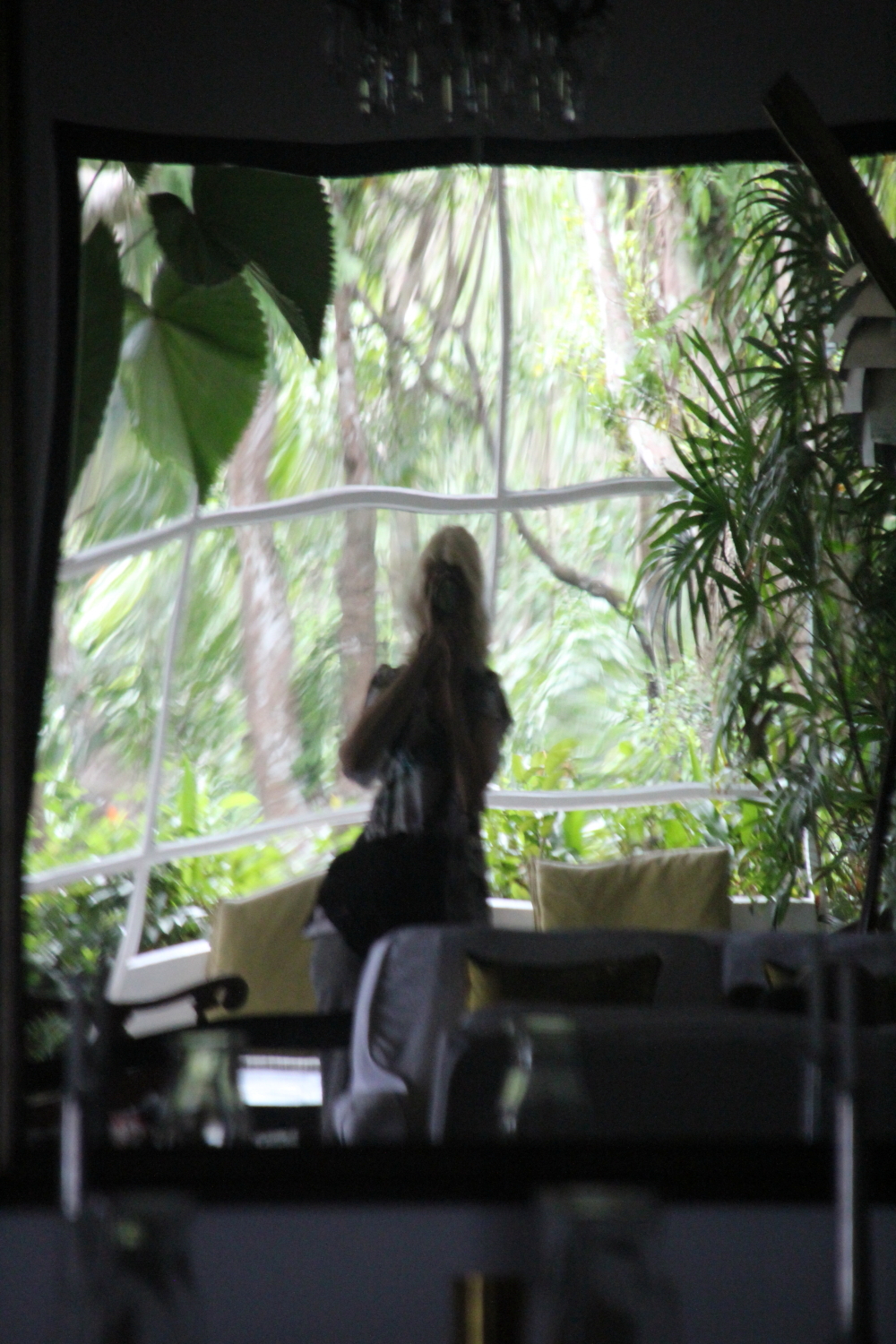
Self-portrait at an architect’s estate in Sri Lanka
A: This is another question that has many answers depending more or less on how things are progressing in the studio. I’d say that you are a successful artist if you are able to keep working and evolving, and are mostly living by your own rules, using your time as you see fit to become a better artist. This means navigating through all the ups and downs, the obstacles – and we know there are many – to art-making and finding joy and on-going discovery in your own particular creative process. The work is everything, as we always say, but hopefully, you have found an appreciative audience and do sell a piece of art now and then.
I know that I am more fortunate than many. Over time I’ve realized that money, i.e., sales, is one of the less important aspects of being an artist. The richness that being a professional artist brings to my life goes far beyond anything that can be acquired with cash!
Comments are welcome!


 barbararachkoscoloreddust.com