Blog Archives
Pearls from artists* # 609
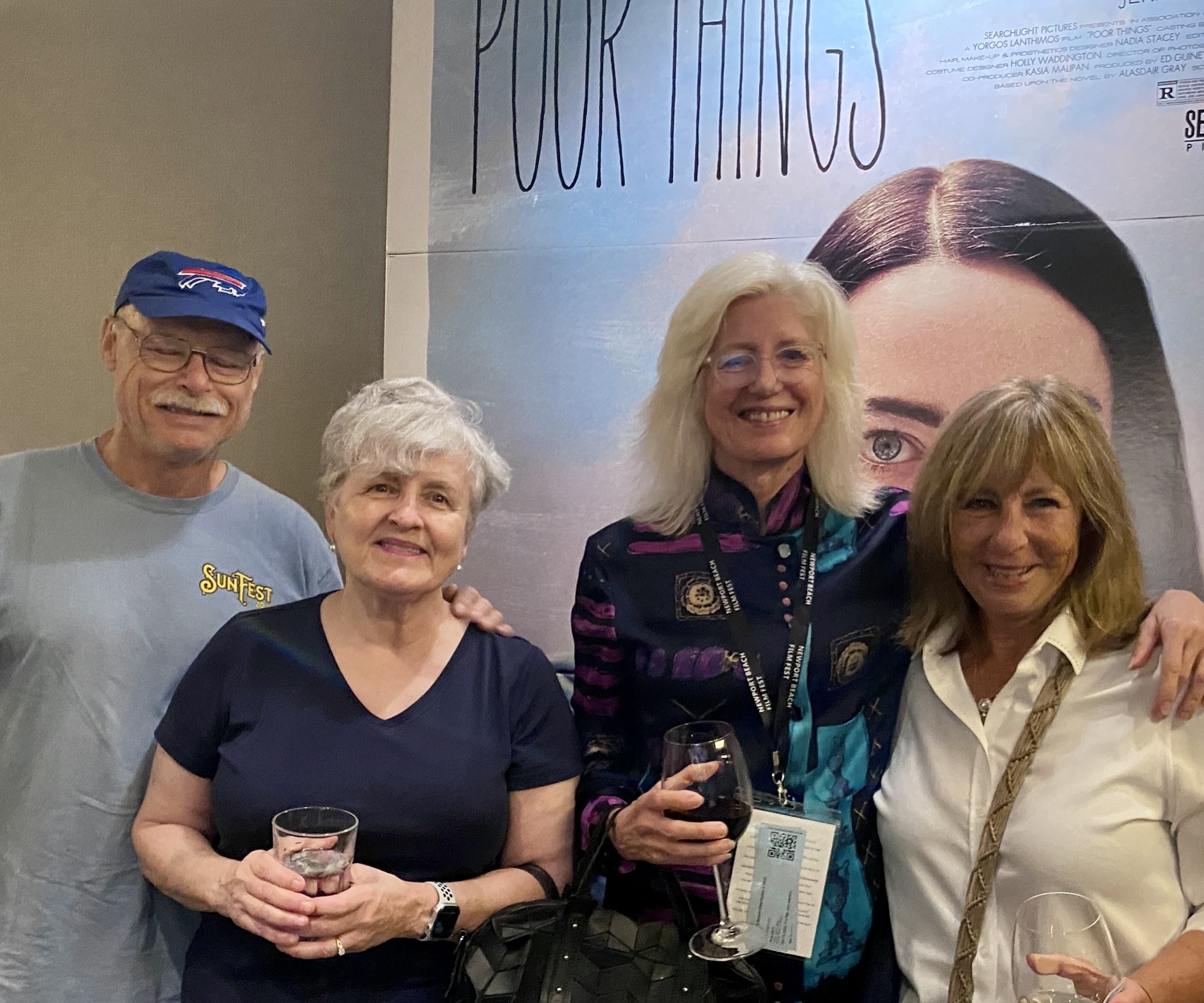
At the World Premier of “Barbara Rachko: True Grit” during the Newport Beach Film Festival
*an ongoing series of quotations – mostly from artists, to artists – that offers wisdom, inspiration, and advice for the sometimes lonely road we are on.
Whether we are creating high art or a meal, we improvise when we move with the flow of time and with our own evolving consciousness, rather than with a preordained script or recipe. In composed or scripted art forms, there are two kinds of time: the moment of inspiration in which a direct intuition of beauty or truth comes to the artist; then the often laborious struggle to hold onto it long enough to get it down on paper or canvas, film or stone. A novelist may have a moment (literally a flash) of insight into which the birth, meaning, and purpose of a new book reveal itself; but it may take years to write it. During this time he must not only keep the thought fresh and clear, he must also eat, live, make money, suffer, enjoy, be a friend, and everything else human beings do. In composed music or theater, moreover, there is yet a third kind of time: besides the moment (or moments) of inspiration and time it takes to write the score, there is the time of the actual performance. Often the music is not even performed until after the composer’s death.
Stephen Nachmanovitch in Free Play: Improvisation in Life and Art
Comments are welcome!
Pearls from artists* # 583

In the Studio Photo: Susan Erlichman
*an ongoing series of quotations – mostly from artists, to artists – that offers wisdom, inspiration, and advice for the sometimes lonely road we are on.
Let’s return to Michelangelo’s idea of removing apparent surfaces to reveal or liberate the statue that has been buried in the stone since the beginning of time. Michelangelo claimed that he was guided by a faculty he called intelleto. Intelleto is intelligence, not of the merely rational kind, but visionary intelligence, a deep seeing of the underlying pattern beneath appearances. Here the artist is, as it were, an archaeologist, uncovering deeper and deeper strata as he works, recovering not an ancient civilization but something as yet unborn, unseen, unheard except by the inner eye, the inner ear. He is not just removing apparent surfaces from some external object, he is removing apparent surfaces from the Self, revealing his original nature.
Stephen Nachmanovitch in Free Play: Improvisation in Life and Art
Comments are welcome!
Q: Can you explain how your current work relates to Jungian archetypes?

In progress: “Wise One,” soft pastel on sandpaper, 58” x 38”
A: Here’s an example. The passage below is from Carl Jung: Knowledge in a Nutshell by Gary Bobroff.
The Wise Old Man or Woman is a figure found throughout folklore and mythology. They possess superior understanding and also often a more developed spiritual or moral character. Frequently, such characters provide the information or learning that the Hero needs to move forward in their quest. In Star Wars, Ben Kenobi plays the teacher to Luke, introducing purpose and knowledge into the young Hero’s life. Where the Hero brings drive, courage, and direct action, the Wise Old One introduces the importance of the opposing values of thought and questioning. Jung describes it thus: ‘Often the old man in fairytales asks questions like who? Why? Whence? Wither? For the purpose of inducing self-reflection and mobilizing the moral forces.’
The Wise One may appear in disguise to test the character of others. In the second Star Wars film, The Empire Strikes Back (1980), Luke’s mentor Yoda does not reveal himself as such when they first meet. He waits, asking questions that test Luke’s motivation for being there. Jung associated the Trickster archetype with the Wise One, and the use of disguise emphasizes this correlation.
Comments are welcome!
Pearls from artists* # 540

*an ongoing series of quotations – mostly from artists, to artists – that offers wisdom, inspiration, and advice for the sometimes lonely road we are on.
The Wise Old Man or Woman is a figure found throughout folklore and mythology. They possess superior understanding and also often a more developed spiritual or moral character. Frequently, such characters provide the information or learning that the Hero needs to move forward in their quest. In “Star Wars,” Ben Kenobi plays the teacher to Luke, introducing purpose and knowledge into the young Hero’s life. Where the Hero brings a drive, courage, and direct action, the Wise Old One introduces the importance of the opposing values of thought and questioning. Jung describes it thus: ‘Often the old man in fairytales asks questions like who? Why? Whence? Wither? For the purpose of inducing self-reflection and mobilizing the moral force.’
The Wise One may appear in disguise to test the character of others. In the second “Star Wars” film, “The Empire Strikes Back” (1980), Luke’s mentor Yoda does not reveal himself as such when they first meet. He waits, asking questions that test Luke’s motivation for being there. Jung associated the Trickster archetype with the Wise One, and the use of disguise emphasizes this correlation.
Gary Bobroff in Carl Jung: Knowledge in a Nutshell
Comments are welcome!
Pearls from artists* # 491
*an ongoing series of quotations – mostly from artists, to artists – that offers wisdom, inspiration, and advice for the sometimes lonely road we are on.
We look at ancient Egyptian painting today and may find it slightly comic, but what the Egyptians were trying to do with the figure was reveal the various aspects of the person’s body in the most characteristic aspect. The face is in profile because that reveals the most about the person’s face, but the shoulders are not in profile, they’re facing the viewer, because that’s the most revealing angle for the shoulders. The hips are not in profile, but the feet are. It gives a strange, twisted effect, but it was natural to the Egyptians. They were painting essences, and in order to paint an essence you have to paint it from its most characteristic angle. So they would simply combine the various characteristic essences of the human body. This was a piece of spiritual art. It wasn’t trying to reproduce photographic reality, it was trying to reproduce and combine all the essential features of a person within one figure.
Walter Murch in The Conversations: Walter Murch and the Art of Editing Film by Michael Ondaatje
Comments are welcome!
Pearls from artists* # 463
*an ongoing series of quotations – mostly from artists, to artists – that offers wisdom, inspiration, and advice for the sometimes lonely road we are on.
When in doubt, when you are lost, don’t stop. Instead, concentrate on detail. Look around, find a detail to concentrate on and do that. Forget the big picture for a while. Just put your energy into the details of what is already there. The big picture will eventually open up and reveal itself if you can stay out of the way for a while. It won’t open up if you stop. You have to stay involved but you don’t always have to stay involved with the big picture.
While paying attention to the details and welcoming insecurity, while walking the tightrope between control and chaos and using accidents, while allowing yourself to go off balance and going through the back door, while creating the circumstances in which something might happen and being ready for the leap, while not hiding and being ready to stop doing homework, something is bound to happen. And it will probably be appropriately embarrassing.
Anne Bogart in A Director Prepares: Seven Essays on Art and Theatre
Comments are welcome!
Pearls from artists* # 348
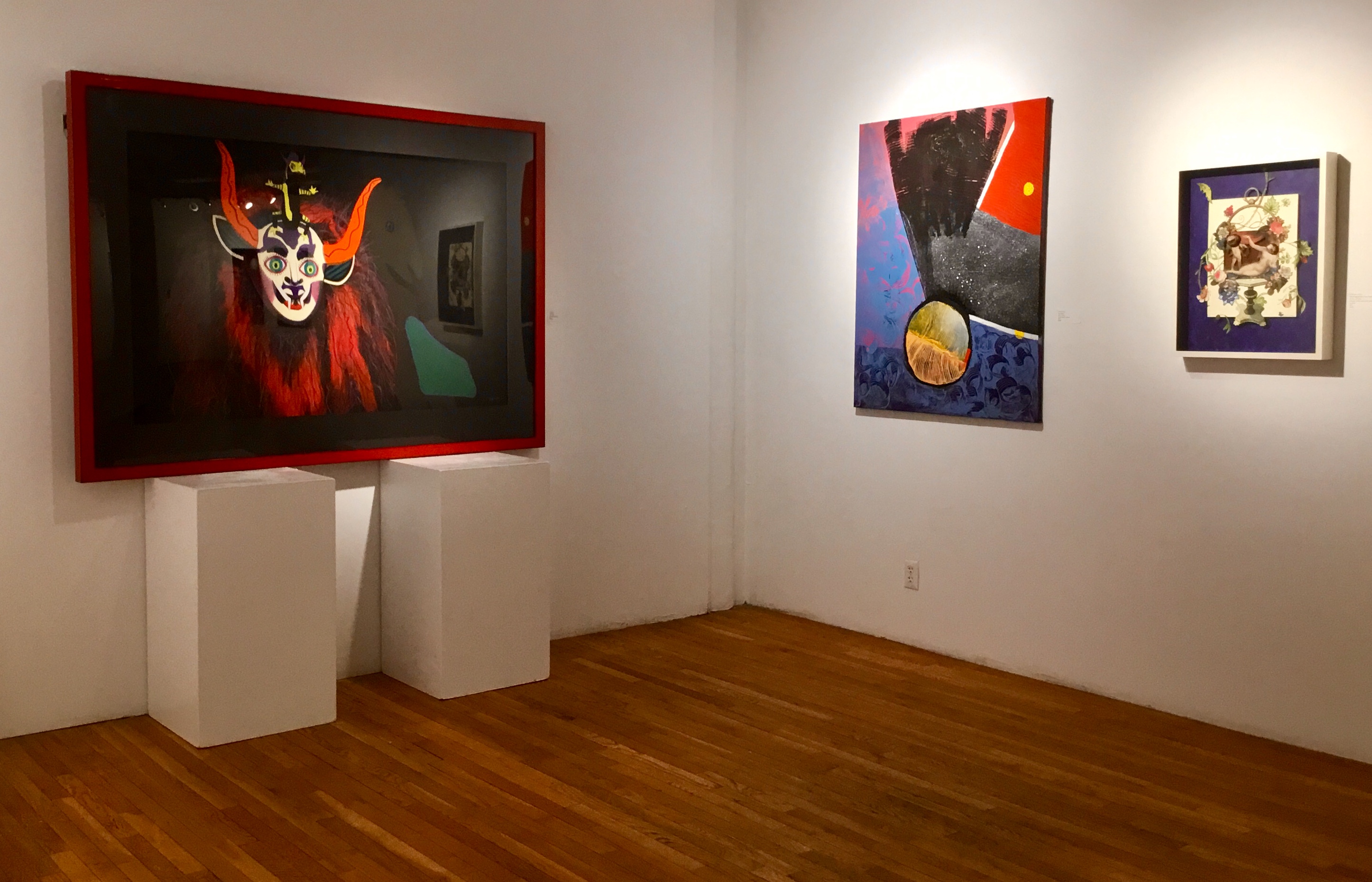
“The Orator” in “Worlds Seen & Unseen” at Westbeth Gallery, NYC
*an ongoing series of quotations – mostly from artists, to artists – that offers wisdom, inspiration, and advice for the sometimes lonely road we are on.
The percipient apprehends the primal quality of art as beauty and symbol, in an experience that invariably involves a sense of radical mystery. Art dissolves the fog of Consensus in which we normally operate to reveal the unseen in the situation. It places us in exactly the same position as the first people who stared up at the stars in wonder. The work of art is perpetually new; it demands reinterpretation with each era, each generation, each percipient. Great works of art are like inexhaustible springs originating from a place beyond our “little world of man.” They reconnect us with a reality too vast for the rational mind to comprehend. Therefore, art can be described as the human activity through which our all-too-human mentality is overcome and in light of which all finite judgments are shown to be inefficient. It is at once a sinking to the source and a leap toward the infinite.
J.F. Martel in Reclaiming Art in the Age of Artifice: A Treatise, Critique, and Call to Action
Comments are welcome!
Pearls from artists* # 174
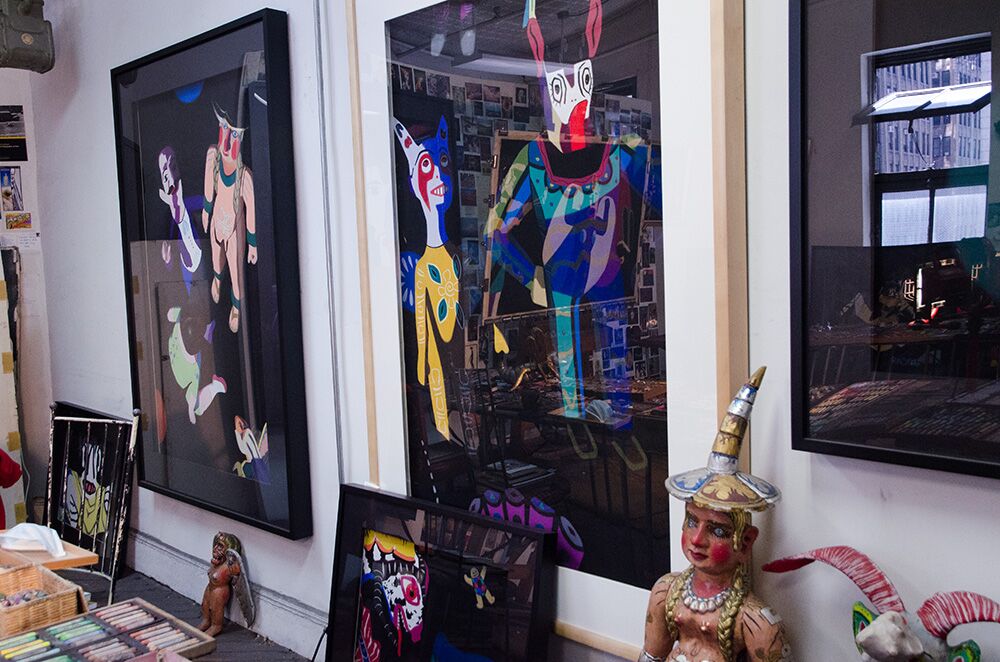
Barbara’s studio, Photo: Marianne Barcellona
* an ongoing series of quotations – mostly from artists, to artists – that offers wisdom, inspiration, and advice for the sometimes lonely road we are on.
If you are older, trust that the world has been educating you all along. You already know so much more than you think you know. You are not finished; you are merely ready. After a certain age, no matter how you’ve been spending your time, you have very likely earned a doctorate in living. If you’re still here – if you have survived this long – it is because you know things. We need you to reveal to us what you know, what you have learned, what you have seen and felt. If you are older, chances are strong that you may already possess absolutely everything you need to possess in order to live a more creative life – except the confidence to actually do your work. But we need you to do your work.
Whether you are young or old, we need your work in order to enrich and inform our own lives.
Elizabeth Gilbert in Big Magic: Creative Living Beyond Fear
Comments are welcome!
Pearls from artists* # 169
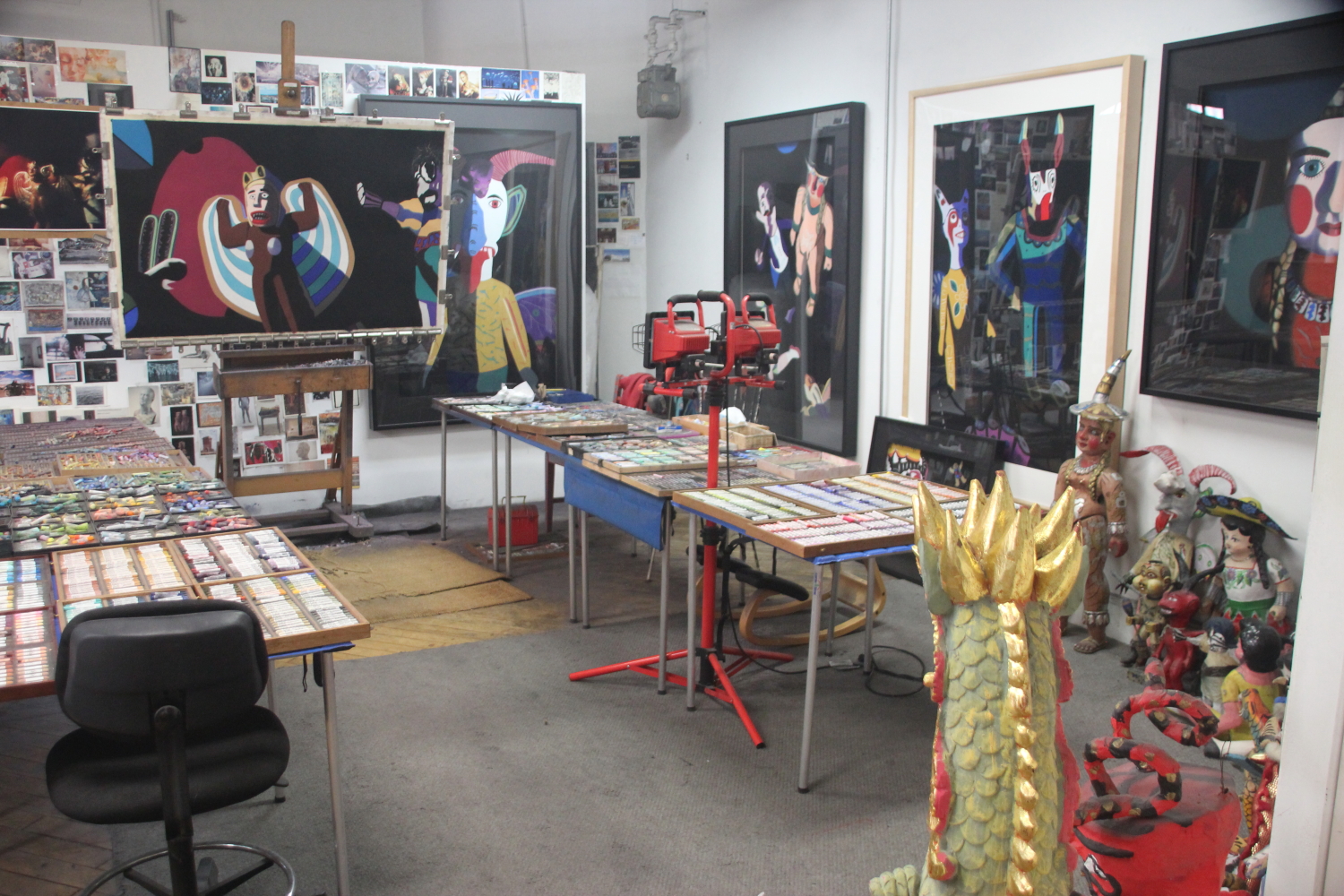
Barbara’s studio
* an ongoing series of quotations – mostly from artists, to artists – that offers wisdom, inspiration, and advice for the sometimes lonely road we are on.
For many, the familiar presence of things is a comfort. Things are valued not only because of their rarity or cost or their historical aura, but because they seem to partake in our lives; they are domesticated, part of our routine and so of us. Their long association with us seems to make them custodians of our memories; so that sometimes, as in Proust, things reveal us to ourselves in profound and unexpected ways.
The Tears of Things: Melancholy and Physical Objects by Peter Schwenger
Comments are welcome!
Pearls from artists* # 161

Whitney Museum
* an ongoing series of quotations – mostly from artists, to artists – that offers wisdom, inspiration, and advice for the sometimes lonely road we are on.
It is the artist’s innate sensitivity that makes him special and different from other professionals. Society expects the artist to be more compassionate and understanding in order to bring out that which will enlighten, inspire and encourage life in his work. His vocation should not just be for art’s sake.
Where the average person sees an old beat-up shark, the artist sees a symbol of beauty in aging and imagines bringing out those qualities that the shark has sheltered over the ages, by means of artistic creation. To the intelligent and sensitive artist, the homeless man lying on the street corner is a symbol that reminds us of what we, as a society, should be doing to better our living.
Sensitivity comes into play when leaves that appear to the general viewer to be uniformly green are seen by the sensitive artist to be different shades, tones, and subtle nuances of green. Without sensitivity, special and important characteristics of nature will be out of our sight and out of reach to the viewing layman. Only the obvious, the average and the common will reveal themselves to the insensitive artist. The endurance of certain works will depend on what the artist has captured with the help of his sensitivity and because of the ideas behind the work.
Samuel Adoquei in Origin of Inspiration: Seven Short Essays for Creative People
Comments are welcome!


 barbararachkoscoloreddust.com