Blog Archives
Pearls from artists* # 544
*an ongoing series of quotations – mostly from artists, to artists – that offers wisdom, inspiration, and advice for the sometimes lonely road we are on.
Creativity is human potential made manifest. But what is talent? The dictionary (in this case Webster’s New World Dictionary) informs us that talent is any natural ability, power, or endowment, and especially a superior, apparently natural ability in the arts or sciences or in the learning or doing of anything.
This definition is revealing on several counts. First of all, it defines talent in terms of abilities and powers. It suggests that an artist can answer the question “Am I talented?” In the affirmative if he can point to certain endowments that he possesses.
But which ones should be point to? What are the important ones in his art discipline? How many of them does he need to do good work? Do they all matter equally? Which, if any, are absolutely necessary? How much of a desired ability does he need – how great a vocal range, how long a leap, how fine a hand as a draftsman?
Eric Maisel in A Life in the Arts: Practical Guidance and Inspiration for Creative and Performing Artists
Comments are welcome!
Q: Can you explain how you choose colors? (Question from Maria Cox via Instagram)

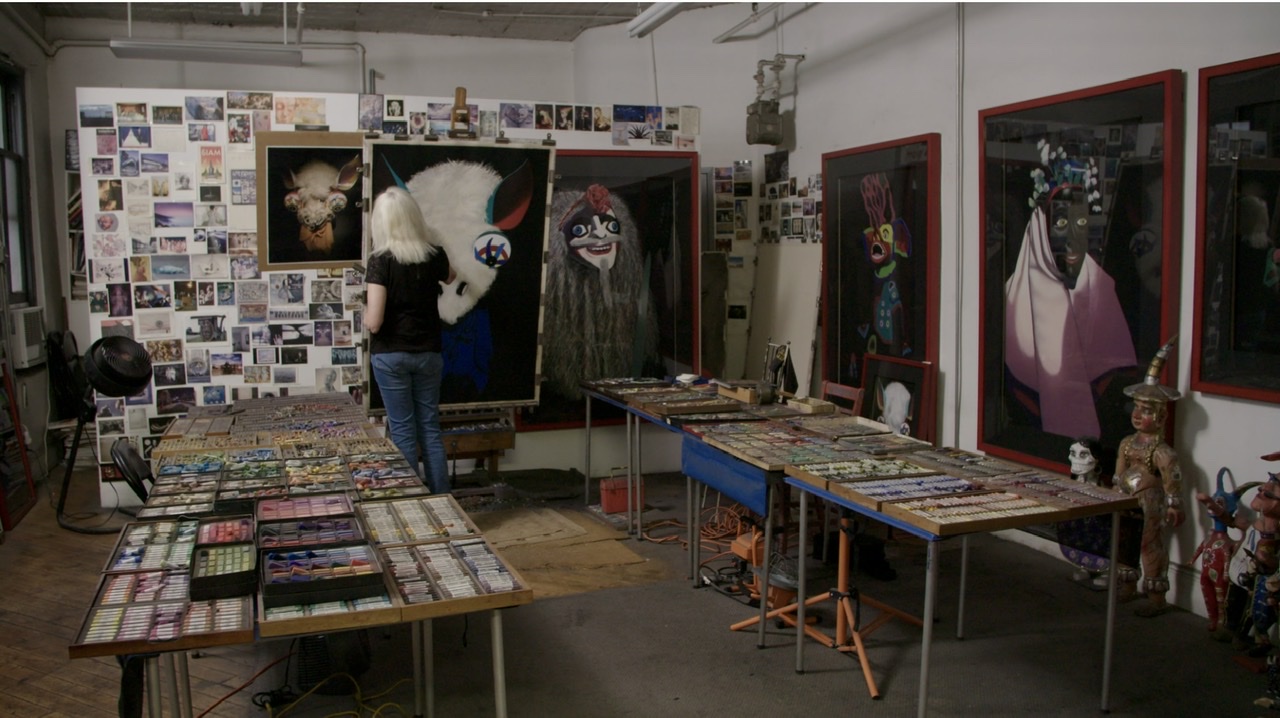
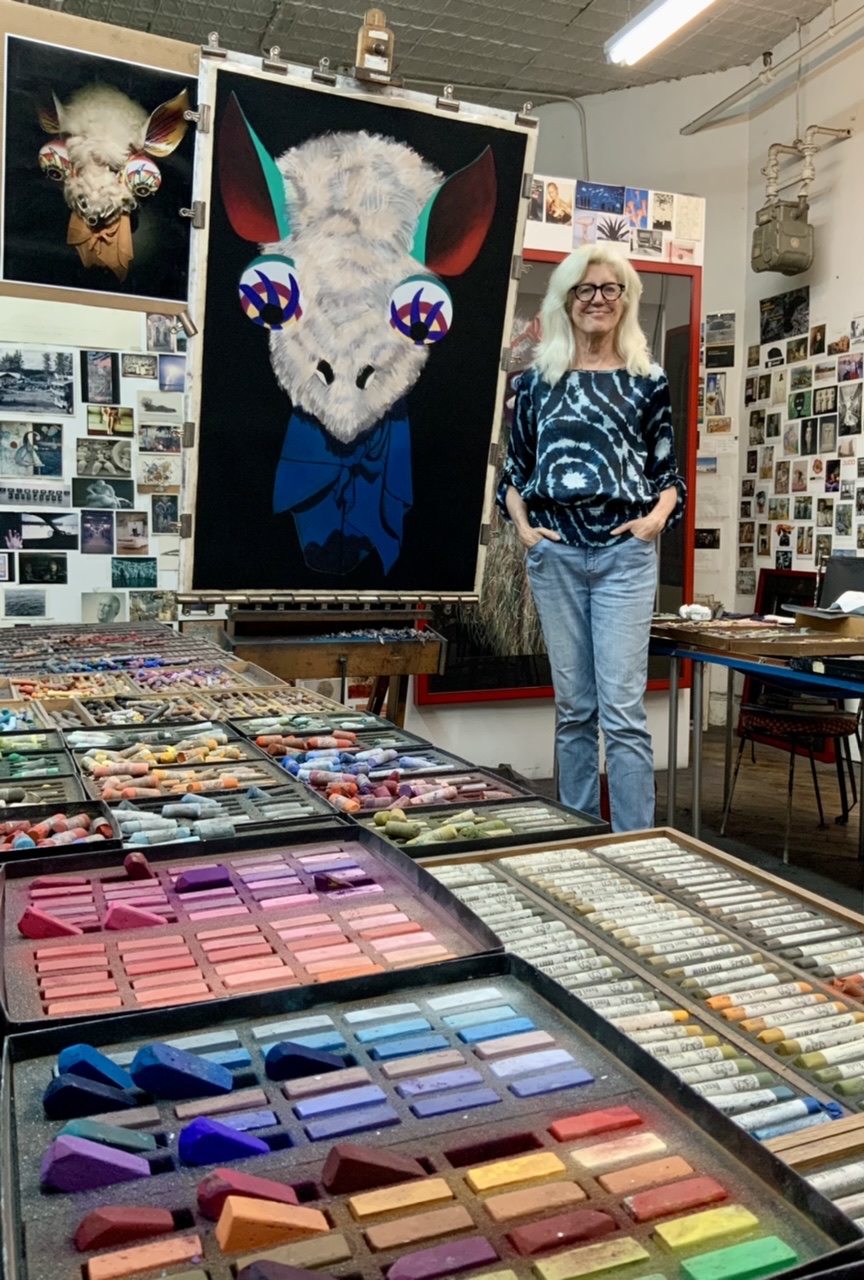
A: I am wild about color! As I work to create a pastel painting, I apply a color, back up from my easel to see how it interacts with and affects the rest of the painting, and then I make revisions. This process necessitates countless color changes and hundreds of hours during months of work. I apply pastel using a meticulous layering process. Were you to x-ray one of them, the earlier, discarded versions of a pastel painting would be visible. All the while I carefully fine-tune and refine how the colors and shapes interact with each other.
The goal is to make an exciting painting that no one, especially me as the maker, has ever seen before. I have no desire to repeat myself, to make art that resembles work by any other artist, or to be forced into a niche.
I try to select intense, vibrant colors that are exciting to look at, that work well in relationship to each other, and that will grab the viewer. Sometimes I deliberately choose colors for their symbolic meanings. For example, I selected a dark purple for the alternating triangles (the ones with the pink dots above) in “Overlord” because purple denotes royalty.
I have been working with soft pastel for 37 years so I have a fairly intricate science of color at my disposal. No doubt, many unconscious factors are at play, too. More on that in future posts.
Comments are welcome!

Q: What does it feel like when you dop off a pastel painting at your Virginia framer’s shop? Are you sorry to see it go? (Question from Caroline Golden)
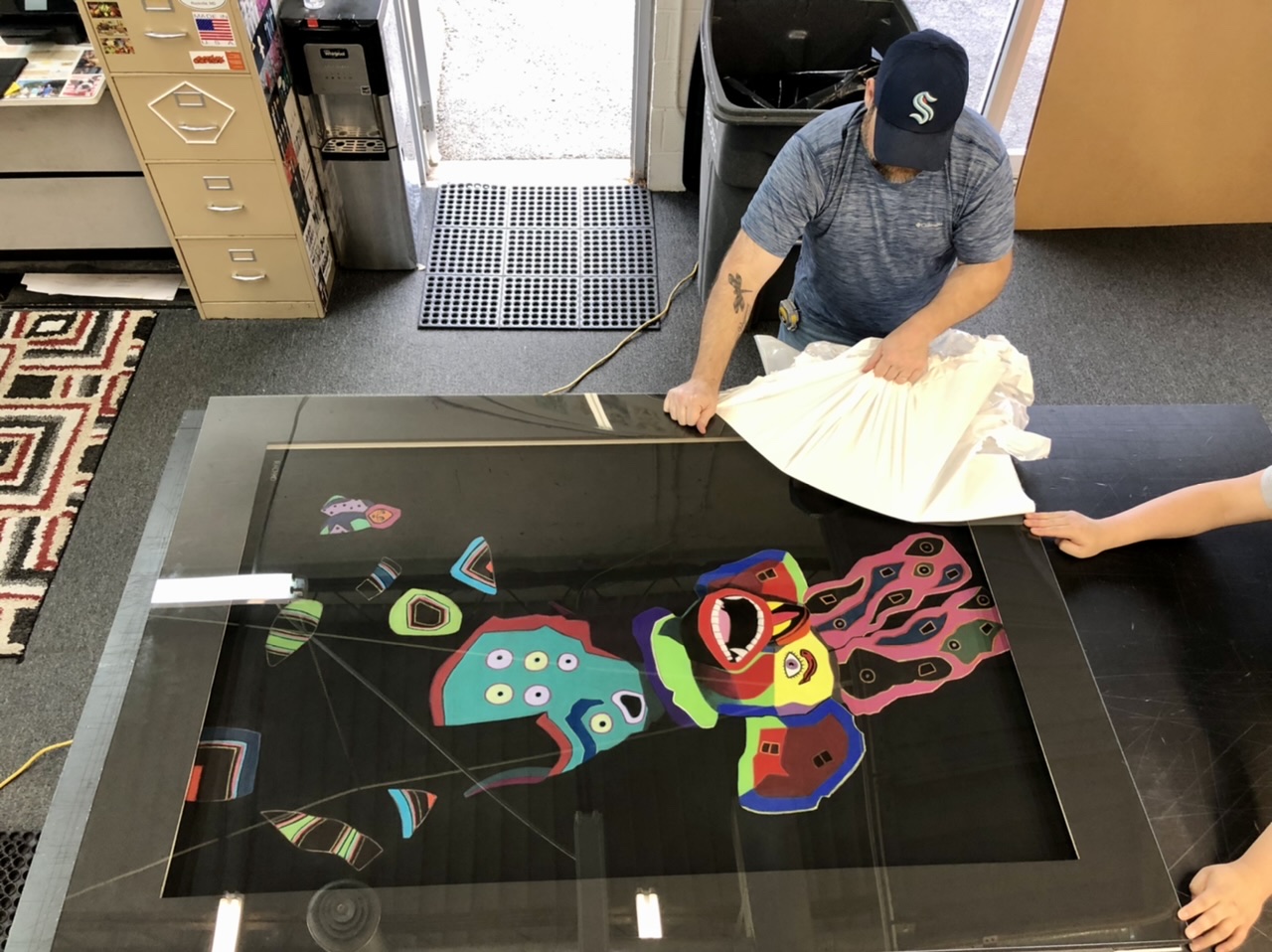
A: Actually, just the opposite since I have been looking at it on my easel for more than three months. Typically, I’m glad to say goodbye – temporarily – because I know when I pick it up in a month, I will have gained some distance and can begin to see and think about it more objectively. I can start reflecting on how this pastel painting relates to my overall body of work.
Comments are welcome!
Pearls from artists* # 527
*an ongoing series of quotations – mostly from artists, to artists – that offers wisdom, inspiration, and advice for the sometimes lonely road we are on.
Vocation was originally a religious term. The word comes from the Latin vocatio, which means a summons, a call. To be a priest, a monk, or a nun is to accept a calling – a vocation. The sense of an imperative – of an activity that’s a necessity, an inevitability – remains very much part of the meaning of the word today. A creative vocation isn’t a job. It’s a calling, even if for most modern artists the summons is an inner necessity, not the call of some divine figure or force. Even an artist as determinedly secular as Picasso saw echoes of religious vocation in his experience as an artist. When his mistress Francoise Gilot, wondering at his concentration and stamina, asked him if when he was painting “it didn’t tire him to stand so long in one spot,” this was his response: “No. That’s why painters live so long. While I work, I leave my body outside the door, the way Moslems take off their shoes before entering the mosque.” For creative spirits the studio or stage – or wherever they do their work – is a place apart. They may recoil from describing this as a sacred space, but there’s no question that these spaces have a special significance.
Jed Perl in Authority and Freedom: A Defense of the Arts
Comments are welcome!
Pearls from artists* # 518
*an ongoing series of quotations – mostly from artists, to artists – that offers wisdom, inspiration, and advice for the sometimes lonely road we are on.
“It’s more than beauty that I feel in music – that I think musicians feel in music. What we know we feel we’d like to convey to the listener. We hope that this can be shared by all. I think, basically, that’s what it is we are trying to do. We never talked about just what we were trying to do. If you ask me that question, I might say this today and tomorrow say something entirely different, because there are many things to do in music.
“But, overall, I think the main thing a musician would like to do is to give a picture to the listener of the many wonderful things he knows of and senses in the universe. That’s what music is to me – it’s just another way of saying this is a big, beautiful universe we live in, that’s been given to us, and here’s an example of just how magnificent and encompassing it is. That’s what I would like to do. I think that’s one of the greatest things you can do in life, and we all try to do it in some way. The musician’s is through his music.”
John Coltrane in Coltrane on Coltrane: The John Coltrane Interviews
Comments are welcome!
Pearls from artists* # 514
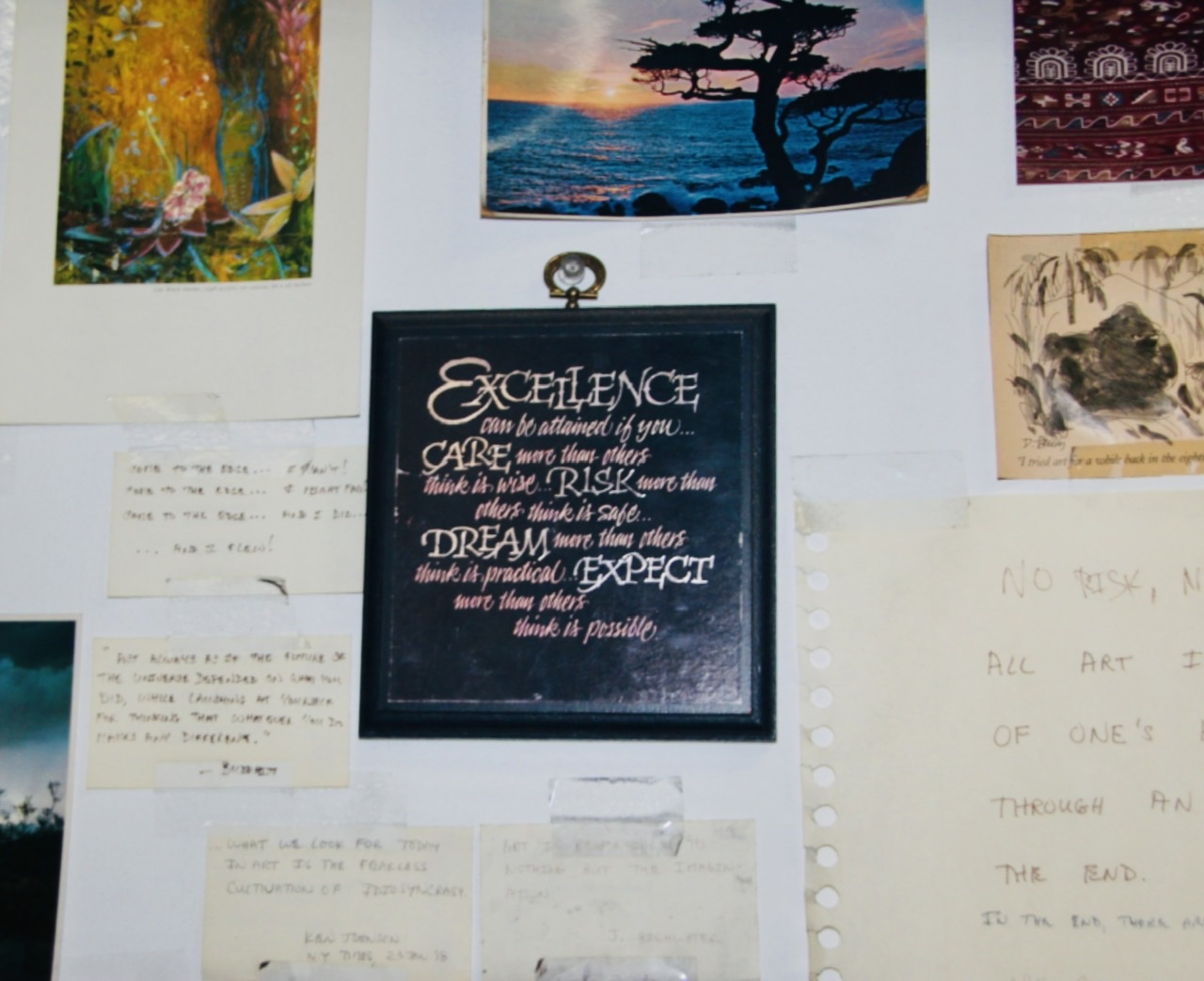
*an ongoing series of quotations – mostly from artists, to artists – that offers wisdom, inspiration, and advice for the sometimes lonely road we are on
Basically I am trying not to stagnate. I go this way and I go that way and I don’t know where I’m going next. But if I should get stagnant, I’d lose my interest.
There are so many things to be considered when making music. The whole question of life itself; my life in which there are many things on which I don’t think I’ve reached a final conclusion; there are matters I don’t think I’ve covered completely, and all these things have to be covered before you make your music sound any way. You have to grow to know.
When I was younger, I didn’t think this would happen, but now I know that I’ve still got a long way to go. Maybe when I’m sixty I’ll be satisfied with what I’m doing, but I don’t know… I’m sure that later on my ideas will carry more conviction.
I know that I want to produce beautiful music, music that does things to people that they need. Music that will uplift and make them happy – those are the qualities I’d like to produce.
Coltrane on Coltrane: The John Coltrane Interviews, edited by Chris DeVito
Comments are welcome!
Pearls from artists* # 499

*an ongoing series of quotations – mostly from artists, to artists – that offers wisdom, inspiration, and advice for the sometimes lonely road we are on.
Life is a journey back to where you started from, Le Guin always said. True voyage is return. When you get there, you might know a little more than when you began.
Isn’t the real question this: Is the work worth doing? Am I, a human being, working for what I really need and want – or for what the State or the advertisers tell me I want? Do I choose? I think that’s what anarchism comes down to. Do I let my choices be made for me, and so go along with the power game, or do I choose? In other words, am I going to be a machine-part, or a human being?
Ursula K. Le Guin: The Last Interview and Other Conversations edited and with an introduction by David Streitfeld
Comments are welcome!
Q: Have you always signed your work on the front? (Question from Anna Rybat)

A: Yes, I have no other choice. I frame all of my pastel paintings under plexiglas soon after they’re completed. Were I to sign on the reverse, as do many painters, my signature would be hidden. Moreover, I sign using pastel pencils so the letters would get smudged.
As I compose and work to complete a pastel painting, I reserve a specific location for my signature. I sign discreetly so as not to interfere with the depicted imagery. In most cases you have to look closely to see my name.
Comments are welcome!
Q: Who are you and what do you do? (Question from “Arts Illustrated”)

A: Here is my professional bio.
I am an American contemporary artist and author who divides my time between residences in New York City and Alexandria, VA. I am best known for my pastel-on-sandpaper paintings, my eBook, “From Pilot to Painter,” and this blog, which now has over 70,000 subscribers!
Friends say that I have led an extraordinary, inspiring life. I learned to fly at the age of 25 and became a commercial pilot and Boeing-727 flight engineer before joining the Navy. As a Naval officer I spent many years working at the Pentagon and retired as a Commander.
On 9/11 my husband, Dr. Bryan C. Jack, was tragically killed on the plane that hit the Pentagon.
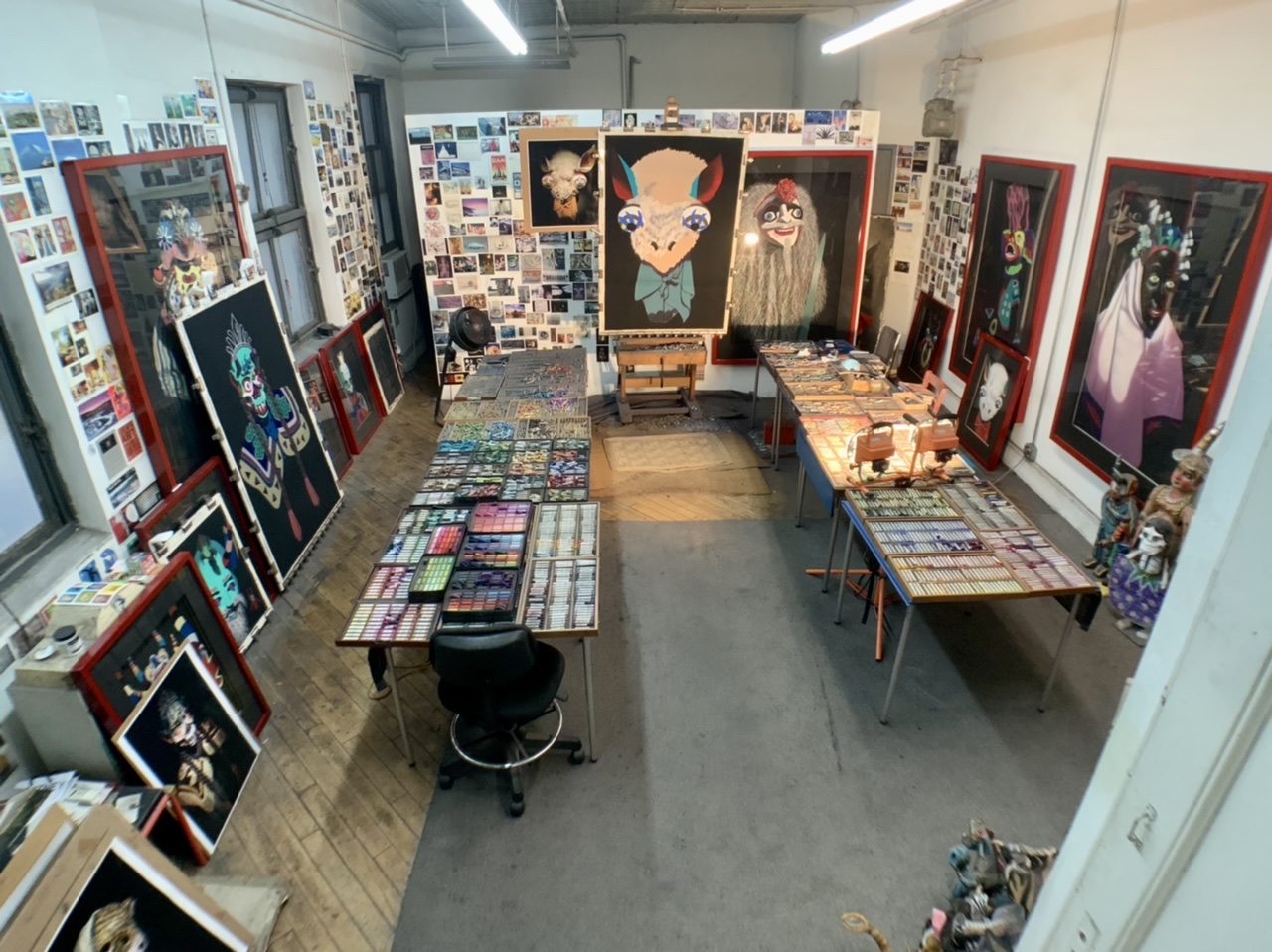
I use my large collection of Mexican and Guatemalan folk art – masks, carved wooden animals, papier mâché figures, and toys – to create one-of-a-kind pastel-on-sandpaper paintings that combine reality and fantasy and depict personal narratives. In 2017 I traveled to Bolivia where I became inspired to paint Bolivian Carnival masks.
My pastel paintings are bold, vibrant, and extremely unusual. Perhaps my business card says it all: “Revolutionizing Pastel as Fine Art!”
I exhibit nationally and internationally and have won many accolades during my 30+ years as a professional artist. For additional info, please see the links in the sidebar.
Comments are welcome!



