Blog Archives
Pearls from artists* # 596

Film still from “Barbara Rachko: True Grit,” Directed by Jennifer Cox, Moto Films LLC
*an ongoing series of quotations – mostly from artists, to artists – that offers wisdom, inspiration, and advice for the sometimes lonely road we are on.
Being an artist is very hard work. Not only do you have to constantly develop your discipline, but if you have a desire to make a living, you have to be a good businessperson.
Agents, business managers, etc., etc., are not the authors of your career. They make suggestions. They are a part of your research team. You are the author. You are the center of your career. You have to run the show. I hope your show is about more than gold digging. I hope your show is about becoming the most engaging, enchanting, magical person that you can be – through your art. Art is ultimately transcendent. That’s a fact.
Anna Deavere Smith in Letters to a Young Artist: Straight-Up Advice on Making a Life in the Arts – For Actors, Performers, Writers, and Artists of Every Kind
Comments are welcome!
Pearls from artists* # 593
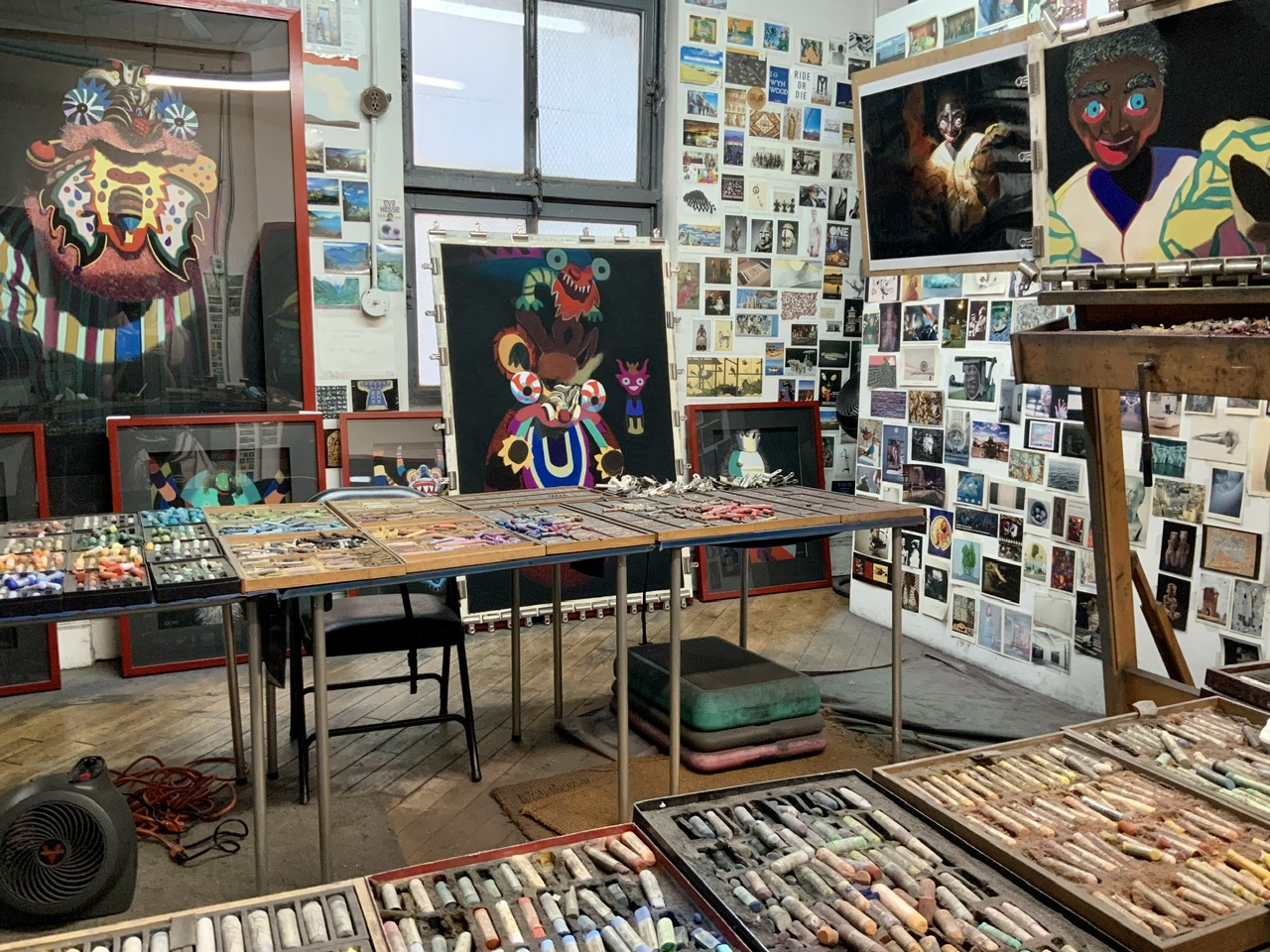
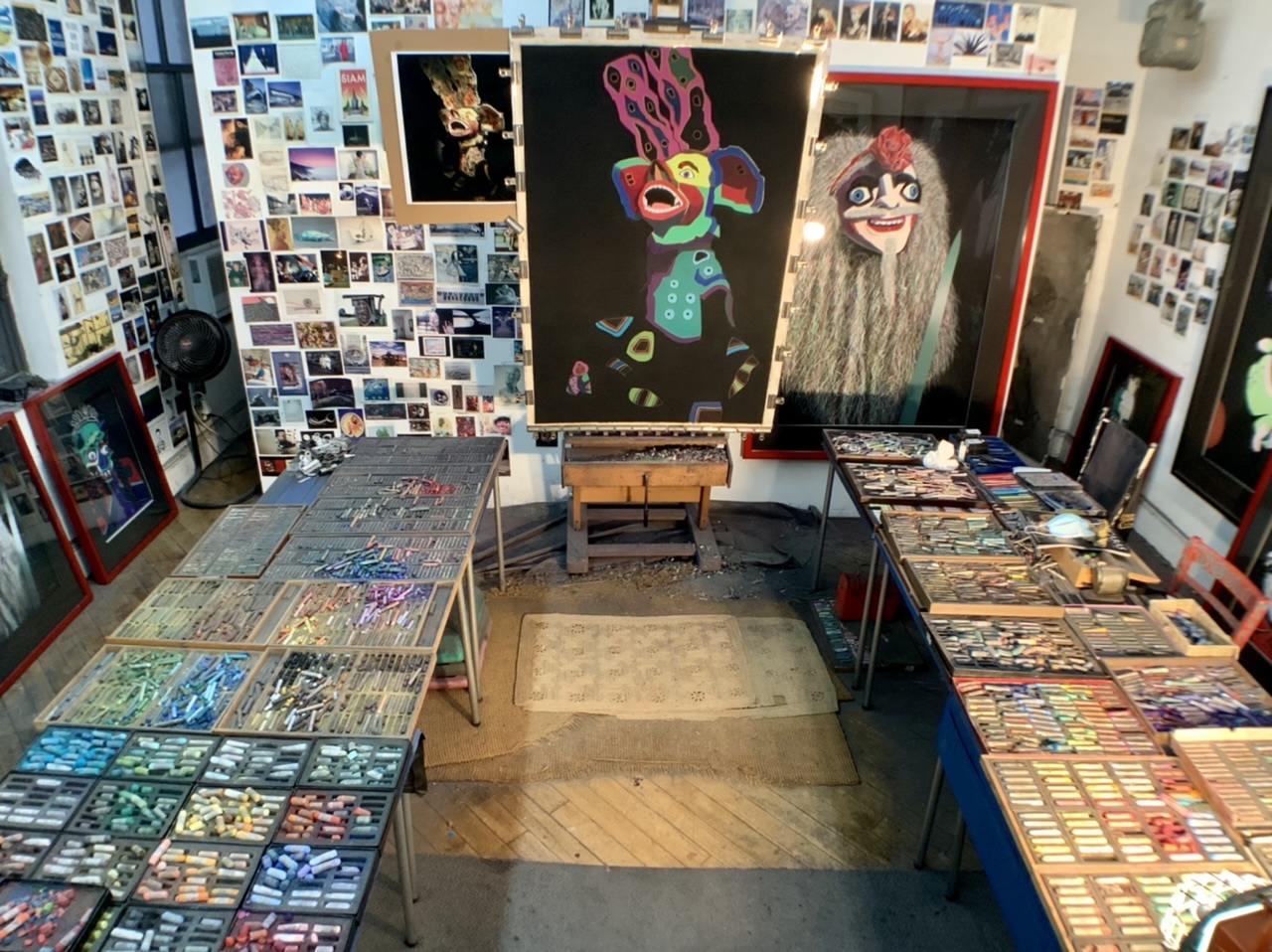
Barbara’s Studio with work in progress
*an ongoing series of quotations – mostly from artists, to artists – that offers wisdom, inspiration, and advice for the sometimes lonely road we are on.
Falling in love with beauty or with someone else’s artwork that touches us is easy. We can experience the rapture of it and go home. But falling in love with our instrument or with our work is more like falling in love with a person, in that we experience the rapture and delight of the discovery, but then we are saddled with the effort of fulfillment, with love’s labors and the hard lessons in which illusions are stripped away, in which we confront difficult pieces of self-knowledge, in which we have to stretch our physical, emotional, intellectual stamina to its limits, in which our patience and our ability to persevere and transcend ourselves are tested.
Stephen Nachmanovitch in Free Play: Improvisation in Life and Art
Comments are welcome!
Pearls from artists* # 576
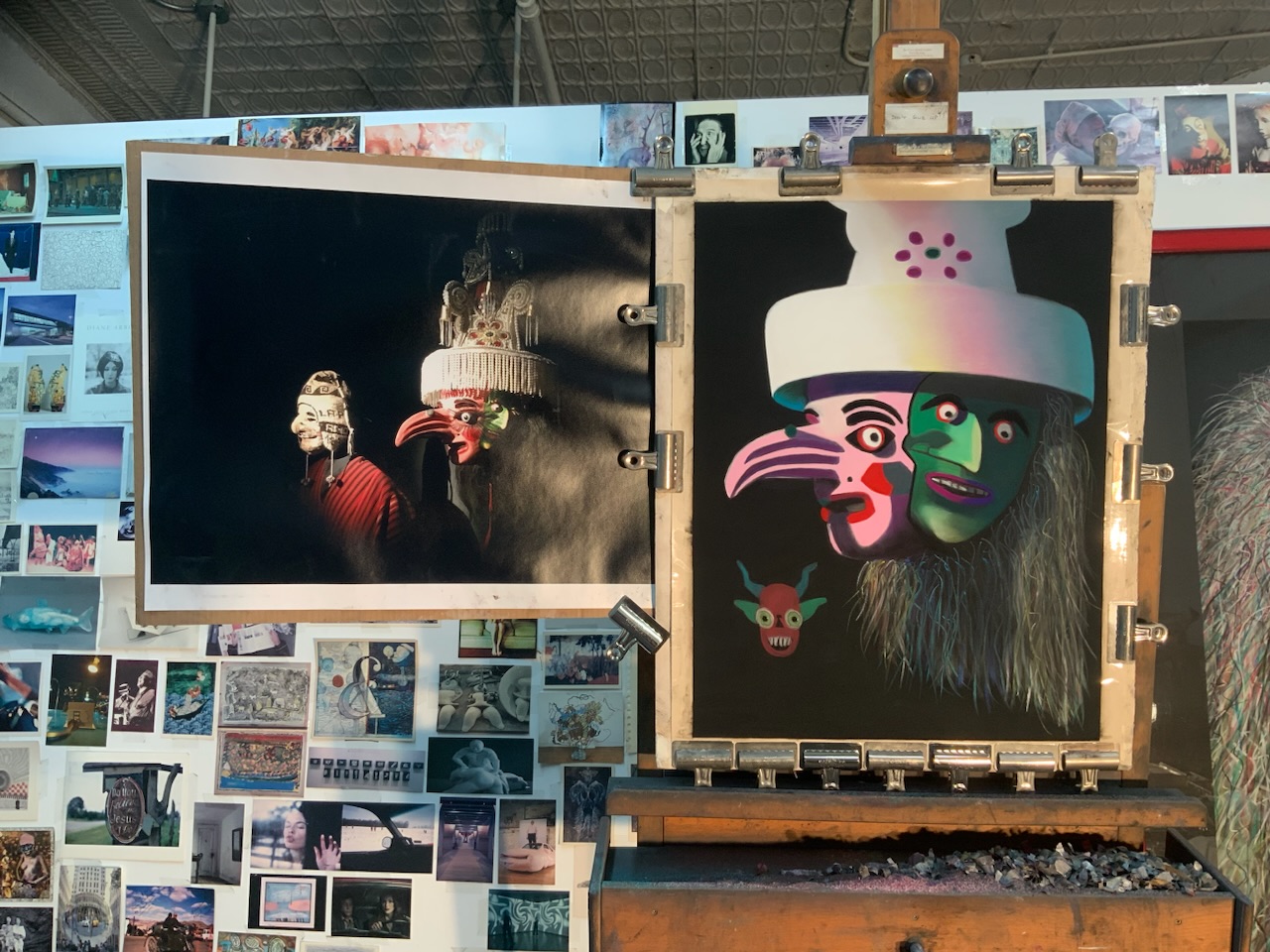
In progress: “Shadow,” soft pastel on sandpaper, 26” x 20”
*an ongoing series of quotations – mostly from artists, to artists – that offers wisdom, inspiration, and advice for the sometimes lonely road we are on.
A word derived from Latin, persona, originally referred to the masks worn by actors in ancient classical theatre. In Jungian psychology, this term refers to the inner character that we use to face the world. Drawn from societal expectations, cultural norms, and natural attributes, it is the person we want others to think we really are. Our persona is our brave face, our false front. It is the ongoing project of building our ideal self.
… the persona is our somewhat embellished view of ourselves, the shiny face that we want the world to see. It’s opposite, everything we reject about ourselves, is called the shadow.
… our shadow is the pain we’ve forgotten about. It is a complex within us, a split-off part our consciousness loaded with emotional weight. Our persona is what we want to be seen to be; shadow is what we least want to be.
Gary Bobroff in Carl Jung: Knowledge in a Nutshell
Comments are welcome!
Pearls from artists* 564
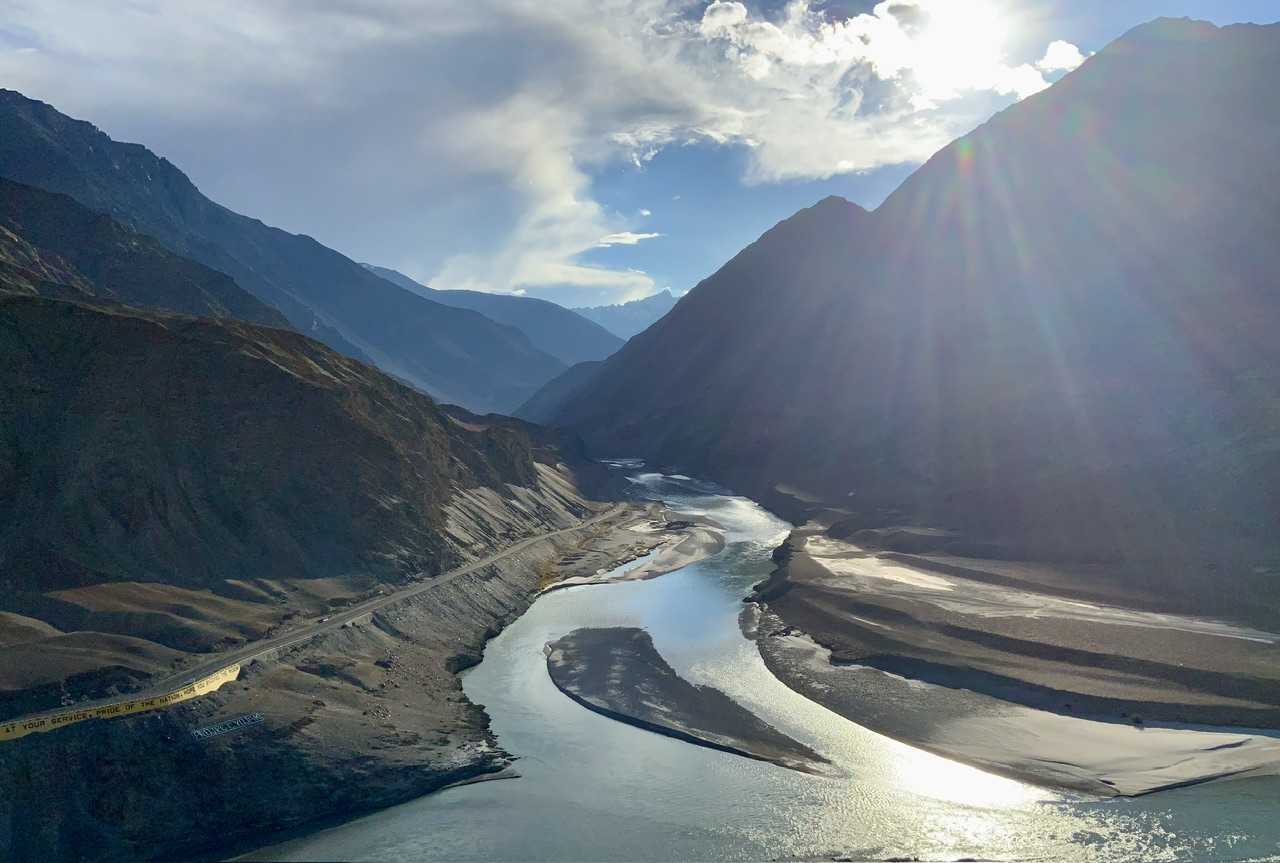
Indus River, Ladakh, India
*an ongoing series of quotations – mostly from artists, to artists – that offers wisdom, inspiration, and advice for the sometimes lonely road we are on.
To travel through the peaks and valleys of Himalayan Buddhism is to become a collector of fragmented images and a teasing array of sense impressions, many of them bound to counter the stereotypes of simplicity and serenity that we expect to define a Buddhist universe. At the end of the journey, the traveler assembles these sense fragments into an individualistic understanding of what has been seen and experienced. Maybe that’s the way it should be, since Buddhism itself teaches us that each person must seek his own way to knowledge and enlightenment in this life or some other.
Barbara Crossette in So Close to Heaven: The Vanishing Buddhist Kingdoms of the Himalayas
Comments are welcome!
Q: What makes you feel most alive?

A: Making art makes me feel alive, using all my gifts, my brain, my heart, and my hands to create something that never existed before and that can never be duplicated; knowing I’m the only person, ever, who could or would make this particular thing, as I strive to push my pastel techniques further each time out. Whether it’s a painting or a photograph, I enjoy making something from nothing… art that is well-crafted and has never been seen before.
Travel is the other activity that excites me. I thrive on adventure and I especially love new vistas. When I am in a country I have never visited before, with every step and around every bend there is something new to see. I am an explorer at heart!
Comments are welcome!
Q: Would you speak about someone who made a difference in your professional life?
A: The first person who comes to mind is my favorite aunt, Teddie. In 1997 she was headed to northern California to attend a three-year-plus silent Tibetan Buddhist retreat at her teacher’s center. Teddie offered me her West 13th Street 6th-floor walkup apartment to live in while she was away. At the time I was based in Alexandria, VA and had just had my first solo exhibition at an important West 57th Street gallery, Brewster Fine Arts. I was becoming increasingly frustrated with the limited Washington, DC art scene, had outgrown everything it had to offer, and felt New York pulling me towards new and exciting professional adventures.
Teddie, recognizing my talent and ambition, made it possible for me to afford to move to New York. She had practiced Tibetan Buddhism for 35 years and was soon to become a Buddhist lama. She had an extraordinary mind and thought deeply about life. We used to talk for hours. Teddie was 7 years older and seemed more like a sister than an aunt. Indeed, she was my first soul mate. (I have been extremely fortunate to have had two such relationships in my life. The other was my late husband, Bryan).
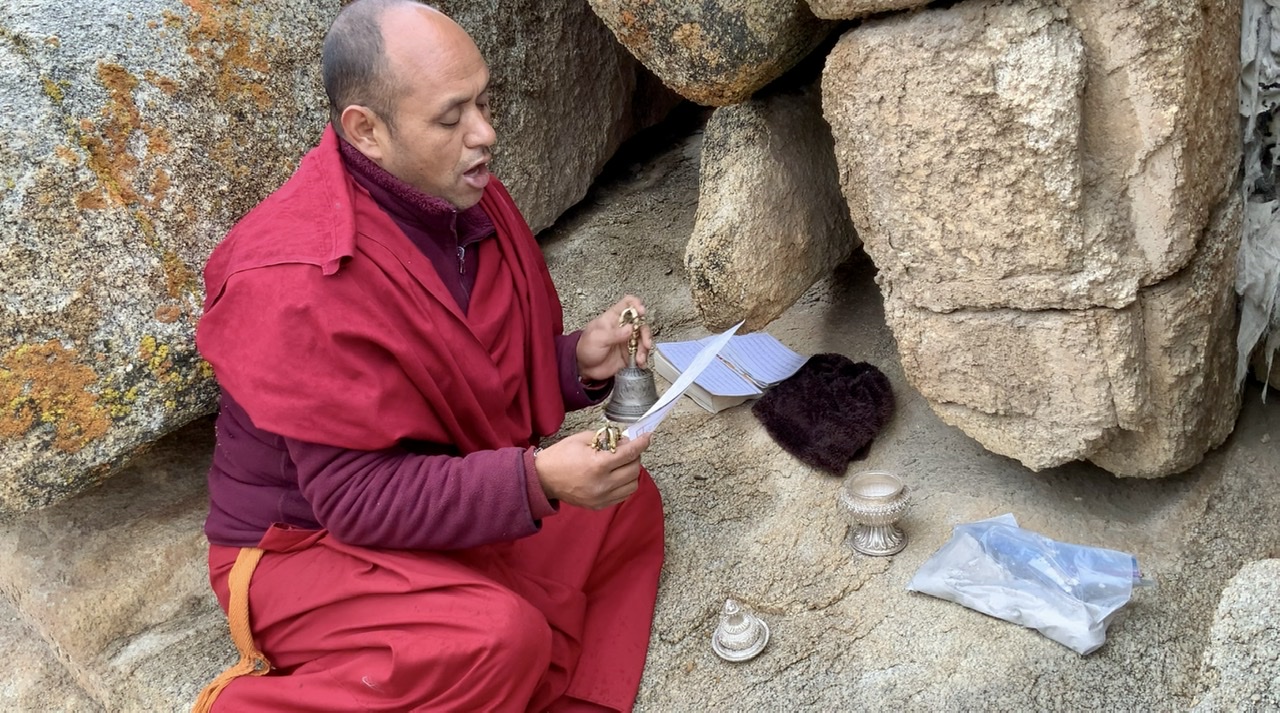
Unfortunately, dear Aunt Teddie died at the age of 67 of breast cancer. Recently, on September 25 I honored her life in a short ceremony on a mountain cliff in Leh, Ladakh (India). A Tibetan Buddhist monk recited prayers as he placed her ashes among the rocks.
Comments are welcome!
Pearls from artists* # 507

* an ongoing series of quotations – mostly from artists to artists – that offers wisdom, inspiration, and advice for the sometimes lonely road we are on.
Intellectual work sometimes, spiritual work certainly, artistic work always – these are forces that fall within its [uncertainty and the unknown] grasp, forces that must travel beyond the realm of the hour and the restraint of the habit. Nor can the actual work be well separated from the entire life. Like the Knights of the Middle Ages, there is little the creatively inclined person can do but prepare himself, body and spirit, for the labor to come – for his adventures are all unknown. And no artist could go about his work, or would want to, with less than extraordinary energy and concentration. The extraordinary is what art is about.
Mary Oliver in Upstream: Selected Essays
Comments are welcome!
Pearls from artists* # 491
*an ongoing series of quotations – mostly from artists, to artists – that offers wisdom, inspiration, and advice for the sometimes lonely road we are on.
We look at ancient Egyptian painting today and may find it slightly comic, but what the Egyptians were trying to do with the figure was reveal the various aspects of the person’s body in the most characteristic aspect. The face is in profile because that reveals the most about the person’s face, but the shoulders are not in profile, they’re facing the viewer, because that’s the most revealing angle for the shoulders. The hips are not in profile, but the feet are. It gives a strange, twisted effect, but it was natural to the Egyptians. They were painting essences, and in order to paint an essence you have to paint it from its most characteristic angle. So they would simply combine the various characteristic essences of the human body. This was a piece of spiritual art. It wasn’t trying to reproduce photographic reality, it was trying to reproduce and combine all the essential features of a person within one figure.
Walter Murch in The Conversations: Walter Murch and the Art of Editing Film by Michael Ondaatje
Comments are welcome!
Pearls from artists* # 468

*an ongoing series of quotations – mostly from artists, to artists – that offers wisdom, inspiration, and advice for the sometimes lonely road we are on.
Why does art elicit such different reactions from us? How can a work that bowls one person over leave another cold? Doesn’t the variability of the aesthetic feeling support the view that art is culturally determined and relative? Maybe not, if we consider the possibility that the artistic experience depends not on some subjective mood but on an individually acquired (hence variable) power to be affected by art, a capacity developed through one’s culture in tandem with one’s unique character. For evidence of this we can point to works that seem to ignore cultural boundaries altogether, affecting people of different backgrounds in comparable ways even though a specific articulation of their personal responses continues to vary. Consider the plays of William Shakespeare or Greek theater, or the fairy tales that have sprung up in similar forms on every continent. We could not be further removed from the people who painted in the Chauvet Cave, nor could we be more oblivious as to the significance they ascribed to their pictures. Yet their work affects us across the millennia. Everyone responds to them differently, of course, and the spirit in which people are likely to receive them now probably differs significantly from how it was at the beginning. But these permutations revolve around a solid core, something present in the images themselves.
J.F. Martel in Reclaiming Art in the Age of Artifice: A Treatise, Critique, and Call to Action
Comments are welcome!
Pearls from artists* # 462
*an ongoing series of quotations – mostly from artists, to artists – that offers wisdom, inspiration, and advice for the sometimes lonely road we are on.
It seems contradictory to call an artist both shy and conceited, introverted and extraverted, empathic and self-centered, highly independent and hungry for community – until we realize that all of these qualities can be dynamically present in one and the same person.
Indeed, this dynamism regularly perplexes and buffets the artist. He may begin to consider himself crazy for longing to perform even though public performance frightens him, or neurotic for feeling competent at the piano but incompetent in the world. He may come to possess the vain hope that he can live quietly, like other people, his personality statically integrated in some fashion, and then feel like a failure when the contradictory forces at play in him prevent him from feeling relaxed even for a minute. Once he realizes, however, that this puzzling contradiction is his personality, he is better able to accept himslef and to understand his motives and actions.
Eric Maisel in “A Life in the Arts: Practical Guidance and Inspiration for Creative and Performing Artists”
Comments are welcome!


 barbararachkoscoloreddust.com