Blog Archives
Q: Do you have a home studio or do you go to an outside studio to work? Which do you prefer and why?
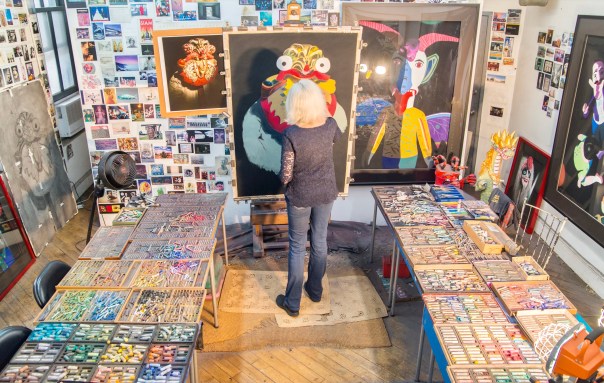
At work
A: I have always preferred a separate studio. Pastel creates a lot of dust, it’s toxic to breathe, plus I do not want to live with the mess! I need a place to go in the mornings, someplace where I can focus and work without any distractions. It’s difficult to do that at home.
From the beginning of my time as an artist, in the mid-1980’s, I had a studio. My first one was in the spare bedroom of the Alexandria, Virginia, house that I shared with my late husband, Bryan, and that I still own.
For about three years in the 1990s I had a studio on the third floor of the Torpedo Factory Art Center, a building in Alexandria, VA that is open to the public. People would come in, watch artists at work, and sometimes buy a piece of art.
In April 1997 an opportunity to move to New York arose and I didn’t look back. By then I was showing in a good 57th Street gallery, Brewster Arts Ltd. (the gallery focused exclusively on Latin American artists; I was in the company of Leonora Carrington, Rufino Tamayo, Diego Rivera, etc.), and I had managed to find a New York agent, Leah Poller, with whom to collaborate.
I looked at only one other space before finding my West 29th Street studio and knew instantly it was the one! An old friend of Bryan’s from Cal Tech rented the space next door and he had told us it was available. Initially the studio was a sublet. The lease-holder was a painter headed to northern California to work temporarily for George Lucas at the Lucas Ranch. After several years she decided to stay so I was able to take over the lease. I feel extremely fortunate to have been in my West 29th Street, New York City space now for twenty-three years. In a city where old buildings are perpetually knocked down to make way for new ones this is rare.
My studio is an oasis in a chaotic city, a place to make art, to read, and to think. I love to walk in the door every morning and I feel calmer the moment I arrive. It’s my absolute favorite place in New York! Sometimes I think of it as my best creation. For more about this please see
https://artofcollage.wordpress.com/2020/04/30/artists-and-their-relationship-to-their-studio
Comments are welcome!
Q: You are a multi-talented woman! Tell us about your book, “From Pilot to Painter,” and how writing, for you, compares to painting and photography. Which do you prefer?
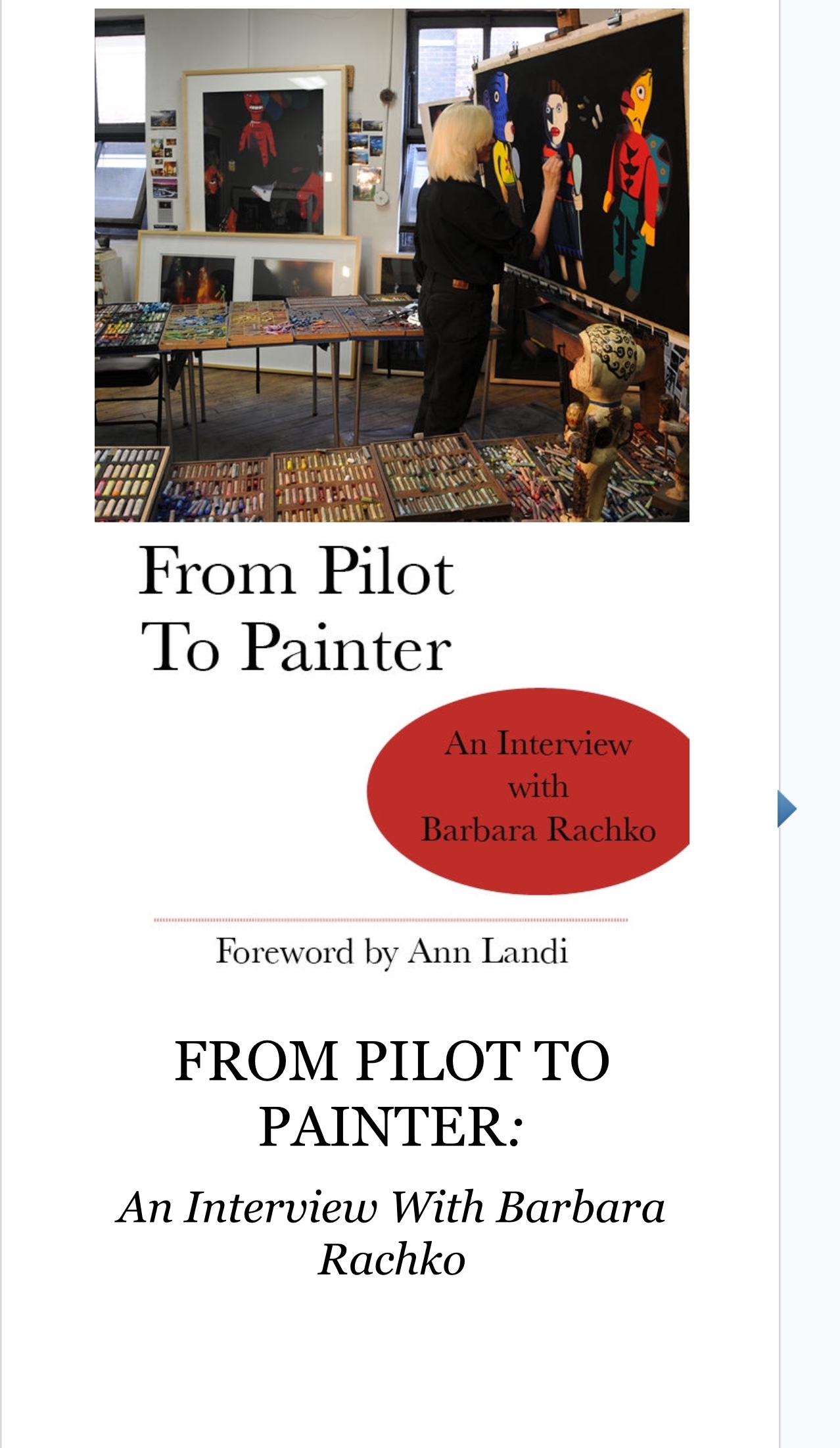
“From Pilot to Painter”
A: I am pleased that my eBook FROM PILOT TO PAINTER is available on Amazon and iTunes. It is based on my blog and is part memoir, including my personal loss on 9/11, insights into my creative practice, and intimate reflections on what it’s like to be an artist living in New York City now. The eBook includes new material not found on the blog, plus 25+ reproductions of my vibrant pastel-on-sandpaper paintings, a Foreword by Ann Landi (who writes for ARTnews and The Wall Street Journal), and more.
“Barbara Rachko’s Colored Dust” (the title of my blog) continues to be a crucial part of my overall art practice. Blogging twice a week forces me to think deeply about my work and to explain it clearly to others. The process has helped me develop a better understanding about why I make art and has encouraged me to become a better writer.
From the beginning in the 1980s I used photographs as reference material and Bryan would shoot 4” x 5” negatives of my elaborate setups with his Toyo-Omega view camera. In those days I rarely picked up a camera except when we were traveling. After Bryan was killed on 9/11, I inherited his extensive camera collection – old Nikons, Leicas, Graphlex cameras, etc. – and I wanted to learn how to use them. In 2002 I enrolled in a series of photography courses (about 10 over 4 years) at the International Center of Photography in New York. I learned how to use all of Bryan’s cameras and how to make my own big color prints in the darkroom. Along the way I discovered that the sense of composition, form, and color I developed over many years as a painter translated well into photography. The camera was just another medium with which to express my ideas. Astonishingly, in 2009 I had my first solo photography exhibition in New York.
It’s wonderful to be both a painter and a photographer. Pastel painting will always be my first love, but photography lets me explore ideas much faster than I ever could as a painter. Paintings take months of work. To me, photographs – from the initial impulse to hanging a framed print on the wall – are instant gratification.
For two years I have been using my iPad Pro to capture thousands of travel photographs. Most recently, I visited Gujarat and Rajasthan in India. I have never been inclined to use a sketchbook so composing photos on my iPad keeps my eye sharp while I’m halfway around the world, far from my studio practice.
Comments are welcome!
Q: Where did you grow up and what were some early milestones or experiences that contributed to you becoming an artist later in life?
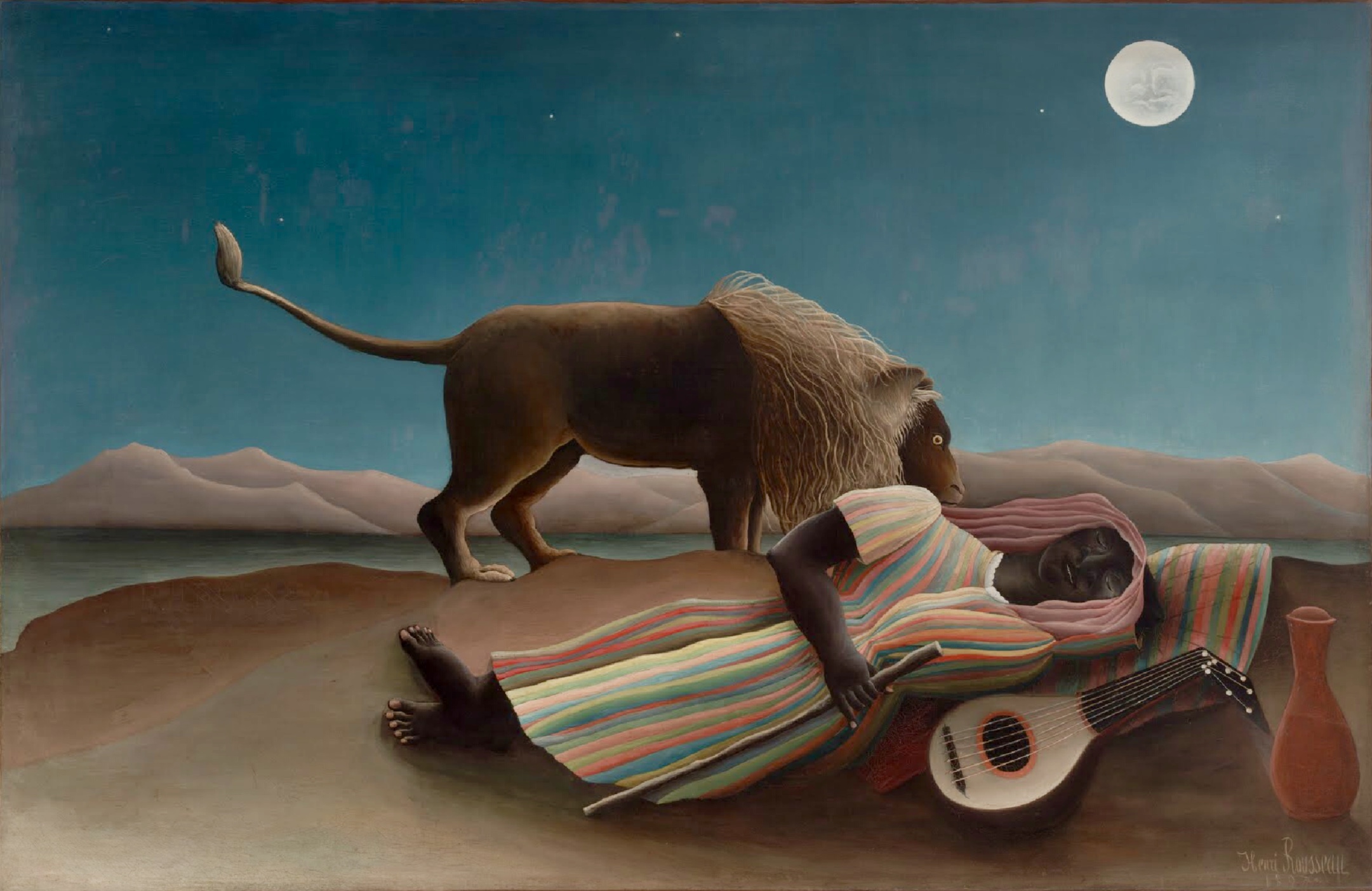
“The Sleeping Gypsy,” Henri Rousseau, oil on canvas, 1897
A: I grew up in a blue collar family in Clifton, New Jersey, a suburb about fifteen miles west of Manhattan. My father was a television repairman for RCA. My mother stayed home to raise my sister and me (at the time I had only one sister, Denise; my sister Michele was born much later). My parents were both first-generation Americans and no one in my extended family had gone to college yet. I was a smart kid who showed some artistic talent in kindergarten and earlier. I remember copying the Sunday comics, which in those days appeared in all the newspapers, and drawing small still lifes I arranged for myself. I have always been able to draw anything, as long as I can see it.
Denise, a cousin, and I enrolled in Saturday morning “art classes” at the studio of a painter named Frances Hulmes in Rutherford, NJ. I was about 6 years old. I continued the classes for 8 years and became a fairly adept oil painter. Since we lived so close to New York City, my mother often took us to museums, particularly to the Museum of Modern Art, the Metropolitan Museum of Art, and the Museum of Natural History. Like so many young girls, I fell in love with Rousseau’s “The Sleeping Gypsy” and was astonished by Picasso’s “Guernica” when it was on long-term loan to MoMA. I have fond memories of studying the dioramas at the Museum of Natural History (they are still my favorite part of the museum). As far as I know, there were no artists in my family so, unfortunately, I had no role models. At the age of 14 my father decided that art was not a serious pursuit – declaring, it is “a hobby, not a profession” – and abruptly stopped paying for my Saturday morning lessons. With no financial or moral support to pursue art, I turned my attention to other interests, letting my artistic abilities go dormant.
Comments are welcome!
Pearls from artists* # 345

Barbara working on an interview. Photo: Maria Cox
*an ongoing series of quotations – mostly from artists, to artists – that offers wisdom, inspiration, and advice for the sometimes lonely road we are on.
You begin your journey as an artist from sacred motives, with dreams and high hopes, and also, perhaps, from a place of painful turmoil or other inner necessity. From these powerful drives comes your conscious decision to pursue a life in art, your resolve to call yourself an artist whatever the consequences. You are the one nodding in agreement when the painter John Baldessari says, “Art is about bloody-mindedness. It’s not about living the good life. In the end, it’s just you and the art.”
Eric Maisel in A Life in the Arts: Practical Guidance and Inspiration for Creative and Performing Artists
Comments are welcome!
Pearls from artists* # 293
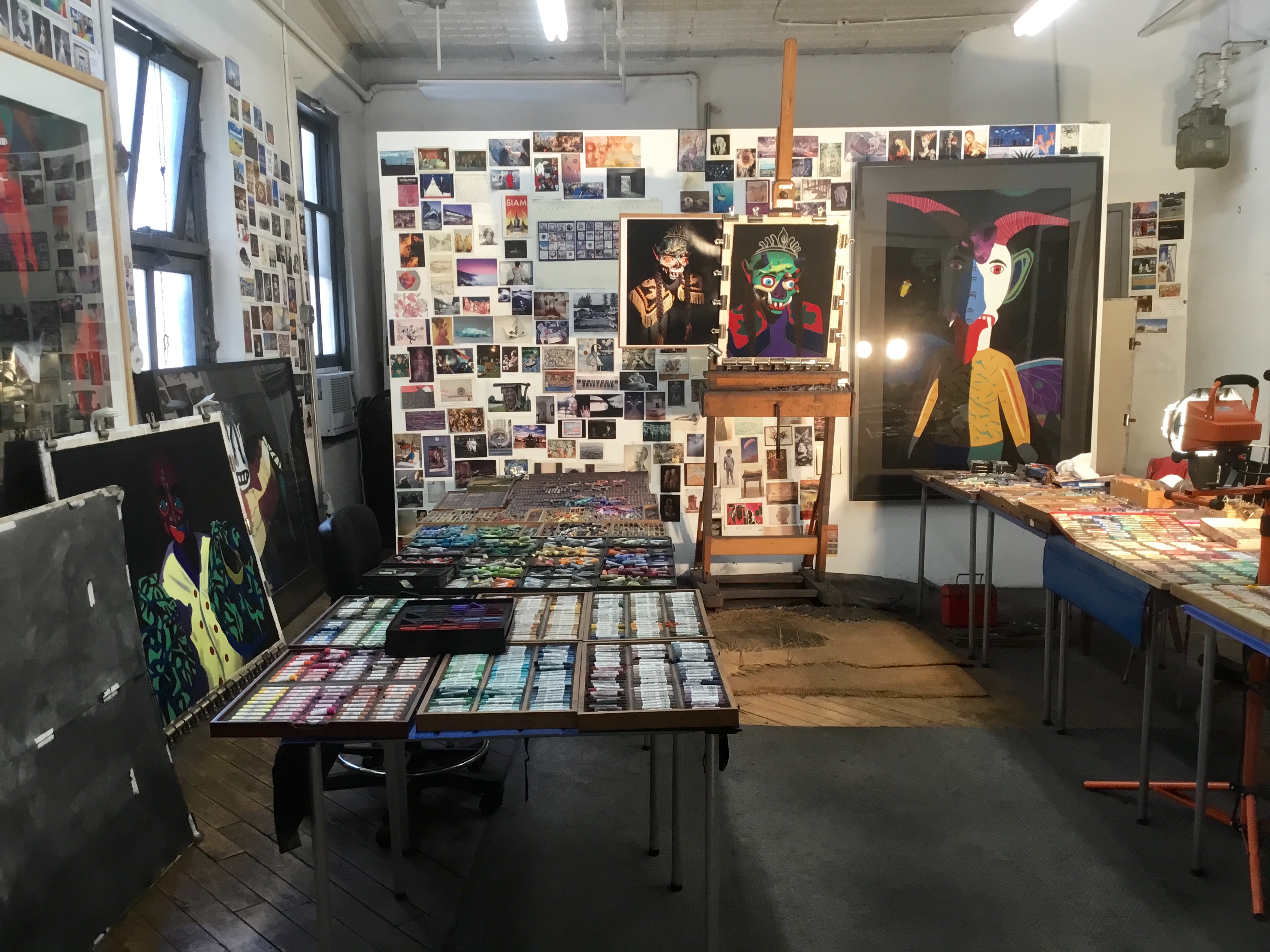
Studio with works in progress
*an ongoing series of quotations – mostly from artists, to artists – that offers wisdom, inspiration, and advice for the sometimes lonely road we are on.
Works of art specify no immediate action or limited use. They are like gateways, where the visitor can enter the space of the painter, or the time of the poet, to experience whatever rich domain the artist has fashioned. But the visitor must come prepared: if he brings a vacant mind or deficient sensibility, he will see nothing. Adherent meaning is therefore largely a matter of conventional shared experience, which it is the artist’s privilege to rearrange and enrich under certain limitations.
George Kubler in The Shape of Time: Remarks on the History of Things
Comments are welcome!
Pearls from artists* # 209

“So What?”, soft pastel on sandpaper, 20″ x 26″
* an ongoing series of quotations – mostly from artists, to artists – that offers wisdom, inspiration, and advice for the sometimes lonely road we are on.
For a young painter, life is difficult. If he’s sincere, if he’s entirely taken up with what he’s researching, he can’t do painting that flatters art lovers. If he’s concerned with success, he works with just the one idea: pleasing people and selling. He loses the support of his own conscience and is dependent on how others are feeling. He neglects his gifts and eventually loses them.
For us, the problem was simple: the buyer simply didn’t exist. We were working for ourselves. We were in a trade that offered no hope at all. So we had fun with any little thing. I suppose people shipwrecked on a desert island must find it very jolly – all their problems have ceased to exist. Nothing left to do but have a laugh, tell jokes, and play jokes. Painters? How could they ever expect to sell anything?
Chatting with Henri Matisse: The Lost 1941 Interview, Henri Matisse with Pierre Courthion, edited by Serge Guilbaut, translated by Chris Miller
Comments are welcome!
Pearls from artists* # 188
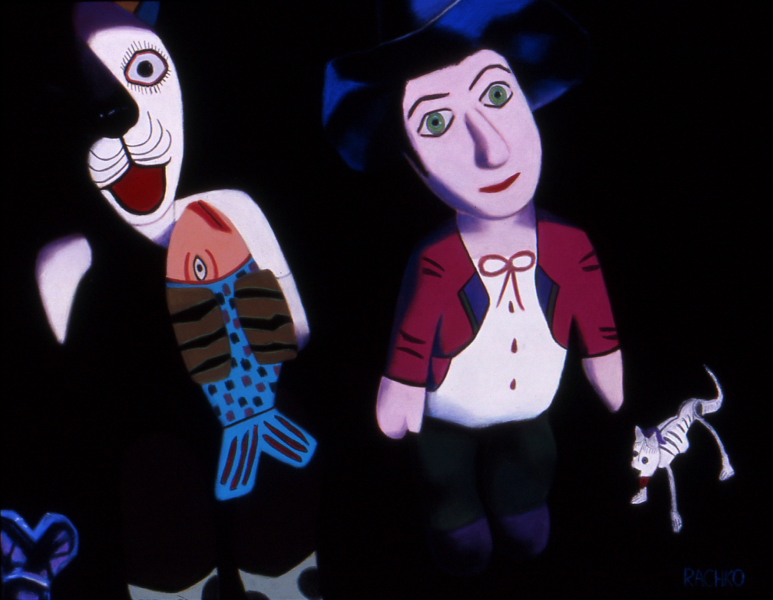
“Offering,” soft pastel on sandpaper, 20″ x 26″
* an ongoing series of quotations – mostly from artists, to artists – that offers wisdom, inspiration, and advice for the sometimes lonely road we are on.
HM: In order to create a work of art, you need an artist, an object, the work, and the audience. Indeed, where there’s no audience, there’s no artist. Renoir used to say, “No painters in Hamlet.” meaning that on a desert island you wouldn’t paint.
( I confess I am a little surprised. For my part, I find it difficult to believe that the true artist cannot work without hope. It seems to me that art is first and foremost an internal necessity, a need to escape from life. It is true that this is closer to the mystics’ point of view and that the artist, if he does not work directly for his contemporaries, at least looks forward to some future resonance. Nonetheless, I ask the same question again.)
PC: Even a true painter wouldn’t paint on a desert island?
HM: No… Painting is a means of communication, a language. An artist is an exhibitionist. Take away his spectators and the exhibitionist slinks off with his hands in his pockets.
The audience is the material in which you work. You don’t see the face of the audience. It’s huge, an immense mass. The public is – listen, it’s the man you encounter one fine day, who says, “Monsieur Matisse, I can’t tell you how much I love your picture, the one you exhibited at the salon,” and this man is a clerk who could never spend a red cent on painting. The public is not the buyer; the public is the sensitive material on which you hope to leave an imprint.
PC: Through the picture, the audience returns to the source of emotion.
HM: Yes, and the artist is the actor, the fellow with the wheedling voice who won’t rest until he’s told you his life story.
Chatting with Henri Matisse: The Lost 1941 Interview, Henri Matisse with Pierre Courthion, edited by Serge Guilbaut, translated by Chris Miller
Comments are welcome!
Pearls from artists* # 145

“Stalemate,” soft pastel on sandpaper, 38″ x 58″
* an ongoing series of quotations – mostly from artists, to artists – that offers wisdom, inspiration, and advice for the sometimes lonely road we are on.
It is a mistake for a sculptor or a painter to speak or write very often about his work. It releases tension needed for his job. By trying to express his aims with rounded-off logical exactness, he can easily become a theorist whose actual work is only a caged-in exposition of conceptions evolved in terms of logic and words.
But though the nonlogical, instinctive, subconscious part of the mind must play its part in his work, he also has a conscious mind which is not inactive. The artist works with a concentration of his whole personality, and the conscious part of it resolves conflicts, organizes memories, and prevents him from trying to walk in two directions at the same time.
Henry Moore: Notes on Sculpture in The Creative Process, edited by Brewster Ghiselin
Comments are welcome!
Pearls from artists* # 136
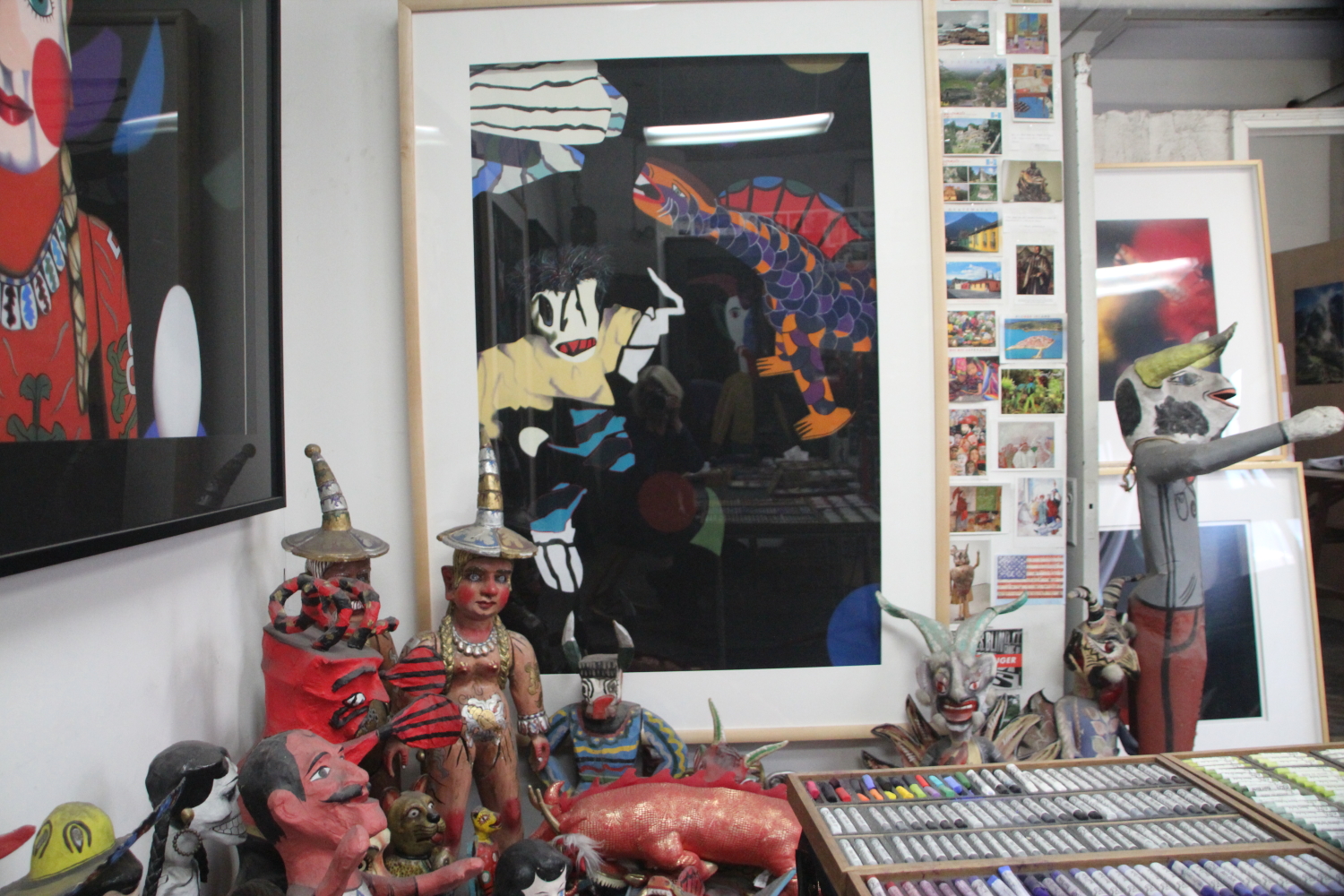
Barbara’s studio
* an ongoing series of quotations – mostly from artists, to artists – that offers wisdom, inspiration, and advice for the sometimes lonely road we are on.
Francis Bacon interview with David Sylvester
DS: What do you think are the essential things that go to make an artist, especially now?
FB: Well, I think there are lots of things. I think that one of the things is that, if you are going to decide to be a painter, you have got to decide that you are not going to be afraid to make a fool of yourself. I think another thing is to be able to find subjects which really absorb you to try and do. I feel without a subject you automatically go back into decoration because you haven’t got the subject which is always eating into you to bring it back – and the greatest art always returns you to the vulnerability of the human situation.
The Art Life: On Creativity and Career by Stuart Horodner
Comments are welcome!
Pearls from artists* # 129
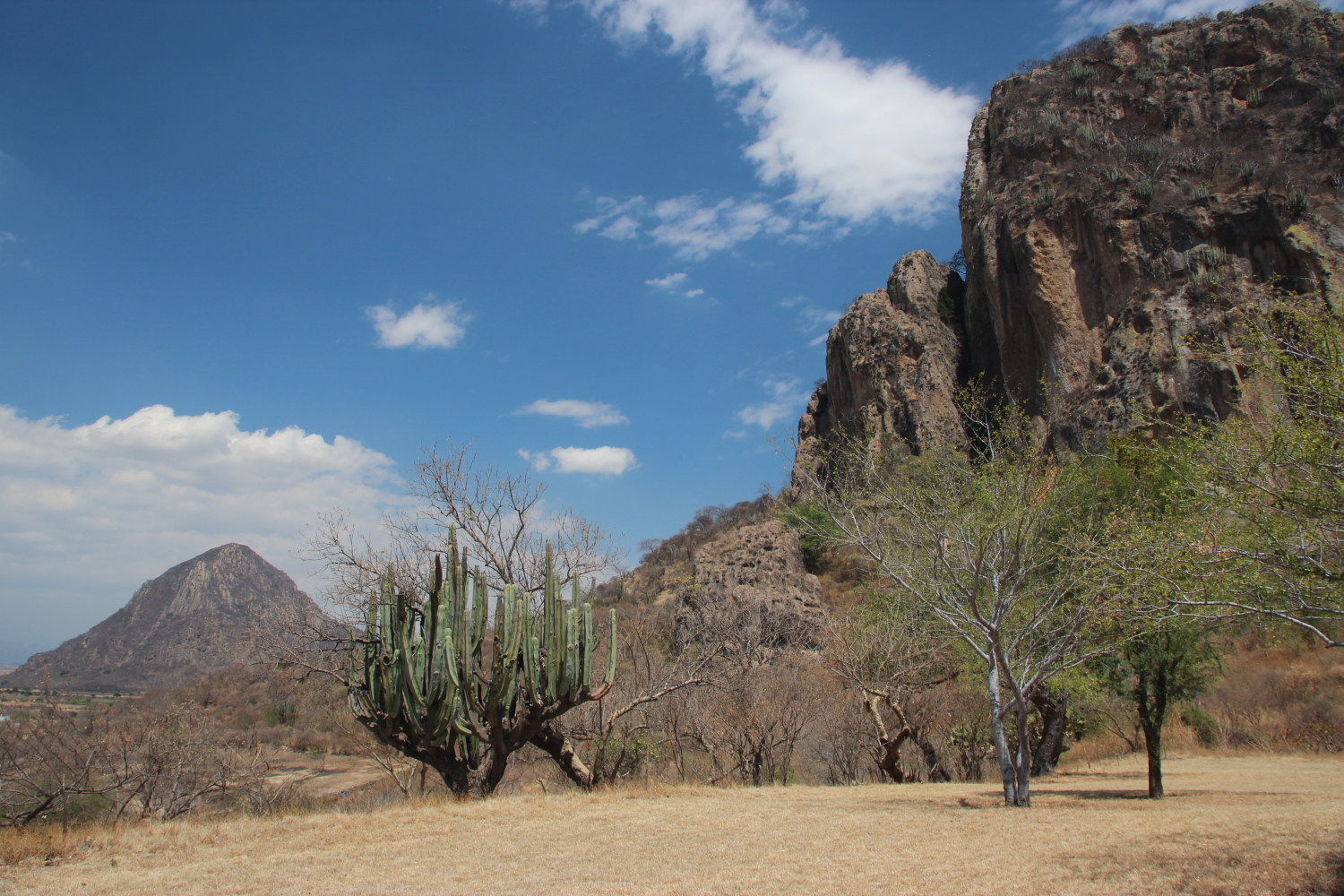
Chalcatzingo, Mexico
* an ongoing series of quotations – mostly from artists, to artists – that offers wisdom, inspiration, and advice for the sometimes lonely road we are on.
A painter friend of mine once told me that he thought of sound as an usher for the here and now. When he was a small child, Adam suffered an illness that left him profoundly deaf for several months. His memories of that time are vivid and not, he insists, at all negative. Indeed, they opened a world in which the images he saw could be woven together with much greater freedom and originality than he’d ever known. The experience was powerful enough that it helped steer him toward his lifelong immersion in the visual arts. “Sound imposes a narrative on you,” he said, “and it’s always someone else’s narrative. My experience of silence was like being awake inside a dream I could direct.”
George Prochnik in In Pursuit of Silence: Listening for Meaning in a World of Noise
Comments are welcome!


 barbararachkoscoloreddust.com