Blog Archives
Pearls from artists* # 653

*an ongoing series of quotations – mostly from artists, to artists – that offers wisdom, inspiration, and advice for the sometimes lonely road we are on.
Watching online markers of approval climb into high numbers releases dopamine in our brains, which can become addictive. If we crave ‘likes,’ and consciously or unconsciously make more of what our audience wants, we become supply-and-demand widget makers. We start catering to the lowest common denominator, asking ourselves what kind of widget will get the most likes or shares. Would you allow a committee into your studio to dictate your next work, to tell you what goes and what stays? How is catering to ‘likes’ any different?
… Every time your work grows, you will gain and lose fans. The more followers you have, the more individuals will need to adjust to the shifts that are happening. Some are guaranteed to disapprove of any new direction, regardless of content. Those who cannot tolerate change will be replaced by supporters of a higher caliber who approve and encourage you to grow.
Kate Kretz in Art From Your Core: A Holistic Guide to Visual Voice
Comments are welcome!
Q: Does your work look different to you on days when you are sad, happy, etc.?

Barbara’s Studio
A: I am much more critical on days when I am sad so that the faults, imperfections, and things I wish I had done better stand out. Fortunately, all of my work is framed behind plexiglas so I can’t easily go back in to touch up perceived faults. I am reminded of the expression, “Always strive to improve, whenever possible. It is ALWAYS possible!” However, I’ve learned that re-working a painting is a bad idea. You are no longer deeply involved in making it and the zeitgeist has changed. The things you were concerned with are gone: some are forgotten, others are less urgent.
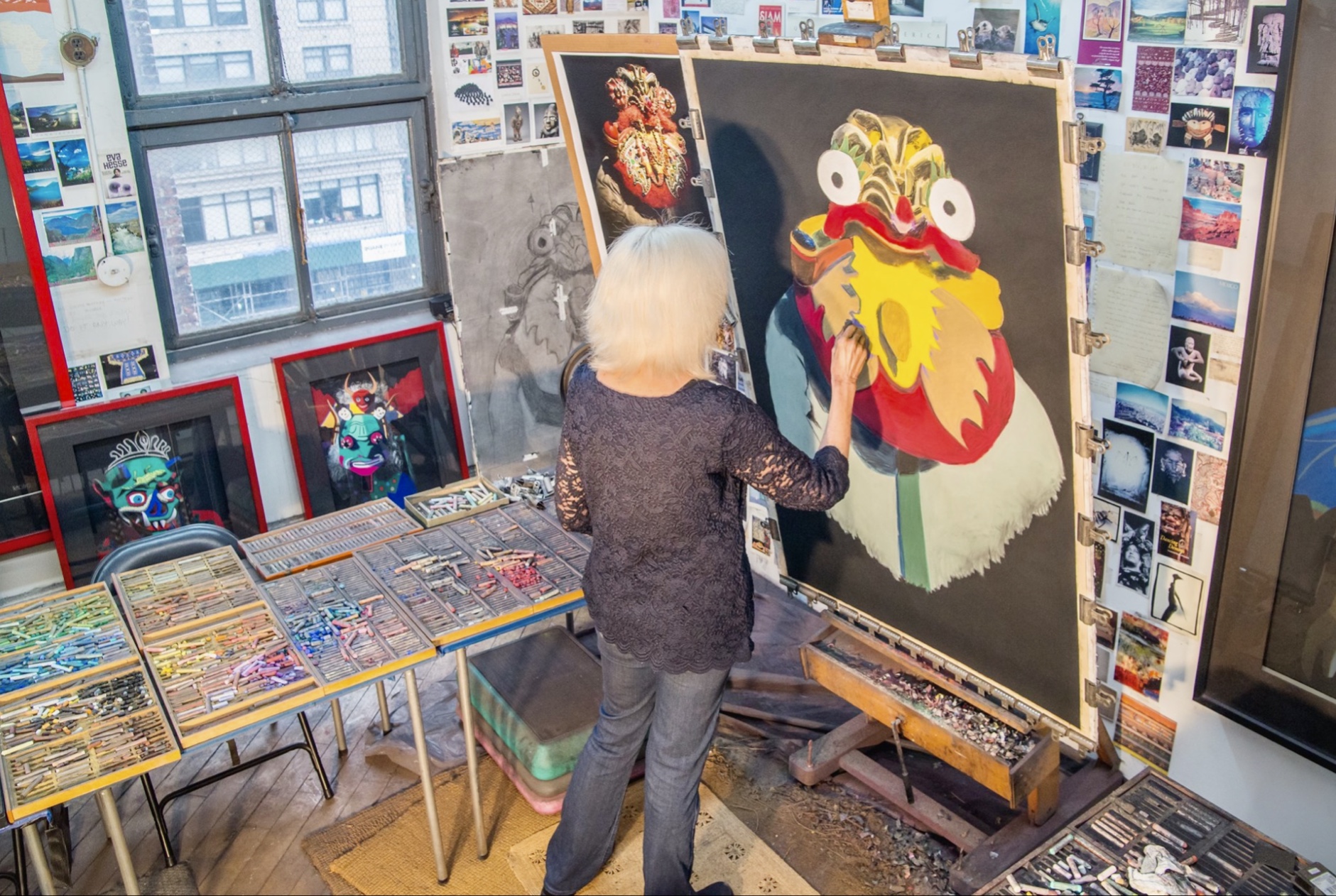
For most artists our work is autobiography. Art is personal. When I look at a completed pastel painting, I usually remember exactly what was happening in my life as I created it. Each piece is a snapshot – maybe a time capsule, if anyone could decode it – that reflects and records a particular moment. When I finally pronounce a piece finished and sign it, that’s it, THE END. It’s as good as I can make it at that point in time. I’ve incorporated everything I was thinking about, what I was reading, how I was feeling, what I valued, art exhibitions I visited, programs that I heard on the radio or watched on television, music that I listened to, what was going on in New York, in the country, and in the world.
It is still a mystery how this heady mix finds its way into the work. During the time that I spend on it, each particular painting teaches me everything it has to teach. A painting requires months of looking, reacting, correcting, searching, thinking, re-thinking, revising. Each choice is made for a reason and together these decisions dictate what the final piece looks like. On days when I’m sad I tend to forget that. On happier days I remember that the framed pastel paintings that you see have an inevitability to them. If all art is the result of one’s having gone through an experience to the end, as I believe it is, then the paintings could not, and should not, look any differently.
Comments are welcome.
Our 2024 Winter Newsletter!

Laurels for our new documentary, “Barbara Rachko: True Grit”!
For today I have decided to forego my usual post and instead share our 2024 Winter Newsletter! Lots of exciting things have been (and are) happening! Please check out the link.
https://mailchi.mp/d71e7ada17b3/2024winternewsletter
Comments are welcome!
Pearls from artists* # 467
*an ongoing series of quotations – mostly from artists, to artists – that offers wisdom, inspiration, and advice for the sometimes lonely road we are on.
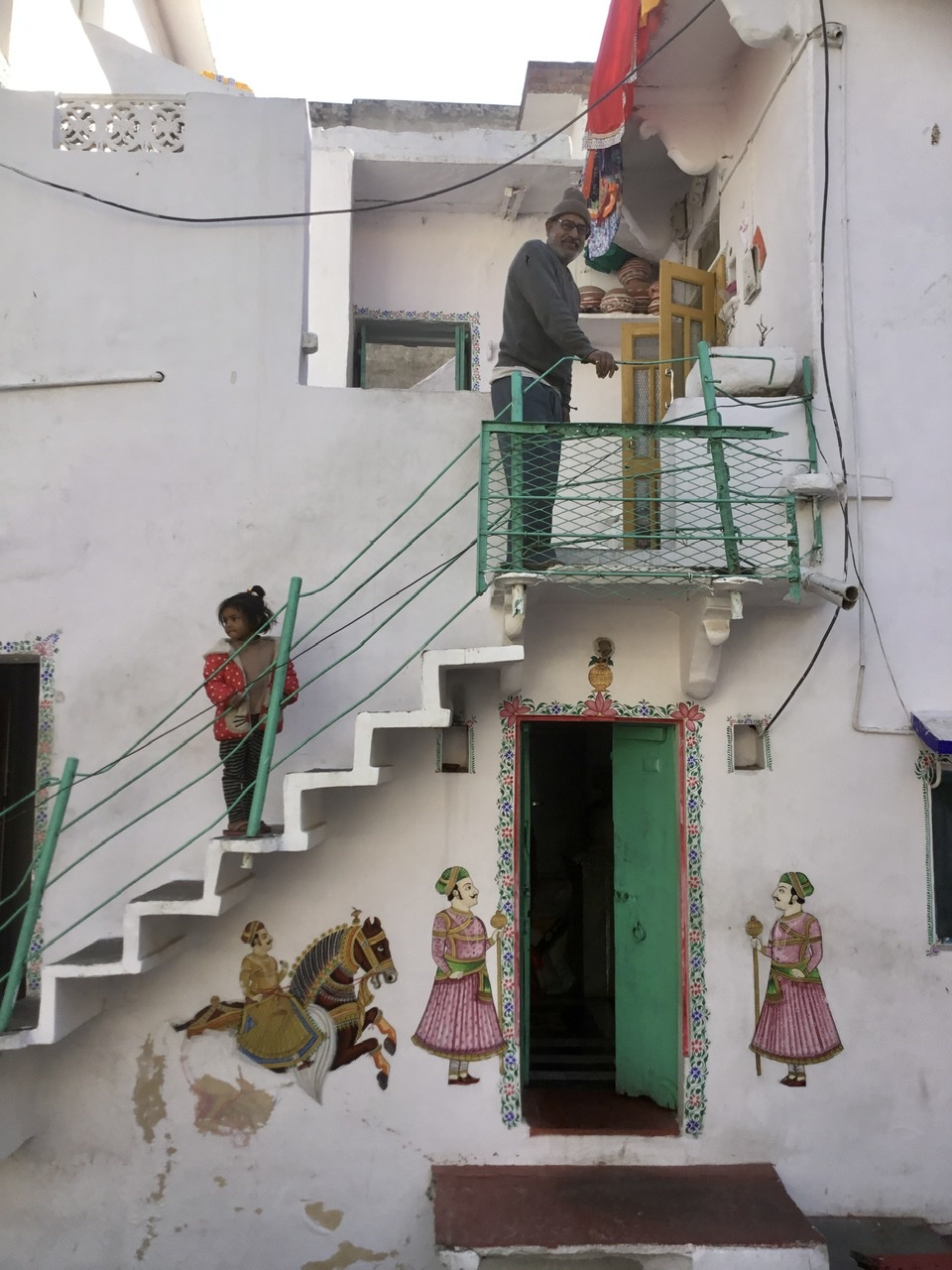
As students confronted with images of India through film and photography, we are challenged to begin to be self-conscious of who we are as “seers.” Part of the difficulty of entering the world of another culture, especially one with as intricate and elaborate a visual articulation as India’s, is that, for many of us, there are no “manageable models.” There are no self-evident ways of recognizing the shapes and forms of art, iconography, ritual life and daily life that we see. Who is Śiva, dancing wildly in a ring of fire? What is happening when the priest pours honey and yogurt over the image of Viṣṇu? Why does the woman touch the feet of the ascetic beggar? For those who enter the visible world of India through the medium of film, the onslaught of strange images raises a multitude of questions. These very questions should be the starting point for our learning. Without such self-conscious questions, we cannot begin to “think” with what we see and simply dismiss it as strange. Or worse, we are bound to misinterpret what we see by placing it solely within the context of what we already know from our own world of experience.
Diana L. Eck in Darsan: Seeing the Divine Image in India
Comments are welcome!
Pearls from artists* # 449
*an ongoing series of quotations – mostly from artists, to artists – that offers wisdom, inspiration, and advice for the sometimes lonely road we are on.
I learned about the Japanese word irimi while studying Aikido, a Japanese martial art. Simply translated, irimi means ,’to enter’ but it can also be translated ‘choose death.’ When attacked you always have two options: to enter, irimi, or to go around, ura. Both when accomplished in the right manner, are creative. To enter or to ‘choose death’ means to enter fully with the acceptance, if necessary, of death. The only way to win is to risk everything and be fully willing to die. If this is an extreme notion to Occidental sensibilities, it does make sense in creative practice. To achieve the violence of decisiveness, one has to ‘choose death’ in the moment by acting fully and intuitively without pausing for reflection about whether it is the right decision or if it is going to provide the winning solution.
It is also valuable to know when to use ura, or going around. There is a time for ura, going around, and there is a time for irimi, entering. And these times can never be known in advance. You must sense the situation and act immediately. In the heat of creation, there is no time for reflection; there is only connection to what is happening. The analysis, the reflection and the criticism belong before and after, never during, the creative act.
Anne Bogart in “A Director Prepares: Seven Essays on Art and Theater”
Comments are welcome!

Pearls from artists* # 443

*an ongoing series of quotations – mostly from artists, to artists – that offers wisdom, inspiration, and advice for the sometimes lonely road we are on.
The theater has been good to me. It has produced great friendships, love, travel, hard work, fun, terror and pleasure. It has also offered an entire life of study. Study is a full-time engagement which includes reading books, reading people, reading situations, reading about the past and reading about the present. To study, you enter into a situation with your whole being, you listen and then begin to move around inside it with your imagination. You can study every situation you are in. You can learn to read life while life is happening.
Anne Bogart in A Director Prepares: Seven Essays on Art and Theatre
Comments are welcome!
Q: What’s on the easel today?
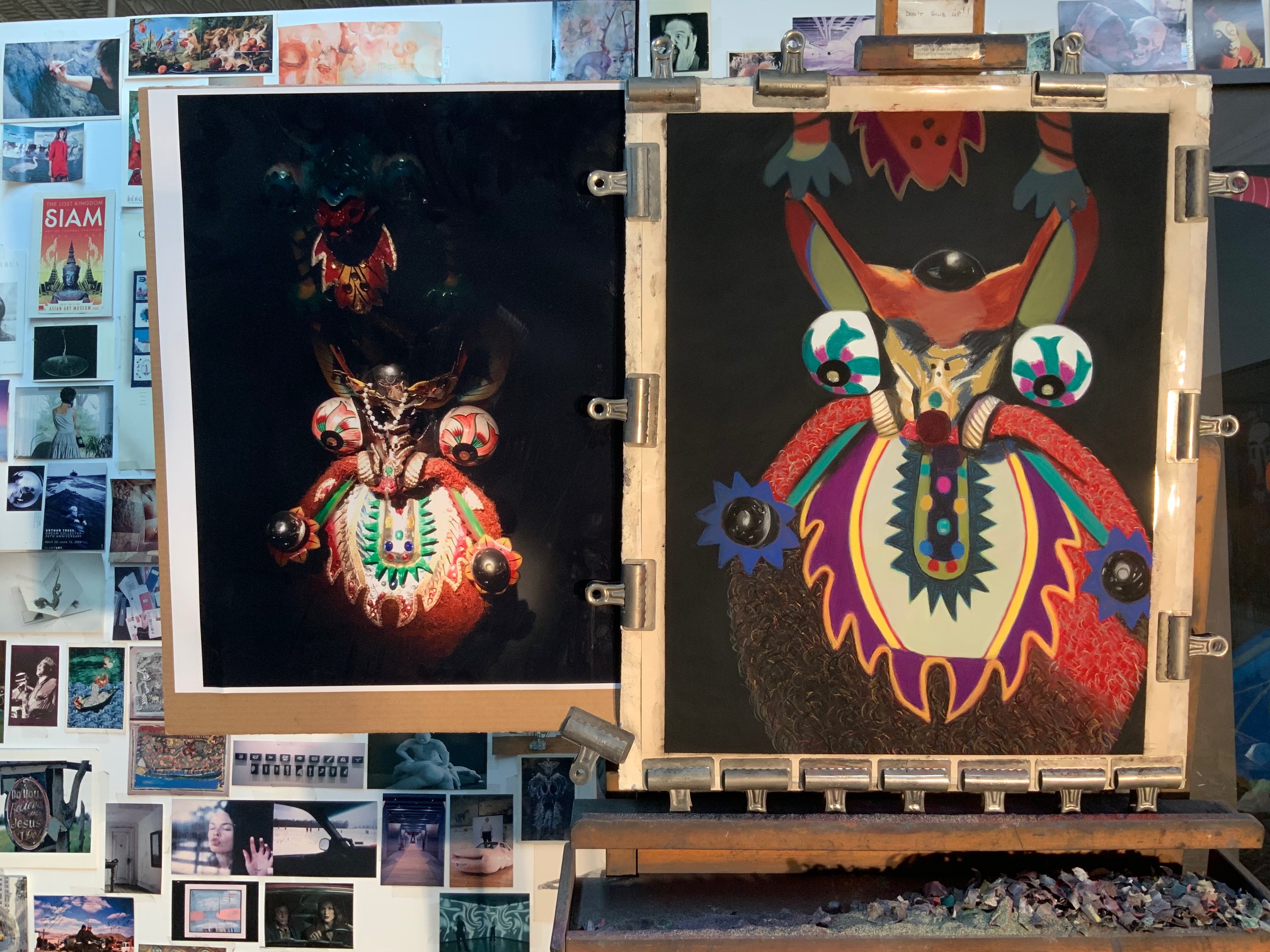
A: I continue working on “Enigma,” soft pastel on sandpaper, 20” x 26.” The title for this piece suggested itself as I was driving to my house in Alexandria, VA. I was listening to Lady Gaga’s current album, “Chromatica.” Her song “Enigma” came on and I thought, “That’s a great title for my painting because some areas of the ‘face’ are my own personal enigma!” They’re rather dark in my reference photo so I don’t yet understand what is happening there visually. But I will figure it out. I always do!
This is the second time I have titled a pastel painting based on a Lady Gaga song. It was “Poker Face,” from her debut album “The Fame.” My painting, “Poker Face,” was completed in 2012 and is number 24/45 in the “Black Paintings” series.
Comments are welcome!
Q: What’s on the easel today?
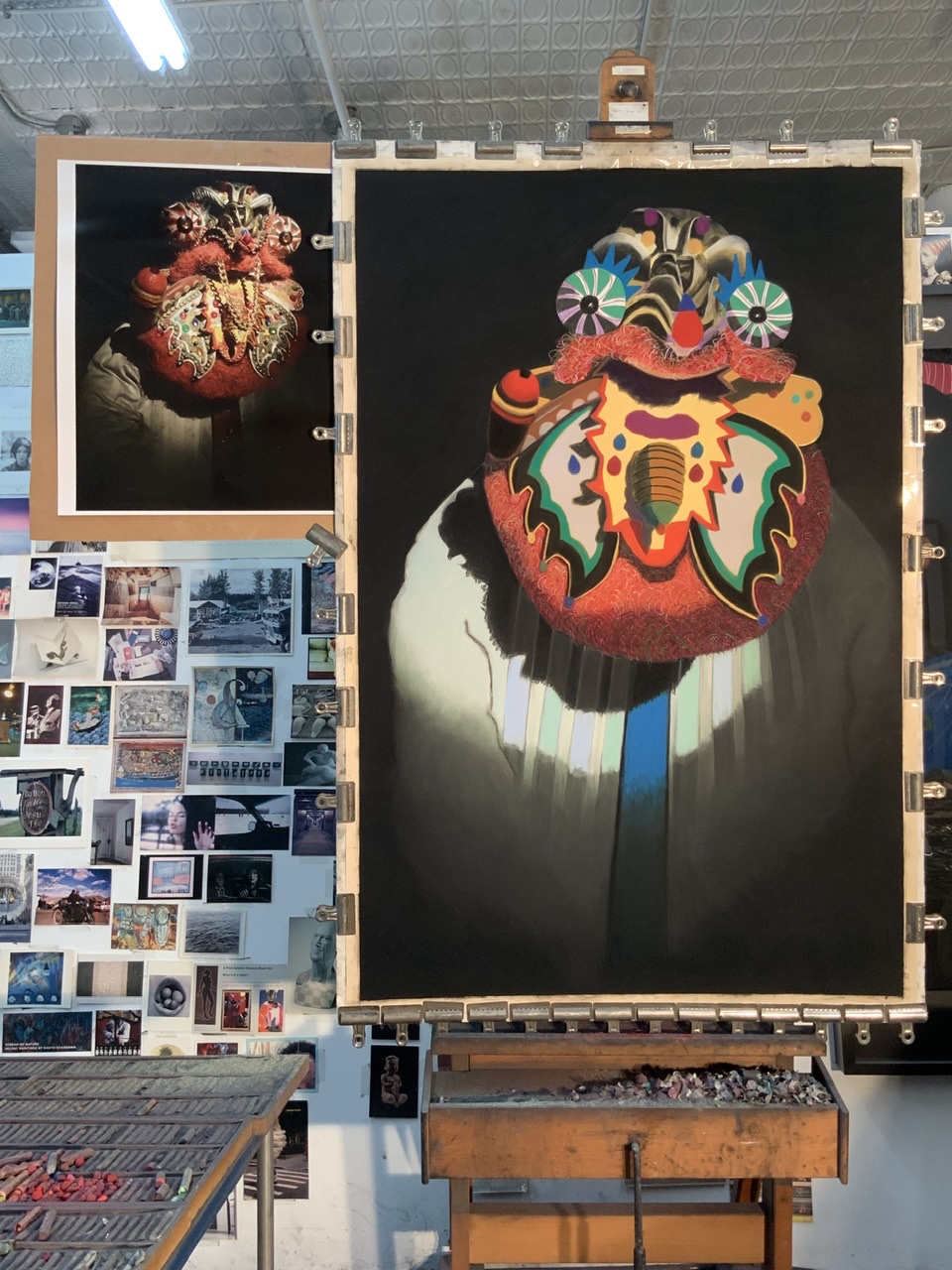
Work in progress
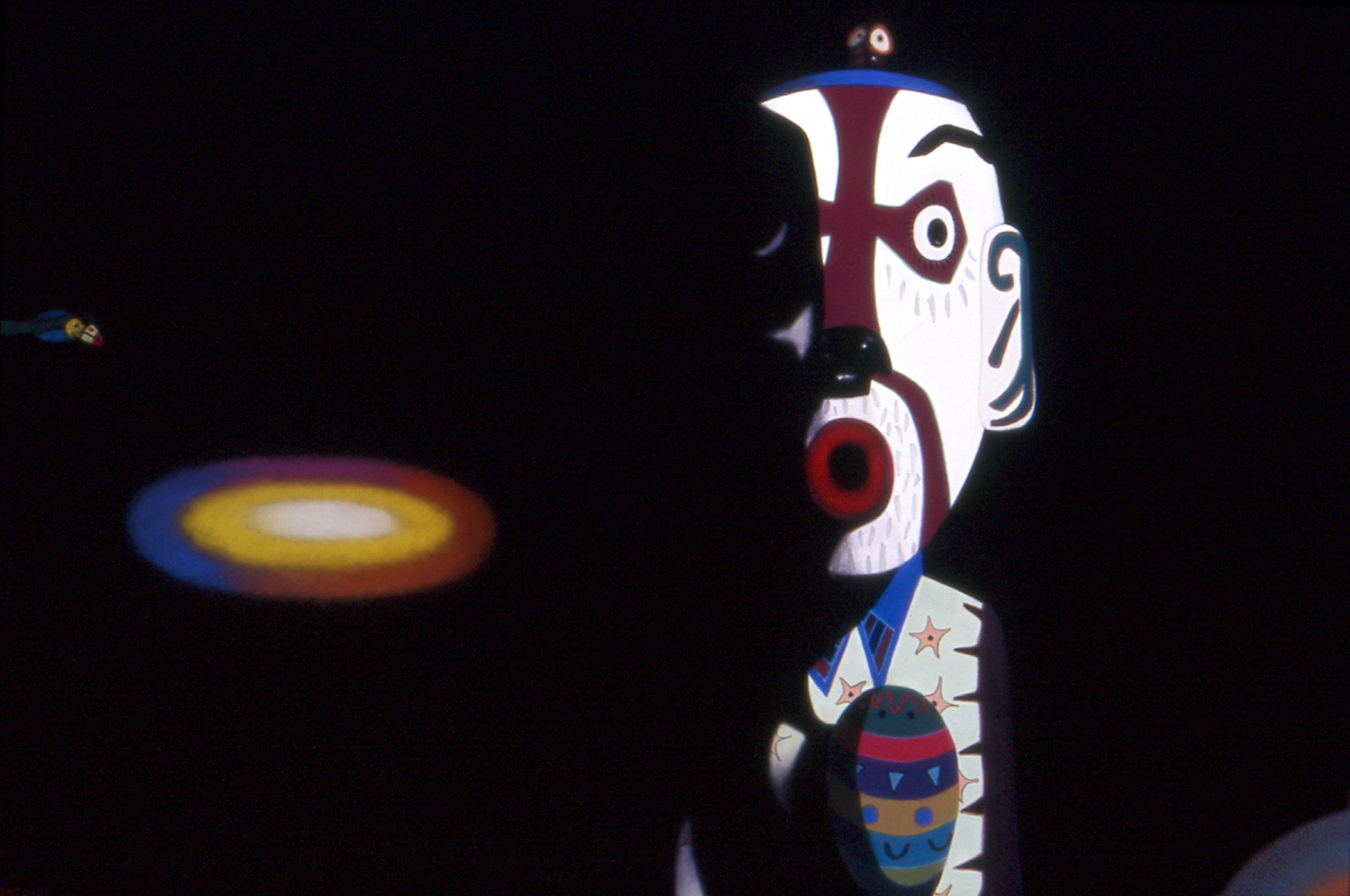
A: Amidst the noisy construction happening next door, I continue slowly working on “Jokester” (tentative title), soft pastel on sandpaper, 58” x 38.” I’ve just begun to add stripes into the shirt.
It is the fifteenth piece in the “Bolivianos” series. Read more about this work at https://barbararachko.art/en/paintings/bolivianos
Comments are welcome!
Q: Do you have any favorites among the Mexican and Guatemalan folk art figures that you depict in your work?

Idea for an upcoming pastel painting
A: I suppose it seems that way, since I certainly paint some figures more than others. My favorite characters change, depending on what is happening in my work. My current favorites are a figure I have never painted before (the Balinese dragon above) and several Mexican and Guatemalan figures last painted years ago. All will make an appearance in a pastel painting for which I am still developing preliminary ideas (above).
Comments are welcome!
Pearls from artists* # 70

New York, NY
* an ongoing series of quotations – mostly from artists, to artists – that offers wisdom, inspiration, and advice for the sometimes lonely road we are on.
Ultimately, whether you like a photograph or not, it has a history behind it. When people look at a photograph, they want to believe in its authenticity, that they’re looking at something special that can’t be repeated. The artist’s eye, the photographer’s eye, has created a moment of truth by pushing the button on the camera. The issue is not that the moment is separate from the rest of the photograph; it is the element that links what’s happening to the rest of the image, and the photographer creates a higher meaning, a higher sensibility, in that instant. That’s difficult to achieve for most people who are involved in photography as artists. It’s an essential part of basic photography that’s learned on the street and in traditional ways that people used to do photography.
Roger Ballen in Lines, Marks, and Drawings: Through the Lens of Roger Ballen
Comments are welcome!


 barbararachkoscoloreddust.com