Blog Archives
Q: What are some of your work habits? Do you sit most of the day?
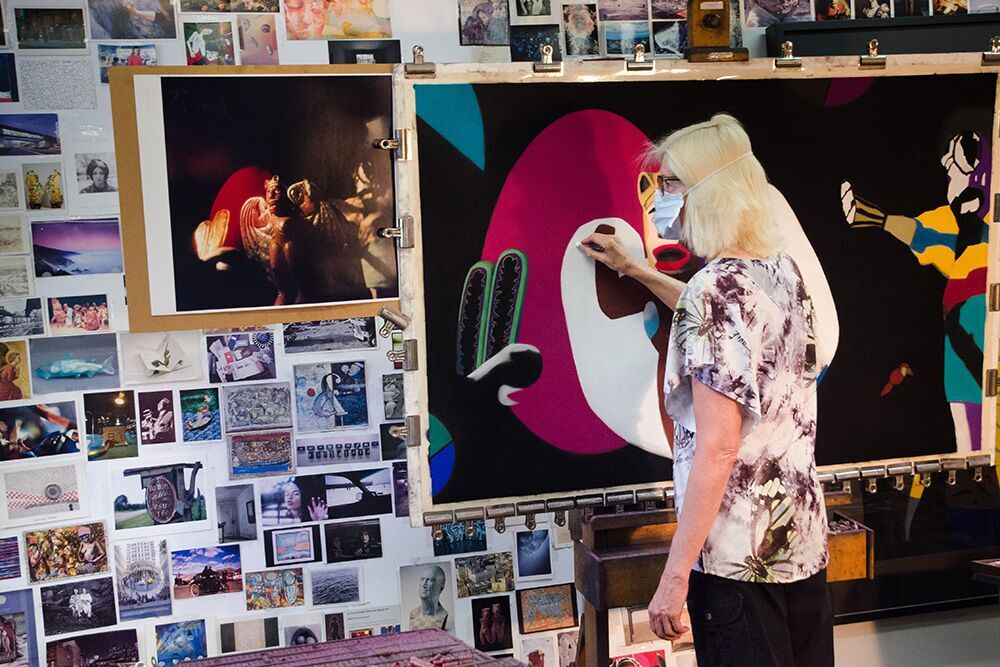
Barbara at work, Photo: Marianne Barcellona
A: No, I never sit while working. I enjoy the physicality of art-making and prefer to stand at my easel so I can back up to see how a painting looks from a distance. I like being on my feet all day and getting some exercise.
In order to accomplish anything, artists need to be disciplined. I work five days a week, taking Wednesdays and Sundays off, and spend seven hours or more in the studio. Daylight is necessary so I work more hours in summer, fewer in winter. I deliberately don’t have a clock on the wall – art-making is independent of timetables – but I tend to work in roughly two-hour blocks before taking a break.
Studio hours are sacrosanct and exclusively for creative work. I keep my computer and mobile devices out of the studio. Art business activities – answering email, keeping up with social media, sending jpegs, writing blog posts, doing interviews, etc. – are mostly accomplished at home in the evenings and on days off.
Comments are welcome!
Q: Do you have any favorites among the Mexican and Guatemalan folk art figures that you depict in your work?

Idea for an upcoming pastel painting
A: I suppose it seems that way, since I certainly paint some figures more than others. My favorite characters change, depending on what is happening in my work. My current favorites are a figure I have never painted before (the Balinese dragon above) and several Mexican and Guatemalan figures last painted years ago. All will make an appearance in a pastel painting for which I am still developing preliminary ideas (above).
Comments are welcome!
Pearls from artists* # 168
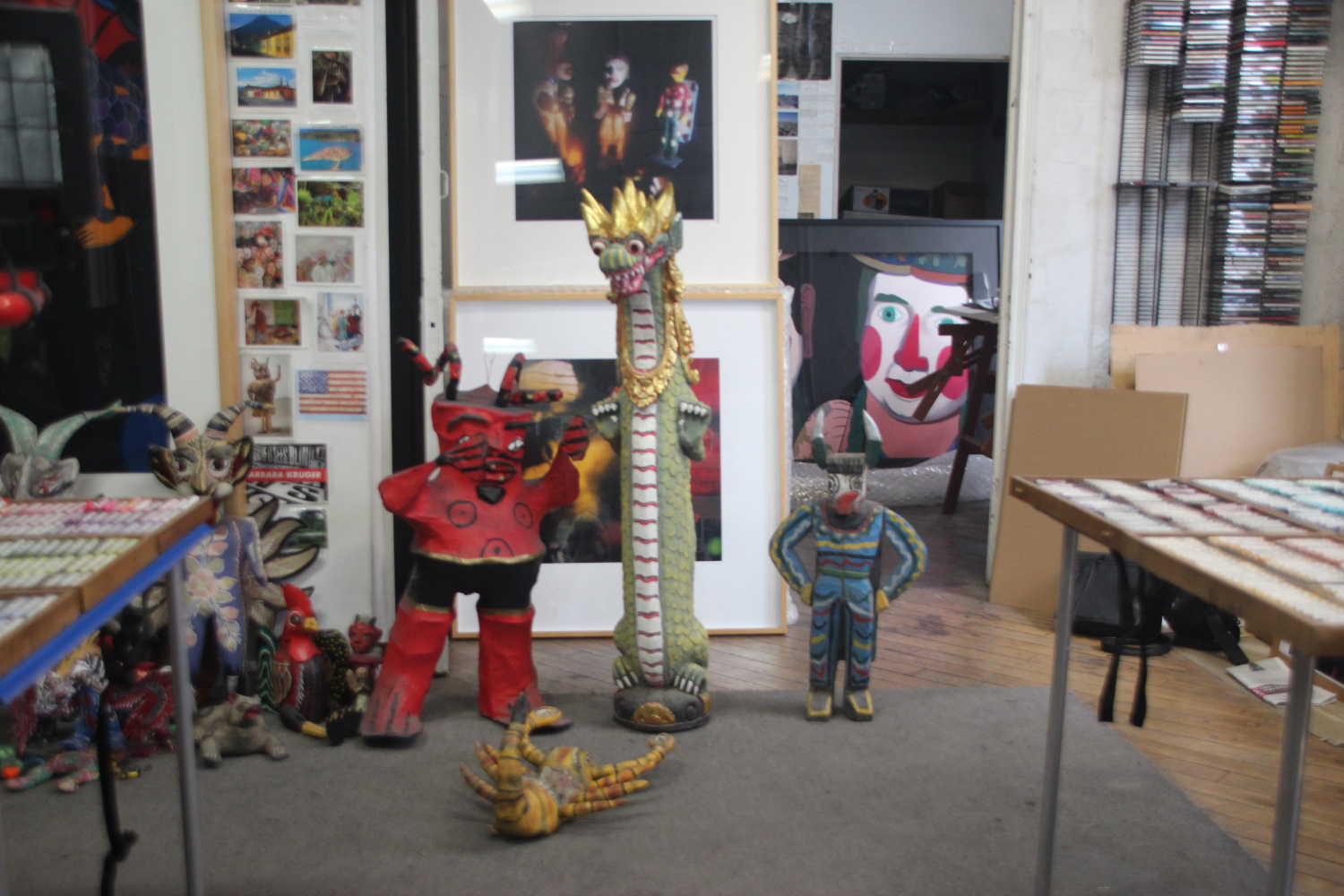
Barbara’s studio
* an ongoing series of quotations – mostly from artists, to artists – that offers wisdom, inspiration, and advice for the sometimes lonely road we are on.
How strange the human mind is! When I first began, I think I should have been willing to work at it from the tops of a church steeple, whereas now, even to think of finishing requires a real effort. And all this, simply because I have been away from it for so long. It is the same with my picture and with everything else I do. There is always a thick crust to be broken before I can give my whole heart to anything; a stubborn piece of ground, as it were, that resists the attacks of plough and hoe. But with a little perseverance the hardness suddenly gives and it becomes so rich in fruit and flowers that I am quite unable to gather them all.
The Journal of Eugene Delacroix edited by Hubert Wellington
Comments are welcome!
Q: Do you have a daily ritual that helps you start working in your studio?

Barbara’s studio
A: In the morning before I start working on a pastel painting, I read for roughly half an hour. Usually I read something art-related; for example, see the books that are quoted on Wednesdays in “Pearls from artists” on this blog.
As I’m reading, I look across at the painting on my easel and soon something becomes apparent, some annoying thing that needs immediate attention. That’s where I will begin. As I’m looking, of course, I’m thinking and the solution to a technical problem becomes obvious. Before I know it, I’m up and working, slowly improving the painting as I go.
Comments are welcome!
Q: What’s on the easel today?
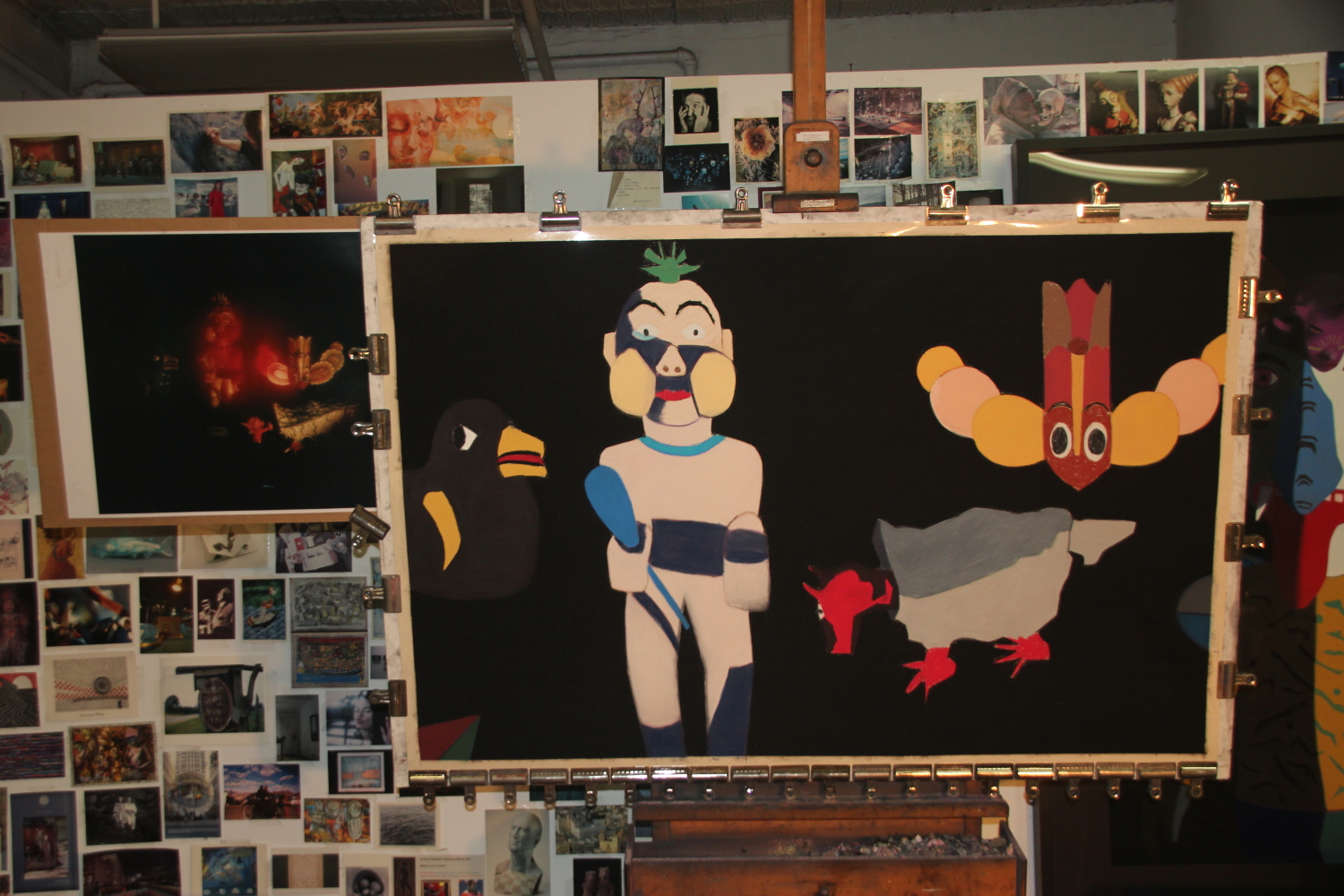
Work in progress
A: I am in the very early stages of a large pastel painting. I have never painted any of these figures before and they originated in different parts of the world. The bird (left) is from the Brooklyn Museum’s store, although it was hand carved in Guatemala. The standing figure is carved wood with beautiful painted details. It was a lucky find on a trip to Panajachel, Guatemala. The armadillo (red and grey) was made by one of my favorite Mexican folk artists (now deceased) and I believe it’s one of the last pieces he completed. It is a papier mâché figure that I found in a small shop in Mexico City. The figure on the upper right is a wooden mask bought from a talkative and talented artist at a hotel in Kandy, Sri Lanka. It depicts nagas (cobras), although you can’t tell that yet in the painting.
Comments are welcome!
Pearls from artists* # 155
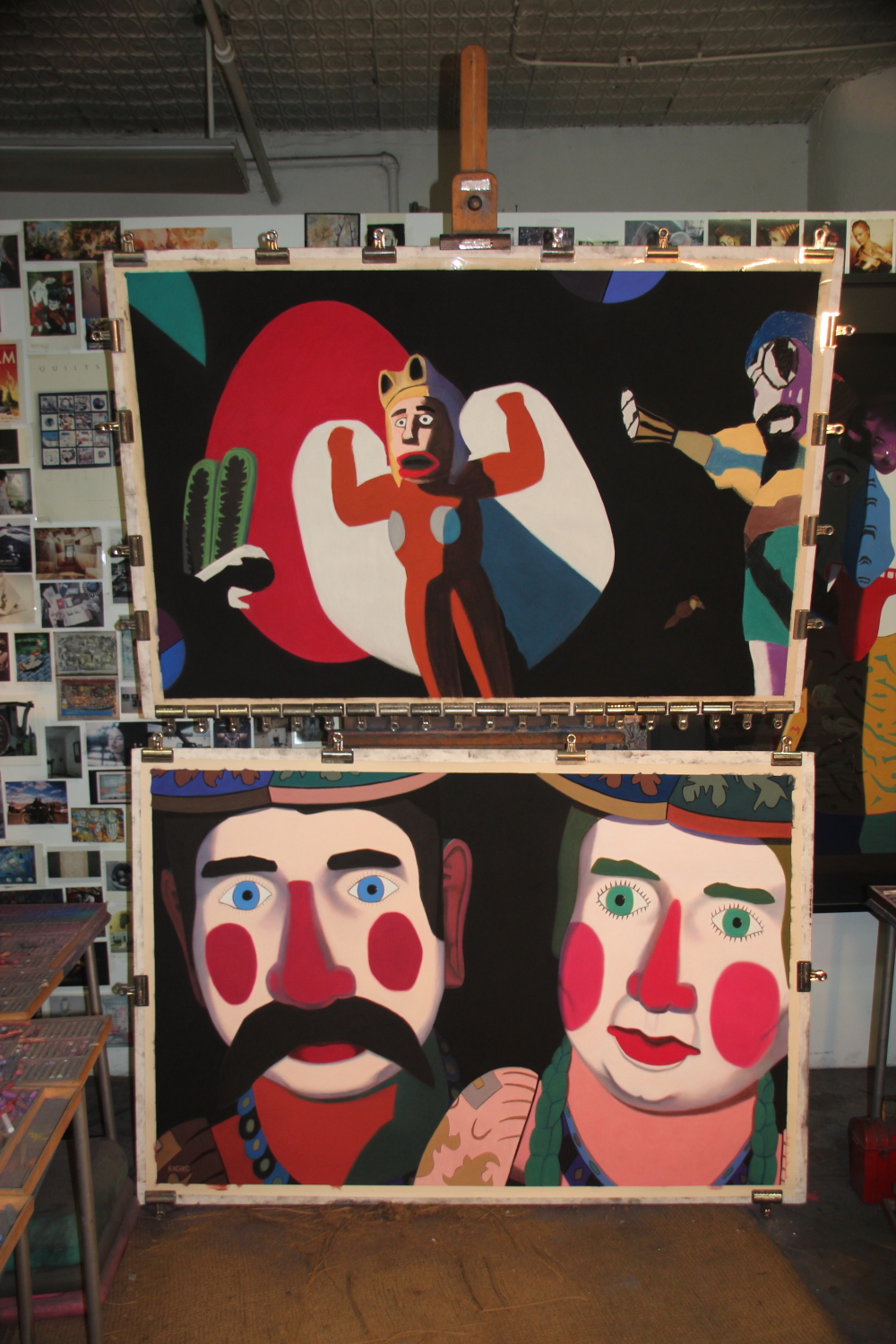
Works in progress
* an ongoing series of quotations – mostly from artists, to artists – that offers wisdom, inspiration, and advice for the sometimes lonely road we are on.
Throughout these many years of painting I have practiced starting my work from reality stating the facts before me. Then I paint without the object for a certain length of time, combining reality and imagination.
I have often obtained in painting directly from the object that which appears to be real results at the very first shot, but when that does happen, I purposely destroy what I have accomplished and re-do it over and over again. In other words that which comes easily I distrust. When I have condensed and simplified sufficiently I know that I have achieved more than reality.
Yasuo Kumiyoshi: East to West in The Creative Process, edited by Brewster Ghiselin
Comments are welcome!
Pearls from artists* # 152

“Between,” soft pastel on sandpaper, 20″ x 26″
* an ongoing series of quotations – mostly from artists, to artists – that offers wisdom, inspiration, and advice for the sometimes lonely road we are on.
The first picture I took of a black man was easy.
That’s the way it sometimes goes for me: I start on a new series of pictures and right away, in some kind of perverse bait-and-switch, I get a good one. This freak of a good picture inevitably inspires a cocky confidence, making me think this new project will be a stroll in the park. But, then, after sometimes two or three more good ones, the next dozen are duds, and that cavalier stroll becomes an uphill slog. It isn’t long before I have to take a breather, having reached the first significant plateau of doubt and lightweight despair. The voice of that despair suggests seducingly to me that I should give up, that I’m a phony, that I’ve made all the good pictures I’m ever going to, and I have nothing more worth saying.
That voice is easy to believe, and, as photographer and essayist (and my early mentor) Ted Orland has noted, it leaves me with only two choices: I can resume the slog and take more pictures, thereby risking further failure and despair, or I can guarantee failure and despair by not making more pictures. It’s essentially a decision between uncertainty and certainty and, curiously, uncertainty is the comforting choice.
Sally Mann in Hold Still: A Memoir with Photographs
Comments are welcome!
Pearls from artists* # 144
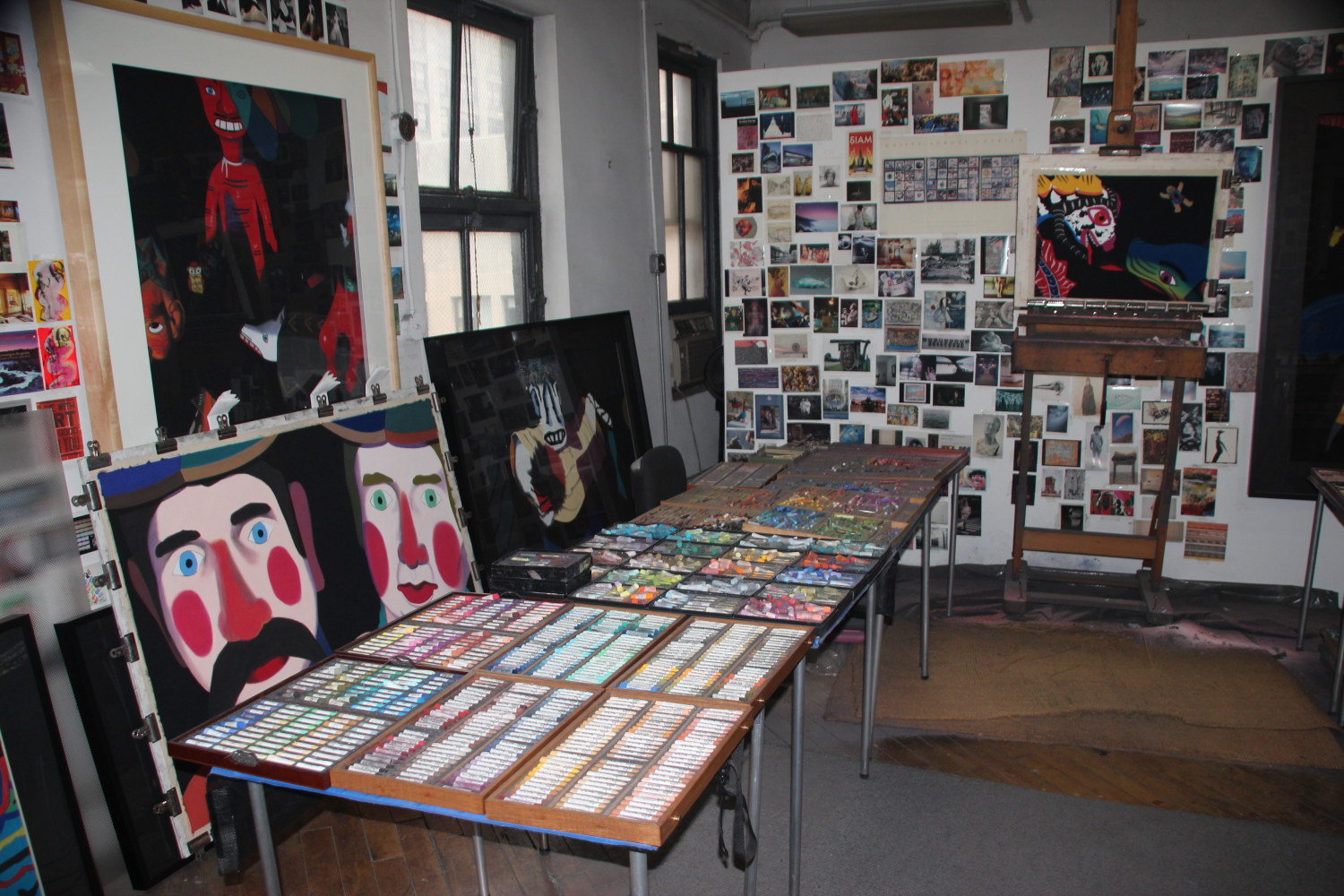
Barbara’s studio
* an ongoing series of quotations – mostly from artists, to artists – that offers wisdom, inspiration, and advice for the sometimes lonely road we are on.
Art and design are rule-based. This flies in the face of everything that most people have been taught before, namely, that art and design are about freedom. I remember reading a wonderful analogy about this concept many years ago in an out-of-print, early twentieth-century book on design. The author asked us to imagine a flying kite – the quintessential emblem of unrestricted, spontaneity, soaring in the wind. Keeping taught the line between you and the kite, however, is the source of that freedom. Here’s another way of putting it: “Creativity arises out of the tension between the rules and imagination.”
Leslie Hirst in The Art of Critical Making: Rhode Island School of Design on Creative Practice, Rosanne Somerson and Mara L. Hermano, editors
Comments are welcome!
Q: What’s on the easel today?
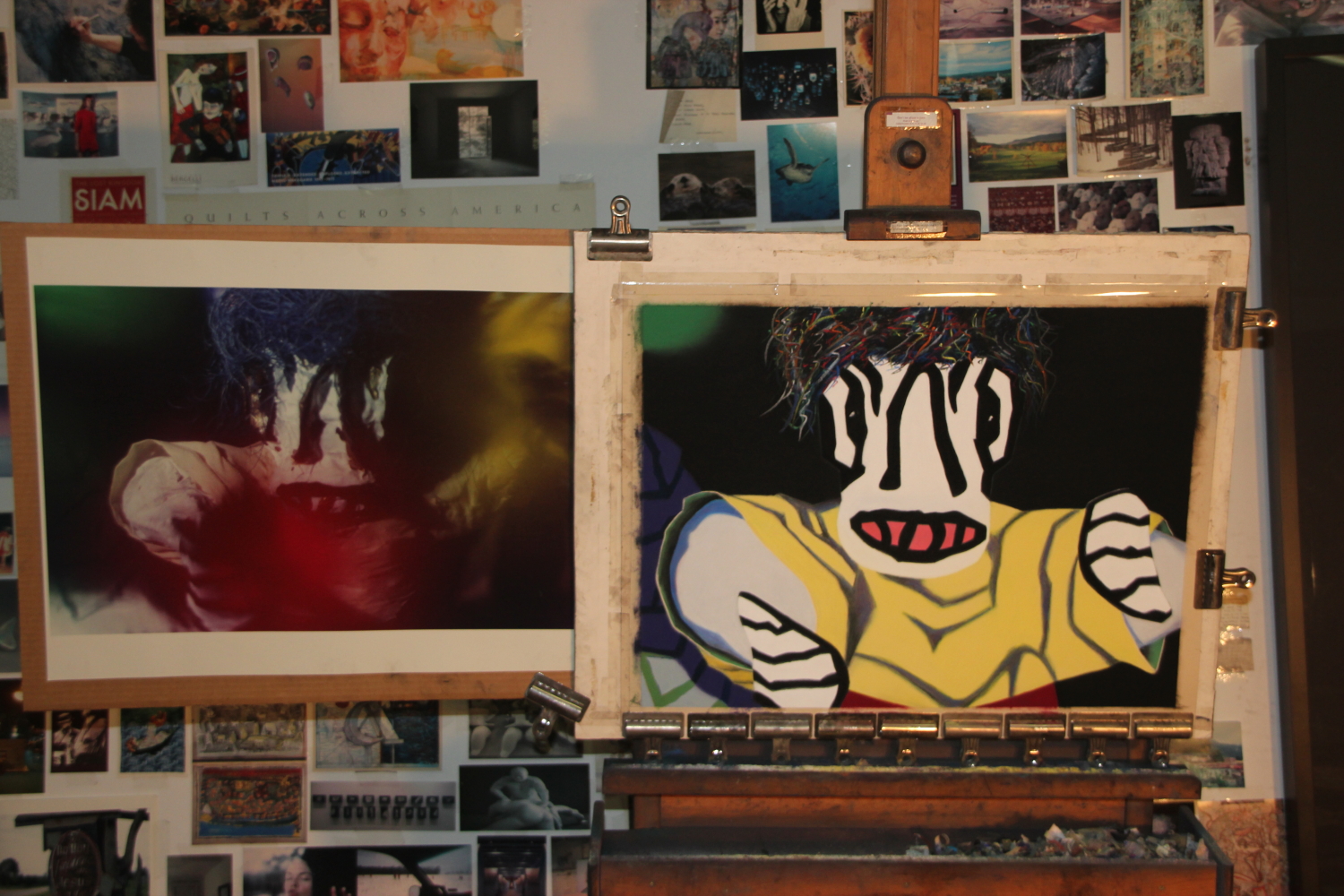
Work in progress
A: I am putting finishing touches on a small pastel painting called, “Spectral.” I worked on it before and after Halloween. Somewhat atypical for my pastel paintings, it clearly reflects the time of year that it was created.
Comments are welcome!
Q: Last week you spoke about what happens before you begin a pastel painting. Would you talk about how you actually make the work?
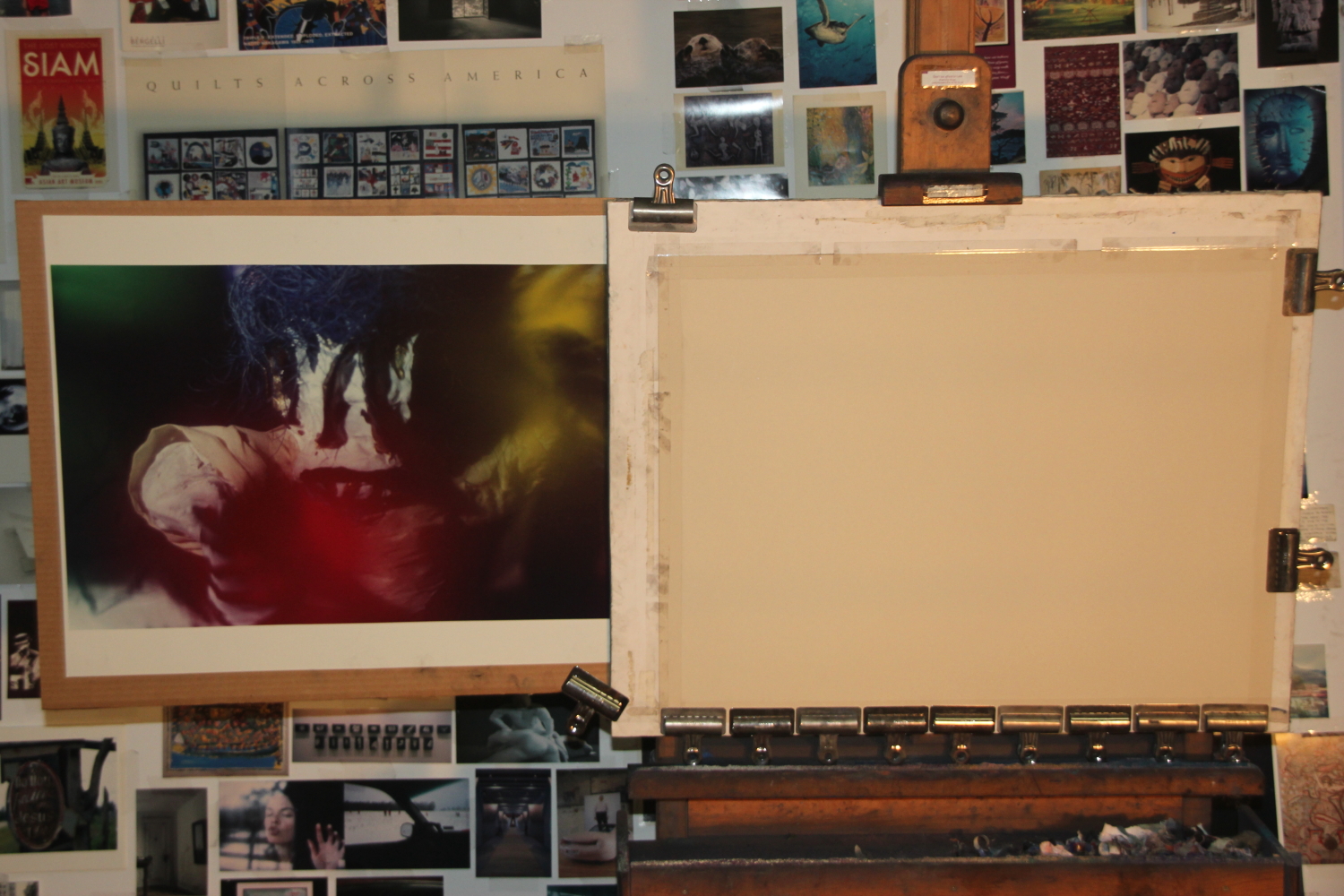
Beginning a new pastel painting
A: I work on each pastel-on-sandpaper painting for approximately three months. I try to be in my studio 7 to 8 hours a day, five days a week.
I make thousands of creative decisions as I apply and layer soft pastels (I have thousands to choose from), blend them with my fingers, and mix new colors directly on the sandpaper. A finished piece consists of up to 30 layers of soft pastel.
My self-invented technique accounts for the vivid, intense color that often leads viewers of my originals to look very closely and ask, “What medium is this?” I believe I am pushing soft pastel to its limits, using it in ways that no other artist has done before.
Comments are welcome!


 barbararachkoscoloreddust.com