Blog Archives
Pearls from artists* # 371
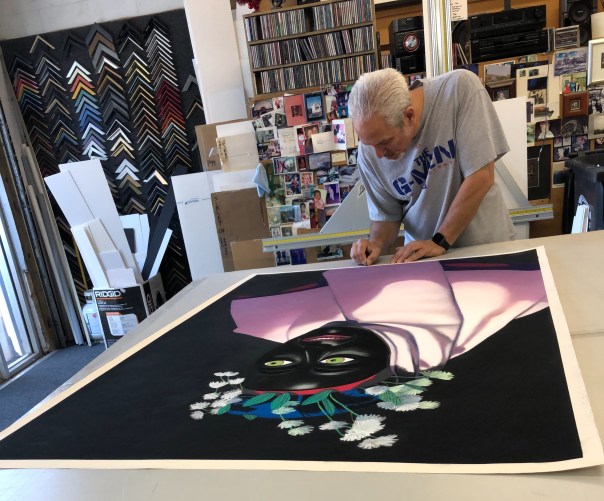
“Poseur,” Soft Pastel on Sandpaper, 58” x 38” at the framer
* an ongoing series of quotations – mostly from artists, to artists – that offers wisdom, inspiration, and advice for the sometimes lonely road we are on.
If you look at the work of an artist over a lifetime there is always transformation. Some hit a lively pace early on and then seem to lose it later. Others find that place progressively throughout their life; others still find it late. But regardless, they are all learning to isolate the poetic within them. That focus on the poetic in our own work increases our appreciation of the beauty around us, increases our growth, and increases our divine connection.
One thing you see in many artists’ work is that as they continue over the decades to translate their experience of the poetic into form, they learn to communicate better. They strip away all the extraneous stuff and artistic baggage they had. They say more with less.
Ian Roberts in Creative Authenticity: 16 Principles to Clarify and Deepen Your Artistic Vision
Comments are welcome!
Q: Your work is unlike anyone else’s. There is such power and boldness in your pastels. What processes are you using to create such poignant and robustly colored work?

Barbara working on an interview. Photo: Maria Cox
A: For thirty-three years I have worked exclusively in soft pastel on sandpaper. Pastel, which is pigment and a binder to hold it together, is as close to unadulterated color as an artist can get. It allows for very saturated color, especially using the self-invented techniques I have developed and mastered. I believe my “science of color” is unique, completely unlike how any other artist works. I spend three to four months on each painting, applying pastel and blending the layers together to mix new colors on the paper.
The acid-free sandpaper support allows the buildup of 25 to 30 layers of pastel as I slowly and meticulously work for hundreds of hours to complete a painting. The paper is extremely forgiving. I can change my mind, correct, refine, etc. as much as I want until a painting is the best I can create at that moment in time.
My techniques for using soft pastel achieve rich velvety textures and exceptionally vibrant color. Blending with my fingers, I painstakingly apply dozens of layers of pastel onto the sandpaper. In addition to the thousands of pastels that I have to choose from, I make new colors directly on the paper. Regardless of size, each pastel painting takes about four months and hundreds of hours to complete.
I have been devoted to soft pastel from the beginning. In my blog and in numerous interviews online and elsewhere, I continue to expound on its merits. For me no other fine art medium comes close.
My subject matter is singular. I am drawn to Mexican, Guatemalan, and Bolivian cultural objects—masks, carved wooden animals, papier mâché figures, and toys. On trips to these countries and elsewhere I frequent local mask shops, markets, and bazaars searching for the figures that will populate my pastel paintings. How, why, when, and where these objects come into my life is an important part of the creative process. Each pastel painting is a highly personal blend of reality, fantasy, and autobiography.
Comments are welcome!
Pearls from artists* # 364
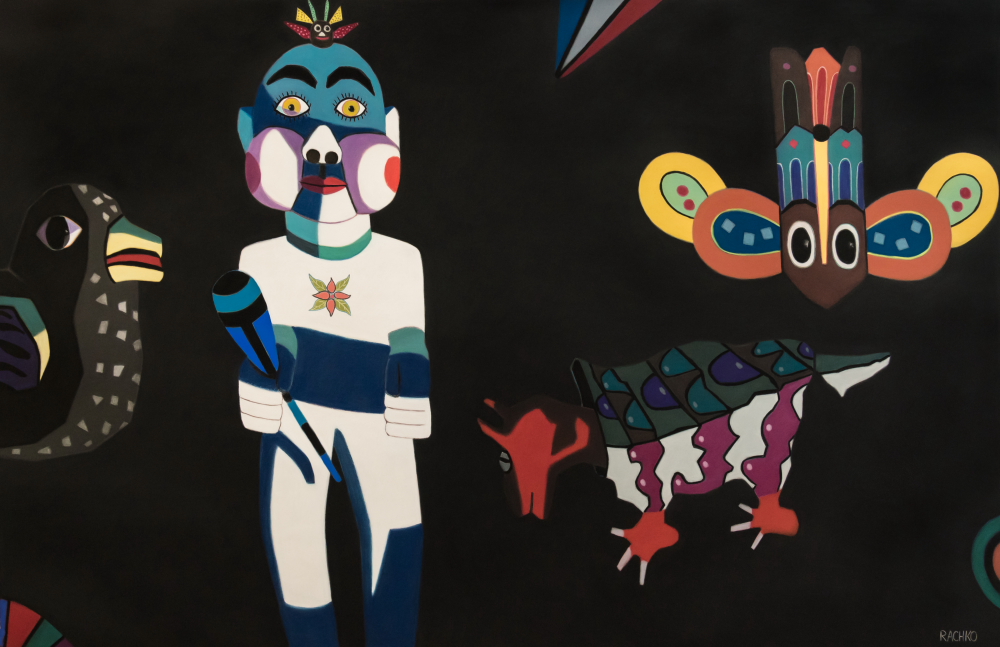
“White Star,” soft pastel on sandpaper, 38″ x 58″
* an ongoing series of quotations – mostly from artists, to artists – that offers wisdom, inspiration, and advice for the sometimes lonely road we are on.
If we are left unmoved by a painting of the Virgin, it is likely because the artist was unmoved in the painting of her. The subject matter is mostly irrelevant; it is important only as a vehicle for the artist’s attention. Authenticity comes from how deeply the artist felt. And this is the key to how much silence, how much consciousness or attention, the art contains.
… subject matter, if the artist is even using it, is just an armature for the artist to engage his intensity of feeling. It is the quality of your attention that influences how you see and how deeply you feel. Different artists have affinities for different subject matter as a way into expressing themselves deeply. And that depth is the quality, we, the viewers, respond to. It is what we continue to respond to over the centuries in great works of art. The fact that things last, that we continue to admire them, is in the end a good indicator of their quality, of their silence. Art museums therefore, have little nodes of silence nestling in their galleries. They are filled with, to use André Malraux’s expression, “the voices of silence.”
Ian Roberts in Creative Authenticity: 16 Principles to Clarify and Deepen Your Artistic Vision
Comments are welcome!
Pearls from artists* # 363
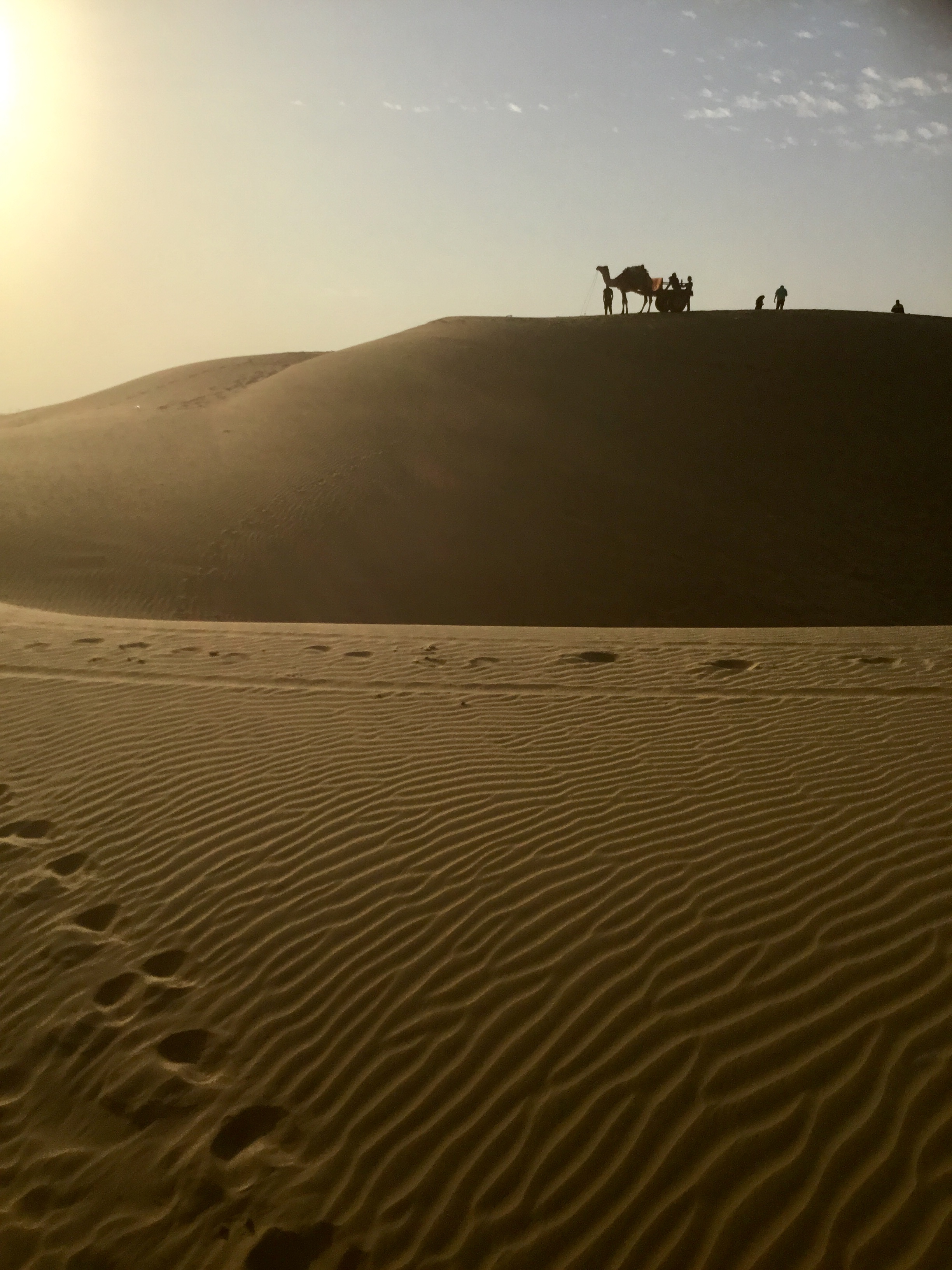
Thar Desert, Rajasthan, India
* an ongoing series of quotations – mostly from artists, to artists – that offers wisdom, inspiration, and advice for the sometimes lonely road we are on.
Beauty seems to need quiet and take patience, both to create it and to experience it.
If our minds are filled with a long and urgent “to do” list, we are not likely to slow down enough to appreciate anything but the next line we can draw through our never-ending list. Yet every now and again something stops us. It arrests our constant external activity and search. We can be stopped by the way the light filters through the trees in our backyard or hits a bowl of fruit on our kitchen table. And we are silenced, even if momentarily. We can be stopped by cave paintings as easily as by a thirteenth-century tapestry or a fifteenth-century Italian painting. We may be impressed by the craft of the artist, but almost always what moves us most deeply is the beauty that is expressed by the craft.
In the face of beauty, we are silenced because beauty expresses silence. In lavishing attention on the object of the artwork, the consciousness of the artist can touch something divine, some transcendental quality, and that transcendent element now resides in the artwork. How do we know it? We feel it. We experience it. Our heart responds to that sublime quality the artist infused into the work.
Ian Roberts in Creative Authenticity: 16 Principles to Clarify and Deepen Your Artistic Vision
Comments are welcome!
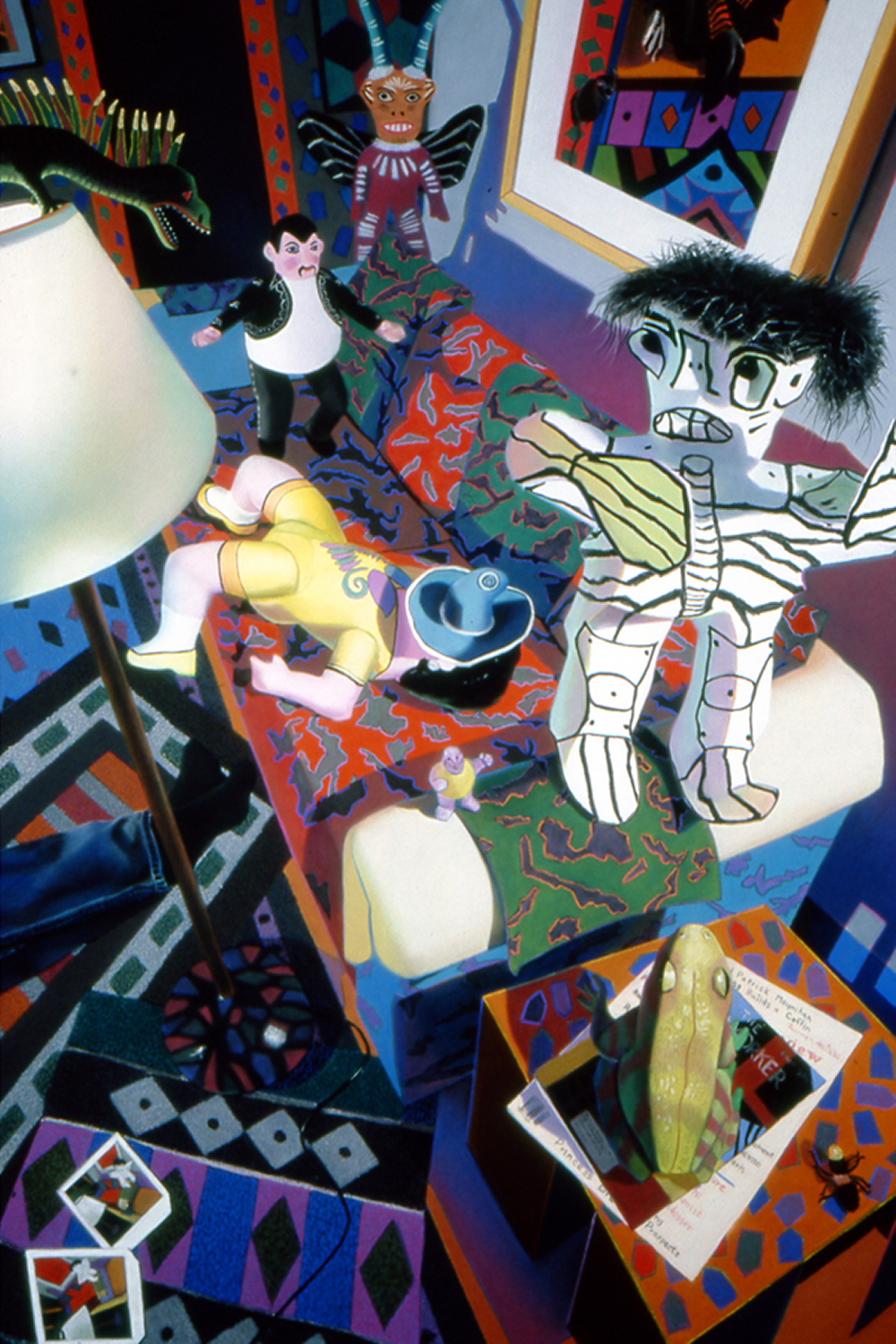
Q: Did your military experience become a building block on which you formed your artistic ideas?
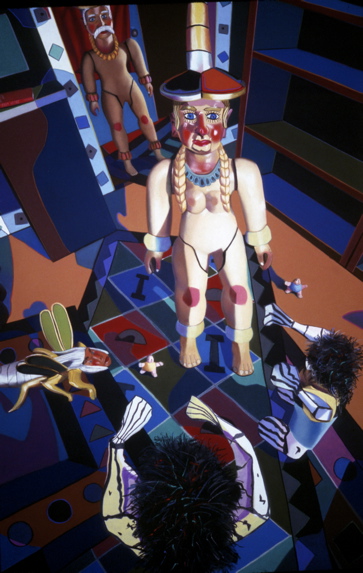
“Answering the Call,” 58″ x 38,” soft pastel on sandpaper, 2000
A: In my younger days boredom was a strong motivator. I left the active duty Navy out of boredom. I couldn’t bear not being intellectually challenged (most of my jobs consisted of paper-pushing), not using my flying skills, and not developing my artistic talent. In what must be a first, by spending a lot of time and money training me for jobs I hated, the Navy turned me into a hard-working, devoted, and disciplined artist! Once I left the Navy there was no plan B. It was “full speed ahead” to become an accomplished artist.
Comments are welcome!
Q: Where did you grow up and what were some early milestones or experiences that contributed to you becoming an artist later in life?
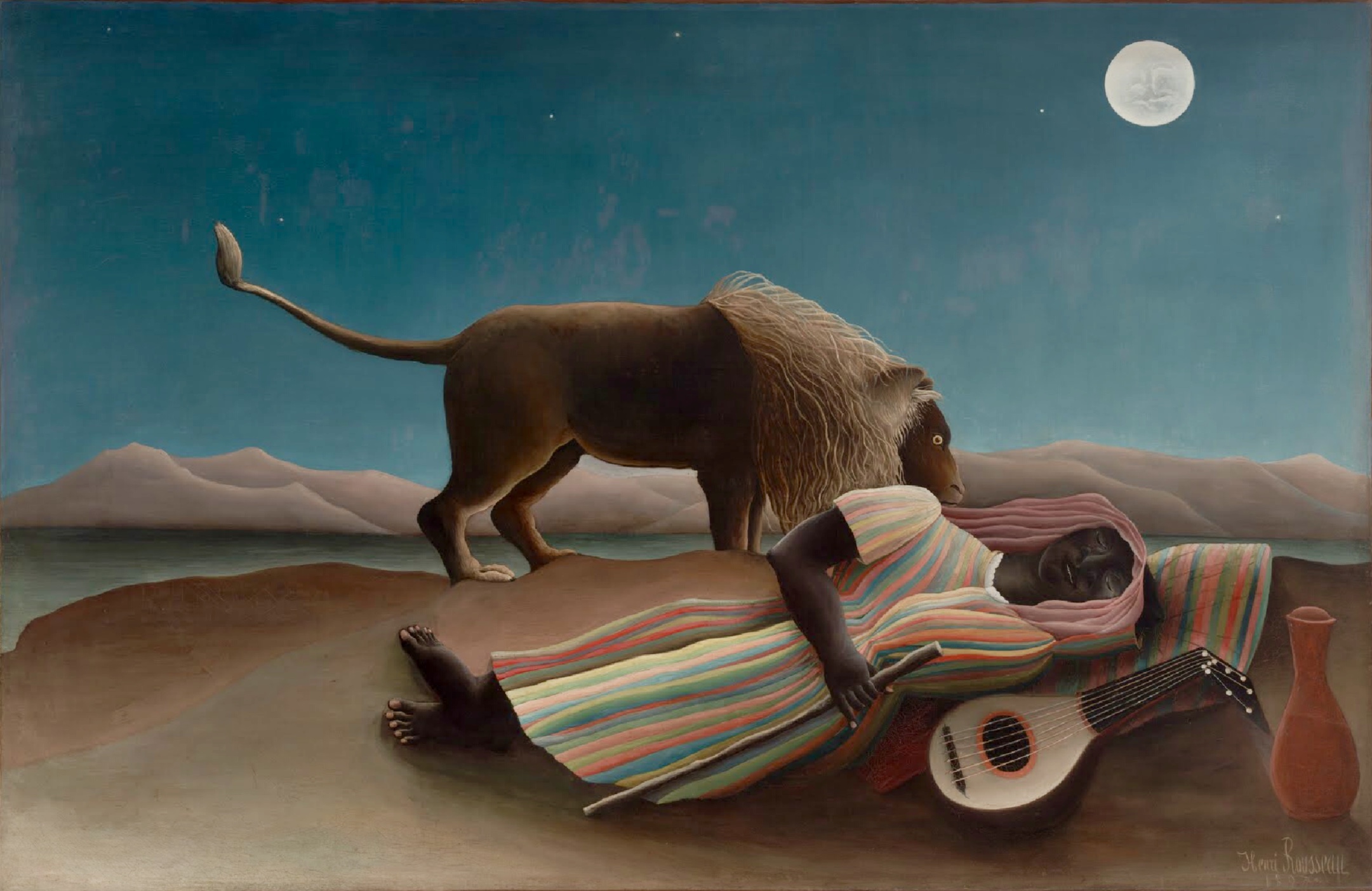
“The Sleeping Gypsy,” Henri Rousseau, oil on canvas, 1897
A: I grew up in a blue collar family in Clifton, New Jersey, a suburb about fifteen miles west of Manhattan. My father was a television repairman for RCA. My mother stayed home to raise my sister and me (at the time I had only one sister, Denise; my sister Michele was born much later). My parents were both first-generation Americans and no one in my extended family had gone to college yet. I was a smart kid who showed some artistic talent in kindergarten and earlier. I remember copying the Sunday comics, which in those days appeared in all the newspapers, and drawing small still lifes I arranged for myself. I have always been able to draw anything, as long as I can see it.
Denise, a cousin, and I enrolled in Saturday morning “art classes” at the studio of a painter named Frances Hulmes in Rutherford, NJ. I was about 6 years old. I continued the classes for 8 years and became a fairly adept oil painter. Since we lived so close to New York City, my mother often took us to museums, particularly to the Museum of Modern Art, the Metropolitan Museum of Art, and the Museum of Natural History. Like so many young girls, I fell in love with Rousseau’s “The Sleeping Gypsy” and was astonished by Picasso’s “Guernica” when it was on long-term loan to MoMA. I have fond memories of studying the dioramas at the Museum of Natural History (they are still my favorite part of the museum). As far as I know, there were no artists in my family so, unfortunately, I had no role models. At the age of 14 my father decided that art was not a serious pursuit – declaring, it is “a hobby, not a profession” – and abruptly stopped paying for my Saturday morning lessons. With no financial or moral support to pursue art, I turned my attention to other interests, letting my artistic abilities go dormant.
Comments are welcome!
Pearls from artists* # 345
Barbara working on an interview. Photo: Maria Cox
*an ongoing series of quotations – mostly from artists, to artists – that offers wisdom, inspiration, and advice for the sometimes lonely road we are on.
You begin your journey as an artist from sacred motives, with dreams and high hopes, and also, perhaps, from a place of painful turmoil or other inner necessity. From these powerful drives comes your conscious decision to pursue a life in art, your resolve to call yourself an artist whatever the consequences. You are the one nodding in agreement when the painter John Baldessari says, “Art is about bloody-mindedness. It’s not about living the good life. In the end, it’s just you and the art.”
Eric Maisel in A Life in the Arts: Practical Guidance and Inspiration for Creative and Performing Artists
Comments are welcome!
Pearls from artists* # 349
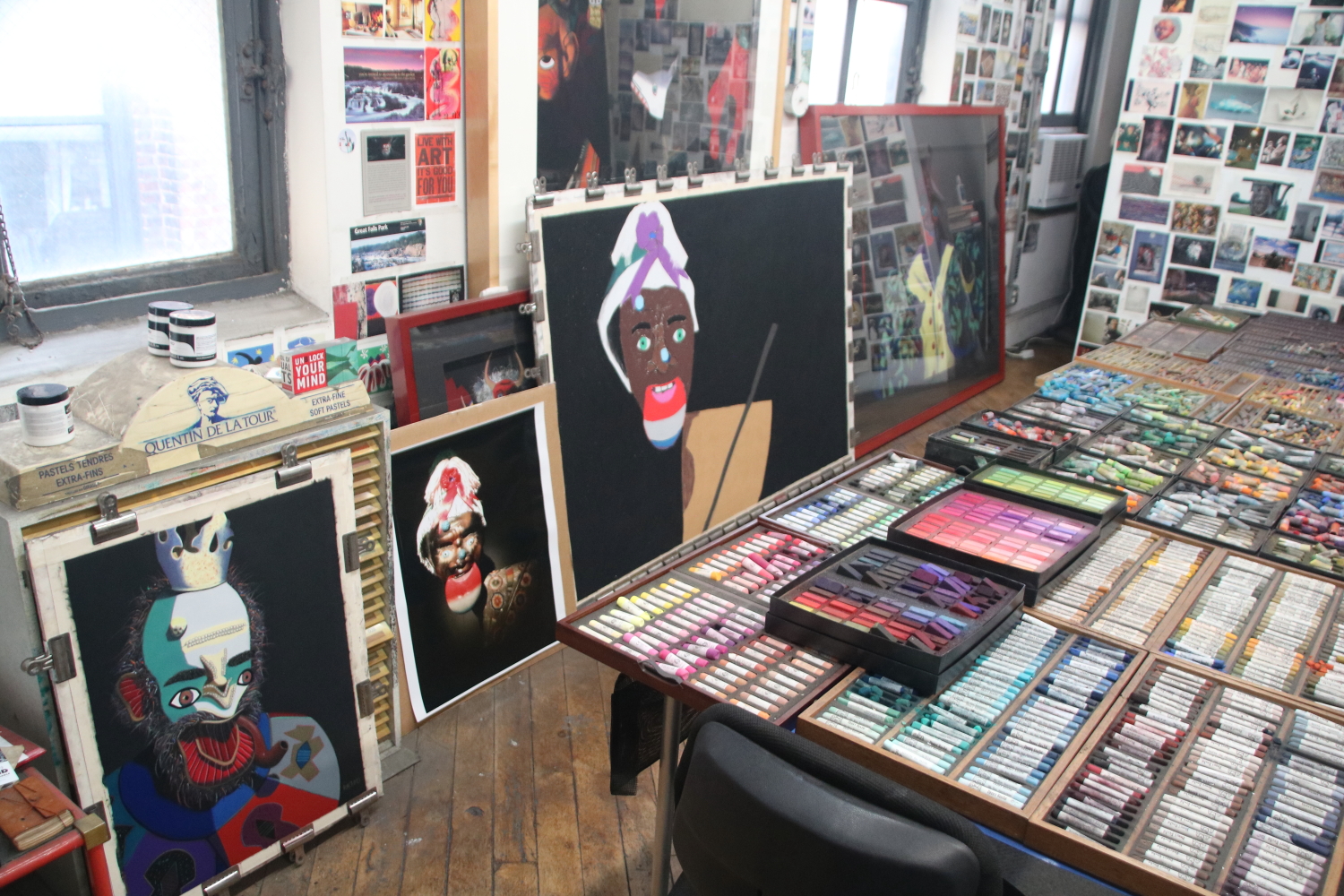
Barbara’s studio
*an ongoing series of quotations – mostly from artists, to artists – that offers wisdom, inspiration, and advice for the sometimes lonely road we are on.
If Dostoyevsky, Flaubert, and so many others were able to create great artistic works, it was because they were able to pull off something few adults can find it in themselves to do: they were able to suspend all final judgments about life and the universe in order to play…
The spirit of work is concerned with self-preservation. It evaluates concepts and ideas in terms of their practical value. Building roads, raising walls, running elections, debating policies, educating the young – all of these are purposive actions ultimately aimed at upholding social structures, changing those structures, or promoting one’s place within society. The spirit of work is the home of the ego, the part of us that has evolved to survive and thrive. One of the conditions of the artistic creation seems to be the ability to move frame this frame of mind into the spirit of play. As many artist have said in varying ways, the trick is to forget everything and create for the sake of creating. No worthwhile play, of course, is without effort. As the painstaking care Flaubert put into every line of his books makes clear, the spirit of play is sometimes the most exciting. Nevertheless, art remains in essence a game, an activity undertaken for its own sake, no matter how difficult. Like all games, it requires the establishment of a perimeter within which things that one might take very seriously in ordinary life are given only relative value. The perimeter suspends all the conventional rules, allowing the artist to turn the world on its head and let the imagination roam freely.
No sooner have we entered the spirit of play than we see things differently.
J.F. Martel in Reclaiming Art in the Age of Artifice: A Treatise, Critique, and Call to Action
Comments are welcome!
Q: Was there a pivotal time in your life when you were forced to choose between two different paths? Do you have any regrets?
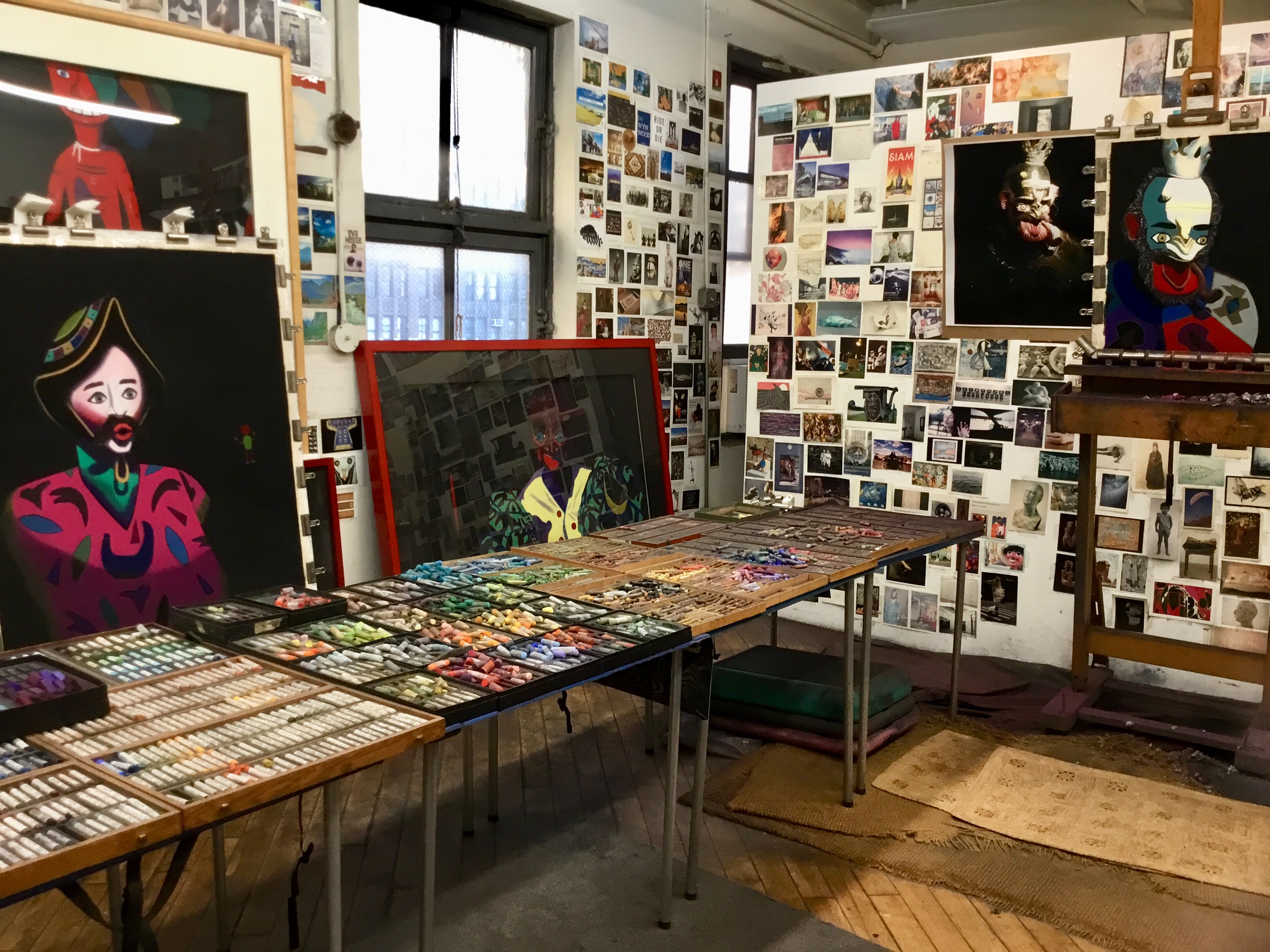
Barbara’s studio
A: In 1988 I was a Navy Lieutenant working at the Pentagon as a computer analyst. I hated my boring job! For about two years I had been taking drawing classes at the Art League School in Alexandria, VA and was rapidly improving. More importantly, I discovered that making art was endlessly fascinating and challenging.
After much soul searching, I made the scary decision to resign from active duty. Sept. 30, 1989 was my last day. I have been a professional visual artist ever since and surprisingly (to me!), have never needed a day job.
However, for fourteen years I remained in the Naval Reserve, working in Virginia one weekend a month and for two weeks each year. After I moved to New York in 1997, I used to take Amtrak to Washington, DC. I would go from my full time New York artist’s life to my part time military life. It was extremely interesting to be around such different types of people, to say the least! On November 1, 2003 I retired as a Navy Commander.
I have never, ever regretted the path I chose. I love being an artist and would not want to spend my life doing anything else.
Comments are welcome!



