Blog Archives
Q: Your pastel paintings are immediately recognizable as yours alone. Did you consciously try to develop a signature style in your work?
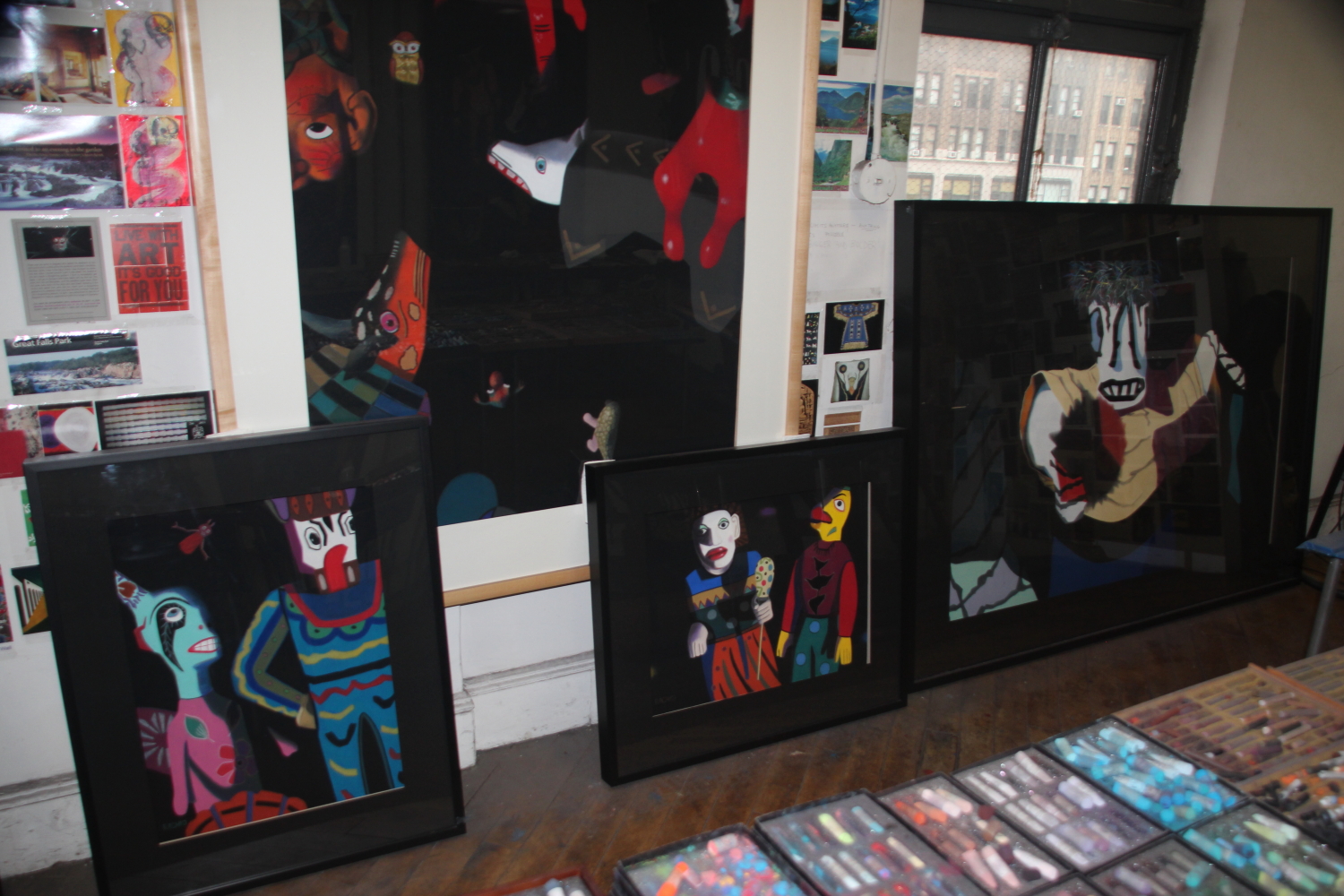
Barbara’s studio
A: I don’t believe that is even possible. An artist’s style is something that evolves with plain hard work and experience, over many years of trial and error, as one finds what techniques work best and discards those that don’t. It is a process of continually experimenting, refining, and clarifying. In other words, style is something that emerges naturally as you gradually strive to improve your art-making.
Style develops in close connection to what an artist is saying as she undergoes a very personal and idiosyncratic journey. Again, it would seem improbable for an artist to strive for any particular style, since style is not something over which an artist can exert much conscious control.
I would even say that each artist’s unique style is inevitable. It would be nearly impossible now to make a pastel painting or photograph that does NOT look like a Rachko.
Comments are welcome!
Q: Can you talk a little bit about your process? What happens before you even begin a pastel painting?

Barbara in Bali (far right)
A: My process is extremely slow and labor-intensive.
First, there is foreign travel – often to Mexico, Guatemala or someplace in Asia – to find the cultural objects – masks, carved wooden animals, paper mâché figures, and toys – that are my subject matter. I search the local markets, bazaars, and mask shops for these folk art objects. I look for things that are old, that look like they have a history, and were probably used in religious festivals of some kind. Typically, they are colorful, one-of-a- kind objects that have lots of inherent personality. How they enter my life and how I get them back to my New York studio is an important part of my art-making practice.
My working methods have changed dramatically over the nearly thirty years that I have been an artist. My current process is a much simplified version of how I used to work. As I pared down my imagery in the current series, “Black Paintings,” my creative process quite naturally pared down, too.
One constant is that I have always worked in series with each pastel painting leading quite naturally to the next. Another is that I always set up a scene, plan exactly how to light and photograph it, and work with a 20″ x 24″ photograph as the primary reference material.
In the setups I look for eye-catching compositions and interesting colors, patterns, and shadows. Sometimes I make up a story about the interaction that is occurring between the “actors,” as I call them.
In the “Domestic Threats” series I photographed the scene with a 4″ x 5″ Toyo Omega view camera. In my “Gods and Monsters” series I shot rolls of 220 film using a Mamiya 6. I still like to use an old analog camera for fine art work, although I have been rethinking this practice.
Nowadays the first step is to decide which photo I want to make into a painting (currently I have a backlog of photographs to choose from) and to order a 19 1/2″ x 19 1/2″ image (my Mamiya 6 shoots square images) printed on 20″ x 24″ paper. They recently closed, but I used to have the prints made at Manhattan Photo on West 20th Street in New York. Now I go to Duggal. Typically I have in mind the next two or three paintings that I want to create.
Once I have the reference photograph in hand, I make a preliminary tonal charcoal sketch on a piece of white drawing paper. The sketch helps me think about how to proceed and points out potential problem areas ahead.
Only then am I ready to start actually making the painting.
Comments are welcome!
Pearls from artists* # 106

Road delay, Arizona
* an ongoing series of quotations – mostly from artists, to artists – that offers wisdom, inspiration, and advice for the sometimes lonely road we are on.
Yet even I, who track the hours closely, understand that one pleasure of art-making is its resolute inefficiency. It resists the sweep of the second hand; it is opposite to my daily muster of punch lists, telephone calls, day job requirements, family life, and errands. The necessary thought may come today or next week. Yet it’s not the same as leisure. The struggle toward the next thought is rigorous, held within an isometric tension. The poet Richard Wilbur writes about laundry drying on the line, “moving and staying like white water.” Moving and staying. Such water, familiar to anyone who has watched a brook rush over rocks, captures the way a creative practice insists you bear time. You must hold still and wait, and yet you must push forward.
Janna Malamud Smith in An Absorbing Errand: How Artists and Craftsmen Make Their Way to Mastery
Comments are welcome!
Q: How do you define success as an artist?
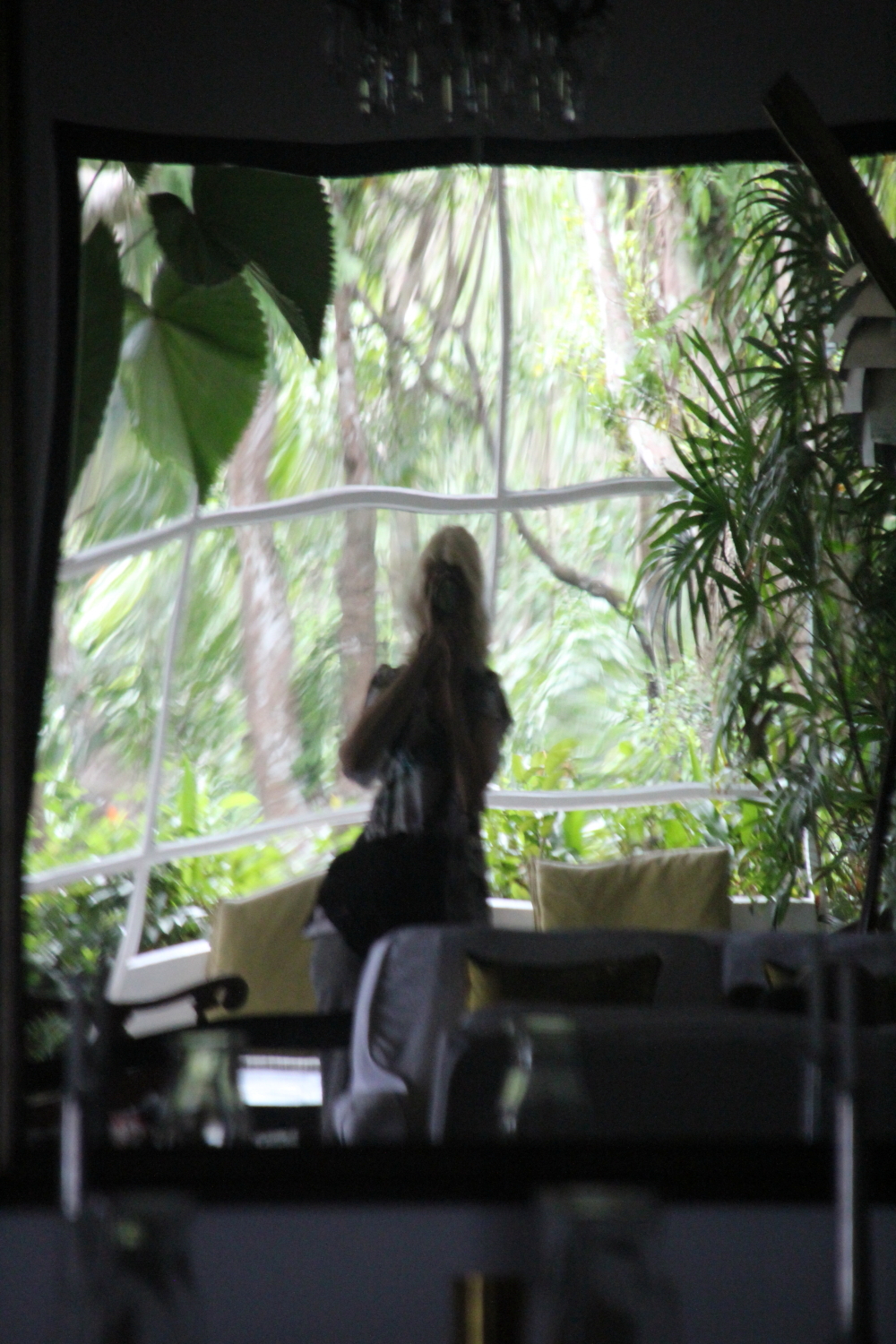
Self-portrait at an architect’s estate in Sri Lanka
A: This is another question that has many answers depending more or less on how things are progressing in the studio. I’d say that you are a successful artist if you are able to keep working and evolving, and are mostly living by your own rules, using your time as you see fit to become a better artist. This means navigating through all the ups and downs, the obstacles – and we know there are many – to art-making and finding joy and on-going discovery in your own particular creative process. The work is everything, as we always say, but hopefully, you have found an appreciative audience and do sell a piece of art now and then.
I know that I am more fortunate than many. Over time I’ve realized that money, i.e., sales, is one of the less important aspects of being an artist. The richness that being a professional artist brings to my life goes far beyond anything that can be acquired with cash!
Comments are welcome!
Q: Would you speak about the practical realities – time and expenses – involved in making your pastel-on-sandpaper paintings? What might people be surprised to learn about this aspect of art-making?
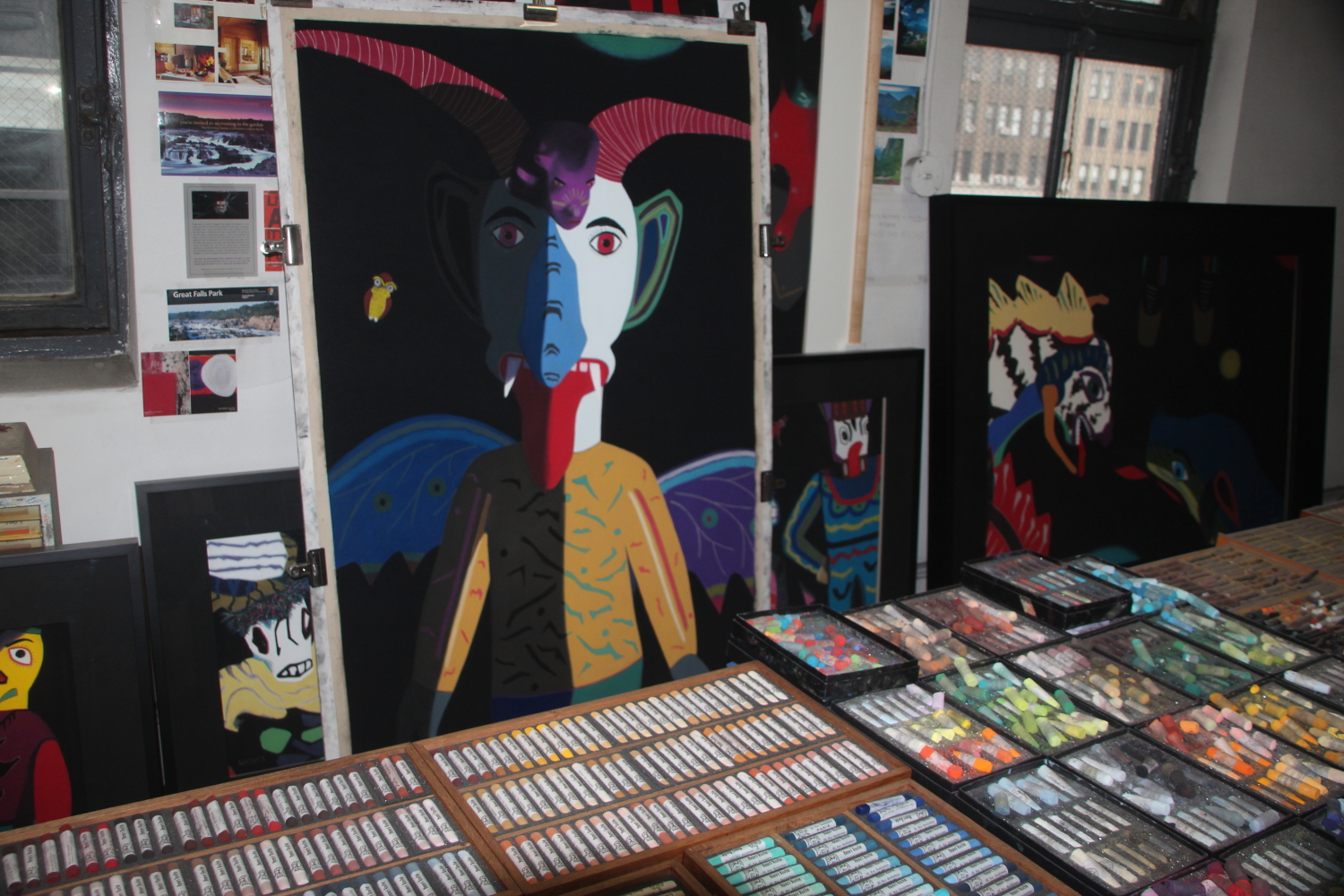
Studio
A: I have often said that this work is labor-intensive. In a good year I can complete five or six large (38″ x 58″) pastel paintings. In 2013 I am on track to make four, or, on average, one completed painting every three months. I try to spend between thirty-five and forty hours a week in the studio. Of course, I don’t work continuously all day long. I work for awhile, step back, look, make changes and additions, think, make more changes, step back, etc. Still, hundreds of hours go into making each piece in the “Black Paintings” series, if we count only the actual execution. There is also much thinking and preparation – there is no way to measure this – that happen before I ever get to stand before an empty piece of sandpaper and begin.
As far as current expenses, they are upwards of $12,000 per painting. Here is a partial breakdown:
$4500 New York studio, rent and utilities ($1350/month) for three months
$2500 Supplies, including frames (between $1500 – $1700), photographs, pastels (pro-rated), paper
$2000 Foreign travel to find the cultural objects, masks, etc. depicted in my work (approximate, pro-rated)
$3000 Business expenses, such as computer-related expenses, website, marketing, advertising, etc.
This list leaves out many items, most notably compensation for my time, shipping and exhibition expenses, costs of training (i.e. ongoing photography classes), photography equipment, etc. Given my overhead, the paintings are always priced at the bare minimum that will allow me to continue making art.
I wonder: ARE people surprised by these numbers? Anyone who has ever tried it knows that art is a tough road. Long ago I stopped thinking about the cost and began doing whatever is necessary to make the best paintings. The quality of the work and my evolution as an artist are paramount now. This is my life’s work, after all.
Comments are welcome!
Pearls from artists* # 18

West Village
* an ongoing series of quotations – mostly from artists, to artists – that offers wisdom, inspiration, and advice for the sometimes lonely road we are on.
Those who would make art might well begin by reflecting on the fate of those who preceded them: most who began, quit. It’s a genuine tragedy. Worse yet, it’s an unnecessary tragedy. After all, artists who continue and artists who quit share an immense field of common emotional ground. (Viewed from the outside, in fact, they’re indistinguishable). We’re all subject to a familiar and universal progression of human troubles – troubles we routinely survive, but which are (oddly enough) routinely fatal to the art-making process. To survive as an artist requires confronting these troubles. Basically, those who continue to make art are those who have learned how to continue – or more precisely, have learned how to not quit.
But curiously, while artists always have a myriad of reasons to quit, they consistently wait for a handful of specific moments to quit. Artists quit when they convince themselves that their next effort is already doomed to fail. And artists quit when they lose the destination for their work – for the place their work belongs.
Virtually all artists encounter such moments. Fear that your next work will fail is a normal, recurring, and generally healthy part of the art-making cycle. It happens all the time: you focus on some new idea in your work, you try it out, run with it for awhile, reach a point of diminishing returns, and eventually decide it’s not worth pursuing further. Writers even have a phrase for it – “the pen has run dry” – but all media have their equivalents. In the normal artistic cycle this just tells you that you’ve come full circle, back to that point where you need to begin cultivating the next new idea. But in artistic death it marks the last thing that happens: you play out an idea, it stops working, you put the brush down… and thirty years later you confide to someone over coffee that, well, yes, you had wanted to paint when you were much younger. Quitting is fundamentally different from stopping. The latter happens all the time. Quitting happens once. Quitting means not starting again – and art is all about starting again.
David Bayles and Ted Orland, Art & Fear
Comments are welcome!
Q: Why do you work in series?
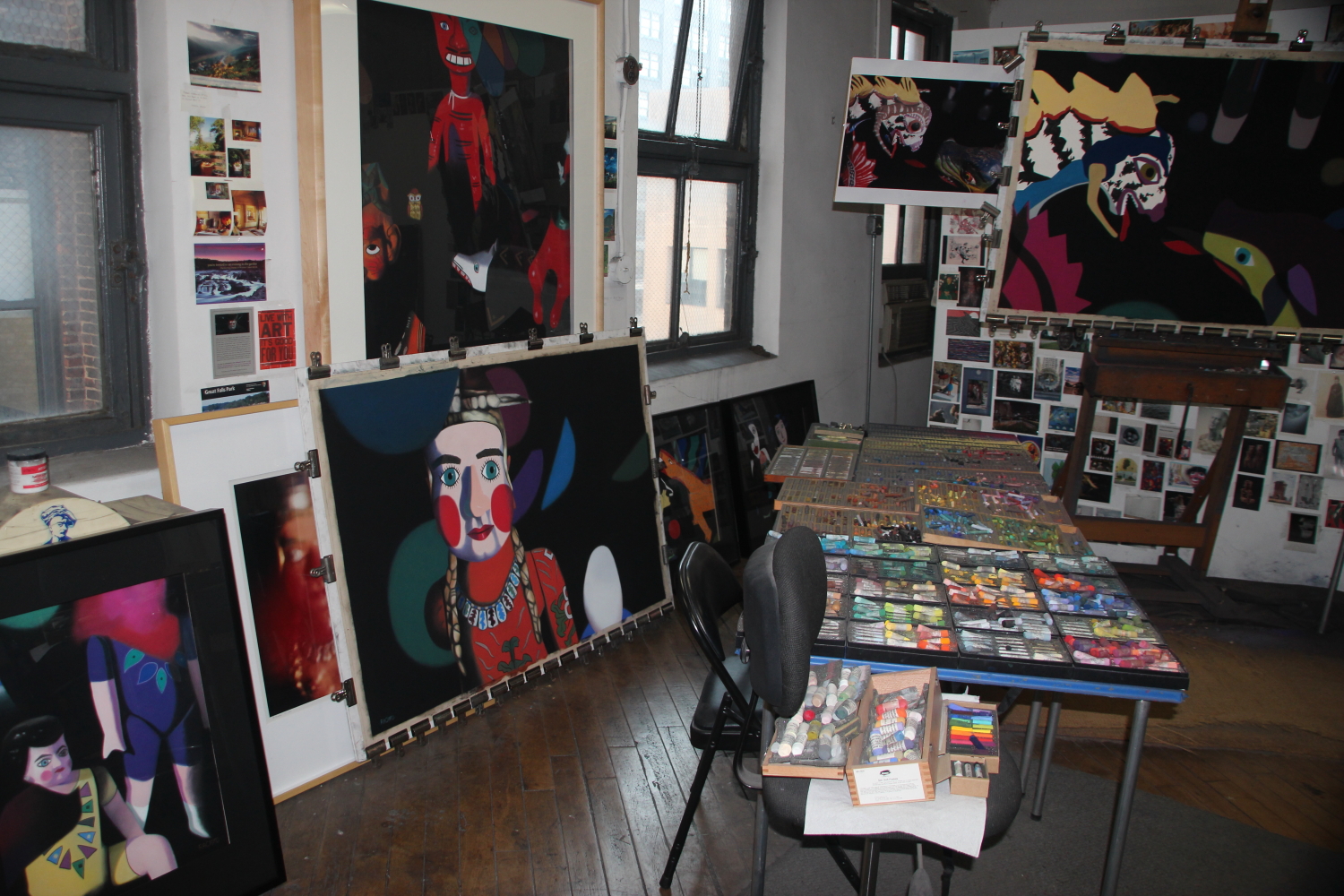
The studio recently
A: I don’t really have any choice in the matter. It’s more or less the way I have always worked so it feels natural. Art-making comes from a deep place. In keeping with the aphorism ars longa, vita brevis, it’s a way of making one’s time on earth matter. Working in series mimics the more or less gradual way that our lives unfold, the way we slowly evolve and change over the years. Life-altering events happen, surely, but seldom do we wake up drastically different – in thinking, in behavior, etc. – from what we were the day before. Working in series feels authentic. It helps me eke out every lesson my paintings have to teach. With each completed piece, my ideas progress a step or two further.
Last week I went to the Metropolitan Museum to see an exhibition called, “Matisse: In Search of True Painting.” It demonstrates how Matisse worked in series, examining a subject over time and producing multiple paintings of it. Matisse is my favorite artist of any period in history. I never tire of seeing his work and this particular exhibition is very enlightening. In fact, it’s a must-see and I plan to return, something I rarely do because there is always so much to see and do in New York. As I studied the masterpieces on the wall, I recognized a kindred spirit and thought, “Obviously, working in series was good enough for Matisse!”
Comments are welcome!


 barbararachkoscoloreddust.com