Category Archives: An Artist’s Life
Pearls from artists* # 349
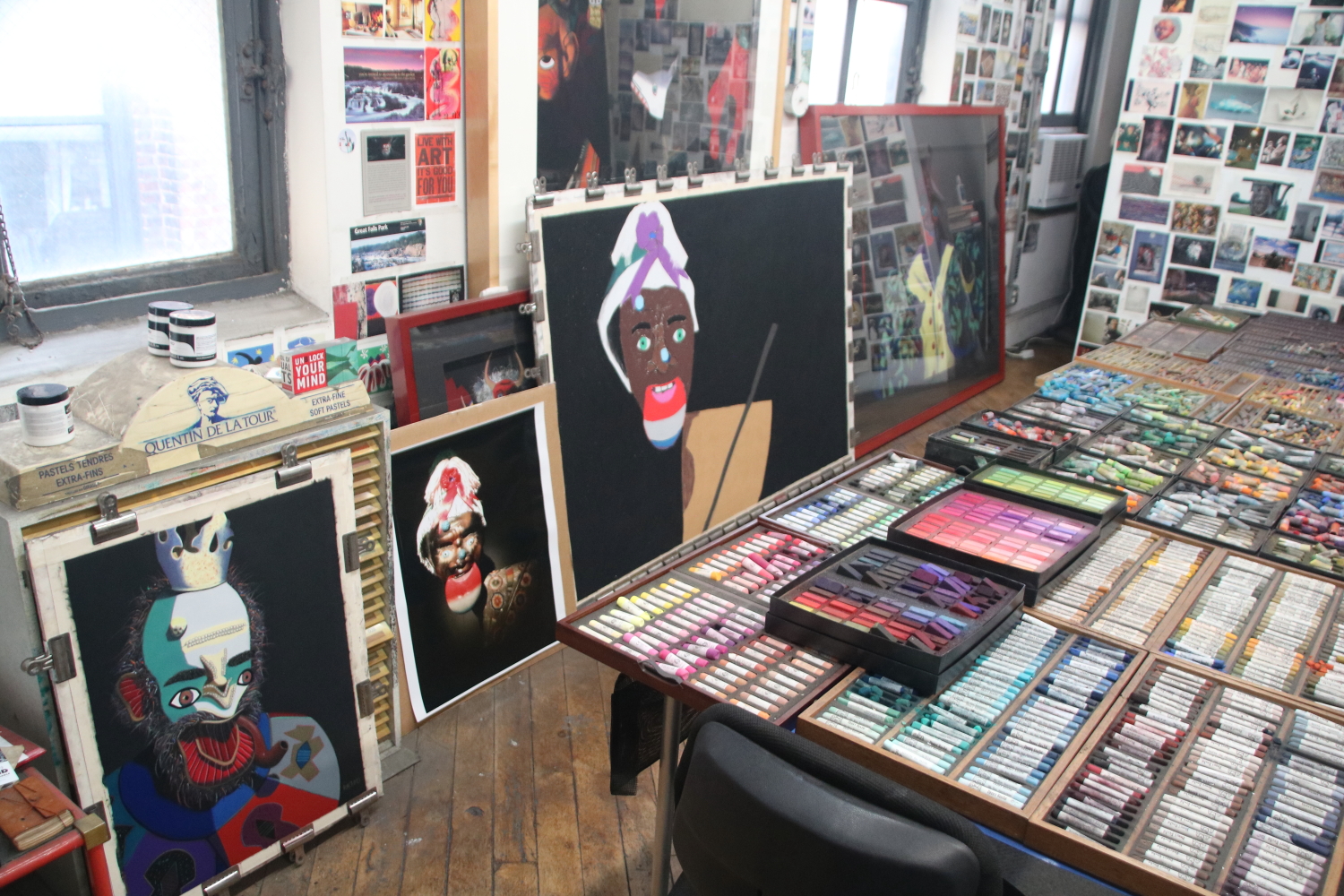
Barbara’s studio
*an ongoing series of quotations – mostly from artists, to artists – that offers wisdom, inspiration, and advice for the sometimes lonely road we are on.
If Dostoyevsky, Flaubert, and so many others were able to create great artistic works, it was because they were able to pull off something few adults can find it in themselves to do: they were able to suspend all final judgments about life and the universe in order to play…
The spirit of work is concerned with self-preservation. It evaluates concepts and ideas in terms of their practical value. Building roads, raising walls, running elections, debating policies, educating the young – all of these are purposive actions ultimately aimed at upholding social structures, changing those structures, or promoting one’s place within society. The spirit of work is the home of the ego, the part of us that has evolved to survive and thrive. One of the conditions of the artistic creation seems to be the ability to move frame this frame of mind into the spirit of play. As many artist have said in varying ways, the trick is to forget everything and create for the sake of creating. No worthwhile play, of course, is without effort. As the painstaking care Flaubert put into every line of his books makes clear, the spirit of play is sometimes the most exciting. Nevertheless, art remains in essence a game, an activity undertaken for its own sake, no matter how difficult. Like all games, it requires the establishment of a perimeter within which things that one might take very seriously in ordinary life are given only relative value. The perimeter suspends all the conventional rules, allowing the artist to turn the world on its head and let the imagination roam freely.
No sooner have we entered the spirit of play than we see things differently.
J.F. Martel in Reclaiming Art in the Age of Artifice: A Treatise, Critique, and Call to Action
Comments are welcome!
Q: Was there a pivotal time in your life when you were forced to choose between two different paths? Do you have any regrets?
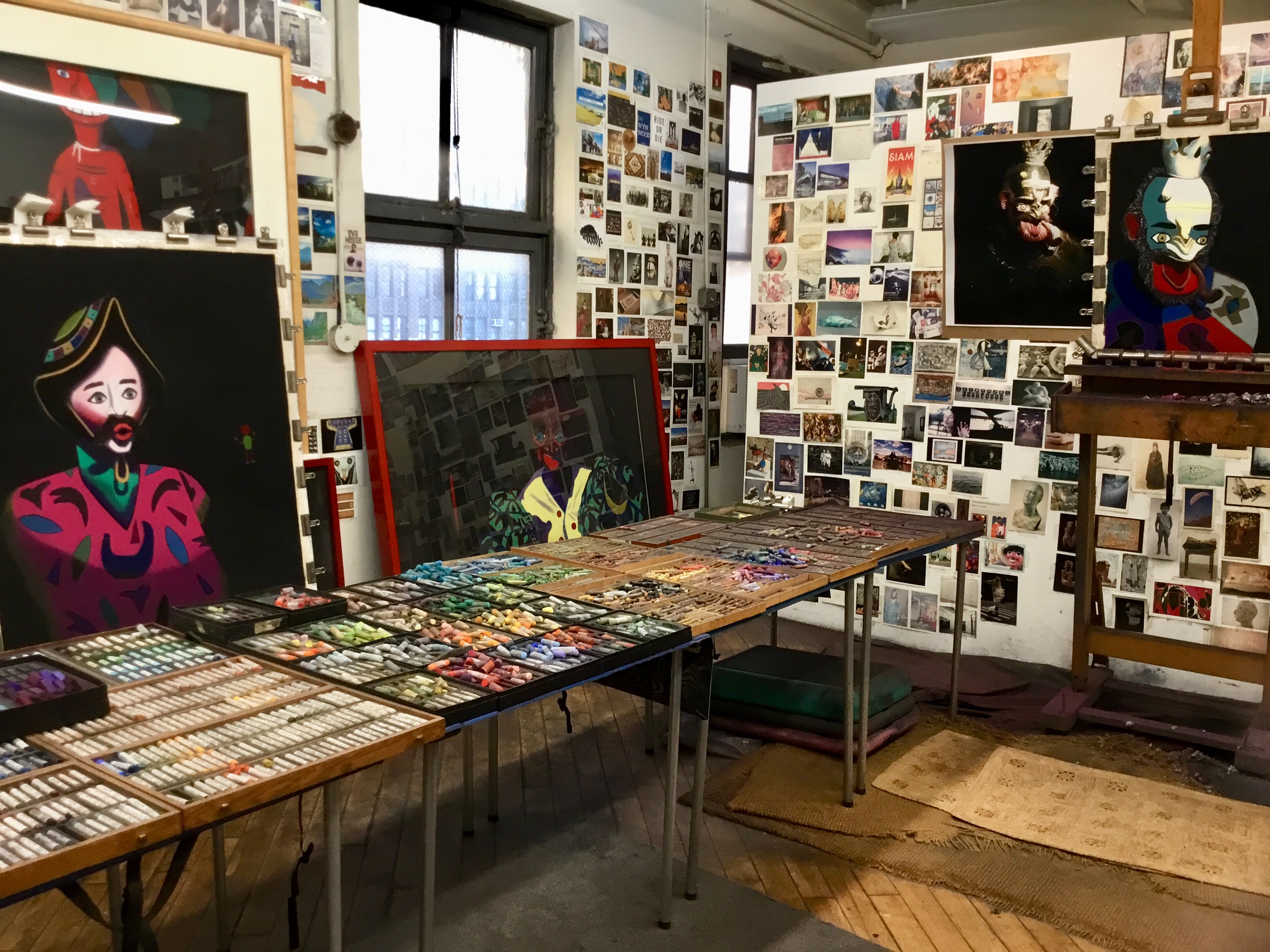
Barbara’s studio
A: In 1988 I was a Navy Lieutenant working at the Pentagon as a computer analyst. I hated my boring job! For about two years I had been taking drawing classes at the Art League School in Alexandria, VA and was rapidly improving. More importantly, I discovered that making art was endlessly fascinating and challenging.
After much soul searching, I made the scary decision to resign from active duty. Sept. 30, 1989 was my last day. I have been a professional visual artist ever since and surprisingly (to me!), have never needed a day job.
However, for fourteen years I remained in the Naval Reserve, working in Virginia one weekend a month and for two weeks each year. After I moved to New York in 1997, I used to take Amtrak to Washington, DC. I would go from my full time New York artist’s life to my part time military life. It was extremely interesting to be around such different types of people, to say the least! On November 1, 2003 I retired as a Navy Commander.
I have never, ever regretted the path I chose. I love being an artist and would not want to spend my life doing anything else.
Comments are welcome!
Pearls from artists* # 342

New York, NY
*an ongoing series of quotations – mostly from artists, to artists – that offers wisdom, inspiration, and advice for the sometimes lonely road we are on.
I work either way, you see – assisted or unassisted – because that is what you must do in order to live a fully creative life. I work steadily, and I always thank the process. Whether I am touched by grace or not, I thank creativity for allowing me to engage at all.
Because either way, it’s all kind of amazing – what we get to do, what we get to attempt, what we sometimes get to commune with.
Gratitude, always.
Always, gratitude.
Elizabeth Gilbert in Big Magic: Creative Living Beyond Fear
Comments are welcome!
Travel photo of the month*
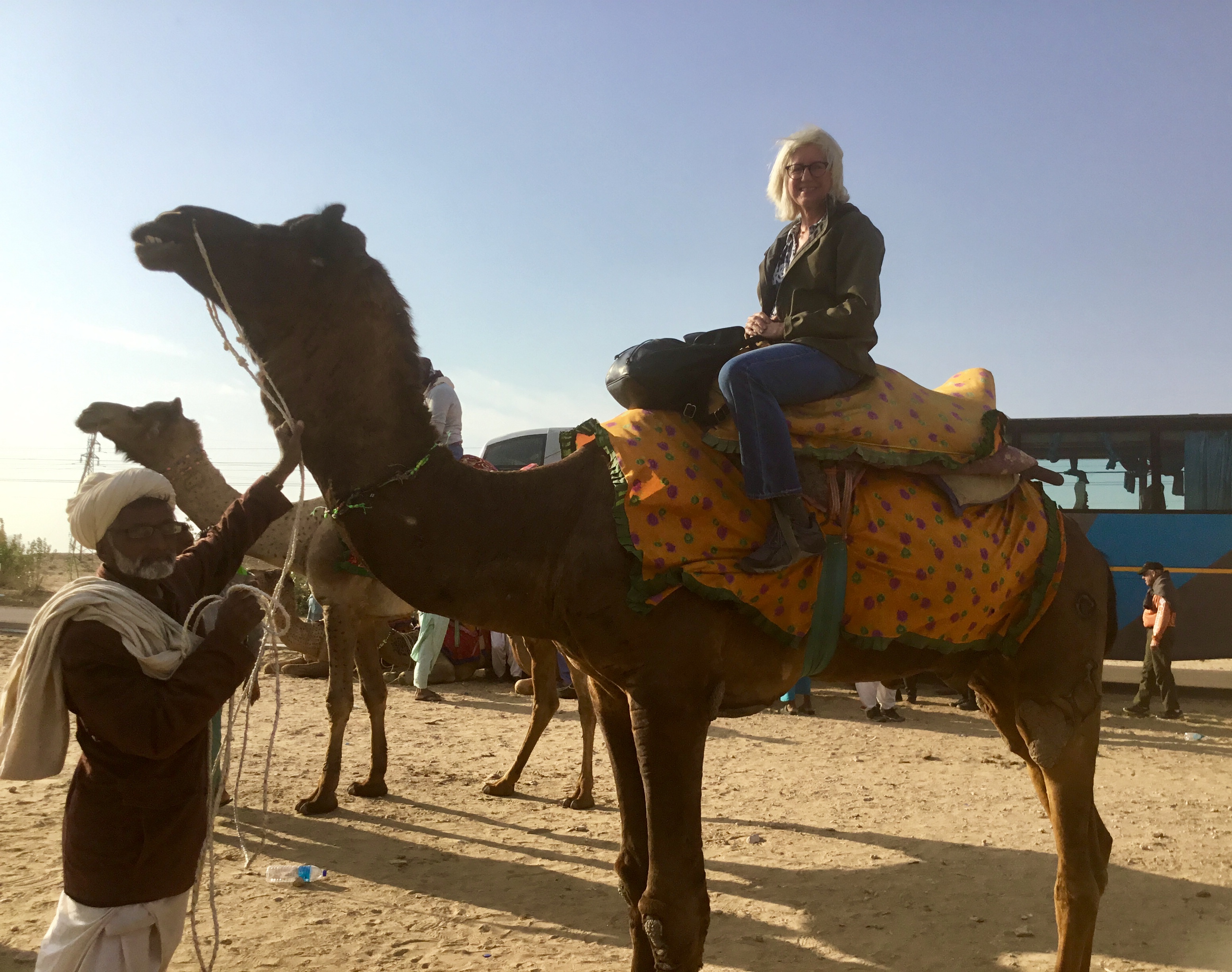
With Carlos the camel in India’s Thar Desert
*Favorite travel photographs that have not yet appeared in this blog
Comments are welcome!
Pearls from artists* # 340

Lower Manhattan
* an ongoing series of quotations – mostly from artists, to artists – that offers wisdom, inspiration, and advice for the sometimes lonely road we are on.
What, do you suppose, are the lives of those who raise themselves above the level of the common herd? A continual struggle. A writer, for instance, must struggle against the laziness which he shares with the ordinary man when it comes to writing, because his genius demands to be heard, it is not merely of an empty desire for fame that he obeys, it is a matter of conscience. Let those who work coldly and calmly keep silence, for they have no conception of what it means to work under the spur of inspiration – the dread, the terror of rousing the sleeping lion whose roaring moves us to the very depth of our being. To sum up: be strong, simple, and true; here is an aim for every moment of the day, and it is always useful.
The Journal of Eugene Delacroix, edited by Hubert Wellington
Comments are welcome!
Q: In the “Bolivianos” series you are exclusively depict masks. What drew you to them?

Source material for “The Champ”
A: For me a mask is so much more than a mask. It is a living thing with its own mind, its own soul, and with a unique history. With this series I feel as though I am creating portraits of living beings.
These images are a return to my early days because I began as a photo-realist portrait painter. So I am reconnecting with a first love, except with a welcome twist. This time I do not have to satisfy a portrait client’s request to make my subject look younger or more handsome. I am free to respond only to what the work needs.
Comments are welcome!
Pearls from artists* # 339
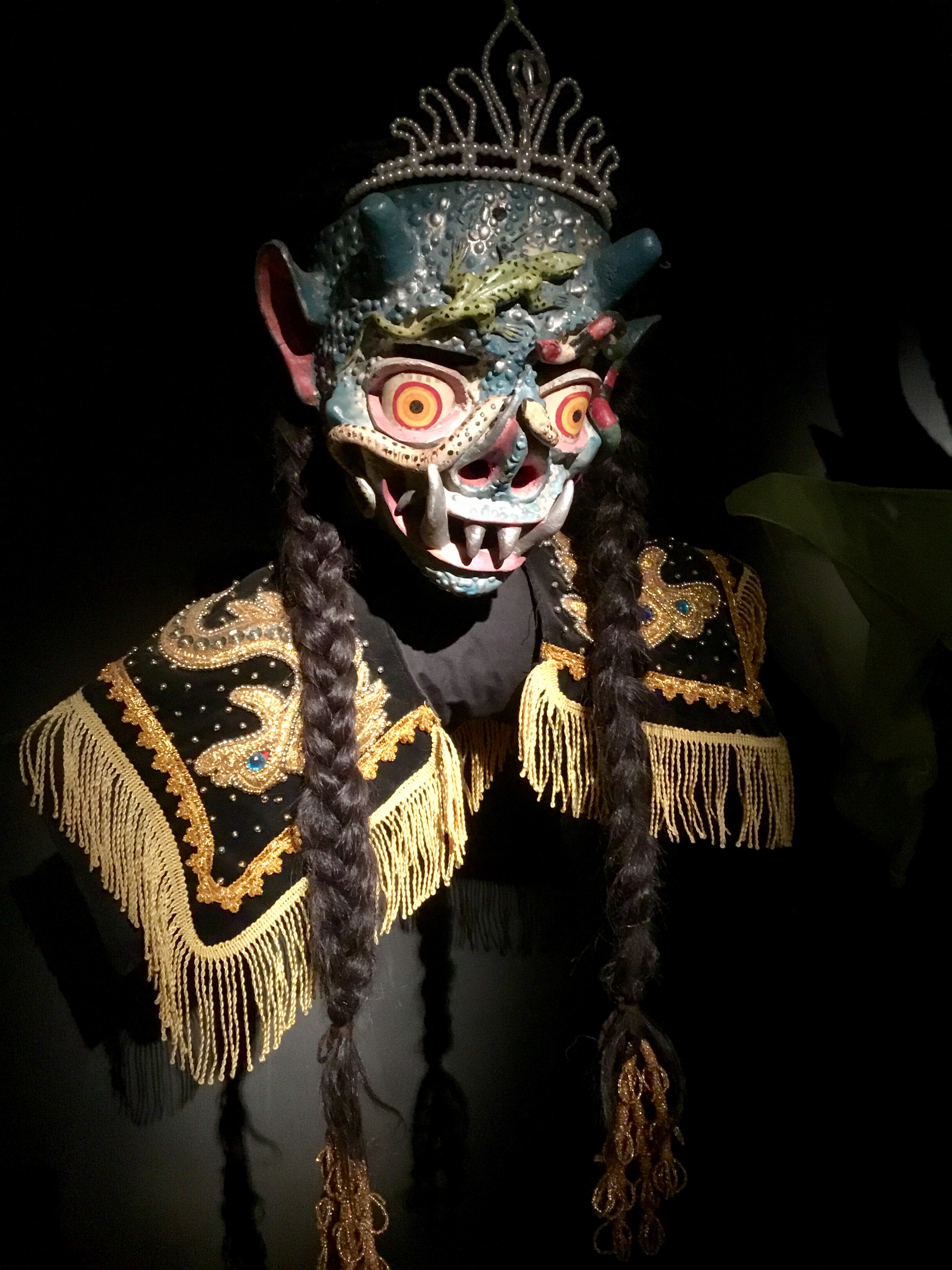
Untitled c-print, 24” x 20,” reference photo for “Shamanic,” Soft Pastel on Sandpaper, 38” x 58”
* an ongoing series of quotations – mostly from artists, to artists – that offers wisdom, inspiration, and advice for the sometimes lonely road we are on.
I have no love for reasonable painting. There is in me an old leaven, some black depth which must be appeased. If I am not quivering and excited like a serpent in the hands of a soothsayer I am uninspired. I must recognize this and accept it. Everything good that I have done has come to me in this way.
The Journal of Eugene Delacroix, edited by Hubert Wellington
Comments are welcome!
Pearls from artists* # 338
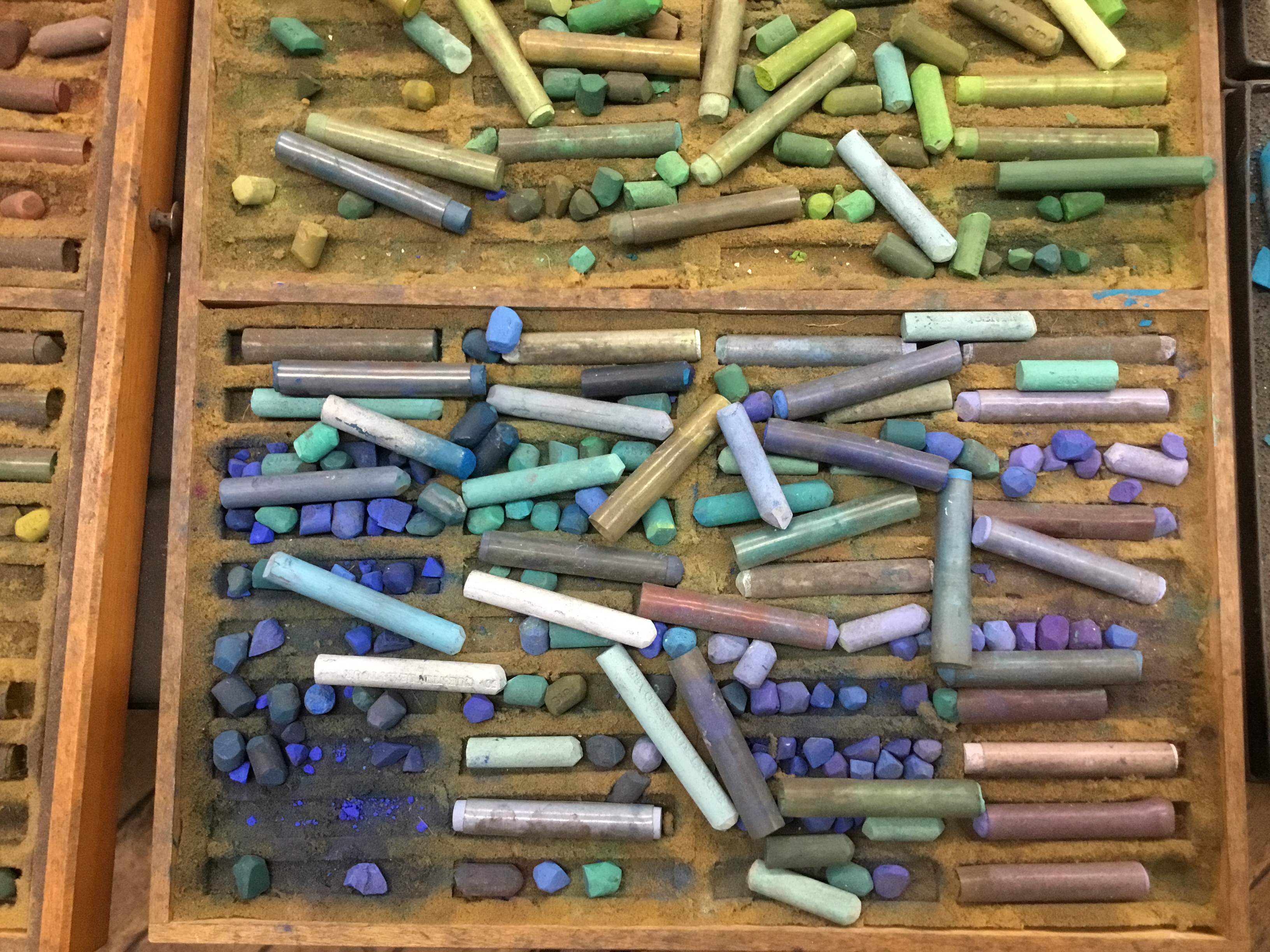
Pastels
*an ongoing series of quotations – mostly from artists, to artists – that offers wisdom, inspiration, and advice for the sometimes lonely road we are on.
Beauty without symbolic depth results in ornament. Symbol without beauty results in psychoanalysis. Only when the two meet can we speak of art. The artistic works that combine the two elements most compellingly are what are called the classics. In his magisterial book The Analogical Imagination, the theologian David Tracy defines the classic as a work exhibiting a permanent “excess of meaning.” We speak of classics as “timeless,” he says, not because they belong to time, but because they are perpetually timely; their relevance never wanes, and each generation, each percipient, must interpret them anew. According to Tracy, we know we are dealing with a classic when a work makes us realize that our general outlook on life is not as complete as we thought it was, that “something else might be the case.” In the light that the classic emanates, things suddenly seem less clear-cut than they used to seem – we find ourselves in the presence of something greater than we are, something potentially infinite. Classics take us to the apex of the numinous, the point of what Werner Herzog calls “ecstatic truth.”
J.F. Martel in Reclaiming Art in the Age of Artifice: A Treatise, Critique, and Call to Action
Comments are welcome!
Pearls from artists* # 337
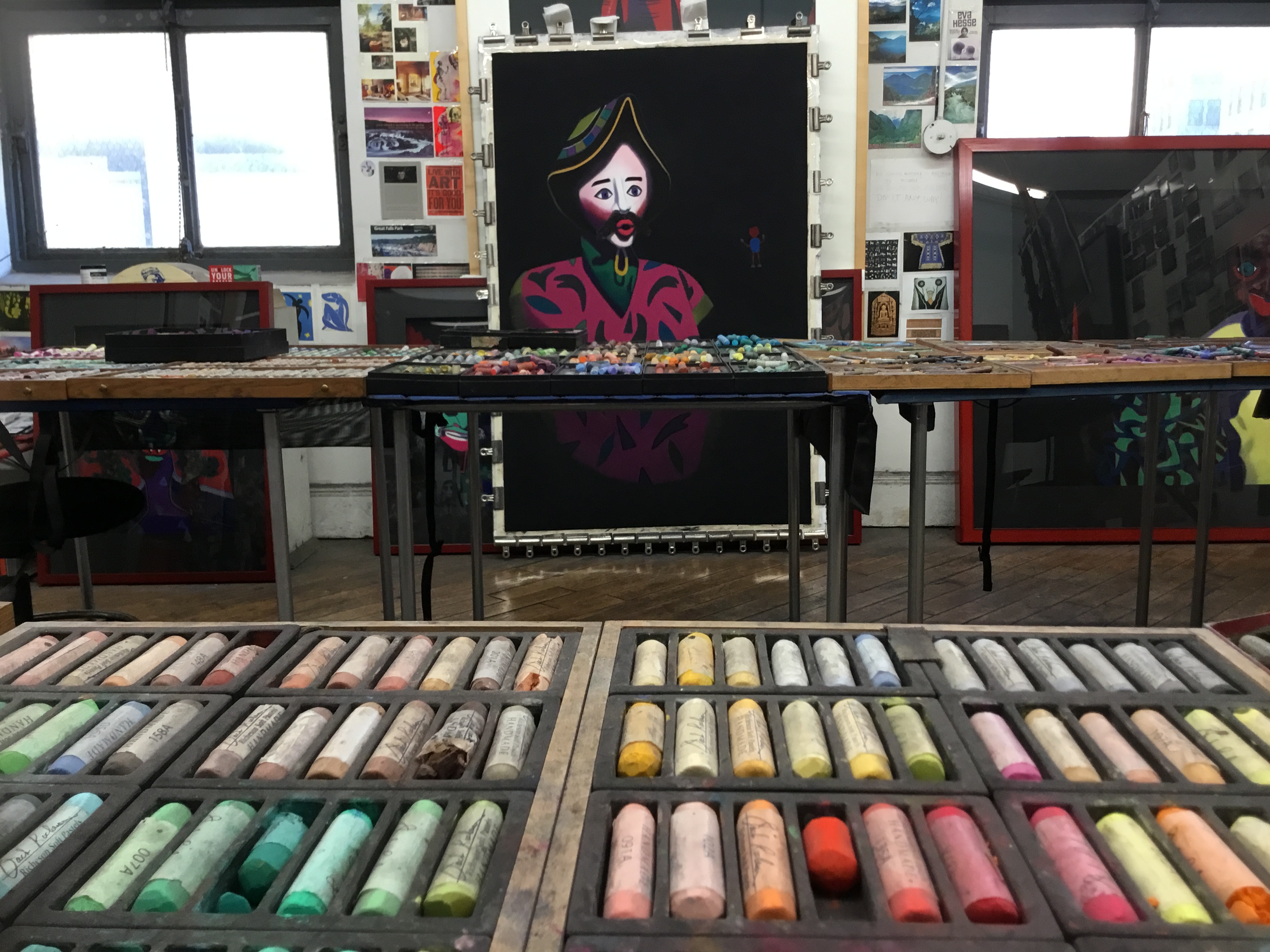
Barbara’s studio
*an ongoing series of quotations – mostly from artists, to artists – that offers wisdom, inspiration, and advice for the sometimes lonely road we are on.
I think society did a great disservice to artists when we started saying they were geniuses, instead of saying they had geniuses. That happened around the Renaissance, with the rise of a more rational and human-centered view of life. The gods and the mysteries fell away, and suddenly we put all credit and blame for creativity on the artists themselves – making the all-too-fragile humans completely responsible for the vagaries of inspiration.
In the process, we also venerated art and artists beyond their appropriate stations. The distinction of “being a genius” (and the rewards and status often associated with it) elevated creators into something like a priestly cast – and perhaps even into minor deities – which I think is a bit too much pressure for mere mortals, no matter how talented. That’s when artists start to really crack, driven mad and broken in half by the weight and weirdness of their gifts.
Elizabeth Gilbert in Big Magic: Creative Living Beyond Fear
Comments are welcome!


 barbararachkoscoloreddust.com
Q: It is well known that you gain inspiration from foreign travel. Has anyone ever accused you of stealing their culture?
Feb 9
Posted by barbararachkoscoloreddust
The Bolivian side of Lake Titicaca
A: Yes, a few people have done so via comments on Facebook. It came as a shock.
The logic of such an accusation presumes ownership. I don’t believe any person has a claim to owning culture.
Travel is arguably the best education there is. My travels around the world, supplemented with lots of research once I return home, are an important part of my creative process. This is how I develop ideas to forge a way ahead. It is difficult and solitary work.
Every artist is tasked with remaining open to influences – however, wherever, and whenever they appear. Somewhat late in life, travel as a source of inspiration found ME. And it has been a blessing!
People around the world have become fans. Many send messages of thanks saying they are proud that some aspect of their country’s culture has inspired my work. I am always grateful and touched to know this.
Comments are welcome!
Share this:
Posted in 2019, An Artist's Life, Bolivia, Creative Process, Inspiration, Studio, The West Village, Working methods
Comments Off on Q: It is well known that you gain inspiration from foreign travel. Has anyone ever accused you of stealing their culture?
Tags: accusation, accused, afterwards, arguably, around the world, aspect, blessing, comments, country, creative process, develop, education, Facebook, foreign travel, forge ahead, grateful, handful, influences, inspiration, inspired, Lake Titicaca, late in life, logic, messages, ownership, presumes, remaining open, research, sentiments, shock, singular, source of inspiration, stealing culture, Studio, supplemented, tasked, telling, thanks, touched, travel