Blog Archives

Pearls from artists* # 125

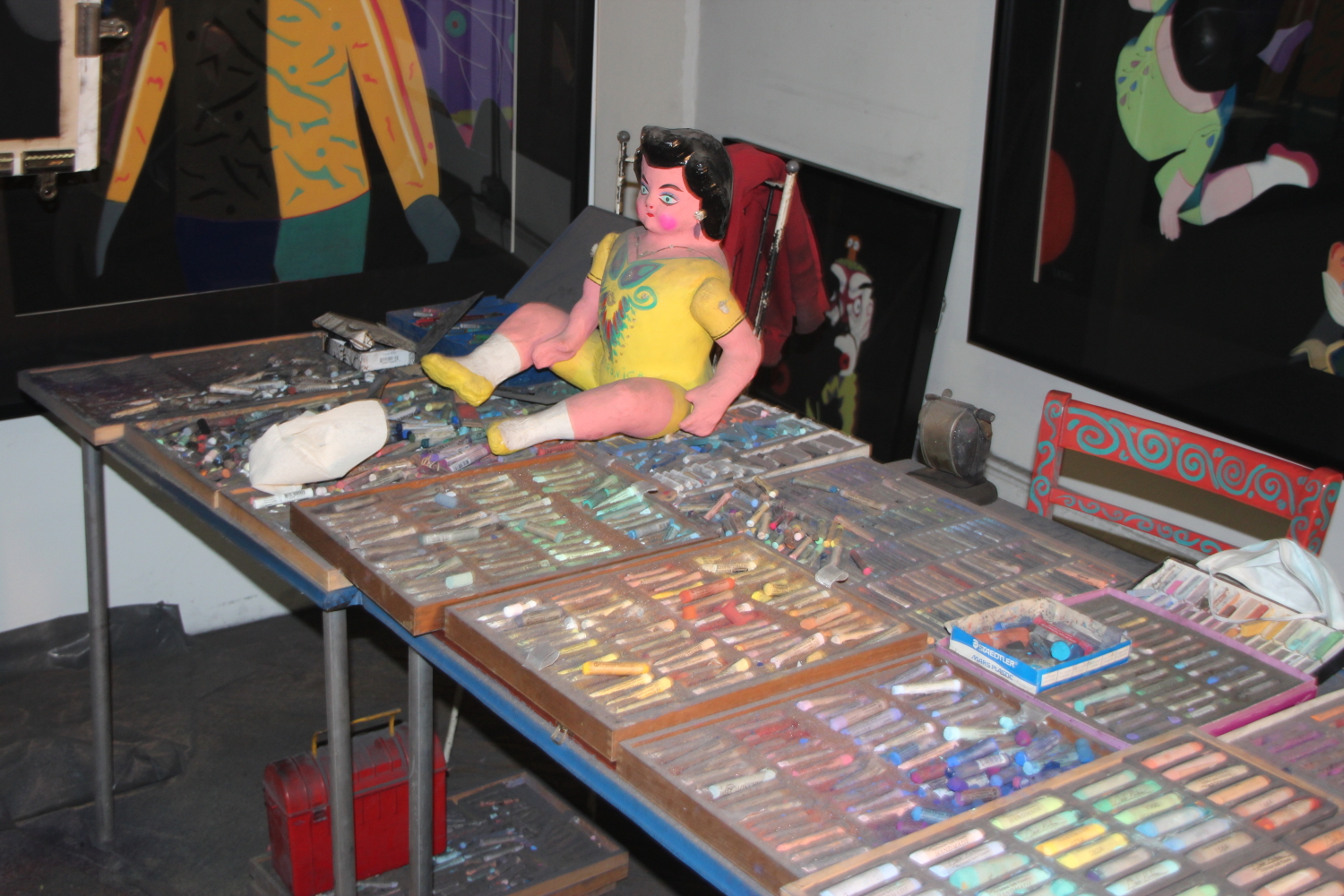
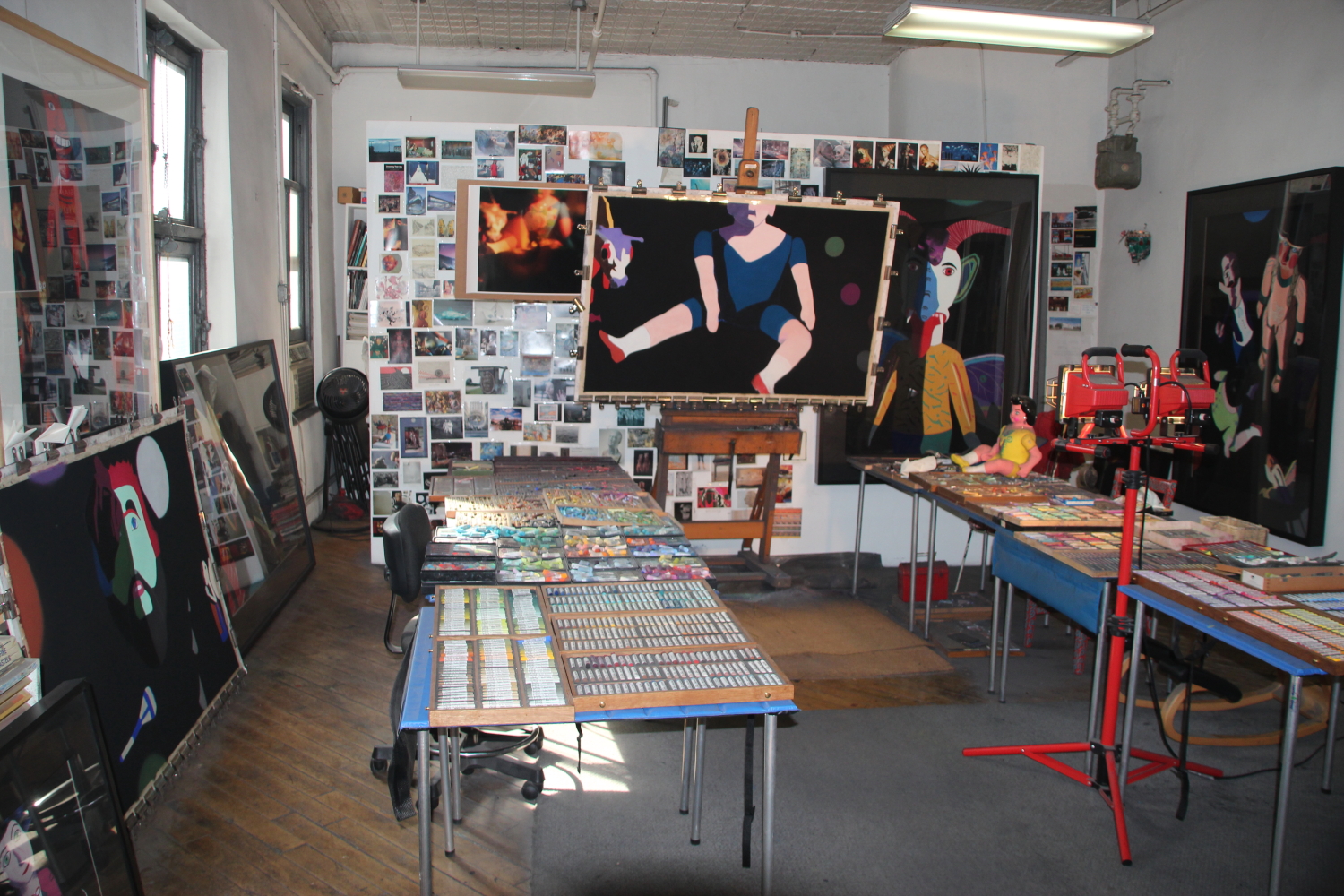
Barbara's studio

Barbara’s studio

* an ongoing series of quotations – mostly from artists, to artists – that offers wisdom, inspiration, and advice for the sometimes lonely road we are on.

My own natural proclivity is to categorize the world around me, to remove unfamiliar objects from their dangerous  perches by defining, compartmentalizing and labeling them.  I want to know what things are and I want to know where they are and I want to control them.  I want to remove the danger and replace it with the known.  I want to feel safe.  I want to feel out of danger.

And yet, as an artist, I know that I must welcome the strange and the unintelligible into my awareness and into my working process.  Despite my propensity to own and control everything around me, my job is to “make the familiar strange and the strange familiar,” as Bertolt Brecht recommended:  to un-define and un-tame what has been delineated by belief systems and conventions, and to welcome the discomfort of doubt and the unknown, aiming to make visible what has become invisible by habit.

Because life is filled with habit, because our natural desire is to make countless assumptions and treat our surroundings as familiar and unthreatening, we need art to wake us up.  Art un-tames, reifies and wakes up the part of our lives that have been put to sleep and calcified by habit.  The artist, or indeed anyone who wants to turn daily life into an adventure, must allow people, objects and places to be dangerous and freed from the definitions that they have accumulated over time.            

Anne Bogart in What’s the Story:  Essays about art, theater, and storytelling

Comments are welcome!

Pearls from artists* # 123

"Quartet" with self-portrait

“Quartet” with self-portrait


* an ongoing series of quotations – mostly from artists, to artists – that offers wisdom, inspiration, and advice for the sometimes lonely road we are on.

We artists should not underestimate the importance of the stories we tell ourselves about how our art will make a difference.  These motivational fictions describe the ways a work might interact with the world to justify our extravagant, and potentially narcissistic labors:  that our art has transformational potential.  A work might be understood as being critical of society or sanctuary from it, for instance, or a Trojan horse sent to the enemy as a nasty gift to unsettle their deeply entrenched frames of mind.  We need renewable encouragement to make fresh work year after year in the face of uncertain rewards.

David Humphrey quoted in THE ART LIFE:  On Creativity and Career by Stuart Horodner

Comments are welcome!

Pearls from artists* # 122

Sanur, Bali

Sanur, Bali

* an ongoing series of quotations – mostly from artists, to artists – that offers wisdom, inspiration, and advice for the sometimes lonely road we are on.

Most significant growth in my life has been the direct result of errors, mistakes, accidents, faulty assumptions and wrong moves.  I have generally learned more from my mistakes and my so-called failures than any successes or instances of “being right.”  I would venture to propose that this equation is also true in the world at large.  Error is a powerful animating ingredient in political, scientific and historical evolution as well as in art and mythology.  Error is a necessity.  The question I had to ask myself was:  how can I cultivate a tolerance and an appetite for being wrong, for error?

In the face of an exceedingly complicated world, there are too many people who are invested in “being right.”  These people are dangerous.  Their authority is based on their sense of certainty.  But innovation and invention do not only happen with smart people who have all of the answers.  Innovation results from trial and error.  The task is to make good mistakes, good errors, in the right direction.

There are many reasons that we get things as wrong as often as we do.  Failures of perception, the cause of most error, are far more common in our daily lives than we like to think.  We make errors because of inattention, because of poor preparation and because of haste.  We err as a result of hardened prejudices about how things are.  We err because we neglect to think things through.  Our senses betray us constantly.  But the chaos caused by being wrong also  awakens energy and consciousness in us.  In the moments that we realize our faults of perception, we are jerked into an awareness of our humanity.  The Slovenian philosopher Slavoj Zizek wrote, “Consciousness originates with something going terribly wrong.”

Anne Bogart in “What’s the Story:  Essays about art, theater, and storytelling

Comments are welcome!     

Pearls from artists* # 119

"He and She"

“He and She”

* an ongoing series of quotations – mostly from artists, to artists – that offers wisdom, inspiration, and advice for the sometimes lonely road we are on.

During the course of the past several years we have experienced a seismic shift in the way the world functions.  Any notion of a certain or stable or inevitable future has vanished.  We are living in what the Polish philosopher Zygmunt Bauman calls “liquid modernity.”  No one’s life is predictable or secure.  We are confronted with challenges never previously encountered, and these challenges weigh heavily on the role and responsibilities of the individual in society.  It is the onus of each one of us to adjust, shift and adjust again to the constant liquid environment of fluid and unending change.  In the midst of all this reeling and realignment, the moment is ripe to activate new models and proposals for how arts organizations [and artists] can flourish in the present climate and into an uncertain future. 

What’s the Story:  Essays about art, theater, and storytelling by Anne Bogart

Comments are welcome!         

Q: I have been always fascinated with the re-contexualizing power of Art and with the way some objects or even some concepts often gain a second life when they are “transduced” on a canvas or in a block of marble. So I would like to ask you if in your opinion, personal experience is an absolutely indespensable part of a creative process. Do you think that a creative process could be disconnected from direct experience?

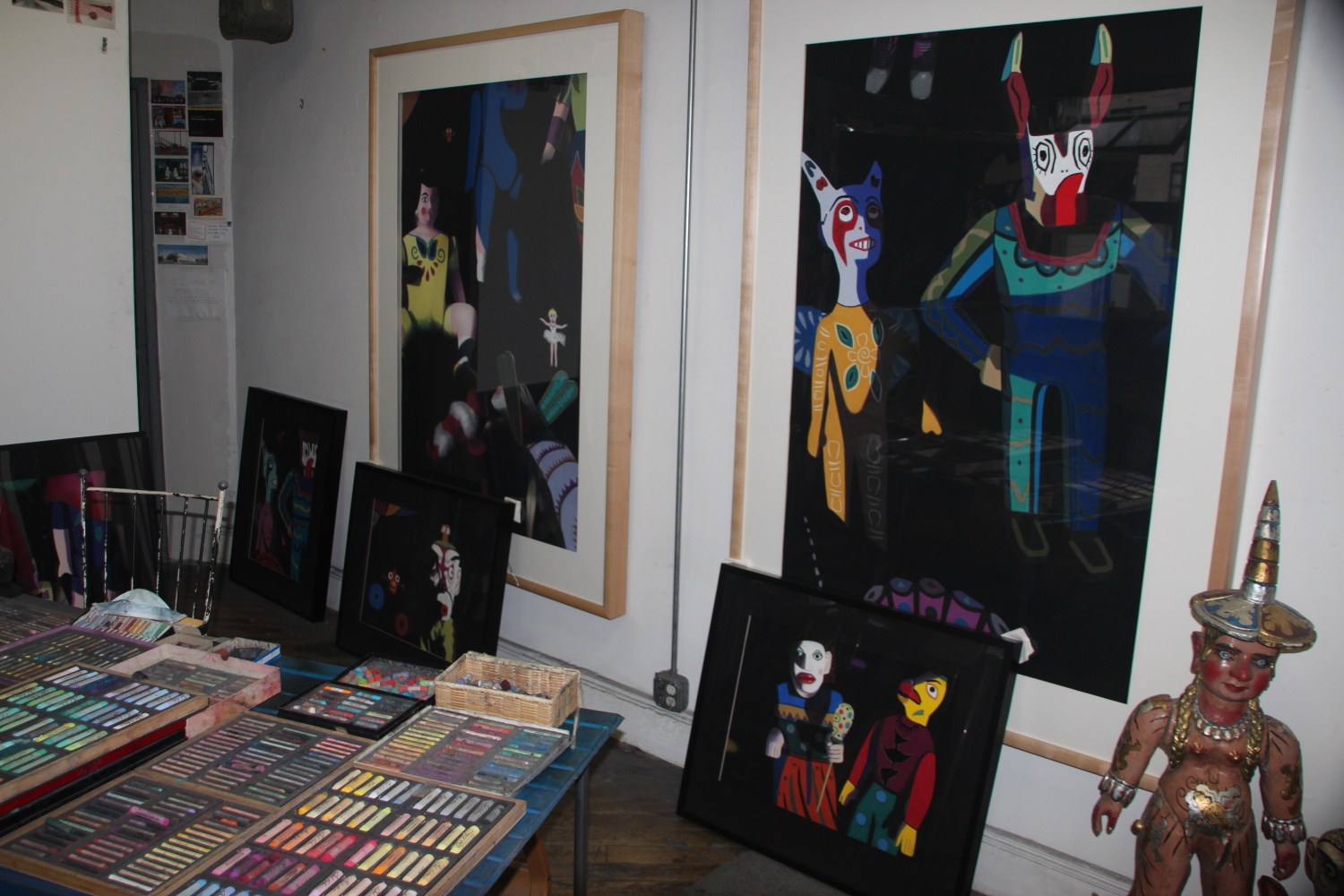
Barbara's studio

Barbara’s studio

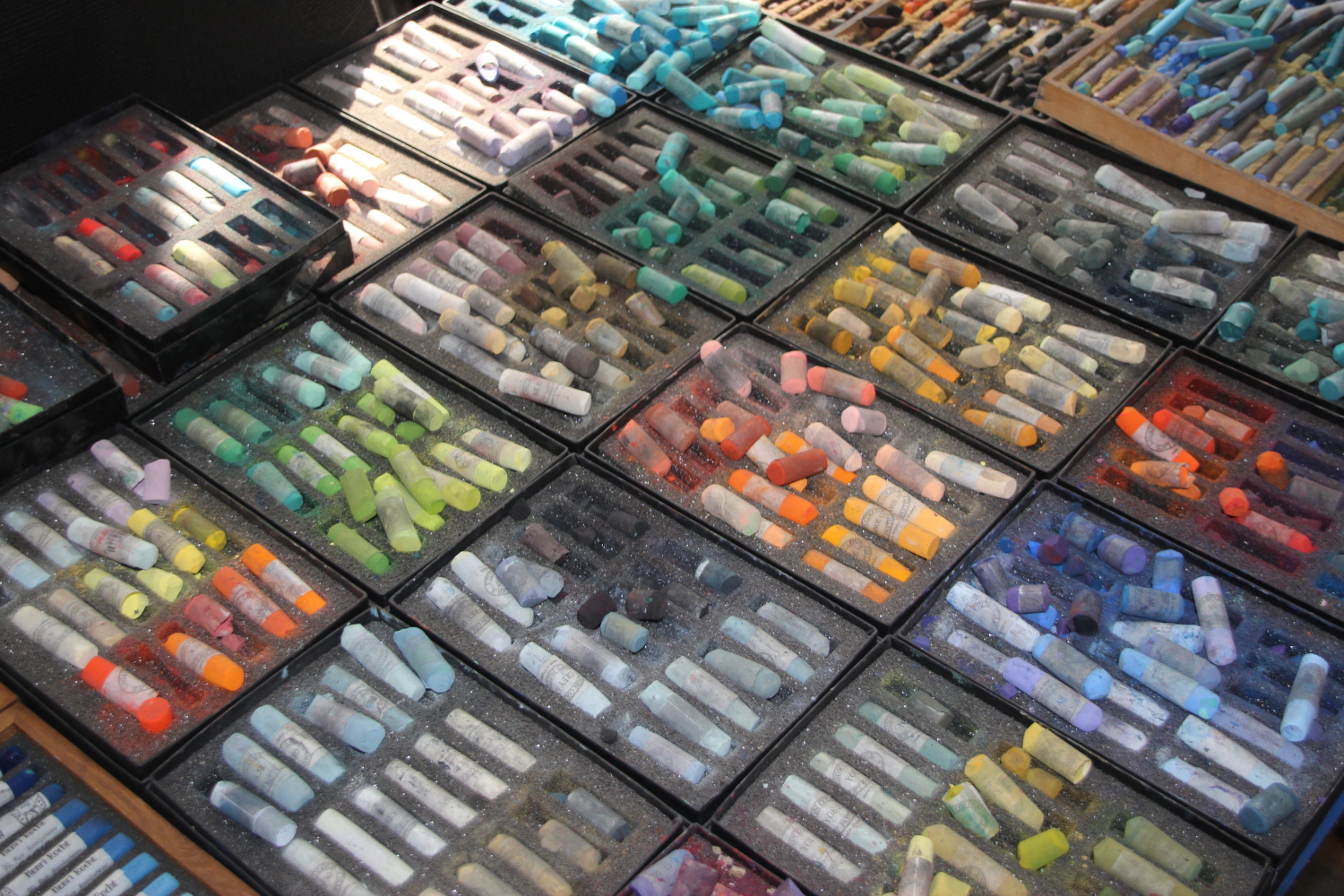
A:  Certainly personal experience is an indispensable and inseparable part of the creative process. For me art and life are one and I suspect that is true for most artists. When I look at each of my pastel paintings I can remember what was going on in my life at the time I made it. Each is a sort of veiled autobiography waiting to be decoded and in a way, each is also a time-capsule of the larger zeitgeist. It’s still a mystery how exactly this happens but all lived experience – what’s going on in the world, books I’m reading and thinking about, movies I’ve seen that have stayed with me, places I’ve visited, etc. – overtly and/or not so obviously, finds its way into the work. 

Life experience also explains why the work I do now is different from my work even five years ago.  In many ways I am not the same person.     

The inseparableness of art and life is one reason that travel is so important to my creative process.   Artists always seek new influences that will enrich and change our work.  To be an artist, indeed to be alive, is to never stop learning and growing.      

Comments are welcome!    

Pearls from artists* # 118

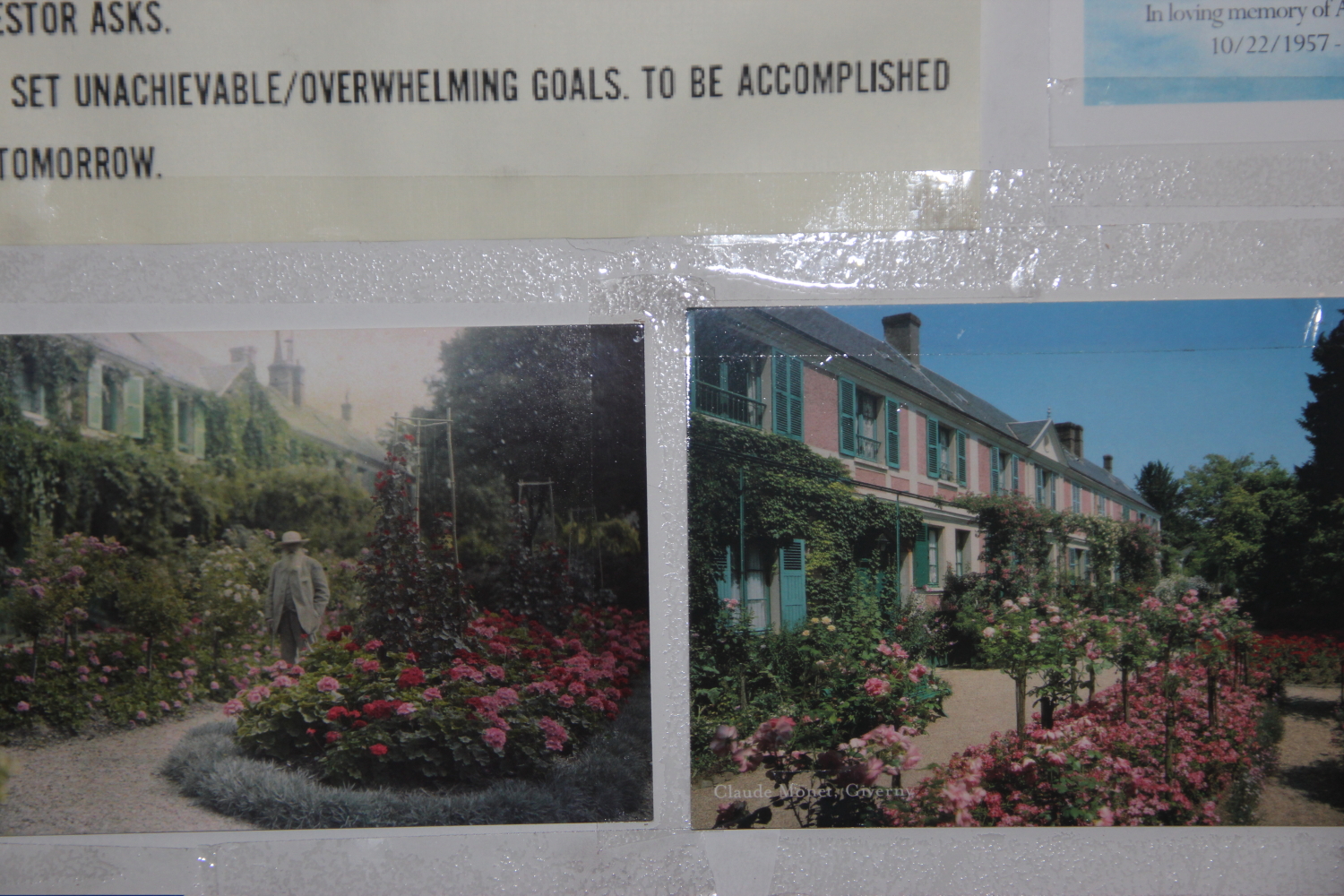
Monet's garden

Monet’s garden

* an ongoing series of quotations – mostly from artists, to artists – that offers wisdom, inspiration, and advice for the sometimes lonely road we are on.

MONET’S “WATERLILIES” (for Bill and Sonja) 

Today as the news from Selma and Saigon

poisons the air like fallout,

          I come again to see

the serene great picture that I love.

Here space and time exist in light

the eye like the eye of faith believes.

          The seen, the known

dissolve in iridescence, become

illusive flesh of light

          that was not, was, forever is.

O light beheld as through refracting tears.

Here is the aura of that world

          each of us has lost.

Here is the shadow of its joy.

Robert Hayden (1913 – 1980) in Art and Artists:  Poems

Comments are welcome!

Q: Would you speak about your first trip to Mexico?


With an amate tree at Chalcatzingo

With an amate tree at Chalcatzingo

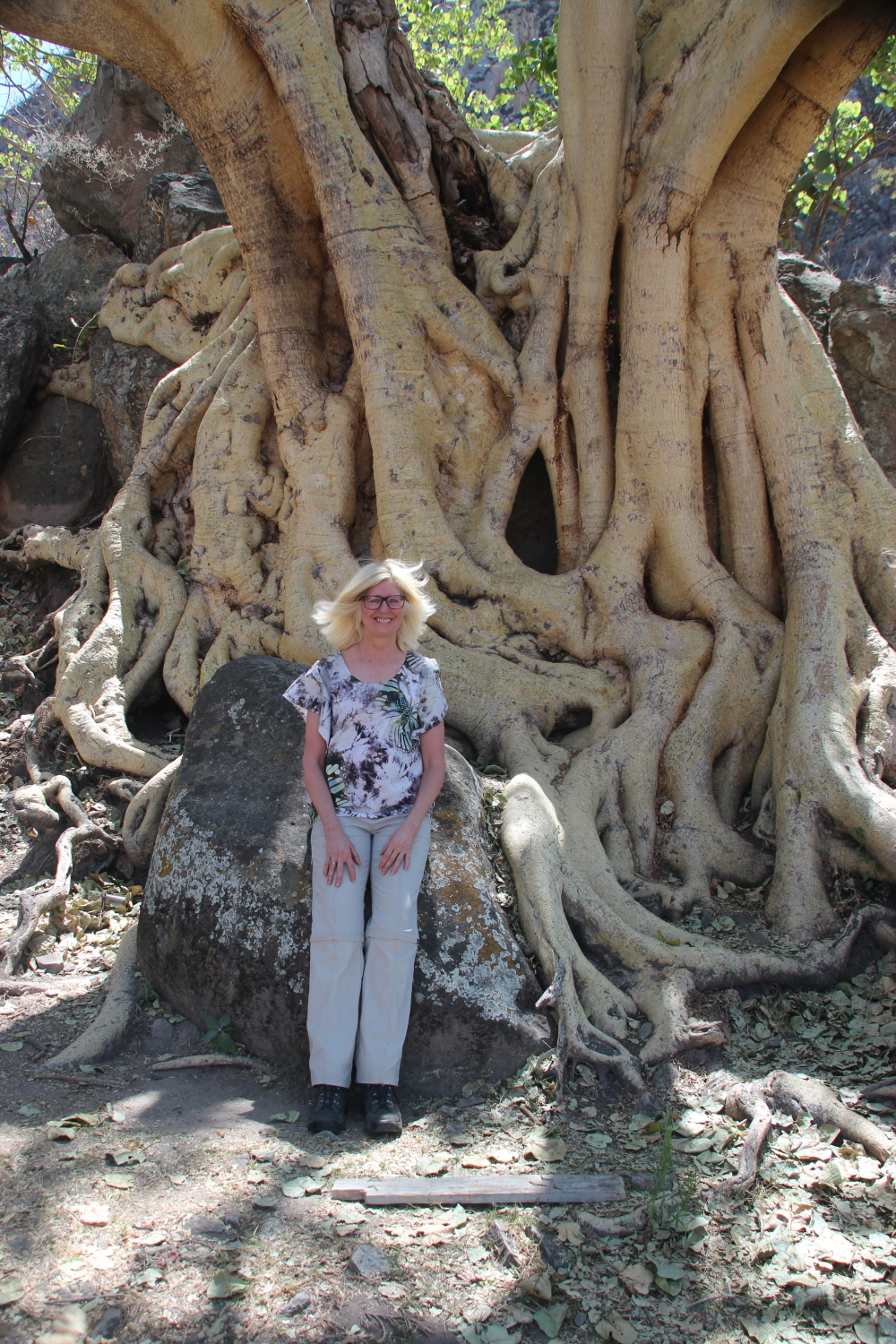
A:  In the early 90’s my late husband, Bryan, and I made our first trip to Oaxaca and to Mexico City.  At the time I had become fascinated with the Mexican “Day of the Dead” celebrations so our trip was timed to see them firsthand.  Along with busloads of other tourists, we visited several cemeteries in small Oaxacan towns.  The indigenous people tending their ancestor’s graves were so dignified and so gracious, even with so many mostly-American tourists tromping around on a sacred night, that I couldn’t help being taken with these beautiful people and their beliefs.  From Oaxaca we traveled to Mexico City, where again I was entranced, but this time by the rich and ancient history.  On that first trip to Mexico we visited the National Museum of Anthropology, where I was introduced to the fascinating story of ancient Mesoamerican civilizations  (it is still one of my favorite museums in the world); the ancient city of Teotihuacan, which the Aztecs discovered as an abandoned city and then occupied as their own; and the Templo Mayor, the historic center of the Aztec empire, infamous as a place of human sacrifice.  I was astounded!  Why had I never learned in school about Mexico, this highly developed cradle of Western civilization in our own hemisphere, when so much time had been devoted to the cultures of Egypt, Greece, and elsewhere? When I returned home to Virginia I began reading everything I could find about ancient Mexican civilizations, including the Olmec, Zapotec, Mixtec, Aztec, and Maya. This first trip to Mexico opened up a whole new world and was to profoundly influence my future work. I would return there many more times, most recently this past March to study Olmec art and culture.

Comments are welcome!

Pearls from artists* # 89

* an ongoing series of quotations – mostly from artists, to artists – that offers wisdom, inspiration, and advice for the sometimes lonely road we are on.
Dear Diary:

On a drifty Manhattan stroll
The kind that unearths magical treasures
I made a right turn off of Houston
Onto Bowery
And as it became Third Avenue
I came upon this old art store
That creaked hello
Its warped wooden shelves
Held new paints
A little dusty from the old building
But whose colors were deeper
Than I’d ever seen before

And at the back of the store
Up a narrow stairway
Was a tiny room
And behind a long table stood three people
(Probably artists)
Who could get me any paper I desired
Paper with designs
To collage with
Hot press, cold press
100 gram, 600 gram paper
To draw and paint on
Any kind of paper I’d ever want
Templates from heaven

And over my right shoulder
Was a tall window
Overlooking the glorious city
That has held this little room
Tenderly in its arms
All these years

And as I hugged
My rolled up package of paper
And went back downstairs
The old stairs seemed to gently whisper
“Come back soon,
We’ll keep each other alive”

And stepping outside
Third Avenue seemed more spacious
And I took a deep breath
As the world
Kaleidoscoped
With possibilities
Lovingly wrapped up
By three kind artists
At the top of the world.

Art Supplies From Heaven, by Judith Ellen Sanders, published in “Metropolitan Diary,” NY Times, April 6, 2014

Comments are welcome!

Pearls from artists* # 87

Studio

Studio

* an ongoing series of quotations – mostly from artists, to artists – that offers wisdom, inspiration, and advice for the sometimes lonely road we are on.

One evening, after one false start too many, I just gave up. Sitting at a bar, feeling a bit burned out by work and by life in general, I just started drawing on the backs of business cards for no reason.  I didn’t really need a reason.  I just did it because it was there, because it amused me in a kind of random, arbitrary way.

Of course it was stupid.  Of course it was not commercial.  Of course it wasn’t going to go anywhere.  Of course it was a complete and utter waste of time.  But in retrospect, it was this built-in futility that gave it its edge.  Because it was the exact opposite of all the “Big Plans” my peers and I were used to making.  It was so liberating not to have to think about all of that, for a change.

It was so liberating to be doing something that didn’t have to have some sort of commercial angle, for a change.

It was so liberating to be doing something that didn’t have to impress anybody, for a change.

It was so liberating to be free of ambition, for a change.

It was so liberating to have something that belonged just to me and no one else, for a change.

It was so liberating to feel complete sovereignty, for a change.  To feel complete freedom, for a change.  To have something that didn’t require somebody else’s money, or somebody else’s approval, for a change.

And of course, it was then, and only then, that the outside world started paying attention.

The sovereignty you have over your work will inspire far more people than the actual content ever will.  How your own sovereignty inspires other people to find their own sovereignty, their own sense of freedom and possibility, will give the work far more power than the work’s objective merits ever will.

Your idea doesn’t have to be big.  It just has to be yours alone.  The more the idea is yours alone, the more freedom you have to do something really amazing.

The more amazing, the more people will click with your idea.  The more people click with your idea, the more this little thing of yours will snowball into a big thing.

That’s what doodling on the backs of business cards taught me. 

Hugh MacLeod in Ignore Everybody:  and 39 Other Keys to Creativity

Comments are welcome! 

Pearls from artists* # 83

West 29th Street studio

West 29th Street studio

* an ongoing series of quotations – mostly from artists, to artists – that offers wisdom, inspiration, and advice for the sometimes lonely road we are on.

The world can make no response to meet art.  Praise can miss the point as much as a casual remark such as I heard last night:  an impeccably turned-out gentleman bounding up the stairs to the gallery exclaimed over his shoulder, “And now to see the minimalist – or maximalist!”  He had all the relish of a casually greedy person with a tasty tidbit in view; he was on his way to gulp down my life with as little consideration as he would an artichoke heart.

Do I wish, can I afford, in my own limitations, to continue to make work that has such a high psychic cost and stands in jeopardy of being so met?  Do I have a choice?  I do not know.  Neither whether I can further endure, nor whether I can stop.  The work is preemptory.  My life has led me to an impasse. 

Anne Truitt in Turn:  The Journal of an Artist 

Comments are welcome!