Blog Archives
Pearls from artists* # 688

*an ongoing series of quotations – mostly from artists, to artists – that offers wisdom, inspiration, and advice for the sometimes lonely road we are on.
Many artists see their studio practice as a religion. Like any other faith, it has rituals, beliefs, devotions, visionaries, martyrs, and even miracles. Our souls have a need to position themselves in the giant scheme of the universe, and art, like spiritual conviction, helps us do that. It allows us to decipher and process the complexities of the world around us. It can make us better humans by telling stories and sharing points of view that stoke compassion, understanding, and empathy. It holds the potential to redeem both the maker and the viewer, transcending quotidian dullness by evoking a deep significance we had forgotten.
Kate Kretz in Art From Your Core: A Holistic Guide to Visual Voice
Comments are welcome!
Pearls from artists* # 640

*an ongoing series of quotations – mostly from artists, to artists – that offers wisdom, inspiration, and advice for the sometimes lonely road we are on.
When an artist changes and develops over the years, as is natural to any creative person, such change is met by howls of protest from the marketers. Sometimes an artist (or teacher, scientist, or spiritual guru) starts with something extraordinary, becomes a star, and then their gift is either frozen or perverted.
The growing and risky edge of creative work is devalued, treated as a frill or extracurricular activity decorating the routine of ordinary life. There are few mechanisms available for the artist to construct a self-sustaining way of living and working. “One gathers,” says Virginia Woolf,
“from the enormous modern literature of confession and self-analysis that to write a book of genius is almost always a feat of prodigious difficulty. Everything is against the likelihood that it will come from the writer’s mind whole and entire. Generally, material circumstances are against it. Dogs will bark; people will interrupt; money must be made; health will break down. Further, accentuating all these difficulties and making them harder to bear is the world’s notorious indifference. It does not ask people to write poems and novels and histories; it does not need them. It does not care whether Flaubert finds the right word or whether Carlyle scrupulously verifies this or that fact. Naturally, it will not pay for what it does not want. And so the writer, Keats, Flaubert, Carlyle, suffers, especially in the creative years of youth, every form of distraction and discouragement. A curse, a cry of agony, rises from those books of analysis and confession. “Mighty poems in their misery dead” – that is the burden of their song. If anything comes through in spite of all this, it is a miracle, and probably no book is born entire and uncrippled as it was conceived.”
Stephen Nachmanovitch in Free Play: Improvisation in Art and Life
Comments are welcome!

Pearls from artists* # 587

With friends of fifty years!
*an ongoing series of quotations – mostly from artists, to artists – that offers wisdom, inspiration, and advice for the sometimes lonely road we are on.
My general preparations include everything I do to be healthy and ready for surprises, with a full palette of resources available. I need energy to acquire skill, energy to practice, energy to keep going through the inevitable setbacks, energy to keep going when things look good and I am tempted to sit back and relax. I need physical energy, intellectual energy, libidinal energy, spiritual energy. The means to tapping these energies are well known: exercise the body, eat well, sleep well, keep track of dreams, meditate, enjoy the pleasures of life, read and experience widely. When blocked, tap into the block-busters: humor, friends, and nature.
Stephen Nachmanovitch in Free Play: Improvisation in Life and Art
Comments are welcome!
Pearls from artists* # 578

Hudson Yards, New York City
*an ongoing series of quotations – mostly from artists, to artists – that offers wisdom, inspiration, and advice for the sometimes lonely road we are on.
He [His Holiness Ngawang Tenzing Zangbo, the Sherpas’ Tengboche abbot and overseer of all Buddhist gompas in Nepal] said that he is not surprised to see Westerners flocking to Tibetan monasteries in Nepal. “In the West, there are too many distractions,” he said. “People long to come to these mountains. Here you can learn things through your heart.” He noted that Kathmandu also drew many Himalayan people because of its proximity to sacred places, but was confident that many lamas among them would return to remote areas and practice a wholesome religion free of urban temptations. He hopes that the spiritual boom will result in higher levels of religious life all around the region and not the further degradation of monastic life through materialism. He sounded as if it might be touch-and-go in some places.
Barbara Crossette in So Close to Heaven: The Vanishing Buddhist Kingdoms of the Himalayas
Comments are welcome!
Pearls from artists* # 575

Barbara’s Studio
*an ongoing series of quotations – mostly from artists, to artists – that offers wisdom, inspiration, and advice for the sometimes lonely road we are on.
Creativity is a harmony of opposite tensions… As we ride through the flux of our own creative processes, we hold onto both poles. If we let go of play, our work becomes ponderous and stiff. If we let go of the sacred, our work loses its connection to the ground on which we live.
Knowledge of the creative process cannot substitute for creativity, but it can save us from giving up on creativity when the challenges seem too intimidating and free play seems blocked. If we know that our inevitable setbacks and frustrations are phases of the natural cycle of creative processes, if we know that our obstacles can become our ornaments, we can persevere and bring our desires to fruition. Such perseverance can be a real test, but there are ways through, there are guideposts. And the struggle, which is guaranteed to take a lifetime, is worth it. It is a struggle that generates incredible pleasure and joy. Every attempt we make is imperfect; yet each one of these imperfect attempts is an occasion for a delight unlike anything else on earth.
The creative path is a spiritual path. The adventure is about us, about the deep self, the composer in all of us, about originality, meaning not that which is all new, but that which is fully and originally ourselves.
Stephen Nachmanovitch in Free Play: Improvisation in Life and Art
Comments are welcome!
Pearls from artists* # 570
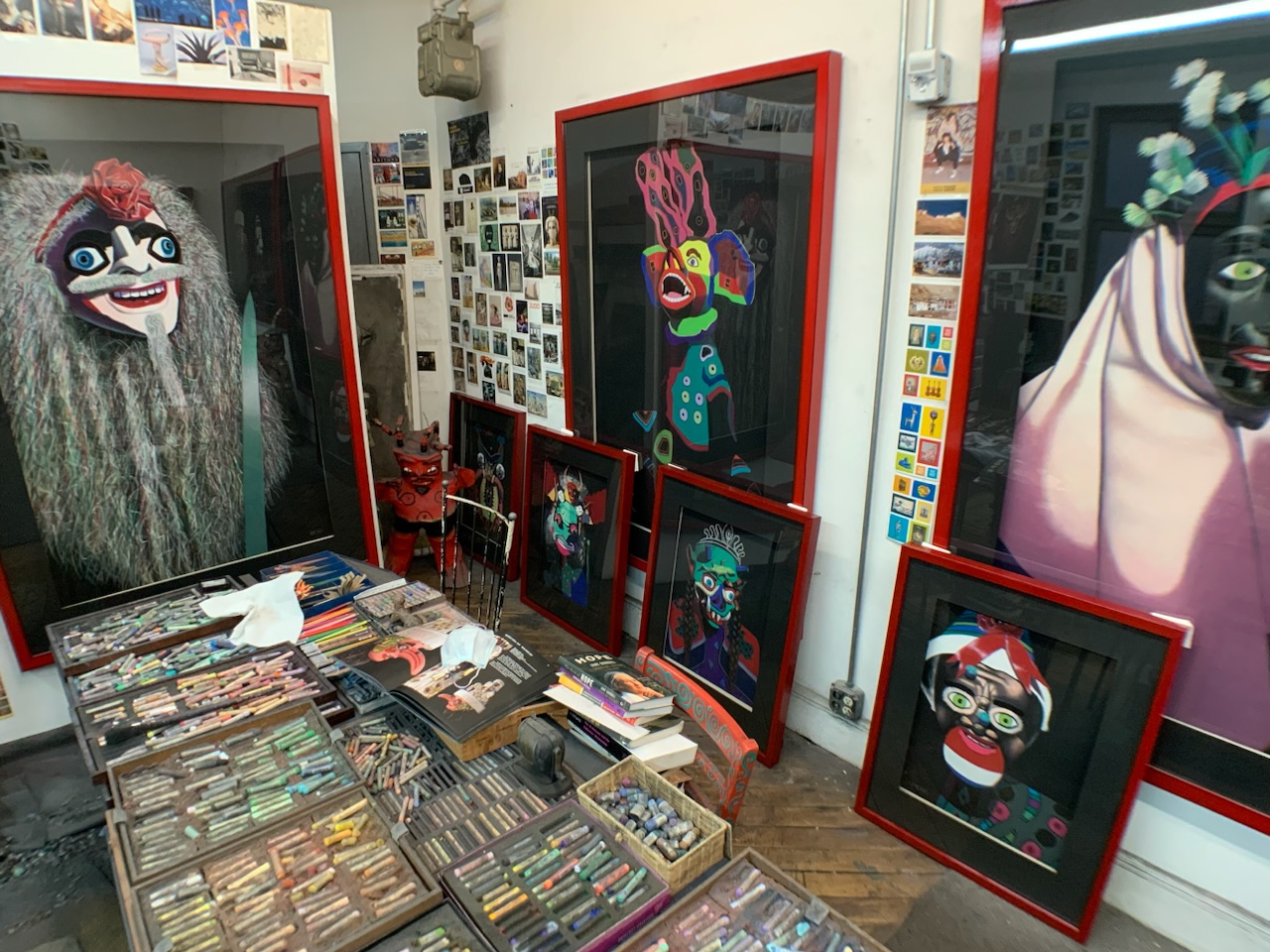
Barbara’s Studio
*an ongoing series of quotations – mostly from artists, to artists – that offers wisdom, inspiration, and advice for the sometimes lonely road we are on.
One of the main differences between the young girl who drew a line in chalk from the Metropolitan Museum all the way to her home on Park Avenue and the young woman who drew lines on canvas and paper twenty years later was that the latter understood the willfulness that drove the child. She was facing “the monster,” the consuming need to create, which was beyond her control but no longer beyond her comprehension. Helen [Frankenthaler] had long understood that her gift set her apart, and that it would be nearly impossible to describe how and why without sounding arrogant or cruel. “It’s saying I’m different, I’m special, consider me differently,” she explained years later. “And it’s also on the other side, a recognition that one is lonely, that one is not run of the mill, that the values are different, and yet we all go into the same supermarkets… and we are all moved one way or another by children and seasons, and dreams. So that art separates you…”
The separation she described was not merely the result of what one did, whether it be painting or sculpting or writing poetry. Helen said the distance between an artist and society was due to a quality both intangible and intrinsic, a “spiritual” or “magical” aspect that nonartists did not always understand and were sometimes frightened by. “They want you to behave a certain way. They want you to explain what you do and why you do it. Or they want you removed, either put on a pedestal or victimized. They can’t handle it.” Helen concluded that existing outside so-called normal life was simply the price an artist paid to create.
Mary Gabriel in Ninth Street Women
Comments are welcome!
Q: Can you explain how your current work relates to Jungian archetypes?

In progress: “Wise One,” soft pastel on sandpaper, 58” x 38”
A: Here’s an example. The passage below is from Carl Jung: Knowledge in a Nutshell by Gary Bobroff.
The Wise Old Man or Woman is a figure found throughout folklore and mythology. They possess superior understanding and also often a more developed spiritual or moral character. Frequently, such characters provide the information or learning that the Hero needs to move forward in their quest. In Star Wars, Ben Kenobi plays the teacher to Luke, introducing purpose and knowledge into the young Hero’s life. Where the Hero brings drive, courage, and direct action, the Wise Old One introduces the importance of the opposing values of thought and questioning. Jung describes it thus: ‘Often the old man in fairytales asks questions like who? Why? Whence? Wither? For the purpose of inducing self-reflection and mobilizing the moral forces.’
The Wise One may appear in disguise to test the character of others. In the second Star Wars film, The Empire Strikes Back (1980), Luke’s mentor Yoda does not reveal himself as such when they first meet. He waits, asking questions that test Luke’s motivation for being there. Jung associated the Trickster archetype with the Wise One, and the use of disguise emphasizes this correlation.
Comments are welcome!
Pearls from artists* # 558
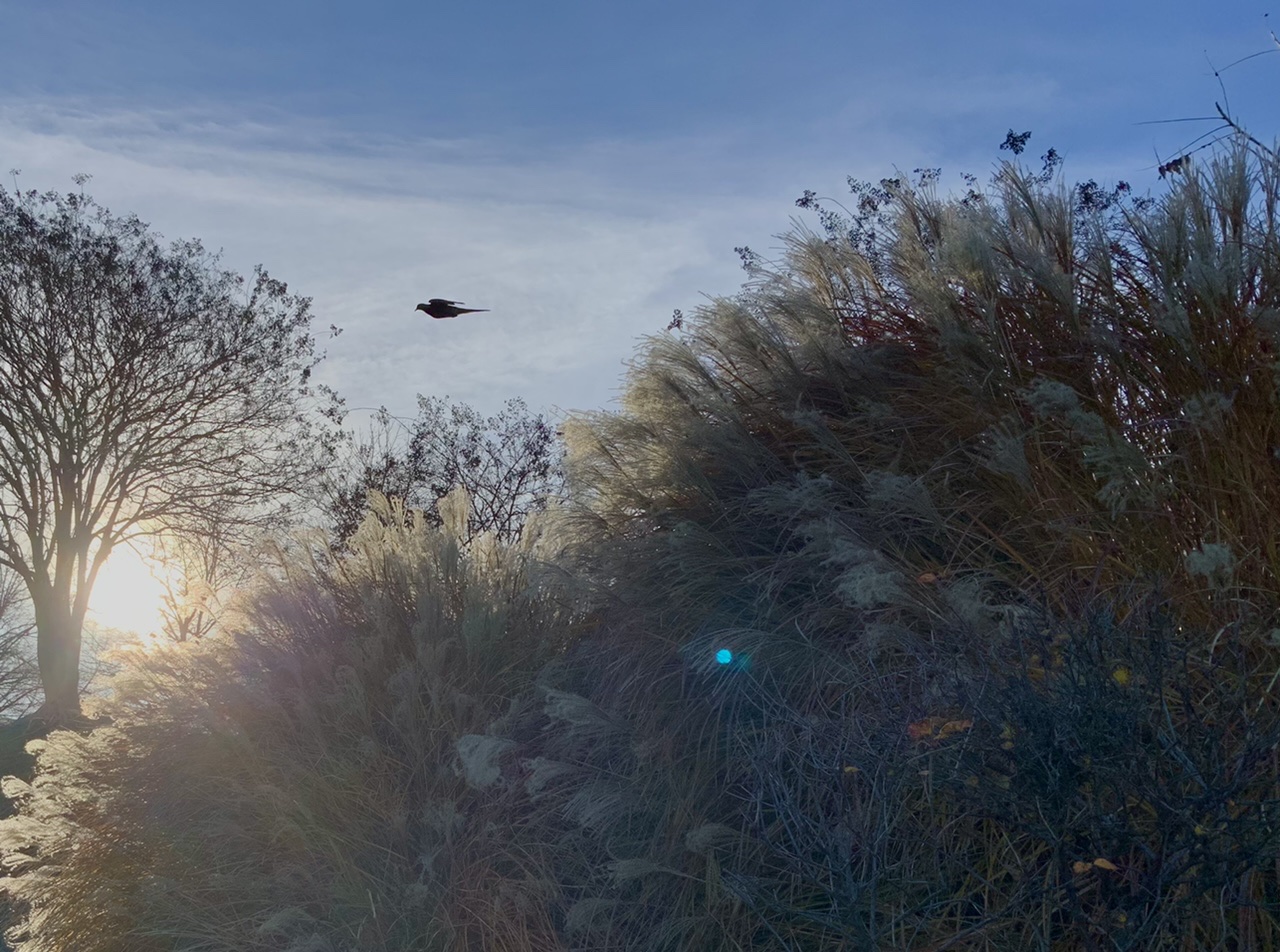
Alexandria, VA
*an ongoing series of quotations – mostly from artists, to artists – that offers wisdom, inspiration, and advice for the sometimes lonely road we are on.
One of the main differences between the young girl who drew a line in chalk from the Metropolitan Museum all the way to her home on Park Avenue and the young woman who drew lines on canvas and paper twenty years later was that the latter understood the willfulness that drove the child. She was facing “the monster,” the consuming need to create, which was beyond her control but no longer beyond her comprehension. Helen [Frankenthaler] had long understood that her gift set her apart, and that it would be nearly impossible to describe how and why without sounding arrogant or cruel. “It’s saying I’m different, I’m special, consider me differently,” she explained years later. “And it’s also on the other side, a recognition that one is lonely, that one is not run of the mill, that the values are different, and yet we all go into the same supermarkets… and we all are moved one way or the other by children and seasons, and dreams. So the art separates you.”
The separation she described was not merely the result of what one did, whether it be painting or sculpting or writing poetry. Helen said the distance between an artist and society was due to a quality both tangible and intangible and intrinsic, a “spiritual” or “magical” aspect that nonartists did not always understand and were sometimes frightened by. “They want you to behave a certain way. They want you to explain what you do and why you do it. Or they want you removed, either put on a pedestal or victimized. They can’t handle it.” Helen concluded that existing outside so-called normal life was simply the price an artist paid to create.
Mary Gabriel in Ninth Street Women
Comments are welcome!
Pearls from artists* # 557

*an ongoing series of quotations – mostly from artists, to artists – that offers wisdom, inspiration, and advice for the sometimes lonely road we are on.
It is true that art, while indebted to tradition, is usually at odds with it; art is about the thrill of mutiny. Young painters and sculptors are particularly unwilling to be hampered by the past, especially if that past is encased in the cement shoes of gender. But familiarity with tradition can be liberating for an artist because it provides a map illustrating the route other people have taken, which is especially valuable at the start of such a perilous journey. Male artists can inspire and instruct, surely. Artistic concerns are gender neutral. But there are social and personal issues a woman artist faces that cannot be found in the stories of men; these are the obstacles confronted and obstacles overcome. The poet Adrienne Rich wrote, “For spiritual values and a creative tradition to continue unbroken we need concrete artifacts, the work of hands, written words to read, images to look at, a dialogue with brave and imaginative women who came before us.” It’s instructive as well as comforting to know how other women have managed and what other women have dared. It’s also gratifying to find in their stories an occasional energizing dose of inspiration.
Mary Gabriel in Ninth Street Women
Comments are welcome!
Pearls from artists* # 540

*an ongoing series of quotations – mostly from artists, to artists – that offers wisdom, inspiration, and advice for the sometimes lonely road we are on.
The Wise Old Man or Woman is a figure found throughout folklore and mythology. They possess superior understanding and also often a more developed spiritual or moral character. Frequently, such characters provide the information or learning that the Hero needs to move forward in their quest. In “Star Wars,” Ben Kenobi plays the teacher to Luke, introducing purpose and knowledge into the young Hero’s life. Where the Hero brings a drive, courage, and direct action, the Wise Old One introduces the importance of the opposing values of thought and questioning. Jung describes it thus: ‘Often the old man in fairytales asks questions like who? Why? Whence? Wither? For the purpose of inducing self-reflection and mobilizing the moral force.’
The Wise One may appear in disguise to test the character of others. In the second “Star Wars” film, “The Empire Strikes Back” (1980), Luke’s mentor Yoda does not reveal himself as such when they first meet. He waits, asking questions that test Luke’s motivation for being there. Jung associated the Trickster archetype with the Wise One, and the use of disguise emphasizes this correlation.
Gary Bobroff in Carl Jung: Knowledge in a Nutshell
Comments are welcome!


 barbararachkoscoloreddust.com