Blog Archives
Pearls from artists* # 559

“Sacrificial” soft pastel on sandpaper, 58” x 38” image, 70” x 50” framed
*an ongoing series of quotations – mostly from artists, to artists – that offers wisdom, inspiration, and advice for the sometimes lonely road we are on.
There are two images the spectator gets from every work of art: one while looking at the work, the other – the after-image – while remembering the work… the artist creates the after-image, the painter makes the painting.
Elaine de Kooning quoted in Ninth Street Women by Mary Gabriel
Comments are welcome!
Pearls from artists* # 558
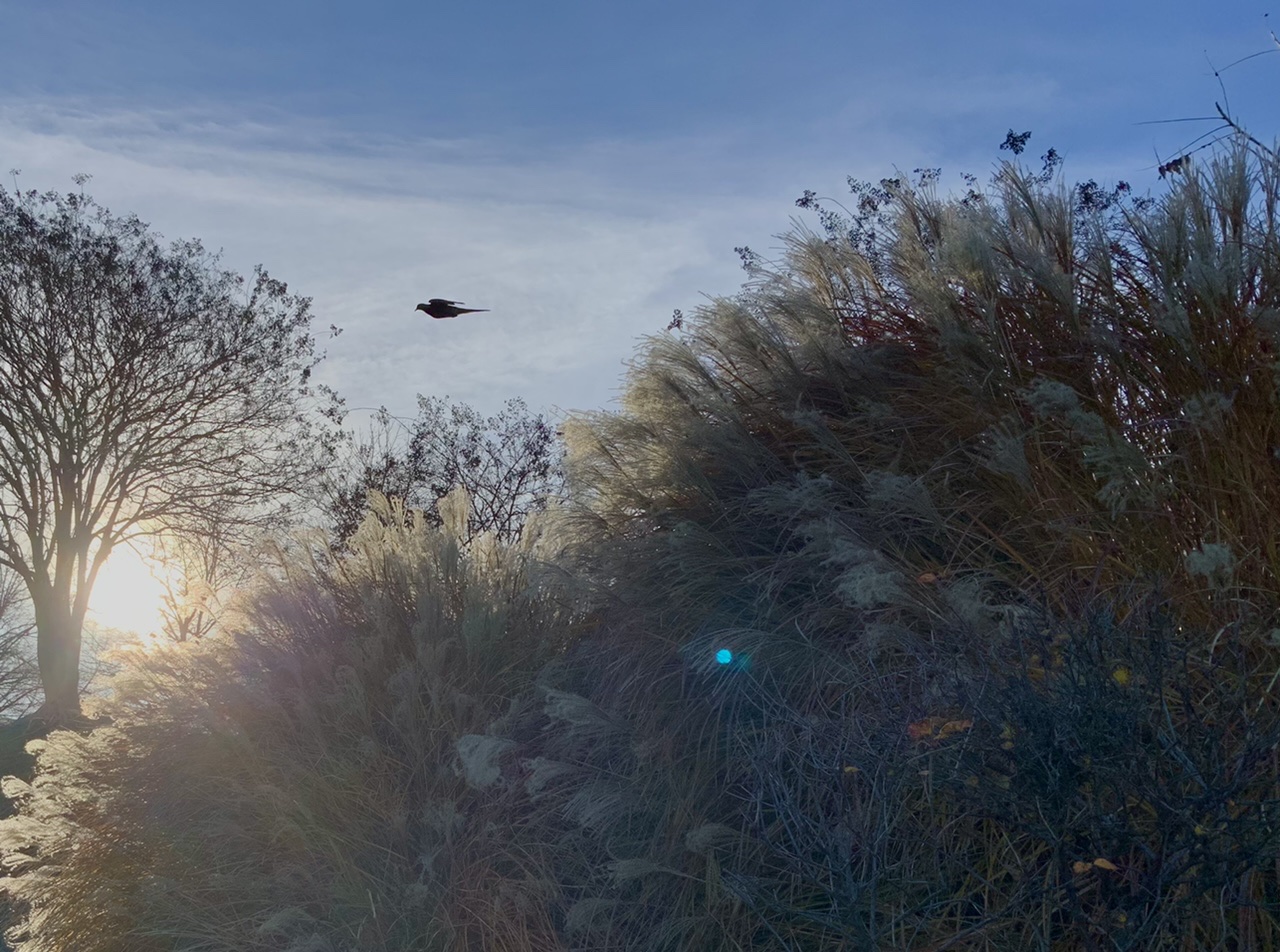
Alexandria, VA
*an ongoing series of quotations – mostly from artists, to artists – that offers wisdom, inspiration, and advice for the sometimes lonely road we are on.
One of the main differences between the young girl who drew a line in chalk from the Metropolitan Museum all the way to her home on Park Avenue and the young woman who drew lines on canvas and paper twenty years later was that the latter understood the willfulness that drove the child. She was facing “the monster,” the consuming need to create, which was beyond her control but no longer beyond her comprehension. Helen [Frankenthaler] had long understood that her gift set her apart, and that it would be nearly impossible to describe how and why without sounding arrogant or cruel. “It’s saying I’m different, I’m special, consider me differently,” she explained years later. “And it’s also on the other side, a recognition that one is lonely, that one is not run of the mill, that the values are different, and yet we all go into the same supermarkets… and we all are moved one way or the other by children and seasons, and dreams. So the art separates you.”
The separation she described was not merely the result of what one did, whether it be painting or sculpting or writing poetry. Helen said the distance between an artist and society was due to a quality both tangible and intangible and intrinsic, a “spiritual” or “magical” aspect that nonartists did not always understand and were sometimes frightened by. “They want you to behave a certain way. They want you to explain what you do and why you do it. Or they want you removed, either put on a pedestal or victimized. They can’t handle it.” Helen concluded that existing outside so-called normal life was simply the price an artist paid to create.
Mary Gabriel in Ninth Street Women
Comments are welcome!
Q: It must be tricky moving pastel paintings from your New York studio to your framer in Virginia. Can you explain what’s involved? (Question from Ni Zhu via Instagram)
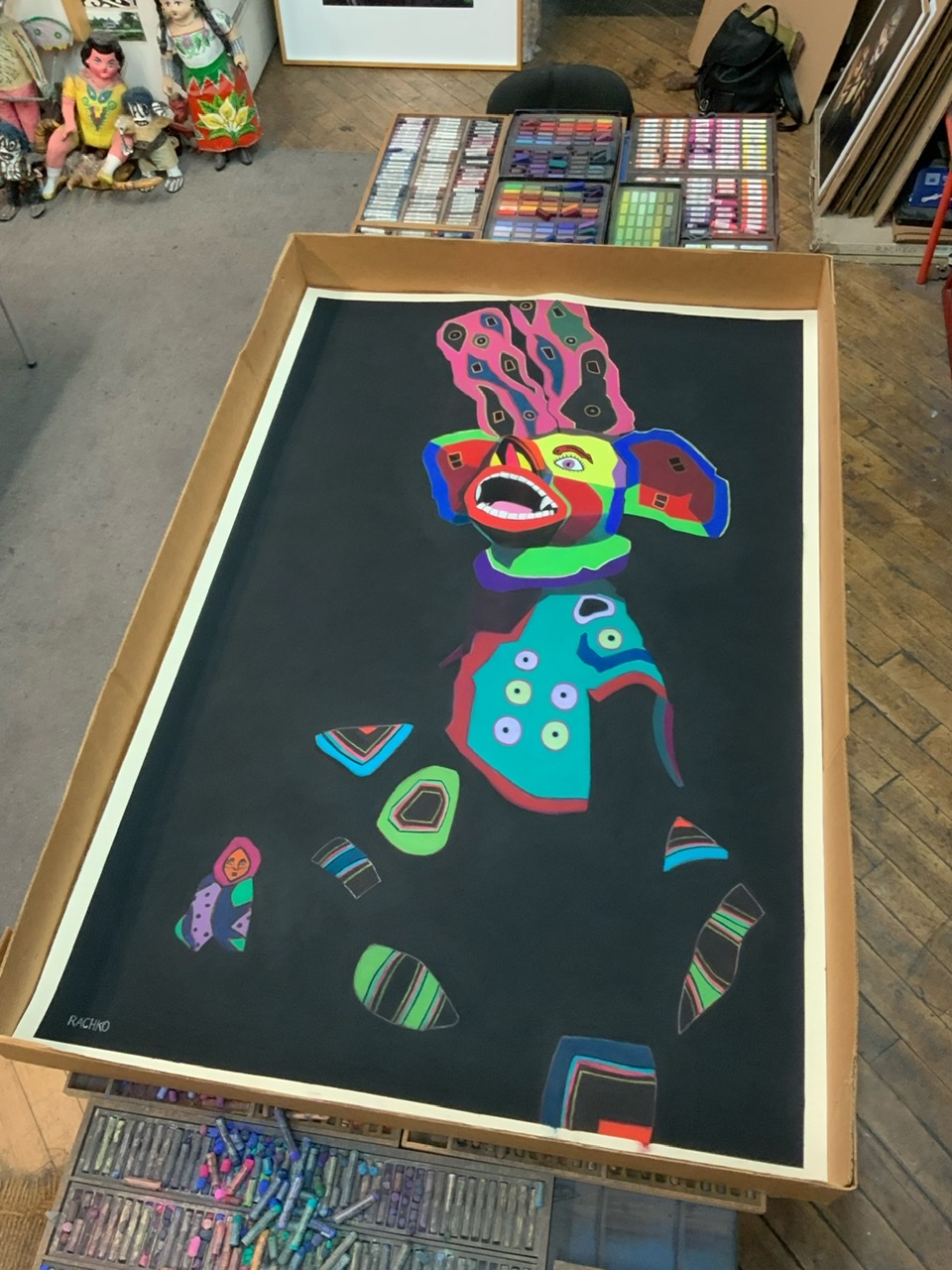
“Impresario” partially boxed for transport to Virginia
A: Well, I have been working with the same framer for three decades so I am used to the process.
Once my photographer photographs a finished, unframed piece, I carefully remove it from the 60” x 40” piece of foam core to which it has been attached (with bulldog clips) during the months I worked on it. I carefully slide the painting into a large covered box for transport. Sometimes I photograph it in the box before I put the cover on (see above).
My studio is in a busy part of Manhattan where only commercial vehicles are allowed to park, except on Sundays. Early on a Sunday morning, I pick up my 1993 Ford F-150 truck from Pier 40 (a parking garage on the Hudson River at the end of Houston Street) and drive to my building’s freight elevator. I try to park relatively close by. On Sundays the gate to the freight elevator is closed and locked so I enter the building around the corner via the main entrance. I unlock my studio, retrieve the boxed painting, bring it to the freight elevator, and buzz for the operator. He answers and I bring the painting down to my truck. Then I load it into the back of my truck for transport to my apartment.
I drive downtown to the West Village, where I live, and double park my truck. (It’s generally impossible to park on my block). I hurry to unload the painting, bring it into my building, and up to my apartment, all the while hoping I do not get a parking ticket. The painting will be stored in my apartment, away from extreme cold or heat, until I’m ready to drive to Virginia. On the day I go to Virginia, I load it back into my truck. Then I make the roughly 5-hour drive south.
Who ever said being an artist is easy was lying!
Comments are welcome!
Q: Can you explain how you choose colors? (Question from Maria Cox via Instagram)

A: I am wild about color! As I work to create a pastel painting, I apply a color, back up from my easel to see how it interacts with and affects the rest of the painting, and then I make revisions. This process necessitates countless color changes and hundreds of hours during months of work. I apply pastel using a meticulous layering process. Were you to x-ray one of them, the earlier, discarded versions of a pastel painting would be visible. All the while I carefully fine-tune and refine how the colors and shapes interact with each other.
The goal is to make an exciting painting that no one, especially me as the maker, has ever seen before. I have no desire to repeat myself, to make art that resembles work by any other artist, or to be forced into a niche.
I try to select intense, vibrant colors that are exciting to look at, that work well in relationship to each other, and that will grab the viewer. Sometimes I deliberately choose colors for their symbolic meanings. For example, I selected a dark purple for the alternating triangles (the ones with the pink dots above) in “Overlord” because purple denotes royalty.
I have been working with soft pastel for 37 years so I have a fairly intricate science of color at my disposal. No doubt, many unconscious factors are at play, too. More on that in future posts.
Comments are welcome!
Pearls from artists* # 532
*an ongoing series of quotations – mostly from artists, to artists – that offers wisdom, inspiration, and advice for the sometimes lonely road we are on.
Far from offering an escape from the world, the arts present one of the most difficult and hard-fought ways to enter into the life of our time or any other time. What the artist must first accept is the authority of an art form, the immersion in what others have done and achieved. Once the artist has begun to take all that in – it’s a process that never really ends – there comes the even greater challenge of asserting one’s freedom. It’s the limits imposed by a vocation that makes it possible to turn away from the pressures of the moment and think and feel freely – and sometimes, give the most private emotions an extraordinary public hearing. If art is the ordering of disorderly experience, and I don’t know how else to describe it, then the artist must be true both to the order and to the disorder. These are the trials of the artist and the artistic vocation. They shape the experience of anybody who reads a novel or looks at a painting or listens to a piece of music.
Jed Perl in Authority and Freedom: A Defense of the Arts
Comments are welcome!
Pearls from artists* # 531
* an ongoing series of quotations – mostly from artists to artists – that offers wisdom, inspiration, and advice for the sometimes lonely road we are on.
Find joy in the process as well as in the product. The issue of recognition is in part the issue of process versus outcome. Insofar as the process brings you joy, insofar as constructing a paragraph, painting shafts of sunlight, or playing a passage fills you with awe and delight, for that hour the issue of recognition vanishes. Insofar as the effort to construct that paragraph or to master that passage is a heartfelt struggle, welling up from deep sources, for that hour the issue of recognition vanishes. Notice your joy in the work, so as to remind yourself why you embarked on this journey.
Eric Maisel in A Life in the Arts: Practical Guidance and Inspiration for Creative and Performing Artists
Comments are welcome!
Q: What makes you feel most alive?

A: Making art makes me feel alive, using all my gifts, my brain, my heart, and my hands to create something that never existed before and that can never be duplicated; knowing I’m the only person, ever, who could or would make this particular thing, as I strive to push my pastel techniques further each time out. Whether it’s a painting or a photograph, I enjoy making something from nothing… art that is well-crafted and has never been seen before.
Travel is the other activity that excites me. I thrive on adventure and I especially love new vistas. When I am in a country I have never visited before, with every step and around every bend there is something new to see. I am an explorer at heart!
Comments are welcome!
Pearls from artists* # 527
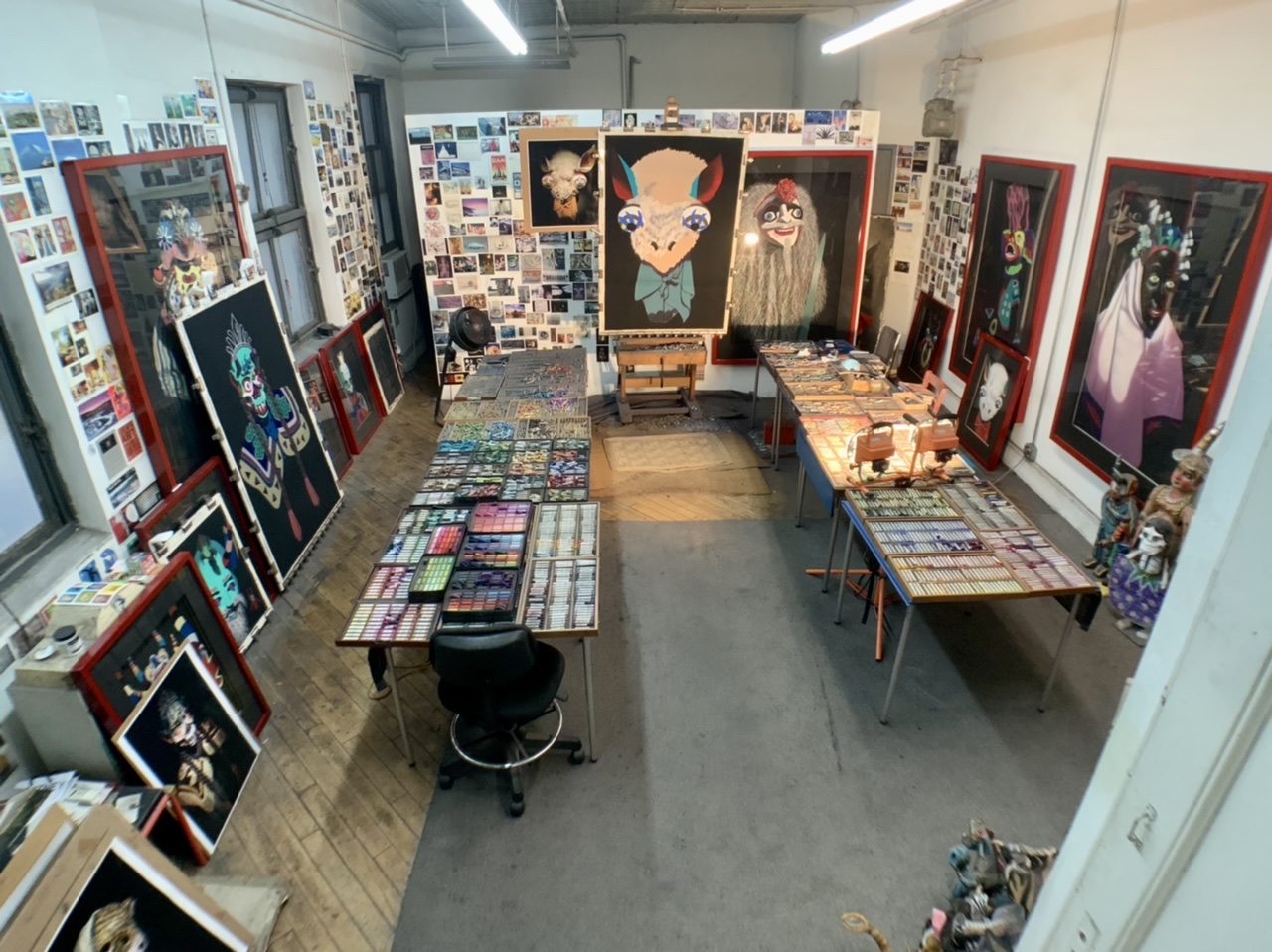
*an ongoing series of quotations – mostly from artists, to artists – that offers wisdom, inspiration, and advice for the sometimes lonely road we are on.
Vocation was originally a religious term. The word comes from the Latin vocatio, which means a summons, a call. To be a priest, a monk, or a nun is to accept a calling – a vocation. The sense of an imperative – of an activity that’s a necessity, an inevitability – remains very much part of the meaning of the word today. A creative vocation isn’t a job. It’s a calling, even if for most modern artists the summons is an inner necessity, not the call of some divine figure or force. Even an artist as determinedly secular as Picasso saw echoes of religious vocation in his experience as an artist. When his mistress Francoise Gilot, wondering at his concentration and stamina, asked him if when he was painting “it didn’t tire him to stand so long in one spot,” this was his response: “No. That’s why painters live so long. While I work, I leave my body outside the door, the way Moslems take off their shoes before entering the mosque.” For creative spirits the studio or stage – or wherever they do their work – is a place apart. They may recoil from describing this as a sacred space, but there’s no question that these spaces have a special significance.
Jed Perl in Authority and Freedom: A Defense of the Arts
Comments are welcome!
Q: What’s on the easel today?
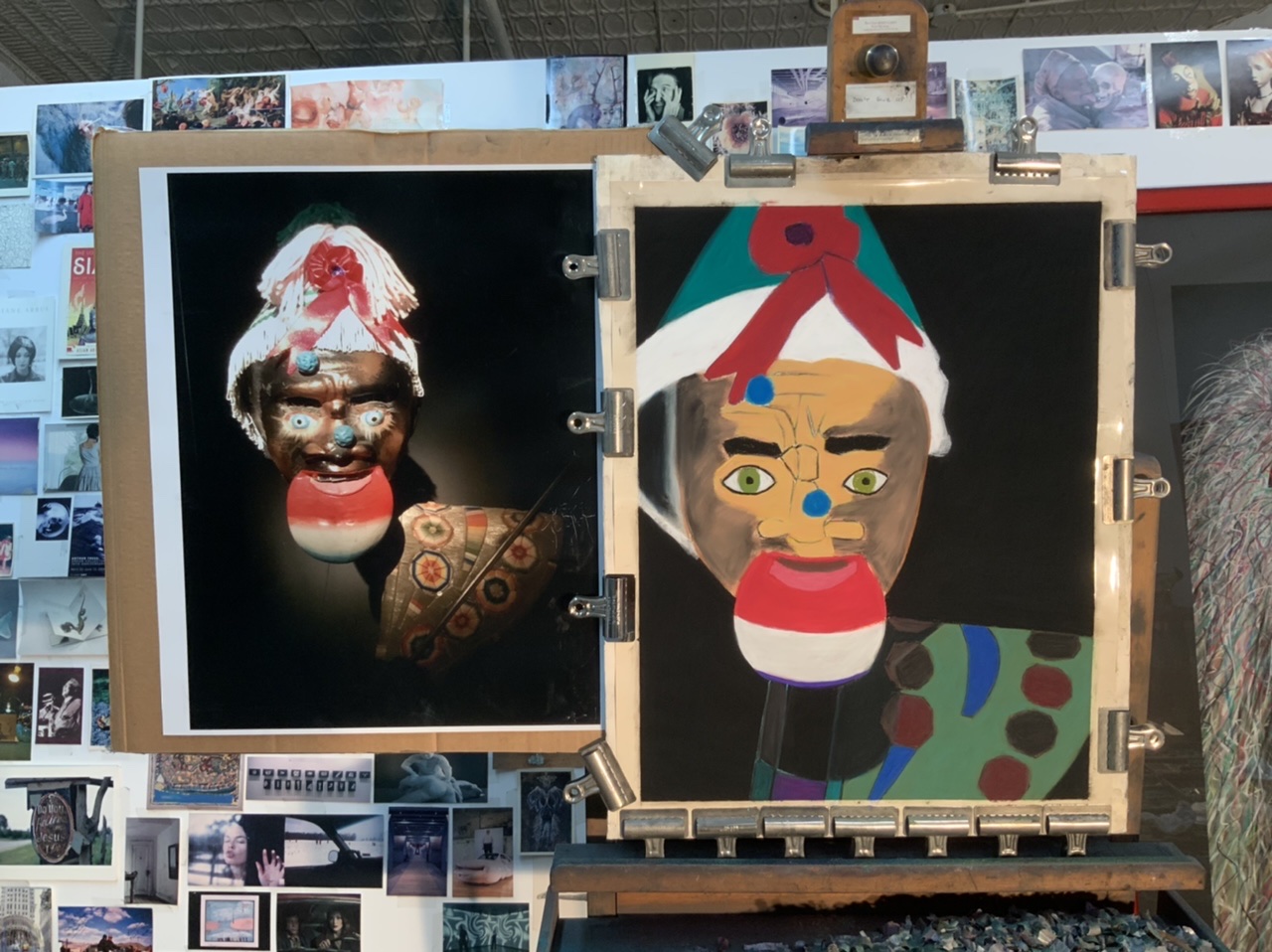
A: I began a new 26” x 20” “Bolivianos” pastel-on-sandpaper painting a few days ago.
Comments are welcome!
Q: What is your process? (Question from artamour)
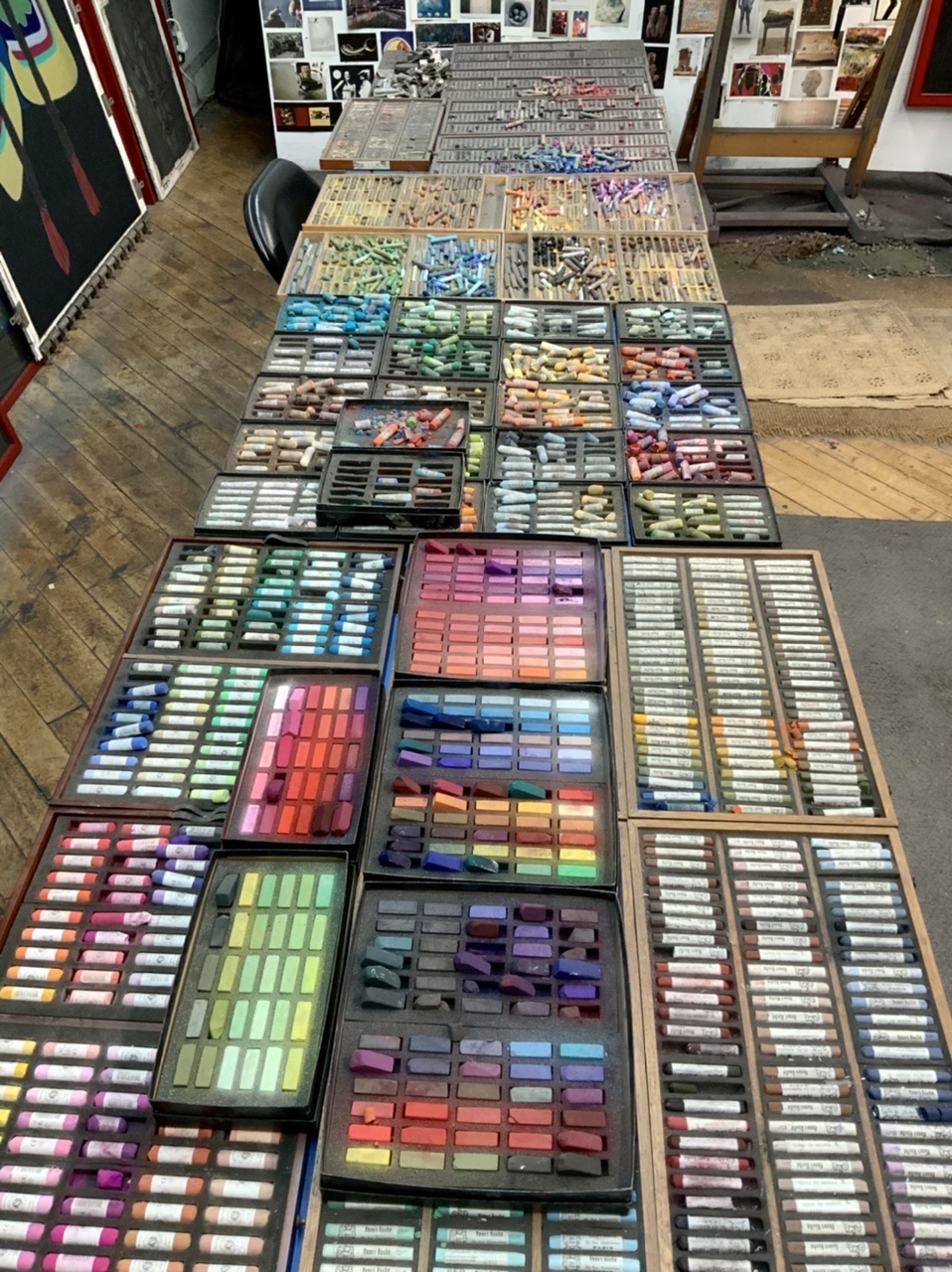
A: For thirty-six years I have worked exclusively in soft pastel on sandpaper. Pastel, which is pigment and a binder to hold it together, is as close to unadulterated color as an artist can get. It allows for very saturated color, especially employing the self-invented techniques I have developed and mastered. I believe my “science of color” is unique, completely unlike how any other artist works. I spend three to four months on each painting, applying pastel and blending the layers together to mix new colors on the paper.
The acid-free sandpaper support allows the buildup of 25 to 30 layers of pastel as I slowly and meticulously work for hundreds of hours to complete a painting. The paper is extremely forgiving. I can change my mind, correct, refine, etc. as much as I want until a painting is the best I can create at that moment in time.
My techniques for using soft pastel achieve rich velvety textures and exceptionally vibrant color. Blending with my fingers, I painstakingly apply dozens of layers of pastel onto the sandpaper. In addition to the thousands of pastels that I have to choose from, I make new colors directly on the paper. Regardless of size, each pastel painting takes three to four months and hundreds of hours to complete.
I have been devoted to soft pastel from the beginning. In my blog and in numerous interviews online and elsewhere, I continue to expound on its merits. For me no other fine art medium comes close.
My subject matter is unique. I am drawn to Mexican, Guatemalan, and Bolivian cultural objects—masks, carved wooden animals, papier mâché figures, and toys. On trips to these countries and elsewhere I frequent local mask shops, markets, and bazaars searching for the figures that will populate my pastel paintings. How, why, when, and where these objects come into my life is an important part of the creative process. Each pastel painting is a highly personal blend of reality, fantasy, and autobiography.
Comments are welcome!


 barbararachkoscoloreddust.com