Blog Archives
Pearls from artists* # 353
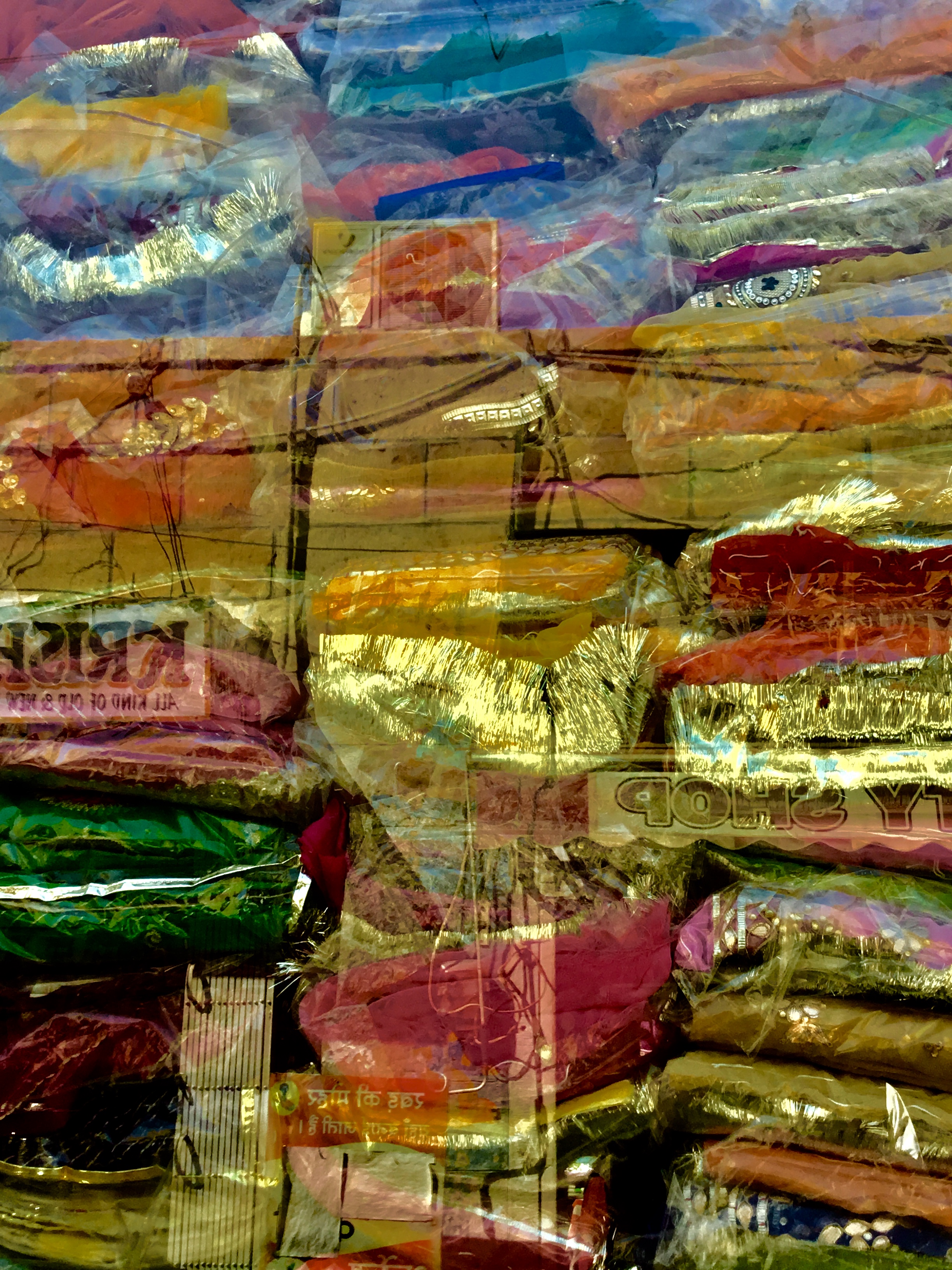
Sari shop, Ahmedabad, India
*an ongoing series of quotations – mostly from artists, to artists – that offers wisdom, inspiration, and advice for the sometimes lonely road we are on.
Creativity is freedom’s most primal expression, though not the freedom we were sold under the banner of democracy. True freedom is less a license to do as one pleases than the power to be what one has no choice but to be, the capacity to follow one’s own inmost desire. It is the freedom Nina Simone compares in “Feeling Good” to the shining of a star, a fish swimming in the sea, or the scent of a pine.
J.F. Martel in Reclaiming Art in the Age of Artifice: A Treatise, Critique, and Call to Action
Comments are welcome!
Q: What is more important to you, the subject of the painting or the way it is executed?

“Sam and Bobo,”soft pastel on sandpaper, 36″ x 31”, 1989
A: In a sense my subject matter – folk art, masks, carved wooden animals, papier mâché figures, toys – chose me. With it I have complete freedom to experiment with color, pattern, design, and other formal properties. In other words, although I am a representational artist, I can do whatever I want since the depicted objects need not look like real things. Execution is everything now.
This was not always the case. I started out in the 1980s as a traditional photorealist, except I worked in pastel on sandpaper. (For example, see the detail in Sam’s sweater above). As I slowly learned and mastered my craft, depicting three-dimensional people and objects hyper-realistically in two dimensions on a piece of sandpaper was thrilling… until one day it wasn’t.
My personal brand of photorealism became too easy, too limiting, too repetitive, and SO boring to execute! In 1989 I had at last extricated myself from a dull career as a Naval officer working in Virginia at the Pentagon. Then after much planning, in 1997 I was a full-time professional artist working in New York.
Certainly I was not going to throw away this opportunity by making boring photorealist art. I wanted to do so much more as an artist: to experiment with techniques, with composition, to see what I could make pastel do, to let my imagination play a larger role in the paintings I made. I was ready to devote the time and do whatever it took to push my art further.
After spending the early creative years perfecting my technical skills, I built on what I had learned. I began breaking rules – slowly at first – in order to push myself onward. And I continue to do so, never knowing what’s next. Hopefully, in 2018 my art is richer for it.
Comments are welcome!
Pearls from artists* # 198

“Troublemaker,” soft pastel on sandpaper, 20″ x 26″
* an ongoing series of quotations – mostly from artists, to artists – that offers wisdom, inspiration, and advice for the sometimes lonely road we are on.
The writer doesn’t need economic freedom. All he needs is a pencil and some paper. I’ve never known anything good in writing to come from having accepted any free gift of money. The good writer never applies to a foundation. He’s too busy writing something. If he isn’t first rate he fools himself by saying he hasn’t got time or economic freedom. Good art can come out of thieves, bootleggers, or horse swipes. People really are afraid to find out just how much hardship and poverty they can stand. They are afraid to find out how tough they are. Nothing can destroy the good writer. The only thing that can alter the good writer is death. Good ones don’t have time to bother with success or getting rich…
Nothing can injure a man’s writing if he’s a first-rate writer. If a man is not a first-rate writer, there’s not anything that can help it much. The problem does not apply if he is not first-rate, because he has already sold his soul for a swimming pool.
William Faulkner in Writers at Work: The Paris Review Interviews First Series, edited and with an introduction by Malcolm Cowley
Comments are welcome!
Pearls from artists* # 177
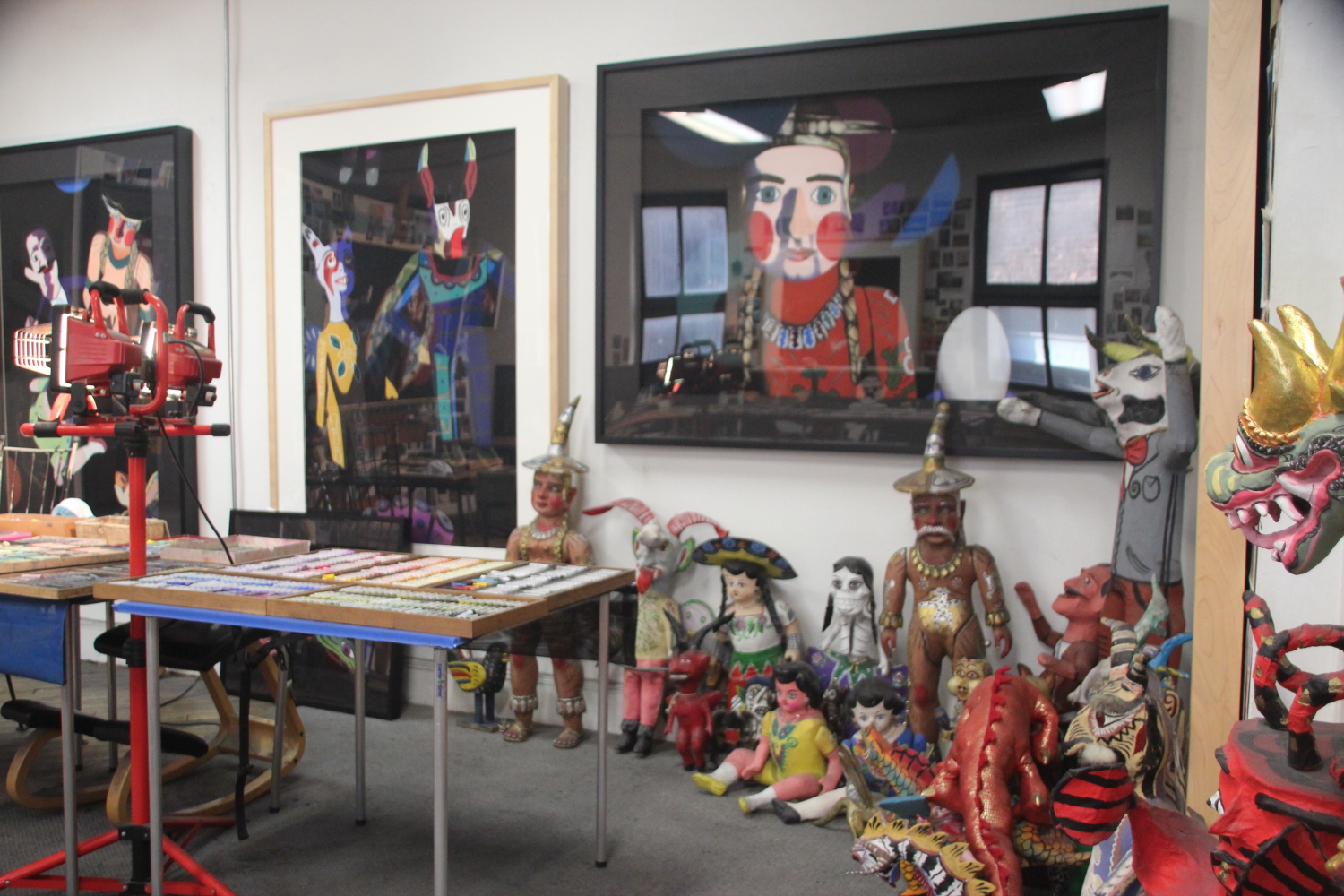
Barbara’s studio
* an ongoing series of quotations – mostly from artists, to artists – that offers wisdom, inspiration, and advice for the sometimes lonely road we are on.
Everyone but a lunatic has a reason for what he does. Yes, in that sense I am a determinist. But I believe, with Kant, that the mind is self-determined. That is, I believe intensely in the creative freedom of the mind. That is indeed absolutely essential to man’s security in a chaotic world of change. He is faced all the time with unique complex problems. To sum them up for action is an act of creative imagination. He fits the different elements together in a coherent whole and invents a rational act to deal with it. He requires to be free, he requires his independence and solitude of mind, he requires his freedom of mind and imagination. Free will is another matter – it is a term, or rather a contradiction in terms, which leads to continual trouble. The will is never free – it is always attached to an object, a purpose. It is simply the engine in the car – it can’t steer. It is the mind, the reason, the imagination that steers.
Joyce Carey in The Paris Review Interviews: Writers at work 1st Series, edited and with an introduction by Malcolm Cowley
Comments are welcome!
Pearls from artists* # 144
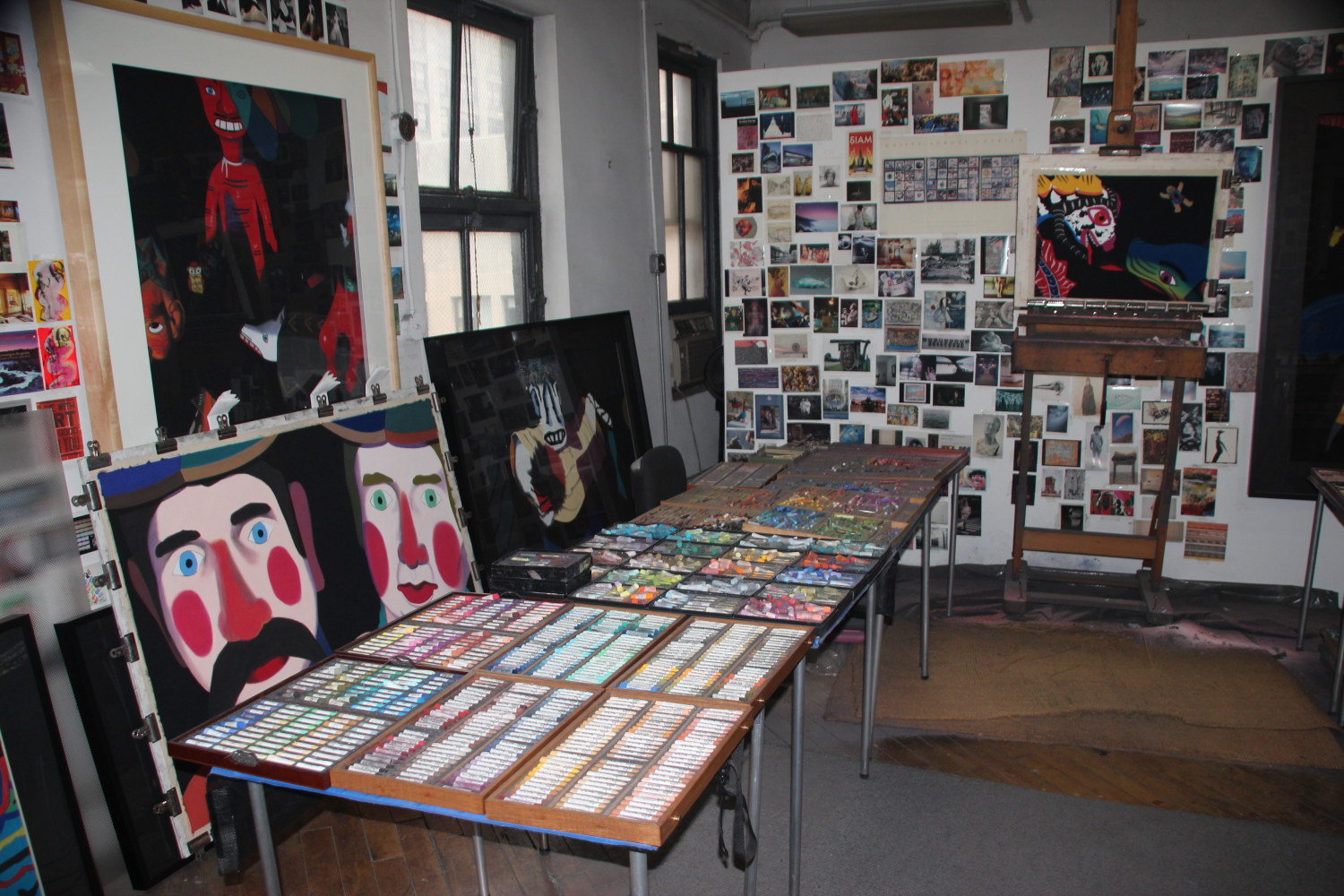
Barbara’s studio
* an ongoing series of quotations – mostly from artists, to artists – that offers wisdom, inspiration, and advice for the sometimes lonely road we are on.
Art and design are rule-based. This flies in the face of everything that most people have been taught before, namely, that art and design are about freedom. I remember reading a wonderful analogy about this concept many years ago in an out-of-print, early twentieth-century book on design. The author asked us to imagine a flying kite – the quintessential emblem of unrestricted, spontaneity, soaring in the wind. Keeping taught the line between you and the kite, however, is the source of that freedom. Here’s another way of putting it: “Creativity arises out of the tension between the rules and imagination.”
Leslie Hirst in The Art of Critical Making: Rhode Island School of Design on Creative Practice, Rosanne Somerson and Mara L. Hermano, editors
Comments are welcome!
Q: All artists go through periods when they wonder what it’s all for. What do you do during times like that?
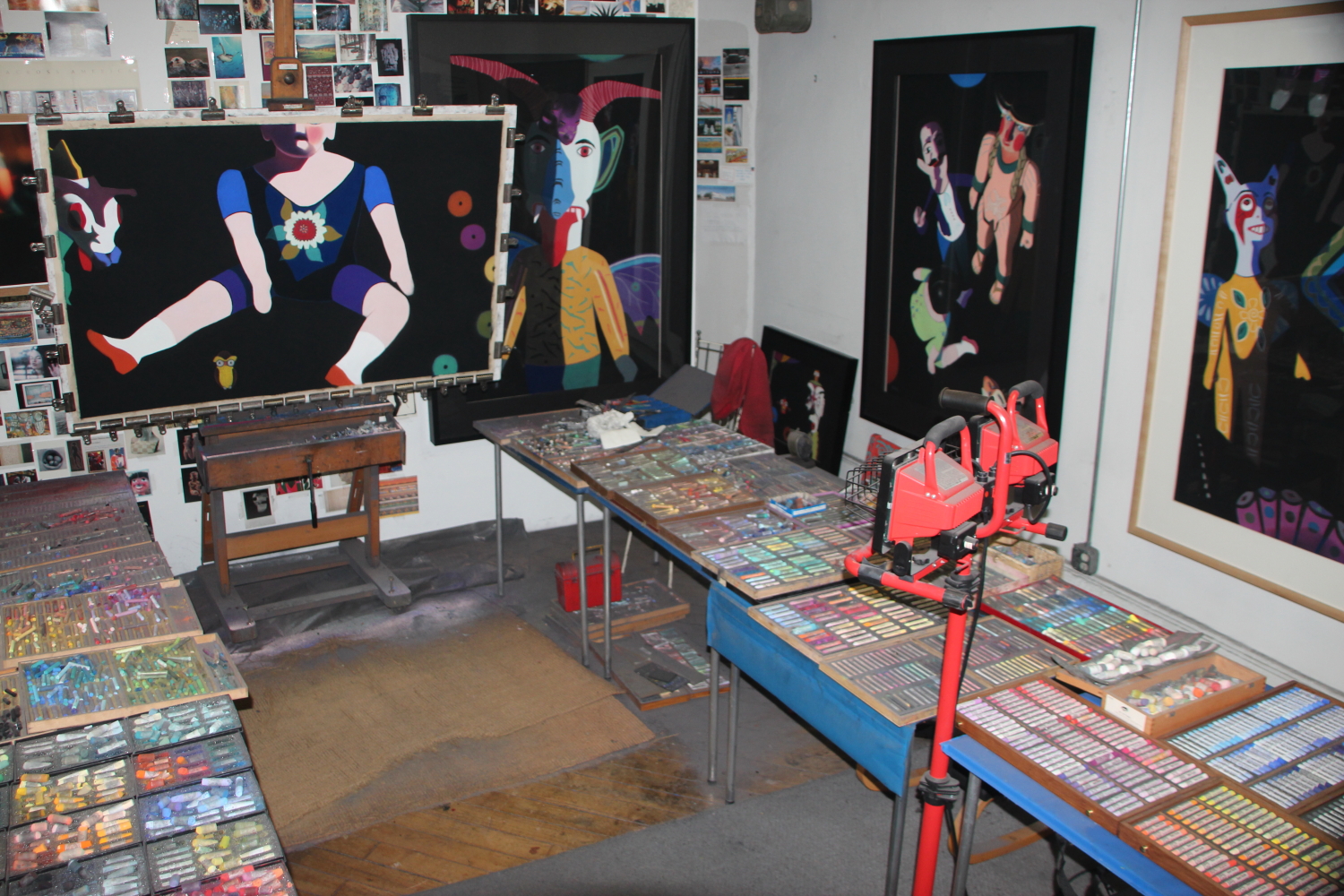
Barbara’s studio
A: Fortunately, that doesn’t happen very often. I love and enjoy all the varied facets involved in being an artist, even (usually) the business aspects, which are just another puzzle to be solved. I have vivid memories of being stuck in a job that I hated, one I couldn’t immediately leave because I was an officer in the US Navy. Life is so much better as a visual artist!
I appreciate the freedom that comes with being a self-employed artist. The words of Louise Bourgeois often come to mind: “It is a PRIVILEGE to be an artist.”
Still, with very valid reasons, no one ever said that an artist’s life is easy. It is difficult at every phase.
Books offer sustenance, especially ones written by artists who have endured all sorts of terrible hardships beyond anything artists today are likely to experience. I just pick up a favorite book. My Wednesday blog posts, “Pearls from artists,” give some idea of the sorts of inspiration I find. I read the wise words of a fellow artist, then I get back to work. As I quickly become intrigued with the problems at hand in a painting, all doubt usually dissolves.
I try to remember: Artists are extremely fortunate to be doing what we love and what we are meant to do with our short time on earth. What more could a person ask?
Comments are welcome!
Pearls from artists* # 129
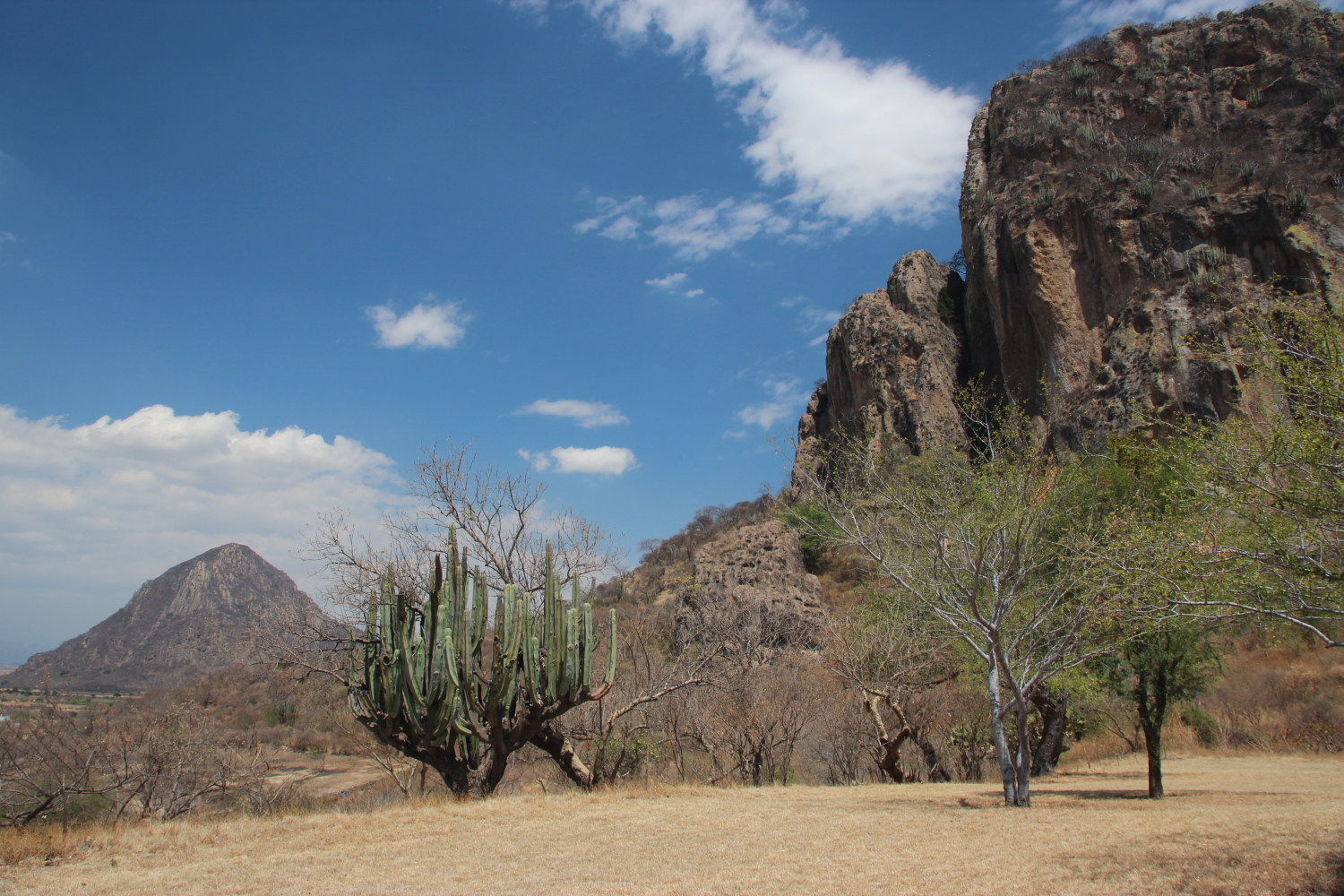
Chalcatzingo, Mexico
* an ongoing series of quotations – mostly from artists, to artists – that offers wisdom, inspiration, and advice for the sometimes lonely road we are on.
A painter friend of mine once told me that he thought of sound as an usher for the here and now. When he was a small child, Adam suffered an illness that left him profoundly deaf for several months. His memories of that time are vivid and not, he insists, at all negative. Indeed, they opened a world in which the images he saw could be woven together with much greater freedom and originality than he’d ever known. The experience was powerful enough that it helped steer him toward his lifelong immersion in the visual arts. “Sound imposes a narrative on you,” he said, “and it’s always someone else’s narrative. My experience of silence was like being awake inside a dream I could direct.”
George Prochnik in In Pursuit of Silence: Listening for Meaning in a World of Noise
Comments are welcome!
Pearls from artists* # 120
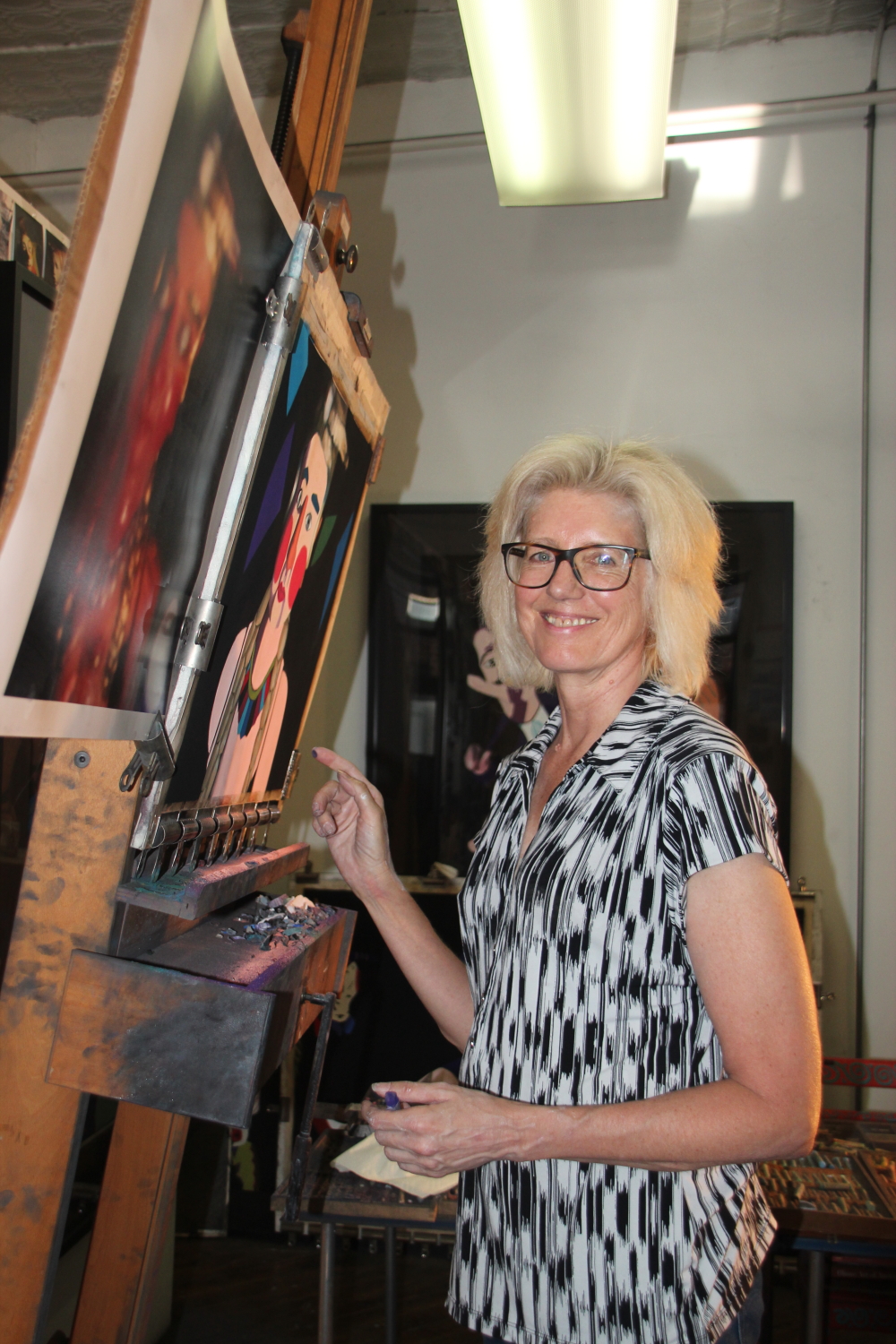
In the studio, Photo: Britta Konau
* an ongoing series of quotations – mostly from artists, to artists – that offers wisdom, inspiration, and advice for the sometimes lonely road we are on.
In solitude artists can experiment, make a mess, sustain notes for the joy of it, imagine themselves on any stage in any play. In the studio or practice room, they are not on display and need not wear their public face. They can be their silent selves, their worst selves. If there is unfreedom on the stage or in the gallery, there is freedom in the studio. As the visual artist Allen Kaprow put it, “Artists’ studios do not look like galleries, and when an artist’s studio does, everyone is suspicious.” Galleries are for show; studios are where messes are made and where the real work happens.
Eric Maisel in A Life in the Arts
Comments are welcome!
Pearls from artists* # 116
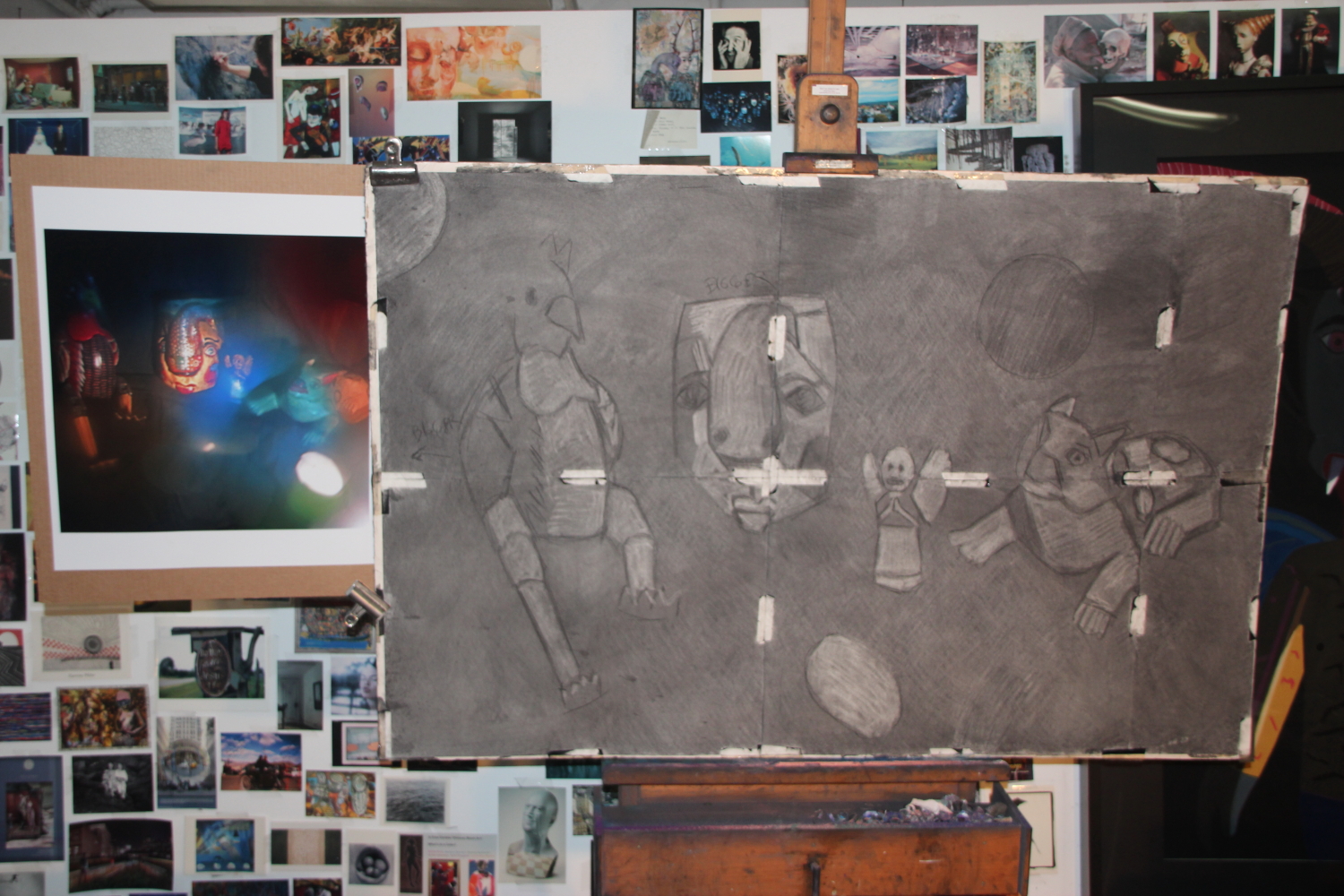
Preliminary sketch
* an ongoing series of quotations – mostly from artists, to artists – that offers wisdom, inspiration, and advice for the sometimes lonely road we are on.
What is the point of all the discipline, hard work, and training? What does the training and preparation have to do with rehearsing a play and with performance? The training and the discipline and the sweating and the study and the memorizing are not the end point, but rather the entry. The preparation is what gives one the permission to take up space and make wild, surprising, and untamed choices. In the quest for artistic freedom and agency it is impossible to walk into a rehearsal room uninhibited, unburdened. We are generally chained down by habits and assumptions and by fear of the new. Permission is what we earn by the sweat, training, preparatory work and dedication.
Anne Bogart in What’s the Story: Essays in art, theater, and storytelling
Comments are welcome!
Pearls from artists* # 87
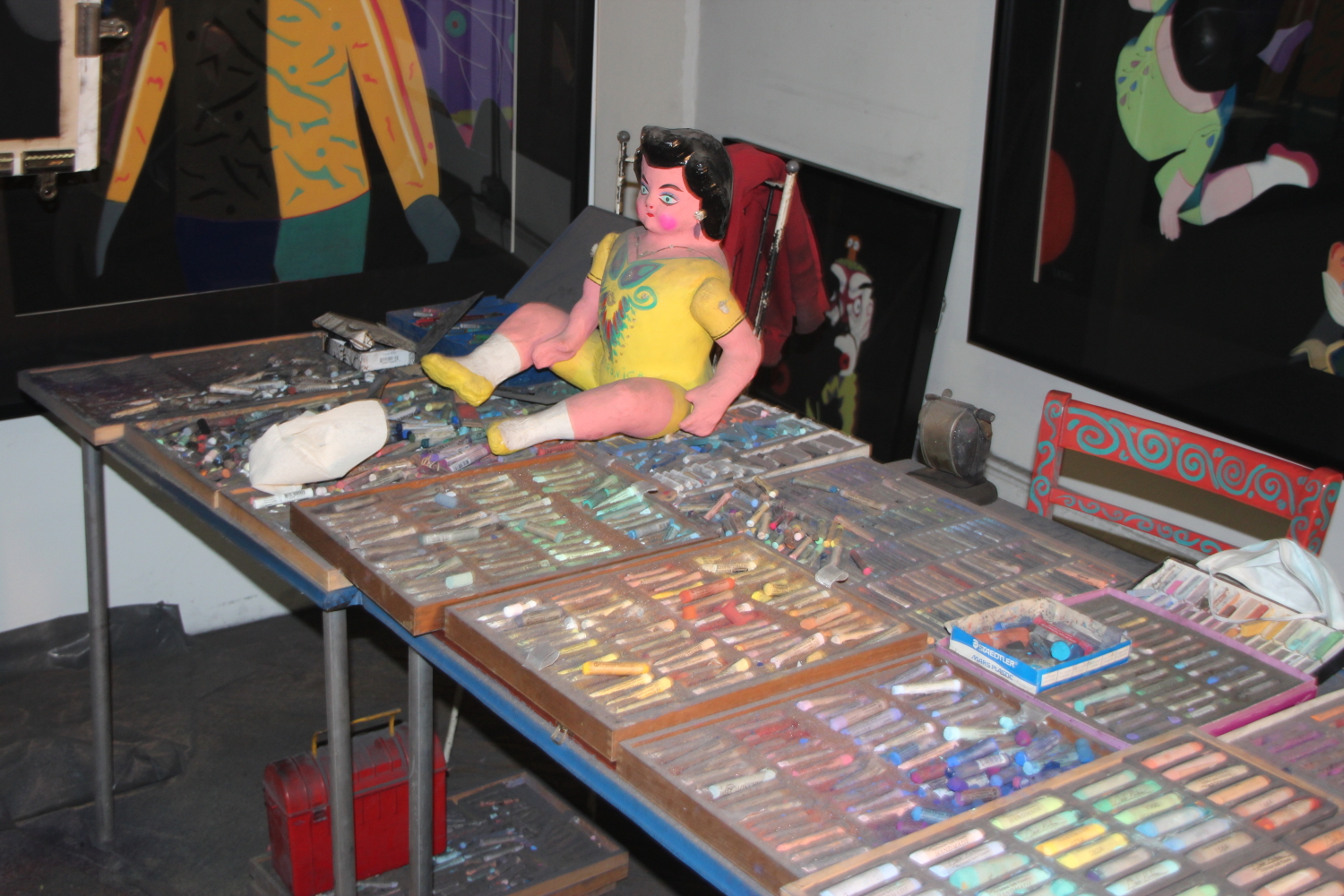
Studio
* an ongoing series of quotations – mostly from artists, to artists – that offers wisdom, inspiration, and advice for the sometimes lonely road we are on.
One evening, after one false start too many, I just gave up. Sitting at a bar, feeling a bit burned out by work and by life in general, I just started drawing on the backs of business cards for no reason. I didn’t really need a reason. I just did it because it was there, because it amused me in a kind of random, arbitrary way.
Of course it was stupid. Of course it was not commercial. Of course it wasn’t going to go anywhere. Of course it was a complete and utter waste of time. But in retrospect, it was this built-in futility that gave it its edge. Because it was the exact opposite of all the “Big Plans” my peers and I were used to making. It was so liberating not to have to think about all of that, for a change.
It was so liberating to be doing something that didn’t have to have some sort of commercial angle, for a change.
It was so liberating to be doing something that didn’t have to impress anybody, for a change.
It was so liberating to be free of ambition, for a change.
It was so liberating to have something that belonged just to me and no one else, for a change.
It was so liberating to feel complete sovereignty, for a change. To feel complete freedom, for a change. To have something that didn’t require somebody else’s money, or somebody else’s approval, for a change.
And of course, it was then, and only then, that the outside world started paying attention.
The sovereignty you have over your work will inspire far more people than the actual content ever will. How your own sovereignty inspires other people to find their own sovereignty, their own sense of freedom and possibility, will give the work far more power than the work’s objective merits ever will.
Your idea doesn’t have to be big. It just has to be yours alone. The more the idea is yours alone, the more freedom you have to do something really amazing.
The more amazing, the more people will click with your idea. The more people click with your idea, the more this little thing of yours will snowball into a big thing.
That’s what doodling on the backs of business cards taught me.
Hugh MacLeod in Ignore Everybody: and 39 Other Keys to Creativity
Comments are welcome!



