Blog Archives
Pearls from artists* # 691
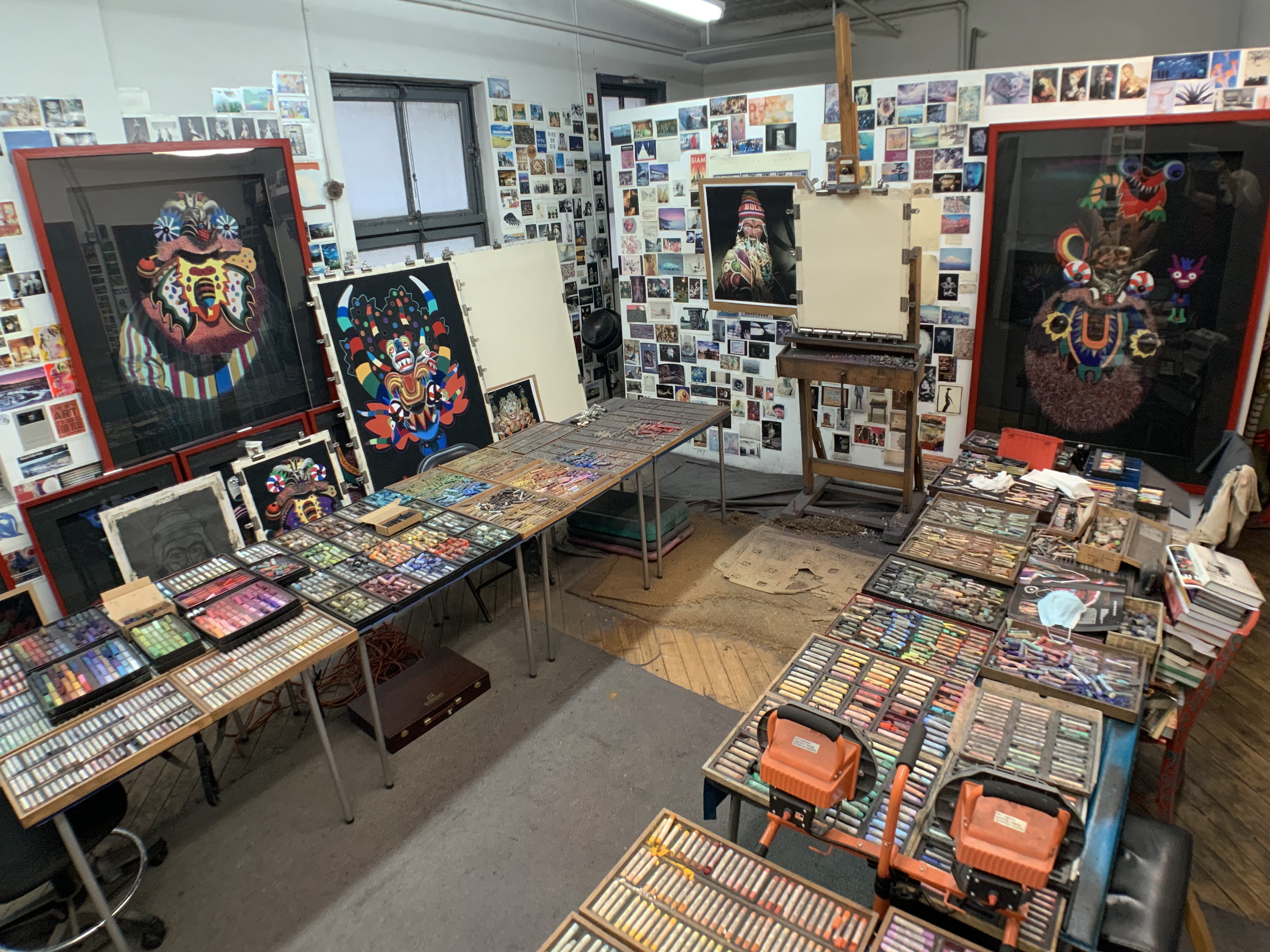
Barbara’s Studio
*an ongoing series of quotations – mostly from artists, to artists – that offers wisdom, inspiration, and advice for the sometimes lonely road we are on.
Repeatedly standing in the fire is a requirement of the art life. The initial act of choosing this vocation requires courage, as does sticking with it when others think you should give up. We prioritize an endeavor that strikes the rest of the world as absurd. We repeatedly risk failure and frustration in the drive to grow our practice. We are visionaries at the front of the breaking wave in our culture, calling out difficult realities that no one wants to think about, and we are often beaten back in attempts to silence us for that role.
Kate Kretz in Art From Your Core: A Holistic Guide to Visual Voice
Comments are welcome!
Pearls from artists* # 689

*an ongoing series of quotations – mostly from artists, to artists – that offers wisdom, inspiration, and advice for the sometimes lonely road we are on.
This is what I wish someone had told me years ago:
The art world is not a meritocracy. Like the world at large, it is a system based on hoarded capital and exploited labor. This system owes you nothing, even if you have extraordinary talent, work tremendously hard, never give up, and do all the right things. There are no ‘extra points’ for effort, earnestness, dedication, or sacrifice.
(We ALL think WE are going to be the exception.)
Unless you have fantastic connections or pedigree, after you build and maintain the basics of making strong work and getting the word out, a great deal depends on luck. Many of the artists you admire are likely living difficult lives you might not be willing to live, making sacrifices you might not be willing to make. Many who appear to support themselves with their work are in fact, partially or fully supported by spouses, family money, or jobs they do not discuss. They keep these jobs secret because some art world players refuse to validate your work if you are not ‘seriously committed’ enough to be a full-time artist. (Of course, artists who were not born wealthy need validation from these very players to be ABLE to create full-time.)
Kate Kretz in Art From Your Core: A Holistic Guide to Visual Voice
Comments are welcome!
Q: You read books on Friedrich Nietzsche and other philosophers. How has philosophy and your personal experience shaped the latest series, Bolivianos? (Question from Vedica Art Studios and Gallery)

A: It’s difficult to pinpoint how philosophy specifically shaped my work because my curiosity spans so many subjects. Some critics have described me as a Renaissance woman, remarking on my wide-ranging and voracious reading. It’s true—I’m genuinely interested in practically everything!
In pursuit of making art, I have undertaken in-depth studies of numerous intriguing fields: drawing, color, composition, gross anatomy, art and art history, the art business, film history, photography, psychology, mythology, literature, philosophy, religion, music, jazz history, and archaeology—particularly ancient Mesoamerica (Olmec, Zapotec, Mixtec, Aztec, and Maya) and South America (the Inca and their ancestors).
Since the early 1990s, my inspiration and subject matter have come primarily from international travel to remote parts of the globe, especially Mexico, Central America, and South America. Travel is by far the best education! By visiting distant destinations, I have developed a deep reverence for people and cultures around the world. People everywhere are connected by our shared humanity.
These travels, supplemented by extensive research at home, are essential parts of my creative process. Research can be solitary and demanding, but I truly enjoy it. I want to know as much as possible, and this curiosity generates ideas for new work, propelling me into unexplored creative realms.
Foreign travel always expands our ways of thinking. This rich mixture of creative influences continually evolves and finds its way into my pastel paintings. Working, learning, evolving, and growing—I am perpetually curious and can hardly imagine a better way to spend my time on Earth!
Comments are welcome!
Pearls from artists* # 679
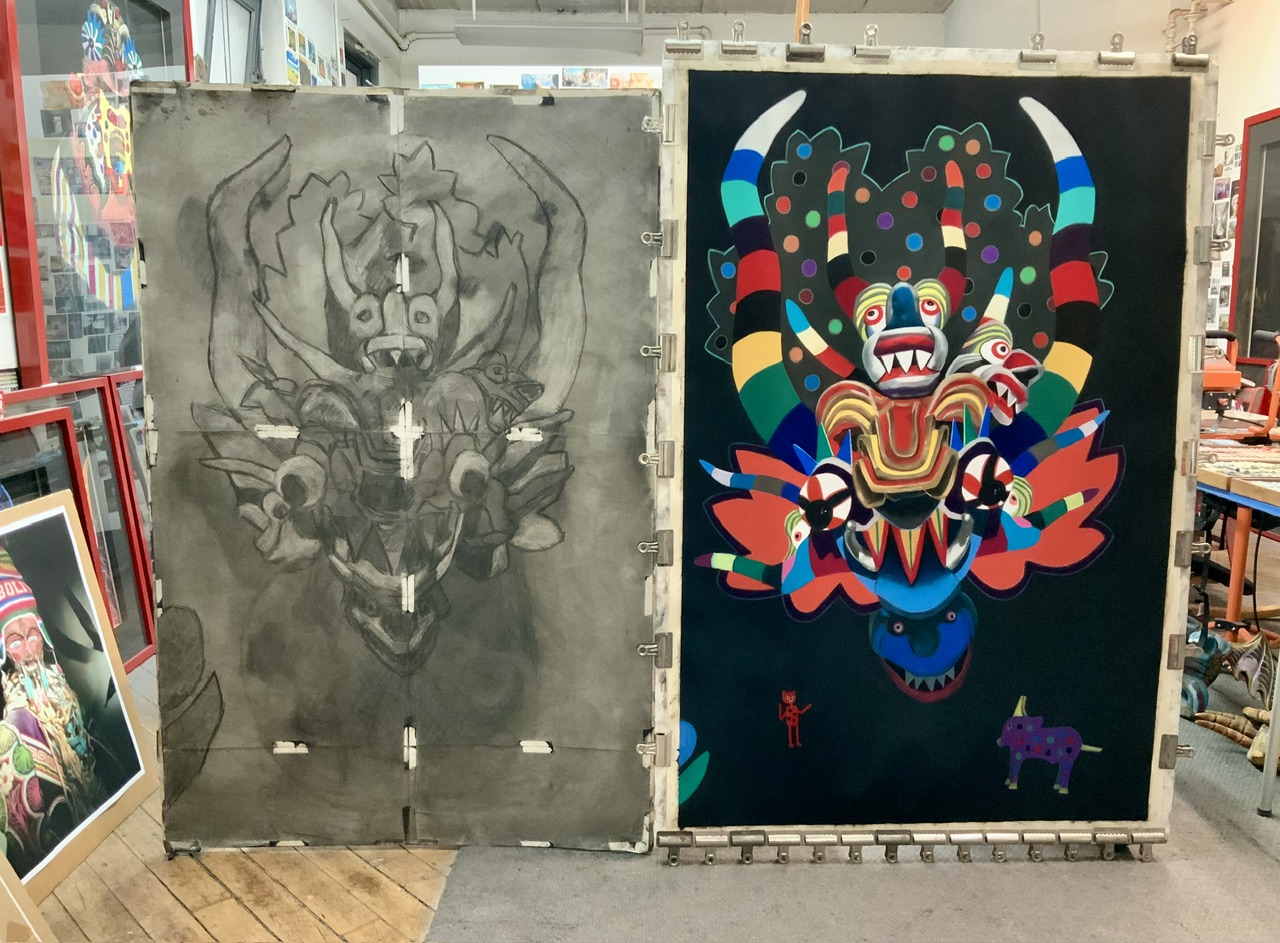
*an ongoing series of quotations – mostly from artists, to artists – that offers wisdom, inspiration, and advice for the sometimes lonely road we are on.
PC: In your painting, you’ve always kept this speed of movement. One senses that you work something out slowly, deep down, that it’s hard work, but there’s always something fresh about its expression
HM: That’s because I revise my notion several times over. People often add or superimpose completing things without changing their plan, whereas I rework my plan every time. I always start again, working from the previous state. I try to work in a contemplative state, which is very difficult: contemplation is inaction and I act in contemplation.
In all the studies I’ve made from my own ideas, there’s never been a faux pas because I’ve always unconsciously had a feeling for the goal; I’ve made my way toward it the way one heads north, following the compass. What I’ve done, I’ve done by instinct, always with my sights on a goal I still hope to reach today. I’ve completed my apprenticeship now. All I ask is four or five years to realize the goal.
PC: Delacroix said that too. Great artists never look back.
HM: Delacroix also said – ten years after he’d left the place – “I’m just beginning to see Morocco.” He needed the perspective. Rodin said to an artist, “You need to stand back a long way for sculpture.” To which the student replied, “Master, my studio is only ten meters wide.”
Chatting With Henri Matisse: The Lost 1941 Interview, Henri Matisse with Pierre Courthion, edited by Serge Guilbaut
Comments are welcome!
Q: How do you decide when a pastel painting is finished?

“Magisterial,” soft pastel on sandpaper, 58” x 38” in progress
A: During the months that it takes to create a pastel painting, I search for arresting colors that work well together. The goal is to make a painting that I have never seen before and that leads the viewer’s eyes around in interesting ways. To do this I build up and blend together as many as 25 to 30 layers of pigment. I am able to complete some areas, like the background, fairly easily – maybe with just six or seven layers of black Rembrandt pastel. The more realistic parts of a pastel painting take many more applications. In general, details always take plenty of time to refine and perfect.
No matter how many pastel layers I apply, however, I never use fixatives. It is difficult to see this in reproductions of my work, but some of the finished surfaces achieve a texture akin to velvet. My technique involves blending each layer with my fingers, pushing the pastel deep into the tooth of the sandpaper, and mixing new colors directly on the paper. Fortunately, the sandpaper holds plenty of pigment so I am able to include lots of details.
Before I pronounce a pastel painting finished, I let it sit against a wall in my studio for a few days so I can look at it later with fresh eyes. I consider a piece done when it is as good as I can make it, when adding or subtracting something would diminish what is there. Always, I try to push myself and my materials to their limits, using them in new and unexpected ways.
Comments are welcome.
Q: How do you decide when a pastel painting is finished?

Signing “Apparition,” soft pastel on sandpaper, 58” x 38”
A: During the several months that I work on a pastel painting, I search for the best, most eye-popping colors, as I build up and blend together as many as 25 to 30 layers of pigment. I am able to complete some areas, like the background, fairly easily – maybe with six or seven layers – but the more realistic parts take more applications because I am continually refining and adding details. Details always take time to perfect.
No matter how many pastel layers I apply, however, I never use fixatives. It is difficult to see this in reproductions of my work, but the finished surfaces achieve a texture akin to velvet. My technique involves blending each layer with my fingers, pushing pastel deep into the tooth of the sandpaper. The paper holds plenty of pigment and because the pastel doesn’t flake off, there is no need for fixatives.
I consider a given painting complete when it is as good as I can make it, when adding or subtracting anything would diminish what is there. I know my abilities and I know what each individual stick of pastel can do. I continually try to push myself and my materials to their limits.
Comments are welcome.
Q: Pastel dust can be toxic. Do you use air filters in your work space?

Barbara’s Studio
A: No, but I wear a surgical mask when I work, to prevent breathing pastel dust. Also, I use a barrier cream, called Artgard, to prevent pigment being absorbed into my skin through cuts. I take care that my head is always higher than my hand as I work, so the dust is below my mouth and nose. It’s difficult to tell from the photo but my easel is tilted forward, allowing pastel dust to fall onto the easel and floor.
I am well aware of the toxicity of pastel, especially with colors that contain cadmium, and believe I take the proper precautions. After forty years working with soft pastel, so far I’ve managed to stay healthy.
Comments are welcome.
Pearls from artists* # 654

*an ongoing series of quotations – mostly from artists, to artists – that offers wisdom, inspiration, and advice for the sometimes lonely road we are on.
The cynical art world, where ‘nothing is a miracle,’ benefits from disempowered artists who have been tricked into feeling devalued, and trained to live at the mercy of the marketplace. But the exact opposite is true. The art world would collapse without our coveted holy vision. Artists are born with unconventional gifts that mark them as innovative thought leaders. Society is only beginning to understand how these gifts may be employed. We possess the power to expose what is going on beneath the surface, initiate difficult conversations, and help people process an increasingly complex world. We fire bullets of truth to pierce the ever-thickening wall of relentless lies. We see things more clearly, precisely because we are on the outside. We foster empathy and point out our common humanity. We remind people that they do not have to go along with this; there are other ways to live. We have the conviction to scream at the top of our lungs when society is veering terribly off course. That the antidote to capitalism is meaning. At our best, through a rather miraculous process, artists change the world.
Kate Kretz in Art From Your Core: A Holistic Guide to Visual Voice
Comments are welcome!
Pearls from artists* # 635

Dinard, Brittany, France
*an ongoing series of quotations – mostly from artists, to artists – that offers wisdom, inspiration, and advice for the sometimes lonely road we are on.
The body of writing takes a thousand different forms,
and there is no right way to measure.
Changing, changing at the flick of a hand, its various
forms are difficult to capture.
Words and phrases compete with one another, but the
mind is still master.
Caught between the unborn and the living, the writer
struggles to maintain both depth and surface.
He may depart from the square, he may overstep the
circle, searching for the one true form of his reality.
He would fill the eyes of his readers with splendor, he
would sharpen the mind’s values.
The one whose language is muddled cannot do it;
only when mind is clear can language be noble.
Lu Chi quoted in Free Play: Improvisation in Art and Life by Stephen Nachmanovitch
Comments are welcome!
Pearls from artists* # 630

*an ongoing series of quotations – mostly from artists, to artists – that offers wisdom, inspiration, and advice for the sometimes lonely road we are on.
During the Victorian age, women, with their ‘smaller,’ less ‘creative’ brains, were considered incapable of becoming professional artists and were often restricted to ‘craft’ or ‘design’ (genres not considered ‘fine art’ by the establishment). This perception made it very difficult not only for women to be taken seriously as artists, but for their (and their female predecessors’) work to be sold. In order to get around this, nineteenth-century art dealers were known to scratch out a female artist’s signature and replace it with that of a male contemporary, which explains why many works by women have only just come to light. (No wonder so many of them hid self-portraits among their still lifes).
Katy Hessel in The Story of Art Without Men
Comments are welcome!


 barbararachkoscoloreddust.com