Blog Archives
Pearls from artists* # 613
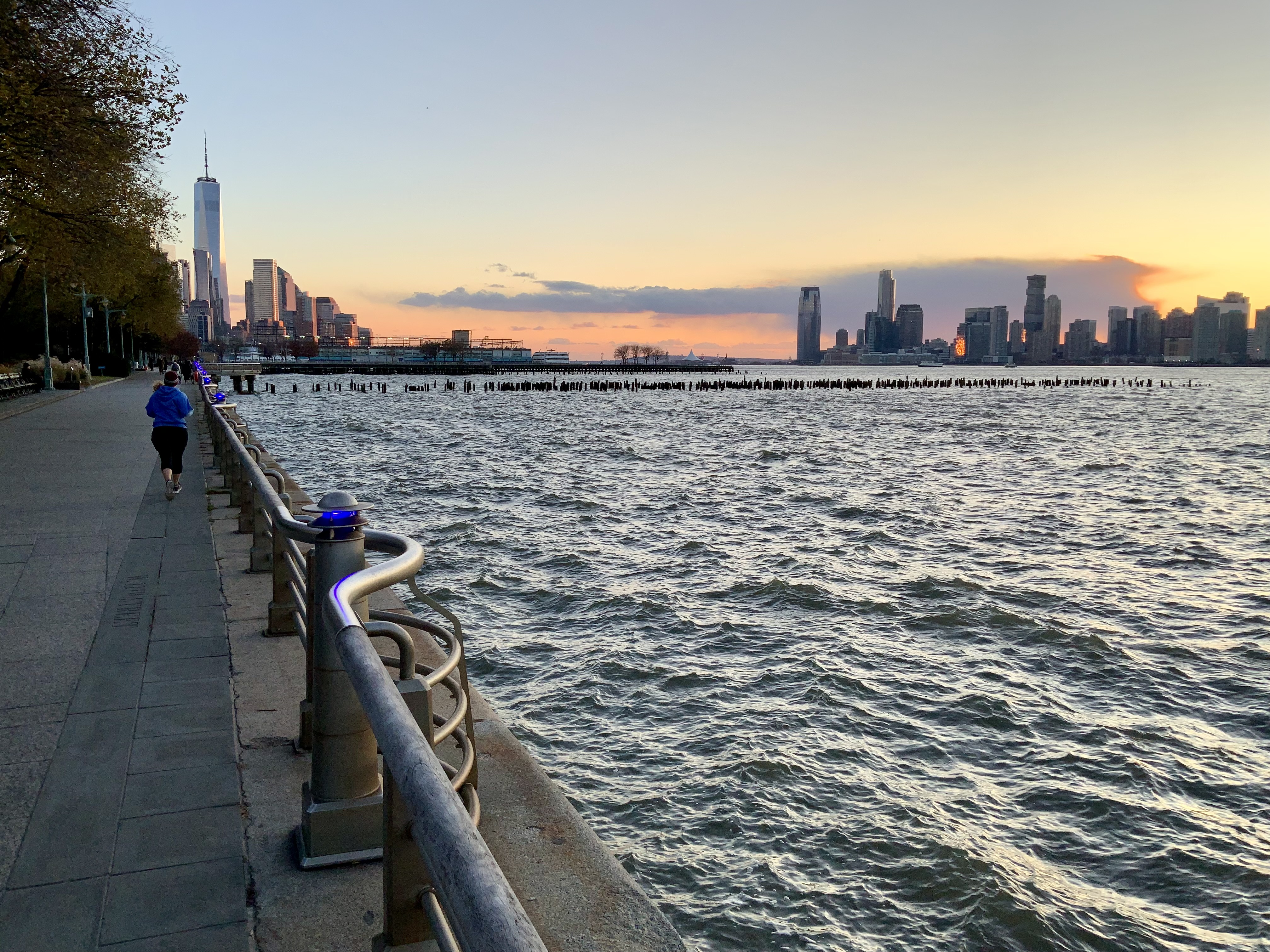
New York NY
*an ongoing series of quotations – mostly from artists, to artists – that offers wisdom, inspiration, and advice for the sometimes lonely road we are on.
A painting is a statement of the artist’s notions of reality in terms of plastic speech. In that sense the painter must be likened to the philosopher rather than to the scientist. For science is a statement of the laws that govern a specific phenomenon or category of matter or energy within the specified units and conditions of its operation. Philosophy, however, must combine all these specialized truths within a single system. It is because of this broad scope that Aristotle gives preeminence to the philosopher in the introduction to his Metaphysics, for he tells us that every man except the philosopher is an authority within his specific field, whereas the philosopher must have the acute knowledge that each man has in his own field plus the ability to relate all these fields to the operations of universality and eternity.
Therefore art, like philosophy, is of its own age; for the partial truths of each age differ from those of other ages, and the artist, like the philosopher, must constantly adjust eternity, as it were, to all the specifications of the moment. Art, too, creates at different times the notions of reality that the artist, as a man of the age, must inherit and develop and consider real along with the other intellectually conscious men of his time. His language, which is his plastic means, will also adjust itself to the possibility of making these notions manifest in their most coherent possibilities. The reality of the artist, therefore, reflects the understanding of his times, even as his creations shape those understandings. We posit this without wishing to attempt to untangle here the series of causes and effects, a process which would probably obscure more than it certified.
Mark Rothko in The Artist’s Reality: Philosophies of Art
Comments are welcome!
Pearls from artists* # 604
*an ongoing series of quotations – mostly from artists, to artists – that offers wisdom, inspiration, and advice for the sometimes lonely road we are on.
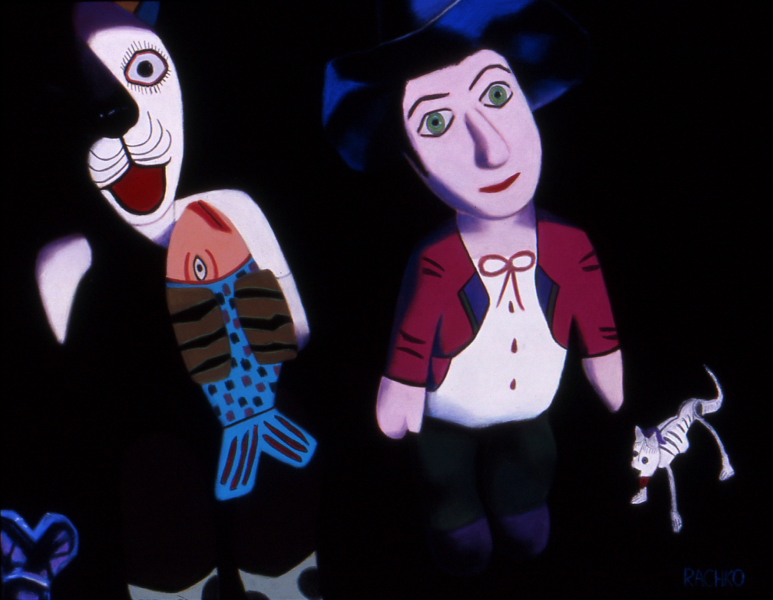
In dealing with unconscious mind, we’re dealing with an ocean full of rich, invisible life forms swimming underneath the surface. In creative work we’re trying to catch one of these fish; but we can’t kill the fish, we have to catch it in a way that brings it to life. In a sense we bring it amphibiously to the surface so it can walk around visibly; and people will recognize something familiar because they’ve got their own fish, who are cousins to your fish. Those fish, the unconscious thoughts, are not passively floating “down there;” they are moving, growing, and changing on their own, and our conscious mind is but an observer or interloper. That is why Jung calls the depths of the unconscious the “objective psyche.”
Stephen Nachmanovitch in Free Play: Improvisation in Life and Art
Comments are welcome!
Pearls from artists* # 565

*an ongoing series of quotations – mostly from artists, to artists – that offers wisdom, inspiration, and advice for the sometimes lonely road we are on.
Jung and Freud both observed that much of what ails us today is a product of being cut off from our inner life. Healing that division requires us to speak the language of symbol, and that necessitates a kind of thinking which is not easy for many of us. This kind of approach is particularly challenging in our culture, which has a bias in favor of the too bright, daylight awareness of the conscious mind, and privileges literal thinking and mechanistic ways of understanding the world.
Gary Bobroff in Carl Jung: Knowledge in a Nutshell
Comments are welcome!
Pearls from artists* #561

*an ongoing series of quotations – mostly from artists, to artists – that offers wisdom, inspiration, and advice for the sometimes lonely road we are on.
The most powerful symbols draw profound reactions from us. The symbolic images in great art attract and fascinate us; they stir our souls and move us beyond what can be easily expressed; ‘their pregnant language cries out to us that they mean more than they say.’
The unconscious produces symbols as part of a natural process within us. These images emerge out of the context of our lived experience… Jung saw the meaning-making process as one that not only requires attendance to the real context of our lives and history, but also involves profound inner listening. It asks us to use our rational capacities, but also our feeling and imaginal ones.
Symbolic images redirect our psychic energy, bringing together conscious and unconscious material and producing the lessening of conflict. In this way, they activate a transcendent function within the psyche. We experience this as the discovery of personal meaning and healing. This transformation is not the result of formulaic operations, but rather is a dynamic process that requires our authentic and vulnerable participation. The process challenges the whole of who we are and requires deep moral effort. That the unconscious would produce moving, powerful compensatory symbols inside us at all points to a fact that our culture may not have fully grasped – that there is a force working within us which is always driving us towards healing growth and greater consciousness… Despite our suffering, the psyche is always ultimately seeking both a healthy homeostatic balance and our ever-unfolding growth and unique development.
Gary Bobroff in Carl Jung: Knowledge in a Nutshell
Comments are welcome!
Pearls from artists* # 410
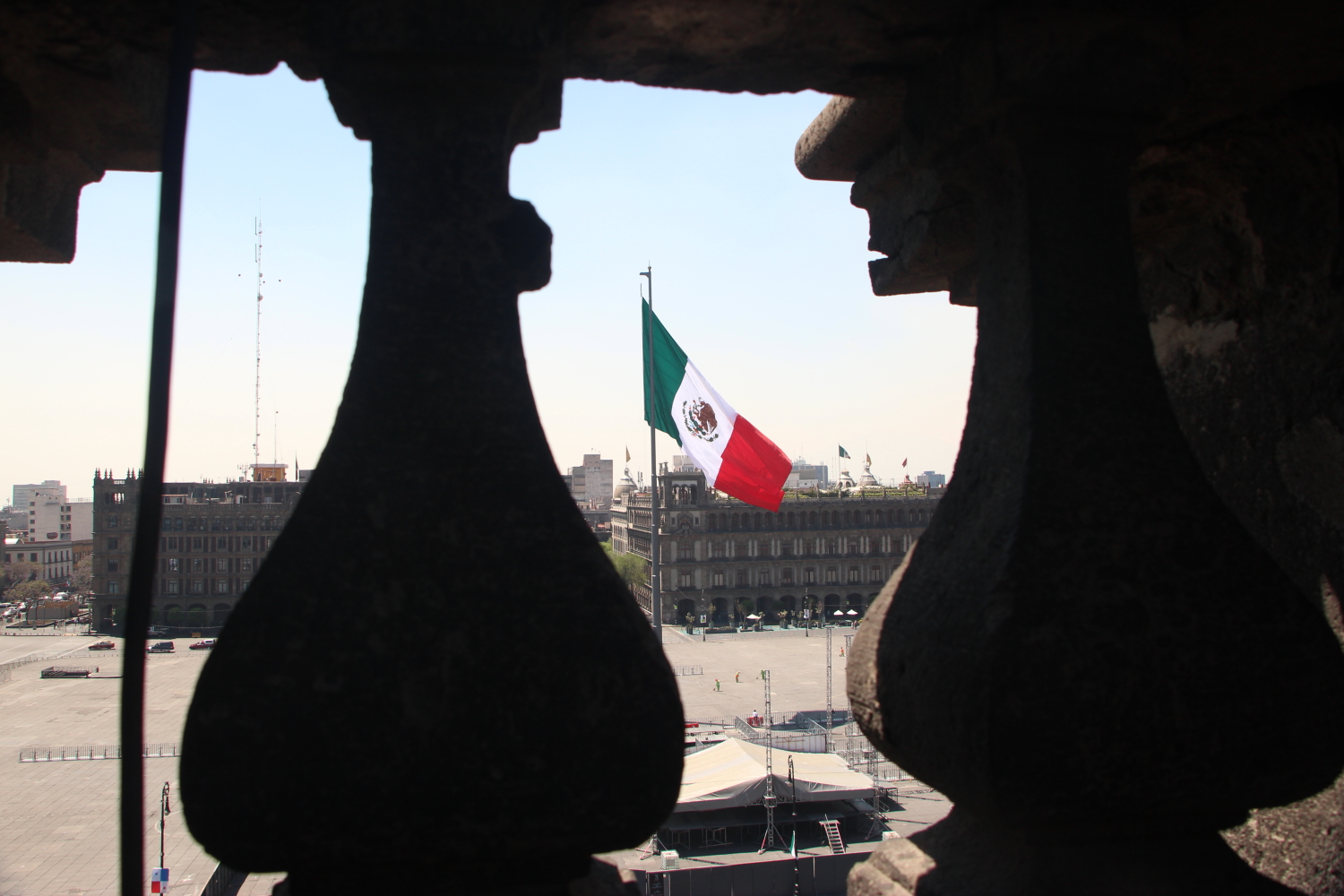
Mexico City
*an ongoing series of quotations – mostly from artists, to artists – that offers wisdom, inspiration, and advice for the sometimes lonely road we are on.
Faced with the disparities between lived reality and America’s professed ideals of inclusion and equity, countless artists have begun embracing the social role of art and using aesthetic means to speak out against all manner of injustice. In such a climate, the Mexican muralists [Jose Clemente Orozco, Diego Rivera, and David Alfaro Siqueiros] have once again emerged as models of how to marry aesthetic rigor and vitality to socially conscious subject matter that addresses the most fundamental questions concerning our collective pursuit of a more just and equitable society. Not withstanding the rich cultural ties and decades of migration that have long existed between the United States and Mexico, the relationship between the two countries has always been fraught, marked as much by mutual wariness and bouts of hostility as by a spirit of camaraderie and cooperation Yet the ugliness and xenophobia of the recent debates on the American side echoes the worst of the past. It thus seems more imperative than ever to acknowledge the profound and enduring influence Mexican muralism has had on artmaking in the United States and to highlight the beauty and power that can emerge from the free and vibrant cultural exchange between the two countries. As much as did American artists decades ago, artists in the United States today stand to benefit from an awareness of how dynamically and inventively the Mexican muralists used their art to project the ideals of compassion, justice, and solidarity. They remain a source of powerful inspiration for their seamless synthesis of ethics, art, and action.
Vida Americana: Mexican Muralists Remake American Art, 1925 – 1945, edited by Barbara Haskell
Comments are welcome!
Pearls from artists* # 387

Barbara at work on “Schemer,” Soft Pastel on Sandpaper, 26” x 20”
* an ongoing series of quotations – mostly from artists, to artists – that offers wisdom, inspiration, and advice for the sometimes lonely road we are on.
You know, you don’t go into the studio and say, “Oh, here I am this marvelous heroine, this wonderful woman doing my marvelous painting so all these marvelous women artists can come after me and do their marvelous painting.” There you are alone in this huge space and you are not conscious of the fact that you have breasts and a vagina. You are inside yourself, looking at a damned piece of rag on the wall that you are supposed to make a world out of. That is all you are conscious of. I simply cannot believe that a man feels differently… Inside yourself, you are looking at this terrifying unknown and trying to feel, to pull everything you can out of all your experience, to make something. I think a woman or a man creating feels very much the same way. I bring my experience, which is different from a man’s, yes, and I put it where I can. But once that is done, I don’t know if it is a woman’s experience I’m looking at.
Grace Hartigan quoted in Ninth Street Women by Mary Gabriel
Comments are welcome!
Pearls from artists* # 345

Barbara working on an interview. Photo: Maria Cox
*an ongoing series of quotations – mostly from artists, to artists – that offers wisdom, inspiration, and advice for the sometimes lonely road we are on.
You begin your journey as an artist from sacred motives, with dreams and high hopes, and also, perhaps, from a place of painful turmoil or other inner necessity. From these powerful drives comes your conscious decision to pursue a life in art, your resolve to call yourself an artist whatever the consequences. You are the one nodding in agreement when the painter John Baldessari says, “Art is about bloody-mindedness. It’s not about living the good life. In the end, it’s just you and the art.”
Eric Maisel in A Life in the Arts: Practical Guidance and Inspiration for Creative and Performing Artists
Comments are welcome!
Pearls from artists* # 211
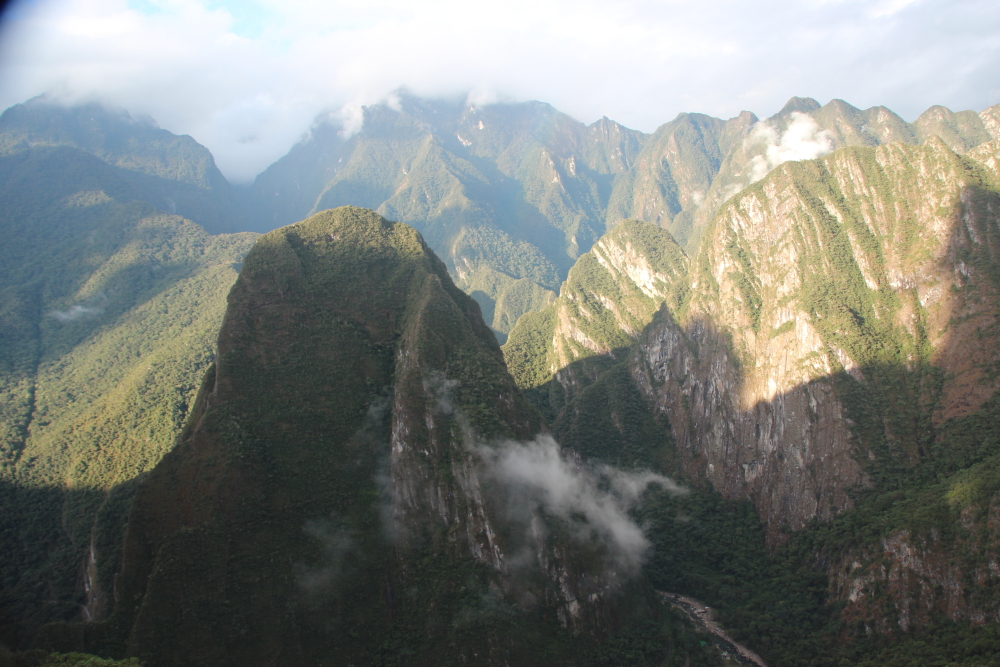
Machu Picchu
* an ongoing series of quotations – mostly from artists, to artists – that offers wisdom, inspiration, and advice for the sometimes lonely road we are on.
There is an ancient view that beauty is the object of a sensory rather than an intellectual delight, and that the senses must always be involved in appreciating it. Hence, when the philosophy of art became conscious of itself at the beginning of the eighteenth century, it called itself ‘aesthetics,’ after the Greek aesthesis, sensation. When Kant wrote that the beautiful is that which pleases immediately, and without concepts, he was providing a rich philosophical embellishment to this tradition of thinking. Aquinas too seems to have endorsed the idea, defining the beautiful in the first part of the Summa as that which is pleasing to sight (pulchra sunt quae visa placent). However, he modifies this statement in the second part, writing that ‘the beautiful relates only to sight and hearing of all the senses, since these are the most cognitive (maxime cognoscitive) among them.’ And this suggests, not only that he did not confine the study of beauty to the sense of sight, but that he was less concerned with the sensory impact of the beautiful than with its intellectual significance – even if it is a significance that can be appreciated only through seeing or hearing.
Beauty: A Very Short Introduction, by Roger Scruton
Comments are welcome!
Q: Your pastel paintings are immediately recognizable as yours alone. Did you consciously try to develop a signature style in your work?
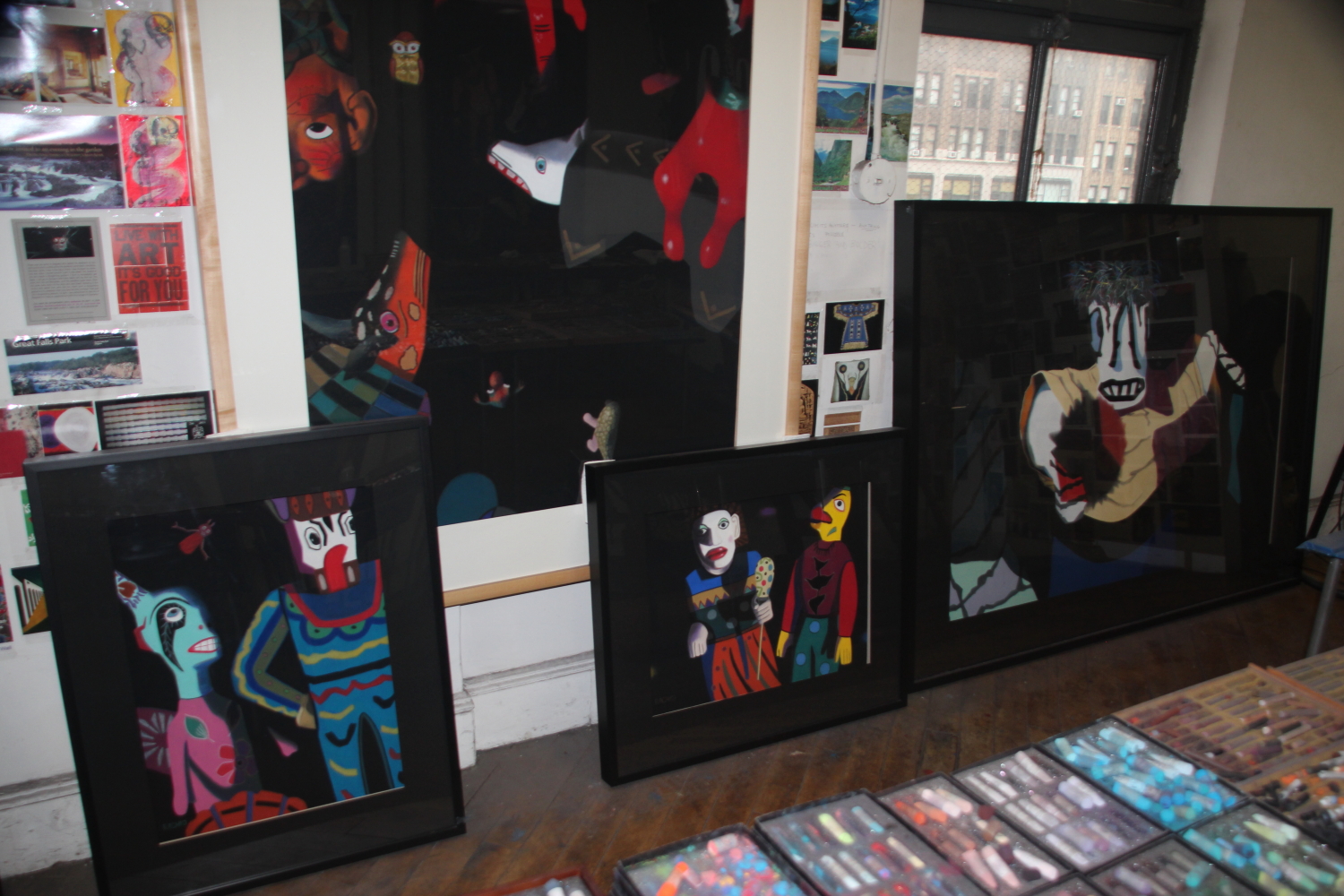
Barbara’s studio
A: I don’t believe that is even possible. An artist’s style is something that evolves with plain hard work and experience, over many years of trial and error, as one finds what techniques work best and discards those that don’t. It is a process of continually experimenting, refining, and clarifying. In other words, style is something that emerges naturally as you gradually strive to improve your art-making.
Style develops in close connection to what an artist is saying as she undergoes a very personal and idiosyncratic journey. Again, it would seem improbable for an artist to strive for any particular style, since style is not something over which an artist can exert much conscious control.
I would even say that each artist’s unique style is inevitable. It would be nearly impossible now to make a pastel painting or photograph that does NOT look like a Rachko.
Comments are welcome!
Q: How do you decide how much realism and how much imagination to put into a pastel painting?
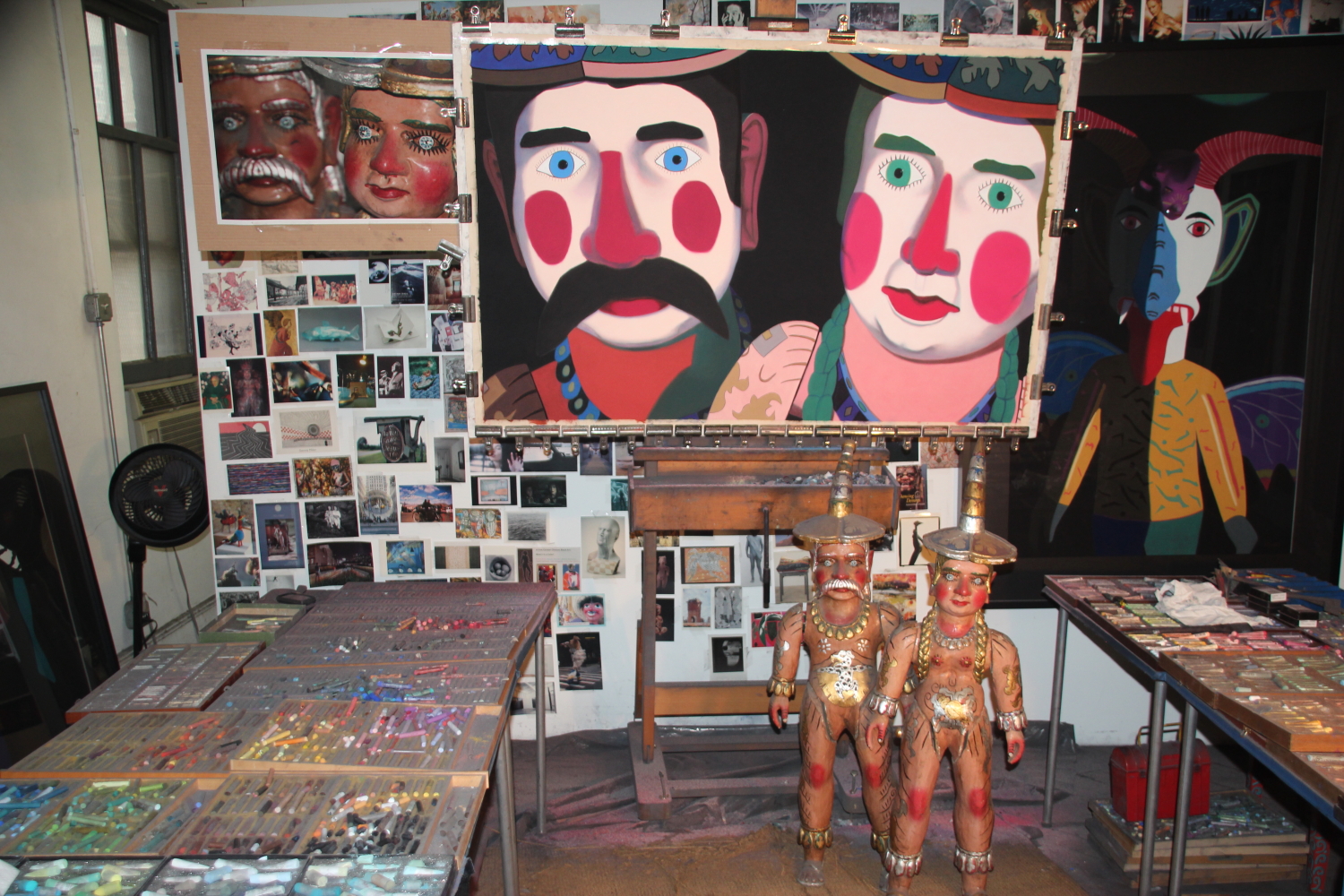
Models, reference photograph, and pastel painting in progress
A: I wouldn’t say “decide” is the right word because creating a painting is not strictly the result of conscious decisions. I think of my reference photograph, my preliminary sketch, and the actual folk art objects I depict as starting points. Over the months that it takes to make a pastel painting, the resulting interpretive development pushes the painting far beyond this source material. When all goes well, the original material disappears and characters that belong to the painting and nowhere else emerge.
It is a mysterious process that I am still struggling to understand. This is the best way I can describe what it feels like from the inside, as the maker.
Comments are welcome!


 barbararachkoscoloreddust.com