Category Archives: Quotes
Pearls from artists* # 361

“The Champ,” soft pastel on sandpaper, 26″ x 20″
* an ongoing series of quotations – mostly from artists, to artists – that offers wisdom, inspiration, and advice for the sometimes lonely road we are on.
It seems to me in the end, as far as expressing yourself is concerned, you just have to plunge in, fears and all. There is something courageous about it. If a person is too timid even to start, I’m not sure what it would take to get that person started.I;m not a big believer in books and courses that advocate going into creativity rituals and altar-making and mask-making in order to get unstuck and get started. Maybe that stuff works. I don’t know. It just seems like more strategies to avoid getting on with it.
Ian Roberts in Creative Authenticity: 16 Principles to Clarify and Deepen Your Artistic Vision
Comments are welcome!
Pearls from artists* # 360
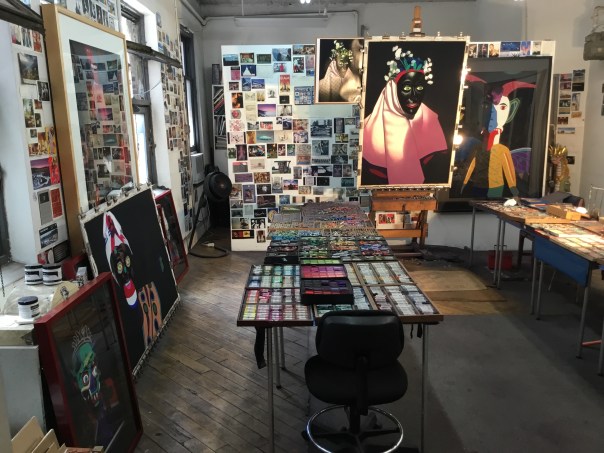
Barbara’s studio
*an ongoing series of quotations – mostly from artists, to artists – that offers wisdom, inspiration, and advice for the sometimes lonely road we are on.
Human beings have been creative beings for a really long time – long enough and consistently enough that it appears to be a totally natural impulse. To put the story in perspective, consider this fact: the earliest evidence of recognizable human art is forty thousand years old. The earliest evidence of human agriculture, by contrast is only ten thousand years old. Which means that somewhere in our collective evolutionary story, we decided it was way more important to make attractive, superfluous items than it was to learn how to regularly feed ourselves.
Elizabeth Gilbert in Big Magic: Creative Living Beyond Fear
Comments are welcome!
Pearls from artists* # 358
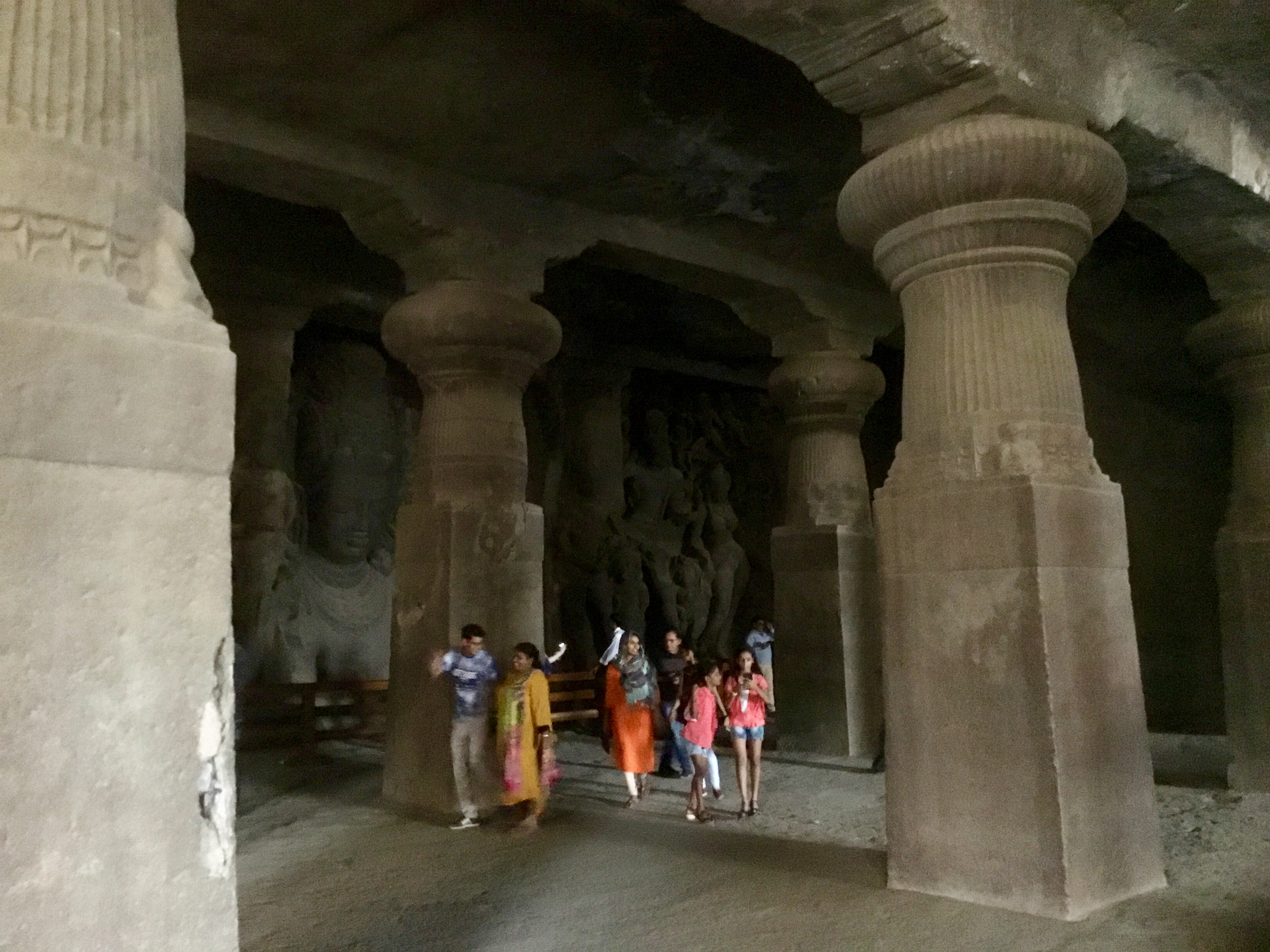
Elephanta Caves, India
*an ongoing series of quotations – mostly from artists, to artists – that offers wisdom, inspiration, and advice for the sometimes lonely road we are on.
According to [Rudolph] Arnheim, the way in which we reach out for and grasp the “object we see, either in our immediate range of perception or through the medium of photography, is dependent upon who we are and what we recognize from past experience.” The visual imprint of an image, an object, or a scene upon the eye is not at all “objective.” In the image-making process of thinking, we see, sort, and recognize according to the visual phenomenology of our own experience. What people notice in the “same” image – be it an image of a dancing Siva or a film of a Hindu festival procession – depends to some extent on what they can recognize from the visual experience of the past. In the case of film, of course, it also depends on what the photographer has seen and chosen to show us. Arnheim writes that the eye and the mind, working together in the process of cognition, cannot simply note down images that are “already there.” “We find instead that direct observation, far from being a mere ragpicker, is an exploration of the form-seeking, form-imposing mind, which needs to understand but cannot until it casts what it sees into manageable models.”
Diana L. Eck in Darsan: Seeing the Divine Image in India
Comments are welcome!
Pearls from artists* # 357
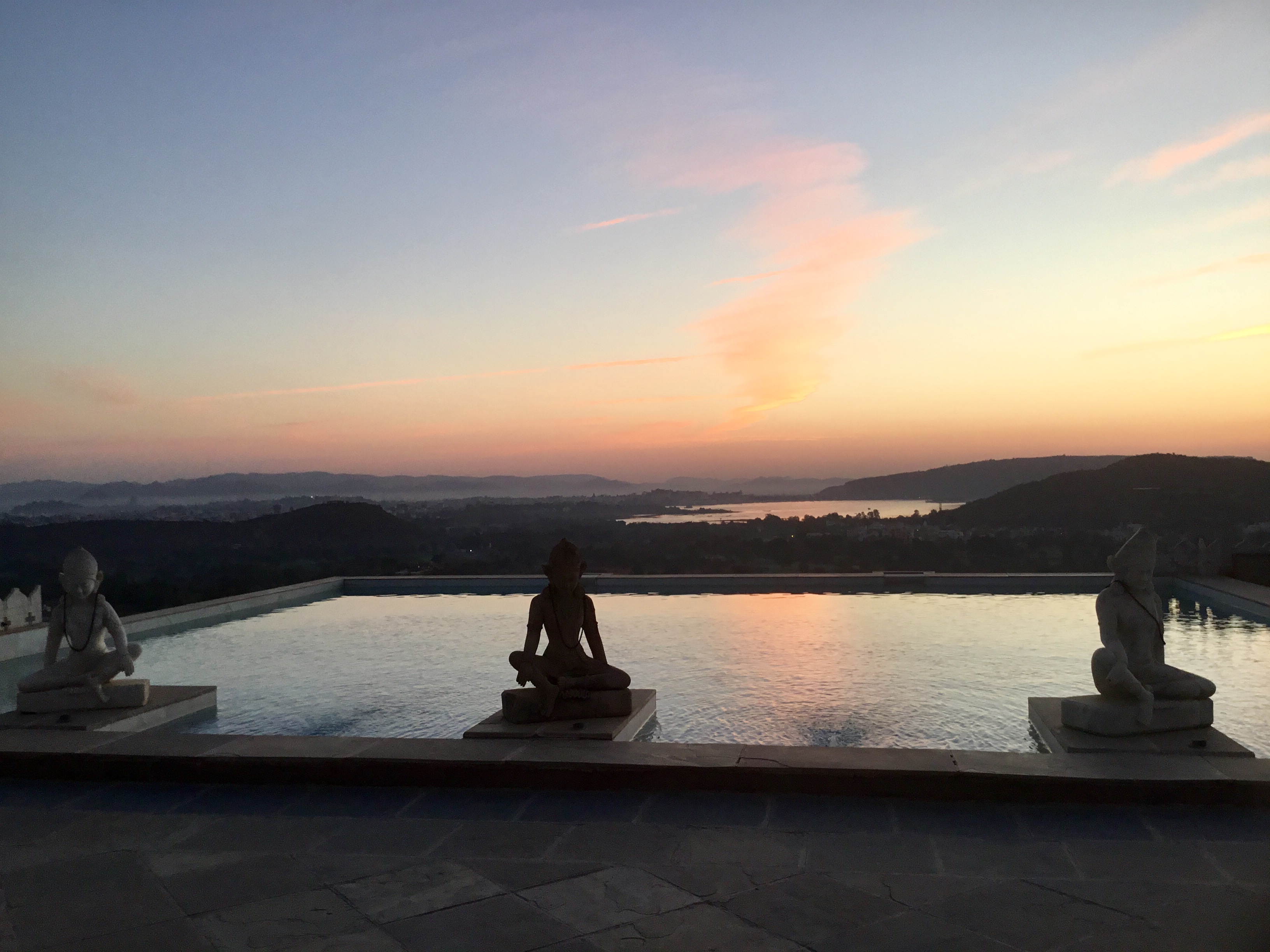
Udaipur, India
*an ongoing series of quotations – mostly from artists, to artists – that offers wisdom, inspiration, and advice for the sometimes lonely road we are on.
The term hermeneutics has been used to describe the task of understanding and interpreting ideas and texts. In a similar way, we need to set for ourselves the task of developing a hermeneutic of the visible, addressing the problem of how we understand and interpret what we see, not only in the classical images and art forms created by the various religious traditions, but in the ordinary images of people’s traditions, rites, and daily activities which are presented to us through the film-image.
Rudolph Arnheim, in his extensive work on visual perception, has shown that the dichotomy between seeing and thinking which runs through much of the Western tradition, is a very problematic one. In Visual Thinking, he contends that visual perception is integrally related to thought. It is not the case, according to Arnheim, that the eyes present a kind of raw data to the mind which, in turn, processes it and refines it by thought. Rather, those visual images are the shapers and bearers of thought. Jan Gonda, in writing on the Vedic notion dhi, sometimes translated as “thought,” finds similarly that the semantic fields of the word in Vedic literature does not correspond as much to our words for “thinking” as it does to our notions of “insight,” “vision,” and “seeing.” Suzanne Langer has also written of the integral relation of thought to the images we see in the “mind’s eye.” The making of all of those images is the fundamental “imaginative” human activity. One might add that it is the fundamental activity of the religious imagination as well. She writes, “Images are, therefore, our readiest instruments for abstracting concepts from the tumbling streams of actual impressions.”
Diana L. Eck in Darsan: Seeing the Divine Image in India
Comments are welcome!
Pearls from artists* # 356
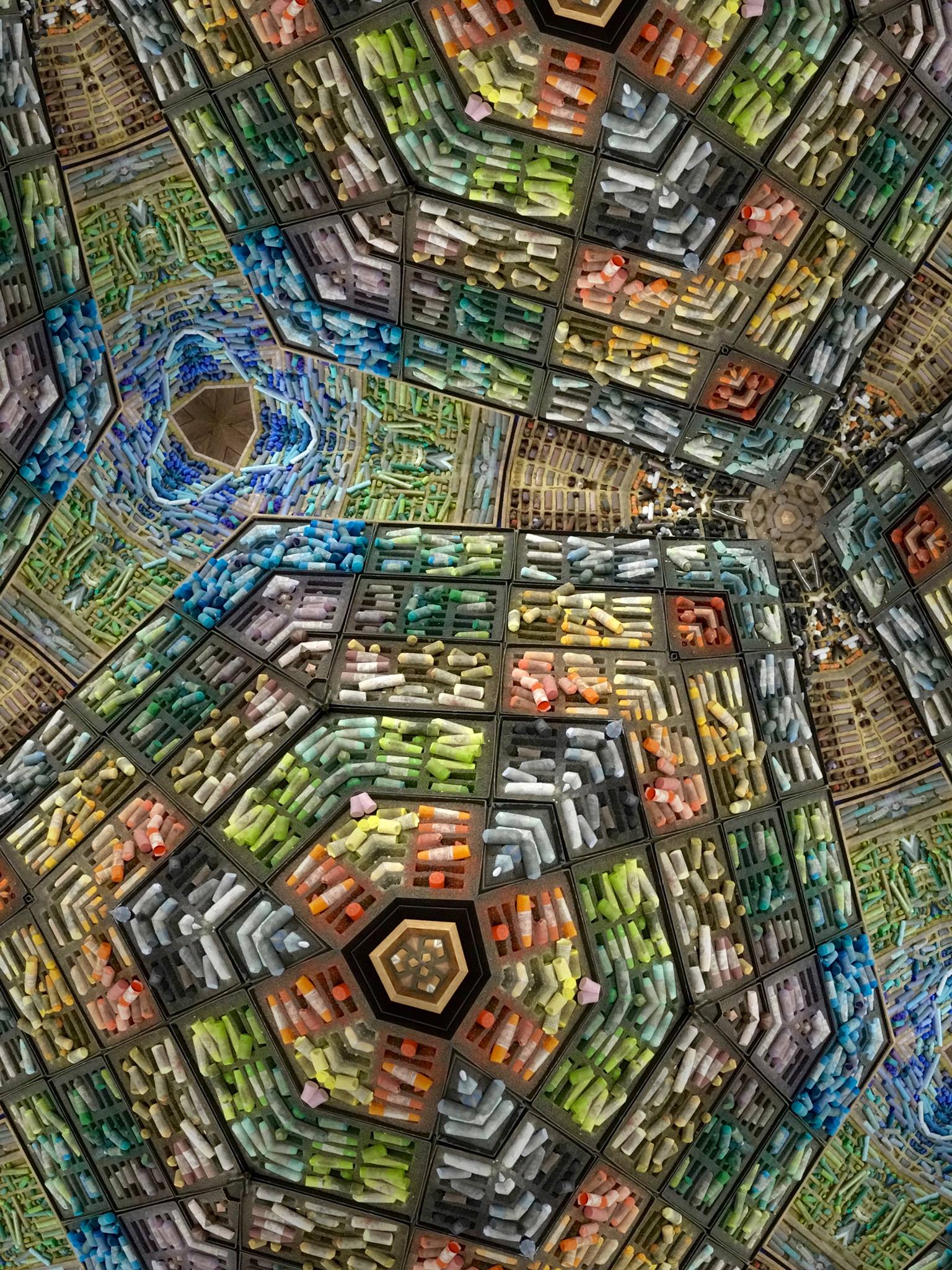
Some of Barbara’s pastels
*an ongoing series of quotations – mostly from artists, to artists – that offers wisdom, inspiration, and advice for the sometimes lonely road we are on.
Science is concerned with the general, the abstract, and the knowable. In contrast, art deals with the particular, the unknowable, the singular. This applies not just to the content of artistic works but also to the way this content is received. Even in the case of a film or concert attended by large numbers of people, the artistic experience remains a fundamentally solitary one. Each one of us lives the work from the work alone. Whatever sense of togetherness accompanies the experience comes precisely from the fact that, faced with the singularity of the aesthetic moment, each percipient feels his aloneness before the radical mystery that enfolds us all. Wherever an act of creation is shared with others, then, there is individuation – not just for the author of the work but for the audience too. The singularity of art awakens us to our own singularity, and through it to the singularity in the Other. I have argued that artifice unifies by imposing a univocal image that replicates itself indefinitely in each spectator. True art tears the spectral out of the mass of sameness, calling forth from the numberless crowd a new people and a new communion.
Reclaiming Art in the Age of Artifice: A treatise, Critique, and Call to Action
Comments are welcome!
Pearls from artists* # 355
“The Champ,” soft pastel on sandpaper, 26″ x 20″
*an ongoing series of quotations – mostly from artists, to artists – that offers wisdom, inspiration, and advice for the sometimes lonely road we are on.
True art provides us with truth in a manner analogous to science. Its prophetic dimension – its knack for showing us the side of things that our interests blind us to – make it a source of knowledge, even though it is knowledge of a kind that instrumental reason has little time for. The psychologists who revolutionized our understanding of human psychology in the earliest twentieth century drew on two principal sources to build their concepts: the dream life of their patients and the great art of the past. Without this recognition of the primacy of imagination, Freud and Jung could never have drawn their maps of the psyche. Those who work for a better world would do well to follow their example and find the guiding patterns of life in the prophetic artistic works of the past and present. Only art can act as a counter-weight to that uniquely modern mentality that, wherever it becomes the only game in town, seeks to persuade us that the proper goal of human beings is to contain, dissect, and control everything – that even the most persistent mysteries are just problems to be solved.
J.F. Martel in Reclaiming Art in the Age of Artifice: A Treatise, Critique, and Call to Action
Comments are welcome!
Pearls from artists* # 354

“Epiphany,” soft pastel on sandpaper, 38″ x 58″
*an ongoing series of quotations – mostly from artists, to artists – that offers wisdom, inspiration, and advice for the sometimes lonely road we are on.
My earlier work had taught me that artistic activity is a form of reasoning, in which perceiving and thinking are indivisibly intertwined. A person who paints, writes, composes, dances, I felt compelled to say, thinks with his senses. This union of perception and thought turned out to be not merely a specialty of the arts. A review of what is known about perception, and especially about sight, made me realize that the remarkable mechanisms by which the senses understand the environment are all but identical with the operations described by the psychology of thinking. Inversely, there was much evidence that truly productive thinking in whatever area of cognition takes place in the realm of imagery. This similarity of what the mind does in the arts and what it does elsewhere suggested taking a new look at the long-standing complaint about the isolation and neglect of the arts in society and education. Perhaps the real problem was more fundamental: a split between sense and thought, which caused various deficiency diseases in modern man.
Rudolph Arnheim in Visual Thinking
Comments are welcome!
Pearls from artists* # 353
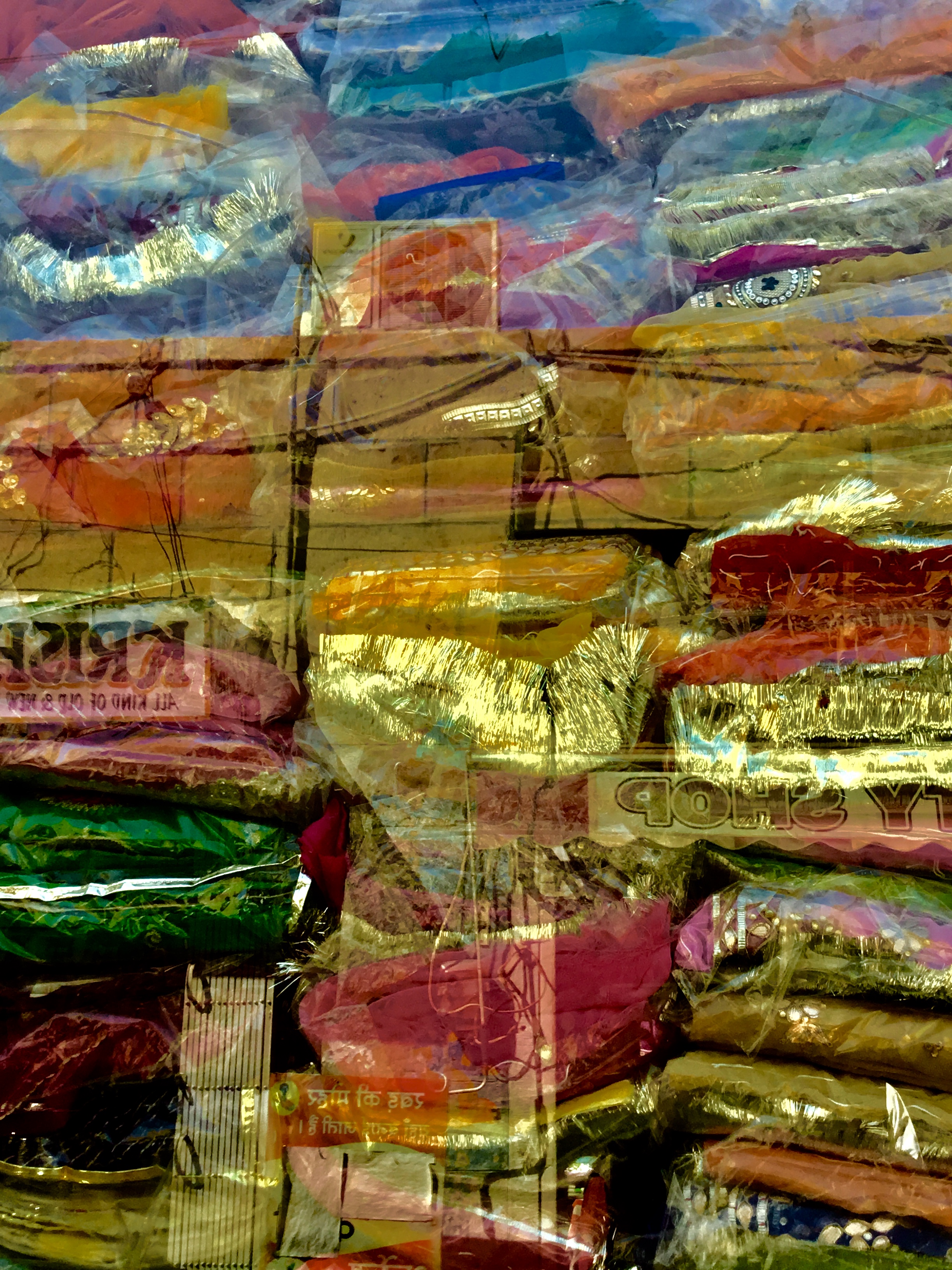
Sari shop, Ahmedabad, India
*an ongoing series of quotations – mostly from artists, to artists – that offers wisdom, inspiration, and advice for the sometimes lonely road we are on.
Creativity is freedom’s most primal expression, though not the freedom we were sold under the banner of democracy. True freedom is less a license to do as one pleases than the power to be what one has no choice but to be, the capacity to follow one’s own inmost desire. It is the freedom Nina Simone compares in “Feeling Good” to the shining of a star, a fish swimming in the sea, or the scent of a pine.
J.F. Martel in Reclaiming Art in the Age of Artifice: A Treatise, Critique, and Call to Action
Comments are welcome!
Pearls from artists* # 352
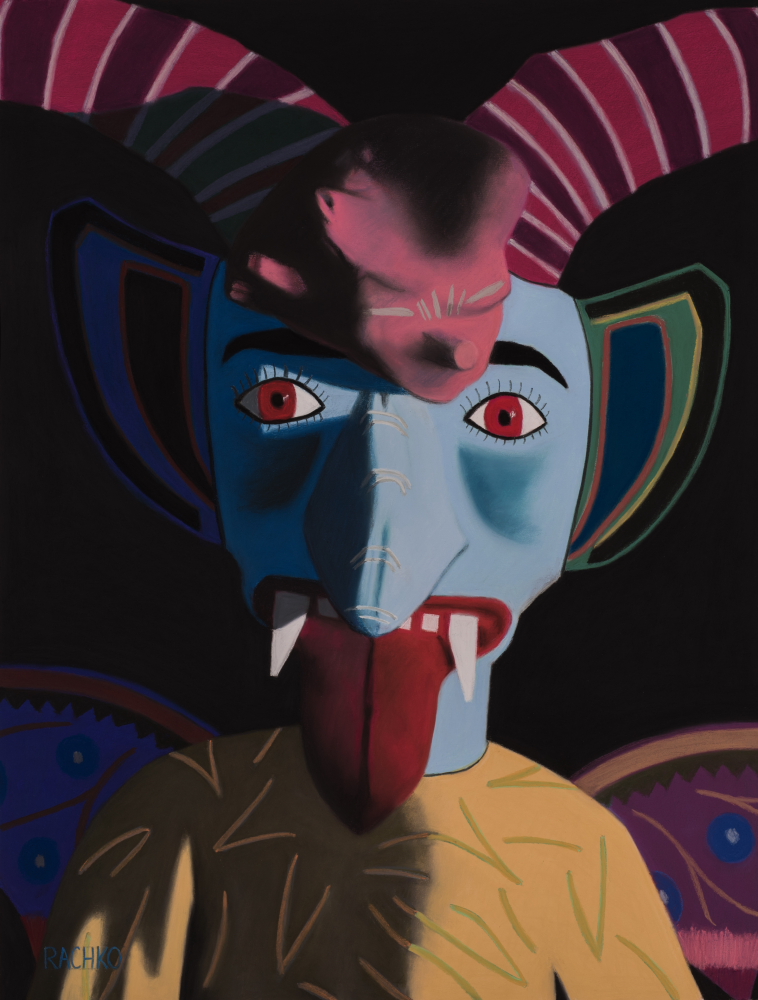
“Provocateur,” soft pastel on sandpaper, 26″ x 20″
*an ongoing series of quotations – mostly from artists, to artists – that offers wisdom, inspiration, and advice for the sometimes lonely road we are on.
The jester was certainly a key player in medieval court politics. His power, however, was commensurate with his acknowledged irrelevance to the state apparatus. As the eternal outsider, ridiculed or at best ignored by the elite unless he was actually entertaining them, he acquired the right to speak truths that others would speak at their peril. Yet if the imprudent king simply saw the Fool as a source of amusement, the wise king saw in his antics and wordplay the pattern of the past, present, and future. In the same way, art is the joker in the hand that was dealt to humanity. Nothing is easier than dismissing it as a frivolity, and yet those who meet it on its own ground gain access to the hidden facets of their situation. It is by virtue of its very separateness, its position outside the realm of the useful and the practical, that art reveals the Real. Paradoxically, art has political value only when appraised outside of any political framework.
J.F. Martel in Reclaiming Art in the Age of Artifice: A Treatise, Critique, and Call to Action
Comments are welcome!
Pearls from artists* # 351

Barbara at work on “The Orator”
*an ongoing series of quotations – mostly from artists, to artists – that offers wisdom, inspiration, and advice for the sometimes lonely road we are on.
That art is apolitical does not mean that artists themselves can be excused from the political responsibilities that fall on others. It means rather that as a manifestation of eternal psychic force, each work of art goes farther and deeper than the limited perspective of any individual mind, including that of its author.
No artist can predict how his work will affect the world… The artist invests his entire personality into the work, but he does so as a means of expressing a vision that is transpersonal. Everything that makes him what he is informs the work, but the final result transcends all personal contingencies.
J.F. Martel in Reclaiming Art in the Age of Artifice: A Treatise, Critique, and Call to Action
Comments are welcome!


 barbararachkoscoloreddust.com