Blog Archives
Q: How would you describe the inside of your studio?

A: My studio is an oasis in a chaotic city, a place to make art, to read, and to think. I love to walk in the door every morning because it is my absolute favorite place in New York! Even after thirty-six years, I still find the entire process of making a pastel painting completely engaging. I try to push my pastel techniques further every time I work in the studio.
There’s one more thing about my studio: I consider it my best creation because it’s a physical environment that anyone can walk into and occupy, as compared to my artworks, which are 2D paintings hanging flat on a wall. It has taken 25 years to get it the way it is now. I believe my studio is the best reflection of my growth as an artist. It changes and evolves as I change over the decades.
Comments are welcome!
Q: What are your favorite subject(s) and media? (Question from “Arts Illustrated”)
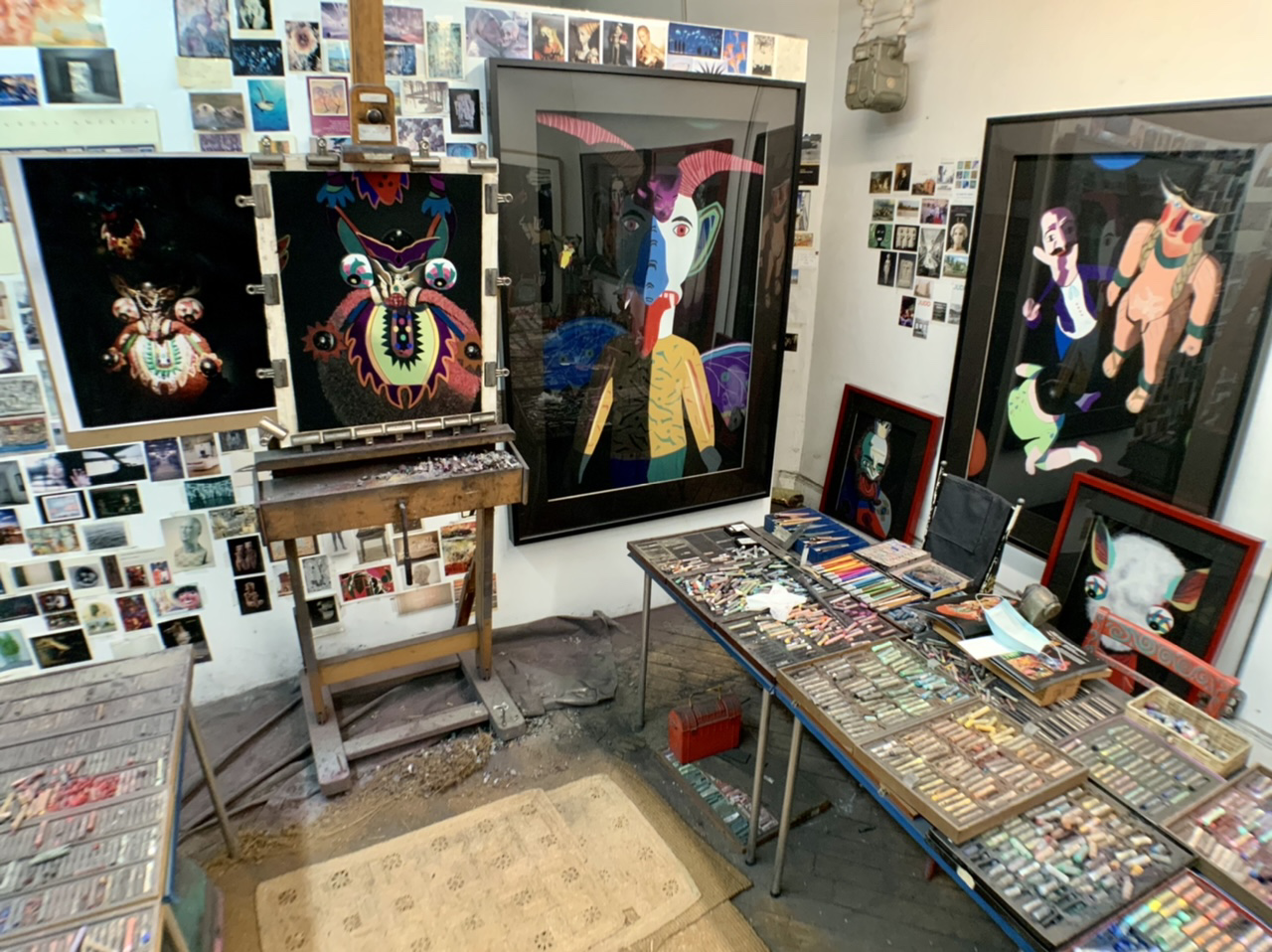
A: Here’s the short answer. I work exclusively in soft pastel on sandpaper, using self-invented pastel techniques that I have been refining for thirty-five years. Since 2017, I have depicted authentic Bolivian Carnival masks that I encountered and photographed at the Museum of Ethnography and Folklore In La Paz.
Comments are welcome!
Q: How long did it take you to discover the properties of pastel? (Liliana Mileo via facebook.com/BarbaraRachko/)
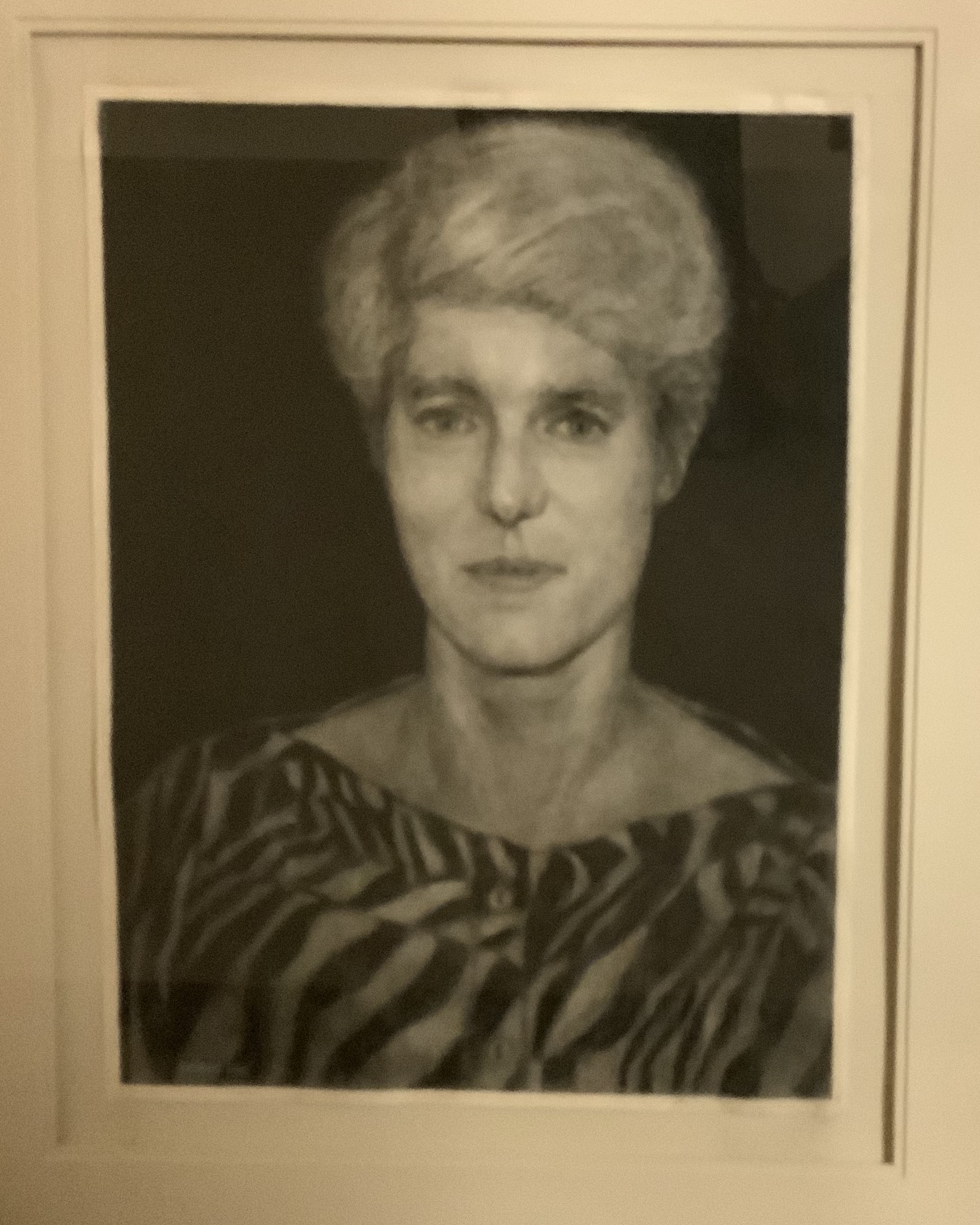
A charcoal self-portrait from 1988
A: After I moved to Alexandria, Virginia in the mid-1980s, I began taking classes at The Art League School. I was extremely unhappy with my career as a Navy Lieutenant. I worked as a computer analyst for the Joint Chiefs of Staff at the Pentagon and was searching for something more meaningful to do with my life.
I began with a basic drawing class and liked it. I enrolled in more classes and decided to spend two years working exclusively in black and white media, such as charcoal and graphite, before advancing to color. Fortunately, early on I found an excellent teacher in Lisa Semerad. I remain deeply grateful for the strong foundational drawing skills she imparted to me during this period.
After two years I tried water color and soon discovered it was not for me, a perfectionist who needs to refine my work. Then I tried etching and found it extremely tedious, the antithesis of instant gratification.
Finally I began studying soft pastel with Diane Tesler, another gifted teacher, and fell in love with this medium! At The Art League School I also completed a one-week workshop with Albert Handell, who introduced me to the archival sandpaper that I have been using ever since.
While I fell in love with pastel three decades ago, I continue to learn about its unique properties. I am pushing pastel to new heights as my techniques continually evolve. This is a lifetime journey of learning. I hope to never know all there is to know.
Comments are welcome! Ask anything and I may answer in a future blog post, as you’ve seen here with Liliana’s question.
Q: Why do you make art?

“Why Do I Make Art” by Ursula von Rydingsvard
A: Last spring I viewed Ursula von Rydingsvard’s exhibition at the National Museum of Women in the Arts. One thing that stayed with me is her wall text, “Why Do I Make Art by Ursula von Rydingsvard” in which she listed a few dozen benefits that art-making has brought to her life.
I want to share some of my own personal reasons here, in no particular order. My list keeps changing, but these are true at least for today.
1. Because I love the entire years-long creative process – from foreign travel whereby I discover new source material, to deciding what I will make, to the months spent in the studio realizing my ideas, to packing up my newest pastel painting and bringing it to my Virginia framer’s shop, to seeing the framed piece hanging on a collector’s wall, to staying in touch with collectors over the years and learning how their relationship to the work changes.
2. Because I love walking into my studio in the morning and seeing all of that color! No matter what mood I am in, my spirit is immediately uplifted.
3. Because my studio is my favorite place to be… in the entire world. I’d say that it is my most precious creation. It’s taken more than twenty-two years to get it this way. I hope I never have to move!
4. Because I get to listen to my favorite music all day or to Public Radio stations.
5. Because when I am working in the studio, if I want, I can tune out the world and all of it’s urgent problems. The same goes for whatever personal problems I am experiencing.
6. Because I am devoted to my medium. How I use pastel continually evolves. It’s exciting to keep learning about its properties and to see what new techniques will develop.
7. Because I have been given certain gifts and abilities and that entails a sacred obligation to USE them. I could not live with myself were I to do otherwise.
8. Because art-making gives meaning and purpose to my life. I never wake up in the morning wondering, how should I spend the day? I have important work to do and a place to do it. I know this is how I am supposed to be spending my time on earth.
9. Because I have an enviable commute. To get to my studio it’s a thirty-minute walk, often on the High Line early in the morning before throngs of tourists have arrived.
10. Because life as an artist is never easy. It’s a continual challenge to keep forging ahead, but the effort is also never boring.
11. Because each day in the studio is different from all the rest.
12. Because I love the physicality of it. I stand all day. I’m always moving and staying fit.
13. Because I have always been a thinker more than a talker. I enjoy and crave solitude. I am often reminded of the expression, “She who travels the farthest, travels alone.” In my work I travel anywhere.
14. Because spending so much solitary time helps me understand what I think and feel and to reflect on the twists and turns of my unexpected and fascinating life.
15. Because I learn about the world. I read and do research that gets incorporated into the work.
16. Because I get to make all the rules. I set the challenges and the goals, then decide what is succeeding and what isn’t. It is working life at its most free.
17. Because I enjoy figuring things out for myself instead of being told what to do or how to think.
18. Because despite enormous obstacles, I am still able to do it. Art-making has been the focus of my life for thirty-three years – I was a late bloomer – and I intend to continue as long as possible.
19. Because I have been through tremendous tragedy and deserve to spend the rest of my life doing exactly what I love. The art world has not caught up yet, but so be it. This is my passion and my life’s work and nothing will change that.
20. Because thanks to the internet and via social media, my work can be seen in places I have never been to and probably will never go.
21. Because I would like to be remembered. The idea of leaving art behind for future generations to appreciate and enjoy is appealing.
Comments are welcome!
Q: Your work is unlike anyone else’s. There is such power and boldness in your pastels. What processes are you using to create such poignant and robustly colored work?

Barbara working on an interview. Photo: Maria Cox
A: For thirty-three years I have worked exclusively in soft pastel on sandpaper. Pastel, which is pigment and a binder to hold it together, is as close to unadulterated color as an artist can get. It allows for very saturated color, especially using the self-invented techniques I have developed and mastered. I believe my “science of color” is unique, completely unlike how any other artist works. I spend three to four months on each painting, applying pastel and blending the layers together to mix new colors on the paper.
The acid-free sandpaper support allows the buildup of 25 to 30 layers of pastel as I slowly and meticulously work for hundreds of hours to complete a painting. The paper is extremely forgiving. I can change my mind, correct, refine, etc. as much as I want until a painting is the best I can create at that moment in time.
My techniques for using soft pastel achieve rich velvety textures and exceptionally vibrant color. Blending with my fingers, I painstakingly apply dozens of layers of pastel onto the sandpaper. In addition to the thousands of pastels that I have to choose from, I make new colors directly on the paper. Regardless of size, each pastel painting takes about four months and hundreds of hours to complete.
I have been devoted to soft pastel from the beginning. In my blog and in numerous interviews online and elsewhere, I continue to expound on its merits. For me no other fine art medium comes close.
My subject matter is singular. I am drawn to Mexican, Guatemalan, and Bolivian cultural objects—masks, carved wooden animals, papier mâché figures, and toys. On trips to these countries and elsewhere I frequent local mask shops, markets, and bazaars searching for the figures that will populate my pastel paintings. How, why, when, and where these objects come into my life is an important part of the creative process. Each pastel painting is a highly personal blend of reality, fantasy, and autobiography.
Comments are welcome!

Q: Do your materials have properties that allow you to maximize what you depict in your work?
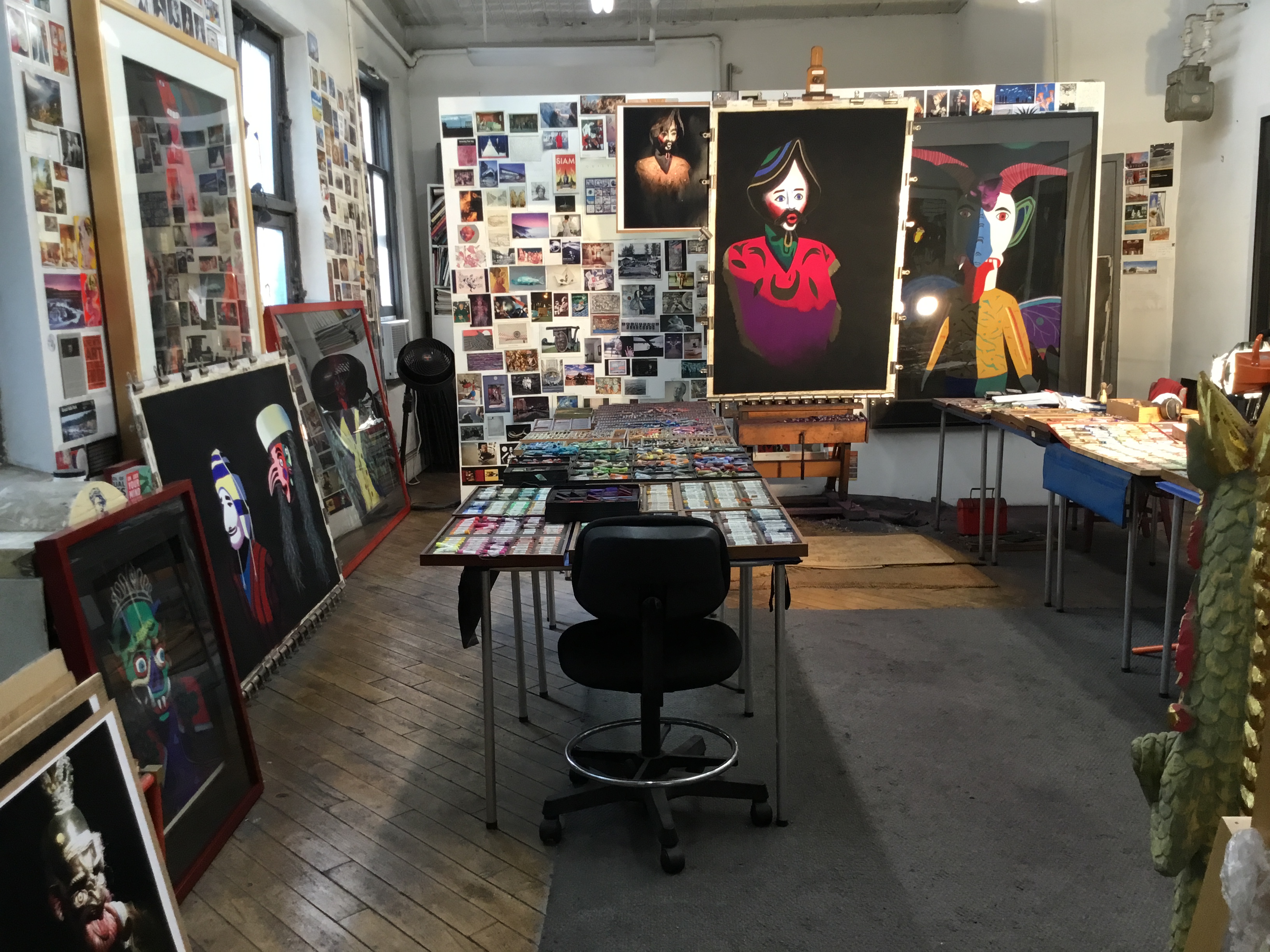
Barbara’s studio
A: I work exclusively in soft pastel on sandpaper. Pastel, which is pigment and a binder to hold it together, is as close to unadulterated pigment as an artist can get. It allows for very saturated color, especially as I utilize the self-invented techniques developed and mastered over more than thirty years as an artist. I believe my “science of color” to be unique, completely unlike how any other artist works. I spend three or four months on each painting, applying pastel and blending the layers together to mix new colors directly on the paper.
The sandpaper support allows the build up of 25 to 30 layers of pastel as I slowly and meticulously work for hundreds of hours to complete a painting. The paper is extremely forgiving. I can change my mind, correct, refine, etc. as much as I want until a painting is the best I can create at that moment in time.
Comments are welcome!
Q: Please speak a little about the history of pastel.
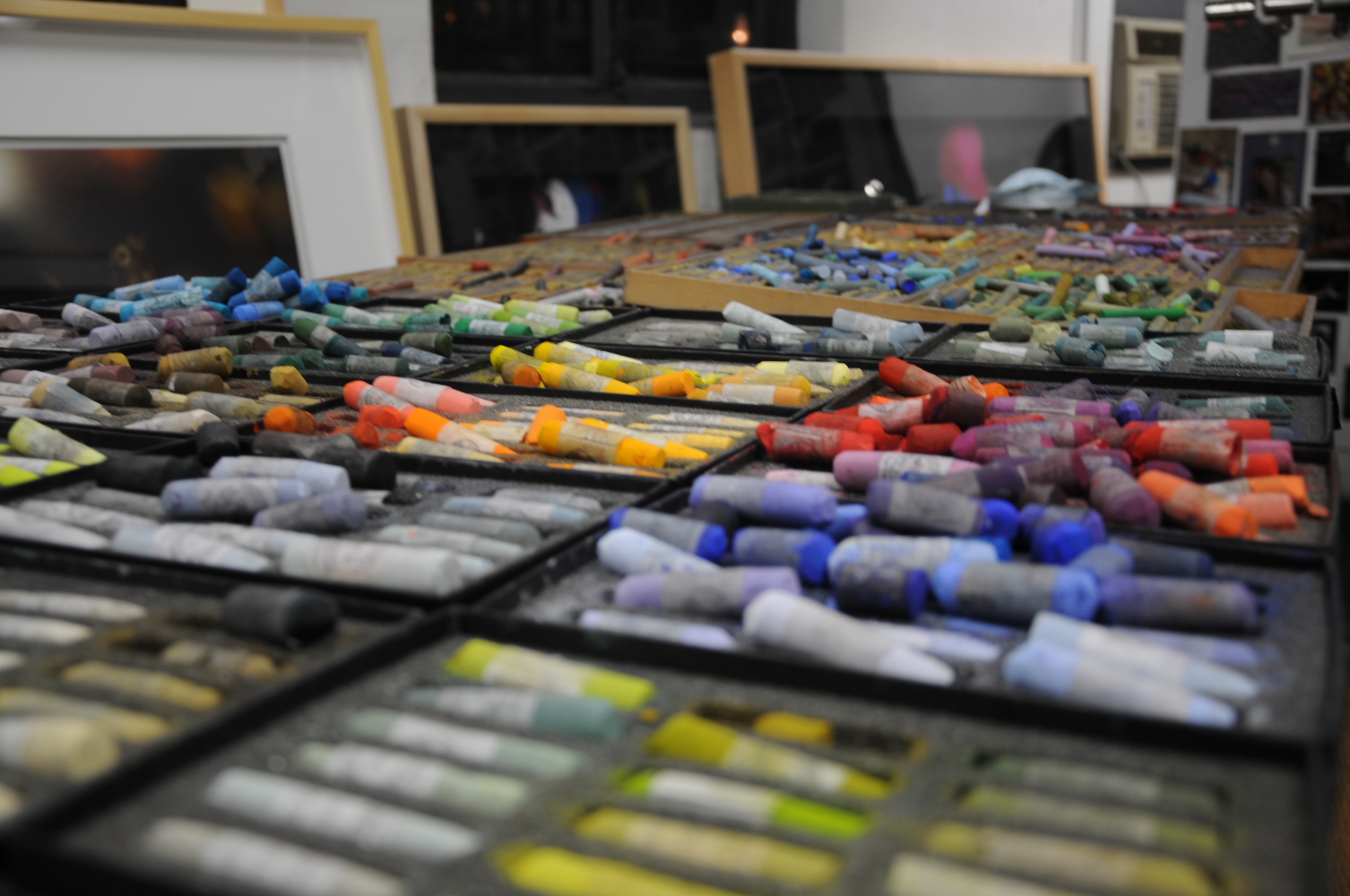
Some of Barbara’s soft pastels
A: Pastel has been in use for five hundred years. Its invention is attributed to the German painter, Johann Thiele, in the 16th century, followed by Venetian artist, Rosalba Carriera, who was the first to use it consistently. Edgar Degas, the most prolific user of pastel and its great champion, was followed by many artists who used varying techniques.
Degas’ subject matter included ballet dancers, laundresses, milliners, and denizens of the Parisian demimonde. The pure hues of pastel, plus its direct application, made it his preferred medium. Rosalba Carriera, a much-admired portrait artist, revolutionized the world of pastel by developing a wider range of colors, expanding pastel’s availability and usefulness. Mary Cassatt’s pastel portraits of children and family life provided her with a steady income while living in Paris. American painter William Merritt Chase used pastel to explore plein air painting. Pastel’s portability and rich colors made it ideal for outdoor landscapes and for capturing light.
Comments are welcome!
Q: What qualities do you think mark the highest artistic achievement?
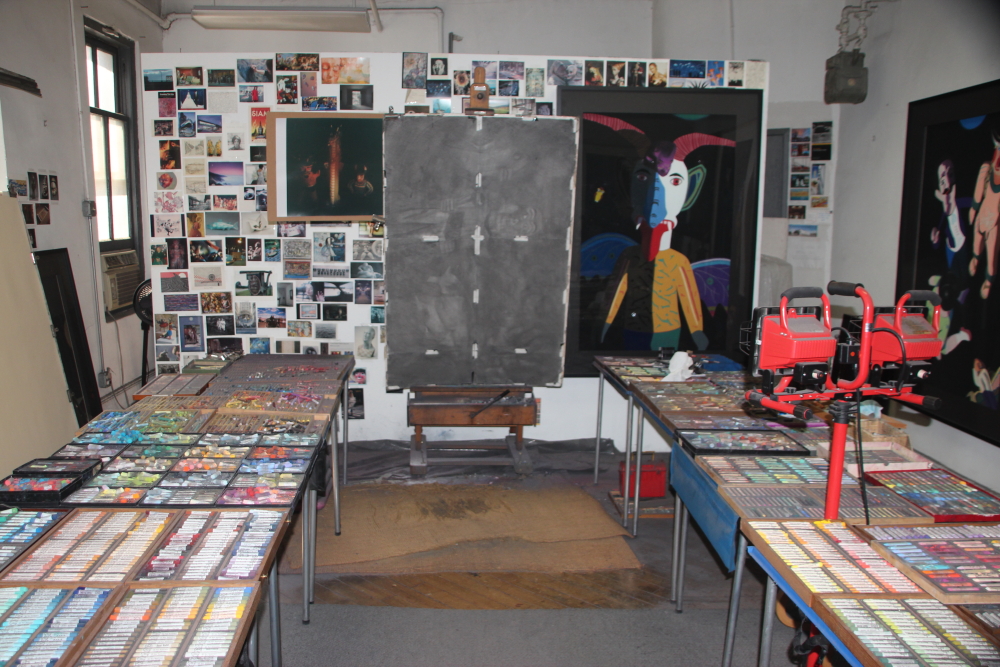
Barbara’s studio
A: If I may speak in the most general terms, several qualities come to mind that, for me, mark real artistic achievement:
- firm artistic control that allows the artist to create works that simultaneously demonstrate formal coherence while responding to inner necessity
- the creation of new forms and techniques that are adapted to expressing the artist’s highly personal vision
- an authentic and balanced fusion of form, method, and idea
- using material from one’s own idiosyncratic experiences and subtly transforming it in a personal inimitable way during the creative process
- the meaning of the thing created is rigorously subordinated to its design, which once established, generates its own internal principles of harmony and coherence
Comments are welcome!
Q: What historical art movement do you most identify with?

Barbara’s studio
A: I’d have to say that I identify most with surrealism, although my work does not exactly fit into any particular art historical movement. When I was first finding my way as an artist, I read everything I could find about surrealism in art and in literature. This research still res0nates deeply and is a tremendous influence on my studio practice. Elements of surrealism DO fit my work. Here’s an excerpt from Wikipedia:
Surrealism is a cultural movement that began in the early 20s and is best known for its visual artworks and writings. The aim was to “resolve the previously contradictory conditions of dream and reality.” Artists painted unnerving, illogical scenes with photographic precision, created strange creatures from everyday objects and developed painting techniques that allowed the unconscious to express itself.
Surrealist works feature the element of surprise, unexpected juxtapositions and non sequitur; however, many Surrealist artists and writers regard their work as an expression of the philosophical movement first and foremost, with the works being an artifact. Leader Andre Breton was explicit in his assertion that Surrealism was, above all, a revolutionary movement.
I hope to expand on this in a future post.
Comments are welcome!


 barbararachkoscoloreddust.com
Q: I understand your comments to mean that being at the studio challenges you to be your best. How (why) do you think that works? (Question from Nancy Nikkal)
Aug 8
Posted by barbararachkoscoloreddust
“Avenger,” soft pastel on sandpaper, 58″ x 38″
A: I am always trying to push my pastel techniques further, seeking to figure out new ways to render my subject matter, expanding my technical vocabulary. It would be monotonous to keep working the same old way. Wasn’t it John Baldessari who said, “No more boring art?” He was talking about art that’s boring to look at. Well, as someone who CREATES art I don’t want to be bored during the making so I keep challenging myself. I love learning, in general, and I especially love learning new things about soft pastel.
Very often I start a project because I have no idea how to depict some particular subject using pastel. For example, one of the reasons I undertook “Avenger” was to challenge myself to render all of that hair! Eventually I managed to figure it out and I learned a few new techniques in the process.
Comments are welcome!
Share this:
Posted in 2020, An Artist's Life, Bolivianos, Creative Process, Pastel Painting, Working methods
2 Comments
Tags: always, “Avenger”, ”No more boring art”, challenge, comments, creates, depict, eventually, expending, figure out, further, John Baldessari, learning, making, managed, matter, monotonous, myself, Nancy Nikkal, particular, pastel, process, project, reasons, render, seeking, soft pastel, soft pastel on sandpaper, Studio, subject, talking, technical, techniques, trying, understand, undertook, vocabulary, working