Blog Archives
Pearls from artists* # 487
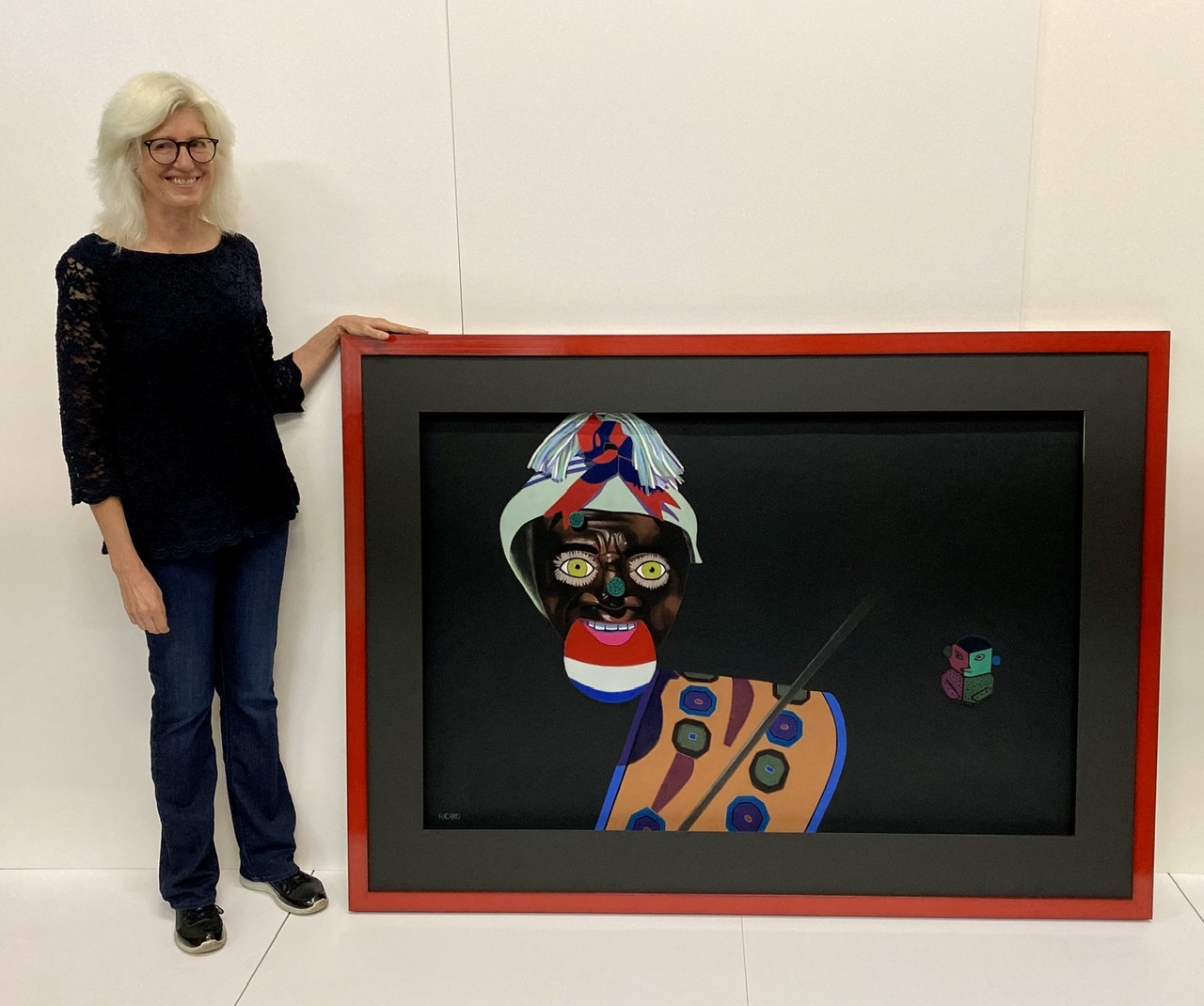
*an ongoing series of quotations – mostly from artists, to artists – that offers wisdom, inspiration, and advice for the sometimes lonely road we are on.
The sheer variety of aesthetic theories may be the best evidence we have that art cannot be boiled down to a single use, and even that it eludes usefulness altogether. In fact, one of the reasons art affects us so deeply is that it calls us out of the means-and-ends thinking that has us reducing everything to a function. Oscar Wilde’s infamous statement, “All art is quite useless,” was more than a pithy remark aimed at ruffling Victorian feathers; as far as he was concerned, it was a plain statement of fact. For the Aesthetic Movement of which Wilde was a leading exponent, art stood in absolute defiance of utility. Which is to say that the Aesthetes saw works of art as things whose only purpose is it be perceived – and this may be as close to a catch-all definition as we are likely to get.
JF Martel in Reclaiming Art in the Age of Artifice: A Treatise, Critique, and Call to Action
Comments are welcome!
Pearls from artists* # 477
*an ongoing series of quotations – mostly from artists, to artists – that offers wisdom, inspiration, and advice for the sometimes lonely road we are on.
Although he produced thousands of works of art in his pitifully short time on earth, Vincent [van Gogh] – as, following his own example, we shall call him – failed to sell a single painting in his lifetime, despite the fact that his brother Theo was a prominent Paris art dealer who, among other business coups, made a fortune for Claude Monet. Although he suffered through periods of deepest doubt, Vincent knew that one day his work would be recognized for its true worth. All the same, he could not have dreamed that his jarringly revolutionary paintings would one day rise so high in popular regard.
John Banville in His Own Worst Enemy, The New York Review of Books, May 13, 2021
Comments are welcome!
Pearls from artists* # 427
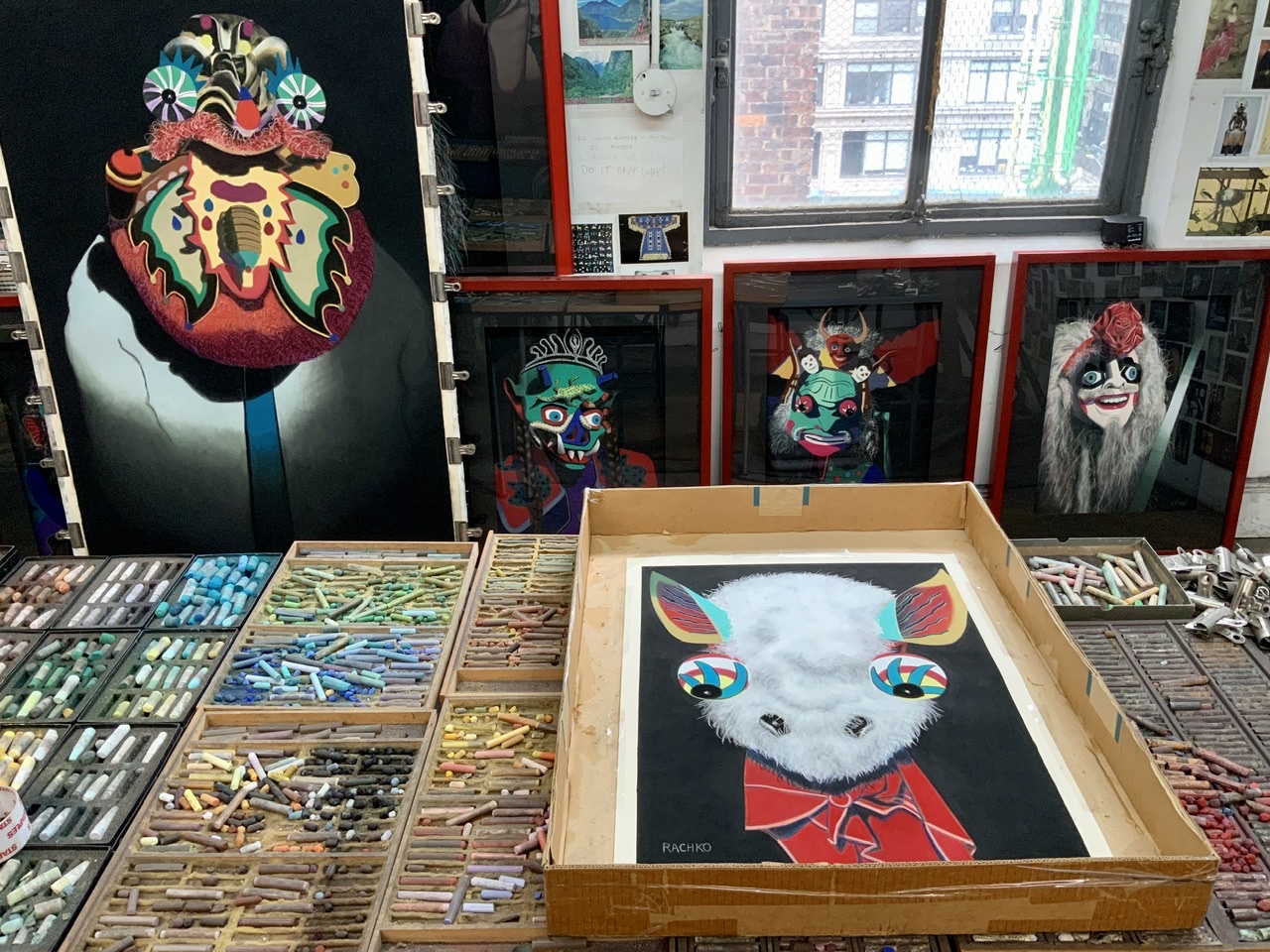
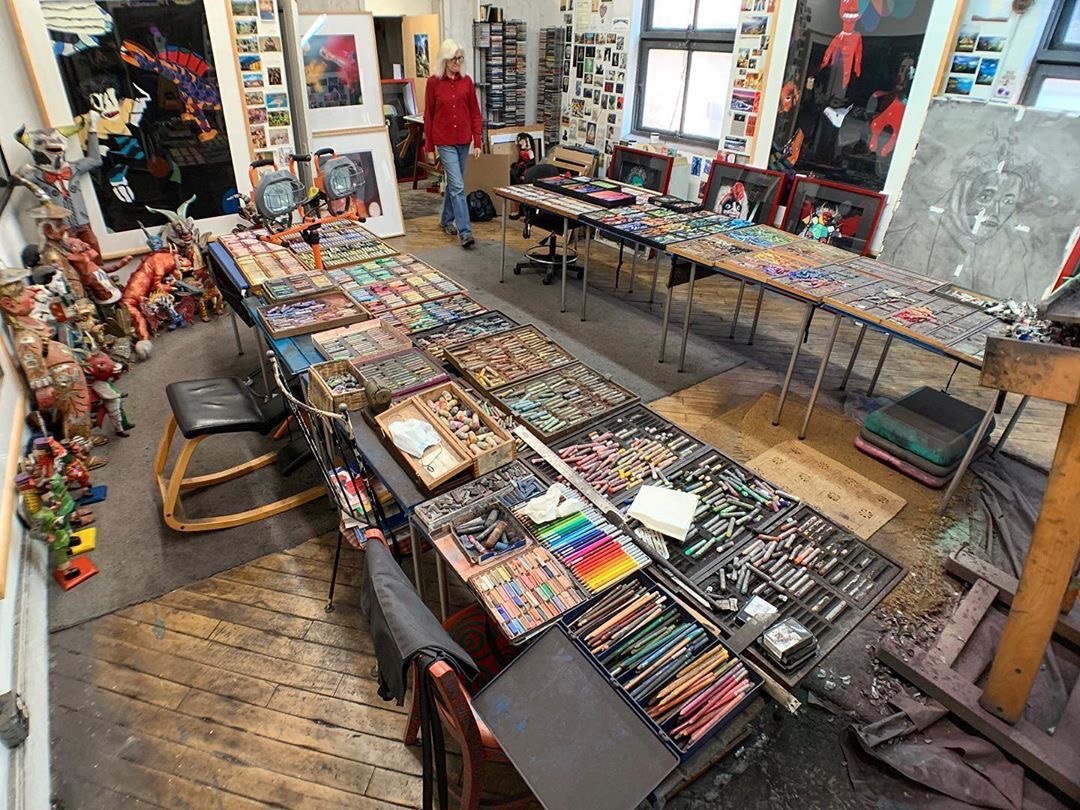
Barbara’s studio
*an ongoing series of quotations – mostly from artists, to artists – that offers wisdom, inspiration, and advice for the sometimes lonely road we are on.
There should be a single Art Exchange in the world, to which an artist would simply send his works and be given in return as much as he needs. As it is, one has to be a merchant on top of everything else, and how badly one goes about it.
Ludwig von Beethoven quoted in Eric Maisel, A Life in the Arts: Practical Guidance and Inspiration for Creative and Performing Artists
Comments are welcome!
Q: Can you describe a single habit that you believe contributes to your professional success?
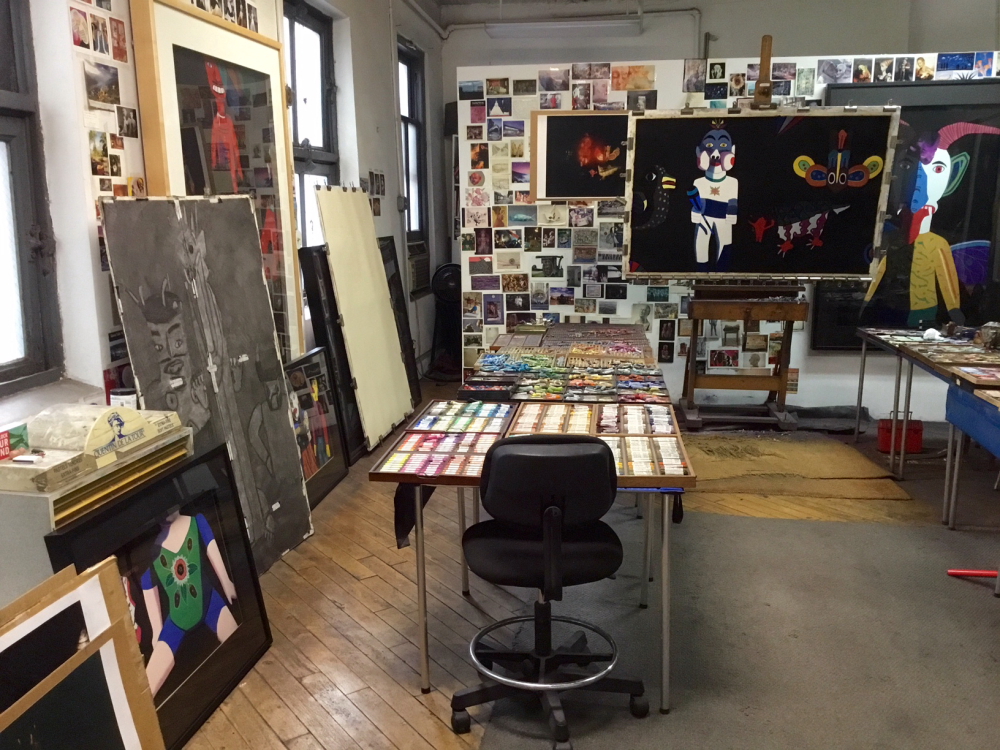
Barbara’s studio with work in progress
A: It’s probably the fact that I keep regular studio hours. Contrary to the cliche of artists working in spurts, I continually work in the studio at least seven hours a day, five days a week, with Wednesdays and Sundays as my days off. I devote another two hours or so in the mornings and evenings for art business tasks: email, sending out jpegs, social media, etc. I always remember something Katharine Hepburn said: “Without discipline there is no life.”
Comments are welcome!
Pearls from artists* # 127
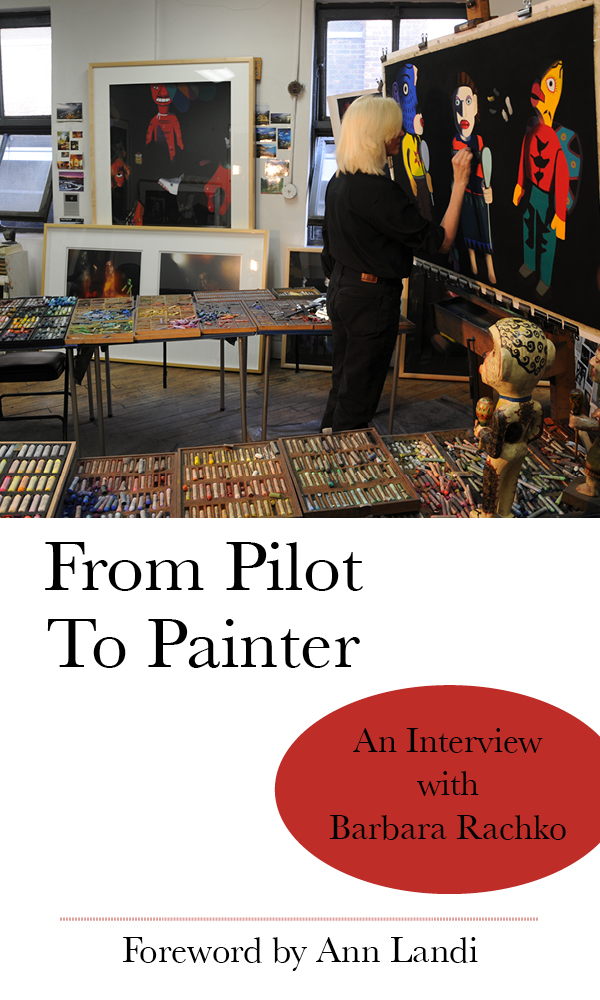
eBook cover
* an ongoing series of quotations – mostly from artists, to artists – that offers wisdom, inspiration, and advice for the sometimes lonely road we are on.
Two facts differentiate Daybook from my work in visual art.
The first is the simple safety of numbers. There are 6500 Daybooks in the world. My contribution to them was entirely mental, emotional. I never put my hand on a single copy of these objects until I picked up a printed book. I made no physical effort; no blood, no bone marrow moved from me to them. I do not mean that I made no effort. On the contrary, the effort was excruciating because it was so without physical involvement, so entirely hard-wrought out of nothing physical at all; no matter how little of the material world goes into visual art, something of it always does, and that something keeps you company as you work. There seems to me no essential difference in psychic cost between visual and literary effort, The difference is in what emerges as result. A work of visual art is painfully liable to accident; months of concentration and can be destroyed by a careless shove. Not so 6500 objects. This fact gives me a feeling of security like that of living in a large, flourishing, and prosperous family.
Ancillary to this aspect is the commonplaceness of a book. People do not have to go much out of their way to get hold of it, and they can carry it around with them and mark it up, and even drop it in a tub while reading in a bath. It is a relief to have my work an ordinary part of life, released from the sacrosanct precincts of galleries and museums. A book is also cheap. Its cost is roughly equivalent to its material value as an object, per se. This seems to me more healthy than the price of art, which bears no relation to its quality and fluctuates in the marketplace in ways that leave it open to exploitation. An artist who sells widely has only to mark a piece of paper for it to become worth an amount way out of proportion to its original cost. This aspect of art has always bothered me, and is one reason why I like teaching; an artist can exchange knowledge and experience for money in an economy as honest as that of a bricklayer.
Anne Truitt in Turn: The Journal of an Artist
Comments are welcome!
Q: What in your opinion marks a work of art as contemporary?

West 26th Street, NYC
A: “Contemporary art” is defined formally as art made since 1970 by living artists who are still making new work. People often confuse the term “contemporary art” with “modern art,” but they are not the same. “Modern art” refers to art made during the period between, roughly, the 1860’s to 1970.
Nowadays there are so many different kinds of art – new forms are developing all the time – and almost anything can be considered contemporary art as long as someone, an artist, says it is art. Ours is a fascinating, but bewildering, crazy, and often silly art world. Since I am based in New York, I see a lot that makes me ask, “Is this really art?” and “Why would anyone make such a thing?”
If there is one single element I look for in visual art it would have to be a high degree of craft. I enjoy seeing work that is beautiful, well-crafted, and that makes me wonder how the artist made it. With the exception of Ai Weiwei and Julie Mehretu (maybe others I can’t think of just now), I prefer art made by a single creator, as opposed to artists like Jeff Koons or Damien Hirst, who employ dozens of people to make their work.
Comments are welcome!
Q: What are your most significant professional accomplishments to date?

“Big Deal,” soft pastel on sandpaper, 58″ x 38″
A: I will mention these: my 1996 solo exhibition at a venerable New York gallery that specialized in Latin American-influenced art, Brewster Arts Ltd. at 41 West 57th Street; completion of Aljira’s Emerge 2000 business program for professional artists; and a solo exhibition at the Walton Art Center in Fayetteville, AR, in 2005. All three were very important factors in my artistic and professional development.
In January I published my first eBook, From Pilot to Painter, on Amazon.
In February I was interviewed by Brainard Carey for his Yale University Radio program. It can be heard at
http://museumofnonvisibleart.com/interviews/barbara-rachko/
Most recently I was interviewed for a fourteen-page article (the longest they have ever published on a single artist!) in ARTiculAction Art Review. Please see
http://issuu.com/articulaction/docs/articulaction_art_review_-_july_201/30
Comments are welcome!
Pearls from artists* # 100
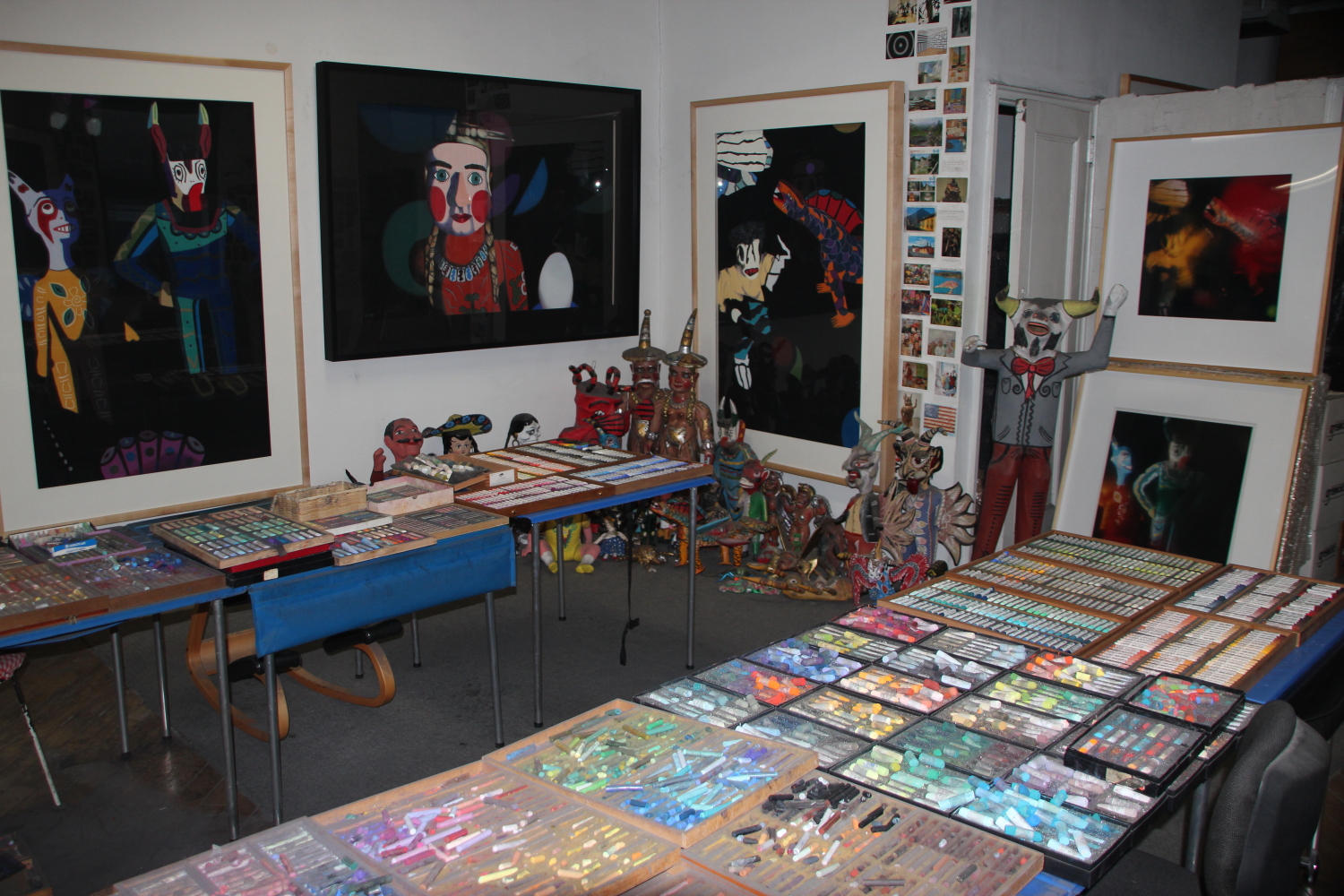
Barbara’s studio
* an ongoing series of quotations – mostly from artists, to artists – that offers wisdom, inspiration, and advice for the sometimes lonely road we are on.
I think it’s terribly important that people have always made structures that are better and more rigorous and more demanding than we as an audience can live up to for every single moment. Serious art should be better than you are. I think my plays are more lucid, more rigorous, than I, Richard, am in my life. I’m a stumble bum like all the rest of us. Create art that is better than you are able to manifest in normal life.
Richard Foreman in Anne Bogart’s Conversations with Anne: Twenty-four Interviews
Comments are welcome!
Pearls from artists* # 77
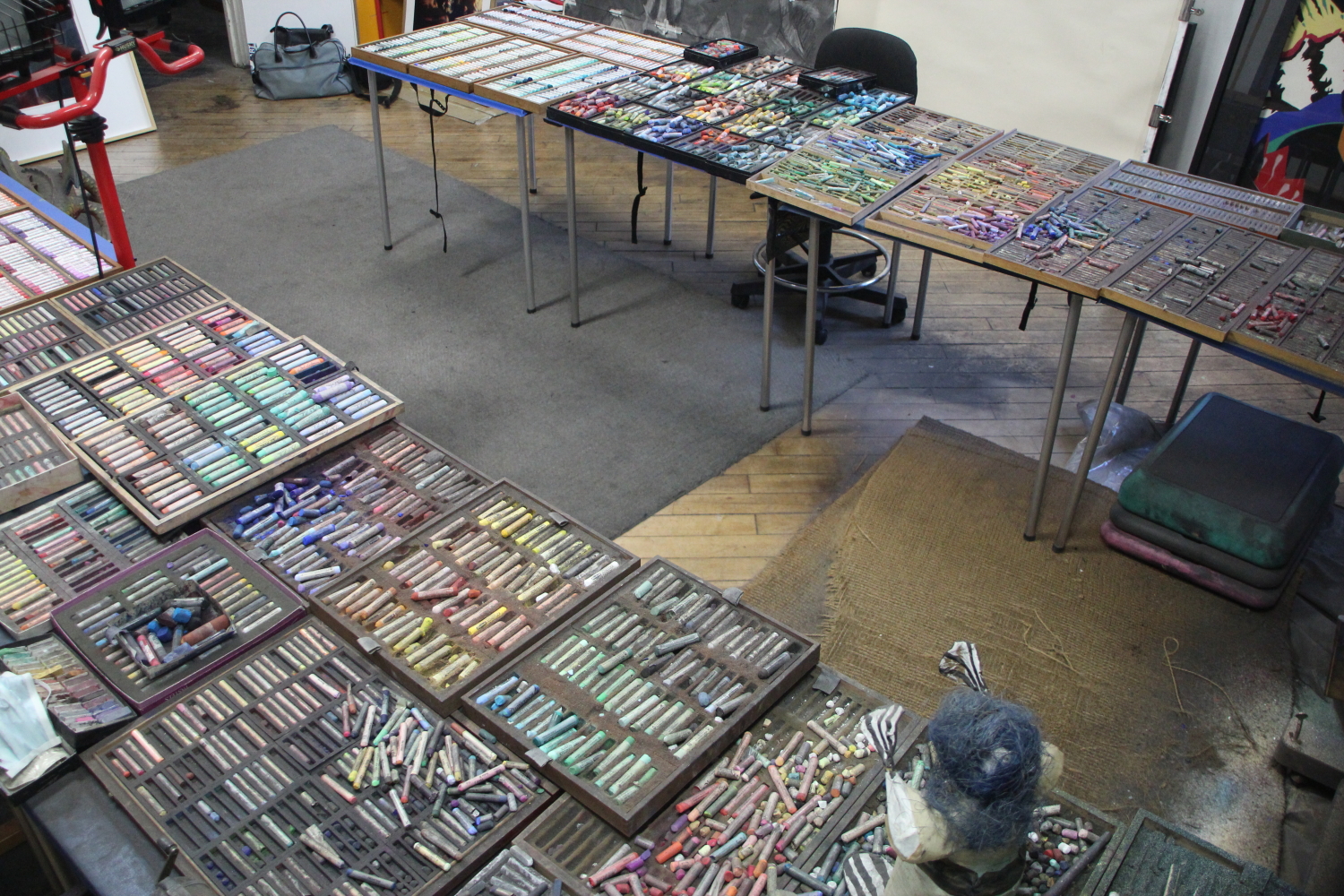
Barbara’s studio
* an ongoing series of quotations – mostly from artists, to artists – that offers wisdom, inspiration, and advice for the sometimes lonely road we are on.
Current possibilities far exceed any single artist’s capacity to engage them. Indeed, every known way of making art ever undertaken in all of history is included in today’s inventory of creative options. Thus, choices must be made. This has had a profound effect upon the quantity and diversity of skills needed to become an artist today. In addition to such conventional forms of artistic talent as visual acuity, manual dexterity, sensitivity, intelligence, ingenuity, and perseverance, contemporary artists must also be able to make judicious choices from a limitless inventory of alternatives. A decisive aspect of the creative act involves choosing a place amid possibilities that are as bountiful as they are eclectic and chaotic. Even this process entail choices. In staking the territory they wish to occupy, artists may be gluttons or ascetics, connoisseurs or commoners. Relationships between artists and their career choices may be lifelong and monogamous, or sequentially monogamous, polygamous, or promiscuous. But artists’ options even exceed selecting precedents. Free access to the past is amplified by freedom to augment the catalogue of creative options by contributing something new.
In the Making: Creative Options for Contemporary Art by Linda Weintraub
Comments are welcome!
Q: Was there a defining moment, meeting, or event that convinced you to pursue an artistic life?
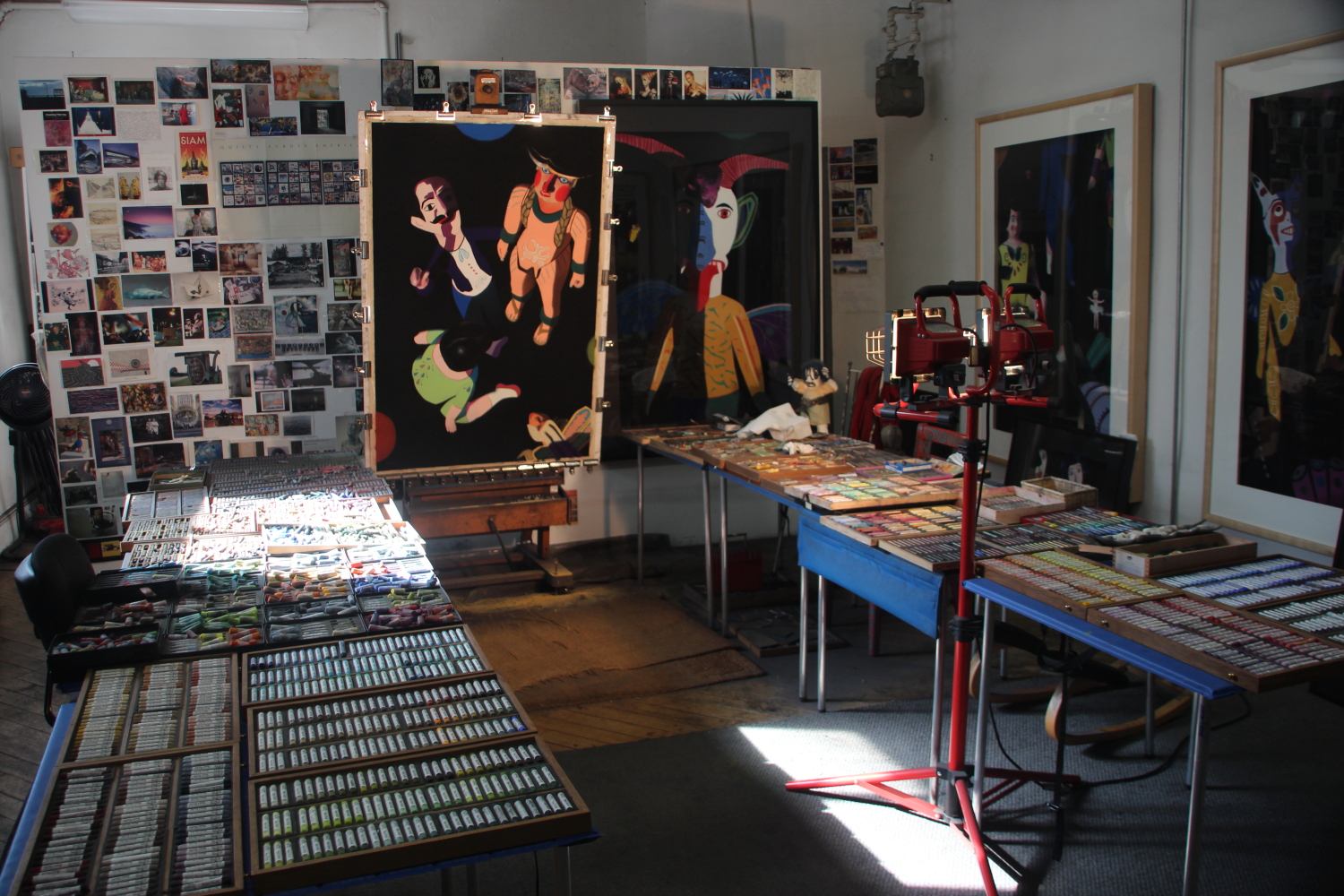
West 29th Street studio
A: There was not a defining moment per se, but looking back now, I’d say that because the Navy assigned me to a series of boring office jobs instead of letting me fly, I became determined to find a vocation infinitely more rewarding and more interesting to devote the rest of my life to. I came to this realization over time, rather than in a single moment.
Comments are welcome!


 barbararachkoscoloreddust.com