Blog Archives
Pearls from artists* # 650

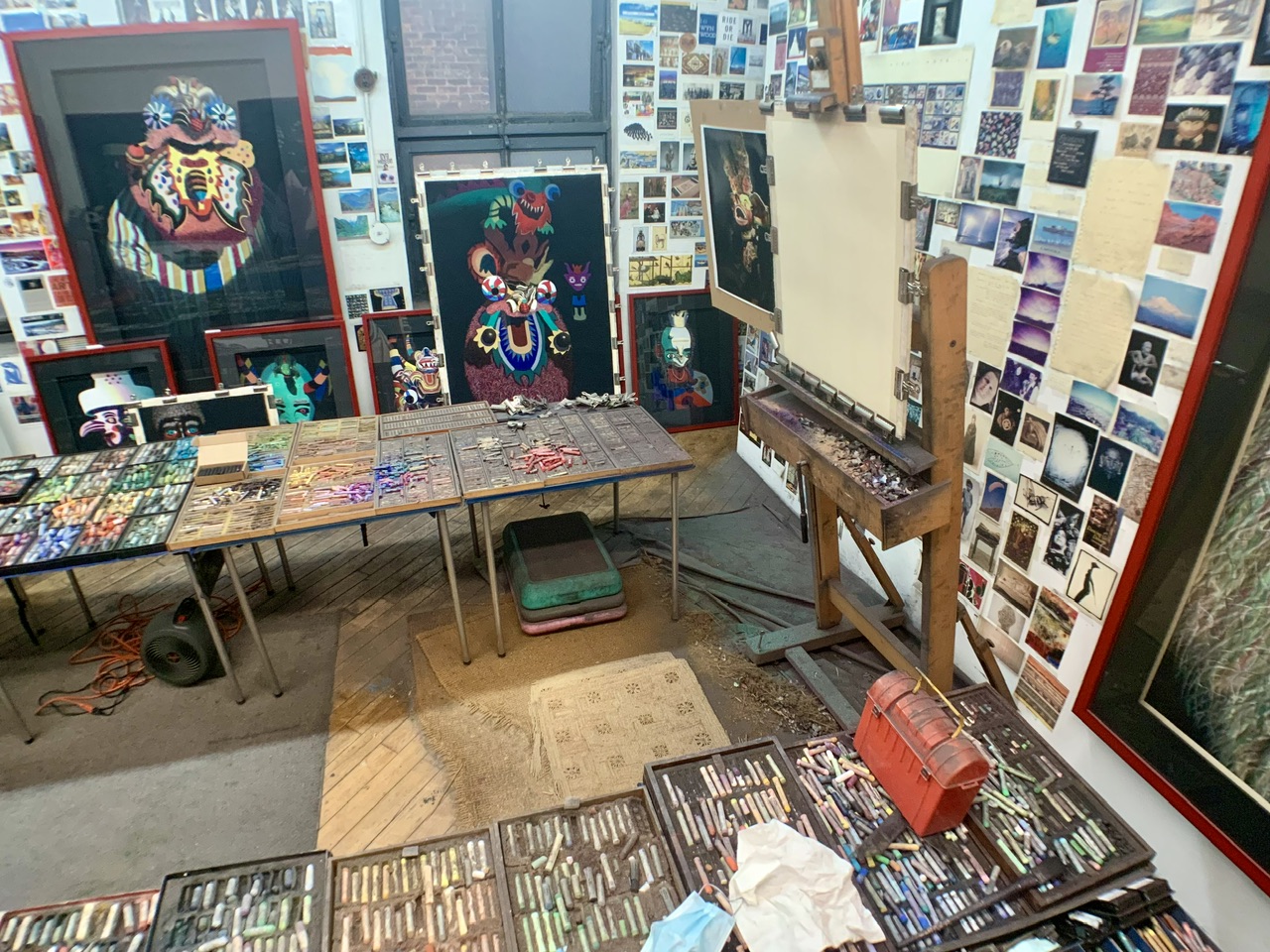
Some of Barbara’s Mexican and Guatemalan folk art collection
*an ongoing series of quotations – mostly from artists, to artists – that offers wisdom, inspiration, and advice for the sometimes lonely road we are on.
Art objects are not just gifts for the viewer: they can hold profound, even mystical, revelations for the maker. When actualizing work that comes from your core, one of the greatest sources of pleasure is the recording of your art life journey, with the serendipitous connections, the seminal players, and meaningful symbols that return again and again. Art is an unconscious language that knows more about you than you know about yourself.
Kate Kretz in Art From Your Core: A Holistic Guide to Visual Voice
Comments are welcome!
Pearls from artists* # 616
*an ongoing series of quotations – mostly from artists, to artists – that offers wisdom, inspiration, and advice for the sometimes lonely road we are on.
This may be the most important piece of advice I can give you: The Internet is nothing like a cigarette break. If anything, it’s the opposite. One of the most difficult practical challenges facing writers in this age of connectivity is the fact that the very instrument on which most of us write is also a portal to the outside world. I once heard Ron Carlson say that composing on a computer is like writing in an amusement park. Stuck for a nanosecond? Why feel it? With the single click of a key we can remove ourselves and take a ride on a log flume instead.
By the time we return to work – if, indeed, we return to our work at all – we will be further away from our deepest impulses rather than closer to them. Where were we? Oh, yes. We were stuck. We were feeling uncomfortable and lost. We have gained nothing in the way of waking-dream time. Our thoughts have not drifted, but rather, have ricocheted from one bright and shiny thing to another.
Dani Shapiro in Still Writing: The Perils and Pleasures of a Creative Life
Comments are welcome!
Q: What makes you just want to run back to the studio and start something new?
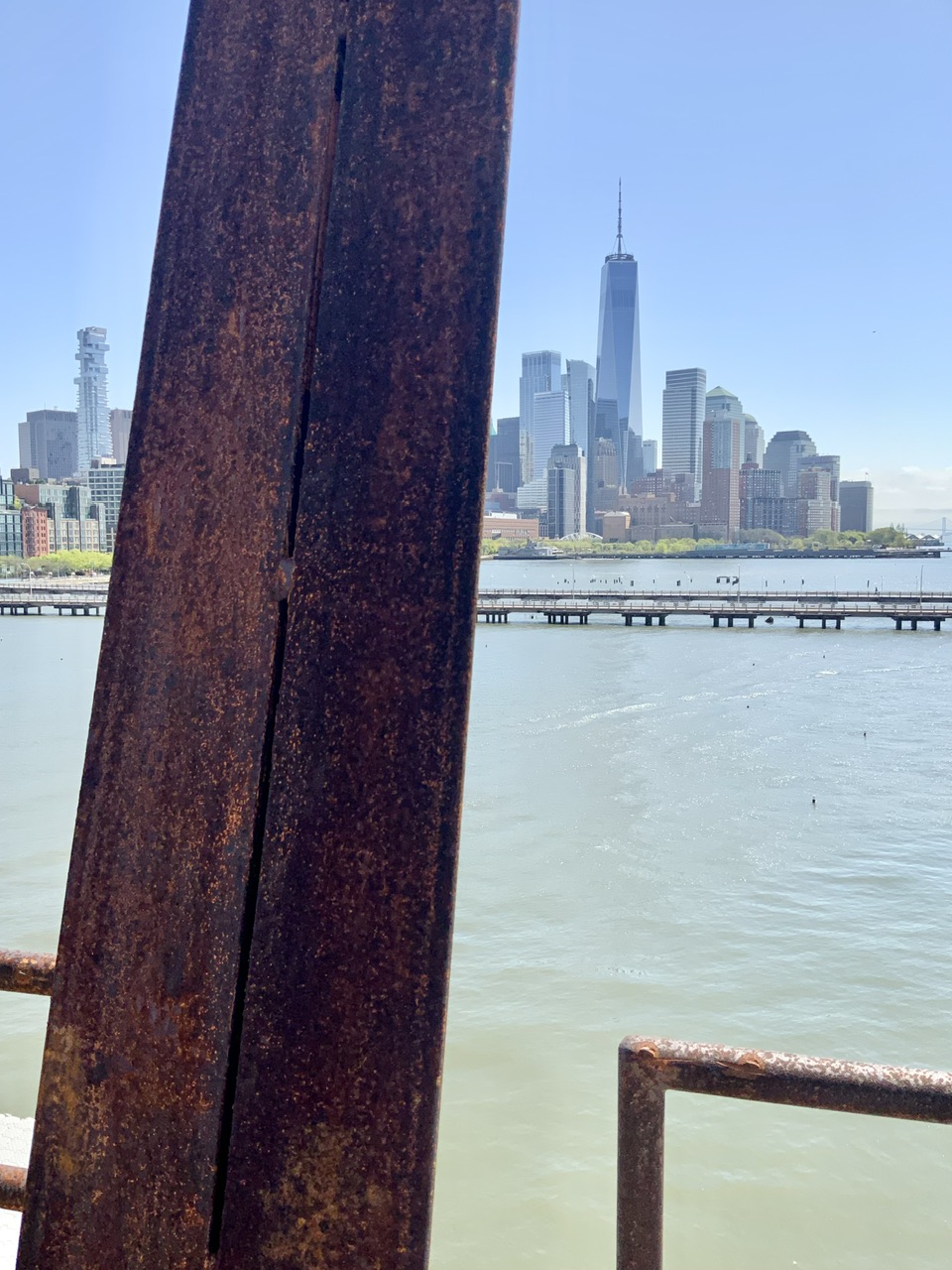
View of Lower Manhattan
A: I always work in series, which means that one pastel painting generally leads into the next. Considerable thought and planning go into each one before I begin, so it would be rare for me to just start something new out of the blue.
Sometimes on days off from the studio when we have beautiful weather, I can can hardly wait to go outside for a walk. I grab my iPad Pro and search for new sights to photograph. After a couple of hours, I usually return home with a handful of interesting images. Photography is such a departure from the slowness of my work in the studio, considering that in a good year I make 3 or 4 pastel paintings.
Comments are welcome!
Pearls from artists* # 583

In the Studio Photo: Susan Erlichman
*an ongoing series of quotations – mostly from artists, to artists – that offers wisdom, inspiration, and advice for the sometimes lonely road we are on.
Let’s return to Michelangelo’s idea of removing apparent surfaces to reveal or liberate the statue that has been buried in the stone since the beginning of time. Michelangelo claimed that he was guided by a faculty he called intelleto. Intelleto is intelligence, not of the merely rational kind, but visionary intelligence, a deep seeing of the underlying pattern beneath appearances. Here the artist is, as it were, an archaeologist, uncovering deeper and deeper strata as he works, recovering not an ancient civilization but something as yet unborn, unseen, unheard except by the inner eye, the inner ear. He is not just removing apparent surfaces from some external object, he is removing apparent surfaces from the Self, revealing his original nature.
Stephen Nachmanovitch in Free Play: Improvisation in Life and Art
Comments are welcome!

Pearls from artists* # 499

*an ongoing series of quotations – mostly from artists, to artists – that offers wisdom, inspiration, and advice for the sometimes lonely road we are on.
Life is a journey back to where you started from, Le Guin always said. True voyage is return. When you get there, you might know a little more than when you began.
Isn’t the real question this: Is the work worth doing? Am I, a human being, working for what I really need and want – or for what the State or the advertisers tell me I want? Do I choose? I think that’s what anarchism comes down to. Do I let my choices be made for me, and so go along with the power game, or do I choose? In other words, am I going to be a machine-part, or a human being?
Ursula K. Le Guin: The Last Interview and Other Conversations edited and with an introduction by David Streitfeld
Comments are welcome!
Q: What makes you drawn to face masks?

A: For me a mask is so much more than a mask. It is almost a living thing with its own soul and with a unique history. I always wonder, who created this mask? For what purpose? Where has it been? What stories would it tell if it could? In my current “Bolivianos” series I feel as though I am creating portraits of living, or perhaps once living, beings.
In a way the masks are a pretext for a return to my early days as an artist. When I resigned my Naval commission to pursue art full time, I started out as a photo-realist portrait painter. The twist is that this time I do not have to satisfy a client’s request to make my subjects look younger or more handsome. I am joyfully free to respond only to the needs of the pastel painting before me on the easel.
Comments are welcome!
Pearls from artists* # 461

*an ongoing series of quotations – mostly from artists, to artists – that offers wisdom, inspiration, and advice for the sometimes lonely road we are on.
I must not eat much in the evening, and I must work alone. I think that going into society from time to time, or just going out and seeing people, does not do much harm to one’s work and spiritual progress, in spite of what many so-called artists say to the contrary. Associating with people of that kind is far more dangerous; their conversation is always commonplace. I must go back to being alone. Moreover, I must try to live austerely, as Plato did. How can one keep one’s enthusiasm concentrated on a subject when one is always at the mercy of other people and in constant need of their society? Dufresne was perfectly right; the things we experience for ourselves when we are alone are much stronger and much fresher. However pleasant it may be to communicate one’s emotion to a friend there are too many fine shades of feeling to be explained, and although each probably perceives them, he does so in his own way and thus the impression is weakened for both. Since Dufresne has advised me to go to Italy alone, and to live alone once I am settled there, and since I, myself, see the need for it, why not begin now to become accustomed to the life; all the reforms I desire will spring from that? My memory will return, and so will my presence of mind, and my sense of order.
The Journal of Eugene Delacroix edited by Hubert Wellington
Comments are welcome!
Pearls from artists* # 427
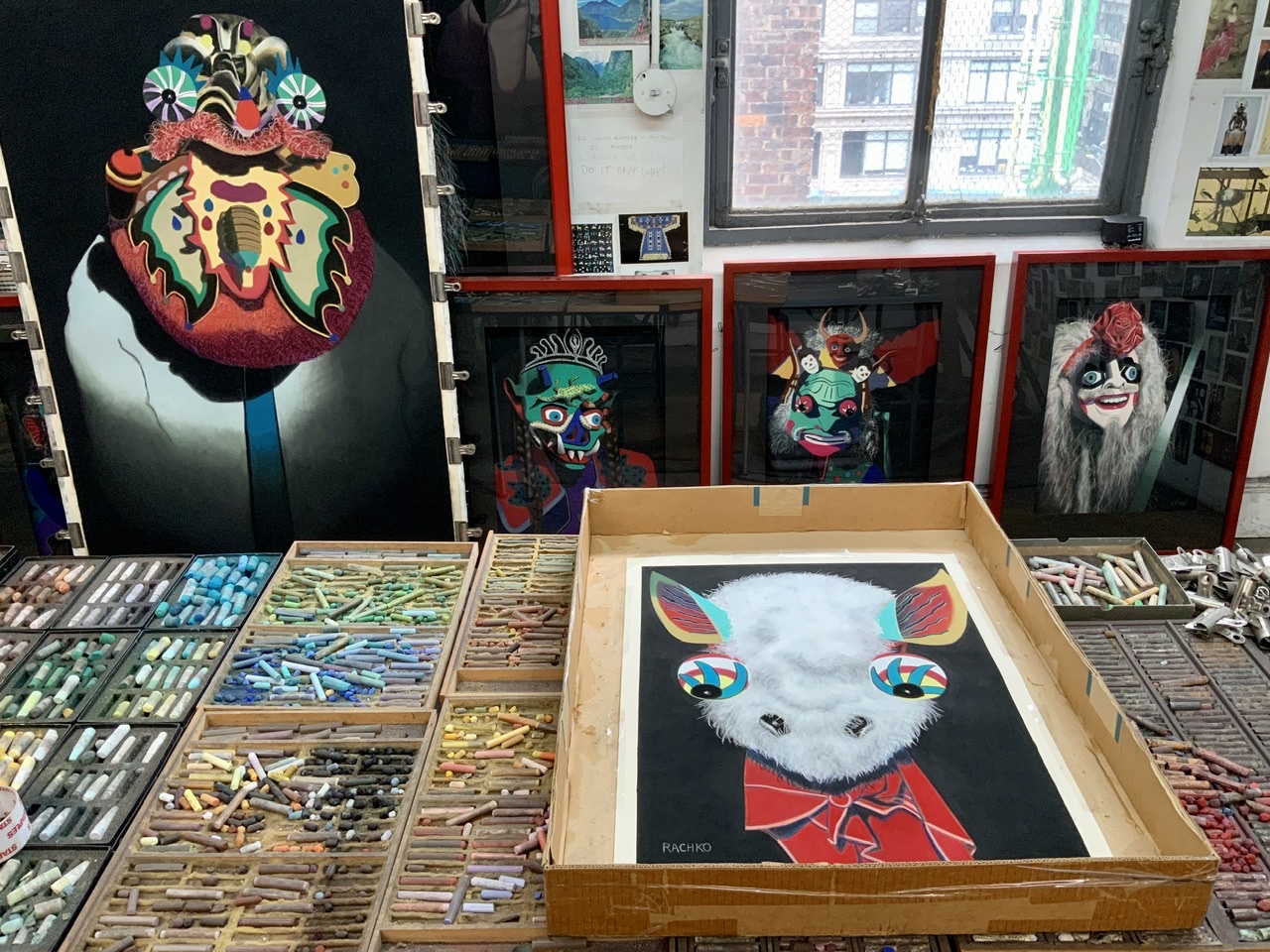
Barbara’s studio
*an ongoing series of quotations – mostly from artists, to artists – that offers wisdom, inspiration, and advice for the sometimes lonely road we are on.
There should be a single Art Exchange in the world, to which an artist would simply send his works and be given in return as much as he needs. As it is, one has to be a merchant on top of everything else, and how badly one goes about it.
Ludwig von Beethoven quoted in Eric Maisel, A Life in the Arts: Practical Guidance and Inspiration for Creative and Performing Artists
Comments are welcome!
Pearls from artists* # 423

“Epiphany,” soft pastel on sandpaper, 38″ x 58″
* an ongoing series of quotations – mostly from artists, to artists – that offers wisdom, inspiration, and advice for the sometimes lonely road we are on.
I’ve mentioned that Kenneth Clark, the British art historian, said you could take the four best paintings of any artist in history and destroy the rest and the artist’s reputation would still be intact. This is because in any artist’s life there are moments when everything goes right. The artist is so in tune with his or her inner vision that there is no restriction. The divine is being expressed. Each mark becomes like a note of music in a divine order.
That experience, that prayer of expression, transcends its material and becomes spiritual. The experience is overwhelming, the joys it communicates explosive.
When on another occasion we can’t find that spiritual level of experience, and so can’t repeat it, the frustration can be cruel and the separation painful. Here lies the myth of the suffering artist. It isn’t the art making when it goes well that has any suffering in it. That is the union with the beloved. It’s the loss that causes the suffering. And the problem isn’t something we can necessarily control. We are instruments, conduits for that expression. It comes through us by grace.
The idea that we “make” art is perhaps a bit misleading. The final product is at its best the result of a collaboration with spirit. We may be separated from a flow within our spirit for weeks. We continue to paint because there is no knowing at what precise moment it will return. And when it does we need our faculties alert and our skills honed. Then the poetry is everywhere.
Ian Roberts in Creative Authenticity: 16 Principles to Clarify and Deepen Your Artistic Vision
Comments are welcome!


 barbararachkoscoloreddust.com