Blog Archives
Q: What kind of reactions do you get from spectators at your exhibitions? (Question from “Cultured Focus Magazine”)

A group exhibition in New Jersey
A: Reactions to my work run the gamut – from dopey comments like, “I’m scared!” to “How in the world is such beauty and profundity possible to achieve using only soft pastel on a piece of sandpaper!”
I’m sure most artists can say the same. We can only hope that our work finds its way to an audience that has the eyes, heart, and mind to understand, to appreciate on a deep level the decades of devotion, sacrifice, and hard work that go into creating works of art.
Comments are welcome!
Pearls from artists* # 627

With friends at the 2024 Whitney Biennial!
*an ongoing series of quotations – mostly from artists, to artists – that offers wisdom, inspiration, and advice for the sometimes lonely road we are on.
“People are really open here and very dynamic, and they really respect hard work. So if you are going to shows, if you are part of the community, if you go do studio visits, if you’re interested in other people, you can create a community, said Julie [Curtiss]. “You can’t be a lazy artist in New York.”
Julie Curtiss quoted in Get the Picture: A Mind-Bending Journey Among the Inspired Artists and Obsessive Art Fiends Who Taught Me How to See by Bianca Bosker
Comments are welcome!
Q: How do you persist despite the haters, nay-sayers, etc.? (Question from Bold Journey Publishing)

Barbara’s Studio
A: There are so many obstacles to art-making and countless reasons to just give up. When you really think about it, it’s amazing that great art gets made at all. So why do we do it? For artists I believe it’s all about making our time on earth matter, about devotion to our innate gifts, and a deep love of our hard-fought creative process.
I have been a full-time professional artist for 37 years. How and why do successful artists persist? It helps a lot to be stubborn! We just keep digging in that much deeper. Making art is a most noble and sacred calling – you know this if you are one of the called – and that’s what separates those of us who are in it for the long haul from the wimps, fakers, and hangers-on. I say to my fellow artists who continue to work despite the endless challenges, we artists who continue to struggle every day for recognition of our gifts are true heroes!
These words below by Mary Gabriel in Ninth Street Women, published in 2017, ring true for artists. It’s good, even for me, to occasionally reread them and be reminded.
The obstacles faced by women who hoped to leave a mark on humankind have, through the millennium, varied in height but not in stubborn persistence. And yet, a great many women have stubbornly ignored them. The desire to put words on a page or marks on a canvas was greater than the accrued social forces that told them they had no right to do so, that they were excluded by their gender from that priestly class called artist. The reason, according to Western tradition, was as old as creation itself: For many, God was the original artist and society had assigned its creator a gender – He. The woman who dared to declare herself an artist in defiance of centuries of such unwavering belief required monstrous strength, to fight not for equal recognition and reward but for something at once more basic and vital: her very life. Her art was her life. Without it, she was nothing. Having no faith that society would broaden its views on artists by dethroning men and accommodating women, in 1928 [Virginia] Woolf offered her fellow writers and painters a formula for survival that allowed them to create, if not with acceptance, then at least unimpeded. A woman artist, she said, needed but two possessions: “money and a room of her own.”
Furthermore, I think I persist because I do not believe in “big breaks.” Big breaks may sometimes happen, but in my experience an artist’s life is made up of single-minded dedication, persistence, hard work, and lots of small breaks. I recently finished reading “Failing Up: How to Take Risks, Aim Higher, and Never stop Learning” by Leslie Odom, Jr. I like what he has to say to artists here:
The biggest break is the one you give yourself by choosing to believe in your wisdom, in what you love, and in the gifts you have to offer the waiting world.
Comments are welcome!
Q: The first pastel painting you see every morning when you arrive at your studio is “Myth Meets Dream.” It must have special meaning. Would you elaborate? (Question suggested by Marlissa Gardner via Facebook)

A: “Myth Meets Dream,” an early pastel painting from the “Domestic Threats” series, is one I have never wanted to sell. It marks the first time I included Mexican folk art figures in my work. In 1992 as a Christmas present, my future sister-in-law sent the two Oaxacan painted wooden figures you see depicted above – the blue winged creature and the red, white, and black figure behind it. The other three figures in this painting are hand-puppets.
Previously, I had been creating elaborate staged photographs in my Alexandria house using stuffed animals and hand-puppets. (The latter were made by a company called “Folk Tails”). I used the photos as reference material for pastel paintings. In other words, rather than work exclusively from life, I mostly looked at these photos while I made the painting. Although I have simplified my process since those early days, I still create pastel paintings using reference photographs.
In “Myth Meets Dream” you can see both puppets and my then new Oaxacan folk art figures. This pastel painting marks an important transition in subject matter and was the start of decades-worth of foreign travel, study, adventure, hard work, and yes, fun. It’s true that “Myth Meets Dream” hangs in my studio and is the first thing I see every morning. It brings back so many precious memories.
Every painting has a story!
If you’re interested to learn more, please see https://barbararachko.art/en/art-market
Comments are welcome!
Q: What advice would you give to a young artist with potential?

Barbara’s studio (since April 1997)
A: I last answered this question in my blog more than ten years ago and I would say similar things now to what I said then.
Be sure that you love your process unconditionally because there is no relationship between how hard you will work and how much money you will earn, period. Indeed, with inflation and rapidly evolving ways of doing business, it seems to cost more money every year to be an artist. As I’ve said often, be prepared to work very, very hard. Really it’s all about making the most of your gifts as an artist. If you don’t feel a deep responsibility to developing your talents as far as possible, you won’t have what it takes to keep going. Countless artists quit and no one can blame them. You absolutely must love your materials and your creative process and be willing to do whatever it takes to continue making art.
This is not a life for slackers!
Comments are welcome!
Q: What do you enjoy most about being an artist?
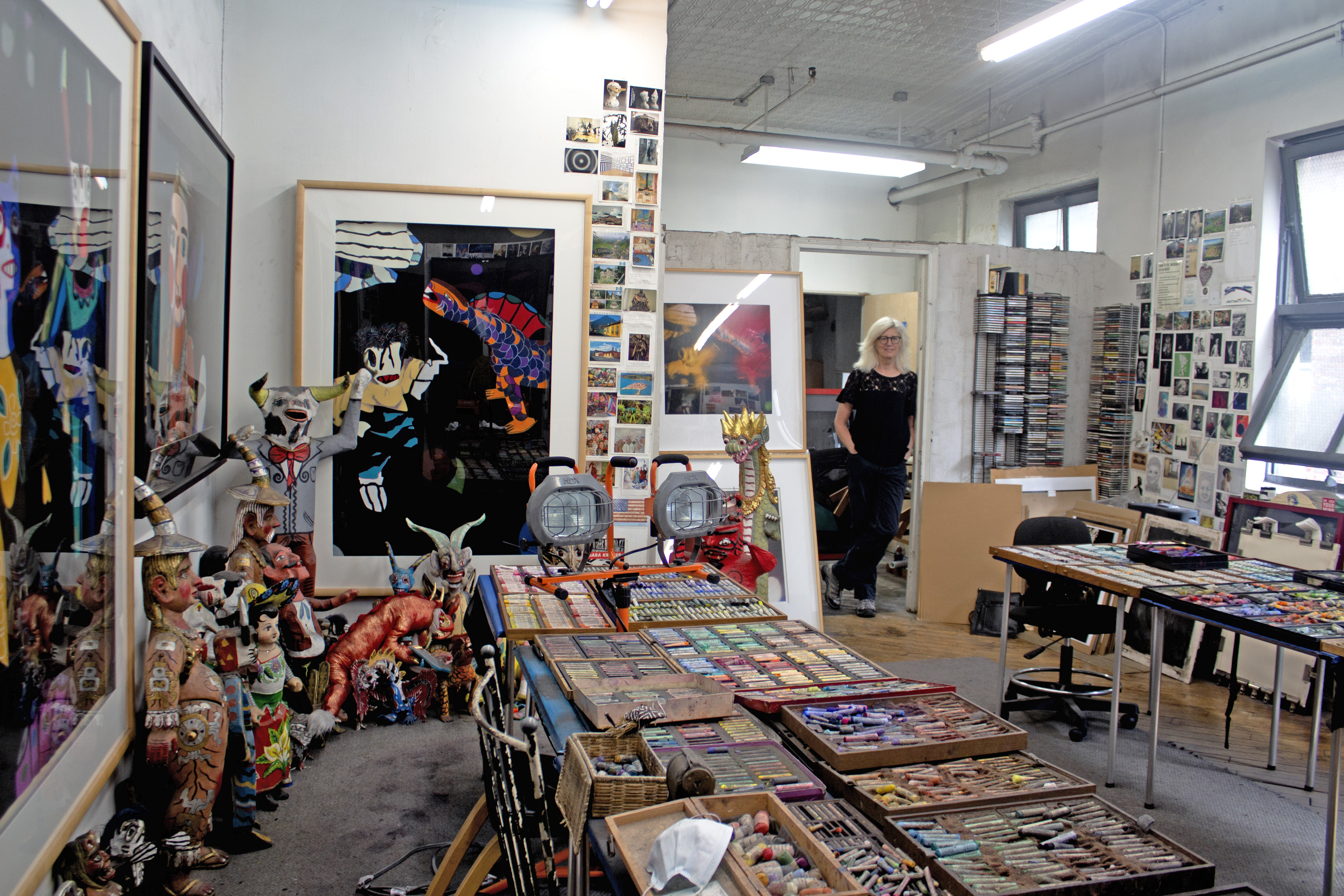
Barbara’s studio
A: This is a question I like to revisit every so often because life as an artist does not get easier; just the opposite, in fact. Visual artists tend to be “one man bands.” We do it all notwithstanding the fact that everything gets more difficult as we get older. It’s good to be reminded about what makes all the sacrifice and hard work worthwhile.
Even after thirty-four years as an artist, there are so many things to enjoy! I make my own schedule, set my own tasks, and follow new interests wherever they may lead. I am curious about everything and am rarely bored. I continually push my pastel technique as I strive to become a better artist. There is still so much to learn!
My relationship with collectors is another perk. I love to see pastel paintings hanging on collectors’ walls, especially when the work is newly installed and the owners are excited to take possession. This means that the piece has found a good home, that years of hard work have come full circle! And it’s often the start of a long friendship. After living with my pastel paintings for years, collectors tell me they see new details never noticed before and they appreciate the work more than ever. It’s extremely gratifying to have built a network of supportive art-loving friends around the country. I’m sure most artists would say the same!
Comments are welcome!
Pearls from artists* # 116
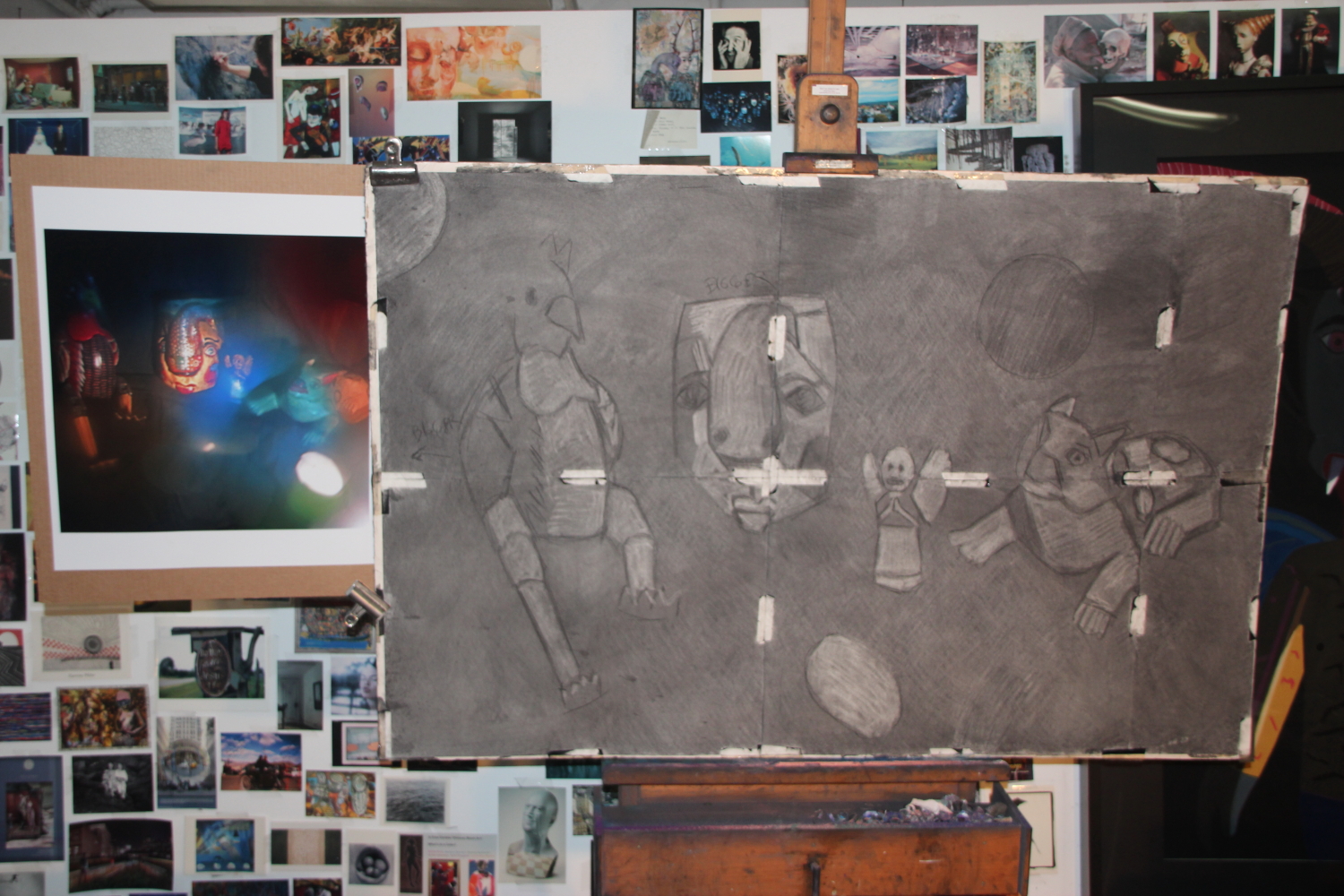
Preliminary sketch
* an ongoing series of quotations – mostly from artists, to artists – that offers wisdom, inspiration, and advice for the sometimes lonely road we are on.
What is the point of all the discipline, hard work, and training? What does the training and preparation have to do with rehearsing a play and with performance? The training and the discipline and the sweating and the study and the memorizing are not the end point, but rather the entry. The preparation is what gives one the permission to take up space and make wild, surprising, and untamed choices. In the quest for artistic freedom and agency it is impossible to walk into a rehearsal room uninhibited, unburdened. We are generally chained down by habits and assumptions and by fear of the new. Permission is what we earn by the sweat, training, preparatory work and dedication.
Anne Bogart in What’s the Story: Essays in art, theater, and storytelling
Comments are welcome!
Q: Can you describe your entire body of work in six words or less?
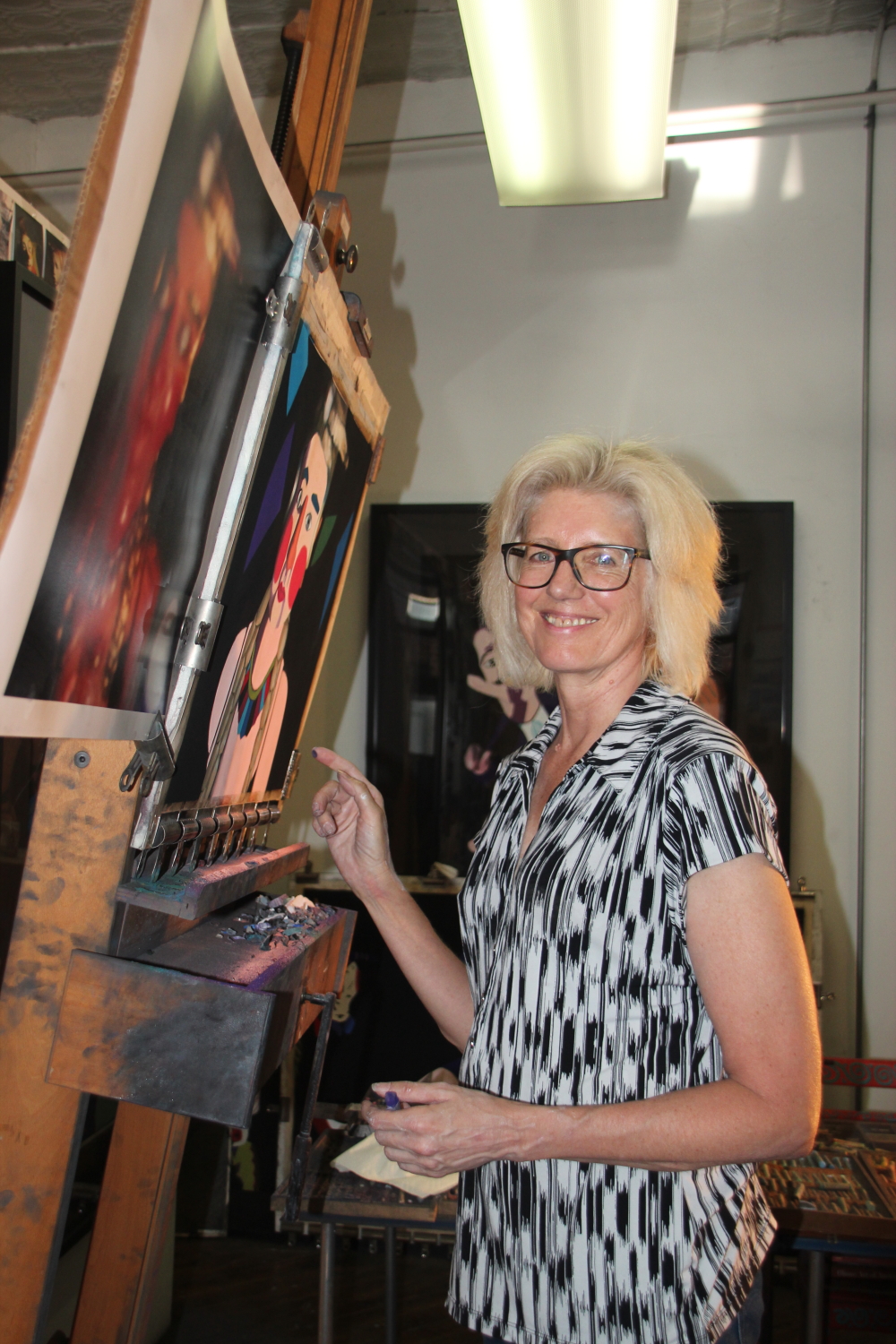
In the studio, Photo: Britta Konau
A: Only if I forget what it took to get me to this point! I remember all too well the long periods of study, hard work, self-doubt, self-nurturing, disappointments, setbacks, risks, focus, drive, discipline, joy, detours, fallow periods, rejections, perseverance, etc. that have gone into sustaining an art career for nearly thirty years. There are no blueprints and few role models for a successful artist’s life. (Even the meaning of “success” as an artist is difficult to define). I invite others, who surely can be more objective, to attempt a summation of my entire body of work in a few words.
Comments are welcome!
Q: The handmade frames on your large pastel-on-sandpaper paintings are quite elaborate. Can you speak more about them?
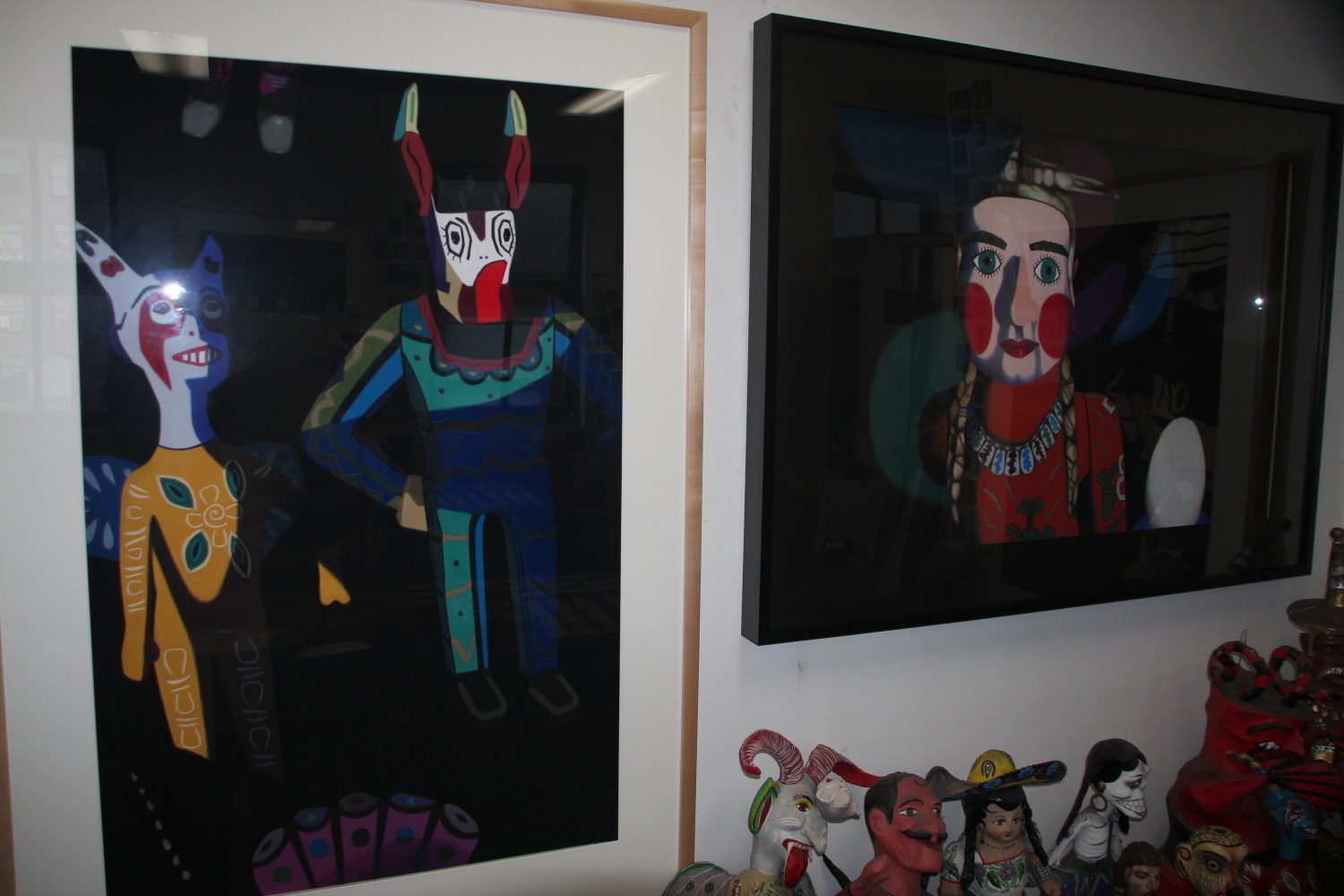
“Quartet” (left) and “Epiphany,” soft pastel on sandpaper
A: I have been working in soft pastel since 1986, I believe, and within six years the sizes of my paintings increased from 11″ x 14″ to 58″ x 38.” (I’d like to work even bigger, but the limiting factors continue to be first, the size of mat board that is available and second, the size of my pick-up truck). My earliest work is framed with pre-cut mats, do-it-yourself Nielsen frames, and glass that was cut-to-order at the local hardware store. With larger-sized paintings DIY framing became impractical. In 1989 an artist told me about Underground Industries, a custom framing business in Fairfax, Virginia, run by Rob Plati, his mother, Del, and until last year, Rob’s late brother, Skip. So Rob and Del have been my framers for 24 years. When I finish a painting in my New York studio, I drive it to Virginia to be framed.
Pastel paintings have unique problems – for example, a smudge from a finger, a stray drop of water, or a sneeze will ruin months of hard work. Once a New York pigeon even pooped on a finished painting! Framing my work is an ongoing learning experience. Currently, my frames are deep, with five layers of acid-free foam core inserted between the painting and the mat to separate them. Plexiglas has a static charge so it needs to be kept as far away from the pastel as possible, especially since I do not spray finished pastel paintings with fixative.
Once they are framed, my paintings cannot be laid face down. There’s a danger that stray pastel could flake off. If that happens, the whole frame needs to be taken apart and the pastel dust removed. It’s a time-consuming, labor-intensive process and an inconvenience, since Rob and Del, the only people I trust with my work, are five hours away from New York by truck.
Comments are welcome!


 barbararachkoscoloreddust.com
Q: What kind of reactions do you get from spectators at your exhibitions? (Question from “Cultured Focus Magazine”)
Jan 18
Posted by barbararachkoscoloreddust
A: Reactions to my work run the gamut – from dopey comments like, “I’m scared!” to “How in the world is it possible to achieve such beauty and profundity using only soft pastel on a piece of sandpaper!” I’m sure most artists can say the same. We can only hope that our work finds its way to an audience that has the eyes, heart, and mind to understand, to appreciate on a deep level the decades of devotion, sacrifice, and hard work that go into creating works of art.
Comments are welcome!
Share this:
Posted in 2025, Exhibitions, New York, NY
Comments Off on Q: What kind of reactions do you get from spectators at your exhibitions? (Question from “Cultured Focus Magazine”)
Tags: achieve, appreciate, artists, audience, “Cultured Focus Magazine”, “Worlds Unseen & Seen”, beauty, comments, creating, decades, devotion, Exhibitions, hard work, New York, possible, profundity, question, reactions, sacrifice, sandpaper, scared, soft pastel, spectators, understand, using, Westbeth Gallery, works of art