Blog Archives
Q: How large is your collection of Mexican folk art objects?

Part of my collection
A: I began collecting these figures in the early 1990s. I haven’t counted them, but my guess is that I have amassed around 200 pieces of various sizes. This includes some Guatemalan figures. I went to Guatemala in 2009 and 2010. Since I divide my time between a house in Alexandria, VA, an apartment in Manhattan, and a studio in Chelsea, a portion of my folk art collection resides in each of these places.
Since 2017 I have been creating pastel paintings in the “Bolivianos” series, which exclusively use my photographs of Bolivian Carnival masks as source material. Occasionally, I will add one of my smaller Mexican or Guatemalan figures to improve and enrich a painting’s composition. Otherwise, my Mexican collection sits gathering dust. My thinking and my ideas, not to mention my travels, have evolved and just naturally moved on with time.
Comments are welcome!
Q: It must be tricky moving pastel paintings from your New York studio to your framer in Virginia. Can you explain what’s involved? (Question from Ni Zhu via Instagram)
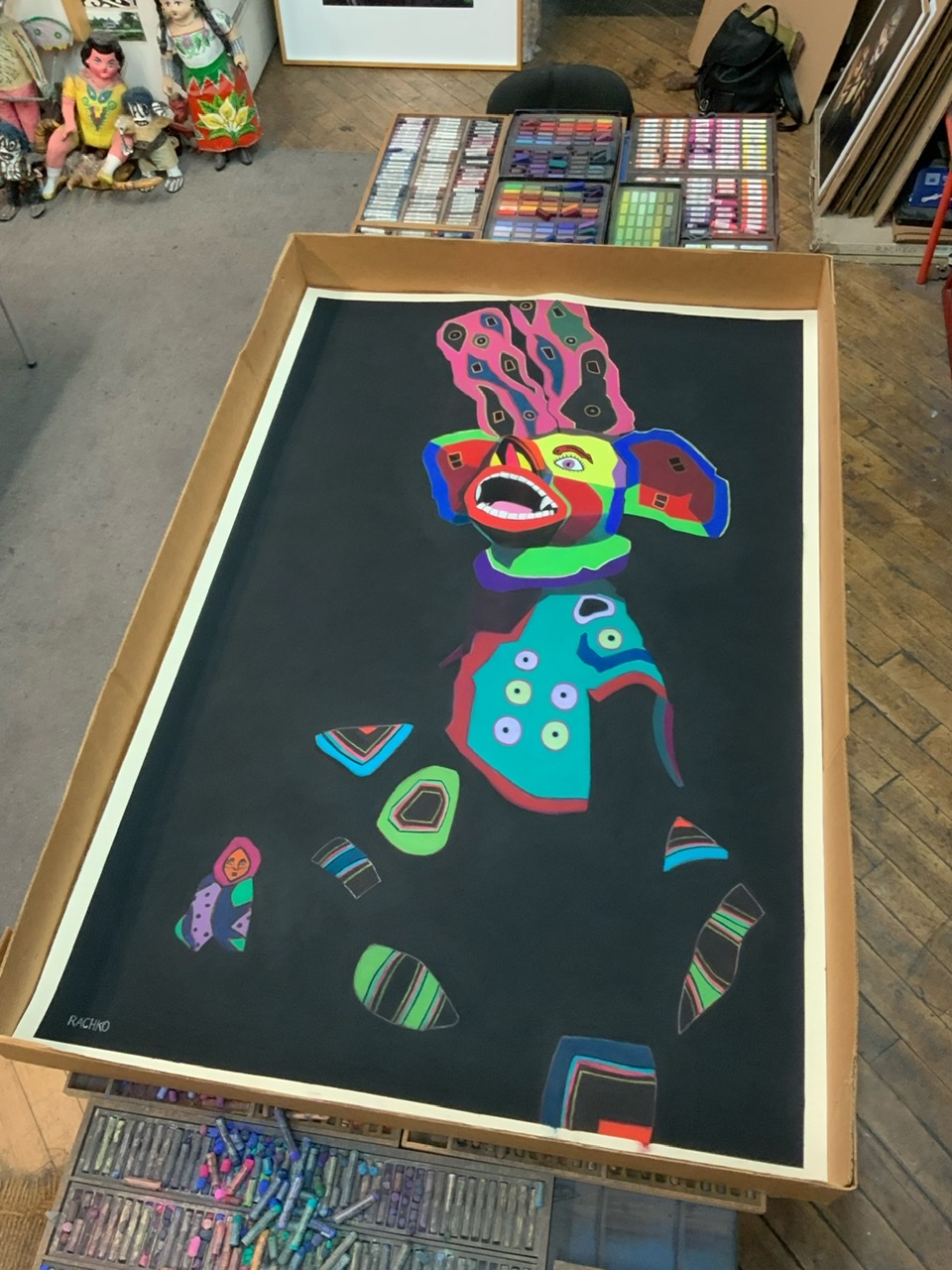
“Impresario” partially boxed for transport to Virginia
A: Well, I have been working with the same framer for three decades so I am used to the process.
Once my photographer photographs a finished, unframed piece, I carefully remove it from the 60” x 40” piece of foam core to which it has been attached (with bulldog clips) during the months I worked on it. I carefully slide the painting into a large covered box for transport. Sometimes I photograph it in the box before I put the cover on (see above).
My studio is in a busy part of Manhattan where only commercial vehicles are allowed to park, except on Sundays. Early on a Sunday morning, I pick up my 1993 Ford F-150 truck from Pier 40 (a parking garage on the Hudson River at the end of Houston Street) and drive to my building’s freight elevator. I try to park relatively close by. On Sundays the gate to the freight elevator is closed and locked so I enter the building around the corner via the main entrance. I unlock my studio, retrieve the boxed painting, bring it to the freight elevator, and buzz for the operator. He answers and I bring the painting down to my truck. Then I load it into the back of my truck for transport to my apartment.
I drive downtown to the West Village, where I live, and double park my truck. (It’s generally impossible to park on my block). I hurry to unload the painting, bring it into my building, and up to my apartment, all the while hoping I do not get a parking ticket. The painting will be stored in my apartment, away from extreme cold or heat, until I’m ready to drive to Virginia. On the day I go to Virginia, I load it back into my truck. Then I make the roughly 5-hour drive south.
Who ever said being an artist is easy was lying!
Comments are welcome!
Q: Would you speak about someone who made a difference in your professional life?
A: The first person who comes to mind is my favorite aunt, Teddie. In 1997 she was headed to northern California to attend a three-year-plus silent Tibetan Buddhist retreat at her teacher’s center. Teddie offered me her West 13th Street 6th-floor walkup apartment to live in while she was away. At the time I was based in Alexandria, VA and had just had my first solo exhibition at an important West 57th Street gallery, Brewster Fine Arts. I was becoming increasingly frustrated with the limited Washington, DC art scene, had outgrown everything it had to offer, and felt New York pulling me towards new and exciting professional adventures.
Teddie, recognizing my talent and ambition, made it possible for me to afford to move to New York. She had practiced Tibetan Buddhism for 35 years and was soon to become a Buddhist lama. She had an extraordinary mind and thought deeply about life. We used to talk for hours. Teddie was 7 years older and seemed more like a sister than an aunt. Indeed, she was my first soul mate. (I have been extremely fortunate to have had two such relationships in my life. The other was my late husband, Bryan).
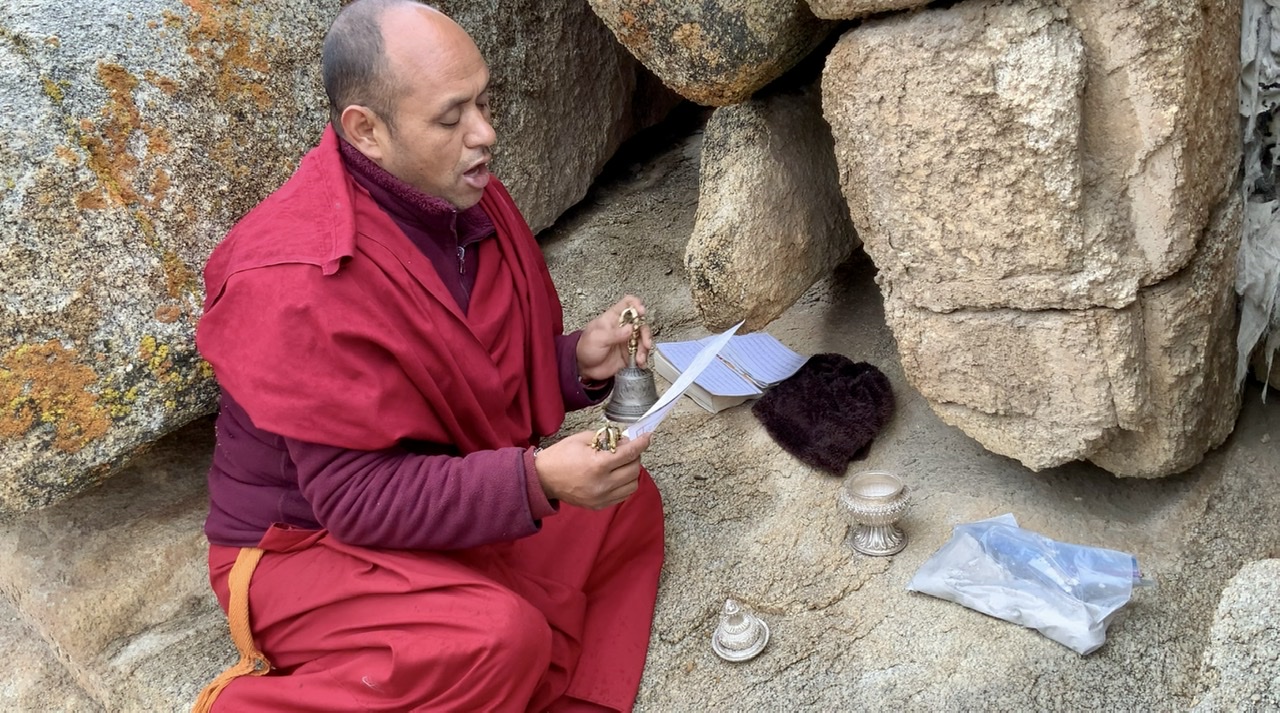
Unfortunately, dear Aunt Teddie died at the age of 67 of breast cancer. Recently, on September 25 I honored her life in a short ceremony on a mountain cliff in Leh, Ladakh (India). A Tibetan Buddhist monk recited prayers as he placed her ashes among the rocks.
Comments are welcome!
Pearls from artists* # 441
*an ongoing series of quotations – mostly from artists, to artists – that offers wisdom, inspiration, and advice for the sometimes lonely road we are on.
The most perennially popular category of art is the cheerful, pleasant, and pretty kind: meadows in spring, the shade of trees on hot summer days, pastoral landscapes, smiling children. This can be deeply troubling to people of taste and intelligence.
… The worries about prettiness are twofold. First, pretty pictures are alleged to feed sentimentality. Sentimentality is a symptom of insufficient engagement with complexity, by which one really means problems. The pretty picture seems to suggest that in order to make life nice, one merely has to brighten up the apartment with a depiction of some flowers. If we were to ask the picture what is wrong with the world, it might be taken as saying ‘You don’t have enough Japanese water gardens’ – a response that appears to ignore all the more urgent problems that confront humanity (primarily economic, but also moral, political, and sexual). The very innocence and simplicity of the picture seems to mitigate against any attempt to improve life as a whole. Secondly, there is the related fear that prettiness will numb us and leave us insufficiently critical and alert to the injustices surrounding us.
Alain de Botton and John Armstrong in Art as Therapy
Comments are welcome!
Pearls from artists* # 434
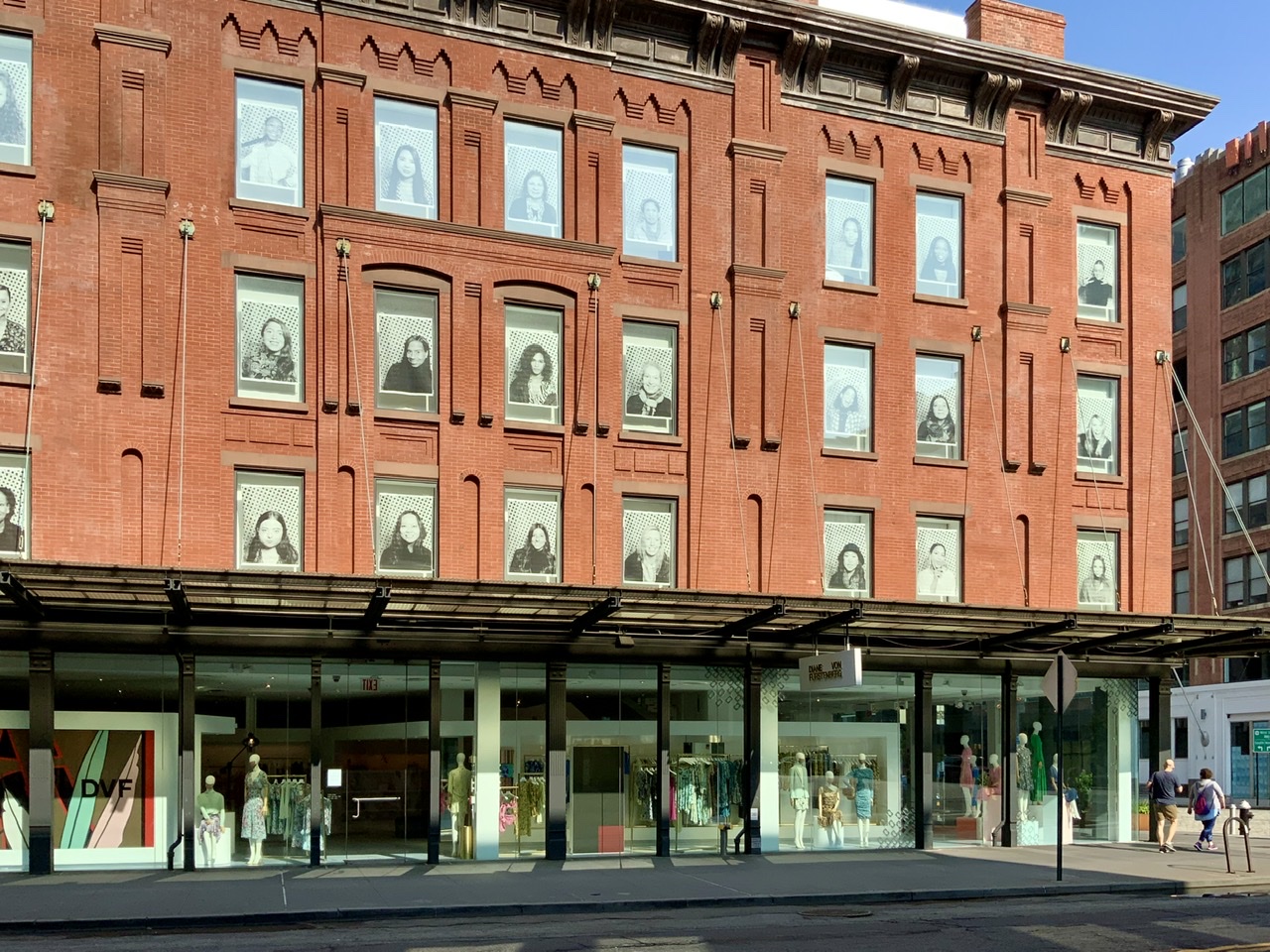
West Village, NYC
*an ongoing series of quotations – mostly from artists, to artists – that offers wisdom, inspiration, and advice for the sometimes lonely road we are on.
What do we carry forward? My family lived in New Jersey near Manhattan until I was ten, and although I have enjoyed spending my adult life as a photographer in the American West, when we left New Jersey for Wisconsin in 1947 I was homesick.
The only palliative I recall, beyond my parents’ sympathy was the accidental discovery in a magazine of pictures by a person of whom I had never heard but of scenes I recognized. The artist was Edward Hopper and one of the pictures was of a woman sitting in a sunny window in Brooklyn, a scene like that in the apartment of a woman who had cared for my sister and me. Other views resembled those I recalled from the train to Hoboken. There was also a picture inside a second-floor restaurant, one strikingly like the restaurant where my mother and I occasionally had lunch in New York.
The pictures were a comfort but of course none could permanently transport me home. In the months that followed, however, they began to give me something lasting, a realization of the poignancy of light. With it, all pictures were interesting.
Robert Adams in Art Can Help
Q: How do you start your day?
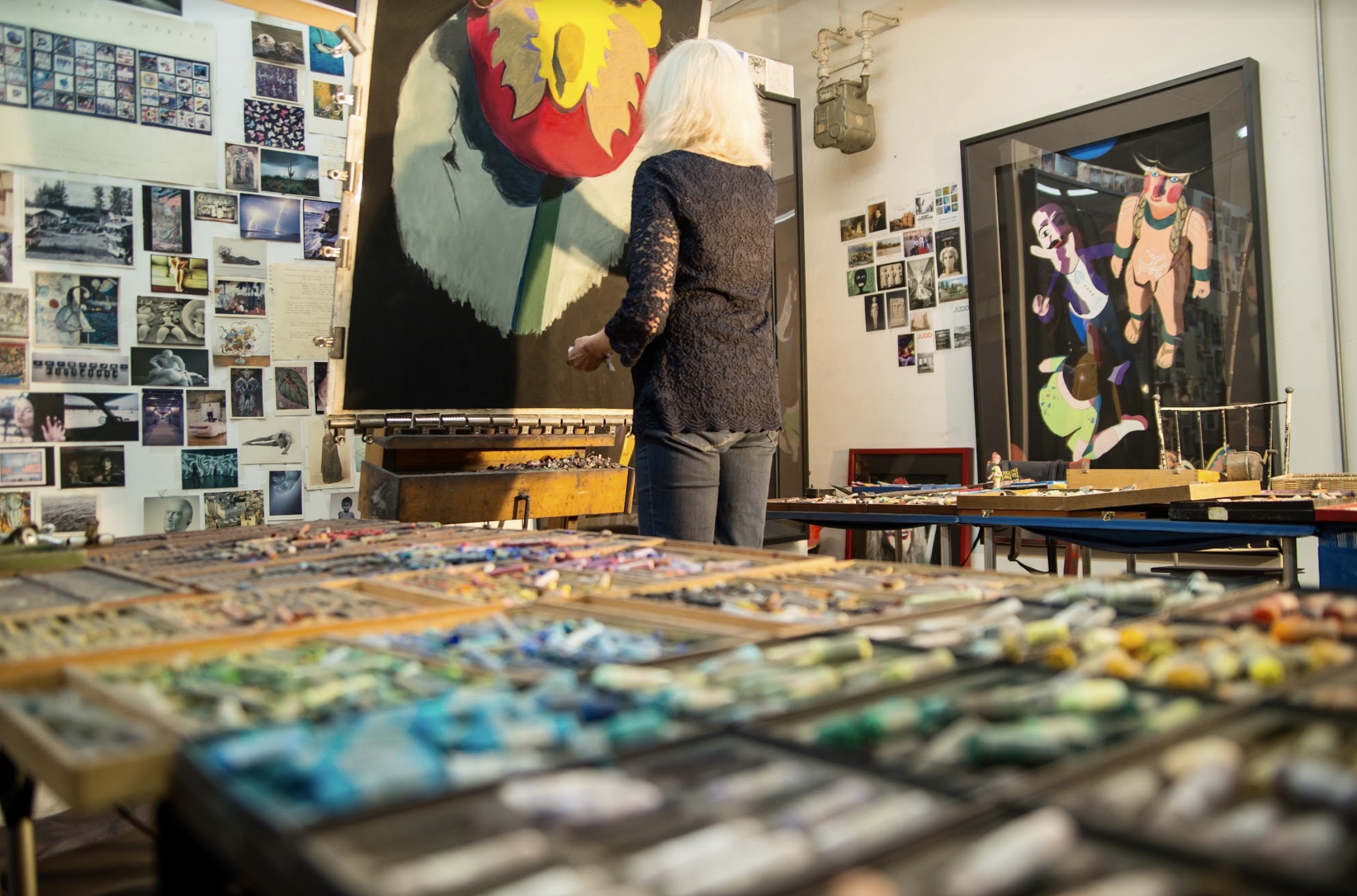
Working
A: (Note: this is my pre-pandemic answer).
I have always been a morning person. I wake up about 6:00, make breakfast, and spend about an hour online checking email, monitoring and responding to social media (my two assistants devote their efforts to social media marketing of my work), catching up on news (art sites like Hyperallergic, The New York Times, the BBC, etc.). I swim three or four times a week. On those days I leave my apartment by 7:30, walk to the pool, swim for an hour, and arrive at the studio about 11. On days when I don’t swim, I generally arrive at the studio between 9:30 and 10.
Comments are welcome!
Q: What’s on the easel today?
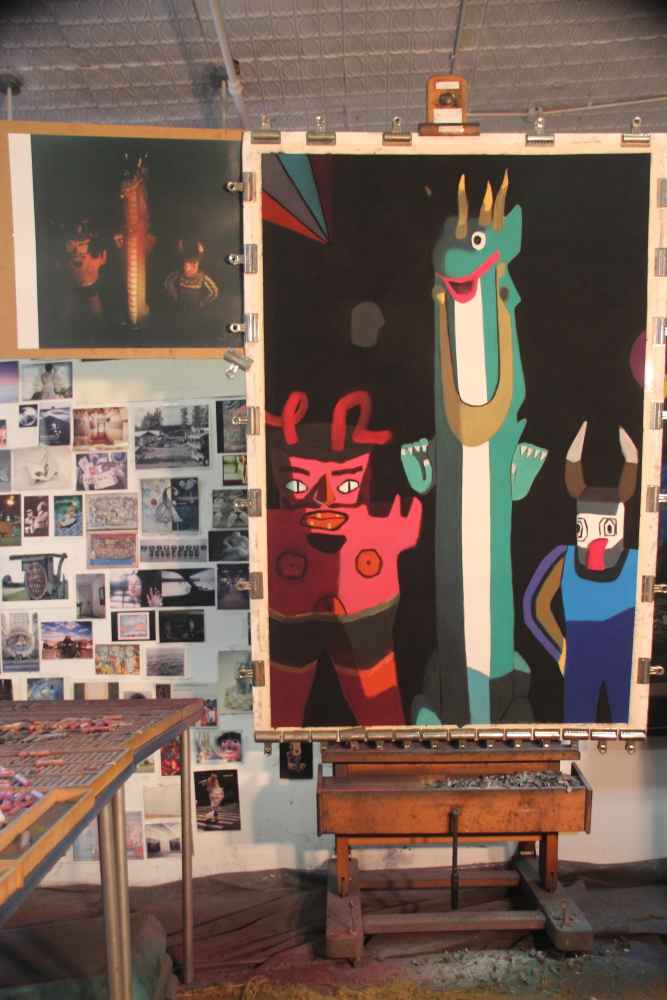
Work in progress
A: I am still in the early stages of a large pastel painting. After visiting Peru and Miami for three weeks, it has taken a few days to readjust and get back into my work routine.
In case you’re wondering, the undistinguished gray shape, roughly center left, is a placeholder for a stone figure found at a shaman’s shop in Chinchero, Peru. When I took this photo, the figure was at my apartment instead of in the studio (and I need to see the figure to paint it).
Comments are welcome!
Q: How do you think living in New York affects your work?
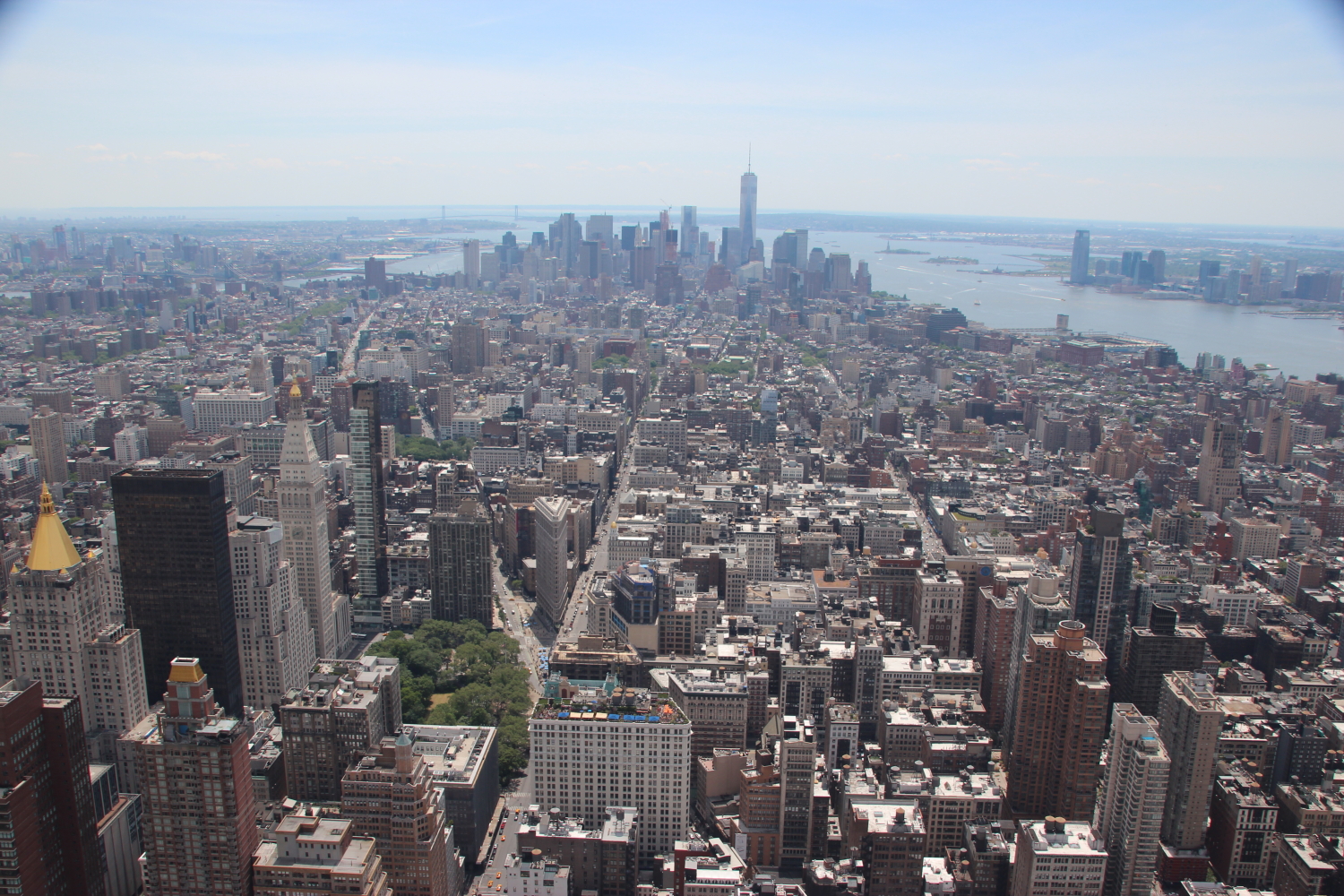
Lower Manhattan
A: Arguably, life in New York provides an artist with direct access to some of the best international art of the past, the present, and probably the future. It is possible to see more art here – both good and bad – than in any other American city.
Just pick up any local magazine and scan the art listings! Our problem is never that there isn’t anything interesting to see or do. It’s “how do we zero in on the most significant local cultural activities, ones that might contribute to making us better artists?”
Certainly a visual artist’s work is consciously and unconsciously influenced not only by what she sees in museums and galleries, but by walking around the city. That’s partly why I am an inveterate walker. I never know what amazing things I am going to see when I leave my apartment.
Although living in New York City is a rich and heady mix for anyone, it is more so for sensitive artists. Artists are virtual sponges, soaking up experiences, processing them, and mysteriously expressing them in our work.
New York lets an artist ponder excellence as we see and experience firsthand what is possible. The best of the best manages to make its way here.
Undoubtedly, my own work is richer for having spent the last eighteen years in this fascinating, wild, and crazy city. For a visual artist New York is an infinitely fascinating place to live.
Comments are welcome!
Q: Do you have any favorite memories of visiting museums when you were a child?
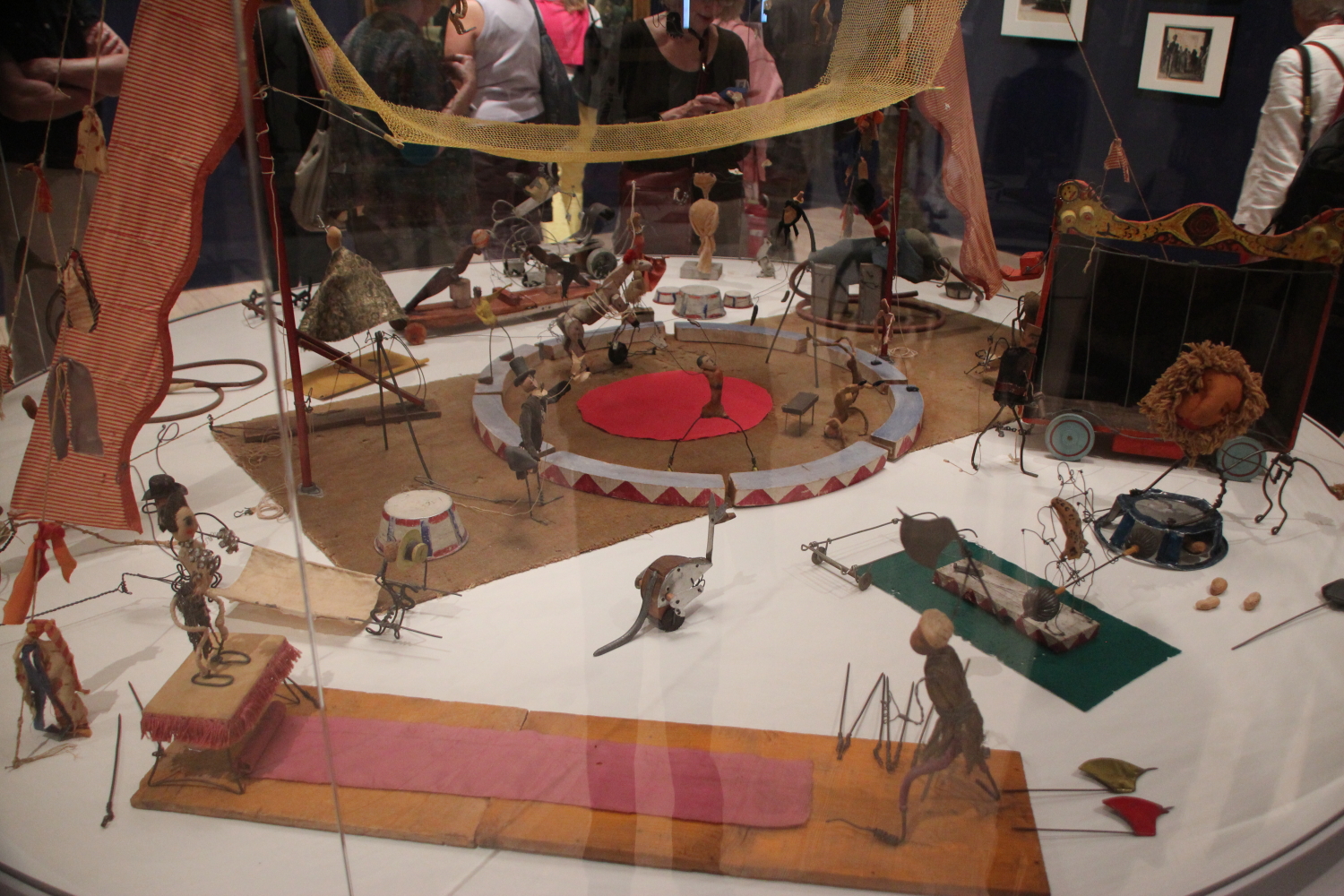
Calder’s circus at the new Whitney Museum of American Art
A: Yes, I loved seeing Alexander Calder’s wire circus at the Whitney Museum of American Art when I was a child. The circus, and the charming movie that he made with his long-suffering wife (to me she always looked bored and embarrassed that her husband was playing with his toys!) used to be on permanent display in a glass case on the ground floor. For many years Calder’s circus was in storage.
How thrilling to see it again, when the new Whitney Museum opened in May, just blocks from my apartment! Now any day of the week I can visit Calder’s circus – and other favorite works that have not been on exhibit for many years!
Comments are welcome!
Q: How do you experience art in New York?

Lower Manhattan
A: As a New York artist I am very fortunate to live in a city with a vibrant, exciting cultural scene. Simply put, art is in the air here and I take inspiration from everything I see and experience: painting, photography, sculpture, installation, performance art, public art, dance, theater, film, opera, jazz, etc. This city itself is an endlessly fascinating place. Visually it is always thrilling! I never know what I am going to see – good and bad – whenever I leave my apartment.
I have been living here since April 1997. The city provides a heady mix to ponder and this mix mysteriously enriches, influences, and somehow finds its way into the work. I have been an artist for nearly thirty years and I continue to be intrigued with watching the intricacies of how my creative process evolves and grows.
Comments are welcome!


 barbararachkoscoloreddust.com