Blog Archives
Q: You read books on Friedrich Nietzsche and other philosophers. How has philosophy and your personal experience shaped the latest series, Bolivianos? (Question from Vedica Art Studios and Gallery)

A: It’s difficult to pinpoint how philosophy specifically shaped my work because my curiosity spans so many subjects. Some critics have described me as a Renaissance woman, remarking on my wide-ranging and voracious reading. It’s true—I’m genuinely interested in practically everything!
In pursuit of making art, I have undertaken in-depth studies of numerous intriguing fields: drawing, color, composition, gross anatomy, art and art history, the art business, film history, photography, psychology, mythology, literature, philosophy, religion, music, jazz history, and archaeology—particularly ancient Mesoamerica (Olmec, Zapotec, Mixtec, Aztec, and Maya) and South America (the Inca and their ancestors).
Since the early 1990s, my inspiration and subject matter have come primarily from international travel to remote parts of the globe, especially Mexico, Central America, and South America. Travel is by far the best education! By visiting distant destinations, I have developed a deep reverence for people and cultures around the world. People everywhere are connected by our shared humanity.
These travels, supplemented by extensive research at home, are essential parts of my creative process. Research can be solitary and demanding, but I truly enjoy it. I want to know as much as possible, and this curiosity generates ideas for new work, propelling me into unexplored creative realms.
Foreign travel always expands our ways of thinking. This rich mixture of creative influences continually evolves and finds its way into my pastel paintings. Working, learning, evolving, and growing—I am perpetually curious and can hardly imagine a better way to spend my time on Earth!
Comments are welcome!
Pearls from artists* # 683
*an ongoing series of quotations – mostly from artists, to artists – that offers wisdom, inspiration, and advice for the sometimes lonely road we are on.
Clichéd subject matter can be a symptom of shallow understanding. Experiencing our subject matter firsthand helps us absorb complexities and discover surprising insights, leading to enriched outcomes. Envision a painting of a tree copied from a found internet photograph. Then, imagine the possibilities of a work executed by a person who loves to climb, sit under, caress, plant, and nurture trees, one who has observed their qualities through downpours, windstorms, and the Fall twilight filtered through leaf layers. They don’t just see, but feel these living, breathing giants straining to grow toward the sun, cooperatively respecting their neighbor’s space high in their crowns, and communicating with their community underground. Inspiration is not just gleaned through the eyes but through our entire bodies, intellect, and feelings.
Kate Kretz in Art From Your Core: A Holistic Guide to Visual Voice
Comments are welcome!
Q: Travel is an essential aspect of your work. How do you decide where to travel next?
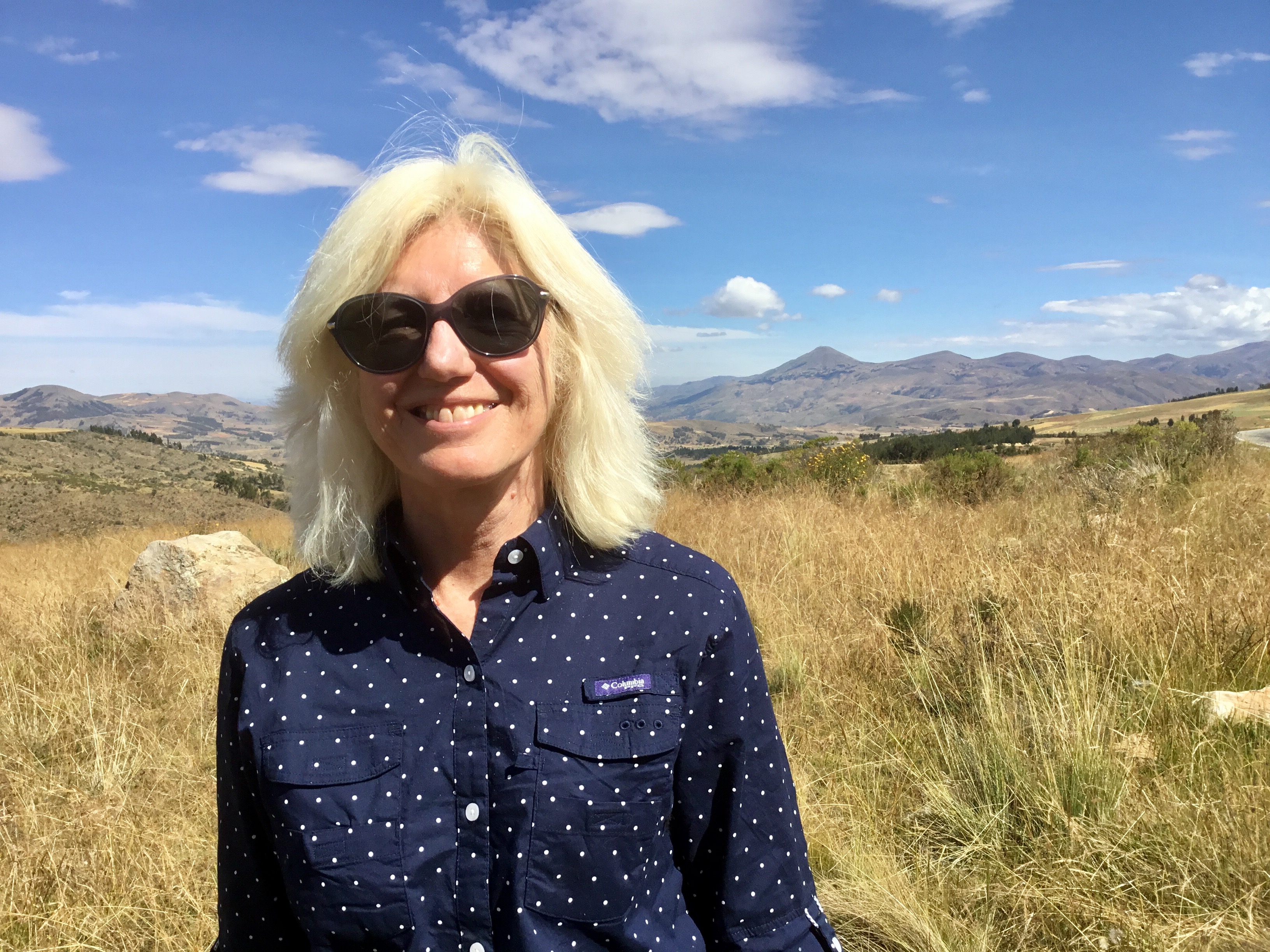
In the Bolivian Andes at about 14,000’
A: Generally, I am most interested in exploring Mexico and destinations in Central and South American because they offer endless inspiration to further my work. I’m not exactly certain why this is the case. I DO know that I cannot get enough of travel to points south!
My 2017 trip to Bolivia proved to be crucial for my current pastel painting series. “Bolivianos” is based on an exhibition of Carnival masks encountered at the National Museum of Ethnology and Folklore in La Paz.
I had high hopes of making a return visit – along with a private tour guide – last February. However, since President Moreno resigned last November, much political instability, violence, and turmoil resulted. I would not have felt safe traveling to Oruro to see Carnival celebrations this year.
In the mean time I look forward to traveling to Chile, the Atacama Desert, and Easter Island next winter!
Comnents are welcome!
Pearls from artists* # 385
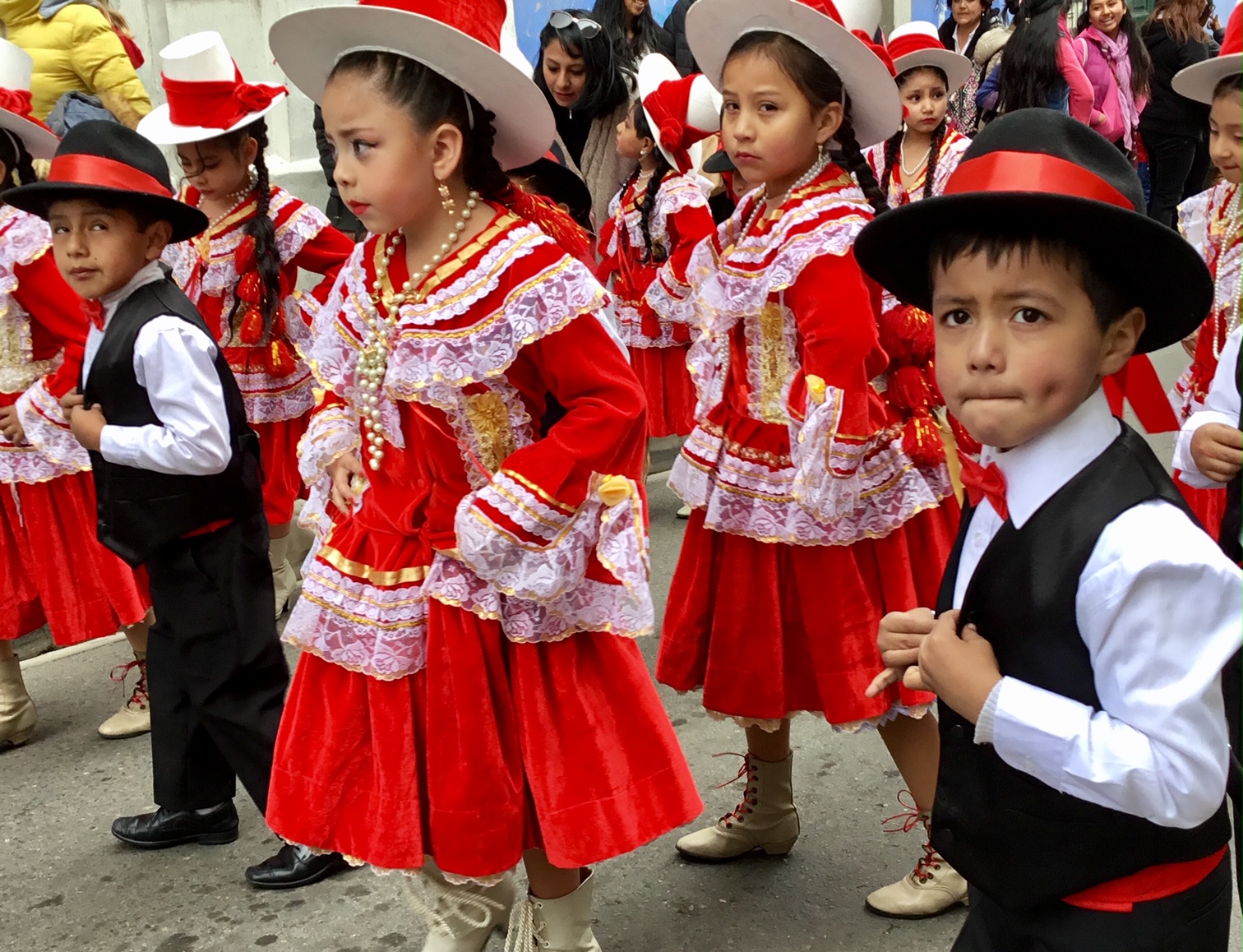
Potosí, Bolivia
* an ongoing series of quotations – mostly from artists, to artists – that offers wisdom, inspiration, and advice for the sometimes lonely road we are on.
Sunday of Carnival, the parade begins. For a whole day of celebration in music and dance, people can express their hope and fears, revive their myths and escape to a reality far from everyday life.
Thousands of spectators arrive from different parts if Bolivia and other countries. Filling the streets, they straddle benches, window ledges, balconies, cats and eve hang from walls or roofs to witness the entrance of the Carnival. Thus is the magnificent parade when Carnival makes its official entry into Oruro. The comparsas (dance troupes) dance to music for20 blocks, nearly eight lies, to the Church of the Virgin of Socavón (Virgin of the Mine). Each tries to out do the next in the brilliance of their costumes, the energy of their dancing and the power of their music. All their efforts are dedicated to the Virgin whose shrine is found on the hill called Pie de Gallo.
If there are thousands of spectators, there are also thousands of dancers from the city and other parts of the country. Among the most remarkable are the Diablos and Morenos which count for eight of the 40 or 50 participating groups. Keeping in mind that the smallest troupes have between 30 and 50 embers and the largest between 200 and 300, it is possible to calculate the number of dancers and imagine the spectacle.
… Each dance recalls a particular aspect of life in the Andes. Lifted from different periods and places, the dances offer a rich interpretation of historical events, creating an imaginative mythology for Oruro.
… Carnival blends indigenous beliefs and rituals with those introduced by the Spaniards. Both systems of belief have undergone transformations, each making allowance for the other, either through necessity or familiarity. The Christianity fought from Europe becomes loaded with new meanings while the myths and customs of the Andes accommodate their language and creativity to the reality of their conquered world. The process can be seen as a struggle culminating in a ‘mestizaje’ or new cultural mix.
El Carnaval de Oruro by Manuel Vargas in Mascaras de los Andes Bolivianos, Editorial Quipus and Banco Mercantil
Comments are welcome!


 barbararachkoscoloreddust.com